Momenta

Search documents
中国智驾淘汰赛:赢者突围、尾部退场,终局未定
Xin Lang Cai Jing· 2025-12-31 08:51
Core Insights - The Chinese intelligent driving industry is experiencing both expansion and contraction, with rapid adoption of assisted driving features in mass-produced vehicles, while financing for some companies is slowing down, leading to exits from mainstream competition [1][2] - The competition in the intelligent driving sector has shifted towards large-scale delivery, cost efficiency, and long-term service capabilities, with opportunities concentrating on a few companies that can prove their value [2][4] - The industry is entering a mature phase, as evidenced by significant orders from conservative automakers like Toyota, indicating a shift from vague to definite market demand [5][6] Industry Dynamics - The competition is no longer about validating technology but about scaling delivery and maintaining cost efficiency, with survival becoming a pressing issue for mid-tier companies [2][4] - The leading companies in the assisted driving sector include Horizon, ZhiYu, Huawei, and Momenta, which have successfully transitioned from technology validation to large-scale delivery [4][5] - The gap between leading companies and newcomers is estimated to be 3 to 5 years, primarily due to data accumulation advantages and algorithm iteration capabilities [4][5] Market Trends - The assisted driving market is seeing a push towards lower-cost models, with major players like Horizon and Momenta targeting vehicles priced under 100,000 yuan, which account for nearly half of China's passenger car sales [8][9] - The competition is intensifying around cost control, as companies strive to keep the cost of assisted driving features within 3% to 5% of the vehicle's price to ensure market acceptance [9][10] - The trend towards self-developed chips is debated, with some companies believing it can lead to differentiation and lower system costs, while others see it as economically challenging [10][11] Competitive Landscape - The intelligent driving sector is unlikely to see a "winner-takes-all" scenario until the L4 or L5 stages of automation, as the current market remains fragmented with multiple strong players [8][11] - Companies that can continuously iterate, validate their solutions through mass production, and respond to market demands will be the ones to secure future growth [11] - The supply chain strategies of automakers suggest that the assisted driving market will not favor a single dominant player, as diverse needs for customization and differentiation persist [7][8]



知情人士:仰望汽车自动驾驶解决方案供应商是Momenta
Di Yi Cai Jing· 2025-12-30 13:38
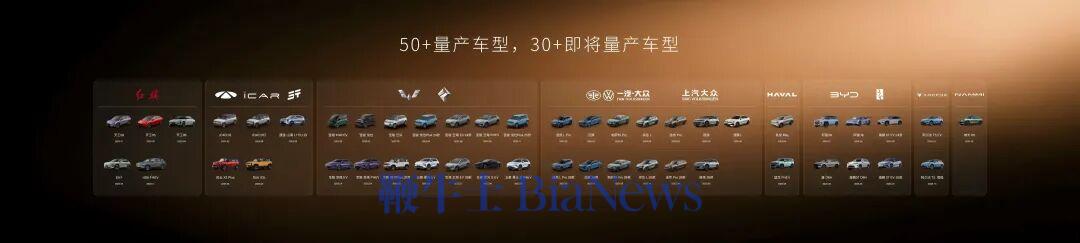
Group 1 - The core message of the news is that Zhuoyu, formerly known as DJI Automotive, celebrated its 10th anniversary and announced partnerships with over 50 mass-produced models and more than 30 upcoming models, including BYD's high-end brand Yangwang's U8 and U9 [1] - Zhuoyu's collaboration with various vehicle models indicates a significant presence in the automotive market, particularly in the high-end segment [1] - The Yangwang U8 and U9 are positioned in the new energy high-end market, with official prices exceeding 1 million yuan [4] Group 2 - A source close to BYD revealed that the autonomous driving solution provider for the Yangwang brand is Momenta, not Zhuoyu [3]

知情人士:仰望汽车自动驾驶解决方案供应商是Momenta
第一财经· 2025-12-30 13:23
Group 1 - The core viewpoint of the article highlights that Zhuoyu (formerly known as DJI Automotive) celebrated its 10th anniversary by announcing partnerships with over 50 mass-produced models and more than 30 upcoming models, including BYD's high-end brand Yangwang's U8 and U9 [1] - The Yangwang brand's autonomous driving solution is supplied by Momenta, not Zhuoyu, according to insiders close to BYD [3] - The official prices for the Yangwang U8 and U9 exceed one million yuan, targeting the high-end new energy market [4]

知情人士:仰望汽车自动驾驶解决方案供应商是Momenta,不是卓驭
Di Yi Cai Jing· 2025-12-30 13:03
Core Viewpoint - Zhuoyu, formerly known as DJI Automotive, celebrated its 10th anniversary and announced partnerships with over 50 mass-produced models and more than 30 upcoming models, including BYD's high-end brands Yangwang U8 and U9 [2] Group 1 - Zhuoyu's collaboration includes over 50 mass-produced models and more than 30 models set to be produced soon [2] - The Yangwang U8 and U9, which are part of BYD's high-end market strategy, have an official price exceeding 1 million yuan [2] - A source close to BYD indicated that the autonomous driving solutions for the Yangwang brand are provided by Momenta, not Zhuoyu [2]
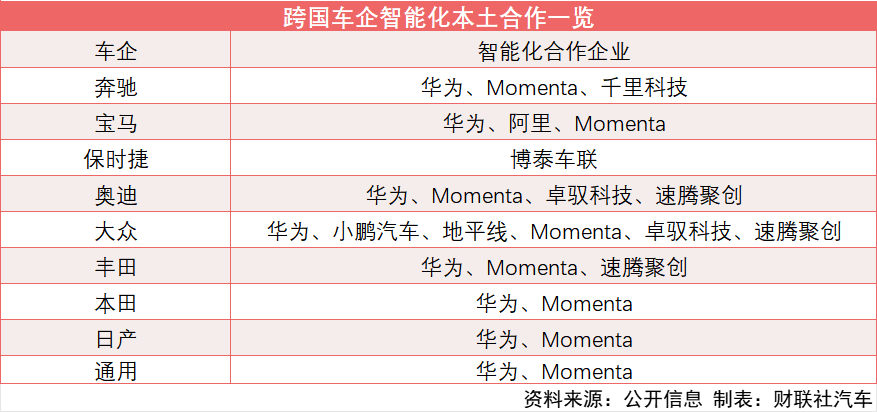
外资品牌深度链接本土“双智”供应商 华为、Momenta成赢家
Xin Lang Cai Jing· 2025-12-30 08:49
Core Viewpoint - The global automotive industry is undergoing significant transformation, presenting both challenges and opportunities for foreign car manufacturers in China. Collaborating with local intelligent suppliers is emerging as a major trend for the automotive industry by 2025 [1] Group 1: Collaborations and Partnerships - Major foreign car manufacturers, including Mercedes-Benz, BMW, and Audi, are forming strategic partnerships with local Chinese companies in the fields of intelligent driving and smart cockpits [2][3] - Mercedes-Benz has entered a long-term strategic cooperation agreement with Qianli Technology, focusing on artificial intelligence, intelligent driving, and smart cockpit technologies [2] - Other notable collaborations include partnerships between BMW and companies like Huawei and Momenta, as well as Audi's cooperation with multiple local suppliers [2][3] Group 2: Financial Performance and Market Trends - Foreign car manufacturers are experiencing declining profits, with BMW reporting a 16.2% year-on-year decrease in EBIT to €8.06 billion for the first nine months of the year, alongside a 5.6% drop in revenue to approximately €100 billion [3] - Sales figures for major brands in China from January to November show significant declines: BMW down 14.7% to 528,000 units, Mercedes-Benz down 18.7% to 518,000 units, and Audi down 13.3% to 518,000 units [4] - Industry experts suggest that the shift towards collaboration with local technology firms is a response to the pressures of profitability and the need for transformation in the automotive sector [3][4]

Uber, Lyft Team Up With Baidu to Start Robotaxi Trials in UK
Insurance Journal· 2025-12-29 16:44
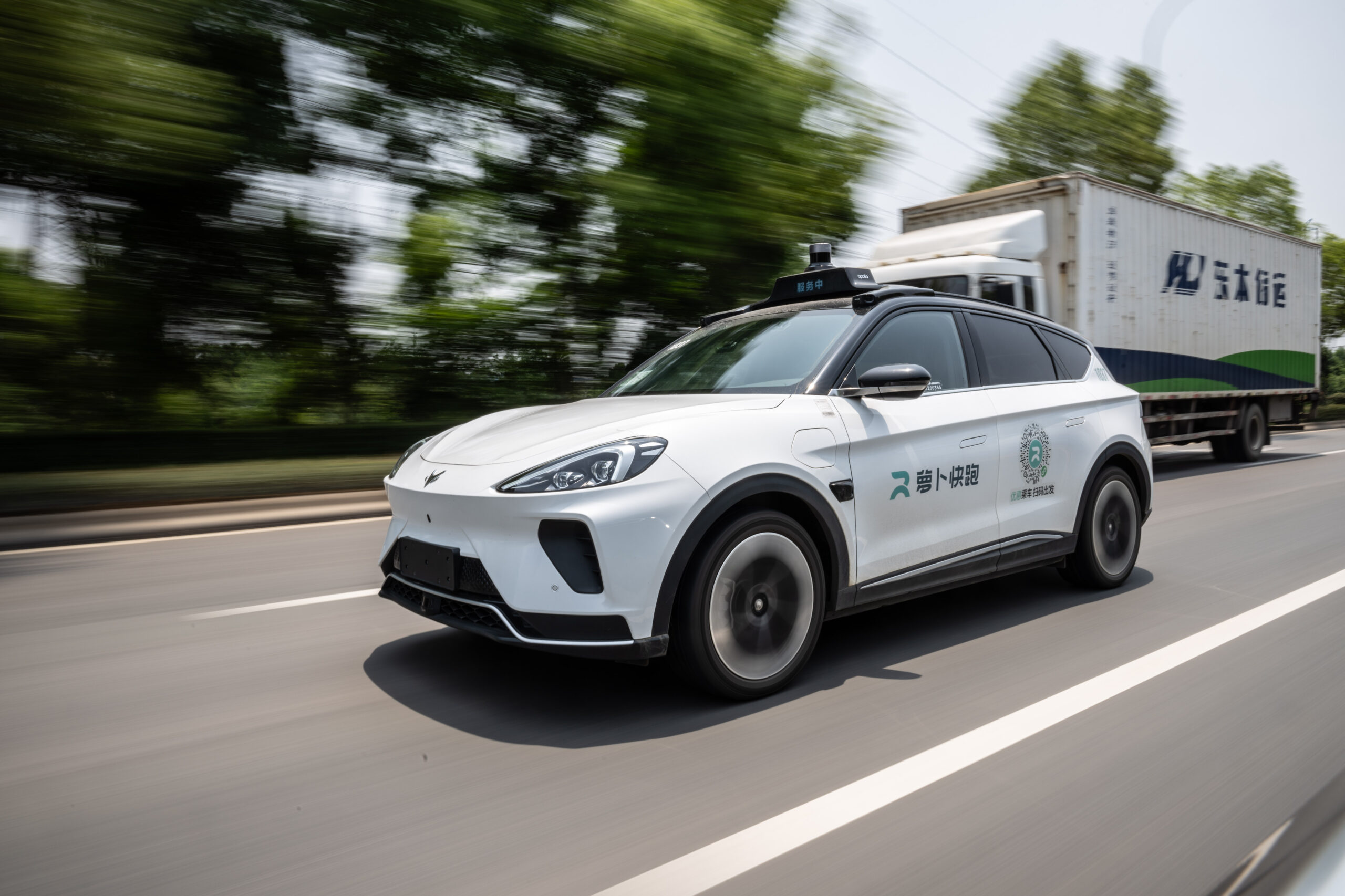
Core Insights - Uber Technologies Inc. and Lyft Inc. are collaborating with Baidu Inc. to test driverless taxis in the UK, reflecting the competitive landscape of autonomous ride-sharing services globally [1][2] - Uber plans to initiate a pilot program with Baidu's Apollo Go RT6 robotaxis in London in the first half of 2026, with expectations for commercial services to launch before the end of next year [1][2] - Lyft is also set to conduct trials in the UK next year, pending regulatory approval, using the same type of vehicles [2] Company Strategies - Uber has shifted from in-house development of autonomous driving, which it abandoned in 2020, to forming partnerships with various robotaxi companies [5] - Uber's CEO has indicated plans to offer driverless services in over 10 markets by the end of next year [5] - Lyft has signed a deal with Baidu to deploy robotaxis in Europe, indicating a similar strategy to Uber [6] Industry Trends - The global rollout of robotaxis is accelerating, with companies like Baidu, Weride Inc., and Alphabet Inc.'s Waymo leading the market [2] - Other ride-hailing platforms, such as Southeast Asia's Grab, are also partnering with Chinese firms to enhance their autonomous vehicle offerings [6] - Despite the growth in the sector, profitability of the robotaxi model remains uncertain, as companies like Pony AI Inc. and Weride continue to incur losses [6]



L3级自动驾驶,是可以跳过,还是无法绕过?
虎嗅APP· 2025-12-26 10:15
Core Viewpoint - The automotive industry is experiencing a divided attitude towards L3 autonomous driving technology, with some viewing it as a temporary phase while others recognize its importance for industry transformation and regulatory experience accumulation [2][8][15]. Group 1: L3 Autonomous Driving Development - The first batch of L3 autonomous vehicles is expected to be tested in specific areas of Beijing and Chongqing within a month [2]. - Industry leaders like Su Qing and He Xiaopeng suggest that L2 technology can efficiently transition to L4, potentially bypassing L3 altogether [4][8]. - The Chinese automotive industry association emphasizes that the implementation of L3 is crucial for the transformation of the automotive supply chain and regulatory experience [8][9]. Group 2: Industry Actions and Reactions - BAIC is one of the first companies to receive L3 approval, aiming to create a replicable operational model for nationwide deployment [9][10]. - Following the approval of L3 vehicles, other companies like Xiaomi and XPeng have shown interest in obtaining L3 testing licenses, although only two companies have received national-level approval [10]. - The launch of L3 vehicles is expected to significantly impact the automotive industry's ecosystem, including vehicle design, supply chain, and production models [15][16]. Group 3: Technical and Regulatory Considerations - The transition from L3 to L4 requires higher perception capabilities and complex decision-making in extreme scenarios [14][18]. - L3 is seen as a critical level for achieving fully autonomous driving, establishing a clear liability framework for accidents [15]. - The automotive industry must accumulate experience and refine systems at the L3 stage to meet the regulatory demands of higher-level autonomous driving [18].



2025 EDGE AWARDS 年度汽车科技榜单正式揭晓
Tai Mei Ti A P P· 2025-12-25 11:31
Core Insights - The automotive industry is shifting focus from mere electrification to a comprehensive system capability centered around "intelligence" [2][3] - The 2025 EDGE AWARDS emphasizes "implementation capability" as a core criterion, recognizing smart automotive products and technologies that have been validated in real user scenarios [3][4] Industry Trends - The competition in the automotive sector has entered a new phase, with rapid technological iterations and a shift in user focus from short-term concept chasing to long-term stability and experience [3][4] - Key areas of innovation include advanced intelligent driving, smart cockpit experiences, and the integration of hardware and software for overall vehicle intelligence [3][4] Award Categories - The awards are categorized into four main directions: Best Intelligent Driving, Best Intelligent Cockpit, Best Intelligent Model, and Innovative Dark Horse Product [4] - Evaluation criteria include technological maturity, scene coverage, user experience, and industry demonstration significance [4] Best Intelligent Driving - The award recognizes models or technologies with leading algorithm capabilities and real-world performance in intelligent driving [5][7] - Notable winners include: - Horizon's Journey series chips for enabling large-scale production of advanced intelligent driving [7] - Huawei's Kunlun ADS for its scalable and replicable industrial system [8] - Momenta for its data-driven approach and international expansion [9] Best Intelligent Cockpit - This category highlights innovative user experiences and the deep application of AI in cockpit technology [10][11] - Key models include: - The ZunJie S800, which integrates intelligent driving and cockpit capabilities for a refined user experience [11] - The Li Auto i6, focusing on reliable daily capabilities for family users [12] Innovative Dark Horse Products - This category celebrates products that achieve success through atypical paths, emphasizing innovation in design, technology, or business models [16] - Notable mentions include: - The Equation Leopard Ti7, which achieved significant sales shortly after launch [17] - The Galaxy V900, a flagship MPV with unique seating configurations and advanced energy management [18] - The Deep Blue L06, featuring advanced suspension technology for enhanced driving comfort [19] Market Impact - The launch of the Leap Lafa5 and the LeDao L90 signifies a trend towards high-quality, high-configuration electric vehicles, addressing market pain points and achieving rapid sales [20][22] - The LeDao L90 has set a record for the fastest delivery of large electric SUVs, indicating a strong market demand for this segment [22]
哈弗猛龙辅助驾驶“自动挡”,高阶依旧选中元戎启行
Jing Ji Guan Cha Bao· 2025-12-25 09:27
Group 1 - The appointment of Zhao Yongpo as CEO of Weipai marks the ninth leadership change in the brand's nine-year history, indicating a strategic shift within the company [1] - Weipai has taken on the role of testing advanced intelligent driving technologies within the Great Wall system, with models like Lanshan and Gaoshan showing improved product capabilities and stabilizing sales after integrating higher-level intelligent driving solutions [1] - The VLA (Vision-Language-Action model) adopted by Lanshan has emerged as a significant technological direction in the advanced driving assistance field, with competitors like Li Auto and XPeng also investing in similar technologies [1] Group 2 - The Haval Menglong is set to enhance its intelligent driving features, becoming a key model for Haval in this domain, with a clear stratification strategy for its configurations [2] - The top model of Menglong will utilize the Yuanrong Qixing solution to support advanced urban NOA capabilities, while the mid and low configurations will adopt a less advanced solution from Momenta, focusing on cost control and stable delivery [2][3] - The collaboration between Yuanrong Qixing and Great Wall began prior to the Menglong project, with a $100 million investment in Yuanrong Qixing in November 2024, laying the groundwork for long-term cooperation in advanced intelligent driving [3] Group 3 - Great Wall is forming a clear path for intelligent advancement, with Weipai exploring high-level technology and Haval focusing on functional segmentation to control costs and promote scalability [3] - The transition from "technology demonstration" to "scale operation" in intelligent driving raises the challenge of balancing technological advancement with commercial efficiency across different brands and price points [3]

中国汽车智能化步入全新攻坚期
Zhong Guo Qing Nian Bao· 2025-12-24 22:15
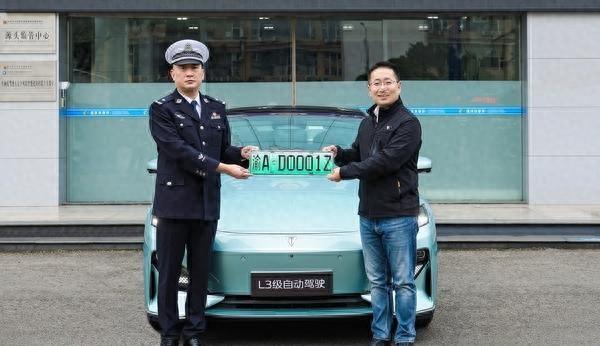
Core Insights - The issuance of the first L3-level autonomous driving license plate "渝AD0001Z" to Changan Automobile marks a significant milestone in China's progress in the autonomous driving sector, reflecting the company's commitment to safety and innovation [2][3] - The approval of L3-level conditional autonomous driving products by the Ministry of Industry and Information Technology indicates a critical advancement in the management practices of strategic technologies in China, serving as a catalyst for the industry's intelligent transformation [2][3] Industry Developments - Changan Automobile has undergone seven iterations of technology since establishing its intelligent research and development team in 2009, showcasing its deep-rooted automotive manufacturing experience and successful transition to smart technology [3] - The penetration rate of L2-level advanced driver assistance systems (ADAS) in new passenger cars in China exceeded 60% in the first three quarters of this year, with expectations to rise to 90% by 2030, indicating a shift from technology validation to large-scale commercial application [3] Collaborative Innovation - The achievement of L3-level autonomous driving is attributed to collaborative innovation across the industry chain, with leading domestic brands and new car manufacturers investing heavily in intelligent driving as a core strategy [4] - Domestic chip companies have made significant breakthroughs in high-performance AI computing chips, reducing reliance on foreign suppliers and providing a "digital foundation" for China's smart vehicles [4] Data Advantage - The rapid proliferation of L2-level assistance driving has established a strong foundation for the advancement of higher-level intelligent driving, creating a unique data advantage through millions of smart connected vehicles operating in complex road environments [5] - This data-driven approach enhances the iterative capabilities of autonomous driving algorithms, making it difficult for other countries to replicate [5] Regulatory Framework - The approval of L3-level products does not equate to mass production, as it serves as a "permit" for specific models to conduct road tests under strict conditions, emphasizing safety and regulatory compliance [6][10] - The initial speed limit of 50 km/h for L3-level autonomous driving reflects a cautious approach to ensure safety during testing in complex urban traffic environments [7] Future Outlook - Achieving safe and rapid deployment of L3-level autonomous driving requires a collaborative effort from government, enterprises, research institutions, and society [9] - A clear and stable regulatory framework is essential to define the legal identity of L3 vehicles and clarify responsibilities in the event of accidents [10] - Continuous investment in technology and infrastructure, along with public trust and understanding of autonomous driving, will be crucial for the industry's long-term success [11]