
伊利股份

Search documents
湖北省黄石市市场监督管理局食品安全监督抽检信息公告(2025年第11期)
Zhong Guo Zhi Liang Xin Wen Wang· 2025-11-11 08:02
Core Viewpoint - The recent food safety inspections in Huangshi City revealed that out of 291 food samples tested, 279 were compliant while 12 samples failed to meet safety standards, indicating ongoing concerns regarding food safety in the region [4][5]. Inspection Summary - A total of 291 food samples were inspected, categorized into 13 types, including grain products (56 samples), edible oils (8 samples), pastries (14 samples), meat products (6 samples), seasonings (8 samples), dairy products (20 samples), frozen foods (1 sample), aquatic products (1 sample), soy products (2 samples), starch and starch products (5 samples), health foods (24 samples), catering foods (62 samples), and edible agricultural products (84 samples) [4]. - Among the 12 non-compliant samples, 3 were edible agricultural products with issues related to pesticide residues (chlorpyrifos and enrofloxacin), and 9 were catering foods with high levels of coliform bacteria [4][5]. Action Taken - The Huangshi Market Supervision Administration has mandated immediate investigation and action on the non-compliant products, including removal from shelves, recalls, and suspension of sales, along with further legal investigations [5].

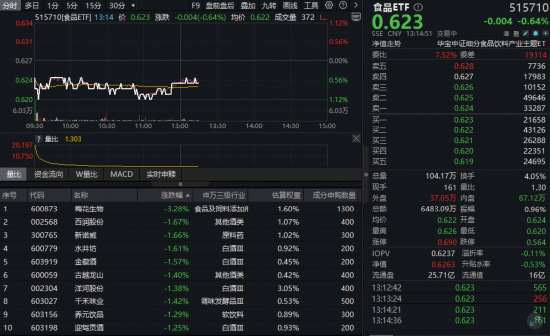
吃喝板块回调,食品ETF(515710)全天低位震荡!机构:2026白酒上行拐点逐步清晰
Xin Lang Ji Jin· 2025-11-11 06:14
Group 1 - The food and beverage sector is experiencing a downturn, with the Food ETF (515710) showing a decline of 0.64% as of the report time [1][2] - Key stocks in the sector, particularly in the liquor and consumer goods categories, are seeing significant drops, with Meihua Biological down over 3% and several others down more than 1% [1][2] - The report indicates that the overall performance of the food and beverage sector is under pressure due to policy impacts and increased competition, leading to reduced profit margins for companies [1][4] Group 2 - The valuation of the food and beverage sector is at a historical low, with the Food ETF's underlying index PE ratio at 21.22 times, indicating a potential opportunity for left-side positioning [3] - The report highlights that leading liquor companies are showing resilience despite the pressure on their financial statements, suggesting a potential for high-quality development in the coming year [4][5] - The demand side is expected to improve gradually, with policies likely to become less restrictive, which may drive demand recovery in the sector [5]



饮料市场 销售下滑丨消费参考
2 1 Shi Ji Jing Ji Bao Dao· 2025-11-11 05:07
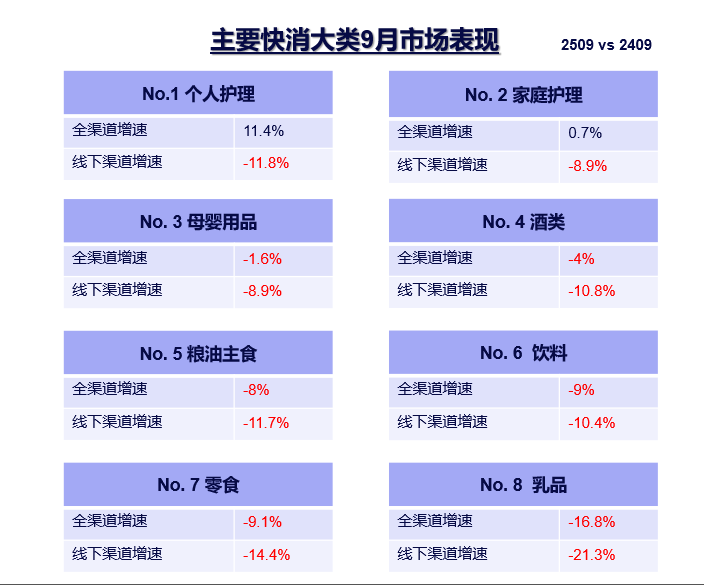
Group 1: Beverage Market Overview - The beverage market has entered a contraction phase, with overall sales down 9% year-on-year in September, and offline sales down 10.4% [1] - Uni-President China reported that its beverage business saw a low single-digit decline in revenue for Q3, while food business revenue grew in the mid to low single digits [1] - The decline in beverage revenue is attributed to price wars on delivery platforms and industry competition, with specific categories like juice facing significant pressure [1] Group 2: Dairy Industry Impact - The dairy market is also facing challenges, with Yili noting that ready-to-drink tea is substituting liquid milk products, particularly impacting packaged liquid milk sales [2] Group 3: Production Trends - National Bureau of Statistics data indicates a weakening trend in beverage production in Q3 compared to the first half of the year, with soft drink production declining by 0.17%, 6.79%, and 10.12% year-on-year in July, August, and September respectively [3] Group 4: External Factors - Adverse weather conditions, including typhoons and heavy rain, may have also impacted beverage sales during Q3 [4] Group 5: Market Recovery Signals - There are signs that the delivery platform price wars are becoming more manageable, which could be a positive development for the beverage market [5][6][7]
饮料市场,销售下滑
2 1 Shi Ji Jing Ji Bao Dao· 2025-11-11 04:47
Core Insights - The beverage market is entering a contraction phase, with overall sales down 9% year-on-year in September, and offline sales down 10.4% [1] Company Performance - Uni-President China reported that its overall revenue remained flat year-on-year in Q3, with beverage revenue declining in the low single digits. The food segment saw mid-to-low single-digit growth, driven by strong performance from products like "Qie Huang" and "Lao Tan Sauerkraut" [2] - Yili mentioned that ready-to-drink tea is substituting liquid milk products, particularly impacting packaged liquid milk sales, which are facing pressure from alternatives that are not fully captured in statistics [2] Industry Trends - Beverage production in China showed a significant weakening trend in Q3 compared to the first half of the year, with soft drink production declining by 0.17%, 6.79%, and 10.12% year-on-year in July, August, and September respectively, indicating a growing downward trend [3] - Adverse weather conditions, including typhoons and heavy rain, may have also impacted beverage sales during Q3 [4] Market Dynamics - The competition in the food delivery sector is becoming more manageable, as many executives noted that delivery subsidies have peaked [5][6] - This stabilization in the delivery market could potentially benefit the beverage sector [7] Market Performance Overview - The beverage category experienced a 9% decline in overall channel growth and a 10.4% decline in offline channel growth in September [12][13]
饮料市场,销售下滑丨消费参考
2 1 Shi Ji Jing Ji Bao Dao· 2025-11-11 04:45
Group 1: Beverage Market Overview - The beverage market is entering a contraction phase, with overall sales down 9% year-on-year in September, and offline sales down 10.4% [1] - Unification Enterprise's beverage business saw a low single-digit decline in revenue for Q3, attributed to price wars on delivery platforms and industry competition [2] - The dairy market is also facing challenges, with ready-to-drink tea beverages replacing liquid milk products, particularly impacting packaged liquid milk sales [2] Group 2: Production and Weather Impact - Beverage production in China showed a significant weakening trend in Q3 compared to the first half of the year, with monthly production declines of 0.17%, 6.79%, and 10.12% respectively [3] - Adverse weather conditions, including typhoons and heavy rain, may have also affected beverage sales during Q3 [4] Group 3: Market Recovery Signals - The competitive landscape of delivery services is becoming more manageable, with several market executives indicating that delivery subsidies have peaked [5][6] - This stabilization in the delivery market could potentially benefit the beverage sector [7]

10月物价数据反应消费回暖拐点?消费ETF(159928)昨日净流入超5.28亿元,盘中再度“吸金”超2.2亿份!机构:消费企稳信号明确!
Xin Lang Cai Jing· 2025-11-11 03:44
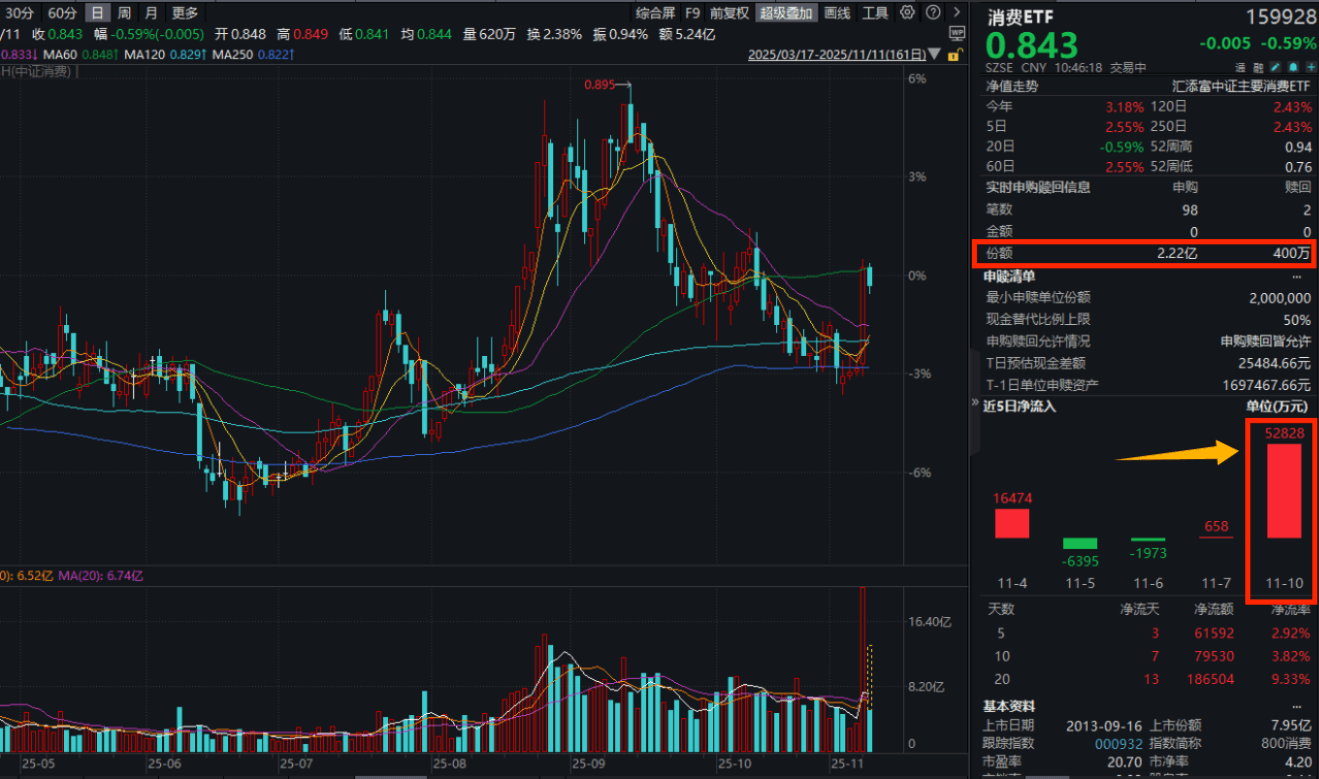
Group 1: Market Performance - The consumer ETF (159928) experienced a slight decline of 0.59% after a significant increase of over 3% the previous day, with a trading volume of 600 million [1] - The consumer ETF attracted substantial capital inflow, with over 528 million yuan on the previous day and a net inflow of over 224 million yuan today, reaching a new high of over 22.1 billion yuan [1][3] - The majority of the weighted stocks in the consumer ETF saw a decline, with notable drops in Luzhou Laojiao (over 2%) and Muyuan Foods (over 1%), while Yili maintained a slight increase [3] Group 2: Valuation and Market Trends - The valuation of the consumer ETF remains attractive, with a TTM price-to-earnings ratio of 20.54, which is at the 7.2% percentile over the past decade, indicating it is cheaper than 92% of the historical time [3] - Seasonal trends suggest that Q4 often sees changes in market style, with December being a period where low valuation stocks may gain more attention [3] Group 3: Economic Indicators - The October CPI showed a positive growth trend, driven by strong service consumption, indicating a recovery in domestic demand [7] - Core CPI increased from 1.0% to 1.2%, marking the sixth consecutive month of growth, with notable price increases in services such as airline tickets and hotel accommodations [9] - The PPI also showed signs of improvement, with a month-on-month increase for the first time this year, suggesting a potential recovery in industrial profitability [7][9] Group 4: Sector Analysis - The liquor industry is currently in a destocking phase, with signs of recovery as companies report easing pressure on their financials [11] - The restaurant supply chain is expected to improve, with new product launches and channel expansions potentially enhancing profitability [11] - The snack food sector is benefiting from health trends and innovation, with strong growth anticipated for products like oats and konjac [11][12]
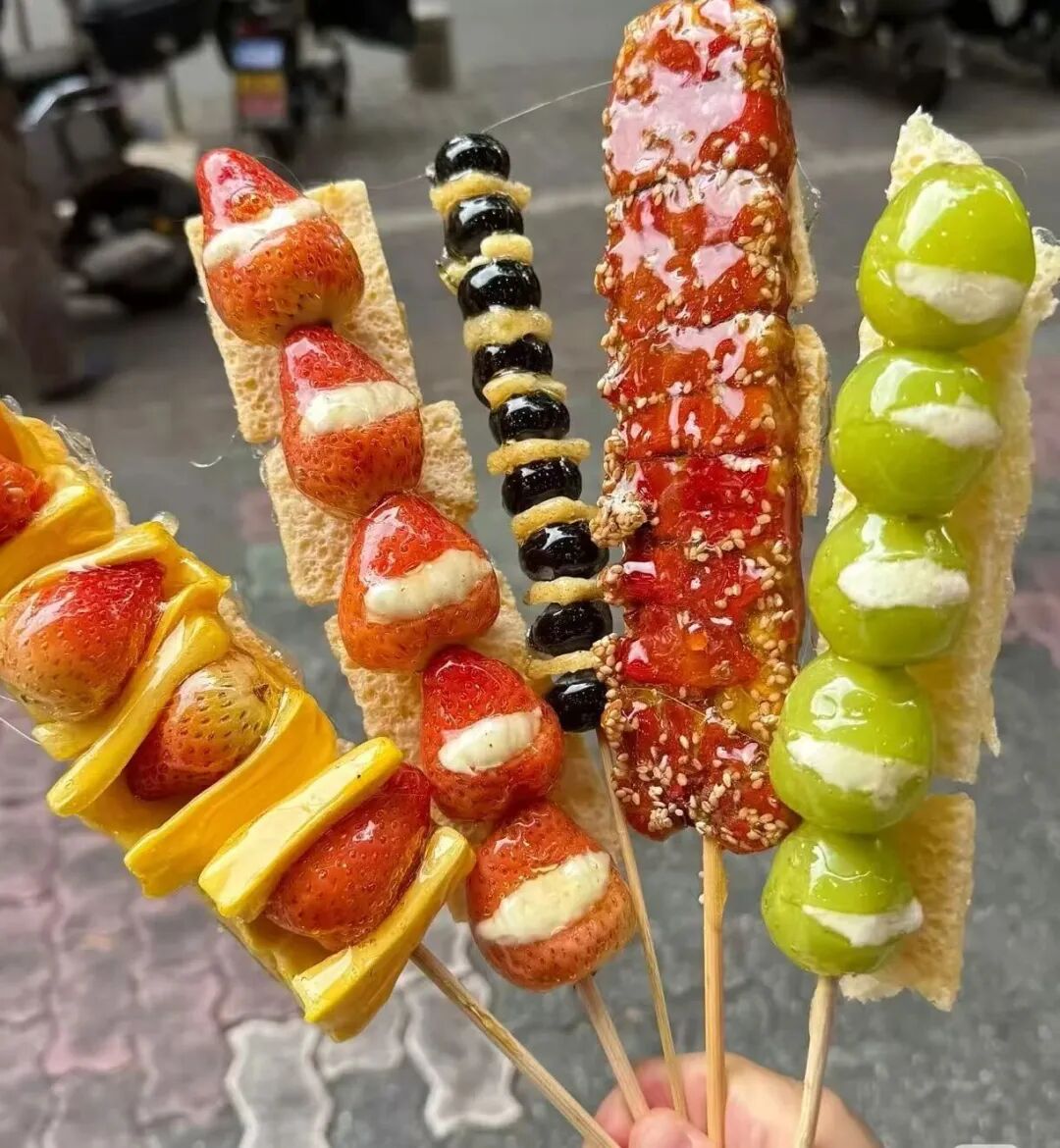
中产快吃不起奶皮子糖葫芦了
3 6 Ke· 2025-11-11 02:43
Core Insights - The popularity of "Nai Pi Zi Tang Hu Lu" (milk skin candied hawthorn) has surged this winter, becoming a trending winter snack across China, with long queues and high prices reported in major cities like Beijing and Shanghai [1][3][4] - The combination of milk skin and candied hawthorn, which originated in Baotou, Inner Mongolia, has led to a significant increase in prices, with some varieties costing three to four times more than traditional candied hawthorn [3][8][10] Market Trends - The hashtag "Nai Pi Zi Tang Hu Lu" has garnered 220 million views on Xiaohongshu and 840 million views on Douyin, indicating strong social media engagement and consumer interest [3] - The price of Nai Pi Zi Tang Hu Lu varies significantly, with basic varieties priced between 15-30 yuan, while premium options can exceed 40 yuan, reflecting a substantial markup due to the inclusion of milk skin [8][10] Supply Chain Dynamics - There is a reported shortage of milk skin, which is primarily handmade and labor-intensive to produce, leading to supply constraints and increased prices from 10 yuan to 19 yuan per piece [12][13] - Many businesses, including snack shops and instant retail platforms, are capitalizing on the trend by introducing their own versions of Nai Pi Zi Tang Hu Lu, indicating a competitive market landscape [15][19] Industry Implications - The dairy industry has seen a decline in overall consumption, with major brands like Yili and Mengniu reporting revenue drops, suggesting that while Nai Pi Zi Tang Hu Lu is a trend, it may not provide long-term growth for dairy companies [20] - Experts suggest that while the product is currently popular, it may not lead to sustainable innovation within the dairy sector due to low profit margins and lack of differentiation in production methods [19][20]
消费政策暖风频吹,食品饮料ETF天弘(159736)10月以来累计"吸金”近2亿元,机构:白酒板块进入布局区间
2 1 Shi Ji Jing Ji Bao Dao· 2025-11-11 02:14
Group 1 - The three major indices opened higher collectively, while the food and beverage sector experienced a slight pullback, with the Tianhong Food and Beverage ETF (159736) declining by 0.14% [1] - The Tianhong Food and Beverage ETF has shown significant capital inflow, with a net inflow exceeding 180 million yuan since October, indicating strong investor interest [1] - The ETF tracks the CSI Food and Beverage Index, focusing on leading stocks in high-end and mid-range liquor, as well as key players in beverages, dairy, condiments, and beer [1] Group 2 - The National Bureau of Statistics reported that the Consumer Price Index (CPI) rose by 0.2% year-on-year in October, reversing a previous decline, while the Producer Price Index (PPI) saw a year-on-year decrease of 2.1%, with a narrowing decline for the third consecutive month [2] - Huajin Securities noted that the improvement in core CPI and PPI indicates a positive trend, emphasizing the need to strengthen domestic demand amid uncertainties from global supply chain restructuring [2] - Open Source Securities suggested that liquor manufacturers are managing inventory levels to support long-term health, and the current white liquor sector is entering a favorable investment phase [2]

背靠农夫山泉,这对夫妻要IPO了
Sou Hu Cai Jing· 2025-11-11 00:47
Core Viewpoint - Jiangtian Technology has successfully passed the IPO review by the Beijing Stock Exchange, indicating its readiness to enter the capital market after over 20 years in the packaging industry, serving major fast-moving consumer goods brands [1][3]. Group 1: IPO Details - Jiangtian Technology plans to publicly issue no more than 176.18 million shares, aiming to raise a total of 531 million yuan, which will be used entirely for the construction of the Jiangtian R&D and manufacturing comprehensive base, including the establishment of intelligent production lines and upgrades to the technology R&D center [2][3]. - The initial fundraising target was 611 million yuan, which included 80 million yuan for working capital. However, after two rounds of inquiries from the Beijing Stock Exchange, the company voluntarily reduced the fundraising amount to alleviate concerns regarding the necessity of the funds [3]. Group 2: Company Background - Established in 2002 and headquartered in Suzhou, Jiangtian Technology specializes in the R&D, production, and sales of label printing products, focusing on self-adhesive labels used in various fast-moving consumer goods sectors [6][8]. - The company has evolved from a regional label printing factory to a significant player in the mid-to-high-end consumer goods market by developing integrated label solutions from design to mass delivery [8]. Group 3: Ownership and Governance - The actual controllers of Jiangtian Technology, Teng Qi and Huang Yanguo, are a married couple, with Teng Qi serving as the chairman and Huang Yanguo as the general manager. Together, they control 88.70% of the voting rights through a joint action agreement [9][10]. - The company has not introduced external institutional investors, resulting in a highly concentrated capital structure, which raises regulatory concerns regarding governance, independence, and future capital operations [10]. Group 4: Client Relationships - Jiangtian Technology's growth is closely tied to its deep relationship with major clients, particularly Nongfu Spring, which accounted for approximately 40% of its sales [11][12]. - The company has established long-term partnerships with well-known brands such as Unilever, Procter & Gamble, Shell, Total, Wyeth, Mondelēz, Xiangpiaopiao, Heytea, Yili, Mengniu, Haidilao, and Blue Moon [13].


消费赛道复苏预期升温 多只消费股估值具备优势
Zheng Quan Shi Bao· 2025-11-10 23:10
Core Viewpoint - The consumer sector is experiencing a collective rebound, driven by government policies aimed at boosting consumption and supporting key industries [1][3]. Group 1: Market Performance - As of November 10, 2023, various consumer indices, including food and beverage, beauty care, and retail, have shown less than 10% growth year-to-date, underperforming the Shanghai Composite Index [2]. - The food and beverage sector has been the weakest performer, with its index in a downward trend for the year [2]. Group 2: Institutional Outlook - Institutions are becoming increasingly optimistic about the future performance of the consumer sector, with several brokerages identifying potential investment opportunities [3]. - Open Source Securities notes that the food and beverage sector is nearing a bottom, with recovery expectations rising as negative factors have largely been released and policy impacts are slowing [3]. - Huachuang Securities highlights that service consumption is in a transformative phase, with strong policy support expected to make it a key investment theme [3]. - Galaxy Securities emphasizes the importance of enhancing consumer power and expanding quality consumption supply during the 14th Five-Year Plan period, as new consumption trends emerge [3]. Group 3: Valuation and Stock Performance - Many consumer stocks are currently seen as undervalued, with 123 stocks having a rolling P/E ratio below 30 and underperforming the Shanghai Composite Index year-to-date [4]. - Notable large-cap stocks include Kweichow Moutai, Midea Group, and Wuliangye, among others [4]. - 23 stocks have seen a cumulative decline of over 10% this year, with Ganyuan Food experiencing the largest drop at 33.79% [4]. Group 4: Future Growth Potential - From an institutional perspective, 43 of the 123 identified consumer stocks have an upside potential exceeding 20% based on consensus target prices [5]. - Proya Cosmetics leads with a projected upside of 49.05%, supported by its international expansion plans [5]. - Xueda Education follows with an expected upside of 48.6%, driven by its clear business expansion strategy in personalized education [5][6].





