天弘基金

Search documents
金融中报观|基金管理费收入小幅回升,21家机构超10亿元,权益基金仍在降
Bei Jing Shang Bao· 2025-09-01 14:32
Core Insights - The management fee income of 193 fund managers reached 62.239 billion yuan in the first half of 2025, marking a slight year-on-year increase of 1.35% after a decline following the fee reduction in July 2023 [1][3][5] - The recovery in management fee income is attributed to the rapid expansion of public fund scales and improved market conditions, although there is significant differentiation among institutions [5][6] - The trend indicates a potential future decline in management fees due to ongoing fee reforms and the introduction of performance-linked floating fee mechanisms [7] Management Fee Income Overview - In the first half of 2025, 100 out of 189 institutions reported a year-on-year increase in management fee income, with Schroder Fund showing the highest growth at 271.29% [3][4] - The top three fund managers by management fee income were E Fund, Huaxia Fund, and GF Fund, with incomes of 3.918 billion yuan, 3.001 billion yuan, and 2.909 billion yuan respectively [3][4] - A total of 21 institutions generated over 1 billion yuan in management fees, accounting for 62.42% of the total management fee income [3][4] Product Type Analysis - Equity fund management fees decreased by 5.91% to 26.571 billion yuan, while bond fund management fees increased by 4.47% to 14.619 billion yuan, and money market fund management fees rose by 9.09% to 18.278 billion yuan [6] - The decline in equity fund management fees is linked to regulatory fee reforms aimed at benefiting investors [6][7] Future Trends - The industry is expected to focus on headquarter consolidation, specialization, and personalization as key development directions [6] - Fund managers are encouraged to enhance asset management capabilities and improve net returns to stabilize management fee income amidst ongoing fee reforms [7]


“电风扇”行情愈演愈烈,布局创业板ETF天弘(159977)、科创综指ETF天弘(589860)及中证A500ETF天弘(159360)等优质宽基指数
Xin Lang Cai Jing· 2025-09-01 07:48
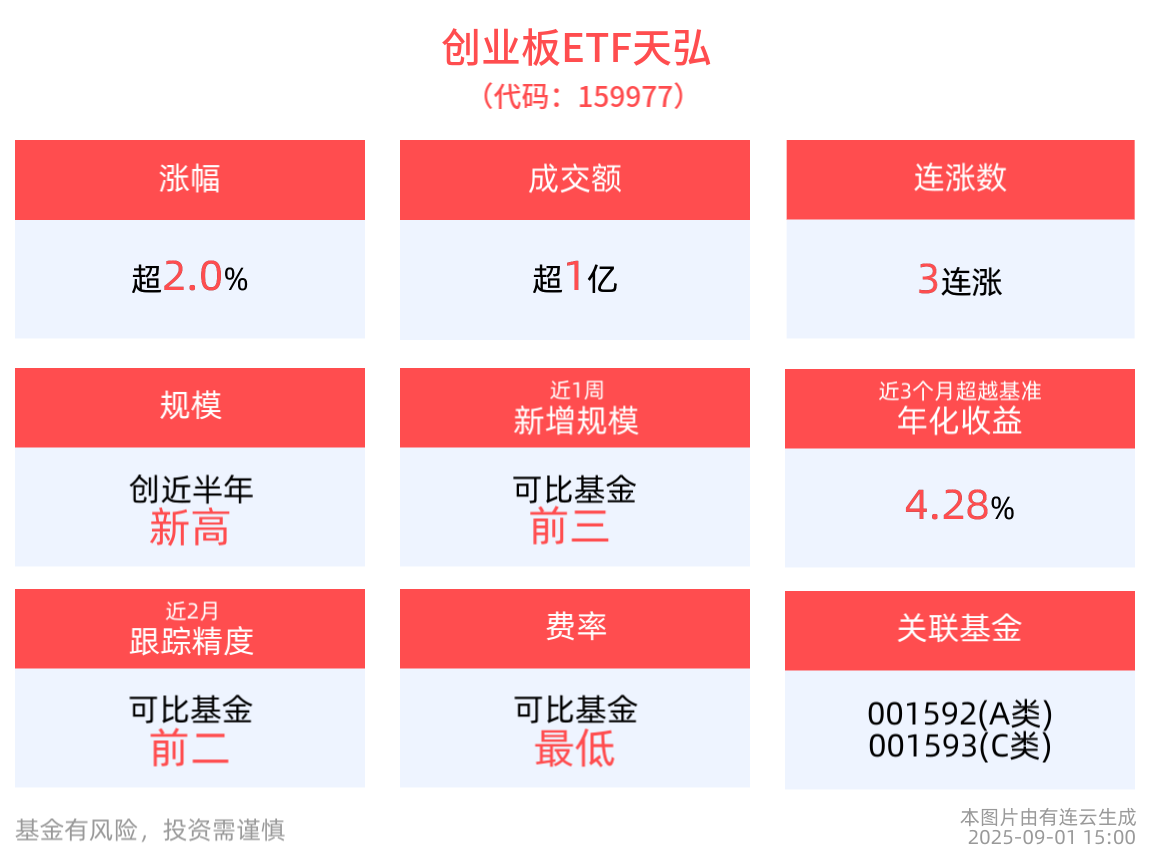
Core Insights - The Tianhong ChiNext ETF (code: 159977) has seen a 2.06% increase, marking three consecutive days of gains with a trading volume of 113 million yuan [6] - The Tianhong Sci-Tech Index ETF (code: 589860) rose by 1.90%, with a turnover rate of 12.1% and a trading volume of 49.59 million yuan, indicating active market participation [6] - The Tianhong CSI A500 ETF (code: 159360) increased by 0.50%, also achieving three consecutive days of gains, with a turnover rate of 3.54% and a trading volume of 63.59 million yuan [6] Fund Performance - As of September 1, 2025, the Tianhong ChiNext ETF (159977) reached a new high in scale at 9.655 billion yuan, the highest in the past six months [7] - The Tianhong ChiNext ETF encompasses four high-growth sectors: pharmaceuticals, new energy, computing power, and brokerage, with a valuation at the 38.36th percentile of its ten-year history, indicating it is undervalued compared to broad-based indices [7] - The Tianhong Sci-Tech Index ETF covers 97% of the Sci-Tech board's market value, focusing on hard technology and balancing investments in semiconductors, artificial intelligence, and biomedicine, with over 80% in strategic emerging industries [7] Economic Indicators - According to the National Bureau of Statistics, the manufacturing PMI, non-manufacturing business activity index, and comprehensive PMI output index for August were 49.4%, 50.3%, and 50.5%, respectively, showing a slight increase from the previous month [7] - Analysts suggest that the economic indicators reflect positive changes in China's economy, with expectations for continued release of domestic demand potential in September and the fourth quarter [7] Market Outlook - Huatai Securities indicates that the extension of short-term tariff exemptions and expectations of Federal Reserve rate cuts may improve risk appetite, with a shift towards fundamentals expected in the medium term [8] - China Galaxy Securities anticipates that the market will maintain a high central tendency, with active trading and supportive policies driving market conditions, while structural allocation opportunities should be monitored [8]

华夏基金盈利掉队:上半年净利11.23亿遭广发、南方反超,同比增速5.78%排名靠后
Xin Lang Ji Jin· 2025-09-01 07:34
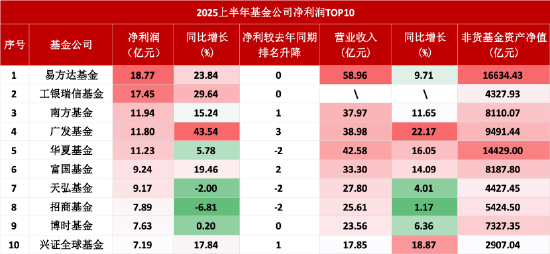
Core Viewpoint - The report highlights the performance of mutual fund companies in the first half of 2025, indicating a shift in competition from mere scale expansion to quality and efficiency in operations [1][5]. Group 1: Fund Company Performance - E Fund remains the top performer with a net profit of 1.877 billion yuan, showing a year-on-year growth of 23.84% [2][3]. - ICBC Credit Suisse Fund follows with a net profit of 1.745 billion yuan, achieving a significant year-on-year growth of 29.64% [2][3]. - Southern Fund's net profit reached 1.194 billion yuan, up 15.24% year-on-year, moving up to third place [3][4]. - GF Fund demonstrated strong performance with a net profit of 1.180 billion yuan, marking a substantial increase of 43.54% year-on-year, climbing three positions to fourth [3][4]. - Huaxia Fund's net profit was 1.123 billion yuan, but its growth rate was only 5.78%, resulting in a drop from third to fifth place [3][4]. - Xingzheng Global Fund re-entered the top ten with a net profit of 719 million yuan, growing 17.84% year-on-year [3][4]. Group 2: Industry Trends and Insights - The competition among leading fund companies is evolving, focusing on product structure, research capabilities, operational efficiency, and cost control rather than just management scale [4][5]. - GF Fund's high growth is attributed to proactive product innovation and market positioning, while Southern Fund's stable performance is linked to its balanced product structure and risk control capabilities [4][5]. - Huaxia Fund faces challenges in improving profitability despite its large asset scale, indicating a need for enhanced operational efficiency [5].
股息率超7%!一键打包【港股通+央企+红利】的港股通央企红利ETF天弘(159281)明日重磅上市
Ge Long Hui· 2025-09-01 07:18
Core Viewpoint - The launch of the Tianhong Hong Kong Stock Connect Central State-Owned Enterprises Dividend ETF (159281) on September 2, 2025, aims to attract investors seeking high dividend yields as the A-share market approaches the 3900-point mark [1]. Group 1: Market Trends - Insurance capital has significantly increased its investment in high-dividend assets, with a total growth of 640 billion yuan in equity assets during the first half of the year [1]. - Major insurance companies, including China Life, China Pacific Insurance, and China Ping An, have indicated plans to enhance their allocation towards quality high-dividend assets in their semi-annual reports [1]. Group 2: ETF Characteristics - The Tianhong ETF tracks the CSI Hong Kong Stock Connect Central SOE Dividend Index, focusing on high-dividend stocks from central state-owned enterprises (SOEs) [1]. - The ETF selects companies that have consistently paid dividends for three consecutive years, ensuring a dividend payout ratio greater than 0 and less than 1 over the past year, thus avoiding "one-off dividends" [1]. - The index is weighted by dividend yield rather than market capitalization, preventing the pitfalls of high buying and low selling [1]. Group 3: Top Holdings - The top ten weighted stocks in the ETF include China COSCO Shipping, Orient Overseas International, China National Offshore Oil, and China Shenhua Energy, among others [1]. - The profitability of central SOEs supports the high dividend yields, allowing investors to benefit from both capital appreciation and stable dividend income under new market regulations [1]. Group 4: Performance Metrics - As of July 4, 2025, the Hong Kong Stock Connect Central SOE Dividend Index had a dividend yield of 7.73% and a year-to-date increase of 17.17%, significantly outperforming the CSI Central SOE Dividend Index, which had a dividend yield of 4.89% and a year-to-date increase of 5.07% [2]. - Over the past five years, the index has achieved an annualized total return of 14.27% with an annualized volatility of 22.02%, indicating a balance of returns and risk management [2].
“T+0”+分红+高股息,港股通央企红利ETF天弘(159281)明日上市交易
2 1 Shi Ji Jing Ji Bao Dao· 2025-09-01 05:29
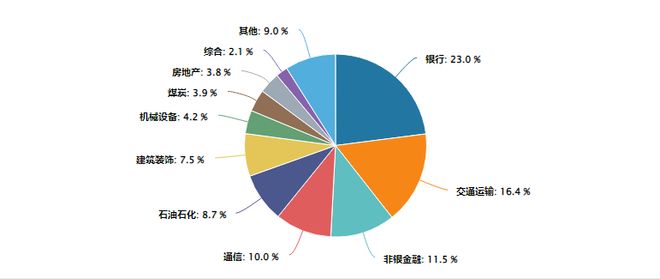
Core Viewpoint - The Hong Kong stock market is showing strength, particularly in cyclical sectors such as consumer discretionary, metals, pharmaceuticals, coal, and steel, with the launch of the Tianhong Central Enterprise Dividend ETF (159281) on September 2, 2023, which aims to track high dividend-yielding central enterprises [1] Group 1: ETF and Index Details - The Tianhong Central Enterprise Dividend ETF has an annual management fee of 0.5% and a custody fee of 0.1% [1] - The ETF closely tracks the Hong Kong Stock Connect Central Enterprise Dividend Index (931233), which selects stable dividend-paying companies controlled by central enterprises within the Stock Connect framework [1] - As of the end of Q2 2025, the index's sector distribution includes banking, transportation, non-bank financials, telecommunications, and oil and petrochemicals, with the top ten constituents accounting for 31% of the index [1] Group 2: Performance Metrics - The index has a dividend yield exceeding 7% as of the end of Q2 2025 [3] - Historical performance shows that the index achieved an annualized return of 14.27% over the past five years, with an annualized volatility of 22.02% as of July 9, 2025 [3] Group 3: Investment Outlook - The investment value of Hong Kong central enterprise dividends is expected to continue benefiting from inflows of southbound capital, structural market conditions, and a focus on investor returns through improved dividend policies [4] - The Hong Kong market is anticipated to rise further in the second half of the year, driven by three positive factors, including the AI cycle benefiting technology stocks and the low-interest-rate environment enhancing dividend attractiveness [4]


基金公司“中考”放榜!谁表现强劲?谁在掉队?
Zheng Quan Shi Bao· 2025-09-01 00:00
Core Insights - The performance of fund companies has shown significant divergence, with some achieving substantial growth while others face declines or losses [2][5]. Group 1: Overall Industry Performance - The public fund industry demonstrated a stable and positive development trend in the first half of 2025, influenced by a recovering equity market and cost reduction efforts [2]. - The total net asset value of public funds managed by 164 institutions reached 34.39 trillion yuan, an increase of 4.75% compared to the end of the previous year [11]. Group 2: Top Fund Companies - Five leading public funds reported net profits exceeding 1 billion yuan, with notable growth rates: E Fund achieved 18.77 billion yuan (up 23.81%), ICBC Credit Suisse Fund reached 17.45 billion yuan (up 29.64%), and Southern Fund reported 11.8 billion yuan (up 43.54%) [3]. - The performance of major fund companies is characterized by a diverse product line and strong shareholder resources, contributing to their growth [2][3]. Group 3: Mid-sized and Smaller Fund Companies - Smaller fund companies with single business lines experienced significant performance fluctuations, with some facing substantial losses [5]. - Notable growth was observed in some regional bank-affiliated fund companies, such as Yongying Fund, which reported a net profit of 1.82 billion yuan (up 80.2%) [5][6]. Group 4: Performance Disparities - The performance of equity-focused funds varied significantly, with some companies like Huatai-PB Fund and China Universal Fund experiencing declines of 16.7% and 25.07% in net profits, respectively [4]. - Some companies, such as Huitianfu Fund, reported a 30.45% decline in net profit, highlighting the challenges faced by certain leading firms [4]. Group 5: Future Outlook and Strategies - Companies like Huaxia Fund and Fuguo Fund are focusing on high-quality development and enhancing customer experience, while also exploring innovative products and expanding overseas [11]. - Financial strategies include strengthening compliance, optimizing product structures, and enhancing investor service systems to improve long-term returns [11].
基金公司“中考”放榜!谁表现强劲?谁在掉队?
券商中国· 2025-08-31 23:29
Core Viewpoint - The performance of fund companies has shown significant divergence, with some achieving substantial profit growth while others face considerable declines or losses [2][7]. Group 1: Fund Company Performance - In the first half of 2025, the public fund industry demonstrated a stable and positive development trend, influenced by a recovering equity market and cost reduction efforts [2]. - Leading fund companies such as E Fund, ICBC Credit Suisse, Southern Fund, GF Fund, and Huaxia Fund reported net profits exceeding 1 billion yuan, with E Fund and GF Fund achieving net profits of 18.77 billion yuan and 11.8 billion yuan, respectively, marking year-on-year growth of 23.81% and 43.54% [4][5]. - Some mid-sized fund companies, including Fuguo Fund and Tianhong Fund, reported net profits between 500 million yuan and 1 billion yuan, while others like Xingzheng Global Fund and Invesco Great Wall Fund showed growth rates of 17.84% and 12.78% [5][4]. Group 2: Performance Disparities - The performance of some leading fund companies has declined significantly, with Huitianfu Fund reporting a net profit of 4.8 billion yuan, down 30.45% year-on-year [6]. - Smaller fund companies are experiencing greater volatility in performance due to their relatively singular business models, with some facing substantial losses [8]. - Local bank-affiliated fund companies, such as Yongying Fund, have shown rapid growth, with Yongying Fund achieving a net profit of 1.82 billion yuan, up 80.2% year-on-year [8][9]. Group 3: Industry Growth and Challenges - As of mid-2025, there are 164 public fund management institutions in China, managing a total net asset value of 34.39 trillion yuan, reflecting a 4.75% increase from the previous year [17]. - The industry is witnessing a shift in resident wealth towards public fund products, with a promising outlook for index-based investments driven by policy incentives and product innovation [17]. - Fund companies are focusing on high-quality development, enhancing product lines, and improving investor experiences to navigate the opportunities and challenges in the market [17].

超1130亿元,增长20.52%
Sou Hu Cai Jing· 2025-08-31 14:35
Core Viewpoint - The public fund industry in China reported a total fee income exceeding 113 billion yuan in the first half of 2025, marking a year-on-year growth of 20.52% due to the recovery of the capital market and record-breaking management scales [1] Management Fees - The management fee income for the first half of 2025 reached 616.03 billion yuan, a 1.98% increase from 604.09 billion yuan in the same period of 2024 [2][3] - Mixed funds generated the highest management fees at 177.49 billion yuan, accounting for 28.81% of total income, although this represents an 8.26% decrease from 193.47 billion yuan in 2024 [3] - Money market and bond funds were the main contributors to management fee income, with 173.19 billion yuan and 144.56 billion yuan respectively, reflecting year-on-year growth of 9.36% and 4.26% [3] Growth in Specific Fund Types - QDII funds, other funds, and commodity funds saw significant increases in management fees, with respective incomes of 19.39 billion yuan, 5.51 billion yuan, and 3.10 billion yuan, showing year-on-year growth of 22.92%, 103.18%, and 169.41% [4] Major Fund Managers - In the first half of 2025, 21 out of 162 fund managers reported management fee incomes exceeding 10 billion yuan, up from 20 in 2024 [5] - E Fund led the industry with a management fee income of 39.27 billion yuan, a decrease of 3.91% from 40.87 billion yuan in 2024 [5] - The top 15 fund managers collectively earned 309.35 billion yuan in management fees, accounting for over half of the industry's total [5] Client Maintenance Fees - Fund companies paid a total of 182.84 billion yuan in client maintenance fees, a 12.79% increase year-on-year [8][10] - After deducting client maintenance fees, the net management fee income for fund companies was approximately 433.19 billion yuan, a decrease of 1.99% from 441.99 billion yuan in the previous year [10] Sales Service Fees - The total sales service fee income reached 152.16 billion yuan, up 13.44% from 134.12 billion yuan in 2024 [11] - Money market funds accounted for 76.34% of the sales service fees, totaling 116.16 billion yuan [11] Custody Fees - The total income from fund custody fees was 137.69 billion yuan, reflecting a 2.36% increase from 134.51 billion yuan in the previous year [13] - Four commercial banks reported custody fee incomes exceeding 10 billion yuan, with Industrial and Commercial Bank of China leading at 20.35 billion yuan [14]
超1130亿元,增长20.52%
中国基金报· 2025-08-31 14:26
Core Viewpoint - The public fund industry in China experienced significant growth in management fees, trading commissions, custody fees, and sales service fees, totaling over 1130 billion yuan in the first half of 2025, marking a year-on-year increase of 20.52% [2]. Management Fees - The total management fee income for the first half of 2025 reached 616.03 billion yuan, a 1.98% increase from 604.09 billion yuan in the same period of 2024 [3][4]. - The public fund management scale hit a record high of 34.39 trillion yuan by the end of June 2025, with an increase of 1.56 trillion yuan in the first half [4]. - Mixed funds generated the highest management fees at 177.49 billion yuan, accounting for 28.81% of total income, although this represents an 8.26% decrease from 193.47 billion yuan in 2024 [4]. - Money market and bond funds were the main contributors to management fee income, generating 173.19 billion yuan and 144.56 billion yuan respectively, with year-on-year growth of 9.36% and 4.26% [4]. Performance of Different Fund Types - QDII funds, other funds, and commodity funds saw substantial increases in management fees, with growth rates of 22.92%, 103.18%, and 169.41% respectively [5]. - Among 162 public fund managers, 21 had management fee incomes exceeding 10 billion yuan, up from 20 in 2024 [7]. - Leading fund companies included E Fund with 39.27 billion yuan, followed by Huaxia Fund and GF Fund with 32.67 billion yuan and 29.15 billion yuan respectively [7]. Client Maintenance Fees - Client maintenance fees amounted to 182.84 billion yuan, reflecting a year-on-year increase of 12.79% [10][12]. - After deducting client maintenance fees, the net management fee income for fund companies was approximately 433.19 billion yuan, a decrease of 1.99% from 441.99 billion yuan in the previous year [12]. Sales Service Fees - Sales service fees totaled 152.16 billion yuan, up 13.44% from 134.12 billion yuan in 2024 [14]. - Money market funds accounted for 76.34% of total sales service fees, with 116.16 billion yuan collected [14][15]. - The highest sales service fee income was recorded by Tianhong Fund at 11.88 billion yuan, with several other companies exceeding 5 billion yuan [15]. Custody Fees - Custody fee income reached 137.69 billion yuan, a 2.36% increase from 134.51 billion yuan in 2024 [16]. - Four commercial banks generated over 10 billion yuan in custody fees, with ICBC leading at 20.35 billion yuan [17]. - Securities firms' custody business remains low, with a total of only 3.08 billion yuan from 24 companies [18].

【财富周报】多家中小银行下调人民币存款利率,沪市ETF规模超3.7万亿元
Sou Hu Cai Jing· 2025-08-31 13:49
Group 1: Economic Indicators - The manufacturing Purchasing Managers' Index (PMI) for August is reported at 49.4%, showing a month-on-month increase of 0.1 percentage points, indicating an improvement in manufacturing sentiment [1] - Large enterprises have a PMI of 50.8%, up 0.5 percentage points from the previous month, exceeding the neutral threshold; medium enterprises have a PMI of 48.9%, down 0.6 percentage points, below the threshold; small enterprises have a PMI of 46.6%, up 0.2 percentage points, also below the threshold [1] Group 2: Investment Trends - Central Huijin has increased its holdings in several ETFs, including broad-based ETFs and sector-specific ETFs such as those related to liquor and chemicals, as disclosed in the latest public fund mid-term report [2] - Over 430 listed companies have announced share repurchase plans this year, with a total repurchase amount exceeding 100 billion yuan; more than 440 companies have announced shareholder buyback plans, with the highest buyback amount exceeding 70 billion yuan [5] - As of the end of August, the scale of ETFs in the Shanghai market has surpassed 3.7 trillion yuan, with domestic ETFs accounting for over 70% of the total; significant inflows of over 350 billion yuan have been recorded this year [6] Group 3: Pension Fund Developments - The number of personal pension funds has increased to 303, up from 297 at the end of June, with several large fund companies participating [7] - The newly added personal pension funds since July are primarily enhanced index funds, indicating a shift in investment strategy [8]