DeepSeek

Search documents
马斯克新模型性价比拉满:1折价格实现Gemini 2.5性能,支持2M上下文
量子位· 2025-09-21 13:29
Core Viewpoint - The article discusses the launch of Grok 4 Fast by Elon Musk's xAI, highlighting its competitive pricing and advanced capabilities in multimodal reasoning and context handling [1][3]. Group 1: Product Features and Performance - Grok 4 Fast achieves a price-performance benchmark by matching the price of Gemini 2.5 while offering a 2 million token context window [1][3]. - It significantly reduces token costs, using 40% fewer tokens on average compared to Grok 4 while maintaining similar performance levels [11][12]. - In benchmark tests, Grok 4 Fast outperformed Grok 3 Mini and ranked 8th in text arena competitions, demonstrating superior performance among similarly sized models [17][18]. Group 2: Competitive Advantage - Grok 4 Fast leads the "price-intelligence" ratio in the industry, as verified by independent assessments [14]. - It scored 1163 points in the search arena, outperforming the second-place model by 17 points, showcasing its competitive edge [18]. Group 3: Technological Innovations - The model employs end-to-end reinforcement learning to enhance its tool usage, excelling in determining when to invoke tools like code execution or web browsing [20]. - Grok 4 Fast integrates advanced search capabilities, allowing seamless web browsing and real-time data enhancement for queries [21][22]. - It features a unified architecture that reduces end-to-end latency and token costs, making it suitable for real-time applications [25]. Group 4: Market Position and Future Developments - Grok 4 Fast is now available to all users, with complex queries automatically utilizing its capabilities in Auto mode [26]. - Two new models are set to be launched, with specific pricing for input and output tokens detailed [27]. - The recruitment of Dustin Tran from Google, a key figure in the development of Gemini models, strengthens the team behind Grok 4 Fast [28][30].

中国公司全球化周报|DeepSeek-R1成为全球首个经过同行评审的主流大语言模型/曼格纳与小鹏汽车达成整车组装合约
3 6 Ke· 2025-09-21 06:54
Company Developments - DeepSeek's R1 reasoning model research paper, co-authored by Liang Wenfeng, has been featured on the cover of the prestigious journal Nature, marking it as the first mainstream large language model to undergo peer review [2] - The global first AI Agent marketplace, MuleRun, developed by Alibaba's team, has officially launched, providing a platform for AI digital labor [2] - Magna International has signed a vehicle assembly contract with Xiaopeng Motors for the European market, marking Magna's first assembly project for a Chinese automaker, with production set to start in Q3 2025 [2] Market Expansion - Geely's Galaxy Starship 7 EM-i has officially launched in Australia, marking the second smart electric vehicle from Geely in the Australian market, with a sales growth rate exceeding 50% [3] - Didi's subsidiary 99 announced a 2 billion Brazilian real (approximately 2.6 billion yuan) investment in its food delivery platform 99Food, aiming to expand its services to 15 cities by the end of the year [4] - Keeta, Meituan's international food delivery brand, has launched operations in Kuwait, following its success in Saudi Arabia and Qatar [4] Partnerships and Collaborations - Grab has partnered with WeRide to launch autonomous driving services in Singapore, with an initial fleet of 11 vehicles [3] - WeRide and Pony.ai have announced plans to introduce fixed-route autonomous driving services in Singapore, pending regulatory approval [3] - The Saudi Central Bank has signed an agreement with Ant Group to launch Alipay+ cross-border payment services in Saudi Arabia by 2026 [5] Financing Activities - Yilujigou has completed a Series B financing round, raising several million yuan to expand its overseas warehouse network [6] - Enruikainuo has completed over 200 million yuan in Series A financing to accelerate innovative drug development and global expansion [6] - Qingyun New Materials has completed a Series C financing round, focusing on the development of new super materials and global capacity expansion [7] Regulatory Developments - Thailand's Trade Competition Commission is advancing new regulatory guidelines for digital e-commerce platforms, aiming to prevent market abuse and ensure fair competition [8]

这一空白终于被DeepSeek打破
Xin Lang Cai Jing· 2025-09-21 06:26
Core Insights - DeepSeek has achieved a significant milestone by having its research paper on the DeepSeek-R1 inference model published in the prestigious journal Nature, marking a breakthrough in the independent peer review of large models [1] - The paper details the model's training methods and data sources, emphasizing transparency and reproducibility in the AI industry, which has been criticized for its "black box" nature since the rise of ChatGPT [1] - DeepSeek's commitment to open-source technology has contributed to its success, with the model being downloaded over 10.9 million times on the HuggingFace platform since its release [1] Industry Impact - DeepSeek is actively applying its technology in verticals such as medical consultation and industrial quality inspection, showcasing the potential of AI to enhance production and daily life [1] - The company exemplifies China's innovative path, demonstrating that true technological advancement thrives in an open and inclusive ecosystem [1] - Amid rising protectionism and unilateralism globally, China is pursuing its own path in scientific innovation while advocating for open collaboration to keep pace with technological development [1]

知乎-W(02390)TechClub新知科技大会:展开科技与人文思辨,向AI先行者致敬
智通财经网· 2025-09-21 05:56
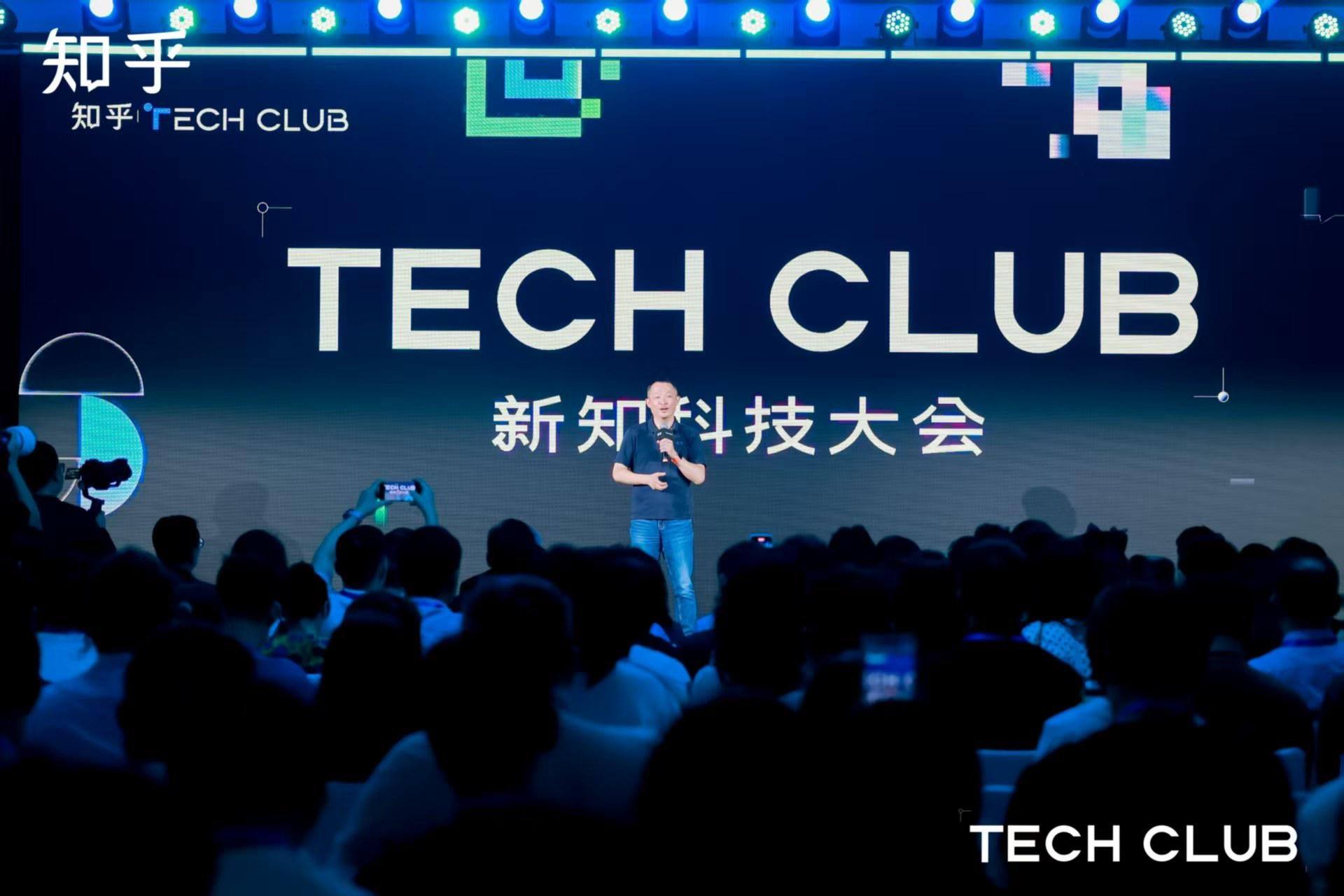
Group 1 - The Zhihu-W TechClub conference focused on the theme "Reconstructing Technology Under AI," bringing together experts, executives, AI developers, and Zhihu contributors to discuss AI technology evolution and human-machine collaboration [1][4] - Zhihu announced the "AI Pioneers" and "Tech Translator Brand" lists, recognizing developers and brands leading technological and product innovation [3][11] - The conference featured discussions on the future of AI technology and its impact on human life, with insights from academic experts on AI development paths and the integration of brain-machine interfaces [4][5] Group 2 - The conference highlighted the importance of AI in various sectors, with examples from China Mobile's AI applications in agriculture, mining, and smart living [5] - A debate among Zhihu contributors addressed the dual nature of AI's impact on society, discussing whether AI enhances or diminishes human creativity and productivity [6][9] - The "AI Pioneers" list included notable figures from academia and industry, showcasing individuals who are driving AI advancements and innovation [13][14] Group 3 - The conference launched the 2025 National AI Application Scenario Innovation Challenge, focusing on general artificial intelligence (AGI) and encouraging participation from research institutions and technology companies [15][17] - The challenge aims to gather innovative projects across various AI application scenarios, emphasizing social concerns and enhancing workplace efficiency [17] - Zhihu aims to connect technology professionals, academia, and the public to transform advanced technologies into practical solutions for everyday life [17]

AI周报:DeepSeek论文登上《Nature》封面 英伟达宣布50亿美元入股英特尔
Di Yi Cai Jing· 2025-09-21 00:32
Group 1: Nvidia and Intel Investment - Nvidia announced a $5 billion investment in Intel, purchasing shares at $23.28 each, pending regulatory approval [1] - Intel will customize x86 architecture CPUs for Nvidia's AI infrastructure, while Nvidia will integrate these products into its platform [1] - The partnership could create a market opportunity of $25 billion to $50 billion annually, impacting competitors like AMD and Broadcom [1] Group 2: DeepSeek Research Publication - DeepSeek's R1 model was featured on the cover of Nature, with a training cost of $294,000 [2] - The team refuted claims of using OpenAI-generated data, stating all data was sourced from web scraping [2] - Observations of data contamination were acknowledged, and measures were taken to address this during pre-training [2] Group 3: OpenAI ChatGPT User Statistics - OpenAI reported over 700 million weekly active users for ChatGPT by June 2025, representing 10% of the global adult population [3] - Female user proportion surpassed male users for the first time, indicating a significant reduction in gender disparity [3] - The primary uses of ChatGPT include guidance, information retrieval, and writing, with writing alone accounting for 40% of interactions [3] Group 4: World Labs 3D Model - Stanford's World Labs launched Marble, a 3D world generation model that creates expansive environments from a single photo [4] - The model generates detailed geometric structures and spatial relationships, but is not yet ready for commercial applications [4] - Current limitations include the inability to generate characters or animals, and further technological advancements are needed for large-scale game environments [4] Group 5: Cambricon's Order Status - Cambricon confirmed ongoing deployments in key industries and refuted misleading information regarding order status [5][6] - The company's stock price fluctuated significantly, with a recent close at 1,349.24 yuan per share after reaching a high of 1,500 yuan [6] - Cambricon has achieved profitability for three consecutive quarters, emphasizing the need for sustained performance to support stock prices [6] Group 6: QuestMobile AI Application Report - QuestMobile reported that mobile AI applications reached 645 million users, with Doubao surpassing DeepSeek in monthly active users [7] - The report highlighted a competitive landscape among AI applications, with a trend of polarization in user growth [7] - Major applications continue to dominate, while smaller applications struggle to grow [7] Group 7: Tencent's Cloud Strategy - Tencent announced full compatibility with mainstream domestic chips, enhancing its AI computing capabilities [8] - The company is diversifying its chip strategy, integrating both imported and domestic options for various AI applications [8] - IDC noted that cloud providers are actively testing and adapting domestic chips alongside foreign ones [8] Group 8: Tencent's Market Capitalization - Tencent's market capitalization surpassed HKD 6 trillion, with stock prices exceeding HKD 660 per share [9] - The company is accelerating its cloud business internationalization, planning new availability zones in Japan and Saudi Arabia [9] - Tencent has been actively repurchasing shares, with a total of 19.84 million shares bought back over 22 consecutive trading days [9] Group 9: Baidu's Stock Surge - Baidu's stock price rose 18% to HKD 134, marking its largest increase in two years [10] - The surge is attributed to multiple factors, including a significant order from China Mobile and positive market sentiment towards its AI and autonomous driving sectors [10] - Baidu's intelligent cloud is becoming a new growth engine, but challenges remain from AI's impact on traditional search advertising [10] Group 10: AI Job Market Growth - AI job postings surged tenfold over the past year, with algorithm positions being the most sought after and highest paying [11] - The average salary for AI scientists exceeds 130,000 yuan per month, with significant salary increases across various algorithm roles [11] - The demand for algorithm positions is rising, with a notable increase in job applications, indicating a competitive job market [11] Group 11: Lenovo's AI Opportunities - Lenovo's chairman highlighted the historical opportunity for Chinese manufacturing in AI applications, emphasizing the potential for global value chain advancement [12] - The company is focusing on both breakthrough technologies and practical applications of AI across industries [12] - The partnership between academia and industry is seen as crucial for accelerating AI innovation and mutual growth [12] Group 12: Groq's Funding Round - AI chip startup Groq raised $750 million in its latest funding round, achieving a valuation of $6.9 billion [13] - The funds will be used to expand data center capacity and enhance Groq's capabilities in providing cost-effective computing services [13] - The interest in AI infrastructure companies remains strong, with other startups like Mistral AI also seeking significant funding [13]



AI周报|DeepSeek论文登上《Nature》封面;英伟达宣布50亿美元入股英特尔
Di Yi Cai Jing· 2025-09-21 00:21
Group 1: Investment and Partnerships - Nvidia announced a $5 billion investment in Intel, purchasing shares at $23.28 each, pending regulatory approval. Intel will customize x86 architecture CPUs for Nvidia, which will integrate these products into its AI infrastructure platform [2] - Nvidia's CEO Jensen Huang stated that the partnership could create market opportunities worth $25 billion to $50 billion annually, potentially impacting competitors like AMD and Broadcom [2] Group 2: AI Model Developments - DeepSeek's R1 model was featured on the cover of Nature, with a training cost of $294,000. The team clarified that no OpenAI synthetic data was intentionally included, and all data was sourced from web scraping [3] - DeepSeek acknowledged that some web pages contained OpenAI-generated answers, which may indirectly benefit their model, but they have addressed data contamination in pre-training [3] Group 3: AI User Engagement - OpenAI reported that ChatGPT's weekly active users surpassed 700 million, representing 10% of the global adult population. Female users now outnumber male users for the first time [4] - The most common uses of ChatGPT include guidance, information retrieval, and writing, accounting for 78% of all interactions, with writing alone making up 40% [4] Group 4: AI Application Market Trends - QuestMobile's report indicated that mobile AI applications reached 645 million users, with Doubao surpassing DeepSeek in monthly active users [8] - The report highlighted a trend of polarization in the AI application market, with leading applications continuing to grow while smaller applications struggle [8] Group 5: Corporate Developments in AI - Tencent announced full compatibility with mainstream domestic chips, enhancing its AI computing capabilities through a heterogeneous computing platform [9] - Tencent's market capitalization exceeded HKD 6 trillion, driven by a doubling of overseas cloud customers and ongoing stock buybacks [10] Group 6: Stock Performance and Market Reactions - Baidu's stock surged 18% to HKD 134, marking its largest increase in two years, driven by multiple factors including a significant order from China Mobile and positive market sentiment towards its AI and autonomous driving initiatives [11][12] Group 7: AI Talent Market - A report indicated that AI job postings surged tenfold in the past year, with algorithm positions being the most sought after and highest paying, averaging over CNY 130,000 per month [13] - The demand for algorithm roles has led to a competitive job market, with a talent supply ratio indicating more candidates than available positions [13] Group 8: AI Chip Financing - AI chip startup Groq raised $750 million in its latest funding round, achieving a valuation of $6.9 billion, with plans to expand data center capacity for AI computing services [15] - The funding round was led by Disruptive, with participation from major investors including BlackRock and Deutsche Telekom's venture arm [15]



教育观察:这二十年,浙大做对了什么?
Zhong Guo Xin Wen Wang· 2025-09-20 21:10
Core Perspective - Zhejiang University (ZJU) has evolved significantly over the past two decades, transforming its vision of becoming a world-class university into practical achievements, serving as a vivid example of the rapid development of higher education in China [2] Group 1: Educational Transformation - ZJU's educational mission has shifted from merely producing students who can read to fostering individuals who can innovate and create [3] - The university has recognized the critical role of artificial intelligence (AI) in educational reform, aligning with national strategies to enhance AI's importance [4][5] - ZJU has launched the "AI+X" micro-major program in collaboration with other top universities, promoting interdisciplinary learning and AI skill acquisition among students [5] Group 2: Innovation and Entrepreneurship - Over the past 20 years, ZJU has not only produced numerous scientists but also a significant number of entrepreneurs, creating a unique "ZJU system" of innovation and entrepreneurship [6] - The establishment of the Hangzhou International Science and Technology Innovation Center exemplifies ZJU's commitment to integrating technology research and industrial application [6][7] - More than 80% of ZJU undergraduates engage in research training during their studies, fostering a strong culture of innovation and entrepreneurship [7] Group 3: Institutional Legacy and Future Vision - The "Seeking Truth and Innovation" spirit, established by former president Zhu Kezhen, remains a foundational value for ZJU, guiding its educational philosophy [8] - ZJU aims to respond effectively to national and regional needs, leveraging its comprehensive advantages in disciplines, talent, and innovation to achieve new developmental milestones [8]
朱啸虎:搬离中国,假装不是中国AI创业公司,是没有用的
Hu Xiu· 2025-09-20 14:15
Group 1 - The discussion highlights the impact of DeepSeek and Manus on the AI industry, emphasizing the importance of open-source models in China and their potential to rival closed-source models in the US [3][4][5] - The conversation indicates that the open-source model trend is gaining momentum, with Chinese models already surpassing US models in download numbers on platforms like Hugging Face [4][5] - The competitive landscape is shifting towards "China's open-source vs. America's closed-source," with the establishment of an open-source ecosystem being beneficial for China's long-term AI development [6][7] Group 2 - Manus is presented as a case study for Go-to-Market strategies, illustrating that while Chinese entrepreneurs have strong product capabilities, they often lack effective market entry strategies [10][11] - Speed is identified as a critical barrier for AI application companies, with the need to achieve rapid growth to outpace competitors [11][12] - Token consumption is discussed as a significant cost indicator, with Chinese companies focusing on this metric due to lower willingness to pay among domestic users [12][13][14] Group 3 - The AI coding sector is characterized as a game dominated by large companies, with high token costs making it challenging for startups to compete effectively [15][16] - The conversation suggests that AI coding is not a viable area for startups due to the lack of customer loyalty among programmers and the high costs associated with token consumption [16][18] - Investment in vertical applications rather than general-purpose agents is preferred, as the latter may be developed by model manufacturers themselves [20] Group 4 - The discussion on robotics emphasizes investment in practical, value-creating robots rather than aesthetically pleasing ones, with examples of successful projects like a boat-cleaning robot [21][22] - The importance of combining functionality with sales capabilities in robotic applications is highlighted, as this can lead to a more favorable ROI [22][23] Group 5 - The conversation stresses the need for AI hardware companies to focus on simplicity and mass production rather than complex features, as successful hardware must be deliverable at scale [28][29] - The potential for new hardware innovations in the AI era is questioned, with a belief that significant breakthroughs may still be years away [30][31] Group 6 - The dialogue addresses the challenges of globalization for Chinese companies, noting that successful market entry in the US requires a deep understanding of local dynamics and compliance [36][37] - The importance of having a local sales team for B2B applications in the US is emphasized, as relationships play a crucial role in sales success [38][39] Group 7 - The conversation highlights the risks associated with high valuations, which can limit a company's flexibility and increase pressure for performance [42][43] - The discussion suggests that IPOs for Chinese companies may increasingly occur in Hong Kong rather than the US, as liquidity issues persist in the market [46][48] Group 8 - The need for startups to operate outside the influence of large companies is emphasized, with a call for rapid growth and innovation in the AI sector [49][53] - The potential for AI startups to achieve significant scale quickly is acknowledged, but the conversation warns that the speed of evolution in the AI space may outpace traditional exit strategies [52][53]

18岁天才少年,登上Nature封面!
猿大侠· 2025-09-20 04:11
Core Viewpoint - DeepSeek-R1 has become the first large model to be published on the cover of Nature after rigorous peer review, highlighting significant advancements in AI research and development [2][10]. Group 1: DeepSeek-R1 and Its Significance - DeepSeek-R1 is recognized as the first large model to undergo strict peer review, marking a milestone in AI research [2]. - The publication has garnered widespread attention, particularly for its unique contributions to reasoning capabilities in AI models [5][54]. Group 2: Jinhao Tu's Contributions - Jinhao Tu, an 18-year-old intern at DeepSeek, is one of the authors of the Nature article, showcasing a remarkable journey from high school to a published researcher [8][10]. - Tu's achievements include winning the global first place in the 2024 Alibaba Data Competition's AI track and developing advanced prompting techniques for AI models [14][18]. Group 3: Innovations in AI Models - Tu's work involved creating a "Thinking Claude" prompt that enhances the reasoning capabilities of the Claude 3.5 model, making it more human-like in its thought processes [16][35]. - The final version of the prompt allows users to interact with the model in a more nuanced way, including features to expand or collapse its reasoning [32][35]. Group 4: Broader Implications for AI - The advancements in AI models like DeepSeek-R1 and Claude 3.5 reflect a shift towards creating systems that not only predict text but also understand underlying meanings, which is crucial for achieving advanced AI capabilities [40][42]. - The focus on safety and alignment in AI development is emphasized, with the belief that these measures are essential for ensuring that AI systems can operate safely and effectively [37][41].

重磅!DeepSeek 梁文锋论文登上《自然》封面,正面回应蒸馏质疑
程序员的那些事· 2025-09-20 01:10
9 月 18 日,由 DeepSeek 团队共同完成、梁文锋担任通讯作者的 DeepSeek-R1 推理模型研究论文,登上了国际权威期刊《自然(Nature)》的封面。 与今年 1 月发布的 DeepSeek-R1 的初版论文相比,本次论文披露了更多模型训练的细节,并正面回应了模型发布之初的蒸馏质疑。 DeepSeek-R1 是全球首个经过同行评审的主流大语言模型。目前几乎所有主流的大模型都还没有经过独立同行评审,这一空白"终于被 DeepSeek 打 破"。 在《自然》封面的推荐介绍中,是这样写的: "如果训练出的大模型能够规划解决问题所需的步骤,那么它们往往能够更好地解决问题。这种『推理』与人类处理更复杂问题的方式类似,但这对人工 智能有极大挑战,需要人工干预来添加标签和注释。在本周的期刊中,DeepSeek 的研究人员揭示了他们如何能够在极少的人工输入下训练一个模型,并 使其进行推理。 DeepSeek-R1 模型采用强化学习进行训练。在这种学习中,模型正确解答数学问题时会获得高分奖励,答错则会受到惩罚。结果,它学会了推理——逐 步解决问题并揭示这些步骤——更有可能得出正确答案。这使得 DeepSeek ...