北方稀土

Search documents
储能行业高景气预期,资源品碳酸锂供需面扭转,稀有金属ETF(562800)有望持续受益
Xin Lang Cai Jing· 2025-11-24 03:16
Group 1 - The rare metals sector is experiencing adjustments, with the China Rare Metals Theme Index declining as of November 24, 2025, while stocks like Plumbum Technology lead gains [1] - The lithium battery, energy storage, and power grid equipment sectors are benefiting from surging domestic and international demand, becoming a focal point for investment [1] - Strong downstream demand has led to a monthly shortage of lithium carbonate, with supply at approximately 115,000 tons and demand at 128,000 tons, resulting in a shortfall of about 13,000 tons [1] Group 2 - The "14th Five-Year Plan" emphasizes the development and reserve of strategic mineral resources, reinforcing national resource security [2] - The non-ferrous metals industry is expected to enter a bull market driven by monetary, demand, and supply factors, with significant growth opportunities for mining companies [2] - As of October 31, 2025, the top ten weighted stocks in the China Rare Metals Theme Index account for 60% of the index, including companies like Northern Rare Earth and Ganfeng Lithium [2] Group 3 - The Rare Metals ETF (562800) tracks the China Rare Metals Theme Index, providing a convenient tool for investing in the rare metals sector [3] - Investors can also explore investment opportunities in the rare metals sector through the Rare Metals ETF linked fund (014111) [4]
“反内卷”:治理逻辑与产业影响
ZHONGTAI SECURITIES· 2025-11-23 12:04
"反内卷" :治理逻辑与产业影响 证券研究报告/策略专题报告 2025 年 11 月 23 日 * [10] M. C. 执业证书编号:S0740519080003 Email:xuchi@zts.com.cn 执业证书编号:S0740520120003 Email:zhangwy01@zts.com.cn 3、《利率下行周期中的高股息增强 策略》2025-09-10 2025-11-07 报告摘要 2025-09-12 | 引言: | 4 | | --- | --- | | 一、从政府工作报告到"十五五"规划:"反内卷"政策脉络 | 4 | | 二、"反内卷"宏观背景:内需不足导致"价格"压力显现 | 5 | | 三、上一轮"供给侧"政策如何演绎? | 9 | | 四、本轮"反内卷"政策宏观环境有何不同? | 12 | | 4.1 宏观环境的根本变化 12 | | | 4.2 产业基础的全新格局 14 | | | 4.3 政策取向的结构性调整 | 15 | | 五、本轮"反内卷"的战略逻辑:"扭转通缩"转向"提高产业议价权" 16 | | | 5.1 为何本轮"反内卷"或成为服务于国家竞争力提升的关键抓手? ...
欧盟急筑矿产防线?中国手里牌更硬
Sou Hu Cai Jing· 2025-11-22 17:12
Core Insights - The European Union (EU) plans to establish a central agency to coordinate the procurement and storage of critical minerals, signaling a strategic move to compete with the United States in the global mineral market, with China playing a crucial role in this dynamic [1][4]. Group 1: EU's Internal Challenges - The EU faces internal challenges regarding its critical mineral production goals, hindered by environmental groups and lengthy approval processes, which have stalled projects [4]. - The European Clean Technology Association has expressed urgency in addressing these shortcomings to avoid falling behind in the clean technology sector [4]. Group 2: China's Dominance in Mineral Supply - The EU's mineral supply chain is heavily reliant on China, with 90% of rare earth elements and 100% of graphite imported from China, and China controlling over 70% of the global refining capacity for key minerals like lithium and cobalt [4]. - Recent data indicates that China exported 2,582 tons of rare earth magnets to the EU, highlighting the ongoing dependency despite previous production disruptions faced by EU companies [4]. Group 3: EU's Contradictory Approach - The EU's approach, characterized as "pragmatic yet contradictory," involves publicly opposing U.S. dominance while simultaneously avoiding direct confrontation with China, as evidenced by the approval of numerous rare earth import applications from China [5]. - The EU's efforts to establish a rare earth facility in Estonia and its investigation into subsidies for Chinese automobiles reflect a complex strategy of balancing competition and cooperation [5]. Group 4: Comparison with U.S. Strategy - The U.S. has adopted a more aggressive strategy, utilizing financial incentives and forming partnerships with countries like Canada and Australia to secure mineral resources, contrasting with the EU's reactive stance [5]. - The EU's acknowledgment of its slower pace in securing mineral resources compared to the U.S. has been criticized by industry stakeholders [5]. Group 5: Implications for China - The evolving situation presents both challenges and opportunities for China, as the EU may collaborate with the U.S. to secure investments in mineral-rich regions, while China maintains a significant advantage in processing capabilities [6]. - China's dominance in rare earth processing, with 58% of global patents and significantly lower refining costs compared to the U.S., positions it favorably in the ongoing competition [6]. Group 6: Strategic Outlook - The current geopolitical landscape reveals a complex interplay where the U.S. seeks to assert dominance, the EU aims to fill gaps in its supply chain, and China leverages its technological and production strengths [6]. - The establishment of the EU's central agency serves as a reminder for China to enhance its global mineral resource strategy and convert its processing advantages into a comprehensive supply chain advantage [6].

美股、A50期指大反弹!12月美联储降息预期大幅飙升!AI板块或将迎来大利好!A股牛市还在吗?高手看好这个主线
Mei Ri Jing Ji Xin Wen· 2025-11-22 10:11
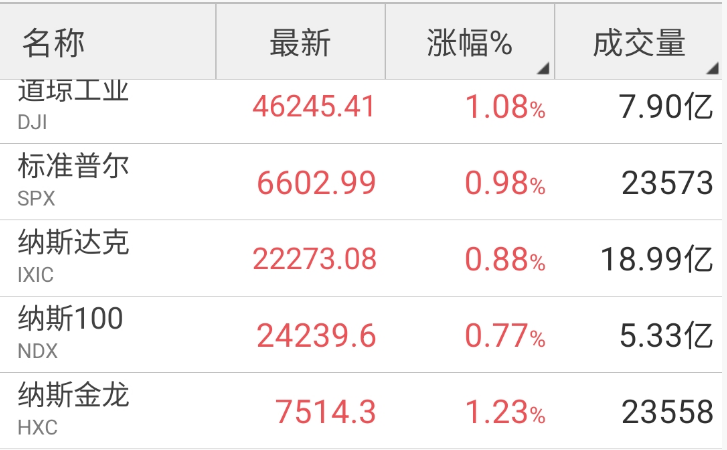
Group 1 - Global stock markets experienced significant volatility, with a sharp decline in Asia-Pacific markets triggered by a drop in US stocks due to hawkish statements from Federal Reserve officials, leading to lower expectations for a rate cut in December [1] - Despite Nvidia's better-than-expected Q3 performance, concerns about an AI bubble persisted, although the US stock market rebounded strongly on Friday after comments from Federal Reserve's Williams suggested there is still room for rate cuts [1] - Following Williams' remarks, the probability of a December rate cut surged to approximately 70% in the futures market, nearly doubling from less than 40% the previous day [1] Group 2 - Berkshire Hathaway, led by Warren Buffett, made significant purchases of Google’s parent company, indicating confidence in the AI sector's future [6] - The AI sector is expected to benefit from upcoming developments, including a planned executive order by President Trump to advance AI initiatives in the US [6] - High-profile investors, including Ray Dalio of Bridgewater Associates, believe that while AI-related investments may create a bubble, there is no immediate need for investors to exit the market [6] Group 3 - Google is accelerating the research and deployment of Optical Circuit Switches (OCS), which has positively impacted related stocks in the A-share market [7] - Market sentiment remains cautious, with expectations of continued volatility due to emotional sell-offs, although a long-term bullish outlook is anticipated, particularly towards 2026 [7] - Some market experts continue to favor sectors such as precious metals, anticipating potential shifts in monetary policy following the end of Fed Chair Powell's term in May [8]
有色金属行业11月21日资金流向日报
Zheng Quan Shi Bao Wang· 2025-11-21 14:04
Core Viewpoint - The Shanghai Composite Index fell by 2.45% on November 21, with the non-ferrous metals sector experiencing a significant decline of 5.26%, making it the second-largest drop among various industries [1] Market Overview - The net outflow of capital from the two markets reached 128.99 billion yuan, with only the media sector seeing a net inflow of 1.48 billion yuan [1] - The electronics sector led the capital outflow, with a net outflow of 26.48 billion yuan, followed by the power equipment sector with 19.54 billion yuan [1] Non-Ferrous Metals Sector Performance - The non-ferrous metals sector saw a drop of 5.26%, with a total net capital outflow of 10.783 billion yuan [2] - Out of 137 stocks in this sector, only 2 stocks rose, while 135 stocks fell, including 11 that hit the daily limit down [2] - The top three stocks with the highest net capital inflow were: - Chihong Zn & Ge: 38.03 million yuan - Hailiang Co.: 35.79 million yuan - Xinjiang Zhonghe: 23.86 million yuan [2] Non-Ferrous Metals Capital Outflow - The top three stocks with the highest net capital outflow were: - Ganfeng Lithium: -1.011 billion yuan - Northern Rare Earth: -940.56 million yuan - Huayou Cobalt: -899.66 million yuan [3] - Other notable outflows included: - Tianqi Lithium: -777.09 million yuan - Zijin Mining: -585.94 million yuan [3]



北方稀土磁性材料订单饱和,轻稀土价格重回55万元/吨高位,稀土ETF易方达(159715)低费率投资工具备受关注
Xin Lang Cai Jing· 2025-11-21 08:03
Core Insights - The price of praseodymium and neodymium oxide has risen to 555,000 yuan per ton as of November 20, with a weekly increase of 10,000 yuan and a monthly increase of 50,000 yuan, reflecting a 10% growth [1] - The domestic rare earth price is expected to continue rising due to improved demand and supply dynamics, driven by factors such as the recovery of China-US relations and strong downstream inventory replenishment [1] - The domestic rare earth industry is showing significant strategic value amid international trade tensions, with expectations for sustained high performance in the second half of the year [1] Price Performance - As of November 20, the price of praseodymium and neodymium oxide reached 555,000 yuan per ton, with a weekly increase of 10,000 yuan and a monthly increase of 50,000 yuan, indicating a 10% rise [1] - The strong demand from downstream industries is contributing to the upward price trend, with companies like Northern Rare Earth reporting full order books and good execution [1] Index Valuation - The China Securities Rare Earth Industry Index PETTM stood at 38.5 as of November 20, 2025, placing it at the 46.1% valuation percentile over the past decade, indicating a return to the long-term valuation mean [1] Industry Trends - China's rare earth industry chain is demonstrating significant strategic value in the context of international trade conflicts, with expectations for continued price increases due to improved supply-demand dynamics [1] - The supply side is expected to remain stable due to the implementation of total control measures for rare earth mining and separation, while demand is driven by sectors such as robotics, low-altitude economy, and military applications [1] - The high cost of overseas refining supports price differentials, and the U.S. acquisition base price is raising price expectations, leading to a re-evaluation of the strategic value of rare earths [1] Related Products - The E Fund Rare Earth ETF (159715) focuses on national strategic resources and global competitive industry chains, with a management and custody fee rate of 0.15% + 0.05% per year, significantly lower than similar products linked to the China Securities Rare Earth Industry Index [2] - As of October 31, 2025, the cumulative return of the E Fund Rare Earth ETF has been 76.43%, outperforming the benchmark index by 13.83%, making it a valuable tool for capturing opportunities in the rare earth industry [2]
外媒紧盯中国稀土出口:对美出口量9个月来最高,有人替日本担心
Guan Cha Zhe Wang· 2025-11-21 07:23
Core Insights - China's rare earth magnet exports in October decreased by 5.2% month-on-month, marking the second consecutive month of decline, but exports to the U.S. surged to the highest level in nine months [1] - The total export volume of rare earth magnets from China reached 5,473 tons in October, down from 5,774 tons in September, but up 15.8% compared to 4,725 tons in the same month last year [1] - Exports to the U.S. saw a significant month-on-month increase of 56.1%, reaching 656 tons, the highest since January of this year [2] Export Data Summary - The cumulative export volume of rare earth magnets from China for the year reached 45,290 tons, reflecting a year-on-year decline of 5.2% [1] - The largest export destinations for China's rare earth magnets in October were Germany, the U.S., South Korea, Vietnam, and India [1] - Exports to Germany increased by 55.9% year-on-year, totaling 1,118 tons, while exports to South Korea reached 569 tons, up 31.3% year-on-year [2] Market Dynamics - Amidst stalled negotiations between China and the U.S., China's rare earth magnet exports to the U.S. dropped to 46 tons in May but rebounded to 619 tons in July before declining again in August and September [2] - Exports to Japan in October increased by 30.2% year-on-year, reaching 226 tons, although when including semi-finished products, the total saw an 18.3% year-on-year decline to 538 tons [2][3] - Experts noted that the export of heavy rare earths to the U.S. and Japan remains limited despite China's dominant position in global rare earth production [4]

小金属景气度或持续向上,稀有金属ETF(562800)有望持续受益
Xin Lang Cai Jing· 2025-11-21 03:23
Group 1 - The rare metals sector is experiencing a pullback as of November 21, 2025, with the China Securities Rare Metals Theme Index declining, led by Tianhua New Energy and followed by Jiangte Electric, Ganfeng Lithium, Tibet Mining, and Shengxin Lithium [1] - Lithium carbonate prices have surged due to significant demand growth in downstream sectors such as energy storage and power batteries, with futures contracts recently surpassing 100,000 yuan/ton, reaching as high as 102,200 yuan/ton on November 20 [1] - The Democratic Republic of Congo has announced a suspension of cobalt exports to address oversupply in the international market, resulting in cobalt prices rising to around 400,000 yuan/ton, aligning with the government's expectations [1] Group 2 - As of October 31, 2025, the top ten weighted stocks in the China Securities Rare Metals Theme Index include Northern Rare Earth, Luoyang Molybdenum, Huayou Cobalt, and others, collectively accounting for 60% of the index [2] - The Rare Metals ETF (562800) tracks the China Securities Rare Metals Theme Index, providing a convenient tool for investing in the rare metals sector [3] - Investors can also explore investment opportunities in the rare metals sector through the Rare Metals ETF linked fund (014111) [4]
中原证券晨会聚焦-20251121
Zhongyuan Securities· 2025-11-21 02:34
Core Insights - The report highlights a significant shift in the food and beverage industry, with revenue growth slowing down and cost pressures increasing, leading to a decline in profit margins [15][16][17] - The lithium battery sector is experiencing robust growth, with revenue and net profit showing double-digit increases in 2025, driven by strong demand for energy storage and electric vehicles [20][21][36] - The semiconductor industry is witnessing a strong performance, particularly in the storage segment, with major players reporting significant profit increases due to rising prices and demand from data centers [38][41] Domestic Market Performance - The A-share market is currently in a phase of consolidation, with the Shanghai Composite Index and the ChiNext Index showing average P/E ratios above their three-year median, indicating potential for long-term investment [10][11][12] - Various sectors such as banking, real estate, and energy metals are leading the market, while sectors like battery and beauty care are underperforming [6][10] Industry Analysis - The food and beverage sector is facing a decline in revenue growth, with certain segments like snacks and soft drinks performing better than others like white spirits and health products [15][16] - The lithium battery industry is projected to maintain strong growth, with significant increases in production and sales of electric vehicles, indicating a positive outlook for 2026 [20][21] - The semiconductor industry is experiencing a recovery, with domestic storage manufacturers showing impressive profit growth due to rising prices and increased demand from cloud service providers [38][41] Investment Recommendations - The report suggests maintaining a "market perform" rating for the food and beverage sector, with a focus on segments like soft drinks and snacks for potential investment opportunities [19] - For the lithium battery sector, a "stronger than market" rating is maintained, with recommendations to focus on key investment lines due to favorable market conditions [21][36] - In the semiconductor industry, the report advises investors to look for opportunities in the storage segment, as prices are expected to rise further, benefiting domestic manufacturers [41]

中国稀土出口量差距:22年4.87万吨,23年5.23万吨,24年多少?
Sou Hu Cai Jing· 2025-11-20 13:40
Core Viewpoint - The article discusses China's dominance in the rare earth market, highlighting its significant control over production and export, which impacts the global supply chain and pricing dynamics. Group 1: Export Data and Trends - In 2022, China exported 48,728 tons of rare earths, a slight decrease of 0.4% from 2021, as the country tightened quotas to retain high-purity products for domestic use [4] - In 2023, exports surged to 52,307 tons, an increase of nearly 3,600 tons, driven by high demand for electric vehicles, with a record monthly export of 6,217 tons in May [6] - For 2024, exports are projected to reach 55,431 tons, a 6% increase, despite a 35% drop in export value due to falling prices [8] Group 2: Market Dynamics and Control - China's export strategy involves controlling who, what, and how much is sold, with a focus on maintaining pricing power and ensuring domestic supply [18] - The article emphasizes that China's rare earth production is not just about volume but also about strategic management of resources and technology [22] - The U.S. and other countries face significant challenges in reducing reliance on Chinese rare earths, as their production capabilities are limited and lag behind China's technological advancements [20] Group 3: Technological Advancements - China's rare earth processing technology has evolved significantly since the 1970s, achieving high purity levels and cost reductions, which have established a competitive edge [12] - The latest advancements include a fifth-generation extraction process that utilizes AI to optimize efficiency and reduce costs by an additional 30% [22] - The article suggests that China's technological superiority has created barriers for foreign competitors, making it difficult for them to catch up [22] Group 4: Future Outlook - The export volume is expected to stabilize around 50,000 tons in 2025, with potential adjustments based on market conditions and strategic decisions [24] - The article concludes that China's control over rare earth exports positions it favorably in the global market, with the ability to dictate terms to other countries reliant on its resources [24]