华安基金

Search documents
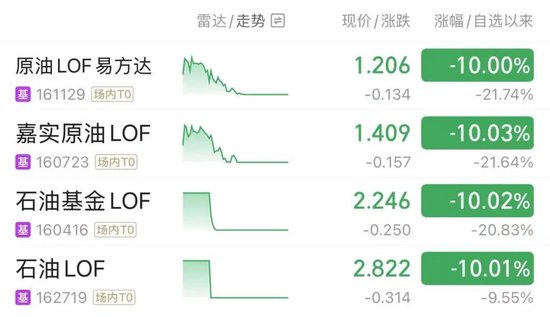
提示溢价风险后,4只原油LOF全部跌停!
Xin Lang Cai Jing· 2026-02-02 12:21
Core Viewpoint - The four oil LOFs managed by E Fund, Jiashi Fund, Huashan Fund, and Guangfa Fund all experienced a trading halt on February 2, with significant price drops following their resumption of trading, indicating volatility in the oil market driven by geopolitical factors and supply-demand dynamics [1][5]. Group 1: Fund Performance - All four oil LOFs, including Huashan's and Guangfa's, hit the trading limit down on their resumption day, with significant declines observed [1][5]. - The specific price changes for the funds included a drop of 10.00% for E Fund's oil LOF, 10.03% for Jiashi's oil LOF, 10.02% for Huashan's oil LOF, and 10.01% for Guangfa's oil LOF [2][3]. - The funds had previously issued warnings about significant premiums in their secondary market trading prices, advising investors to be cautious of potential losses from high premium purchases [2][7]. Group 2: Market Dynamics - Brent crude oil futures fell below $67 per barrel, while WTI crude oil futures dropped below $63, with both experiencing daily declines exceeding 3% [3][8]. - The volatility in oil prices is attributed to sudden shifts in geopolitical expectations, particularly concerning U.S.-Iran relations, which had previously driven prices to six-month highs [3][8]. - The International Energy Agency (IEA) forecasts a supply surplus in the global oil market this year, with supply exceeding demand by 3.85 million barrels per day [4][8]. Group 3: Future Outlook - Analysts suggest that the oil market may continue to experience volatility in the short term, with the potential for further price increases if geopolitical tensions escalate [4][9]. - The balance of supply and demand remains loose, indicating that much of the geopolitical risk premium has already been priced in, but any escalation in conflict could lead to upward pressure on oil prices [4][9].

食品饮料ETF领涨;14只ETF单月扩容超百亿元丨ETF晚报
2 1 Shi Ji Jing Ji Bao Dao· 2026-02-02 11:54
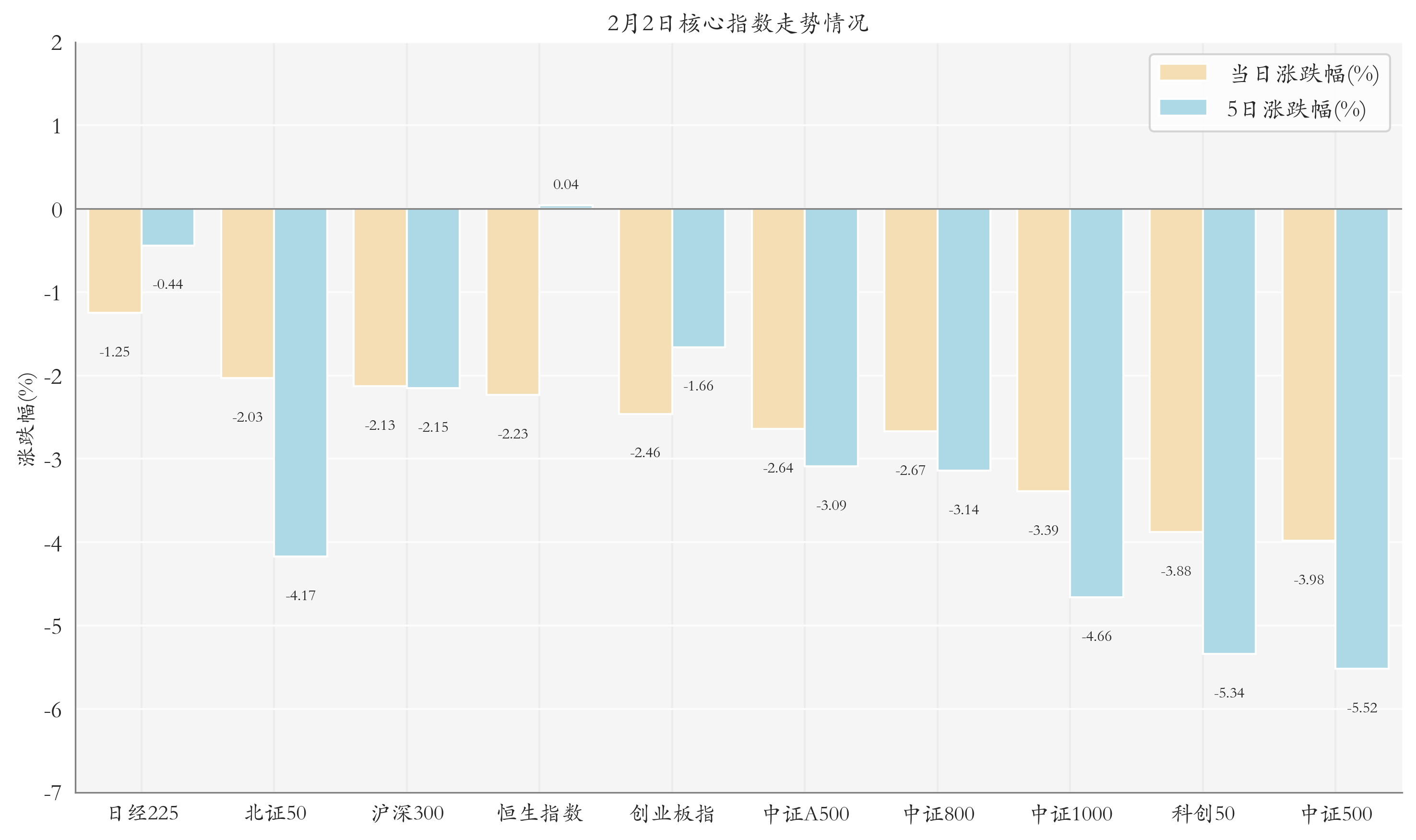
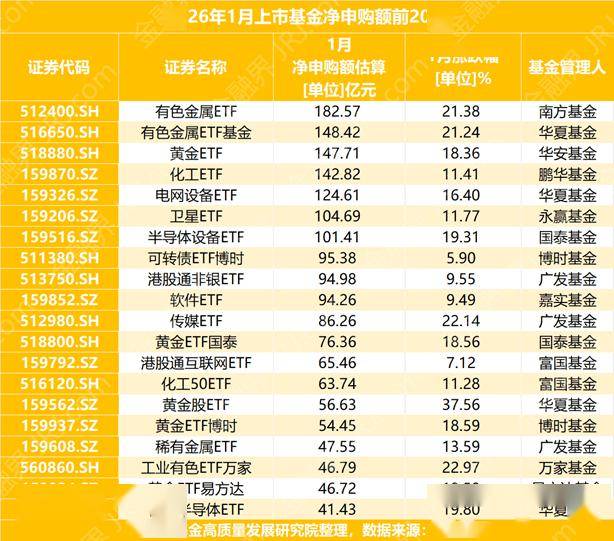
ETF Industry News - The three major indices experienced fluctuations and declines, with the Shanghai Composite Index down 2.48%, the Shenzhen Component Index down 2.69%, and the ChiNext Index down 2.46%. However, several ETFs in the food and beverage sector saw gains, including the Wine ETF (512690.SH) up 1.48%, the Huabao Food and Beverage ETF (515710.SH) up 0.86%, and the Yinhua Food and Beverage ETF (159862.SZ) up 0.79% [1] - The non-ferrous metal sector saw multiple ETFs decline significantly, with the Industrial Bank Gold ETF (159315.SZ) down 10.02%, the Gold Stocks ETF (159321.SZ) down 10.01%, and the Guotai Non-ferrous Metal ETF (159881.SZ) down 10.01% [1] - Guotai Junan Securities predicts a positive outlook for the food and beverage sector by 2026, highlighting four main lines of focus: cost dividend release, operational efficiency improvement, innovation-driven growth, and opportunities for reversal in certain sub-industries. The upcoming Spring Festival is expected to be a significant catalyst, and the imminent introduction of national standards for prepared dishes is also seen as a positive for the industry [1] ETF Market Performance - In January, the stock ETF market experienced a cumulative net outflow of over 790 billion yuan, with the last trading day seeing a net outflow of over 3.7 billion yuan. Popular thematic ETFs such as non-ferrous metals, chemicals, and satellite ETFs saw inflows, while broad-based ETFs like the CSI 300 ETF and the SSE 50 ETF faced significant outflows [2] - The thematic ETFs have gained popularity, with 14 ETFs expanding by over 10 billion yuan each in January. Resource-related and technology-related ETFs have shown particularly strong performance, with the Gold ETF seeing a scale increase of 33.54 billion yuan and the Southern CSI Non-ferrous Metal ETF increasing by 24.22 billion yuan [3][4] - The overall performance of ETFs varied, with money market ETFs showing the best average performance at 0.00%, while commodity ETFs had the worst average performance at -8.88% [11] Sector Performance - In terms of sector performance, the food and beverage, banking, and household appliance sectors ranked highest today, with daily gains of 1.11%, 0.17%, and -0.49% respectively. Conversely, the non-ferrous metals, steel, and basic chemicals sectors ranked lowest, with daily declines of -7.62%, -5.93%, and -5.69% respectively [8] - Over the past five trading days, the food and beverage, communication, and banking sectors have shown positive performance, with gains of 3.14%, 2.47%, and 0.59% respectively, while the non-ferrous metals, steel, and comprehensive sectors have shown declines of -8.68%, -7.66%, and -7.6% respectively [8]
贵金属资金流向逆转:投机资金集中撤离,品种分化行情将至!
Sou Hu Cai Jing· 2026-02-02 11:21
除了宏观政策面的风向突变,交易层面的因素也放大了波动。在1月份价格飙升至历史高位的过程中, 黄金的相对强弱指数(RSI)等技术指标已进入严重超买区间,积累了巨大的获利了结压力。早期涌入 的投机资金与高杠杆交易盘在价格转向时集中平仓,引发了连锁式的技术性抛售。其中,白银因市场规 模相对较小、金融与工业属性交织且投机资金参与度更高,其价格波动较黄金更为剧烈。 针对后市走向,光大期货认为,贵金属价格剧烈调整是对前期极端超买与过度拥挤交易的一次"挤泡沫 和降杠杆"式的强制性清算,但支撑贵金属的长期核心变量(如美元信用体系重构、去美元化储备趋 势、地缘政治裂痕常态化)并未发生逆转,长期驱动逻辑依然完整。进入2月,市场将更加关注宏观、 政策信号与地缘事件驱动寻求贵金属的支撑点,波动率仍将维持高位,但各品种将走向分化。 从长周期来看,国联期货表示,贵金属整体趋势依然稳定。在全球秩序重构大势不可逆、地缘政治仍处 于高度不确定性、全球信用货币体系重构(美元信用松动)的长期宏观趋势背景下,黄金作为重要储备 资产,在避险、货币对冲及抗通胀的配置需求支持下,仍将维持强势格局。而白银在全球战略资产储备 需求升温、结构性供需缺口长期存在 ...

ETF周报|4000点保卫战打响,你慌了吗?
Sou Hu Cai Jing· 2026-02-02 11:10
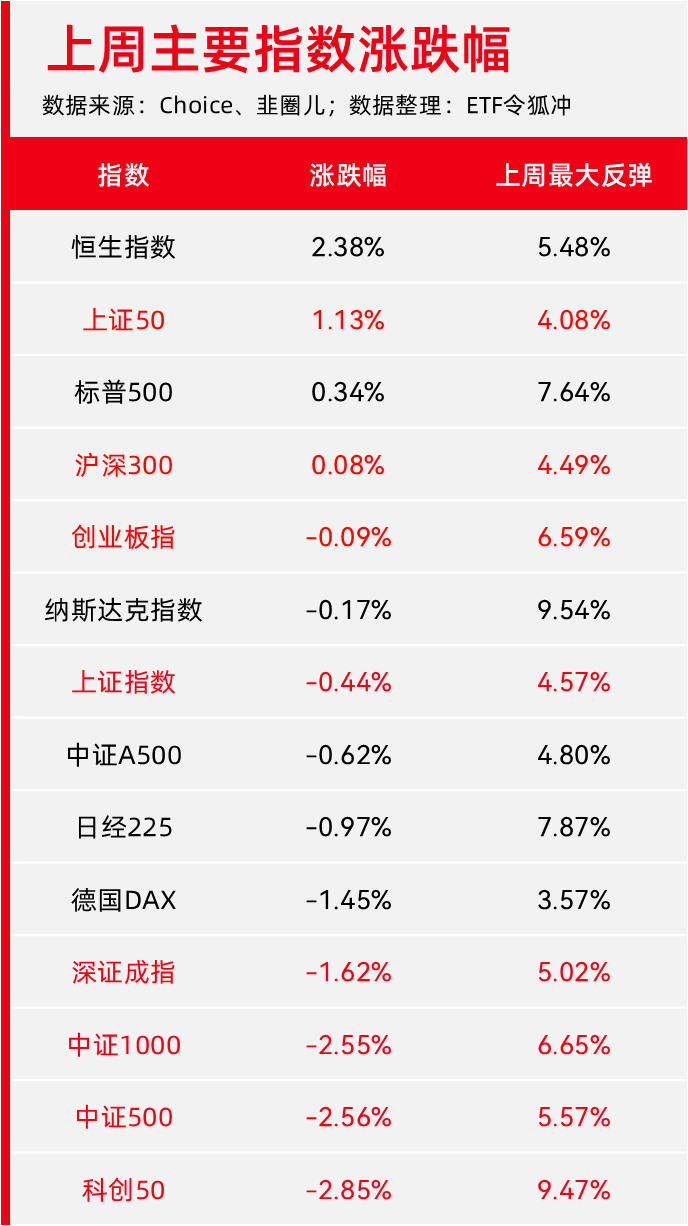
Overall Market Trends - The market experienced significant fluctuations, with the Shanghai Composite Index showing a decline of 0.44% last week, while the Hang Seng Index rose by 2.38% [3][4] - The overall market sentiment has shifted, with a noticeable rotation from small-cap stocks to undervalued large-cap stocks, particularly in the banking and consumer sectors [22][23] ETF Performance - Major ETFs such as the CSI 300 ETF saw a substantial decrease in scale, with the total assets of the top four CSI 300 ETFs shrinking from 1.19 trillion yuan to 570 billion yuan, a drop of over 50% [13][28] - The Gold ETF experienced a significant increase in scale, rising by 12.28% last week, making it the third-largest ETF in terms of scale [14][24] Sector Analysis - The banking sector showed resilience, with the Bank ETF increasing by 0.78% and the scale rising by 7.15% [22] - The consumer sector, particularly the liquor and food and beverage ETFs, saw a surge in trading volume, with the liquor ETF's trading volume increasing over 100% [22][23] - The agricultural sector is showing signs of recovery, supported by rising pork prices and favorable government policies [23] Global Market Context - Global indices such as the Nasdaq and DAX experienced declines, indicating a broader market fatigue after a prolonged period of growth [4][7] - The Fear and Greed Index indicated a drop to 78.99, reflecting a shift in market sentiment towards caution, although it remains in the greed zone [7][10] Fund Management Trends - Major fund management companies like E Fund and Huatai-PB saw significant reductions in their ETF scales due to major shareholders reducing their holdings [28] - Despite the overall decline in ETF scales, companies like Guotai and Huaan managed to grow their scales, benefiting from balanced industry allocations and strong gold ETFs [28]
寻找未来阿尔法!点拾高端论坛第二站,共探主动权益回归之路
点拾投资· 2026-02-02 11:00
Core Viewpoint - The event "Dian Shi 100" hosted by Dian Shi Investment focused on high-quality discussions among leading fund managers from various prominent public funds, addressing critical topics such as the future of active management in the context of ETF trends, the potential of growth styles in the Chinese stock market, and the impact of emerging industries like AI and commercial aerospace on investment strategies [1][3]. Group 1: Active Management and Alpha Generation - The discussion highlighted the challenges faced by active equity funds as passive investment strategies have gained popularity, yet since 2025, active equity fund indices have outperformed the CSI 300, indicating their resilience [3]. - Fund managers emphasized the importance of building a robust team capable of generating excess returns, with a focus on creating a systematic approach rather than relying on individual talent [7][5]. Group 2: Growth Opportunities in A-shares - Fund manager Cao Jin discussed the significance of growth as a primary source of alpha in the A-share market, emphasizing the need to differentiate between genuine growth opportunities and mere thematic speculation [8][11]. - He introduced a simple metric for evaluating growth potential based on the payment capabilities of end-users, stressing that only trends that can translate into actual company performance should be prioritized [11]. Group 3: Insights from Foreign Fund Managers - The roundtable discussion featured foreign fund managers who shared their strategies, with a focus on balancing growth and value investments, particularly in the context of current market conditions [14][15]. - They highlighted the importance of combining high-dividend assets with cutting-edge technology growth stocks to optimize risk-return profiles, especially in light of declining interest rates and improved corporate governance [15]. Group 4: Fund Manager Selection and Performance - The event concluded with a presentation on the unique methodology for selecting top-performing fund managers, which combines qualitative interviews and quantitative analysis to identify those who consistently outperform benchmarks [22][23]. - The selection process has resulted in significant excess returns, with the equity manager list achieving an accumulated excess return of 8.38% since its inception, indicating the effectiveness of the selection criteria [25].

“高台跳水”!黄金、白银,骤变!流动性风暴,敲响风险警钟
券商中国· 2026-02-02 08:26
贵金属市场风云突变,此前一路高歌猛进的黄金和白银掉头向下,上演了一场惊心动魄的"高台跳水"。 近日,黄金、白银迎来暴击。1月31日,伦敦金现盘中一度大跌超12%,创40年来最大单日跌幅;白银更是上 演"断崖式下跌",一度暴跌超35%。然而,到了2月2日,暴跌仍未停止,现货黄金失守4500美元/盎司,为1月9 日以来首次,日内跌近8%;纽约期银跌破72美元/盎司,日内跌超8%。 价格的波动本是市场的常态,但此次金银价格从暴涨到暴跌的极端表现,再次凸显了当前全球金融市场的复杂 性和脆弱性。从宏观风向到交易结构,再到投资者的非理性行为,多重因素交织共振,最终酿成了一场剧烈的 市场震荡,这不仅是一次价格回调,更像一堂深刻而及时的风险警示课。 宽松预期接连动摇 市场普遍认为,美联储下届主席人选及政策风向转变,是本轮金银"高台跳水"的导火索。 当地时间1月30日晚间,美国总统特朗普提名凯文·沃什为下任美联储主席,而凯文·沃什此前长期以鹰派立场闻 名,主张降息缩表,被华尔街投资者普遍定义为"鹰派中略偏鸽"的候选人,叠加美国PPI再度抬头,1月29日美 联储议息会议维持基准利率不变,市场此前较为一致的宽松预期被接连动摇。 消 ...

超80亿资金被困跌停板!黄金、白银基金从赶套利到忙出逃
Sou Hu Cai Jing· 2026-02-02 07:06
Core Viewpoint - The recent sharp decline in gold and silver funds, triggered by the nomination of hawkish Kevin Warsh as the next Federal Reserve Chairman, has led to significant market panic and liquidity traps for investors [2][6][11]. Group 1: Market Reaction - On February 2, the Guotai Silver LOF fund resumed trading and immediately hit the daily limit down, with sell orders exceeding 8 billion yuan, while the trading volume was only around 50 million yuan by midday [3][5]. - Major gold and silver funds, including E Fund and Harvest, experienced daily declines of over 7%, with some ETFs hitting the limit down, reflecting a nearly 30% maximum drawdown over the past three trading days [5][6]. Group 2: Causes of Decline - The direct catalyst for the decline was President Trump's nomination of Kevin Warsh, known for his hawkish monetary policy stance, which raised fears of a shift in monetary policy [6][11]. - Following this announcement, international precious metal futures prices plummeted, with silver futures experiencing a single-day drop of over 30%, the largest since 1980, and gold futures dropping over 10% [6]. Group 3: Investment Risks - The investment frenzy in gold and silver funds, particularly the Guotai Silver LOF, revealed multiple risks, including liquidity traps and a lack of understanding of the fund's arbitrage mechanisms among investors [8][10]. - The Guotai Silver LOF saw its price premium soar to over 60%, attracting speculative investments, but the subsequent market downturn has left many investors facing significant losses due to the rapid decline in both the fund's net asset value and the premium [10][11]. Group 4: Future Outlook - Analysts suggest a "long-term bullish, short-term bearish" outlook for precious metals, indicating that while short-term volatility is expected, the long-term demand from global central banks will continue to support gold prices [7]. - The current market conditions highlight the importance of value investing and caution against speculative behavior, as many investors may become trapped in high-premium situations [11].



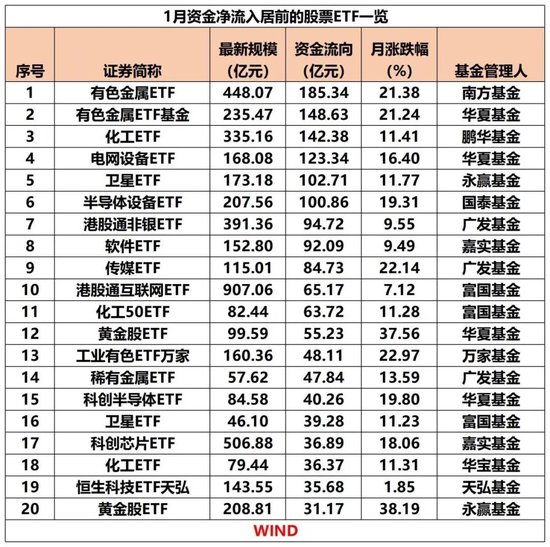
净流出超7900亿元!
Zhong Guo Ji Jin Bao· 2026-02-02 06:24
Core Viewpoint - In January, the stock ETF market experienced significant outflows, totaling over 790 billion yuan, with a notable net outflow of 37.20 billion yuan on January 30 alone [1][5][3]. Group 1: ETF Market Performance - On January 30, the Shanghai Composite Index fell over 2%, closing down 0.96% at 4117 points, with most industry sectors declining, while communication, electronics, and agriculture sectors showed gains [2][3]. - The total net outflow for all stock ETFs (including cross-border ETFs) in January reached 795.67 billion yuan [5]. - The largest inflows were seen in thematic ETFs such as non-ferrous metals, chemicals, electric grid equipment, and satellite ETFs, while broad-based ETFs like the CSI 300 ETF and SSE 50 ETF faced significant outflows [6][7]. Group 2: Specific ETF Data - On January 30, the SGE Gold 9999 index had the highest net inflow of 16.24 billion yuan, while the CSI 300 index saw the largest outflow of 73.23 billion yuan [3]. - Over the past five days, the SGE Gold 9999 index attracted over 20.2 billion yuan, and the chemical sector saw inflows exceeding 9.9 billion yuan [3]. - Leading fund companies like Huaxia Fund reported significant inflows in their non-ferrous metals ETF and chip ETF, with net inflows of 1.134 billion yuan and 430 million yuan, respectively [3]. Group 3: Sector Insights - The chemical industry ETF from E Fund saw a net inflow of 390 million yuan, while the chip ETF from E Fund had a net inflow of 170 million yuan [4]. - Analysts suggest that geopolitical uncertainties and rising nationalism may drive resource commodities into a super cycle, with metals like gold, silver, copper, aluminum, tungsten, and cobalt being particularly noteworthy [9]. - Investment opportunities are identified in sectors such as steel, building materials, chemicals, and silicon materials, which are expected to benefit from demand recovery [9].
华安基金栾超:“成长+新红利”的平衡术
Xin Lang Cai Jing· 2026-02-02 06:22
2025年,科技创新浪潮澎湃,人工智能、新能源、半导体、数字经济等前沿领域不断突破与融合,深刻 重塑产业格局与投资逻辑。华安基金作为业内最早深耕科技投资的基金公司之一,集结了产业学术背景 +投研实力的"华安基金科技联盟",凭借深厚的产业积淀与团队协作能力,在科技投资领域不断扩容深 耕与迭代探索,形成了多元互补的投资风格体系。 其中,"均衡成长投资专家"栾超拥有超十年的投资经验,行业配置较为均衡,始终能抓住每个时期经济 最强的成长动力,重点方向突出,实现超额收益。在他看来,投资的核心在于研究创造价值,关键在于 把握企业盈利与估值之"锚",通过"成长+新红利"的策略实现均衡成长,从而提升投资者的持有体验与 获得感。 以基本面为锚,均衡配置 分享摘要:"成长+新红利",解锁均衡投资密码 栾超具有13年证券从业经验,超9年证券投资经验,既深耕过机械等周期性行业,也深入覆盖TMT、医 药等成长赛道,积累了扎实而全面的行业认知。 投资中,栾超不赌赛道,不喜欢博弈,更希望看清楚产业趋势和方向,以基本面为锚,赚企业盈利增长 的钱。基于这一理念,他构建了"择时、择势、择股"三位一体的投资框架,即通过宏观层面锚定大类资 产配置方 ...
1月股票ETF资金累计净流出超7900亿元
Xin Lang Cai Jing· 2026-02-02 06:22
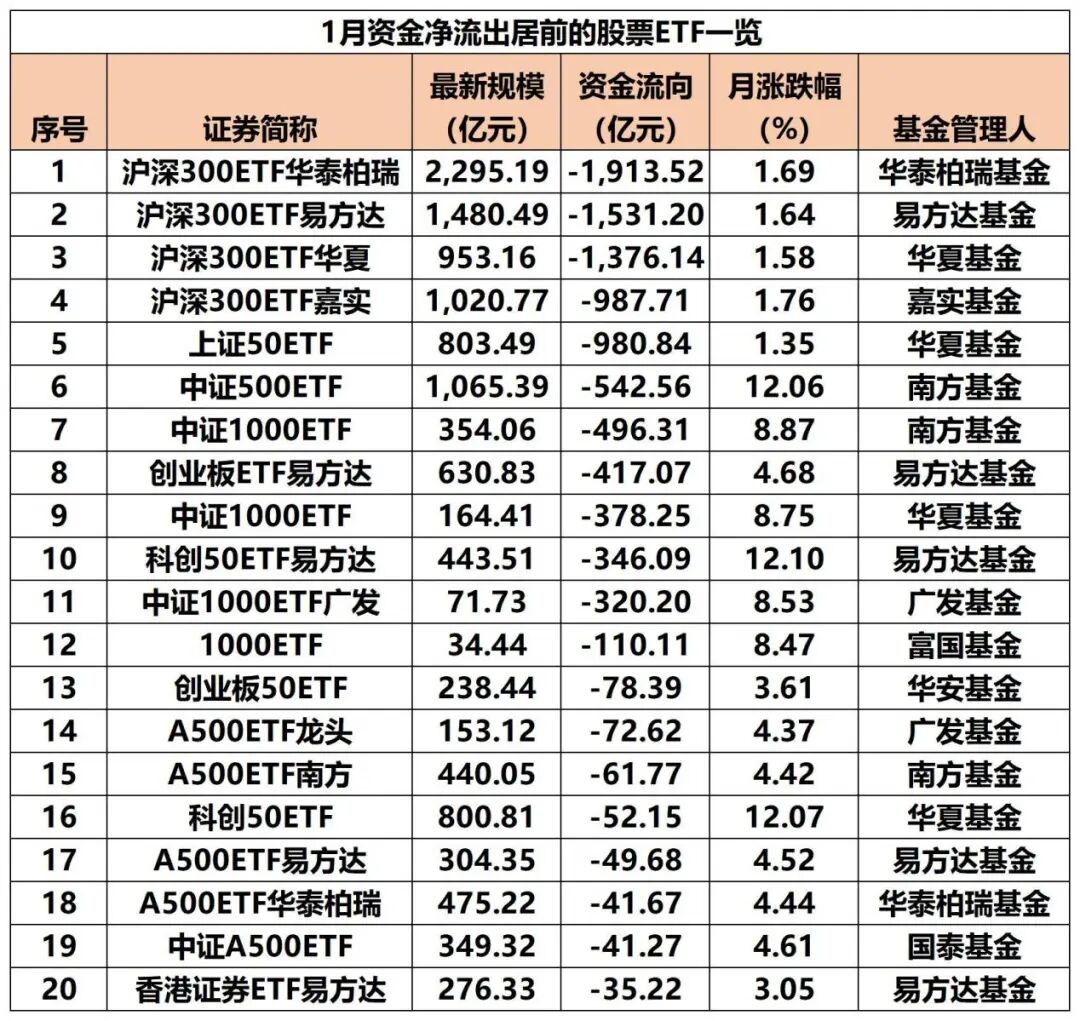
Core Viewpoint - In January, the stock ETF market in China experienced a significant net outflow of over 790 billion yuan, indicating a turbulent market environment with specific sectors showing varied performance [1][5][11]. Summary by Category Market Performance - On January 30, the Shanghai Composite Index fell by over 2%, closing down 0.96% at 4117 points, with most sectors declining, while communication, electronics, and agriculture sectors showed gains [2][12]. - The total net outflow for stock ETFs (including cross-border ETFs) on January 30 was 37.20 billion yuan, with industry theme ETFs and commodity ETFs seeing inflows of 112.63 billion yuan and 21.66 billion yuan, respectively [3][13]. ETF Inflows and Outflows - In January, the cumulative net outflow for all stock ETFs reached 795.67 billion yuan, with popular theme ETFs like non-ferrous metals, chemicals, electric grid equipment, and satellite ETFs attracting significant inflows [5][15]. - The largest net outflows were observed in broad-based ETFs such as the CSI 300 ETF, which saw a net outflow of 1,913.52 million yuan, followed by other major ETFs [7][17]. Sector-Specific Insights - The SGE Gold 9999 index recorded a net inflow of 16.24 billion yuan on January 30, while the CSI 300 index had a net outflow of 73.23 billion yuan [3][13]. - Notable inflows were seen in specific ETFs managed by major fund companies, with the non-ferrous metals ETF and chip ETF from Huaxia Fund seeing inflows of 11.34 billion yuan and 4.3 billion yuan, respectively [3][13][14]. Investment Opportunities - Analysts suggest that geopolitical uncertainties and rising national consciousness may drive resource commodities into a super cycle, highlighting metals like gold, silver, copper, and aluminum as having long-term investment value [8][18]. - The focus is also on sectors benefiting from domestic demand and self-sufficiency trends, such as engineering machinery, new energy vehicles, and AI computing, which are expected to provide structural investment opportunities [8][18].