SpaceX

Search documents
X @Tesla Owners Silicon Valley
Tesla Owners Silicon Valley· 2026-03-02 00:25
RT Doge Tipping (@Dogetothemoon)Starshield leverages SpaceX's Starlink technology and launch capability to support national security efforts.While Starlink is designed for consumer and commercial use, Starshield is designed for government use, with an initial focus on three areas:-Earth Observation: Starshield launches satellites with sensing payloads and delivers processed data directly to the user.-Communications: Starshield provides assured global communications to government users with Starshield user e ...
电力设备与新能源行业研究:绿醇内外部催化共振,太空光伏再次蓄势待发,AIDC迎GTC催化
SINOLINK SECURITIES· 2026-03-02 00:24
Investment Rating - The report emphasizes a positive outlook on sectors such as green hydrogen, wind power, lithium batteries, and space photovoltaic technology, indicating strong investment opportunities in these areas [2][3][6]. Core Insights - The upcoming Two Sessions are expected to focus on "green hydrogen and methanol" as key components of carbon reduction strategies, with potential policy support driving demand [6][11]. - The geopolitical situation in Iran is likely to push up methanol prices, enhancing the competitiveness of green methanol as a substitute in various industries [11][12]. - The report highlights significant investment opportunities in core equipment and materials related to space photovoltaic technology, driven by collaborations between major tech companies [2][6][8]. Summary by Relevant Sections Hydrogen and Fuel Cells - The hydrogen industry is at a pivotal moment, with strategic importance elevated due to upcoming policies and geopolitical factors affecting methanol supply [3][11]. - The report suggests that green methanol producers will benefit from high premium returns due to supply shortages, with a projected demand increase for green methanol in shipping and chemical sectors [11][12]. Wind Power - Wind turbine bidding prices remain high, indicating a stable market, with recommendations to focus on the wind turbine segment for profit potential [3][13]. - The UK government has publicly released a memorandum on clean energy cooperation with China, which may catalyze opportunities in offshore wind exports [13][18]. Lithium Batteries - The lithium battery supply chain is showing signs of recovery, with significant month-on-month increases in production across various segments [19][20]. - The suspension of lithium concentrate exports from Zimbabwe is expected to tighten supply and elevate market prices, creating investment opportunities in battery materials [20][21]. Space Photovoltaics - The report notes a rebound in space photovoltaic stocks, driven by significant partnerships and upcoming launches, suggesting a bullish outlook for related companies [2][6][8]. - Key recommendations include focusing on companies involved in core equipment and materials for space and ground applications [8][9]. Investment Recommendations - The report provides a detailed list of recommended companies across various sectors, including wind power, solar energy, energy storage, and hydrogen, emphasizing their potential for growth and profitability [34][35][36].






美以对伊朗动武,AI参与战争的时代正式拉开帷幕?
虎嗅APP· 2026-03-02 00:03
Core Viewpoint - The article emphasizes that artificial intelligence (AI) is fundamentally transforming warfare, particularly in the context of the recent U.S.-Israel military actions against Iran, where AI played a crucial role in precision strikes [5][10]. Group 1: AI's Role in Military Operations - AI has been integrated into military strategies, enabling precise targeting and operational efficiency, as evidenced by the U.S. defense budget of nearly $900 billion, which heavily invests in intelligence algorithms and advanced weaponry [5][22]. - The U.S. military has accumulated vast amounts of operational data from drone strikes over the past two decades, which has significantly improved AI algorithms' accuracy in target elimination [5][12]. - The military's AI strategy includes the use of advanced models for processing sensitive intelligence, as demonstrated in operations against figures like Venezuelan President Maduro [9][10]. Group 2: AI Applications in Warfare - AI is expected to enhance various aspects of military operations, including target identification, real-time battlefield analysis, cyber warfare, and drone coordination [11][12]. - The U.S. military's three-tiered operational framework leverages AI for data acquisition, decision support, and weapon application, significantly compressing the OODA loop (Observe, Orient, Decide, Act) [12][13]. - AI's integration allows for rapid processing of diverse battlefield data, improving intelligence efficiency and decision-making capabilities [15][16]. Group 3: Global AI Arms Race - The U.S. has initiated the "Genesis Mission," likening it to historical projects like the Manhattan Project, to elevate AI research to a national security priority [21][22]. - The defense budget for AI-related systems is projected to increase significantly, with a proposed $21.1 billion allocated for C4I systems in the 2025 fiscal year, marking a 45.5% increase from the previous year [22][23]. - Other nations, including France and Ukraine, are also advancing their military AI capabilities, indicating a global trend towards AI integration in defense strategies [26][29]. Group 4: Competitive Landscape and Implications - The competition in AI military applications is not just about technological advancements but also involves broader factors such as computational power, energy supply, and overall national strength [31][32]. - China's approach to AI development is characterized by a focus on unique applications and leveraging vast industrial data, which may provide it with competitive advantages in certain areas [30][32]. - The article raises ethical concerns regarding the control and decision-making capabilities of AI in warfare, questioning the implications of autonomous systems in military contexts [34][36].

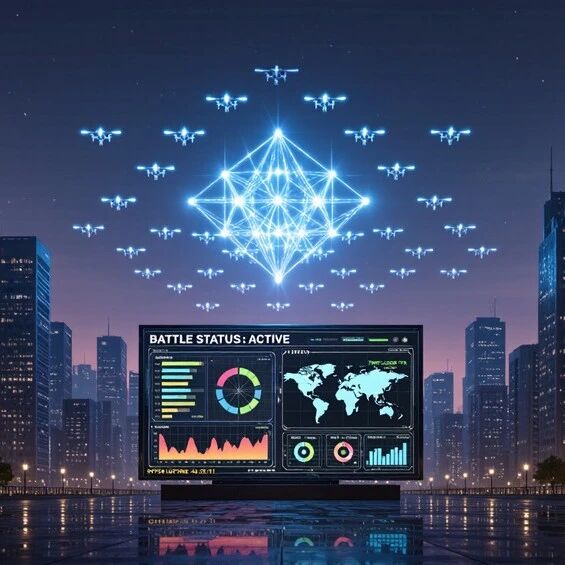
8点1氪:阿联酋宣布承担所有滞留旅客费用;宗馥莉砍掉娃哈哈机器人业务;五粮液回应董事长被查
36氪· 2026-03-01 23:59
Group 1 - UAE announced it will cover all accommodation and reception costs for affected and stranded travelers during operational adjustments due to airspace closures by Iran and Israel [2][3] - Dubai International Airport, one of the busiest airports globally, faced complete flight cancellations, impacting the global aviation network [3] - Approximately 20,200 travelers were processed by UAE airports and airlines in response to flight changes [3] Group 2 - Wahaha Precision Machinery Co., Ltd. officially entered liquidation, with its operations ceasing as part of a strategic shift by its actual controller, Zong Fuli, to focus on core food and beverage business [4] - Five Star Liquor confirmed that its chairman is under investigation, but the company’s operations remain normal and unaffected [4] Group 3 - OpenAI announced a record $110 billion financing round, doubling its previous funding, with investments from Amazon, Nvidia, and SoftBank [13] - OpenAI's valuation reached $730 billion, significantly up from $500 billion in October [13] Group 4 - SpaceX is reportedly preparing to submit an IPO application as early as next month, with a potential valuation exceeding $1.75 trillion [12] - Delta Airlines ordered 34 Airbus A321 neo aircraft, marking its third aircraft order in less than six weeks [12]

陆家嘴财经早餐2026年3月1日星期日
Wind万得· 2026-03-01 23:06
Group 1 - The article discusses a sudden "black swan" event where the US and Israel launched airstrikes against Iran, aiming to destroy Iran's missile industry and naval capabilities, with the goal of regime change in Iran [3] - Following the airstrikes, Iran retaliated by launching missile attacks on Tel Aviv and targeting US military bases in the region, leading to the closure of the Strait of Hormuz by the Iranian Revolutionary Guard [3] - The situation has caused major oil companies to suspend operations in the Strait of Hormuz, which is critical for global oil transport, resulting in a significant halt in oil tanker traffic [3] Group 2 - The UN Secretary-General condemned the military escalation in the Middle East and called for an immediate cessation of hostilities to prevent further deterioration of the situation [4] - China's Ministry of Foreign Affairs expressed concern over the military actions and emphasized the need to respect Iran's sovereignty and territorial integrity, urging for dialogue and negotiation to maintain peace in the region [4] Group 3 - Analysts are closely monitoring the situation as the Strait of Hormuz is a vital oil transport route, with approximately 13 million barrels of oil passing through daily, accounting for about 31% of global maritime oil flow [6] - The military actions could lead to increased volatility in oil prices, with expectations of a 5%-10% rise, potentially pushing crude oil prices to between $95 and $110 per barrel [6] - Global stock markets may experience a decline of 1%-2% in response to the heightened tensions, and US Treasury yields could drop by 5-10 basis points [6]

商业航天行情复盘及展望
2026-03-01 17:23
Summary of Commercial Aerospace Market Review and Outlook Industry Overview - The commercial aerospace sector has been significantly influenced by the geopolitical context, particularly the Russia-Ukraine conflict, which has led to a reassessment of the defense value of satellite networks like Starlink. This has driven demand for national defense applications and highlighted the scarcity of orbital frequency resources, which has propelled the development of commercial aerospace. However, the early stages lacked sufficient application logic to support commercial viability [1][2]. Key Insights and Arguments - The domestic civil communication market is constrained by the dominance of state-owned ground operators, which suppresses demand for satellite networks and hinders the formation of a commercial closed loop [1][3]. - The concept of "space data centers," driven by overseas AI computing demand, is expected to fill the application scenario gap by the end of 2025, serving as a key catalyst for market growth [1][4]. - The economic viability of space computing is contingent upon reducing rocket launch costs to $200 per kilogram and increasing satellite power output to 100 kilowatts per satellite [1][4]. Market Phases - The market is divided into five phases, with the first phase characterized by overseas-driven "rush" for rocket power, highlighted by the successful maiden flight of the Zhuque-3 rocket, which marked a significant breakthrough for domestic private enterprises [1][5]. - The second phase saw increased market attention and a rise in indices due to significant events like the Zhuque-3 launch and the influx of institutional funds, alongside policy support for commercial aerospace as a key component of the national development plan [1][5][7]. - The third phase was marked by a notable increase in institutional holdings, driven by positive test results from Zhuque-3 and the upcoming Long March 12A launch, which heightened market expectations [1][8][9]. - The fourth phase experienced the strongest index growth, driven by policy support from the Ministry of Industry and Information Technology and significant inflows from passive funds and retail investors [1][11][12]. - The fifth phase saw market differentiation, with companies linked to SpaceX and those with overseas supply chain attributes performing better amid a market correction [1][13]. Long-term Outlook - The overall judgment for the commercial aerospace sector in 2026 is optimistic, with expectations of long-term upward trends supported by policy backing, ongoing overseas demand, and real benefits from the industry chain. The market is anticipated to exhibit a structure of "long-term upward movement with periodic fluctuations" [1][14]. - Key time windows to watch in 2026 include the second quarter, when the listings of Blue Arrow and SpaceX are expected, potentially leading to favorable market performance [1][15]. - Focus areas for 2026 include communication transmission links (e.g., microwave antennas and laser communication) and satellite power technologies (e.g., perovskite, gallium arsenide, HCG, silicon-based technologies), which align with the industry's constraints and development narratives [1][16].
商业航天发展驶入快车道-如何把握布局机会
2026-03-01 17:23
Summary of Key Points from the Conference Call on Commercial Aerospace Development Industry Overview - The commercial aerospace industry is experiencing accelerated development due to intensified global competition for space resources, particularly in low Earth orbit satellite frequencies, with SpaceX maintaining a leading position [1][4] - China is set to launch its second-generation satellites, with significant increases in launch frequency and capacity expected in 2026, marking a pivotal year for the industry [1][5] Core Insights and Arguments - The establishment of a Commercial Aerospace Department by the National Space Administration indicates that commercial aerospace will be a key focus during the 14th Five-Year Plan [1][7] - The market is opening up further as China applies for frequency resources for over 200,000 satellites, which is expected to create substantial market opportunities [1][8] - The domestic satellite manufacturing and rocket launch sectors are anticipated to enter a phase of rapid growth, particularly from 2027 to 2028, driven by increased launch services for major satellite constellations [5][6] Key Developments and Trends - The commercial aerospace sector has seen a recent stabilization after a period of adjustment, with ongoing infrastructure development in Hainan and other regions [2][13] - The domestic satellite launch capacity is currently constrained, but several private rocket companies are expected to achieve successful launches, alleviating this bottleneck [3][10] - The rapid iteration of reusable rocket technology is crucial for cost reduction and operational efficiency, with significant milestones expected in 2026 [11][25] Investment Opportunities and Risks - Investment focus should be on the upstream sectors of satellite manufacturing and rocket launch services, as downstream operations face challenges due to regulatory constraints and lack of publicly traded entities [27] - The anticipated IPOs of key players in the commercial aerospace sector, such as Blue Arrow Aerospace and others, are expected to enhance market interest and investment potential [28] Additional Important Insights - The competitive landscape is evolving, with SpaceX's advancements in satellite deployment and launch capabilities prompting other nations to accelerate their own commercial aerospace initiatives [4][15] - The development of low Earth orbit constellations is seen as a strategic necessity for national security and economic growth, with implications for China's own aerospace ambitions [21][22] - The integration of satellite communication technologies into emerging sectors like 6G and IoT is expected to drive further investment and innovation in the commercial aerospace industry [14][19] Conclusion - The commercial aerospace sector is positioned for significant growth, driven by technological advancements, policy support, and increasing market demand, making it a focal point for investment in 2026 [30]

UBS Upgrades Southwest Airlines (LUV) to Buy, Raises Target by $22
Yahoo Finance· 2026-03-01 15:04
Core Insights - Southwest Airlines Co. (NYSE:LUV) is recognized as one of the 10 Best Stocks to Buy according to Elliott Investment Management [1] - UBS upgraded Southwest Airlines' rating from Neutral to Buy and increased the price target from $51 to $73, anticipating that the airline will exceed initial targets for assigned seating and extra-legroom programs [2] - UBS expects these initiatives, along with checked bag fees, to generate an incremental earnings per share of $4.25 to $4.50 by fiscal 2027 [2] Developments - On February 11, 2026, Southwest Airlines announced plans to integrate SpaceX's Starlink into its fleet, offering next-generation Wi-Fi across its network in 11 countries [3] - Starlink aims to provide an at-home experience in the air, allowing customers to stream shows, watch live sports, download music, play games, work, and connect with loved ones from takeoff to landing [4] - The airline plans to have Starlink-equipped aircraft enter service in the summer and aims to expand high-speed internet connectivity to over 300 aircraft by the end of 2026 [4] Company Background - Founded in 1967, Southwest Airlines is a major U.S. carrier known for pioneering the low-cost, point-to-point model, with its headquarters located in Texas [5]

电力设备及新能源行业:太空光伏布局升温,催化电池新技术加速量产
Dongxing Securities· 2026-03-01 14:35
Investment Rating - The industry investment rating is "Positive" [4] Core Insights - The photovoltaic industry is transitioning from "scale competition" to "value competition," with a projected domestic installation of 180-240 GW in 2026, down from 315 GW in 2025. The average annual new installations during the 14th Five-Year Plan period are expected to be 238-287 GW, with global annual installations projected at 725-870 GW [1] - The establishment of a supply-demand platform for space photovoltaic technology marks a significant step towards industrial collaboration, with major companies like Tesla and SpaceX actively engaging in the photovoltaic supply chain [2] - The recent bidding for photovoltaic components by China Huadian Group saw prices exceed 1 RMB/W for the first time, indicating a shift towards rational pricing in the industry [3] Summary by Sections Industry Dynamics - The photovoltaic industry is experiencing a rational clearing process, with a long-term growth center clearly defined for the 14th Five-Year Plan period. The focus on "value competition" will accelerate the elimination of outdated production capacities, benefiting leading companies with efficient batteries and advanced materials [1] Technological Developments - The focus on heterojunction (HJT) and perovskite technologies is gaining momentum, with significant interest from major players in the industry. This shift is expected to catalyze the mass production of new battery technologies [2] Market Trends - The recent price increases in photovoltaic components are driven by multiple factors, including rising silver prices and a consensus within the industry to avoid excessive competition. This trend is expected to lead to a more rational pricing environment [3] Investment Strategy - The investment strategy highlights three main lines: 1. "Anti-involution" benefiting high-cost silicon material and integrated component companies, with recommended stocks like Tongwei Co. 2. Energy storage as a rapidly growing segment, with recommendations for companies like Sungrow Power Supply. 3. Space photovoltaic technology, driven by AI computing needs, with a focus on HJT and perovskite technologies, benefiting companies like Junda Co. and GCL-Poly Energy [3]
国泰海通|机械:SpaceX计划在月球电磁弹射卫星,推动国内火箭技术加速迭代——商业航天事件点评
国泰海通证券研究· 2026-03-01 14:30
Core Viewpoint - SpaceX plans to launch satellites from the Moon using a giant electromagnetic catapult to establish a constellation of 1 million satellites for a space AI data center, which is expected to accelerate the iteration of domestic rocket technology and benefit the satellite manufacturing and rocket launch industries [1][2]. Group 1: SpaceX's Moon Launch Plans - SpaceX aims to build a factory on the Moon to assemble satellites equipped with high-performance AI processors, utilizing the Moon's low gravity, lack of atmosphere, and abundant solar energy for satellite launches via a multi-kilometer electromagnetic catapult [1][2]. - The U.S. Federal Communications Commission has accepted SpaceX's plan to launch up to 1 million satellites for a data center network in Earth orbit, which will operate at altitudes between 500-2,000 km and provide an additional 100 GW of space computing power annually, powered by solar energy [2]. Group 2: Integration with xAI and Future IPO - SpaceX has acquired xAI, a company owned by Elon Musk, to integrate technologies such as the Grok model, rocket launches, and satellite internet for its space data center strategy, with plans for an IPO in 2026 to fund Starship flight tests, data center networking, and lunar base construction [2]. Group 3: Lunar City and Global Space Competition - Elon Musk's lunar city construction plan may intensify global space competition, with a permanent lunar base providing advantageous conditions for SpaceX's satellite network [3]. - SpaceX's lunar missions align with the U.S. Artemis program and policies to ensure American space dominance, increasing competition in spacecraft, satellite internet, and space robotics, while expanding commercial space applications and industry scale [3]. Group 4: Investment Recommendations - Investors are advised to focus on satellite manufacturing companies capable of large-scale, low-cost production, as well as suppliers of key components like phased array antennas, onboard laser communication terminals, and Hall thrusters [4]. - The Starship flight tests are expected to boost confidence in reusable rocket manufacturing and launch, benefiting leading commercial rocket companies with "high payload + reusable" technology and related core component firms [4]. - Space photovoltaic technology is highlighted as a crucial energy supply method for the operation of space data center satellites and lunar base construction, with potential for increased application opportunities [4].