蔚来

Search documents
期指:大涨后的偏强震荡
Guo Tai Jun An Qi Huo· 2026-01-06 01:32
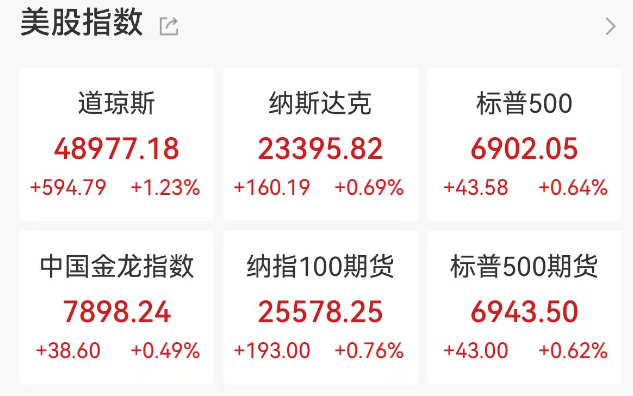
Report Summary 1. Report Industry Investment Rating No information provided. 2. Core Viewpoints - On January 5, 2026, all four major stock index futures contracts for the current month rose, with IF up 2.07%, IH up 2.42%, IC up 2.81%, and IM up 2.37% [1]. - On the trading day, the total trading volume of stock index futures rebounded, indicating increased trading enthusiasm among investors. The total trading volume of IF, IH, IC, and IM increased by 20,649 lots, 6,347 lots, 29,217 lots, and 24,485 lots respectively. In terms of positions, the total positions of IF, IH, IC, and IM increased by 8,201 lots, 3,543 lots, 22,660 lots, and 13,346 lots respectively [2]. - The trend strength of IF and IH is 1, and that of IC and IM is also 1. The A - share market had a good start in 2026, with the Shanghai Composite Index rising by more than 1% and returning to 4,000 points, and the ChiNext Index surging nearly 3%. The Hong Kong stock market fluctuated slightly up, with the biotechnology and semiconductor industries strengthening [6][7]. 3. Summary by Relevant Catalogs 3.1. Stock Index Futures Data Tracking - **CSI 300 and Related Futures**: The CSI 300 closed at 4,717.8, up 1.90%. Among its futures, IF2601 closed at 4,714, up 2.07%, with a basis of - 3.75; IF2602 closed at 4,702.6, up 2.14%, with a basis of - 15.15; IF2603 closed at 4,697, up 2.26%, with a basis of - 20.75; IF2606 closed at 4,649.8, up 2.23%, with a basis of - 67.95 [1]. - **SSE 50 and Related Futures**: The SSE 50 closed at 3,099.8, up 2.26%. Among its futures, IH2601 closed at 3,097.4, up 2.42%, with a basis of - 2.35; IH2602 closed at 3,099.6, up 2.59%, with a basis of - 0.15; IH2603 closed at 3,098.8, up 2.55%, with a basis of - 0.95; IH2606 closed at 3,088.8, up 2.56%, with a basis of - 10.95 [1]. - **CSI 500 and Related Futures**: The CSI 500 closed at 7,651.2, up 2.49%. Among its futures, IC2601 closed at 7,664.8, up 2.81%, with a basis of 13.6; IC2602 closed at 7,624.8, up 2.95%, with a basis of - 26.4; IC2603 closed at 7,596, up 3.11%, with a basis of - 55.2; IC2606 closed at 7,417, up 3.27%, with a basis of - 234.2 [1]. - **CSI 1000 and Related Futures**: The CSI 1000 closed at 7,753.9, up 2.09%. Among its futures, IM2601 closed at 7,759.2, up 2.37%, with a basis of 5.32; IM2602 closed at 7,697.8, up 2.56%, with a basis of - 56.08; IM2603 closed at 7,639, up 2.69%, with a basis of - 114.9; IM2606 closed at 7,403.4, up 2.76%, with a basis of - 350.5 [1]. 3.2. Position Changes of the Top 20 Futures Members - For IF contracts, in IF2601, long positions decreased by 607 and short positions increased by 347; in IF2603, long positions increased by 5,858 and short positions increased by 5,971; in IF2606, long positions increased by 1,027 and short positions increased by 490 [5]. - For IH contracts, in IH2601, long positions decreased by 62 and short positions increased by 168; in IH2603, long positions increased by 2,259 and short positions increased by 2,443; in IH2606, long positions increased by 206 and short positions increased by 91 [5]. - For IC contracts, in IC2601, long positions increased by 598 and short positions increased by 1,459; in IC2603, long positions increased by 11,123 and short positions increased by 12,210; in IC2606, long positions increased by 2,786 and short positions increased by 2,146 [5]. - For IM contracts, in IM2601, long positions decreased by 1,660 and short positions decreased by 909; in IM2602, long positions increased by 2,233 and short positions increased by 2,659; in IM2603, long positions increased by 4,700 and short positions increased by 8,413 [5]. 3.3. Market Trends and Drivers - **A - share Market**: The A - share market had a good start in 2026. The Shanghai Composite Index rose 1.38% to 4,023.42 points, the Shenzhen Component Index rose 2.24%, the ChiNext Index rose 2.85%, the Beixin 50 rose 1.8%, the Kechuang 50 rose 4.41%, and the Wind All - A Index rose 1.99%. The total trading volume was 2.57 trillion yuan, compared with 2.07 trillion yuan the previous day [6]. - **Hong Kong Stock Market**: The Hong Kong stock market fluctuated slightly up. The Hang Seng Index rose 0.03% to 26,347.24 points, the Hang Seng Tech Index rose 0.09% to 5,741.63 points, and the Hang Seng China Enterprises Index fell 0.22% to 9,148.47 points. The market trading volume was HK$283.462 billion, significantly higher than the previous trading day's HK$140.864 billion [7]. - **US Stock Market**: The three major US stock indexes all closed up. The Dow Jones Industrial Average rose 1.23% to 48,977.18 points, reaching a new record high; the S&P 500 Index rose 0.64% to 6,902.05 points; the Nasdaq Composite Index rose 0.69% to 23,395.82 points [8].
中国汽车第一城易主
第一财经· 2026-01-06 01:31
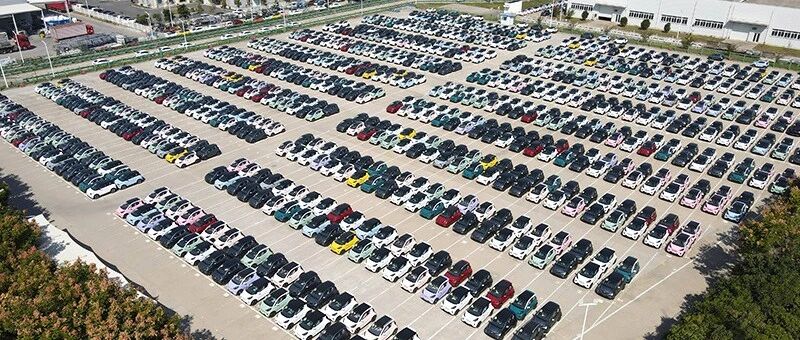
2026.01. 06 本文字数:2318,阅读时长大约4分钟 作者 | 第一财经 葛慧 2025年中国"汽车第一城"的争夺形势已逐渐明朗。 2025年,在新能源汽车浪潮与统计口径调整的双重影响下,传统汽车制造重镇面临转型压力,而新 兴城市正凭借赛道优势加速突围。目前,重庆以近250万辆的整车产量领跑总量榜,合肥则以超120 万辆的新能源汽车产量占据细分赛道首位。 在整车制造领域,国家统计局自2021年推行"法产并重"的统计改革,随着该统计改革的持续推进, 真实的汽车产业版图正浮出水面。这场城市间的角逐,不仅是产能规模的比拼,更是技术创新、产业 链整合与政策适应能力的综合竞争。统计方法的调整、技术路线的选择,都将深刻影响未来十年的城 市产业竞争格局。 重庆成为"汽车第一城"几成定局 第一财经从重庆市2025年11月份的统计月报中获悉,重庆前11月的汽车产量为249.81万辆,同比增 12.1%。以城市角度来看,重庆成为"汽车第一城"几成定局。 重庆的汽车产业发展中,既有央企长安这样的传统品牌坐镇,也有"黑马"赛力斯的逆袭。2025年, 长安汽车实现了3000万辆下线,全国首块L3级自动驾驶专用正式号牌也在重庆 ...

中国汽车第一城易主
Di Yi Cai Jing Zi Xun· 2026-01-06 01:20
Core Insights - The competition for the title of "Automobile Capital" in China by 2025 is intensifying, with Chongqing currently leading in overall vehicle production and Hefei excelling in the new energy vehicle segment [1][2]. Group 1: Chongqing's Position - Chongqing's vehicle production reached 2.4981 million units from January to November 2025, marking a 12.1% year-on-year increase, solidifying its status as a leading automobile city [2]. - The city is home to traditional brands like Changan and emerging players like Seres, contributing to its competitive edge [2]. Group 2: Hefei's Growth - Hefei produced 1.246 million new energy vehicles in the same period, ranking first among cities in this category [4]. - The city aims to achieve a scale of 700 billion yuan in its new energy vehicle industry by 2025, with a target of producing over 3 million vehicles [4]. Group 3: Other Competitors - Anhui province, with a total vehicle production of 3.335 million units and 1.635 million new energy vehicles, has surpassed Guangdong to become the leading province [3]. - Cities like Wuhu and Liuzhou are also making significant strides, with Wuhu's production expected to rise and Liuzhou achieving a vehicle production of 1.331 million units, a 37.8% increase [5][4]. Group 4: Emerging Cities - Cities such as Xi'an, Zhengzhou, and Qingdao are approaching the "million vehicle" production threshold, with Xi'an producing 1.576 million vehicles and Zhengzhou showing a significant year-on-year growth of 89.72% [9]. - Qingdao's production reached 911,700 units, supported by major manufacturers like SAIC-GM Wuling and Chery [10]. Group 5: Challenges for Major Cities - Shenzhen's automotive production has declined, with the city no longer maintaining a competitive edge in vehicle production due to statistical adjustments [7]. - Guangzhou's traditional vehicle production fell by 20%, indicating a significant transition challenge [8].

美股三大指数集体收涨,道指涨1.23%创新高,特斯拉涨超3%
Ge Long Hui· 2026-01-06 00:27
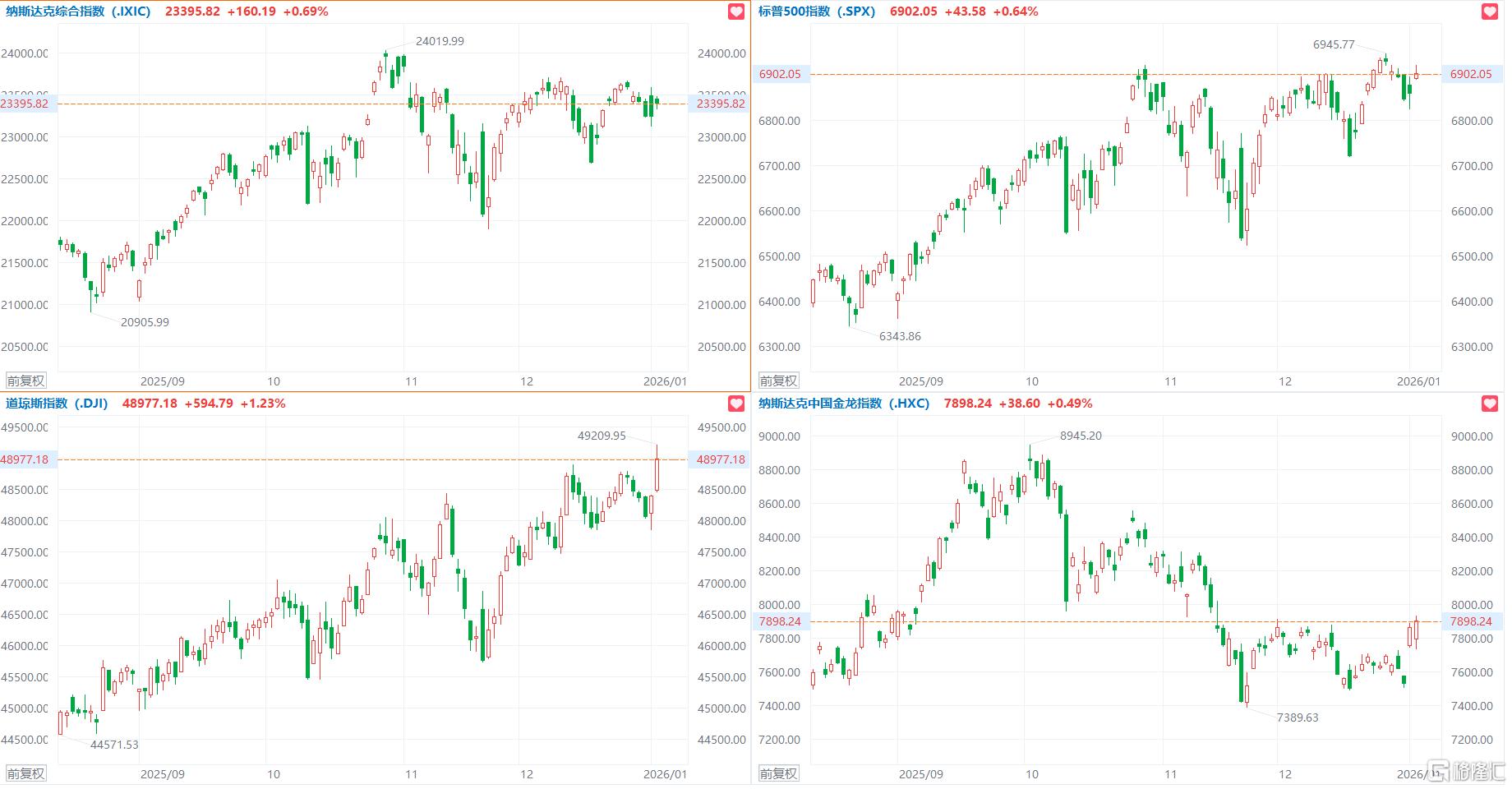
美股三大指数集体收涨,道指涨1.23%,再创历史新高;纳指涨0.69%,标普500指数涨0.64%。大型科技股多数上涨,特斯拉涨超3%,亚马逊涨逾2%,Meta 涨超1%,奈飞、谷歌小幅上涨;苹果跌超1%,微软、英伟达、英特尔小幅下跌。 纳斯达克中国金龙指数收涨0.49%,热门中概股中,文远知行、拼多多收涨3%,小马智行涨2.6%,美团涨1.9%,理想、腾讯、京东、阿里涨幅不到1%,小 鹏、网易则跌超1%,百胜中国跌2.8%,小米跌3%,蔚来跌5.1%。 ...
车市进入高销量低增长周期行业从拼价格转向拼价值
Zheng Quan Shi Bao Wang· 2026-01-06 00:07
Core Insights - Despite challenges, the Chinese automotive market is expected to achieve record production and sales in 2025, with a total of 31.23 million vehicles produced and 31.12 million sold in the first eleven months of the previous year, both showing over 11% year-on-year growth [1] - The industry is transitioning from extensive competition to value-driven high-quality development, supported by factors such as over 50% penetration of new energy vehicles and advancements in autonomous driving technology [1][3] Industry Trends - 2026 is anticipated to be a watershed year for automakers, entering a new cycle characterized by high sales but low growth, with consumers benefiting from advanced features at lower prices [3] - The competition is shifting from individual models to a systematic approach focusing on cost, supply chain, and product matrix, as evidenced by BYD surpassing Tesla in electric vehicle sales [4] - New energy vehicle companies are approaching profitability, with Leap Motor achieving a 103% year-on-year increase in deliveries, while NIO aims for breakeven by Q4 2025 [4] Market Dynamics - The differentiation among automakers is widening, with companies like Li Auto facing challenges in meeting delivery targets during their transition to electric vehicles [5] - Companies are exploring "boundaryless integration," venturing into AI and robotics, indicating a shift towards a more technology-driven and ecosystem-oriented approach [5] - The automotive industry is expected to play a crucial role in driving technological innovation, with advancements in semiconductors and AI being applied at scale [6] Competitive Landscape - The industry is moving away from price wars towards value creation, with a focus on safety and quality as competitive advantages [7] - The market is projected to stabilize with annual sales around 30 million vehicles from 2026 to 2030, with significant growth in exports, particularly in new energy vehicles [8] Capital and Investment - A surge in IPOs within the automotive sector is noted, with companies like Chery and Seres successfully listing, indicating a robust capital operation environment [10] - Traditional automakers are actively restructuring and seeking value reassessment, with state-owned enterprises enhancing their market positions [10] Future Challenges - The automotive market is expected to face intensified competition in 2026, with potential policy rollbacks and rising costs posing significant challenges [11] - The industry is likely to undergo a rapid consolidation phase, with resources concentrating on high-quality enterprises as the market matures [11]

道指深夜涨近600点创新高,中概股飘红,国际油价拉升,加密货币超12万人爆仓
2 1 Shi Ji Jing Ji Bao Dao· 2026-01-05 23:33
Market Performance - The three major US stock indices all closed higher, with the Dow Jones soaring nearly 600 points, ultimately closing up over 1% at 48,977.18, marking a new historical high [1] - The Nasdaq China Golden Dragon Index rose by 0.49%, while the Nasdaq 100 futures increased by 0.76% [2] Sector Performance - The energy sector within the S&P 500 index saw a significant increase of 2.7%, driven by major stocks like ExxonMobil and Chevron [3] - The Philadelphia Semiconductor Index rose by 1.07%, with notable gains in companies such as Applied Materials and ASML, which both increased by over 5% [3] Notable Stocks - Tesla and Amazon both saw gains of over 3%, while Facebook and Google also experienced slight increases [3] - Neuralink, a brain-machine interface company led by Elon Musk, surged by over 31% following news of plans to significantly increase production by 2026 [5] Commodity Prices - International oil prices strengthened, with both WTI and Brent crude oil rising nearly 2% [6] - Gold and silver prices opened slightly higher, with gold at $4,450.15, up 0.07%, and silver at $76.755, up 0.29% [9] Cryptocurrency Market - The cryptocurrency market saw a collective surge, with Bitcoin surpassing $94,000, marking a 3.36% increase [10]
A股申购 | 至信股份(603352.SH)开启申购 可覆盖汽车全车冲焊件需求
Xin Lang Cai Jing· 2026-01-05 22:49
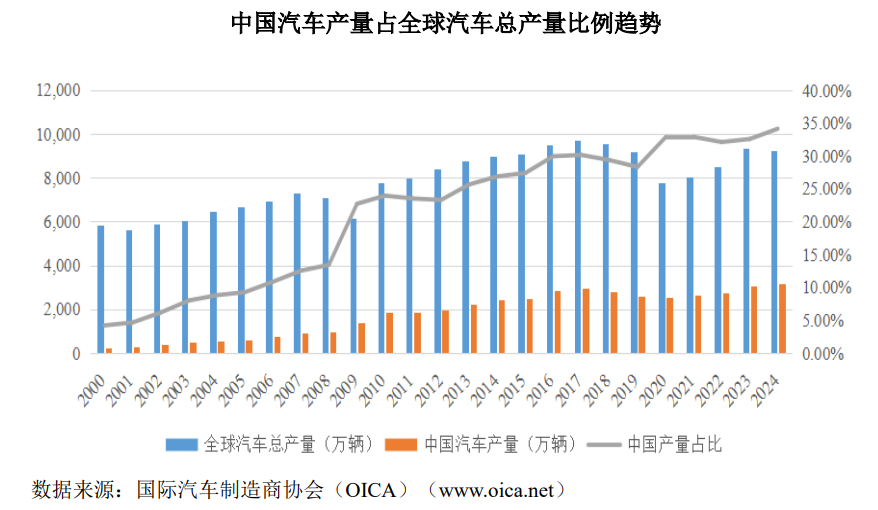
Core Viewpoint - Zhixin Co., Ltd. (603352.SH) has initiated its subscription with an issue price of 21.88 CNY per share and a price-to-earnings ratio of 26.85 times, positioning itself as a key player in the automotive parts industry, particularly in the manufacturing of automotive body welding parts and related molds [1]. Company Overview - Zhixin Co., Ltd. specializes in the development, processing, production, and sales of automotive stamping and welding parts, including automotive body welding parts and related tooling [1]. - The company has established itself as a first-tier supplier for major automotive manufacturers such as Changan Automobile, Geely, Ford, NIO, Li Auto, BYD, Great Wall Motors, and Leap Motor, as well as for well-known parts suppliers like CATL, Inafa, and Webasto [1]. Industry Context - The global automotive parts industry is currently dominated by traditional automotive powerhouses such as the United States, Germany, and Japan, while emerging markets like China and India are gaining traction due to their large market capacity, rapid consumption growth, and lower labor costs [2]. - China has become the world's largest automobile producer, accounting for 34.11% of global automobile production in 2024, highlighting its significant market share [1]. Financial Performance - The company reported revenues of approximately 2.09 billion CNY, 2.56 billion CNY, and 3.09 billion CNY for the years 2022, 2023, and 2024, respectively, with net profits of approximately 70.69 million CNY, 132 million CNY, and 204 million CNY for the same years [5]. - As of the end of 2022, 2023, and 2024, the total assets of the company were 3.15 billion CNY, 2.56 billion CNY, and 3.08 billion CNY, respectively, with a debt-to-asset ratio of 52.15%, 49.11%, and 52.17% [6]. - The company’s basic earnings per share were 0.46 CNY, 0.78 CNY, and 1.20 CNY for the years 2022, 2023, and 2024, respectively, indicating a positive growth trend [6].
2025造车新势力变局:“鸿零米”改变“蔚小理”格局
2 1 Shi Ji Jing Ji Bao Dao· 2026-01-05 22:31
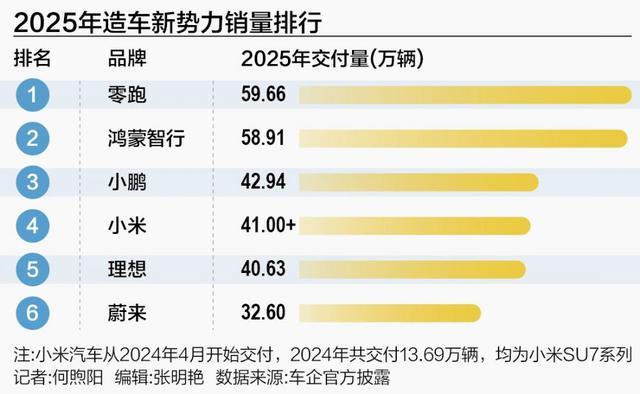
Core Insights - The 2025 new energy vehicle market has shown a stark polarization, with emerging players like "Honglingmi" (Hongmeng Zhixing, Leap Motor, Xiaomi) rapidly gaining market share while established companies like "Weilai, Xiaopeng, and Lixiang" face significant challenges [1][15] - The competition has intensified, with some companies thriving in the growing market while others struggle for survival in a saturated environment [1] Group 1: Emerging Players - "Leap Motor" has emerged as the biggest dark horse, achieving a delivery volume of 596,600 units in 2025, becoming the top seller among new forces and setting a record for annual sales [3] - Leap Motor's success is attributed to its long-term commitment to self-research and development, achieving a half-year delivery of 221,700 units and becoming one of the only two profitable companies in the sector [3][4] - Xiaomi's automotive division delivered over 410,000 units in its first full year, exceeding its annual target by 17% [5] Group 2: Established Players - "Weilai" and "Lixiang" have entered a painful transformation phase, with both companies failing to meet their annual sales targets in 2025 [8] - "Xiaopeng" is the only company among the established players to achieve its annual sales target, delivering 429,400 units in 2025 [9] - Weilai has undergone a significant organizational change, focusing on core automotive operations and achieving notable sales with new models like the L90 and ES8 [12] Group 3: Market Dynamics - The competition has shifted towards a focus on systemic capabilities, with companies needing to balance technology development, product iteration, financial reserves, and operational efficiency to succeed [15] - The market is witnessing a shift where companies like Leap Motor and Xiaomi leverage their unique strengths to disrupt traditional players, while established companies are forced to adapt to survive [7][15]
车市进入高销量低增长周期 行业从拼价格转向拼价值
Zheng Quan Shi Bao· 2026-01-05 18:38
Group 1 - The Chinese automotive market is expected to set new records in production and sales in 2025, with a cumulative completion of 31.23 million vehicles produced and 31.12 million sold in the first 11 months of the previous year, both showing an increase of over 11% year-on-year [1] - The industry is transitioning from extensive competition to high-quality development, driven by factors such as over 50% penetration of new energy vehicles and the rollout of L3 autonomous driving [1] - The year 2026 is anticipated to mark a turning point for automakers, entering a new cycle characterized by high sales but low growth, with consumers benefiting from advanced features at lower prices [1] Group 2 - BYD has surpassed Tesla in annual sales of pure electric vehicles, indicating a shift in the competitive landscape towards a focus on cost, supply chain, and product matrix [2] - New energy vehicle companies like Leap Motor and XPeng are approaching profitability, while NIO aims for breakeven in Q4 2025, highlighting a significant differentiation among automakers [2] - The competition is expected to evolve from mere delivery races to comprehensive assessments of cash flow, gross margins, and channel efficiency [2] Group 3 - Automakers are exploring "boundaryless integration," with companies like Li Auto and XPeng venturing into AI glasses and flying cars, respectively, indicating a shift towards technology and ecosystem development [3] - The year 2025 is seen as the "year of universal intelligent driving," with advancements in L2 and L3 driving assistance technologies becoming more mainstream [3] - The automotive industry is becoming a core driver of technological innovation, with a growing emphasis on integrating advanced technologies like semiconductors and AI [4] Group 4 - The automotive industry is moving away from price wars towards value creation, with a focus on safety and emotional value for consumers [5] - The market is expected to stabilize with annual sales around 30 million vehicles from 2026 to 2030, indicating a shift towards a more rational competitive environment [5] - The industry is witnessing a recovery in profit margins due to effective policies like the vehicle trade-in program, which has reduced the prevalence of price wars [5] Group 5 - The international market is becoming a crucial growth area, with projections of Chinese automotive exports reaching 8 million units by 2026 and 10 million by 2030, primarily driven by new energy vehicles [6] - Chinese automakers are transitioning from merely exporting products to establishing a comprehensive ecosystem that includes technology and supply chain collaboration [6] Group 6 - The automotive industry is experiencing a surge in IPOs, with companies like Chery and Seres successfully listing, indicating a vibrant capital market for the sector [7] - Traditional automakers are actively engaging in capital operations to enhance their market positions and prepare for intensified competition [7] - The market consensus suggests that 2026 will bring a more brutal competitive environment, with potential for increased consolidation and closures among weaker players [7][8] Group 7 - The automotive industry is expected to undergo rapid resource concentration towards high-quality enterprises, with the performance in 2025 serving as a ticket for the competitive landscape in 2026 [8] - Companies must accelerate their transition to new energy, strengthen technological barriers, and expand into global markets to survive in the upcoming competitive landscape [8]
2025年港股再融资规模略超IPO
Zheng Quan Ri Bao· 2026-01-05 17:08
Core Insights - The Hong Kong stock market's refinancing activities in 2025 were exceptionally active, with a total of approximately HKD 325.32 billion raised through various methods, significantly surpassing the previous year [1] - Placement became the primary method for refinancing, with 345 companies initiating 463 placements, raising HKD 289.62 billion, slightly exceeding the HKD 285.69 billion raised through IPOs [1] - Leading companies like BYD and Xiaomi spearheaded large-scale refinancing efforts, focusing on industry integration and technological development [2] Group 1: Refinancing Trends - In 2025, the refinancing market in Hong Kong saw significant participation from industry leaders, with BYD raising HKD 43.51 billion and Xiaomi raising HKD 42.6 billion [2] - Other notable companies included NIO and Horizon Robotics, which collectively raised over HKD 11 billion, focusing on core technology breakthroughs and operational stability [2] - The refinancing activities reflect a trend of companies engaging in multiple rounds of financing, with firms like SenseTime and China Ruoyi completing several placements throughout the year [4] Group 2: Mechanisms and Strategies - The "old before new" placement system in Hong Kong allows companies to quickly raise funds by transferring existing shares before issuing new ones, significantly shortening the financing cycle [5] - This method typically offers discounts of 5% to 12% compared to market prices, effectively attracting institutional investors [5] - New companies listed in 2025, such as Boreton and Jiangsu Hongxin, quickly initiated refinancing to leverage their post-IPO stock price advantages [6] Group 3: Strategic Focus - The funds raised through refinancing are often directed towards capacity expansion and R&D, particularly in high-growth sectors like technology and renewable energy [3] - Companies like GCL-Poly announced specific uses for their raised funds, including structural adjustments in polysilicon production and enhancing R&D capabilities [2] - The trend of "going global" is also evident, with many Hong Kong-listed companies pursuing international expansion strategies while ensuring compliance with local regulations [7]