京东

Search documents
盘前必读丨《网络交易平台收费行为合规指南》征求意见;海光信息拟换股吸收合并中科曙光
Di Yi Cai Jing· 2025-05-25 23:43
热门中概股涨跌不一,阿里巴巴跌0.62%,京东跌1.01%,百度跌0.31%,拼多多跌0.47%,网易涨 0.61%,理想汽车涨0.84%,腾讯音乐涨3.48%,携程涨2.08%。 ►►据新华社,李强主持召开国务院常务会议,审议通过《制造业绿色低碳发展行动方案(2025-2027 年)》,研究进一步健全横向生态保护补偿机制有关举措,讨论《中华人民共和国食品安全法(修正草 案)》。 ►►为规范网络交易平台向平台内经营者收取佣金、抽成、会员费、技术服务费、信息服务费、营销推 广费等收费行为,维护平台内经营者合法权益,促进平台经济健康有序发展,近日,市场监管总局研究 起草了《网络交易平台收费行为合规指南(征求意见稿)》,并向社会公开征求意见。 ►►商务部印发《深化国家级经济技术开发区改革创新以高水平开放引领高质量发展工作方案》。支持 在有条件的国家级经开区布局重大产业科技创新平台,支持区内相关单位承担国家和地方科技计划项 目。鼓励国家级经开区科技领军企业联合高校、科研机构等组成创新联合体,加强与国家大学科技园协 调联动,协同推进技术创新与商业转化。 机构表示,A股短期可能延续震荡偏强趋势,短期建议继续关注科技和部分 ...



每周股票复盘:健之佳(605266)2024年净增门店370家,强化全渠道服务
Sou Hu Cai Jing· 2025-05-24 01:35
Core Viewpoint - The company, Jianzhijia, has shown significant growth in its stock price and is actively expanding its market presence through both self-built and acquired stores, while also focusing on social responsibility and competitive strategies in the healthcare sector [1][2][3]. Group 1: Market Performance - As of May 23, 2025, Jianzhijia's stock closed at 23.01 yuan, a 9.83% increase from the previous week [1]. - The company reached a market capitalization of 3.556 billion yuan, ranking 22nd in the pharmaceutical commercial sector and 3715th in the overall A-share market [1]. Group 2: Store Expansion Strategy - In 2024, Jianzhijia opened 314 self-built stores and acquired 122 stores, resulting in a net increase of 370 stores after closing 66 [2][4]. - The company plans to adapt its expansion strategy based on regional market conditions and policy implementations, emphasizing compliance with national healthcare regulations [2]. Group 3: Social Responsibility Initiatives - Jianzhijia has created approximately 21,000 jobs, focusing on providing opportunities for women and marginalized groups [1]. - The company has engaged in various health education and community support activities, including free health monitoring for over 4 million chronic disease members and significant contributions to public health initiatives [1][4]. Group 4: Competitive Positioning - The company views third-party platforms as partners rather than competitors, leveraging them for data and logistics services to enhance customer reach [3]. - Jianzhijia aims to differentiate itself through unique product offerings, professional services, and brand positioning to maintain a competitive edge in the market [3][4]. Group 5: Corporate Governance - The 2024 annual shareholders' meeting was held on May 21, 2025, with 153 shareholders present, representing 53.24% of the voting shares [5]. - The meeting approved ten resolutions, including financial reports and the appointment of auditing firms, confirming compliance with legal and regulatory standards [5].

外卖大战影响即时配送行业,知名配送公司上市不到8个月股价大跌85%
第一财经· 2025-05-23 12:24
Core Viewpoint - The article discusses the competitive landscape of the instant delivery industry, highlighting the struggles of the company Flash Delivery (闪送) and the overall market dynamics influenced by the food delivery sector [1][3][7]. Group 1: Flash Delivery's Performance - Flash Delivery's stock price fell by 1.26% to $2.35, down 85.8% from its IPO price of $16.5 [1]. - In Q1 2025, Flash Delivery reported revenue of 960 million yuan, a 13.5% decrease from 1.11 billion yuan in Q1 2024, with a net loss of 10.3 million yuan compared to a net profit of 64.6 million yuan in the same period last year [3]. - The company experienced a decline in order volume, completing 58 million orders in Q1 2025, down from 65.8 million in Q4 2024, attributed to increased market competition [3][4]. Group 2: Market Dynamics and Competitors - The instant delivery market is seeing a divergence in performance among logistics companies, with SF Express (顺丰) reporting a 27.1% revenue increase to 15.75 billion yuan in 2024, driven by stable demand in food delivery [6]. - Dada's total net revenue for 2024 was 9.664 billion yuan, an 8% decline, while its instant delivery platform saw a 44.6% increase in revenue to 5.805 billion yuan due to rising order volumes from chain merchants [6]. - The entry of JD.com into the food delivery market has intensified competition, with Dada becoming a key logistics partner for JD's delivery services [6]. Group 3: Future Trends and Opportunities - The instant delivery market is expected to grow, with user numbers projected to exceed 1 billion by 2030, driven by the expansion of instant logistics [7]. - The food delivery sector is a critical application for instant delivery services, with the online food delivery market reaching 1.6357 trillion yuan in 2024, a 7.2% increase [9]. - Future trends in instant delivery include multi-platform competition, integrated logistics solutions, and technological advancements such as AI optimization [11].


闪送股价较发行价跌去85%,即时配送行业因外卖大战迎来分化
Di Yi Cai Jing· 2025-05-23 09:48
Core Insights - The takeaway from the articles is that the food delivery industry is deeply intertwined with the instant logistics sector, which is currently experiencing significant changes due to increased competition and evolving market dynamics [1][7]. Group 1: Market Performance - Flash Delivery (FLX) saw its stock price drop by 85.8% from its IPO price of $16.5 to $2.35 as of May 22, 2023, reflecting ongoing challenges in the market [1]. - Flash Delivery reported a revenue of 960 million yuan for Q1 2025, down 13.5% from 1.11 billion yuan in Q1 2024, with a net loss of 10.3 million yuan compared to a net profit of 64.6 million yuan in the same period last year [3][4]. - The total order volume for Flash Delivery in Q1 2025 was 58 million, a decrease from 65.8 million in Q4 2024, indicating a downward trend in demand [4]. Group 2: Competitive Landscape - The instant delivery market is seeing a divergence in performance among logistics companies, with SF Express reporting a 27.1% revenue increase to 15.75 billion yuan in 2024, driven by stable demand in food delivery [5]. - Dada's total net revenue for 2024 was 9.664 billion yuan, down 8%, while its instant delivery platform saw a 44.6% increase in revenue to 5.805 billion yuan due to increased order volume from chain merchants [5]. - JD.com announced that its daily order volume for food delivery exceeded 20 million, indicating its growing presence in the market and the competitive pressure on existing players [6]. Group 3: Industry Trends - The online food delivery market in China reached a scale of 1.6357 trillion yuan in 2024, growing by 7.2%, with a penetration rate of 28% [7]. - The demand for instant logistics is expected to grow, with the user base projected to exceed 1 billion by 2030, driven by the expansion of instant logistics services [6][7]. - The industry is witnessing a shift towards more diversified services beyond food delivery, with opportunities in instant retail and other sectors [8]. Group 4: Challenges and Innovations - The industry faces challenges such as food safety, rider rights protection, and high operational costs, prompting platforms to invest in technology and innovate their business models [9]. - Over 60% of consumers reported that their issues with instant delivery platforms were resolved, but over 80% experienced blame-shifting among platforms, merchants, and riders when goods were damaged [9].

5.22犀牛财经晚报:三一重工向港交所提交上市申请 新华保险认购私募基金份额100亿元
Xi Niu Cai Jing· 2025-05-22 10:19
Group 1: Financial Regulations and Market Developments - The Financial Regulatory Bureau announced the approval of a third batch of long-term investment reform pilot programs for insurance funds, totaling 60 billion yuan, bringing the total approved amount to 222 billion yuan [1] - The China Securities Regulatory Commission (CSRC) is set to implement the fifth listing standard for the Sci-Tech Innovation Board, aiming to support high-quality, unprofitable tech companies in going public [1] - China Securities Depository and Clearing Corporation released the clearing and settlement arrangements for the Dragon Boat Festival holiday in 2025, detailing specific dates for fund clearing and settlement [1] Group 2: Technology and Market Trends - The 2025 Bluetooth Asia Conference in Shenzhen projected that global Bluetooth device shipments will exceed 5.3 billion units in 2025, with a forecast of nearly 8 billion units by 2029 [2] - Lenovo Group reported a 23% year-on-year revenue increase to approximately 17 billion USD, driven by growth in the personal computer market and AI server demand, despite a 64% drop in net profit due to derivative losses and pricing pressures [2][6] - The automotive market is experiencing intense competition, with Mercedes-Benz significantly reducing prices on several models, with discounts reaching up to 50% [3] Group 3: Corporate Actions and Financial Performance - Sany Heavy Industry submitted an application for listing H-shares on the Hong Kong Stock Exchange [3] - Xinhua Insurance subscribed to a private equity fund with a total investment of 10 billion yuan, contributing to a fund size of 20 billion yuan [5] - Zhongnan Media's subsidiary signed a procurement contract worth 1.009 billion yuan for the supply of educational resources in Hunan Province [8] Group 4: Market Performance and Stock Movements - The market experienced a significant decline, with the North Stock 50 index dropping over 6% and more than 4,400 stocks declining across the market [11] - Despite the overall market downturn, banking stocks showed resilience, with several banks reaching historical highs [11]



公募REITs系列之三:顺丰深港双平台,优质仓储物流REITs的配置窗口期
HUAXI Securities· 2025-05-22 05:05
1. Report Industry Investment Rating No relevant content provided. 2. Core Viewpoints of the Report - The logistics industry is showing positive trends, but the warehousing rental market is adopting a "price - for - volume" strategy due to supply shocks. The current high - rent period of Southern SF Logistics REIT is a window of opportunity for investment, and investors who meet the income conditions can consider allocating it at an appropriate time [1][4]. 3. Summary According to the Directory 3.1 Logistics activities are improving, but warehousing facilities are rented at the expense of price for volume - **Logistics industry boom has significantly increased, and the proportion of logistics storage costs has been stable with a slight increase**: In April 2025, China's Logistics Prosperity Index was 51.1%, remaining in the expansion range. The warehousing logistics industry is cyclical, affected by e - commerce promotions and manufacturing business peaks. In 2024, the total social logistics cost was 19.0 trillion yuan, a year - on - year increase of 4.1%, and the storage cost was 6.4 trillion yuan, accounting for 34% of the total social logistics cost [11][15]. - **The domestic high - standard warehouse industry has a "one - super - many - strong" pattern, and the supply shock will continue**: The domestic high - standard warehouse industry is highly concentrated, with GLP having a leading market share. Different development entities have increased the supply of high - standard warehouses. Due to the slowdown of macro - economic recovery and continuous supply release, the market generally adopts a "price - for - volume" strategy, but still faces short - term challenges of falling rents and rising vacancy rates [20][24]. - **Domestic warehousing logistics REITs are also facing a "price - for - volume" situation, and rents have declined**: As of May 16, 2025, 9 warehousing logistics REITs have been listed in China, involving 31 underlying assets. In 2025, the operating occupancy rates and rent levels of these REITs are still under pressure, and many projects will adopt a more aggressive "price - for - volume" strategy [31][35]. 3.2 SF Hong Kong REIT performs well and is an effective reference for domestic REITs - **SF Holdings adopts a self - operated logistics model, providing stable demand for Hong Kong and Shenzhen REITs**: SF Holdings is the largest comprehensive logistics service provider in China and Asia and the fourth - largest in the world. It has many key site resources such as logistics industrial parks, which can provide potential rental demand and expansion assets for its REITs [41][44]. - **SF Hong Kong REIT has been in operation for many years, with a high proportion of related tenants but stable performance**: Since its listing in 2021, SF REIT has been operating stably. Its first - largest tenant is the SF Holdings Group, and the rental area of SF Group tenants in 2024 accounted for 80.3% of the rentable area. The overall occupancy rate of its 4 properties has remained above 98% in the past three years [51][66]. - **The valuation of SF Hong Kong REIT has been adjusted downward, and the downward pressure on warehousing logistics assets still exists**: Affected by the decrease in occupancy rate and rent, the valuation of SF REIT decreased by 8.9% in 2024. It will face the renewal test of related tenants in 2026, and the subsequent lease term, rent, and increase rate need to be evaluated [68][70]. - **SF Hong Kong REIT has experienced multiple market cycles, and the low stock price has led to a dividend yield of over 7%**: Since its listing, SF REIT has experienced multiple market cycles and has been in a discounted state for a long time. From 2021 - 2024, its annualized distribution yields were 7.9%, 9.5%, 10.7%, and 8.8% respectively [73][74]. 3.3 Southern SF Logistics REIT, cherish the window period of the current high - rent period - **The underlying assets of SF's domestic REIT are sorting centers, which are important sites for express delivery services**: The underlying assets of Southern SF Logistics REIT include three projects in Shenzhen, Wuhan, and Hefei, with a total asset valuation of about 3.041 billion yuan. The sorting center area accounts for about 55% of the total rentable area, and the income accounts for a relatively high proportion [79][82]. - **The asset competition between the Hong Kong and Shenzhen REITs has eased, and each has its own regional focus**: SF REIT has the pre - emptive right to purchase SF Group's assets. In the future, SF Holdings will fully negotiate when selling assets to the two REITs. SF REIT will focus on South China and Southwest China, while Southern SF Logistics REIT will focus on the Yangtze River Delta, Beijing - Tianjin - Hebei, and the middle and lower reaches of the Yangtze River [88][89]. - **It highly depends on SF Group tenants, and the occupancy rate is expected to be generally stable**: As of September 30, 2024, the related - party rental area of Southern SF Logistics REIT accounted for 84.29% of the rented area, and the related - party contributed 88.45% of the monthly rent and management fee income. Although the high concentration of tenants has both advantages and disadvantages, the occupancy rate is expected to be generally stable [91]. - **The valuation has considered the risk of rent decline, and the current distribution rate is a good allocation period**: As of May 16, 2025, the market value of Southern SF Logistics REIT was 3.766 billion yuan, and the expected cash distribution rate in 2025 was 3.98%, ranking in the upper - middle level among the 9 listed warehousing logistics REITs. The current high - rent period before 2027 is a window of opportunity for investment [4].

顺丰深港双平台,优质仓储物流REITs的配置窗口期
HUAXI Securities· 2025-05-22 04:48
Group 1: Market Overview - The logistics industry in China has shown significant improvement, with the logistics industry prosperity index at 51.1% in April 2025, indicating expansion[1] - The average effective rent in major city clusters has declined, with the Beijing-Tianjin-Hebei region down 3.7%, Yangtze River Delta down 6.1%, and the Pearl River Delta down 0.3%[2] - As of May 16, 2025, there are 9 listed logistics REITs in China, with 31 underlying assets, facing pressure on rental rates and occupancy[2] Group 2: REIT Performance - SF Hong Kong REIT, initiated by SF Holding, has been stable since its listing in May 2021, with a valuation drop to HKD 6.7 billion in 2024, down 8.9%[3] - The Southern SF Logistics REIT, listed in April 2025, focuses on high-quality assets in the South China and Southeast Asia regions, with a market value of CNY 3.766 billion and an expected cash distribution rate of 3.98% in 2025[4] - The Southern SF Logistics REIT's rental rates are currently above market averages, but there is a risk of downward adjustment upon lease renewals[4] Group 3: Supply and Demand Dynamics - The high-standard warehouse sector in China is characterized by a "one strong, many strong" market structure, with Prologis leading in market share[2] - The logistics REITs are adopting a "price for volume" strategy to maintain occupancy amid supply shocks, leading to rental declines and rising vacancy rates[2] - The average vacancy rates in major city clusters are high, with the Beijing-Tianjin-Hebei region at 28.6% and the Yangtze River Delta at 25.4%[2] Group 4: Future Outlook and Risks - The logistics sector is expected to face continued pressure from rental declines and increased vacancy rates due to ongoing supply releases[2] - The Southern SF Logistics REIT is positioned to benefit from the current high rental period before potential adjustments in 2027[4] - Risks include unexpected policy changes regarding public REITs and operational risks associated with infrastructure projects[5]
海外基金重仓中国电商,两个原因不得不提
Sou Hu Cai Jing· 2025-05-21 15:06
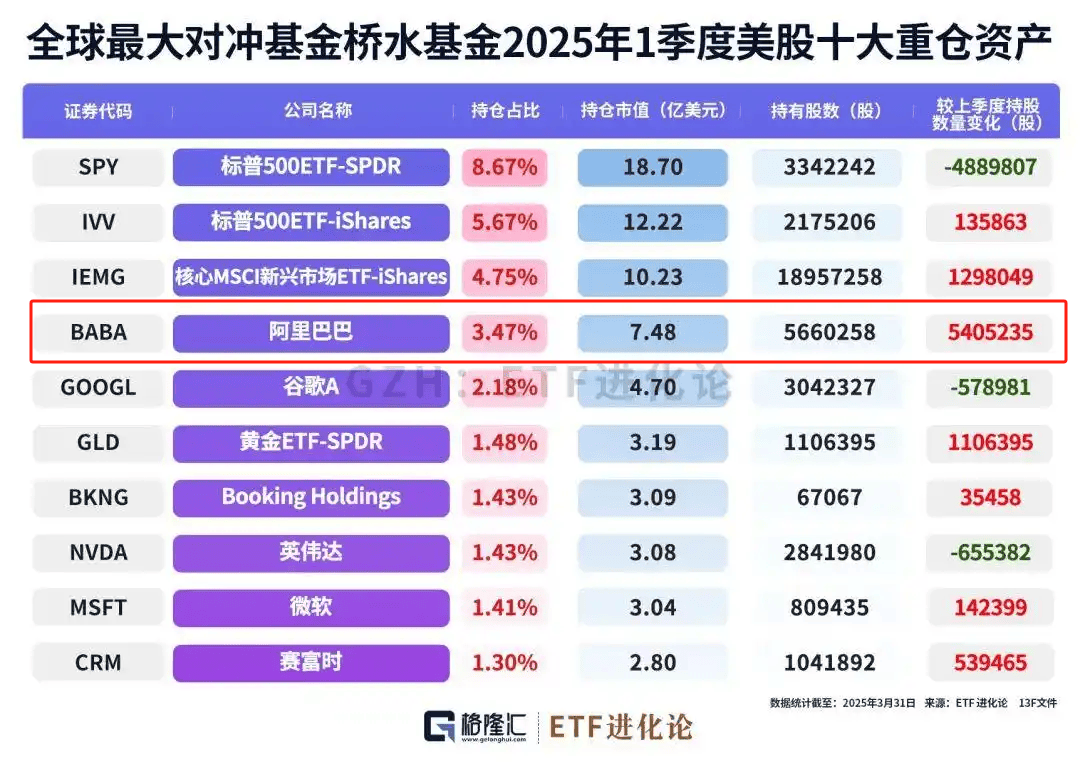
Core Viewpoint - Recent capital inflow into Chinese e-commerce indicates strong investor confidence, with major funds significantly increasing their positions in companies like Alibaba and JD.com [1][5]. Group 1: Investment Activity - Bridgewater Associates increased its holdings in Alibaba by 2119% in Q1, reflecting a strong bullish sentiment [1]. - The fund also initiated a position in JD.com with 2.78 million shares, valued at $114 million, making it the second-largest new position [1]. - Hillhouse HHLR Advisors included Vipshop in its top 10 holdings, indicating positive sentiment towards the company [2]. Group 2: Market Performance - The retail sales in China reached 12.47 trillion yuan in Q1, showing a year-on-year growth of 4.6%, indicating a clear recovery in consumer spending [5]. - JD.com reported Q1 revenue of 301.1 billion yuan, a 15.8% increase year-on-year, while Alibaba's revenue was 236.4 billion yuan, growing by 7% [5]. - Vipshop's Q1 revenue was 26.3 billion yuan, with a GMV of 52.4 billion yuan, demonstrating steady growth despite its smaller size [5]. Group 3: Industry Trends - E-commerce companies are focusing on high-quality development and improving user experience, as evidenced by JD.com's active user growth of over 20% and Vipshop's SVIP user growth of 18% [7]. - The shift towards customer-centric strategies is seen as essential for sustainable growth in the e-commerce sector, moving away from merely pursuing scale and profit [7]. - Upcoming promotional events like the 618 shopping festival are adopting simpler discount strategies to enhance customer experience [7].

金十图示:2025年05月21日(周三)全球主要科技与互联网公司市值变化
news flash· 2025-05-21 02:59
| 亚德诺 | 1113 | -0.02% | 224.49 | | --- | --- | --- | --- | | CrowdStrike | 1101 | -0.47% | 442.25 | | N 美光科技 | 1096 | -0.56% | 98.1 | | 拉姆研究 | 1078 | 1 0.56% | 84.29 | | 美团 美团 | 1066 | 1 0.15% | 17.45 | | Keyence | 1054 | -0.71% | 434.77 | | 科雷 | 1045 | 1 0.42% | 790.29 | | SK Hynix 110 | 1000 | + -0.5% | 144.96 | | sed Sea Limited | del | -0.19% | 162.41 | | intel 英特尔 | 927 | 0.51% | 21.27 | | 任天堂 | 920 | -1.47% | 1 78.82 | | 费哲金融服务 | 919 | + -1.93% | 165.87 | | 铿腾电子 cadence | 875 | 1 0.08% | 320.55 | | DO ...

摩根大通中国市场峰会:三大关键投资主题
Zhi Tong Cai Jing· 2025-05-21 02:29
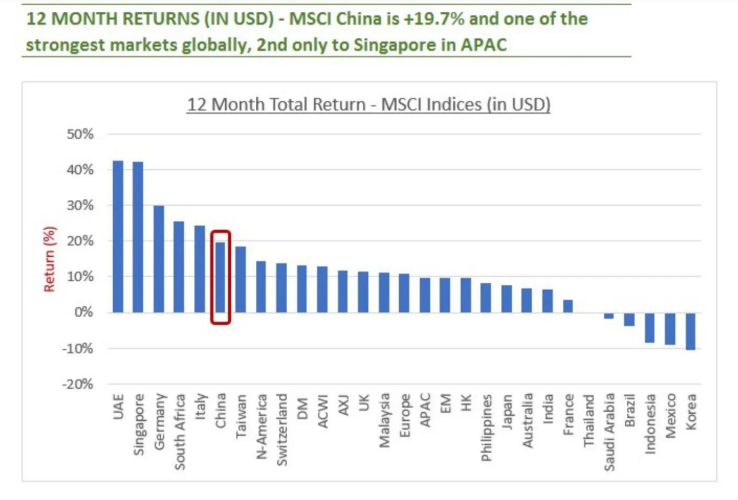
Core Insights - The Morgan Stanley China Summit is set to begin this week with over 2,800 participants, reflecting a more optimistic market sentiment compared to last year, which was focused on hope for policy shifts and growth stabilization that have since materialized [1] - The consensus for EPS growth for the MSCI China Index is projected at 8.3% for 2025 and 11.8% for 2026, with potential upside risks driven by increased AI applications [1][2] Group 1: Investment Themes - Three key investment themes highlighted by Morgan Stanley include: (1) AI innovations in enterprises, particularly in robotics and autonomous driving; (2) consumer demand supported by government policies; (3) the current state and future trajectory of US-China relations [2][10] Group 2: Market Positioning - Emerging market funds have returned to neutral positioning in Hong Kong/China markets, with a median overweight of +0.2 percentage points, ending a two-year low allocation period [4] - Global and EAFE funds remain significantly underweight in the Chinese market, requiring approximately $475 billion in long positions to adjust to neutral [4] Group 3: Market Performance - The MSCI China Index has risen 19% over the past year, outperforming the S&P 500 Index (+14%) and emerging markets (+10%), with a year-to-date increase of 16% [5][9] - Recent performance has lagged slightly, with a 9% increase in the past month compared to the S&P 500's 15% rise [5] Group 4: Valuation Metrics - The MSCI China Index's P/E ratio is currently at 12.6x, and P/B ratio at 1.6x, indicating valuations are no longer a barrier to market growth [6] - There are still significant value opportunities, particularly in the consumer discretionary sector, which is trading at a 30% discount to its 10-year average [6][11] Group 5: Consumer Sector Insights - The Chinese government is shifting focus from supply-side growth to boosting demand, which is crucial for EPS growth in consumer companies [10] - There is a notable disconnect between the earnings growth and stock performance of leading Chinese consumer companies, presenting attractive buying opportunities [11] Group 6: AI and Innovation - The focus on AI applications is expected to grow, with significant interest in "physical AI" such as robotics and advanced driver-assistance systems (ADAS) [14][15] - Companies like UBTECH and Unitree are leading in the humanoid robotics space, with a projected market size of $5 billion for humanoid robots [14] Group 7: US-China Relations - The strategic competition between the US and China extends beyond trade, with deep-rooted geopolitical tensions and a spectrum of potential outcomes ranging from a grand bargain to a new cold war [18][20][22] - The current geopolitical landscape poses risks for companies operating in both markets, with implications for their strategic decisions and operations [18]