万润新能

Search documents
《关于26年实施大规模设备更新和消费品以旧换新政策的通知》点评:电动车补贴延续,26年电动车渗透率有望再提升
Shenwan Hongyuan Securities· 2025-12-31 07:12
Investment Rating - The industry investment rating is "Overweight" indicating a positive outlook for the sector compared to the overall market performance [2]. Core Insights - The report highlights the continuation of electric vehicle (EV) subsidies in 2026, which is expected to enhance the penetration rate of EVs and boost sales, particularly for mid to high-priced models [2]. - The implementation of a large-scale equipment renewal and consumer goods replacement policy reflects the government's commitment to supporting the consumption of new energy vehicles [2]. - The report anticipates a strong demand for lithium batteries in 2026, driven by the sustained growth in electric vehicle sales and the continuation of the old-for-new policy [2]. Summary by Sections Policy Impact - The 2026 policy includes subsidies for scrapping and replacing old vehicles, with personal consumers receiving up to 20,000 yuan for qualifying new energy vehicles [2]. - The policy aims to support the transition to low-emission vehicles, including electric trucks and city buses, thereby alleviating concerns about subsidy reductions for electric heavy trucks [2]. Market Performance - In 2025, the old-for-new policy significantly boosted the sales of new energy vehicles, with production and sales reaching 14.91 million and 14.78 million units respectively, marking a year-on-year growth of 31.4% and 31.2% [2]. - The report notes that the domestic power battery sales reached 1,044.3 GWh in 2025, reflecting a 50.3% year-on-year increase, indicating a robust market for battery manufacturers [2]. Investment Recommendations - The report suggests focusing on leading battery companies such as CATL, Zhongxin Innovation, and Yiwei Lithium Energy, as well as material suppliers like Hunan Youneng and Tianwei Technology, due to their strong market positions and growth potential [2]. - The anticipated increase in electric vehicle penetration and battery demand presents a favorable investment landscape for stakeholders in the new energy sector [2].



20cm速递|关注创业板新能源ETF国泰(159387)投资机会,锂电产业链检修与价格波动引关注
Mei Ri Jing Ji Xin Wen· 2025-12-31 03:35
Group 1 - Several lithium iron phosphate companies, including Hunan Youneng, Wanrun New Energy, Defang Nano, and Anda Technology, have announced production line maintenance, with a reduction scale expected between 0.3 to 3.5 million tons, and maintenance duration of about one month [1] - Lithium carbonate prices continue to rise, reaching 111,900 yuan per ton this weekend, an increase of 17,400 yuan per ton compared to two weeks ago [1] - Prices for ternary cathodes, lithium iron phosphate cathodes, and wet separators have also increased, along with a rise in battery cell prices [1] Group 2 - The solid-state battery industry is accelerating, with XINWANDA Power signing a strategic cooperation framework agreement with Zhongwei Co., and QuantumScape signing a joint development agreement with a top ten global automaker [1] - Major contracts in the lithium battery supply chain are increasing, with CATL signing a ten-year deep cooperation agreement with Lantu and a three-year 50GWh energy storage cooperation memorandum with Siyuan Electric [1] - European new energy vehicle sales have shown strong growth, with a year-on-year increase of 41% in November across nine European countries, achieving a penetration rate of 34.6%, while domestic new energy vehicle sales increased by 21% year-on-year, with a penetration rate of 53.2% [1] Group 3 - The ChiNext New Energy ETF Guotai (159387) tracks the Innovation Energy Index (399266), which has a daily price fluctuation limit of 20%, selecting innovative enterprises in renewable energy, clean energy technology, and equipment manufacturing to reflect the overall performance of companies with technological advantages and sustainable development potential in the new energy sector [1]

手握3200亿现金与5500亿债务压顶:“宁王”不停融资的A面B面
投中网· 2025-12-31 03:04
Core Viewpoint - CATL is actively seeking to raise funds through bond issuance despite having substantial cash reserves, indicating a strategic response to increasing competition and the need for aggressive expansion in the battery market [5][6][9]. Financial Position - CATL plans to issue bonds up to RMB 10 billion, with proceeds aimed at project construction, operational funding, and debt repayment [6]. - As of Q3, CATL holds cash reserves of RMB 324.24 billion, significantly higher than its peers [6]. - The company's financial assets increased by 202.9% year-on-year to RMB 43.26 billion, with investment income rising by 67.46% to RMB 5.24 billion [6]. Market Competition - CATL's market share in the power battery sector has declined to 41.7% in Q3 2025, down from 45.3% in the same period of 2024, marking the lowest level in five years [9]. - Competitors like Yiwei Lithium Energy have shown strong growth, with a 66.98% increase in battery shipments and a rise in market share from 3% to 4.6% [9][10]. Expansion Plans - CATL is aggressively expanding production capacity, with construction projects in various locations, leading to a 48.27% increase in ongoing projects year-on-year, totaling RMB 37.37 billion [11]. - The company is also investing heavily in overseas projects, with total investments in three major projects reaching RMB 136.7 billion [12][17]. Debt and Financing Strategy - CATL's total liabilities are projected to exceed RMB 600 billion this year, reflecting a significant increase in debt levels over recent years [18][22]. - The company's debt-to-asset ratio was 61.27% in Q3 2025, higher than the industry average of 48.67% [21]. - CATL has adopted a high-leverage financial strategy, which could pose risks if market conditions deteriorate [22].


碳酸锂期货日报-20251231
Jian Xin Qi Huo· 2025-12-31 01:55
碳酸锂期货日报 行业 日期 2025 年 12 月 31 日 一、 行情回顾与操作建议 研究员:张平 021-60635734 zhangping@ccb.ccbfutures.com 期货从业资格号:F3015713 021-60635729 yufeifei@ccb.ccbfutures.com 期货从业资格号:F3025190 021-60635740 pengjinglin@ccb.ccbfutures.com 期货从业资格号:F3075681 有色金属研究团队 研究员:余菲菲 研究员:彭婧霖 请阅读正文后的声明 #summary# 每日报告 每日报告 数据来源:Wind,建信期货研究发展部 图1:碳酸锂现货价及价差 图2:碳酸锂期货持仓量成交量 数据来源:Wind,建信期货研究发展部 碳酸锂期货探底回升,总持仓增 212,贵金属大跌令期货早盘低开,但现货报价 相对坚挺令期货止跌,钢联早盘优质电碳报价 117000,晚盘报价 117250,下调 2050,现货再度对盘面贴水。澳矿降 15 至 1550,锂云母持平 3400,三元涨 100-150, 铁锂持平,电解液持平。12 月 25 日至 29 日 ...
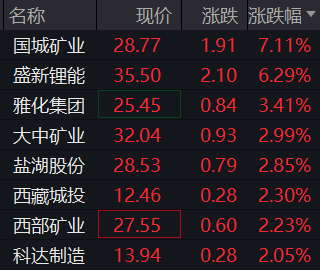
锂矿概念爆发!磷酸铁锂厂商掀减产潮,国城矿业暴涨7%,盛新锂能涨超6%
Jin Rong Jie· 2025-12-31 01:51
Group 1 - Lithium mining sector shows strong performance with companies like Guocheng Mining up over 7% and Shengxin Lithium Energy up over 6% [1][2] - Several companies including Longpan Technology and Hunan Youneng have announced production cuts, with reductions expected to impact output by 3,000 to 35,000 tons [3] - Tianqi Lithium announced a change in its spot trading settlement price, now referencing Mysteel battery-grade lithium salt prices or the main contract price of lithium carbonate futures [3] Group 2 - The lithium mining industry is expected to benefit from rising lithium salt prices and increased demand from energy storage and new energy vehicles, leading to improved profitability [4] - The positive outlook for lithium battery cathode materials is driven by reduced supply from phosphate lithium manufacturers and growing demand from downstream sectors [4] - The energy storage battery sector is anticipated to see performance growth as lithium prices stabilize and demand for storage projects accelerates [4]



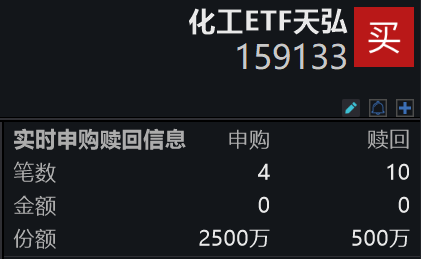
化工行情接棒商业航天!化工ETF天弘(159133)昨日净申购2000万份,近5日“吸金”4800万元,跟踪指数再创年内新高!
Sou Hu Cai Jing· 2025-12-31 01:38
Group 1 - The core viewpoint of the news highlights the strong performance of the Tianhong Chemical ETF (159133), which saw a turnover of 4.42% and a transaction volume of 26.6075 million yuan, with the underlying index rising by 1.84% to reach a new annual high [1][3] - The Tianhong Chemical ETF has achieved a record high in size at 629 million yuan and a record high in shares at 567 million, with a net inflow of 21.9844 million yuan recently [3] - The chemical sector is characterized by its complexity and rapid rotation, with the Tianhong Chemical ETF tracking 50 leading companies, covering both traditional cyclical sectors and emerging growth areas [3] Group 2 - Recent news indicates that major companies in the lithium iron phosphate industry, including Wanrun New Energy and Hunan Youneng, have announced maintenance and production cuts, with reductions of 35% to 50% planned for January 2026 [3][4] - Research institutions suggest that the collective maintenance in the lithium iron phosphate industry is a response to rising raw material costs, leading to increased operational pressure on companies [4] - The lithium battery supply chain is experiencing a rise in both volume and price, with significant increases in production and prices for lithium carbonate and lithium iron phosphate, indicating a recovery in downstream demand [5]


四大证券报头版头条内容精华摘要_2025年12月31日_财经新闻
Xin Lang Cai Jing· 2025-12-30 23:15
Group 1 - The Central Rural Work Conference was held in Beijing, focusing on the "three rural issues" and outlining the work plan for 2026 [1] - The 2026 "Two New" policy has been announced, expanding the scope of subsidies for digital and smart products [2][18] - The copper market has seen a significant price increase, with LME three-month copper rising over 40%, indicating strong market performance [3][19] Group 2 - The 2026 "Two New" policy includes updates on support areas and subsidy standards, with an initial allocation of 625 billion yuan for consumer goods replacement [10][25] - The personal housing sales tax rate has been reduced from 5% to 3% for properties sold within two years, effective January 1, 2026 [5][21][26] - The new VAT implementation regulations will take effect on January 1, 2026, aiming to enhance tax incentives [9][24] Group 3 - The stock market has seen over 2,800 A-share companies receiving broker research attention, with machinery, electronics, and biomedicine being the most favored sectors [4][20] - Huawei's chairman announced a strategic focus on seven business directions for 2026, emphasizing the development of the Harmony ecosystem [14][29] - The new display technology industry is projected to reach an output value of 800 billion yuan, capturing nearly 54% of the global market [8][23]
传递“挺价”信号 多家磷酸铁锂龙头相继减产检修
Zheng Quan Ri Bao Zhi Sheng· 2025-12-30 16:13
Core Viewpoint - Several lithium iron phosphate (LFP) manufacturers, including Hunan YN Energy Battery Materials Co., Ltd. and Guizhou Anda Technology Energy Co., Ltd., announced production cuts for maintenance to ensure stable operations amid rising raw material costs and squeezed profit margins [1][2][3]. Group 1: Production Cuts and Maintenance - Multiple LFP manufacturers plan to reduce production and conduct maintenance from January 1, 2026, for one month, stating that this will not significantly impact their 2026 financial performance [1]. - Anda Technology expects a reduction of 3,000 to 5,000 tons in LFP output due to maintenance, attributing this decision partly to rising upstream raw material prices [2]. Group 2: Market Dynamics and Pricing Pressure - The LFP industry has seen a strong recovery since Q3 2025, driven by increased demand for energy storage, with many leading companies operating at full capacity and some even exceeding it [2]. - Despite the recovery, LFP manufacturers face significant pricing pressure due to high raw material costs and limited ability to pass these costs onto downstream customers, leading to squeezed profit margins [2][3]. Group 3: Strategic Responses and Industry Challenges - The collective decision to reduce production is seen as a strategy to signal price increases to reluctant downstream battery customers, aiming to reverse ongoing losses [3]. - The industry is characterized by weak bargaining power for LFP manufacturers, who are caught between fluctuating raw material prices and long-term contracts with major battery producers [3][4]. Group 4: Innovation and Industry Development - The China Chemical and Physical Power Industry Association has called for a shift in focus from price competition to enhancing technology, product performance, and manufacturing processes [5]. - Companies are encouraged to invest in research and development to improve key performance indicators such as energy density and safety, aiming to build a high-quality industry ecosystem driven by innovation [5].
锂价翻倍、LFP 集中停产、电池厂加注钠电 锂电产业链博弈“三重门”
高工锂电· 2025-12-30 10:55
Core Viewpoint - The lithium battery industry is undergoing significant changes in pricing mechanisms, production adjustments, and technological advancements, with key players like Tianqi Lithium leading the way in redefining pricing structures and production strategies [3][8][41]. Pricing Restructuring - Lithium carbonate prices have surged, with the benchmark price exceeding 120,000 yuan/ton by December 30, marking a more than 30% increase from the beginning of the month and doubling from the year's low of under 60,000 yuan/ton [5][6]. - Tianqi Lithium announced a shift in its pricing model starting January 1, 2026, moving from a single pricing reference to a dual structure based on either the Mysteel index or the futures contract price, allowing customers to choose [9][10][12]. Production Adjustments - Major players in the lithium iron phosphate sector, including Hunan Youneng and Wanrun New Energy, have announced production cuts due to high operational loads and maintenance needs, with total reductions estimated between 30,000 to 70,000 tons, representing 7% to 17% of the domestic output in January [17][19][20]. - The industry is experiencing a shift from total price negotiations to discussions around processing fees, with leading companies seeking to raise processing fees by 2,000 to 3,000 yuan/ton to offset rising raw material costs [24][22]. Technological Developments - Sodium-ion batteries are gaining attention, with companies like CATL aiming for large-scale applications by 2026, focusing on energy storage and commercial vehicles [35][39]. - The economic viability of sodium-ion batteries is becoming more favorable as they do not require lithium carbonate or copper, providing a cost advantage in a high-price environment [38][39]. Market Dynamics - The lithium battery supply chain is attempting to redefine profit and risk boundaries in anticipation of a "tight balance" in 2026, with various strategies being employed across different segments of the industry [43][44]. - The overall net profit margin for lithium battery companies is around 9%, with upstream resources maintaining higher profitability while many midstream and downstream companies face tighter cash flows [42].


1月锂电排产“踩刹车”,但国补续期预期升温
高工锂电· 2025-12-30 10:55
Group 1 - The core viewpoint of the article highlights a convergence of supply-side adjustments and demand-side support in the lithium battery and new energy vehicle industry as it enters 2026, with a notable reduction in production and an extension of government subsidies for vehicle trade-ins [1][7][9] Group 2 - In January 2026, the production of lithium batteries in China is estimated to be around 210 GWh, reflecting a month-on-month decline of over 4%, while global production is expected to be approximately 220 GWh, down more than 6% [2] - Major battery manufacturers in mainland China are planning a production decrease of about 7% in January 2026, with some companies reducing output by nearly 10%, which is worse than previous optimistic expectations of a low single-digit adjustment [2][3] - The decline in production is attributed to seasonal factors and negotiations with upstream suppliers rather than a systemic deterioration in end-demand [3] Group 3 - Leading companies in the cathode material sector, such as Hunan Youneng and Wanrun New Energy, have announced production cuts or maintenance starting January 1, 2026, with reductions in phosphate cathode products expected to range from 3,000 to 35,000 tons [4][5] - The companies involved in these maintenance announcements hold a significant market share, and the rationale provided focuses on the need for safety and quality assurance, although market interpretations lean towards price factors [5][6] Group 4 - The government has confirmed the continuation of subsidies for vehicle trade-ins in 2026, emphasizing a more precise and structured approach to support [7][9] - Data from the Ministry of Commerce indicates that trade-in programs led to over 2.5 trillion yuan in sales from January to November 2025, with over 11.2 million vehicles traded in, significantly boosting the automotive market [8] Group 5 - The expected changes in subsidy structures may lead to a redistribution of support, favoring high-end electric vehicles while potentially reducing subsidies for lower-priced models, accelerating structural differentiation in the automotive market [10][12] - The adjustments in subsidy mechanisms are anticipated to impact the competitiveness of different vehicle types, pushing manufacturers to invest more in technology and efficiency [13] Group 6 - The interplay between reduced production in January and the continuation of government subsidies is not merely a simple balancing act but reflects a complex reallocation of risks and rewards across the industry under high costs and low profits [14]