任天堂

Search documents
日本股市没想到过去10年回报还行
集思录· 2025-12-14 14:17
Core Viewpoint - The article discusses the performance of the Japanese stock market and its relationship with the country's economic growth, highlighting the disparity between stock market returns and GDP growth rates [2][3]. Group 1: Japanese Stock Market Performance - The annualized return of the Japanese stock market over the past 10 years is approximately 7.8% [2]. - Major companies mentioned include Toyota with a market cap of over 2 trillion RMB and a PE ratio of 8.67, Fast Retailing with a market cap of 800 billion RMB and a PE of 39, and others like SoftBank, Mitsubishi, Sony, Hitachi, and Nintendo [2]. - The article notes that the performance of the stock market may not directly correlate with domestic economic growth, as many large companies operate internationally [6][11]. Group 2: Economic Growth Data - Japan's GDP growth rates from 2020 to 2023 show fluctuations: -4.3% in 2020, +2.1% in 2021, +1.0% in 2022, and +1.9% in 2023 [2]. - IMF forecasts for 2024 and 2025 predict GDP growth rates of 0.7% and 0.5%, respectively, citing factors like insufficient domestic demand and an aging population [2][4]. Group 3: Global Economic Context - Japan's share of the global GDP has significantly decreased from 17.7% in 1995 to an estimated 3.6% in 2024, indicating a substantial decline in its economic influence [3][4]. - The article suggests that the stock market's performance may not be a reliable indicator of the overall economy, as evidenced by the contrasting trends in GDP and stock market returns [3][10]. Group 4: Investment Strategies - The article mentions that the Bank of Japan has been actively buying Japanese stocks for over 15 years, contributing to market liquidity [12]. - Notable investors like Warren Buffett have shown interest in Japanese companies, focusing on valuation, fundamentals, and shareholder return mechanisms [7].



什么样的人,能在这个时代里活得很好?
Sou Hu Cai Jing· 2025-12-12 21:13
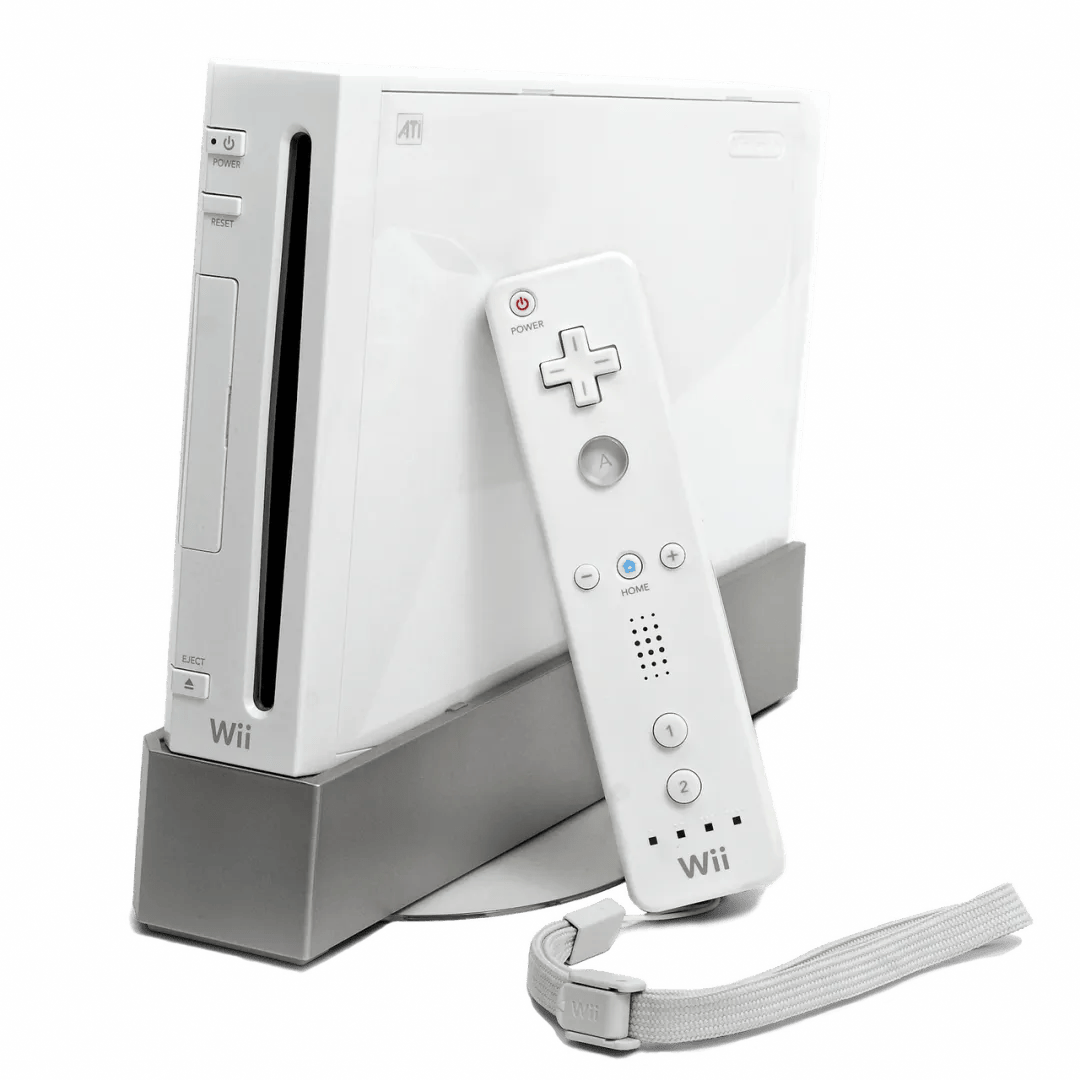
Core Insights - The current era rewards stability and prudence in business practices [2][27] - Companies with strong cash reserves can navigate challenges more effectively [18][27] Group 1: Case Study of Nintendo - Nintendo revolutionized the gaming industry with the launch of Wii, selling over 100 million units and significantly increasing its market value [5][24] - The failure of Wii U led to substantial losses, with stock prices plummeting back to 10,000 yen and market value evaporating by over 85% [9][10] - Despite pressure from the market to cut costs and pivot to software, Nintendo's leadership maintained a conservative financial strategy, preserving cash reserves of over 1 trillion yen [17][18] - This financial stability allowed Nintendo to retain talent, invest in R&D, and explore innovative ideas without immediate pressure for profitability [20][21][22] - The successful launch of the Switch in 2017, which sold over 140 million units, marked a significant recovery for Nintendo [24][25] Group 2: Principles of Stability - Companies should maintain a robust cash reserve to ensure operational flexibility during downturns [27][35] - Stability encompasses three key aspects: capability stability, financial stability, and mental resilience [33][34][35] - The ability to adapt and learn new skills is crucial for long-term success in a changing market [34] - Financial stability provides the freedom to make choices without immediate economic pressure [35] - Mental resilience allows individuals and companies to navigate challenges while maintaining a clear strategic vision [36]
TGA把我干懵了——《33号远征队》横扫9大奖,创下纪录
3 6 Ke· 2025-12-12 08:48
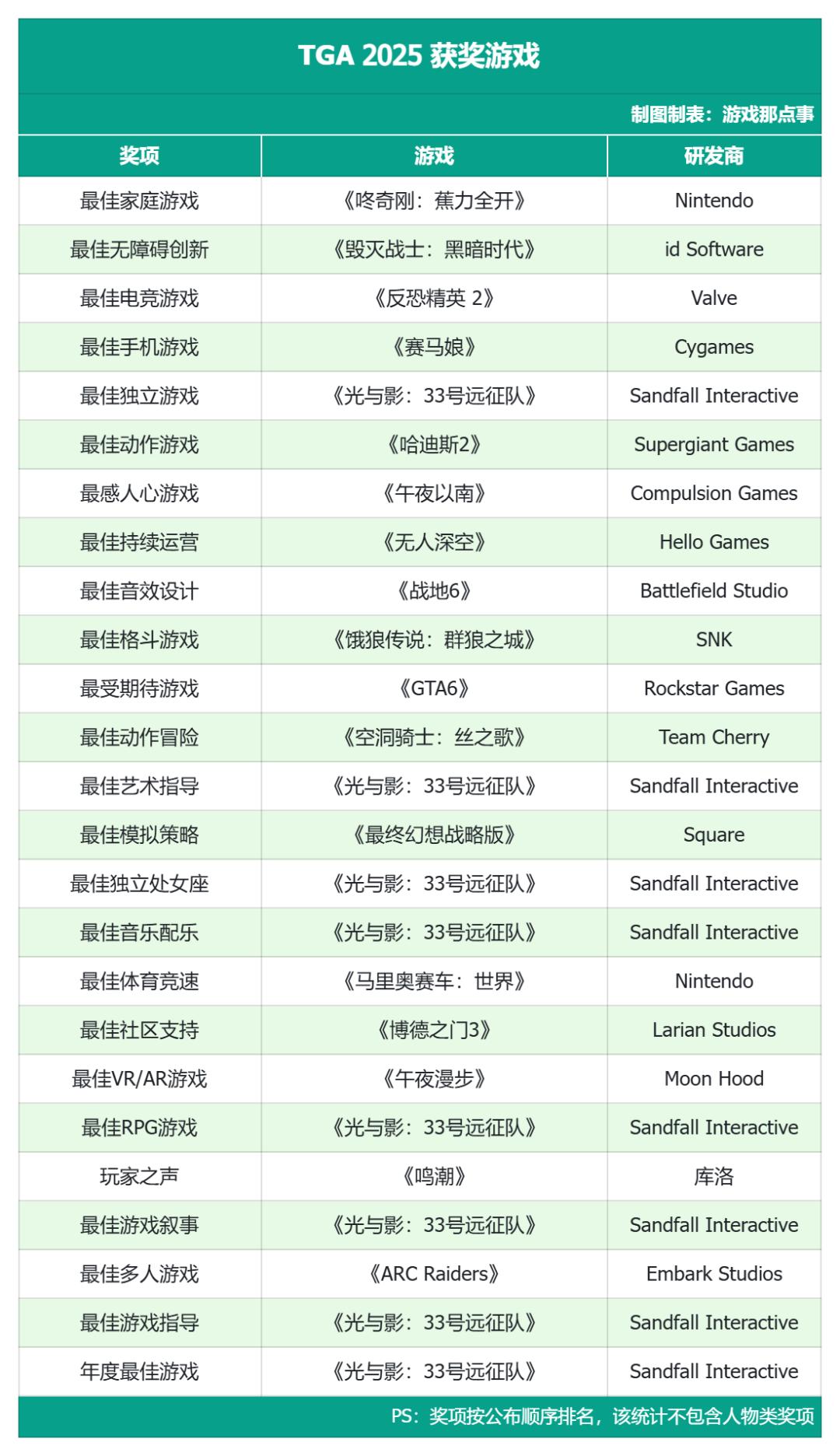
Core Insights - The 2025 TGA (The Game Awards) has been criticized as one of the worst editions, despite the anticipated winner being "33号远征队" [1][4][24] - The awards have sparked significant debate among players regarding the selection process and the perceived importance of TGA in the gaming industry [9][11][31] Award Summary - Best Family Game: "咚奇刚:蕉力全开" by Nintendo [3] - Best Accessibility Innovation: "毁灭战士:黑暗时代" by id Software [3] - Best Esports Game: "反恐精英 2" by Valve [3] - Best Mobile Game: "赛马娘" by Cygames [3] - Best Independent Game: "光与影:33号远征队" by Sandfall Interactive [3] - Best Action Game: "哈迪斯2" by Supergiant Games [3] - Most Emotional Game: "午夜以南" by Compulsion Games [3] - Best Ongoing Game: "无人深空" by Hello Games [3] - Best Sound Design: "战地6" by Battlefield Studio [3] - Best Fighting Game: "饿狼传说:群狼之城" by SNK [3] - Most Anticipated Game: "GTA6" by Rockstar Games [3] - Best Action-Adventure: "空洞骑士:丝之歌" by Team Cherry [3] - Best Art Direction: "光与影:33号远征队" by Sandfall Interactive [3] - Best Simulation Strategy: "最终幻想战略版" by Square [3] - Best Independent Debut: "光与影:33号远征队" by Sandfall Interactive [3] - Best Music Score: "光与影:33号远征队" by Sandfall Interactive [3] - Best Sports Racing: "马里奥赛车:世界" by Nintendo [3] - Best Community Support: "博德之门3" by Larian Studios [3] - Best VR/AR Game: "午夜漫步" by Moon Hood [3] - Best RPG Game: "光与影:33号远征队" by Sandfall Interactive [3] - Best Game Narrative: "光与影:33号远征队" by Sandfall Interactive [4] - Best Multiplayer Game: "ARC Raiders" by Embark Studios [4] - Best Game Direction: "光与影:33号远征队" by Sandfall Interactive [4] - Game of the Year: "光与影:33号远征队" by Sandfall Interactive [4] Industry Context - The TGA has faced ongoing criticism regarding its relevance and the selection process, with many players questioning the significance of the awards [11][24][31] - The awards are perceived as being heavily influenced by Western media and industry standards, which may not fully represent the global gaming landscape [23][35] - Despite criticisms, TGA remains a significant platform for global exposure, especially for Chinese games, which are increasingly impacting the awards' narrative and selection criteria [32][36][40]
不到 2 分钟,6 岁小孩用 AI 建了个网站!律师老爸当场“破防”:我阻止了十多年的事,他随手就做到了
程序员的那些事· 2025-12-12 01:57
Core Viewpoint - The article discusses the potential copyright crisis brought about by generative AI, highlighting how even a 6-year-old can create potentially infringing content in seconds using AI tools, which poses significant challenges for the intellectual property (IP) industry [1][12][14]. Group 1: AI and Copyright Challenges - A 6-year-old child was able to create a fully interactive website called "Bedtime Story Weaver" using Google AI Studio in under 2 minutes without any coding experience [6][5]. - The website allows users to generate complete stories and illustrations based on simple inputs, demonstrating how AI can democratize content creation [6][8]. - The child generated a story featuring characters from major franchises like Sonic and Mario, which raised immediate concerns about copyright infringement [10][12]. Group 2: Implications for IP Professionals - Jonathan Menkes, an IP lawyer, emphasized that the ease of generating infringing content with AI tools indicates that many in the IP industry are unprepared for the challenges posed by AI [13][14]. - The traditional barriers to creating infringing content, such as the need for technical skills and software, have been eliminated, making it accessible to anyone, including children [14][13]. - Menkes advocates for IP professionals to understand AI technology and anticipate the issues and opportunities it presents, as the scale and speed of potential infringements far exceed traditional monitoring capabilities [14][15]. Group 3: Recommendations for IP Holders - IP holders should assess their current copyright monitoring systems to ensure they can handle the scale of AI-generated content [14][15]. - Companies are encouraged to test new AI tools for built-in copyright safety mechanisms and to push for the implementation of filtering systems if such mechanisms are lacking [15][16]. - Establishing a rapid response mechanism to address infringements promptly is crucial, as the future of IP enforcement may depend on the ability to compel AI companies to implement protective measures [16][14]. Group 4: Future Outlook - There is concern that only large corporations will be able to effectively navigate the evolving copyright landscape, potentially leaving individual creators and small companies vulnerable to exploitation by AI [17][14]. - The article suggests that while AI may necessitate urgent updates to copyright laws, the outcome remains uncertain, with ongoing debates about the implications for creators and IP holders [17][14].

X @Bloomberg
Bloomberg· 2025-12-11 19:13
Holiday shoppers are filling their baskets with pricey video game consoles, likely unaware of the seismic supply-chain shift hitting the industry. From Sony’s PS5, to Xboxes and the Nintendo Switch 2 — the packaging now likely reads “Made in Vietnam.”@andretartar explains https://t.co/VQKDyRokVN ...
腾讯为何也要买华纳:引入HBO、参投哈利波特或纯财务?
3 6 Ke· 2025-12-11 12:15
Core Insights - Warner Bros. Discovery (WBD) is currently engaged in a significant merger battle, with Netflix proposing an $82.7 billion acquisition and Paramount's Oracle-backed bid of approximately $108.4 billion in cash [1][2] - Tencent has withdrawn from the bidding process for WBD to avoid U.S. national security scrutiny, despite previously committing $1 billion to support Paramount's acquisition [2][3] Group 1: Acquisition Details - Paramount's cash offer is set at $30 per share, totaling over $100 billion, while Netflix's offer primarily involves stock [2] - The involvement of foreign sovereign wealth funds from Saudi Arabia, Abu Dhabi, and Qatar in the Paramount bid is noted, as they agreed to relinquish management rights to avoid additional scrutiny [2][3] Group 2: Political and Regulatory Context - The acquisition of WBD by a Chinese tech giant like Tencent would raise significant political concerns in the U.S., particularly regarding media ownership and national security [3][4] - The urgency of the bidding war is emphasized, as Paramount must demonstrate a more stable and quicker transaction to WBD shareholders compared to Netflix's offer [3][16] Group 3: Tencent's Historical Involvement - Tencent has been a strategic shareholder in Skydance Media for seven years, initially investing over $100 million for a 5-10% stake [4][6] - Tencent's previous involvement in projects like "Terminator: Dark Fate" and its eventual withdrawal from "Top Gun: Maverick" due to concerns over U.S.-China relations illustrate the complexities of its investment strategy [6][8] Group 4: Broader Industry Implications - The competition for WBD highlights the increasing influence of Middle Eastern capital in the entertainment industry, as they seek to reshape global cultural narratives [12][14] - The ongoing battle between WBD, Paramount, and Netflix may extend into the next year, with WBD shareholders facing a tight deadline to respond to Paramount's hostile takeover bid [16]



Nintendo Loses Billions in Market Value Amid Worries Over Surging Chip Costs
MarketWatch· 2025-12-11 09:44
Core Viewpoint - Nintendo's shares have experienced a decline of over 10% in the past week, primarily due to concerns regarding increasing memory-chip prices [1] Company Summary - Nintendo's stock performance has been negatively impacted, with a notable drop exceeding 10% [1] - Analysts attribute this decline to worries surrounding the rising costs of memory chips, which are critical components for gaming consoles and devices [1] Industry Summary - The gaming industry is facing challenges related to supply chain issues, particularly in the semiconductor sector, which includes memory chips [1] - Rising memory-chip prices could affect not only Nintendo but also other companies within the gaming and technology sectors, potentially leading to increased production costs and reduced profit margins [1]


出生安徽,台湾旺宏电子吴敏求之“铁汉”传奇
Xin Lang Cai Jing· 2025-12-11 06:12
Core Insights - The article highlights the recognition of Wu Minqiu, chairman of Winbond Electronics, as the recipient of the 19th Pan Wen-yuan Award, a prestigious honor in Taiwan's technology industry, emphasizing his significant contributions to the semiconductor sector [1][13]. Group 1: Background and Early Life - Wu Minqiu was born in 1948 in Anhui and moved to Taiwan as an infant, where he developed resilience in a challenging environment [3][16]. - His education at Cheng Kung University and Stanford University shaped his character, where he learned to survive in scarcity [3][16]. Group 2: Career Beginnings - In 1989, Wu made a bold decision to leave his high-paying job at Intel to establish Winbond Electronics with over 40 semiconductor experts, despite the nascent state of Taiwan's semiconductor industry [5][18]. - Initial funding challenges were overcome with the help of venture capitalist Hu Dinghua, who provided NT$800 million and connections to other financial institutions [5][18]. Group 3: Business Strategy and Challenges - Wu's strategy focused on independent research and development in the non-volatile memory sector, which was initially overlooked but later proved to be a wise decision as demand surged in the consumer electronics era [7][20]. - Winbond faced significant losses from 2012 to 2017, totaling NT$23 billion, yet Wu maintained his commitment to R&D and avoided layoffs during this period [9][20]. Group 4: Recovery and Growth - The company's turnaround was marked by a focus on technology, leading to partnerships with major clients like Nintendo and Apple, and establishing Winbond as a leader in NOR Flash technology [9][22]. - Wu's leadership resulted in a remarkable recovery from annual losses to stable profitability within five years, showcasing the importance of core technology independence [9][22]. Group 5: Recognition and Legacy - Wu's receipt of the Pan Wen-yuan Award is seen as a recognition of both his personal achievements and Winbond's innovative business model, reflecting a shift in Taiwan's semiconductor industry from technology importation to self-innovation [11][24]. - His story serves as an inspiration, illustrating the journey of Taiwan's semiconductor industry and the value of perseverance and innovation in overcoming adversity [12][25].

高盛:人民币被严重低估,真实价值为5.0
Sou Hu Cai Jing· 2025-12-11 02:10
China - The Chinese government has established a "moderately loose" monetary policy, leading to a steepening of the government bond yield curve, with the 30-year and 2-year yield spread reaching a year-to-date high. This is driven by liquidity easing expectations, with the central bank injecting 110.5 billion yuan in a single day and lowering the overnight repo rate to 1.28%, a new low for 2023. The long end of the curve is under pressure due to a significant supply-demand mismatch, with a 30% year-on-year increase in 30-year bond supply and a projected fiscal expansion in 2026 [5][12][15]. - Goldman Sachs estimates that the Chinese yuan is currently about 25% structurally undervalued, with a fair value theoretically anchored at 5.0. The bank has designated the yuan as a "high conviction" trade, arguing that even a gradual appreciation will maintain export competitiveness despite market concerns [7][10]. - Data since 2017 shows a strong correlation between a strong yuan and strong exports, contradicting traditional fears that yuan appreciation would hinder export competitiveness. This reflects the inherent resilience of China's macroeconomic fundamentals, where strong industrial competitiveness supports external demand expansion and currency stability [10][21]. - The "carry-to-volatility" ratio in the Chinese bond market has collapsed to extremely low levels, limiting the attractiveness of long-duration bonds. With the central bank's slow interest rate cuts already partially priced in, the meager carry space fails to adequately compensate for the volatility risks associated with holding long-term bonds [12][15]. - Recent data indicates that the complexity of China's export products has significantly diverged from low-end assembly represented by Vietnam, aligning more closely with high-end manufacturing characteristics of Japan [18]. - The International Monetary Fund (IMF) has noted that the real effective exchange rate of the yuan has fallen to its lowest point in over a decade, enhancing China's export competitiveness but exacerbating global trade imbalances. The IMF has projected a GDP growth rate of 5% for 2025, while warning that excessive reliance on export-driven growth could escalate tensions with major trading partners [21]. United States - The Federal Reserve has lowered the benchmark interest rate by 25 basis points to a range of 3.5%-3.75%, aligning with market expectations. However, there is a significant division among decision-makers, with some advocating for no change and others suggesting a larger cut. The Fed has also initiated a monthly purchase plan for short-term bonds to maintain ample reserves, indicating a shift from continuous easing to a more cautious approach [23][26]. - The latest dot plot from the Fed indicates a consistent median rate forecast, suggesting a gradual rate cut of 25 basis points annually over the next two years, with a more dovish outlook than previously anticipated [26][28]. - The Fed has raised its GDP growth forecasts for the next four years, reflecting stronger economic momentum than previously assessed. The inflation outlook has been adjusted downward, reinforcing the expectation of a "soft landing" for the economy [28]. - The asset-liability structure of American middle-class households is undergoing a significant transformation, with essential spending on housing, healthcare, and childcare now consuming a larger share of median income. This shift is creating purchasing power anxiety among households [33]. - The era of light-asset business models for tech giants is ending, as significant capital expenditures are now required for AI infrastructure, aligning these companies more closely with capital-intensive industries like energy [36]. - Apple's lagging AI strategy has led to a structural decoupling of its stock price from other tech giants, with its correlation with the sector dropping significantly. This has resulted in a market perception of Apple as a "anti-AI" asset, prompting efforts to reverse this trend through management changes [40]. Europe - The European Central Bank's executive board member has indicated that the next policy adjustment may be an interest rate hike, leading to a significant re-pricing of long-term interest rates in the Eurozone. Market expectations for a rate hike have shifted dramatically, with the probability now exceeding 50% [47]. Asia-Pacific - The Bank of Japan has disclosed that it holds approximately 83 trillion yen in ETFs, effectively locking in about 7% of the Japanese stock market's float. Despite plans for a gradual exit from this position, the central bank's holdings significantly influence market pricing [58]. - The high minimum trading requirements in Japan's stock market are hindering retail investor participation, with the median minimum investment amount being over ten times that of the U.S. market [58][61]. - Nintendo is facing severe challenges to its profitability due to rising component costs, particularly for its upcoming Switch 2 hardware, which has led to a significant drop in its stock price [64].

任天堂股价暴跌,全怪芯片?
半导体芯闻· 2025-12-10 10:38
Core Insights - Nintendo's stock price dropped 4.7%, reaching its lowest level since May, due to concerns over rising storage chip prices impacting profit margins [3] - The cost of 12GB RAM modules for the Switch 2 has surged by 41%, while NAND flash memory prices have increased by nearly 8%, affecting the pricing of related storage products [3] - The market sentiment towards the Switch 2 is cooling as the supply crisis for storage chips worsens, with Nintendo's market value declining by approximately $14 billion over eight trading days [3] Group 1 - The rising costs of storage components are expected to compress the profit margins of Nintendo's new Switch 2 gaming console, potentially suppressing market demand [3] - The price of a 256GB high-speed SD card on Amazon has reached $89.99, with costs being passed on to consumers, particularly affecting players due to the limited internal storage of the Switch 2 [4] - The unexpected early price drop of the Switch 2, including a $50 discount during Black Friday, raises concerns about its ability to maintain high sales momentum beyond its initial launch [4]