招商证券

Search documents
招商证券:保险行业2025年稳健收官 2026年开门红值得期待
Zhi Tong Cai Jing· 2026-02-10 06:08
Core Viewpoint - The insurance industry maintains a recommended rating, supported by a "slow bull" market trend that benefits both asset returns for insurance companies and sales of floating income-type dividend insurance [1] Group 1: Life Insurance Companies - In 2023, life insurance companies achieved a cumulative premium income of 43,624 billion, with a year-on-year growth of 8.9%, slightly down from 9.1% [3] - December's premium income for life insurance companies was 2,152 billion, showing a year-on-year increase of 6.0%, with life insurance premiums at 1,683 billion, up 10.1% [3] - The strong performance in life insurance is expected to continue into 2026, particularly in the bancassurance channel, where new single premiums are anticipated to double [3] Group 2: Property Insurance Companies - Property insurance companies reported a cumulative premium income of 17,570 billion in 2023, with a stable year-on-year growth of 3.9% [4] - December's premium income for property insurance was 1,413 billion, with a year-on-year increase of 4.4%, and auto insurance premiums at 977 billion, up 2.2% [4] - Non-auto insurance premiums in December reached 437 billion, showing a significant year-on-year growth of 9.6%, driven by low base effects from the previous year [4] Group 3: Overall Industry Performance - The total premium income for the insurance industry in 2023 was 61,194 billion, reflecting a year-on-year growth of 7.4% [5] - By the end of December, the total assets of the insurance industry reached 413,145 billion, a 15.1% increase from the beginning of the year, while net assets grew by 10.2% to 36,640 billion [5] - Investment recommendations include China Ping An, New China Life, China Life, and China Taiping, with a focus on the long-term investment value of China Property Insurance [5]




南向资金年内净买入超1200亿港元 恒生科技ETF广发(513380)持续“吸金”
Mei Ri Jing Ji Xin Wen· 2026-02-10 06:03
Group 1 - Southbound funds have significantly increased their investment in the Hong Kong stock market, with a cumulative net inflow exceeding 120 billion HKD since the beginning of 2026, reaching a total of 125 billion HKD as of February 8 [1] - In the last three trading days (February 4-6), the net buying amount exceeded 10 billion HKD each day, with February 6 recording a single-day net buying amount of 24.98 billion HKD, marking a recent high [1] - The Hang Seng Tech ETF has also attracted substantial capital, with continuous net inflows for seven consecutive trading days, and the fund's latest scale exceeding 12.8 billion HKD, ranking high in terms of scale and liquidity among peers [1] Group 2 - According to a report by China Merchants Securities, the Hang Seng Tech Index is currently trading at a significant discount compared to the A-share tech index, nearing historical lows, indicating that the Hong Kong tech sector is "significantly undervalued" [2] - The recent sharp decline in the Hang Seng Tech Index is attributed to a liquidity shock, but the fundamental outlook and bullish logic for Hong Kong tech stocks remain unchanged [2] - The current valuation of Hong Kong tech stocks relative to A-share tech stocks is at a historical high discount, suggesting substantial allocation value at this position [2]
招商证券:当前资金面、基本面形势相对有利债券资产,是债券投资机会相对较好
Sou Hu Cai Jing· 2026-02-10 05:32
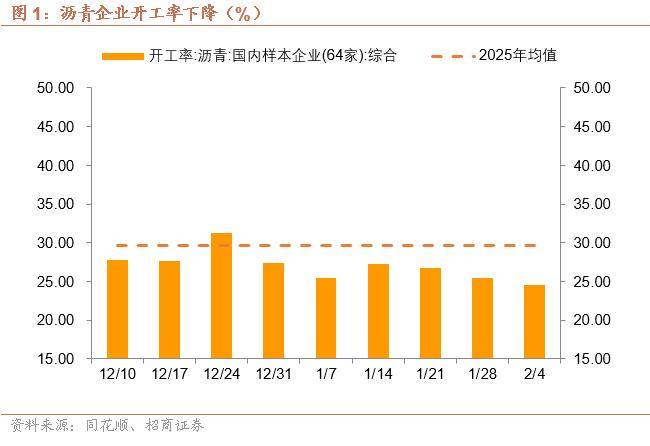
Group 1: Bond Market Outlook - The current funding and fundamental conditions are favorable for bond assets, presenting a relatively good investment opportunity [1] - Year-to-date, the 10-year government bond yield has decreased from approximately 1.9% to around 1.8%, while the 30-year yield has fallen from 2.3% to about 2.25% [1] - The investment value of bond assets is marginally recovering in the first quarter, marking a rare window of opportunity for the year [1] Group 2: Economic Indicators - The funding environment remains loose, with government bond issuance expected to rise, and financial support for fiscal bond issuance keeping funding rates low [1] - The overnight rate DR001 has dropped below 1.3%, and DR007 has decreased to around 1.45%, indicating a significant narrowing of the policy interest rate spread [1] - Short-term fundamentals are likely to remain weak, with last year's fixed asset investment growth showing negative growth for the first time, and significant declines in real estate and manufacturing investment [1] Group 3: Industry Operating Rates - The asphalt sample enterprise operating rate was 24.5%, down 1.0 percentage points week-on-week, with a year-on-year growth of 10.9% [3] - The national electric furnace operating rate was 52.56%, down 8.98 percentage points week-on-week, with a year-on-year growth of 86.3% [5] - The operating rate of major steel enterprises' blast furnaces was 73.7%, down 0.1 percentage points week-on-week, with a year-on-year decline of 2.4% [8] Group 4: Production and Capacity Utilization - The steel mill capacity utilization rate was 86.33%, up 0.42 percentage points week-on-week, with a year-on-year decline of 0.6% [30] - The average daily crude steel production of key enterprises was 1.935 million tons in late January, down 44,000 tons from mid-January, with a year-on-year decline of 8.3% [54] - The average daily cement production was 8.118 million tons, down 654,000 tons week-on-week, but up 36.5% year-on-year [71] Group 5: Real Estate Market - The transaction area of commercial housing in 30 cities was 1.395 million square meters, down 42,300 square meters week-on-week, but up 242.2% year-on-year [131] - The land transaction area was 12.0525 million square meters, up 4.4562 million square meters week-on-week [134] - The land transaction premium rate was 3.12%, down 0.45 percentage points week-on-week [135] Group 6: Logistics and Transportation - The subway passenger volume was 419.951 million trips, up 5.1195 million trips week-on-week, with a year-on-year increase of 44.8% [142] - The domestic civil aviation flight execution was 100,919 flights, up 6.7% week-on-week, but down 1.5% year-on-year [146] - The port cargo throughput was 281.597 million tons, up 9.27% week-on-week [151]

持股过节!十大券商集体喊话,布局节后“红包”行情
Bei Ke Cai Jing· 2026-02-10 04:16
Core Viewpoint - As the Spring Festival approaches, the choice between "holding stocks or holding cash" has become a focal point for investors, with a consensus emerging among major brokerages favoring "holding stocks" as the better option this year [1][2]. Group 1: Market Sentiment and Predictions - Major brokerages, including Guotai Junan and GF Securities, express optimism about the market's potential for recovery post-holiday, suggesting that the A-share market may experience a favorable "timing, location, and human factors" for an upward trend [2][17]. - Despite a general consensus on holding stocks, several brokerages caution that market performance may still be influenced by multiple risks, including slower-than-expected economic recovery and geopolitical uncertainties [3]. Group 2: Investment Strategies and Sector Focus - Guotai Junan recommends focusing on emerging technology and value sectors, highlighting themes such as commercial aerospace, robotics, urban renewal, and domestic consumption [4]. - Dongwu Securities suggests three main investment directions: overvalued technology sectors, booming industries like energy storage and lithium batteries, and themes related to the 14th Five-Year Plan, including commercial aerospace and 6G technology [5]. - Galaxy Securities advocates for a cautious approach with "light positions," emphasizing the importance of the upcoming "Two Sessions" and the shift towards "new productive forces" in sectors like semiconductors and artificial intelligence [6][7]. - Huaxia Securities emphasizes the importance of preparing for the post-holiday "red envelope" market, noting that technology sectors typically show better elasticity after the holiday [13]. - The investment focus should also include sectors that have underperformed but are expected to recover, such as food and beverage, agriculture, and healthcare [12]. Group 3: Market Dynamics and Historical Trends - Historical data indicates that the market tends to perform better after the Spring Festival, with a common pattern of "lower before the holiday and higher after" across various style indices [11]. - The current market environment is characterized by a high trading volume, with brokerages maintaining a cautious yet optimistic stance, suggesting that the market is not likely to turn bearish easily [8][9]. - The upcoming Spring Festival is seen as a critical period for potential market recovery, with many brokerages encouraging investors to remain confident and prepared for the first wave of the new year's upward cycle [17].





招商证券:当前做多港股科技,胜率和赔率均较高
Mei Ri Jing Ji Xin Wen· 2026-02-10 01:54
Group 1 - The core viewpoint of the articles indicates that the recent volatility in Hong Kong's technology sector, with the Hang Seng Tech Index dropping 6.5% in a week, is primarily due to liquidity shocks, but the outlook for investing in Hong Kong tech stocks remains positive with high odds and win rates [1] - From the perspective of odds, the discount of Hong Kong tech stocks relative to A-share tech stocks is near historical lows, suggesting significant undervaluation, especially in the context of improved regulatory and economic conditions compared to 2022 and 2023 [1] - In terms of win rates, favorable factors are accumulating, including the peak of overseas liquidity shocks having passed, the effectiveness of the "buy the dip" strategy, and the potential for a rebound as the relative valuation of Hong Kong tech stocks approaches historical lows [1] Group 2 - Investment opportunities in Hong Kong tech-related ETFs are highlighted, including the Hang Seng Tech Index ETF (513180.SH), Hang Seng Internet ETF (513330.SH), and Hong Kong Stock Connect Tech ETF (159101.SZ), which provide low-threshold access for A-share investors [2] - The Hang Seng Internet ETF (513330.SH) focuses on major Hong Kong internet companies such as Alibaba, Baidu, Tencent, and NetEase, while the Hong Kong Stock Connect Tech ETF (159101.SZ) emphasizes leading companies and includes innovative pharmaceutical stocks [2] - These ETFs are listed on mainland stock exchanges and support T+0 intraday trading, offering convenience for investors without the need for cross-border accounts or currency exchange [2]


武汉启动“城市更新金融服务团进各区” 金融机构650亿授信落地赋能城市更新
Chang Jiang Shang Bao· 2026-02-10 00:18
活动现场,12个城市更新重点项目分批次与金融机构签订授信合作协议,现场签约总额274.3亿元。据 了解,目前在汉金融机构已对接授信项目29个、意向授信金额373.7亿元,后续将逐步落地见效。 武汉市城市更新金融服务团同时正式组建,并同步启动"城市更新金融服务团进各区"活动。服务团首批 成员共23位,来自国家开发银行、农业发展银行、农业银行、招商证券等23家金融机构,服务团将聚焦 城市更新项目融资需求与发展痛点,深入各区精准对接,提供政策宣讲、项目策划、融资咨询、资金落 地等"融资+融智"服务。 此前,武汉市委金融办、武汉市住房和城市更新局联合出台《金融支持"五改四好"城市更新行动若干措 施》,旨在通过多元化金融手段为武汉市城市更新注入强劲动力,构建"政策引导、市场运作、多元参 与"的投融资新格局。依据规划,2025年到2027年,武汉将完成182个片区城市更新。目前,首批80个片 区已经全面启动,总投资约1300亿元。该措施明确将组建城市更新金融服务团,组织金融机构紧密衔接 相关部门和项目实施主体,提前参与项目策划、投融资方案设计。未来,将以服务团为纽带,深化政银 企协作,力争实现金融支持项目超百个、资金投放 ...
天海电子IPO,销售净利率低至5%,还给安徽舒城县画了大饼?
Xin Lang Cai Jing· 2026-02-09 23:18
Core Viewpoint - Tianhai Automotive Electronics Group Co., Ltd. is applying for an IPO, focusing on manufacturing automotive components such as wiring harnesses and connectors, serving both traditional and new energy vehicle markets [1][6] Financial Performance - In 2024, Tianhai Electronics is expected to achieve a revenue growth of 8.44%, but its net profit attributable to shareholders is projected to decline by 5.83%. However, a recovery is anticipated in 2025, with net profit for the first three quarters reaching approximately 5.37 billion, which is about 85% of the estimated annual net profit of 6.14 billion for 2024 [1][6] - The company's gross profit margin has shown a declining trend from 16.26% in 2022 to 14.43% in the first half of 2025, leading to a long-term net profit margin below 5% [1][6] Accounts Receivable and Financial Management - By the end of 2024, the company's net accounts receivable is projected to be 5 billion, which is over eight times the net profit for the same year, indicating a high risk if a major customer defaults on payments [2][7] - The financial management situation is precarious, characterized by high receivables and low profit margins, which poses a risk to the company's cash flow [2][7] Shareholder and Project Details - The largest shareholder of Tianhai Electronics is Guangzhou Industrial Investment Holding Group Co., Ltd., which emphasizes the company's importance in the automotive parts industry [8] - A significant project, the Anhui Tianhai Electronics Industrial Park, was launched with a total investment of 3.2 billion, expected to generate an annual output value of 3 billion once completed, and create 4,000 jobs [3][10] Discrepancies in Project Data - The IPO disclosure did not mention the 3.2 billion investment in the Anhui project, and there are notable discrepancies in the reported figures, such as the total assets of the subsidiary being only 363 million compared to the project investment [5][10] - The annual revenue of the subsidiary is around 1 billion, which is significantly lower than the projected output value of 3 billion for the completed project [5][10] - The reported employment figure of 4,000 jobs contrasts sharply with the actual number of social security contributors being less than 300, raising questions about the accuracy of the claims [5][10]
招商证券:当前为何坚定看好恒生科技?
智通财经网· 2026-02-09 22:28
Core Viewpoint - The recent weakness in the Hang Seng Tech index is attributed to a significant liquidity shock, but the fundamental outlook and bullish logic for Hong Kong tech stocks remain unchanged [1][2]. Group 1: Liquidity Analysis - The peak of the overseas liquidity shock has passed, and the "buy the dip" strategy is considered effective [1][2]. - The recent liquidity shock from the "Wash Trade" has led to a sharp decline in Hong Kong stocks, but this is expected to gradually subside [2][3]. - Domestic liquidity disturbances caused by public funds over-allocating to Hong Kong stocks are also coming to an end, reducing selling pressure [3]. Group 2: Valuation Insights - The relative valuation of Hong Kong tech stocks is at a historical low compared to A-share tech stocks, indicating a potential for a rebound [3][4]. - The current valuation levels are significantly lower than previous lows in March and October 2022, suggesting that Hong Kong tech stocks are undervalued in the context of a favorable regulatory and economic environment [3][4]. Group 3: Market Sentiment and Fundamentals - Strict control over IPO quality is expected to improve market sentiment, as excessive IPOs have previously contributed to weak performance in Hong Kong stocks [4]. - The fundamental outlook for Hong Kong stocks remains solid, with earnings expectations stabilizing after recent declines [4][5]. - The tech industry is experiencing positive developments, with major companies like Tencent and Alibaba promoting large models, indicating ongoing innovation and growth [4].
全球资本版图重构:一场私募的“出海征途”
Shang Hai Zheng Quan Bao· 2026-02-09 18:21
◎记者 马嘉悦 "中东、新加坡、欧洲……近一年我频繁飞国外,因为那里有大量配置中国资产的需求。"一位百亿级量 化私募创始人的经历,在私募业颇具代表性。 据私募排排网统计,截至2月9日,当前持有香港9号牌照的内地私募证券投资基金管理人已超130家,较 去年同期增加逾40家。与此同时,多家私募创始人在开年以来与外资的交流中,感受到全球资金增配中 国的意愿逐步增强。 用业内人士的话来说,私募出海从来不仅是扩圈,更是全球资本版图重构下的顺势而为。在这场浪潮 中,中国私募将进一步积聚站在全球舞台的力量。 私募出海趋势已成 135家,是持有香港9号牌照的内地私募证券投资基金管理人最新数字,也是迄今为止的最高数字。 私募排排网最新数据显示,截至2026年2月9日,当前持有香港9号牌照的内地私募证券投资基金管理 人,较去年同期增加了41家。其中,规模在50亿元以上的私募数量达62家,是私募出海的主力军。 "这些年去香港拿9号牌的私募越来越多,有的已经耕耘海外业务多年初见规模,有的则是为了公司未来 的全球规划做准备。"沪上某业内人士感慨称。 灵均投资透露,公司已在香港和新加坡分别设立办公室,作为出海的"桥头堡",面向境外合格投 ...
突然,飙涨90%!芯片,利好突袭!
券商中国· 2026-02-09 12:13
Core Viewpoint - The storage price surge is ongoing, with memory prices expected to rise by 80%-90% by Q1 2026, driven by significant demand in the server DRAM market and a broader increase across all memory categories [1][2]. Group 1: Price Trends - According to Counterpoint, memory prices are projected to increase by 80%-90% by Q1 2026, with server DRAM prices being a major contributor [2]. - The price of 64GB RDIMM has surged from $450 in Q4 2022 to over $900 in Q1 2023, with expectations to exceed $1,000 in Q2 2023 [2]. - TrendForce has revised its forecast for Q1 2023, predicting a 90%-95% increase in Conventional DRAM contract prices, up from an earlier estimate of 55%-60% [3]. Group 2: Supply and Demand Dynamics - Goldman Sachs has significantly raised its forecast for the supply-demand gap in the memory chip market, predicting a shortage of 4.9% for DRAM in 2026 and 2.5% in 2027, marking the most severe shortage in 15 years [4]. - The demand for server DRAM is expected to grow by 39% in 2026 and 22% in 2027, with servers becoming the primary driver of DRAM demand [4]. - The NAND market is also tightening, with Goldman Sachs forecasting a 4.2% shortage in 2026 and 2.1% in 2027, driven by strong enterprise SSD demand [5]. Group 3: Market Drivers - The current memory cycle is driven by AI demand, which is leading to a more comprehensive shortage compared to previous cycles, with cloud service providers (CSPs) driving the demand [3]. - The shift in customer demand from end-users to CSPs has resulted in exponential growth in procurement volumes, with less sensitivity to price increases [3]. - The AI industry's focus on real-time response and data access efficiency is increasing the demand for high-capacity, high-bandwidth DRAM [3]. Group 4: Future Outlook - The storage industry is expected to see significant revenue growth, with the market projected to reach $551.6 billion by 2026, driven by supply constraints and price surges [2]. - The current price and demand dynamics suggest that 2026 will be a year of substantial performance releases for storage companies, with a focus on the sustainability of price trends and company performance [6].