
Momenta

Search documents
Lumo、梅赛德斯-奔驰与Momenta将在阿布扎比推出高端自动驾驶网约车车队
Shang Wu Bu Wang Zhan· 2025-12-23 16:46
Core Viewpoint - The collaboration between Lumo, Mercedes-Benz, and Momenta aims to launch a high-end autonomous taxi fleet in Abu Dhabi, utilizing Level 4 autonomous driving technology on a mass-produced luxury platform [1] Group 1: Company Collaboration - Lumo, a national taxi company in the UAE, partners with Mercedes-Benz and Momenta to introduce an autonomous taxi fleet [1] - The fleet will be based on the new Mercedes S-Class and will incorporate Momenta's Level 4 autonomous driving system [1] - This initiative marks the first scalable autonomous taxi model based on a mass-produced luxury platform in the industry [1] Group 2: Market Expansion - The autonomous taxi fleet is expected to commence commercial operations in Abu Dhabi next year [1] - There are plans to expand the service to additional international markets following the initial launch [1] Group 3: Industry Impact - The collaboration is positioned to advance the development of smart transportation solutions [1]
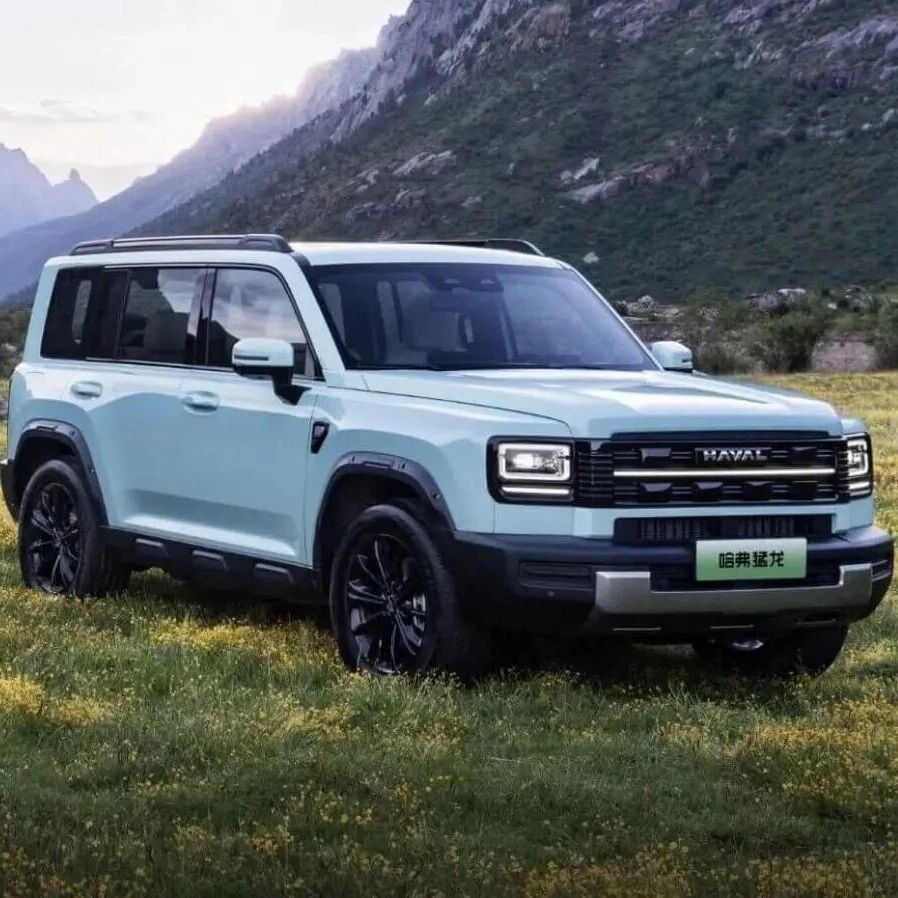
独家丨长城哈弗将采用Momenta智驾方案,新车计划明年初上市
雷峰网· 2025-12-23 14:30
Core Viewpoint - Momenta has secured contracts with Great Wall Motors for two new models, including the Haval Menglong, which will feature an L2+ level of assisted driving capabilities and is expected to launch in early next year [2]. Group 1: New Model Features - The new models will utilize Momenta's latest end-to-end solution, based on the R6 flywheel large model, similar to that used in the Buick Zhijing L7, and will be developed on the Qualcomm Snapdragon 8620 chip with an effective computing power of 156 TOPS [2]. - The assisted driving capabilities will include features such as highway NOA (Navigation on Autopilot) and parking assistance, but will not support urban NOA initially [2]. Group 2: Future Developments - Momenta plans to shift its mass production solutions entirely to end-to-end models, incorporating large models based on reinforcement learning [5]. - The R6 flywheel large model, which utilizes reinforcement learning, was first mass-produced in the Buick Zhijing L7, providing urban NOA capabilities [5]. Group 3: Collaboration with Great Wall Motors - Momenta has established a dedicated demo testing team for assisted driving at Great Wall's headquarters in Baoding, with CEO Cao Xudong actively overseeing the project and providing technical demonstrations [7]. - Great Wall Motors also collaborates with Yuanrong Qixing for its assisted driving solutions, with plans for the Wuling Blue Mountain model to launch in August 2024 featuring Yuanrong's urban NOA solution [7].


专访地平线副总裁吕鹏:做不好端到端就做不好VLA
2 1 Shi Ji Jing Ji Bao Dao· 2025-12-23 00:45
Core Insights - The domestic market for passenger cars priced above 200,000 yuan accounts for 30% of the market share, while those below 130,000 yuan hold a significant 50% share, indicating a vast opportunity for companies like Horizon and Momenta to capture market share in the autonomous driving sector [1][13] - Horizon has launched its Horizon SuperDrive (HSD) solution based on the Journey 6 series chip, entering mass production with significant activation numbers shortly after the launch of new models [1][14] - The company aims to make urban assisted driving technology accessible to vehicles priced at 100,000 yuan, targeting a production scale of 10 million units within the next 3-5 years [2][14] Market Dynamics - The market for vehicles priced below 130,000 yuan is largely untapped in terms of urban assisted driving features, attracting various autonomous driving companies to accelerate their market strategies [1][13] - Horizon's HSD solution has seen rapid adoption, with over 12,000 activations within two weeks of launching two new models, indicating strong market demand [1][14] Technological Development - Horizon is focusing 90% of its R&D resources on end-to-end technology, which is seen as crucial for the future of autonomous driving [2][14] - The company believes that a solid end-to-end foundation is essential for integrating new modalities and enhancing product performance [15][21] Competitive Landscape - Companies lacking chip development capabilities are increasingly collaborating with Horizon, highlighting the company's strong position in the market [2][14] - Horizon's commitment to an end-to-end approach distinguishes it from competitors who are exploring various models, such as VLA [2][21] Technical Insights - The end-to-end system developed by Horizon is one of the few complete systems available, with a focus on seamless information transfer and high-dimensional feature integration [16][17] - The distinction between one-stage and two-stage end-to-end systems is critical, with the former providing a more cohesive and intuitive driving experience [18][19] Future Directions - Horizon plans to enhance its product experience and safety, emphasizing the importance of market acceptance over new terminologies and concepts [11][22] - The company is open to integrating VLA technology in the future but maintains that a robust end-to-end system is foundational for success [24]
地平线吕鹏:端到端是基石,做不好端到端就做不好VLA
2 1 Shi Ji Jing Ji Bao Dao· 2025-12-22 13:23
Core Viewpoint - The article emphasizes the importance of end-to-end technology in the development of autonomous driving solutions, highlighting Horizon's commitment to this approach as a foundation for future advancements in the industry. Market Overview - In the first three quarters of this year, the market share for passenger cars priced above 200,000 yuan accounted for 30%, while those below 130,000 yuan reached 50%, with many lower-priced models lacking urban auxiliary driving features [1]. - This gap in the market is attracting companies like Horizon and Momenta to accelerate their strategies to capture market opportunities [1]. Product Development - Horizon launched its Horizon SuperDrive (HSD) solution based on the Journey 6 series chips in April, entering mass production by November with the launch of the Exeed ET5 and Deep Blue L06 models, achieving over 12,000 activations within two weeks [1][2]. - The company aims to make urban auxiliary driving features available in vehicles priced around 100,000 yuan, targeting a production scale of ten million units in the next 3-5 years [2]. Technological Strategy - Horizon is one of the few companies firmly committed to the end-to-end approach in autonomous driving, believing that a solid end-to-end foundation is essential for integrating new modalities and enhancing product performance [3][7]. - The company has invested 90% of its R&D resources into developing and implementing end-to-end technology since the end of 2024 [2]. Technical Insights - Horizon's end-to-end system is described as a complete solution, contrasting with two-stage systems that may lose information during processing [4][5]. - The company believes that a robust end-to-end model is crucial for achieving high performance and seamless driving experiences, akin to human driving instincts [6][9]. Future Directions - Horizon's future plans include enhancing its end-to-end technology while exploring the integration of world models and reinforcement learning as auxiliary components to improve overall system performance [9][10]. - The focus remains on product experience and safety, with an emphasis on market acceptance rather than getting caught up in new terminologies or concepts [9].
每周十大股权投资:银河通用吞下3亿美元热钱,复杂世界交互进入倒计时;这家公司狂吸谷歌英伟达,程序员高薪饭碗还能端稳几年?
3 6 Ke· 2025-12-22 10:46
Group 1: Investment Highlights - Galaxy General Robotics completed a B+ round financing of $300 million, aimed at integrating "embodied multimodal large models" with general robotic platforms [1] - Momenta received strategic investment from Grab, significantly increasing its post-investment valuation, to enhance its global expansion and data-driven autonomous driving algorithms [2] - Zhongyan Alkali Industry secured a strategic investment of 3.92 billion RMB to expand efficient and green extraction of natural soda resources [3] - Gongyuan Sanqian completed a B round financing of several hundred million RMB to develop AI-based industrial quality inspection systems [4] - Zhanlue Data finished a C+ round financing, with a post-investment valuation of approximately 3.6 billion RMB, focusing on health insurance risk control and claims automation [5][6] - Zhongke Hongtai obtained A round financing of several tens of millions RMB to advance surgical robots for vascular intervention [7] - Wuhu Lindong Technology completed an angel round financing to explore unmanned social spaces with a self-service bar model [8] - Lovable, a Swedish AI company, completed a B round financing with investments from Google and NVIDIA to develop AI engineers for software development [9] - Cyera, a US data security company, received a strategic investment of $400 million from Blackstone to promote its data-centric proactive security platform [10] - Neural Concept, a Swiss software company, completed a C round financing of $100 million to enhance AI-driven engineering design software [11][12] Group 2: Company Focus and Innovations - Galaxy General Robotics focuses on developing a robot platform capable of understanding the physical world and possessing general intelligence [1] - Momenta specializes in autonomous driving technology, leveraging vast real-world driving data to evolve its algorithms [2] - Zhongyan Alkali Industry is engaged in the extraction and processing of natural soda, emphasizing environmentally friendly methods [3] - Gongyuan Sanqian integrates AI with X-ray inspection technology to provide real-time detection solutions for high-end manufacturing [4] - Zhanlue Data is dedicated to health insurance technology, offering solutions for risk control and automated claims processing [5][6] - Zhongke Hongtai develops medical robots aimed at improving precision in surgical procedures [7] - Wuhu Lindong Technology operates a self-service bar model, creating a new social space for young consumers [8] - Lovable aims to revolutionize software development by creating AI that can autonomously generate and deploy applications [9] - Cyera focuses on data security, providing a platform that automatically discovers and assesses data risks [10] - Neural Concept enhances industrial design processes through AI, significantly reducing development cycles for complex manufacturing [11][12]

硅谷停电干崩谷歌Robotaxi,马斯克贴脸热嘲:特斯拉就没事
3 6 Ke· 2025-12-22 09:09
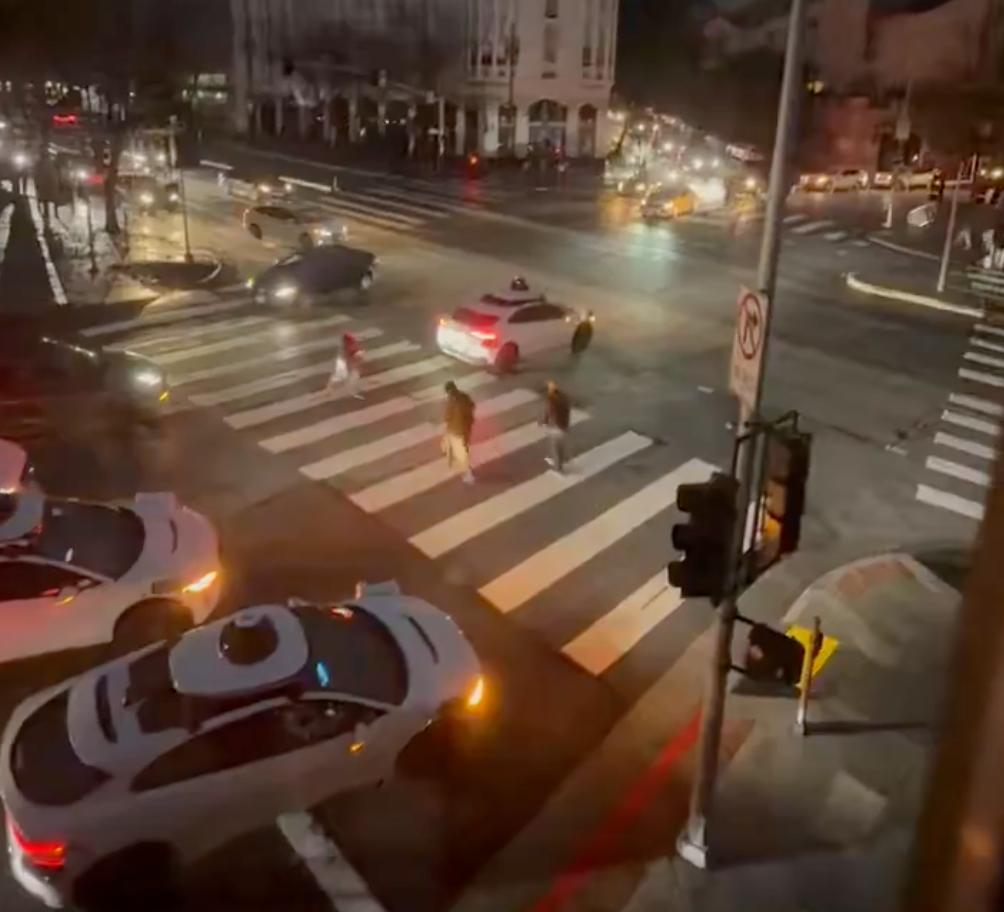
一次大规模停电,暴露了全球无人车一哥的短板。 被曝估值冲上千亿美元没几天,Waymo就因为当地停电全面停摆了,挡在路中间,造成城市拥堵,相关视频疯传。 马斯克第一时间"补刀",表示自家Robotaxi就没受到影响。看上去,特斯拉代表的L2渐进式路线,似乎小胜了一局……反正马哥认为这就是彰显优越性的 时刻。 在Robotaxi战场上,今年马斯克的一举一动,都把自动驾驶之争推向了新的高潮,大洋两岸更多玩家开始入场,沿着「特斯拉路线」前进,与「Waymo路 线」争夺自动驾驶圣杯。 所以问题是,停电是如何影响Waymo Robotaxi的? 当地停电,Waymo停工 Waymo停摆源自一场火灾,旧金山变电站失火,导致当地大规模停电,据说直接影响到13万居民用电。 更要命的是,因为大范围停电,马路上的红绿灯都不亮了,引发Waymo无人车全面停摆。 真是屋漏偏逢连夜雨,本就混乱的交通,这下因为无人车挡在路上变得更堵了。Waymo只好连夜找拖车运走了无人车,同时宣布在当地停运,目前还不 清楚什么时候重新上线。 所以为啥停电会导致Waymo停运?首先是官方回应暴露的运营漏洞。 Waymo在官方声明中解释称,Waymo的Rob ...

中尾部智驾玩家,困在“赢者通吃”的焦虑里
Di Yi Cai Jing· 2025-12-22 09:03
Core Viewpoint - The sudden shutdown of Haomo Zhixing highlights the intense competition and market consolidation in the autonomous driving industry, where leading companies are rapidly advancing while mid-tier players struggle to survive [1][2][3]. Group 1: Company Developments - Haomo Zhixing announced a complete shutdown on November 22, 2025, due to its poor operational status, despite previously being valued over $1 billion [2]. - The company faced multiple failures, including hardware selection issues, outdated software algorithms, and indecisive management, leading to delays in its urban advanced driving solutions compared to competitors [2]. - Long-term partnerships with major automotive manufacturers have shifted, with Haomo Zhixing losing support from Great Wall Motors, which has turned to other suppliers for its advanced driving solutions [2]. Group 2: Industry Dynamics - The autonomous driving sector is witnessing a significant divide, with leading companies like Huawei and Momenta rapidly gaining market share, while mid-tier firms face existential threats [3][5]. - Huawei's autonomous driving system has surpassed 1 million units, with a market share of 27.8% in the NCA segment, indicating strong demand for its technology [5]. - The industry is moving towards a "winner-takes-all" scenario, with predictions that only a few players will remain by 2027, emphasizing the need for data-driven approaches and collaboration among companies [7][10]. Group 3: Competitive Strategies - Mid-tier companies are exploring differentiated survival strategies, including diversifying into sectors like unmanned delivery and agriculture, as well as seeking international partnerships [4][5]. - There is a trend among mid-tier firms to form deep partnerships with ecosystem players, as seen with significant investments and acquisitions aimed at strengthening their market positions [9][10]. - The competitive landscape is evolving, with a consensus that while some consolidation is inevitable, the final outcome may not lead to a complete monopoly, especially in software solutions where differentiation remains crucial [10].
中尾部智驾玩家,困在“赢者通吃”的焦虑里
第一财经· 2025-12-22 08:53
Core Viewpoint - The article discusses the significant challenges faced by mid-tier autonomous driving companies in the context of a rapidly consolidating industry, highlighted by the sudden shutdown of a once-promising unicorn, Haomo Zhixing, and the contrasting success of leading players like Huawei and Momenta [4][5][7]. Group 1: Industry Dynamics - In 2025, the autonomous driving industry experienced a harsh competitive landscape, with leading companies aggressively pursuing market share, leaving little room for smaller players [3][4]. - The industry is witnessing a "winner-takes-all" scenario, where top players are expected to dominate, while mid-tier companies struggle to find their place [9][11]. - The market is increasingly favoring companies that can integrate their technologies and maintain control over their intellectual property, as seen in the shift towards "white box" solutions [5][6][12]. Group 2: Company-Specific Insights - Haomo Zhixing, founded in 2019 and once valued over $1 billion, faced operational failures due to poor hardware choices, outdated software algorithms, and indecisive management, leading to its abrupt halt in operations [4][5]. - Mid-tier companies, like the one represented by Zhang Li, are exploring alternative markets and applications, such as unmanned delivery vehicles and international collaborations, to differentiate themselves [6][12]. - Leading companies like Huawei and Momenta are achieving significant milestones, with Huawei's autonomous driving technology being integrated into over 100,000 vehicles and Momenta collaborating with more than 160 models [7][9]. Group 3: Future Outlook - The consensus among industry experts is that the autonomous driving sector will continue to consolidate, with predictions that only a few key players will remain by 2027 [11][12]. - There is a debate on whether the industry will ultimately see a "winner-takes-all" outcome, with some arguing for a more diversified ecosystem to mitigate risks associated with having too few dominant players [12][13]. - The potential for standardization in hardware, particularly in autonomous driving chips, is recognized, while software solutions may retain diversity as companies seek to maintain competitive advantages [13].

中尾部智驾玩家,陷在“赢者通吃”的焦虑里 | 智驾中场战事
Di Yi Cai Jing Zi Xun· 2025-12-22 07:19
Core Viewpoint - The sudden shutdown of Haomo Zhixing highlights the intense competition and market consolidation in the autonomous driving industry, where leading companies are rapidly advancing while mid-tier players struggle to survive [1][2][3]. Group 1: Company Developments - Haomo Zhixing announced a complete shutdown on November 22, 2025, due to its poor operational status, despite previously being valued at over $1 billion [2]. - The company faced multiple failures, including hardware selection issues, outdated software algorithms, and indecisive management, leading to delays in its urban advanced driving solutions compared to competitors [2]. - Long-term partnerships with major automotive manufacturers have shifted, with Haomo Zhixing losing support from Great Wall Motors, which has turned to other suppliers for its advanced driving solutions [2]. Group 2: Market Dynamics - The autonomous driving industry is experiencing a significant divide, with leading companies like Huawei and Momenta rapidly gaining market share, while mid-tier firms face existential threats [3][5]. - Huawei's autonomous driving system has surpassed 1 million units, with a market share of 27.8% in the NCA segment, indicating strong demand for advanced driving technologies [5]. - The competitive landscape is shifting towards a "winner-takes-all" scenario, where only a few players are expected to survive, as highlighted by predictions from industry leaders [7][10]. Group 3: Strategic Responses - Mid-tier companies are seeking differentiation by exploring new markets and applications, such as autonomous delivery vehicles and international collaborations [4][5]. - There is a trend among mid-tier firms to form strategic partnerships and investments to enhance their competitive positioning, as seen with companies like Aito and their acquisitions [9][10]. - Despite the prevailing narrative of consolidation, some mid-tier executives believe there is still room for diverse survival strategies within the industry, suggesting that the market is not yet fully consolidated [9][10].
智能汽车ETF(159889)涨超2.2%,政策与技术双轮驱动行业提速
Mei Ri Jing Ji Xin Wen· 2025-12-22 06:29
Group 1 - The core viewpoint is that the gradual relaxation of intelligent driving policies in China is expected to drive further growth for related companies, marking a significant step towards the commercialization of L3 autonomous driving vehicles [1] - The first batch of L3 autonomous driving vehicles in China has received approval for commercial use, with two models designed for urban congestion and highway conditions set to conduct pilot tests in designated areas of Beijing and Chongqing [1] - Tesla has initiated unmanned Robotaxi road testing in Austin, while XPeng Motors has obtained a road testing license for L3 autonomous driving and plans to launch mass-produced L4 autonomous vehicles by 2026 [1] - Guangzhou has achieved full-scale open demonstration operations for autonomous driving with safety personnel in vehicles, launching multiple demonstration operation routes [1] - China FAW plans to mass-produce solid-state batteries by 2027 for its high-end Hongqi flagship models [1] - Momenta has formed a strategic partnership with Grab to explore the integration of L4 autonomous driving capabilities into mass-produced vehicles [1] - The EU's decision to abandon the proposal to ban internal combustion engines by 2035 indicates flexibility in the policy environment [1] - These developments highlight that the smart automotive industry is experiencing a dual drive of policy support and technological breakthroughs, accelerating the commercialization process [1] Group 2 - The Smart Automotive ETF (159889) tracks the CS Smart Automotive Index (930721), which selects listed companies involved in smart driving and vehicle networking from the A-share market [2] - The CS Smart Automotive Index covers multiple industries, including electronics, computers, and automobiles, reflecting the overall performance of listed companies in the smart automotive sector [2] - The index is designed to represent the growth potential and investment value of companies related to the smart automotive industry [2]