洋河股份

Search documents
午前,突然拉升!
中国基金报· 2025-09-02 04:53
Market Overview - On September 2, A-shares experienced a collective pullback, with the ChiNext index dropping nearly 3%. The Shanghai Composite Index fell to 3844.84 points, down 0.79%, while the Shenzhen Component Index decreased by 2.21% [1] - The trading volume reached 2.08 billion hands with a turnover of 529.16 billion yuan, reflecting a turnover rate of 3.91% [2][4] Sector Performance - The brokerage sector saw a sudden surge in the morning, with notable stocks such as Pacific Securities hitting the daily limit, and Guosheng Financial Holdings rising by 5.82% [5][6] - Financial stocks generally performed well, with China Merchants Bank increasing by nearly 3%, and other major banks like Construction Bank and Industrial and Commercial Bank of China rising over 1% [6][7] Consumer Sector - Several large consumer stocks rose against the trend, including BeiGene, which increased by 9.84%, and Midea Group, which also saw gains [9] - The food and beverage sector experienced a broad increase, with Kweichow Moutai's stock price briefly returning to 1500 yuan, currently reported at 1488.07 yuan per share [10] Gold and Silver Market - The gold and jewelry sector saw significant gains, with stocks like Mankalon rising by 16% and several others hitting the daily limit. Gold futures and spot prices both surpassed the 3500 USD mark, marking a historical high [17][20] - Silver also saw a notable increase, with Hunan Silver rising by 6.48% [18]


浙商证券:重视酒类新消费投资机会 重点推荐珍酒李渡
Zhi Tong Cai Jing· 2025-09-02 04:49
Core Viewpoint - The report from Zheshang Securities emphasizes the investment opportunities arising from innovations in new categories, products, and channels within the liquor industry, particularly highlighting the phenomenon-level product "Dazhen" from Zhenjiu Lidu [1] Group 1: New Consumption Concept - New consumption in the liquor sector focuses on product, channel, and model innovations, with representative products including sparkling yellow wine, tea beer, and low-alcohol white liquor products [1] - Innovations in models include products like Dazhen, Jiugui's "Free Love," and others, indicating a shift towards more diverse offerings in the market [1] Group 2: Investment Logic - Unlike traditional consumer goods, new consumption liquor stocks are expected to reflect future performance directly, with significant investment opportunities arising from short-term catalysts, mid-term performance realization, and long-term growth potential [2] - A comparative analysis of stock prices for traditional and new consumption liquor brands shows that price movements for Kweichow Moutai are influenced by multiple cycles, while stocks like Huadiao Mountain and Pop Mart have seen price increases due to market expectations and product performance [2] Group 3: Case Studies - Huadiao Mountain is focusing on brand rejuvenation and price increases to align with consumer trends, positioning itself as a leader in the yellow wine sector [3] - Bairun Co. is leveraging a dual-driven model of "pre-mixed liquor + whiskey" to establish a new growth area in the domestic liquor market [3] - Zhenjiu Lidu aims to achieve a mid-term target of 6 billion yuan through the launch of "Dazhen" and an innovative business model [3] - Jiugui Liquor's collaboration with Pang Donglai has resulted in strong sales, driven by innovative channel strategies and consumer trends [3]

近2.3万亿元!A股两融余额创历史新高
Zhong Guo Zheng Quan Bao· 2025-09-02 04:40
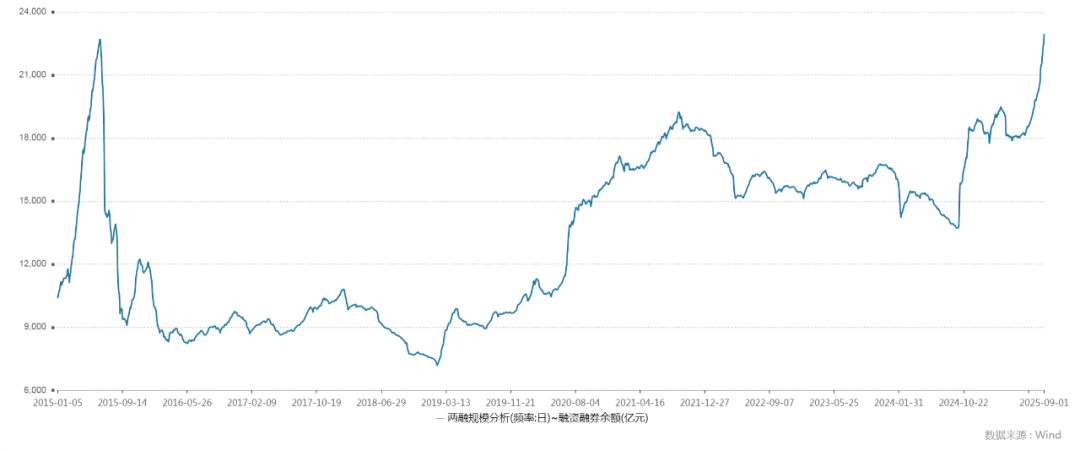
Group 1 - As of September 1, the A-share market's margin trading balance reached a historical high of 22,969.91 billion yuan, with the financing balance at 22,808.29 billion yuan, surpassing the previous peak on June 18, 2015 [1][2] - Since the beginning of the year, the A-share financing balance has increased by 4,266.84 billion yuan, with the electronic industry seeing an increase of over 950 billion yuan [1][9] - The top stock for net buying in the A-share market is Xinyi Sheng (300502), while the largest net selling stock is Muyuan Foods (002714) [1][9] Group 2 - The margin trading activity in the A-share market has been active, with the margin trading amount accounting for over 10% of the total A-share trading volume for 16 consecutive trading days from August 11 to September 1, peaking at 11.66% on September 1 [5] - The margin trading balance accounted for 2.42% of the A-share circulating market value as of September 1 [5] - Despite the historical highs in margin trading and financing balances, the ratios of margin trading amount to total trading volume and margin balance to circulating market value are still below their historical peaks [5] Group 3 - As of September 1, the electronic industry leads in margin trading balance among 31 sectors, with a total of 3,126.49 billion yuan, followed by non-bank financials at 1,805.59 billion yuan and the computer industry at 1,792.11 billion yuan [6][7] - Other sectors with margin trading balances exceeding 1,000 billion yuan include electric equipment, pharmaceutical biology, machinery, automotive, and non-ferrous metals [6] Group 4 - The top ten stocks with the highest net buying amounts this year include Xinyi Sheng, Shenghong Technology, BYD, and others, with Xinyi Sheng seeing a net buying of 108.26 billion yuan [10][11] - The stocks with the highest net selling amounts include Muyuan Foods, Kunlun Wanwei, and Luzhou Laojiao, with Muyuan Foods experiencing a net selling of 15.04 billion yuan [12][13]





食品饮料2025年白酒板块中报总结:出清开启,加速寻底
CMS· 2025-09-02 03:05
Investment Rating - The report maintains a strong buy recommendation for leading companies in the liquor sector, including Guizhou Moutai, Wuliangye, and Luzhou Laojiao, while suggesting a hold for Yingjia Gongjiu and Jinhuijiu [10][9]. Core Insights - The liquor industry is undergoing a significant clearing phase due to the impact of the "ban on alcohol" policy, with second and third-tier companies facing substantial challenges, while leading firms show resilience [1][9]. - The report anticipates that the financial statements of leading liquor companies will signal an industry turning point, potentially reshaping market expectations and indicating a gradual emergence of the industry bottom [9][1]. - The demand for liquor is expected to continue recovering, driven by a positive price index in 2026, which may lead to inflation and increased corporate profitability [1][9]. Revenue and Net Profit - In Q2 2025, the liquor industry reported revenues of 881 billion yuan, a year-on-year decrease of 5.0%, and a net profit of 312 billion yuan, down 7.5% [2][13]. - For the first half of 2025, the industry generated revenues of 2,415 billion yuan, with a slight year-on-year decline of 0.9% in revenue and 1.2% in net profit [2][13]. - Excluding Moutai, the industry's revenue in Q2 2025 was 484 billion yuan, reflecting a more significant decline of 13.1% [2][13]. Profitability - The overall gross margin of the liquor sector is under pressure due to declining prices and structural changes, with high-end liquor experiencing a slight decrease in gross margin [4][28]. - Many companies have increased their expense ratios to cope with price declines and intensified competition, although some have managed to reduce costs through digitalization and refined channel management [4][28]. Investment Recommendations - The report suggests focusing on strong leading companies and those that have cleared their market burdens first, such as Shanxi Fenjiu and Luzhou Laojiao, while also monitoring companies like Yingjia Gongjiu and Jinhuijiu for potential growth contributions in the second half of 2025 [9][10]. - The anticipated recovery in liquor demand and the potential for improved profitability in 2026 present a favorable investment landscape for the sector [9][1].




洋河股份涨2.03%,成交额2.18亿元,主力资金净流入1163.63万元
Xin Lang Cai Jing· 2025-09-02 01:58
Core Viewpoint - Yanghe Co., Ltd. has experienced fluctuations in stock price and financial performance, with a notable decrease in revenue and net profit for the first half of 2025, indicating potential challenges in the market [2][3]. Financial Performance - As of June 30, 2025, Yanghe Co., Ltd. reported a revenue of 14.796 billion yuan, a year-on-year decrease of 35.32% [2]. - The net profit attributable to shareholders was 4.344 billion yuan, reflecting a year-on-year decline of 45.34% [2]. - The company's stock price has decreased by 4.48% year-to-date, but has shown a recovery with a 1.25% increase over the last five trading days, a 9.58% increase over the last 20 days, and a 17.62% increase over the last 60 days [1]. Shareholder Information - As of June 30, 2025, the number of shareholders increased to 190,700, up by 1.68% from the previous period [2]. - The average number of circulating shares per shareholder decreased by 1.65% to 7,898 shares [2]. - The company has distributed a total of 56.344 billion yuan in dividends since its A-share listing, with 19.655 billion yuan distributed in the last three years [3]. Stockholder Composition - The top ten circulating shareholders include notable entities such as the China Securities White Wine Index A and Hong Kong Central Clearing Limited, with changes in their holdings indicating shifts in investor sentiment [3]. - New entrants among the top shareholders include Huatai-PB CSI 300 ETF and Wine ETF, while some previous shareholders have exited the top ten list [3]. Company Overview - Yanghe Co., Ltd. is primarily engaged in the production, processing, and sales of various brands of strong-flavor liquor, with 97.96% of its revenue derived from liquor sales [1]. - The company is classified under the food and beverage industry, specifically in the liquor sector, and is part of several investment concepts including high dividend yield and Jiangsu state-owned assets [1].

白酒:底部渐显,积极布局
2025-09-02 00:42
Summary of the Conference Call on the Baijiu Industry Industry Overview - The Baijiu industry is experiencing a downturn, with the overall performance in the first half of 2025 showing a slight decline in revenue and profit. The total revenue for the Baijiu sector in Q2 2025 was approximately 880 billion yuan, a year-on-year decrease of 5%, and the net profit attributable to shareholders was 312 billion yuan, down 8% [2][3]. Key Points and Arguments - **Revenue and Profit Trends**: In the first half of 2025, the Baijiu sector achieved revenue of about 2.4 trillion yuan, reflecting a minor decline of around 1%. The second quarter saw a more significant drop in revenue and profit compared to the first quarter [3][5]. - **Segment Performance**: High-end Baijiu saw a slight revenue increase of 3% in Q2 2025, while mid-range Baijiu revenue fell by 5%, and regional Baijiu experienced a substantial decline of 30%. The net profit for high-end Baijiu grew slightly by 1%, while regional Baijiu's profit dropped by 41% [4][6]. - **Market Dynamics**: The decline in Q2 was primarily due to reduced demand from institutional consumption and a lack of confidence among distributors, leading to forced inventory clearance by manufacturers. Regional brands were particularly affected due to prior inventory accumulation [6][7]. - **Brand Strategies**: Moutai is expanding its channels and introducing new product specifications while implementing price reductions to capture market share. Wuliangye and Luzhou Laojiao are focusing on maintaining channel profits and controlling inventory while introducing tactical products for lower price segments [7][8]. - **Inventory Management**: Some brands, such as Yanghe and Jinshiyuan, are actively reducing inventory to alleviate channel pressure, emphasizing channel health and stability in response to market changes [7][8]. - **State-Owned Enterprises**: State-owned enterprises face slower inventory clearance due to heavier tax burdens. Moutai continues to grow, while Wuliangye exceeded expectations, and Luzhou Laojiao strictly controlled inventory [8][9]. Additional Insights - **Stock Performance**: The Baijiu sector's stock prices fell by approximately 8-9% in the first half of 2025, underperforming the Wind All A Index by about 15 percentage points. The dynamic price-to-earnings ratio is below 20 times, nearing a ten-year low, indicating market pessimism regarding future performance [5][10]. - **Market Adjustment**: State-owned enterprises tend to experience a more gradual decline and adjustment during market changes compared to non-state-owned enterprises, which are quicker to adapt and innovate [11]. - **Current Cycle Position**: The Baijiu sector is currently at a low point in terms of stock prices, with similarities to previous downturns. The expected recovery in revenue may take several quarters, with a potential turnaround by Q2 2026 [12][13]. - **Future Expectations**: The outlook for Q3 suggests continued pressure on most Baijiu companies, but a potential recovery compared to Q2. The fundamental recovery is anticipated to become more evident starting in Q2 2026 [14]. - **Investment Recommendations**: Long-term recommendations include high-quality leading companies such as Moutai, Luzhou Laojiao, and Shanxi Fenjiu. Short-term recommendations focus on companies with marginal change potential, including Hong Kong-listed Zhenjiu, Shede Liquor, and Gujing Gongjiu [15].
白酒行情,突围了吗?
Sou Hu Cai Jing· 2025-09-01 14:56
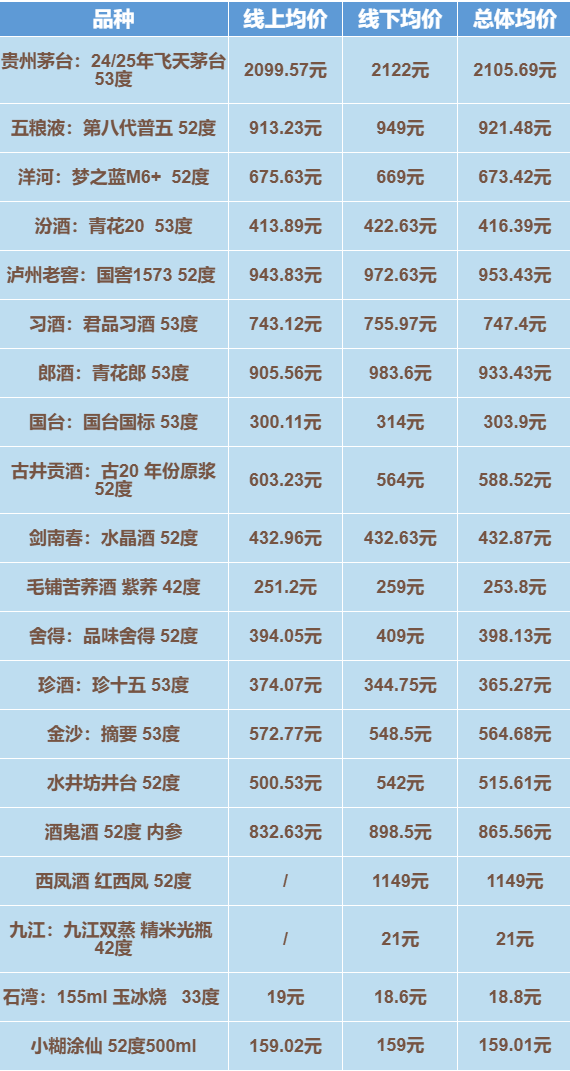
Core Viewpoint - The overall performance of the liquor industry has declined in the first half of the year, with many companies reporting lower earnings, although leading firms have managed to maintain growth albeit at a slower pace [1][20]. Price Trends - In Guangzhou, over half of the sampled products saw a decline in average retail prices, including high-end brands like Moutai and Wuliangye, with price drops generally under 30 yuan [2][3]. - The average price of Moutai is approximately 2106 yuan, down by about 28 yuan from the previous period, while Wuliangye's average price is around 921 yuan, down by 23 yuan [3]. - In Shenzhen, the retail prices are primarily influenced by online platforms, with significant price differences between online and offline channels [4][8]. Channel Analysis - Online platforms generally offer lower prices compared to offline channels, with Meituan's prices being the lowest across the board [4]. - The price dynamics in Shenzhen reflect the growing impact of online retail on liquor pricing, especially during the pre-festival period [8]. Regional Price Variations - In Foshan, the average price of Moutai has decreased to 2256 yuan, influenced by online pricing strategies [12][14]. - East Dongguan shows a mixed trend with 9 out of 18 sampled products experiencing price declines, while some products like Jinsha saw price increases [15][17]. Industry Challenges - The liquor industry faces significant challenges, including high inventory levels and pressure to reduce prices, with total revenue for 20 A-share listed liquor companies at 241.5 billion yuan, a slight decrease from the previous year [20]. - Companies are exploring transformation strategies, such as introducing lower-alcohol products and optimizing channels to adapt to changing consumer preferences [20].
白酒行业上市公司上半年整体业绩“小幅回调”,多家酒企恐难实现全年目标
Feng Huang Wang· 2025-09-01 14:06
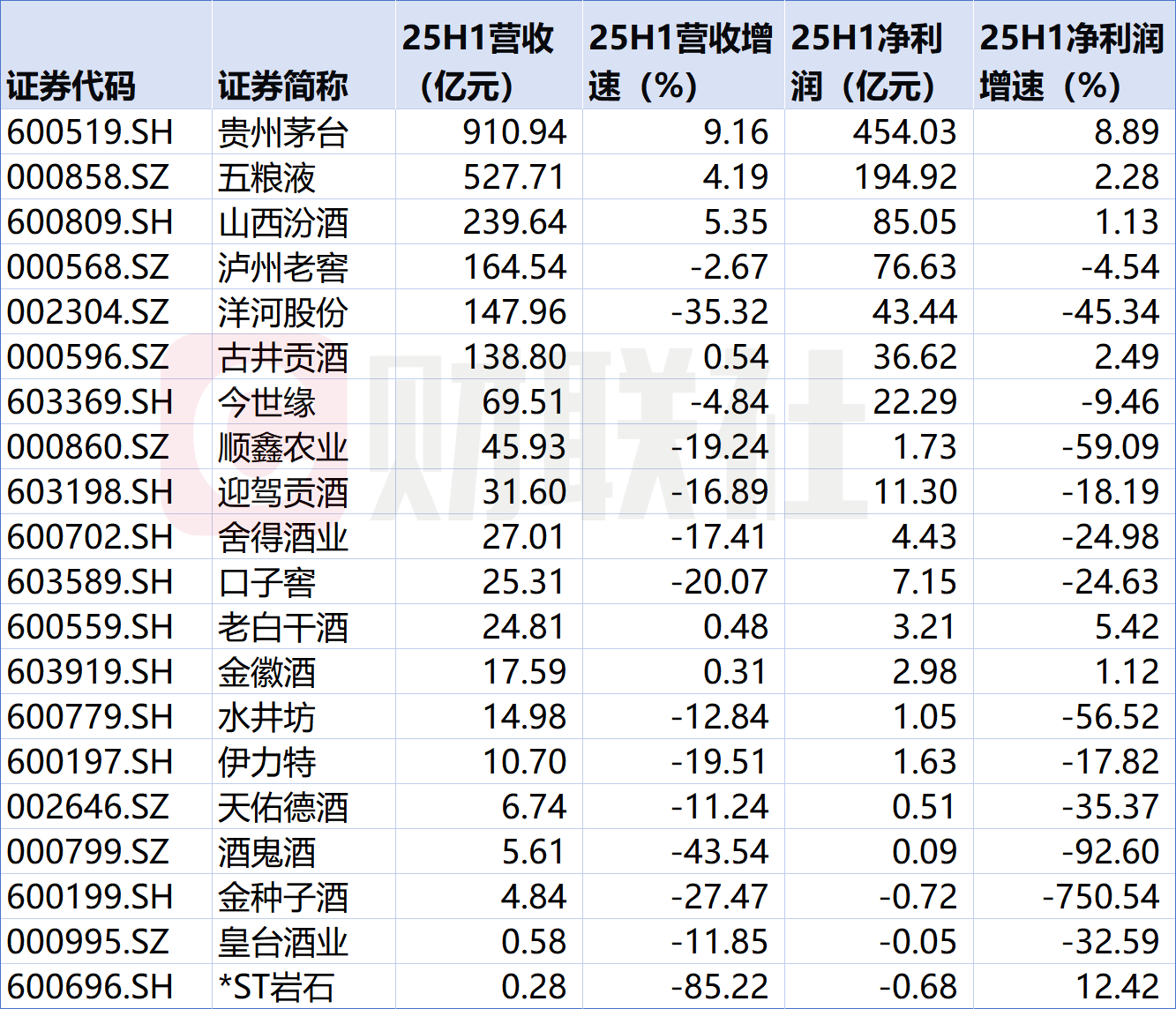
Core Viewpoint - The A-share liquor sector is experiencing intensified competition and policy adjustments, leading to a decline in overall performance for the first half of the year, with 20 listed companies reporting a combined net profit drop of approximately 1% year-on-year, and many companies failing to meet their revenue growth targets for the year [1][2]. Group 1: Industry Performance - In the first half of the year, the A-share liquor sector achieved a total revenue of 241.51 billion yuan, a year-on-year decrease of about 0.86%, and a net profit of 94.56 billion yuan, down approximately 1.17%, breaking the industry's consecutive years of positive growth [2][4]. - The top six liquor companies in the A-share market reported a combined revenue of 212.96 billion yuan, a year-on-year increase of 1.2%, accounting for 88.18% of the total revenue of A-share liquor companies [4][5]. - The overall performance of the liquor sector is characterized by a significant divergence, with 13 out of 20 listed companies experiencing negative growth, representing over 65% of the sector [1][5]. Group 2: Company-Specific Performance - Among the top six liquor companies, Yanghe Co. (002304.SZ) experienced the most severe decline, with a revenue drop of approximately 35% and a net profit decrease of about 45% [5][6]. - Kweichow Moutai (600519.SH) showed the best performance among the top companies, with a revenue increase of 9.16% and a net profit increase of 9.16% [3][7]. - Companies like Jinzhongzi Liquor (600199.SH) and Jiu Gui Liquor (000799.SZ) reported net profit declines exceeding 50%, indicating a significant struggle for many second and third-tier liquor companies [1][5]. Group 3: Future Outlook - Many liquor companies are unlikely to meet their annual performance targets, as indicated by their underperformance in the first half of the year [6][8]. - The industry is expected to face a "structural repair and weak recovery" in the second half of the year, with some personalized products potentially finding opportunities, but a comprehensive V-shaped recovery is unlikely [9].


稳居前三!山西汾酒半年报营利“双增”,省外收入占比超六成!
Sou Hu Cai Jing· 2025-09-01 14:02
Core Viewpoint - Shanxi Fenjiu achieved double growth in revenue and net profit in the first half of 2025, maintaining its position among the top three in the industry despite overall pressure in the liquor sector [2][10]. Group 1: Financial Performance - The company reported a revenue of 23.964 billion yuan, a year-on-year increase of 5.35%, and a net profit of 8.505 billion yuan, up 1.13% [2]. - The core product, the "Fenjiu series," generated sales revenue of 23.391 billion yuan, reflecting a 5.75% increase, accounting for 98% of total revenue [3]. - Revenue from the domestic market reached 8.732 billion yuan, growing by 4.04%, while revenue from outside Shanxi was 15.143 billion yuan, increasing by 6.15% [4][6]. Group 2: Market Position and Trends - The proportion of revenue from outside Shanxi increased from 62.96% in 2024 to 63.42% in 2025, indicating effective national expansion [5]. - The liquor industry is experiencing significant differentiation, with leading companies like Shanxi Fenjiu showing resilience while smaller firms face challenges [7][8]. - Among 17 listed liquor companies, only a few, including Shanxi Fenjiu, reported growth in both revenue and net profit, contrasting with the decline seen in many others [9]. Group 3: Strategic Initiatives - Shanxi Fenjiu is focusing on management transformation, production optimization, national expansion, technological innovation, and cultural development to drive high-quality growth [10]. - The company is implementing lean management across its production chain and enhancing supply chain resilience by establishing backup procurement channels [10]. - The national expansion strategy is being advanced with a focus on key markets and brand penetration through targeted promotional projects [10].

和君王明夫:世界酒业王者是怎样炼成的?
Sou Hu Cai Jing· 2025-09-01 10:19
Core Insights - The article emphasizes the potential for individual wine enterprises to rise above current industry challenges through self-initiated efforts and strategic innovation, suggesting that the time has come for China to produce a global wine leader [2][3]. Industry Overview - The global wine industry is characterized by significant competition and evolving market dynamics, with a focus on strategic growth paths for companies transitioning from local to global players [2][3]. - The top ten global wine companies are dominated by beer giants, with Anheuser-Busch InBev leading at $593.8 billion in revenue, followed by Heineken at $402.1 billion and Diageo at $247.4 billion [7][14]. - In contrast, the Chinese wine industry shows a strong dominance of baijiu companies, with seven out of the top ten companies being baijiu producers, highlighting a stark difference from the global trend [14][17]. Company Performance - The top Chinese wine company, Kweichow Moutai, reported revenues of $212.1 billion, making it the second-largest wine company globally by market capitalization [11][17]. - The combined revenue of the top ten Chinese wine companies is approximately $620 billion, which is about 30% of the total revenue of the top ten global wine companies [17]. - The market capitalization of Kweichow Moutai and Wuliangye significantly exceeds that of their global counterparts, indicating a higher valuation in the capital markets [17][18]. Strategic Insights - The article discusses the importance of management consulting, goal decomposition, and process management as critical components for success in the wine industry [2][18]. - The narrative of Anheuser-Busch InBev's rise illustrates the effectiveness of strategic acquisitions and operational efficiencies in building a global brand [19][27]. - Diageo's growth is attributed to a series of strategic acquisitions and a focus on high-end products, showcasing the importance of brand management and market responsiveness [39][50]. Market Trends - The article notes a lack of significant presence for wine companies in the global top rankings, suggesting challenges in scaling production and market share within the wine sector [18]. - The Chinese wine market is characterized by a lack of internationalization, with Moutai's overseas revenue accounting for only 4% of its total, indicating potential growth opportunities in global markets [14][17].