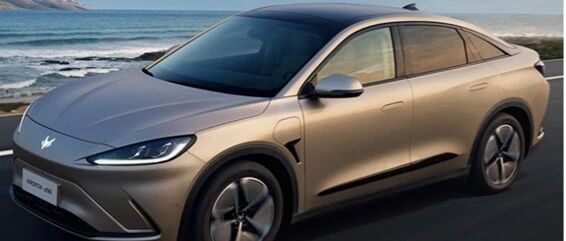
长安汽车

Search documents
中国智驾产业变迁:从封闭交付到普惠生态
雷峰网· 2025-12-25 09:24
Core Viewpoint - Over the past decade, China's intelligent driving industry has transitioned from a closed chain to an inclusive ecosystem, driven by technological advancements and collaborative efforts among local companies [1][36]. Group 1: Industry Evolution - In 2011, Tesla's CEO Elon Musk dismissed BYD as a competitor, highlighting the significant gap in technology and product appeal between Chinese automakers and Tesla at that time [2][3]. - By 2024, Chinese automakers like BYD and Geely have surpassed Tesla in sales, becoming part of the top ten global car manufacturers, showcasing the rapid evolution of the industry [4]. - The core of Tesla's sustained optimism lies in its self-developed chips and intelligent driving capabilities, which have spurred a wave of research and development in China's intelligent driving sector [4]. Group 2: Key Players and Partnerships - The critical turning point for China's intelligent driving industry occurred between 2019 and 2020, marked by the emergence of companies like Horizon Robotics and Momenta, which began to establish themselves in the market [6]. - The collaboration between Changan Automobile and Horizon Robotics exemplifies how local companies are building flexible and open supply chain systems, enhancing their control over core technologies [10][12]. - The partnership between Li Auto and Horizon Robotics allowed for rapid development and deployment of advanced driving features, demonstrating the importance of open collaboration in overcoming technological challenges [13][17]. Group 3: Technological Advancements - The shift from Mobileye's closed delivery model to more open and collaborative approaches has catalyzed the development of local intelligent driving technologies, enabling companies to gain autonomy over their systems [9][18]. - Horizon Robotics' introduction of the Journey 5 chip, which offers high performance and supports advanced driving needs, has positioned the company to compete in the high-end intelligent driving market [23][24]. - The "HSD Together" model proposed by Horizon Robotics aims to enhance collaboration across the supply chain, significantly reducing development costs and time to market for automotive companies [27][28]. Group 4: Market Accessibility and Inclusivity - The evolution of intelligent driving technology is making advanced features more accessible to a broader range of consumers, breaking down price barriers that previously limited adoption to high-end vehicles [30][31]. - BYD's upcoming "Heavenly Eye" system, powered by Horizon Robotics' Journey 6 chip, aims to provide advanced driving capabilities across its entire model range, including lower-priced vehicles [30]. - The introduction of Horizon Robotics' HSD full-scene driving assistance system is set to make high-level intelligent driving features available in mid-range vehicles, promoting inclusivity in the market [31][33].


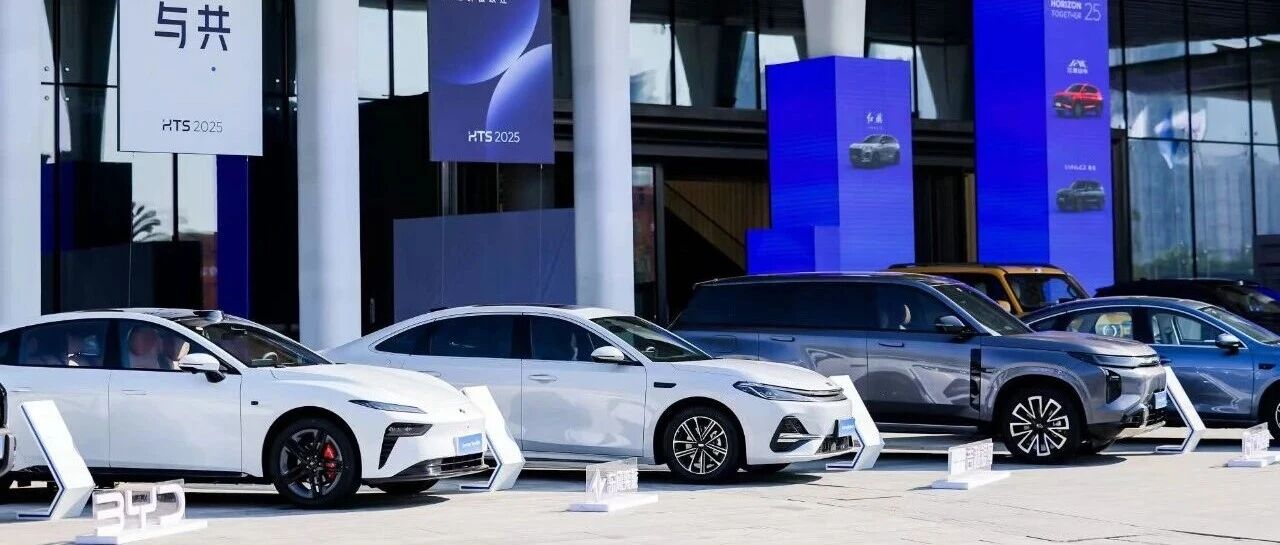
日本经验,零部件观点更新,岱美股份重申-20251225
Shenwan Hongyuan Securities· 2025-12-25 09:14
Investment Rating - The report maintains a positive outlook on the automotive industry, specifically recommending companies like Uxin and Daimay as strong investment opportunities [2][5]. Core Insights - The second-hand car export market faces significant challenges, including the non-standard nature of vehicles and a complex transaction chain. Japan's experience in this sector offers valuable lessons, such as stringent vehicle inspection policies and the establishment of standardized auction platforms [3][4]. - The automotive parts sector has not seen the anticipated year-end surge due to exhausted subsidies and consumer hesitance. The report suggests focusing on companies with strong alpha, such as Shuanghuan Transmission and Yinlun, which have stable growth and high market ceilings [4]. - Daimay is highlighted as a stable, undervalued company with significant growth potential, particularly in the automotive interior and robotics sectors. The company has made substantial progress in expanding its client base, including partnerships with major players like Tesla [5][7]. Summary by Sections Second-Hand Car Export - The second-hand car export market is hindered by trust issues and a lack of standardized practices. Japan's strict vehicle inspection policies and auction platforms provide a model for improvement. Uxin, with a current inventory of nearly 7,000 vehicles, is positioned for growth in this market [2][3]. Automotive Parts Sector - The automotive industry did not experience the expected late-year demand surge due to depleted subsidies and cautious consumer behavior. The report emphasizes the need to monitor the continuation of trade-in policies and suggests focusing on companies with strong alpha characteristics, such as Shuanghuan Transmission and Yinlun [4]. Daimay - Daimay is recognized for its stable performance and low valuation, with 80% of its revenue coming from overseas markets. The company is well-positioned to withstand domestic market pressures and has made significant strides in the robotics field, particularly in electronic skin technology [5][7].

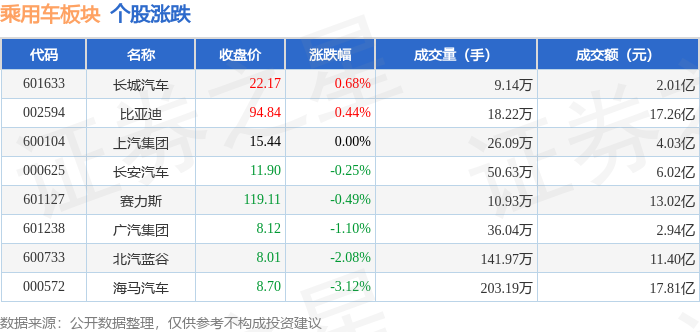
乘用车板块12月25日跌0.07%,海马汽车领跌,主力资金净流出5.36亿元
Zheng Xing Xing Ye Ri Bao· 2025-12-25 09:07
Core Insights - The passenger car sector experienced a slight decline of 0.07% on December 25, with Haima Automobile leading the drop [1] - The Shanghai Composite Index closed at 3959.62, up 0.47%, while the Shenzhen Component Index closed at 13531.41, up 0.33% [1] Market Performance - Great Wall Motors closed at 22.17, with an increase of 0.68%, trading volume of 91,400 shares, and a transaction value of 201 million yuan [1] - BYD closed at 94.84, up 0.44%, with a trading volume of 182,200 shares and a transaction value of 1.726 billion yuan [1] - SAIC Motor remained unchanged at 15.44, with a trading volume of 260,900 shares and a transaction value of 403 million yuan [1] - Changan Automobile closed at 11.90, down 0.25%, with a trading volume of 506,300 shares and a transaction value of 602 million yuan [1] - Seres closed at 119.11, down 0.49%, with a trading volume of 109,300 shares and a transaction value of 1.302 billion yuan [1] - GAC Group closed at 8.12, down 1.10%, with a trading volume of 360,400 shares and a transaction value of 294 million yuan [1] - BAIC Blue Valley closed at 8.01, down 2.08%, with a trading volume of 1,419,700 shares and a transaction value of 1.14 billion yuan [1] - Haima Automobile closed at 8.70, down 3.12%, with a trading volume of 2,031,900 shares and a transaction value of 1.781 billion yuan [1] Capital Flow - The passenger car sector saw a net outflow of 536 million yuan from institutional investors, while retail investors had a net inflow of 484 million yuan [1] - BYD had a net inflow of 171 million yuan from institutional investors, but a net outflow of 117 million yuan from retail investors [2] - Great Wall Motors experienced a net inflow of 22.71 million yuan from institutional investors, with a net outflow from retail investors [2] - GAC Group had a significant net outflow of 63.71 million yuan from institutional investors, while retail investors contributed a net inflow of 39.88 million yuan [2] - Changan Automobile faced a net outflow of 83.01 million yuan from institutional investors, with retail investors showing a net inflow of 75.99 million yuan [2] - BAIC Blue Valley had a net outflow of 126 million yuan from institutional investors, while retail investors contributed a net inflow of 81.98 million yuan [2] - Haima Automobile saw a net outflow of 186 million yuan from institutional investors, with retail investors showing a net inflow of 16.8 million yuan [2] - Seres experienced a net outflow of 27.37 million yuan from institutional investors, while retail investors had a net inflow of 18.41 million yuan [2]





【乘联分会论坛】2025年11月皮卡市场分析
乘联分会· 2025-12-25 08:32
Core Viewpoint - The pickup truck market in China is experiencing significant growth, with strong sales and export performance, particularly in the southwestern and northwestern regions, while the demand in eastern developed areas is relatively weak [2][3][9]. Group 1: Overall Market Analysis - In November 2025, the pickup truck market sold 56,000 units, a year-on-year increase of 22% and a month-on-month increase of 17%, marking a high point in the last five years [2][8]. - From January to November 2025, the total sales reached 519,000 units, up 8% year-on-year [8]. - The production of pickup trucks in November 2025 was 52,000 units, a year-on-year increase of 8%, with a total production of 527,000 units from January to November, reflecting a 14.5% increase [2][8]. Group 2: Export Performance - In November 2025, China exported 32,000 pickup trucks, representing a year-on-year increase of 54% and a month-on-month increase of 19% [3][10]. - The total exports from January to November 2025 reached 268,000 units, a 22% increase compared to the previous year [10]. - By November 2025, exports accounted for 57% of total pickup truck sales, indicating a strong international demand for Chinese-made pickups [10]. Group 3: New Energy Pickup Trucks - In November 2025, sales of new energy pickup trucks reached 8,000 units, a year-on-year increase of 152% and a month-on-month increase of 40% [3][14]. - Cumulatively, from January to November 2025, 67,000 new energy pickups were sold, reflecting a staggering growth of 335% [14]. - The market for new energy pickups is expected to grow rapidly, driven by increasing domestic and international demand [14]. Group 4: Regional Sales Characteristics - The main demand for pickup trucks is concentrated in the southwestern and northwestern regions, which accounted for 46% of total demand in November 2025 [15][18]. - The eastern developed regions are showing weaker performance, with significant growth observed in smaller cities and rural areas [18][20]. - The market dynamics are shifting, with urban areas experiencing a decline while county and township markets are recovering [20][31]. Group 5: Competitive Analysis - Great Wall Motors continues to dominate the pickup truck market, holding nearly 50% of the domestic market share, with strong performances from Changan, SAIC Maxus, and Zhengzhou Nissan [23][26]. - The competitive landscape is evolving, with emerging players like Geely and new energy brands gaining traction [26][31]. - The export performance of major manufacturers is robust, with Great Wall Motors leading, followed by Changan and SAIC Maxus [28][31].
商业航天板块活跃,24位基金经理发生任职变动
Sou Hu Cai Jing· 2025-12-25 08:17
Market Performance - On December 25, the three major A-share indices collectively rose, with the Shanghai Composite Index increasing by 0.47% to 3959.62 points, the Shenzhen Component Index rising by 0.33% to 13531.41 points, and the ChiNext Index up by 0.3% to 3239.34 points [1] Fund Manager Changes - On December 25, 24 fund managers experienced changes in their positions, with 675 fund products having manager changes in the past 30 days [3] - The reasons for the changes included 4 managers leaving due to job changes, 1 due to personal reasons, and 3 due to product expiration [3] - Wang Liang from Minsheng Jianyin Fund managed assets totaling 3.205 billion yuan, with the highest return product being Minsheng Jianyin Prosperity Industry Mixed A, achieving an 86.63% return over 7 years and 56 days [3] New Fund Managers - On December 25, 29 fund products announced new fund managers, involving 16 managers [4] - Yang Zhenshao from E Fund currently manages assets of 9.842 billion yuan, with the highest return product being E Fund Medical Care Industry Mixed A, which achieved a 199.09% return over 9 years and 129 days [4] Fund Research Activity - In the past month (November 25 to December 25), Bosera Fund conducted the most company research, engaging with 39 listed companies, followed by Huaxia Fund, Southern Fund, and Huitianfu Fund with 38, 37, and 34 companies respectively [6] - The most researched industry was specialized equipment with 178 instances, followed by chemical products with 130 instances [6] Recent Company Focus - In the last month, the most focused company by public funds was Zhongke Shuguang, with 117 fund management companies participating in its research [6] - In the past week (December 18 to December 25), Lingyi Zhi Zao was the most researched company, receiving attention from 40 fund institutions [7]


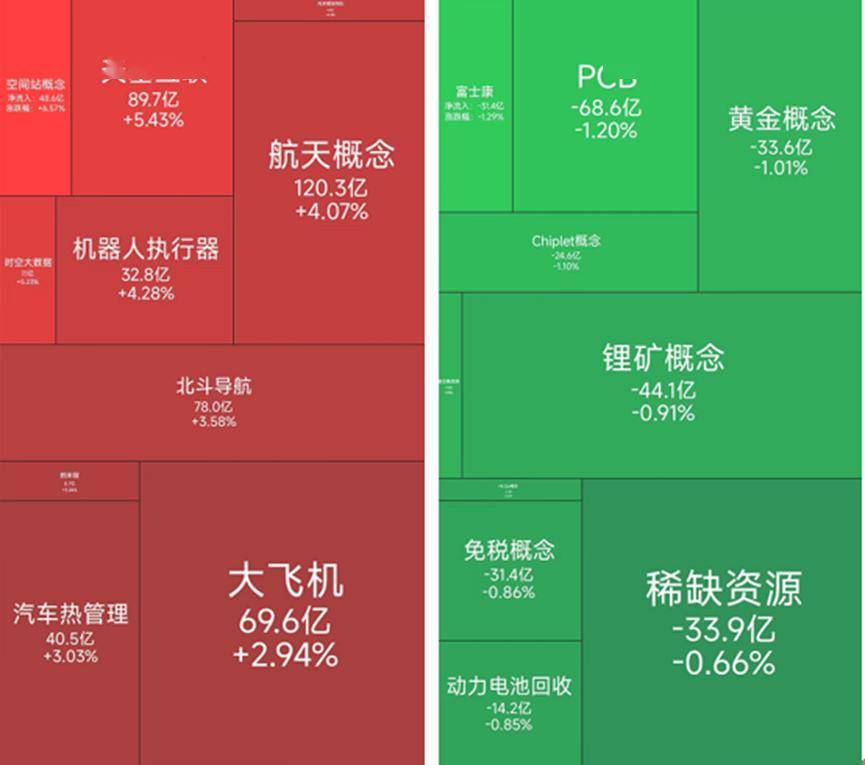
长安汽车:废轻铁拍卖等信息不实,将通过法律手段维权
Mei Ri Jing Ji Xin Wen· 2025-12-25 08:09
"上述发布行为已对公司的品牌声誉和正常经营秩序造成了严重的负面影响。针对造谣、传谣、抹黑和 诋毁行为,公司将通过法律手段维护公司的合法权益。"长安汽车方面称。 12月24日,长安汽车不实信息举报中心发布声明称,近期,长安汽车关注到网络上有"重庆长安汽车废 轻铁拍卖,疑致数千万国有资产流失"等信息。经调查核实,该内容为不实信息。 ...
61.22亿元增资落地!深蓝汽车第二代产品已开始开发,计划2026年投放
Mei Ri Jing Ji Xin Wen· 2025-12-25 06:49
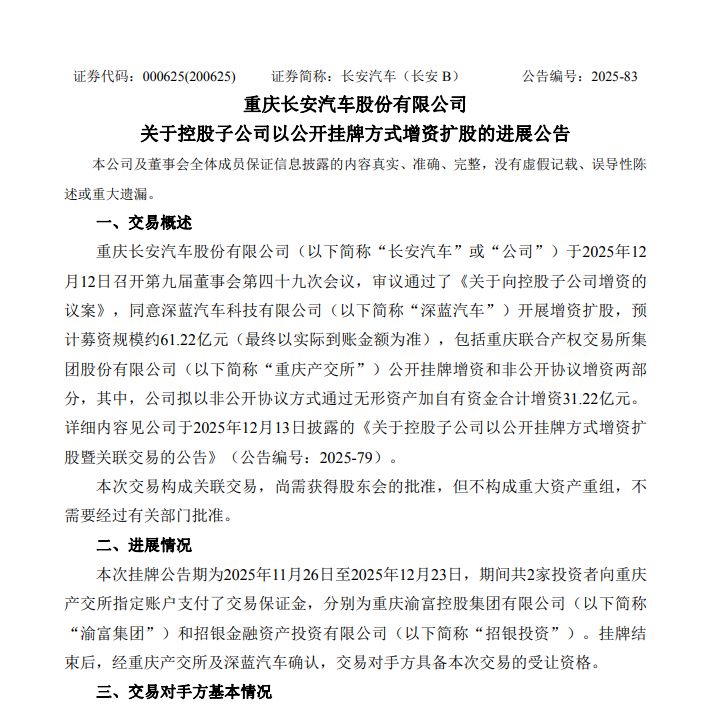
每经记者|段思瑶 每经编辑|裴健如 12月24日晚间,长安汽车发布公告称,公司控股子公司深蓝汽车科技有限公司(以下简称深蓝汽车)拟增资扩股,新增两名投资者——重庆渝富控股集团有 限公司(以下简称渝富集团)和招银金融资产投资有限公司(以下简称招银投资)。 按照交易计划,渝富集团、招银投资均拟以现金方式,分别向深蓝汽车增资25亿元、5亿元,成为深蓝汽车的第二和第九大股东,持股比例分别为12.0934% 和2.4187%。其中,招银投资系招商银行的全资子公司。 长安汽车曾在公告中披露,此次深蓝汽车预计募资规模约61.22亿元。接下来,钱将花在哪里?据悉,深蓝汽车这笔资金将主要用于新汽车研发、智能化与 电动化技术创新、全球品牌力提升领域。 据《每日经济新闻》记者了解,目前深蓝汽车第二代产品已经开始有序开发,计划2026年投放,2030年前累计推出30款产品。 另外,12月15日,深蓝汽车产品获批搭载L3级自动驾驶功能的智能网联汽车产品准入许可,可以实现在交通拥堵环境下高速公路和城市快速路单车道内的 自动驾驶功能。同时,首块L3级自动驾驶专用正式号牌也已在深蓝汽车启用。 有分析认为,深蓝汽车作为长安汽车孵化创立,已初步 ...
中国电车攻占泰国70%市场
2 1 Shi Ji Jing Ji Bao Dao· 2025-12-25 06:21
Core Insights - Thailand is the 10th largest automotive producer globally and the largest in Southeast Asia, known as the "Detroit of the East" [2] - The Thai government is initiating a transition to electric vehicles (EVs), prompting Chinese automakers to aggressively enter the market [3][6] - The penetration rate of new energy vehicles in Thailand has reached 20%, with significant growth in EV sales compared to other regions [6][10] Industry Overview - Thailand's automotive market has a long-standing dominance of Japanese brands, which held a market share of around 90% at their peak and is expected to remain at about 70% in 2024 [2] - Chinese automakers have increased their market share from 5% to approximately 20% in recent years, with over 70% market share in the EV segment [7][10] - The Thai government has implemented subsidies for EVs, significantly boosting sales, with a reported 7.6 times increase in new EV registrations in the first nine months of 2023 compared to the previous year [11] Market Dynamics - The Thai EV market is characterized by a lack of local automotive brands, allowing for a more open market environment [10] - The government has introduced policies requiring local production to benefit from subsidies, which has led to increased investments from Chinese companies like BYD and GAC [12][11] - The competition in the Thai automotive market is intensifying, with new entrants increasing the pressure on existing players [18] Future Opportunities - There is a significant opportunity for Chinese brands in the Thai market, particularly in the segments of pickup trucks and commercial vehicles, where current penetration is low [20] - The Thai government is negotiating free trade agreements with the EU, which could provide additional market access and benefits for manufacturers operating in Thailand [13] - The shift towards hybrid vehicles (PHEV and REEV) presents a potential growth area, as these models may capture market share from traditional HEVs [19]


长安汽车和渝富集团等3家投资方向深蓝汽车增资61.22亿元
Xin Jing Bao· 2025-12-25 06:20
Core Viewpoint - Changan Automobile has announced the progress of capital increase and share expansion for Deep Blue Automobile through public listing, involving three investors: Changan Automobile, Chongqing Yufu Holding Group, and China Merchants Jinling Financial Asset Investment [1] Group 1: Investment Details - The total amount of capital increase for Deep Blue Automobile is 6.122 billion yuan [1] - Changan Automobile contributes 3.122 billion yuan, which includes 2.079 billion yuan in cash and intangible assets related to the Deep Blue S05 and G318 models [1] - Chongqing Yufu Holding Group invests 2.5 billion yuan in cash, while China Merchants Jinling Financial Asset Investment contributes 500 million yuan in cash [1] Group 2: Shareholding Structure - After the capital increase, Changan Automobile's shareholding remains at 50.9959%, while Chongqing Yufu Holding Group holds 12.0934% and China Merchants Jinling Financial Asset Investment holds 2.4187% [1]
中国市场 L3 自动驾驶车型量产准入许可:象征性举措还是重大产业机遇?
Counterpoint Research· 2025-12-25 06:14
Core Insights - The article discusses the approval of L3-level conditional autonomous driving vehicles in China, specifically the Changan Deep Blue SL03 and BAIC Arcfox αS6, highlighting their operational limitations and the significance of this regulatory milestone [4][6]. Group 1: Regulatory Approval and Market Impact - On December 15, 2025, the Ministry of Industry and Information Technology of China approved Changan and BAIC's applications for L3-level autonomous vehicles, allowing them to operate under specific conditions [4][6]. - The approval is seen as a symbolic milestone that exceeds the immediate production value, with the first half of 2026 expected to be a critical window for mass production of L3-level autonomous vehicles in China [6][7]. Group 2: Competitive Landscape - Tesla's Full Self-Driving (FSD) 14.2 system is anticipated to enter mass production in China between Q2 and Q3 of 2026, increasing competitive pressure on local automakers [6]. - Joint ventures represented by companies like BMW, GM, and Mercedes are likely to miss the approval window for L3-level autonomous production in 2026 due to internal communication and localization compliance challenges [6]. Group 3: Technical Analysis of Approved Models - Both approved models, Changan Deep Blue SL03 and BAIC Arcfox αS6, are based on L2-level hardware but have been adapted for specific L3 operational design domains (ODD) [7]. - Changan's solution relies on pure visual perception and a rule-based planning and control system, reflecting the company's ongoing advancements since 2020 [10]. - BAIC's approach utilizes multi-sensor fusion and an end-to-end software architecture, optimized for L3 highway scenarios based on Huawei's commercial autonomous driving system [10]. Group 4: Future Projections - Additional models from companies such as BYD, FAW, GAC, NIO, and SAIC are expected to receive L3-level approval, with models from XPeng, Tesla, and those equipped with Huawei ADS 4.0 anticipated to launch in the latter half of 2026 [7].