
平安银行

Search documents
未来5年,把存款换成这4样东西,也许会让生活变得更舒适
Sou Hu Cai Jing· 2025-10-19 23:52
Core Viewpoint - The continuous decline in bank deposit interest rates has led to a situation where savings cannot keep up with inflation, prompting a shift in investment strategies for individuals to enhance their financial comfort and security [1][12]. Group 1: Bank Deposit Rates - Recent trends show a significant drop in bank deposit interest rates, from 2.25% to 1.35%, resulting in a decrease of 900 yuan in annual interest income for a deposit of 100,000 yuan [1]. - The current deposit rates are unable to outpace inflation, diminishing the purchasing power of savings over time [1]. Group 2: Investment Recommendations - Individuals are advised to acquire a skill or trade, as this can provide job security and additional income opportunities, especially during economic downturns [3]. - Investing in gold is recommended, as its price has been rising due to global economic instability and a declining US dollar index. It is suggested to buy gold during price corrections to maximize returns [8]. - Health investment is emphasized as crucial, with recommendations for regular exercise, proper sleep, and health check-ups, reflecting a growing awareness of the importance of physical well-being [9]. - Investing in dividend-paying bank stocks is encouraged, as many A-share listed banks offer dividend yields exceeding 3%, with some over 5%, providing a better return compared to current deposit rates [12].


前三季度主要金融数据变化怎么看
Xin Hua Wang· 2025-10-19 23:50
Core Viewpoint - The People's Bank of China reported that in the first three quarters of this year, RMB loans increased by 14.75 trillion yuan, with both broad money and social financing growth rates remaining high, creating a favorable monetary environment for economic recovery [1] Group 1: Loan Growth and Structure - As of the end of September, the balance of RMB loans reached 270.39 trillion yuan, a year-on-year increase of 6.6% [2] - The social financing scale stood at 437.08 trillion yuan, with a year-on-year growth of 8.7%, which is 0.7 percentage points higher than the same period last year [2] - The incremental social financing scale for the first three quarters totaled 30.09 trillion yuan, which is 4.42 trillion yuan more than the previous year [2] - The balance of inclusive small and micro loans was 36.09 trillion yuan, up 12.2% year-on-year, while medium and long-term loans for the manufacturing sector reached 15.02 trillion yuan, increasing by 8.2% [2] Group 2: Support for Key Industries - Key industries such as equipment manufacturing and high-tech manufacturing maintained high levels of prosperity, effectively releasing corporate financing demand [2] - A state-owned bank reported that manufacturing loans accounted for over half of its corporate loans, primarily in the form of medium and long-term loans, which align with the long-term needs of manufacturing enterprises for technological upgrades [2] Group 3: Policy Impact and Consumer Demand - Recent policy measures, including personal consumption loan subsidies and adjustments to housing purchase restrictions in major cities, have led to a rebound in consumer loan demand [3] - In September, the transaction volume of commercial housing in 30 major and medium-sized cities increased by approximately 7% year-on-year, indicating a recovery in personal housing loan demand [3] Group 4: Financing Costs and Transparency - Loan interest rates have remained low, with the weighted average interest rate for newly issued corporate loans at about 3.1%, down approximately 40 basis points year-on-year [5] - The implementation of the "loan transparency" initiative has helped reduce financing costs for small and medium-sized enterprises, ensuring that they are aware of all associated costs [4][5] Group 5: Monetary Policy and Economic Outlook - The current monetary policy remains moderately accommodative, with continuous effects from previous rate cuts and reserve requirement ratio reductions, supporting high growth rates in RMB loans [6] - The broad money (M2) balance reached 335.38 trillion yuan, growing by 8.4% year-on-year, while the narrow money (M1) balance was 113.15 trillion yuan, up 7.2% [7] - The economic indicators show strong vitality and resilience, with structural monetary policy tools expected to continue supporting key sectors [8]


信贷结构持续优化 前三季度主要金融数据变化怎么看
Ren Min Ri Bao· 2025-10-19 23:37
Core Viewpoint - The People's Bank of China reported that in the first three quarters of this year, RMB loans increased by 14.75 trillion yuan, with both broad money and social financing growth rates remaining high, creating a favorable monetary environment for economic recovery [1]. Financial Data Overview - As of the end of September, the balance of RMB loans reached 270.39 trillion yuan, a year-on-year increase of 6.6%. The total social financing scale was 437.08 trillion yuan, up 8.7% year-on-year, which is 0.7 percentage points higher than the same period last year. The cumulative increase in social financing for the first three quarters was 30.09 trillion yuan, 4.42 trillion yuan more than the previous year [3]. - By the end of September, the balance of inclusive small and micro loans was 36.09 trillion yuan, growing by 12.2% year-on-year, while medium and long-term loans for the manufacturing sector reached 15.02 trillion yuan, up 8.2% year-on-year [3]. Support for the Real Economy - Key industries such as equipment manufacturing and high-tech manufacturing maintained high levels of prosperity, with effective release of corporate financing demand. A state-owned bank reported that manufacturing loans accounted for over half of its corporate loans this year, primarily in the form of medium and long-term loans to support technological upgrades in the manufacturing sector [3]. - Recent policy financial tools have been deployed in various regions, targeting urban renewal, transportation, water services, logistics, and environmental protection, addressing capital shortages for major projects and boosting related credit growth [4]. Consumer Credit Trends - There has been a rebound in consumer credit demand, driven by the implementation of personal consumption loan interest subsidies and service industry loan subsidies. In September, the transaction volume in the real estate market increased by approximately 7% year-on-year, leading to a corresponding recovery in personal housing loan demand [4]. Financing Costs and Loan Rates - Loan interest rates have remained low, with the weighted average interest rate for newly issued corporate loans at approximately 3.1%, down about 40 basis points year-on-year. Similarly, the average interest rate for new personal housing loans was also around 3.1%, down about 25 basis points year-on-year [6]. - The introduction of the "Loan Clarity Paper" has made financing costs more transparent, helping to reduce the overall financing costs for small and medium-sized enterprises [5][6]. Monetary Policy Outlook - The current monetary policy remains moderately accommodative, with ongoing effects from previous rate cuts and reserve requirement ratio reductions. This has resulted in a high growth rate of RMB loans and low loan interest rates, indicating a sufficient supply of credit resources to meet the financing needs of the real economy [7]. - The broad money (M2) balance reached 335.38 trillion yuan, growing by 8.4% year-on-year, while the narrow money (M1) balance was 113.15 trillion yuan, up 7.2% year-on-year, reflecting increased business activity and consumer demand [8]. Future Policy Directions - The focus will continue on structural monetary policy tools to enhance financial support for key sectors, with expectations for ongoing collaboration between monetary and fiscal policies to sustain economic recovery [9].
前三季度主要金融数据变化怎么看(高质量发展看亮点·读数)
Ren Min Ri Bao· 2025-10-19 22:01
Core Insights - The People's Bank of China reported that in the first three quarters of this year, RMB loans increased by 14.75 trillion yuan, creating a favorable monetary environment for economic recovery [1] - The demand for corporate credit has been met, particularly in key sectors such as equipment manufacturing and high-tech manufacturing, which continue to show high levels of prosperity [2][3] Financial Data Overview - As of the end of September, the total RMB loans reached 270.39 trillion yuan, a year-on-year increase of 6.6%, while the total social financing scale was 437.08 trillion yuan, up 8.7% year-on-year [3] - The cumulative increase in social financing for the first three quarters was 30.09 trillion yuan, which is 4.42 trillion yuan more than the same period last year [3] - The balance of inclusive small and micro loans was 36.09 trillion yuan, growing by 12.2% year-on-year, and medium to long-term loans for the manufacturing sector reached 15.02 trillion yuan, up 8.2% year-on-year [3] Policy and Market Dynamics - Recent policy measures in regions like Jiangsu, Guangdong, and Guangxi have led to the deployment of new policy financial tools aimed at urban renewal, transportation, and environmental protection, addressing capital shortages in major projects [4] - The implementation of personal consumption loan interest subsidies and adjustments in housing purchase policies in major cities have contributed to a rebound in housing loan demand [4] Financing Costs and Loan Rates - Loan interest rates have remained low, with the weighted average interest rate for new corporate loans at approximately 3.1%, down about 40 basis points year-on-year [6] - The introduction of the "Loan Transparency Document" has helped reduce financing costs for small and medium enterprises, ensuring that they are aware of all associated costs [5][6] Monetary Policy Impact - The current monetary policy remains moderately accommodative, with measures such as reserve requirement ratio cuts and interest rate reductions showing positive effects on loan growth and economic stability [7][9] - The broad money supply (M2) reached 335.38 trillion yuan, growing by 8.4% year-on-year, indicating a healthy liquidity environment [8] Future Outlook - The fourth quarter is expected to see continued support for the real economy from monetary policy, alongside active fiscal measures aimed at promoting consumption and improving livelihoods [9] - The ongoing structural monetary policy tools are anticipated to enhance financial support for key sectors, fostering a more balanced economic supply-demand relationship [8][9]
牛市中非主线行业何时领涨?
Ge Long Hui· 2025-10-19 14:36
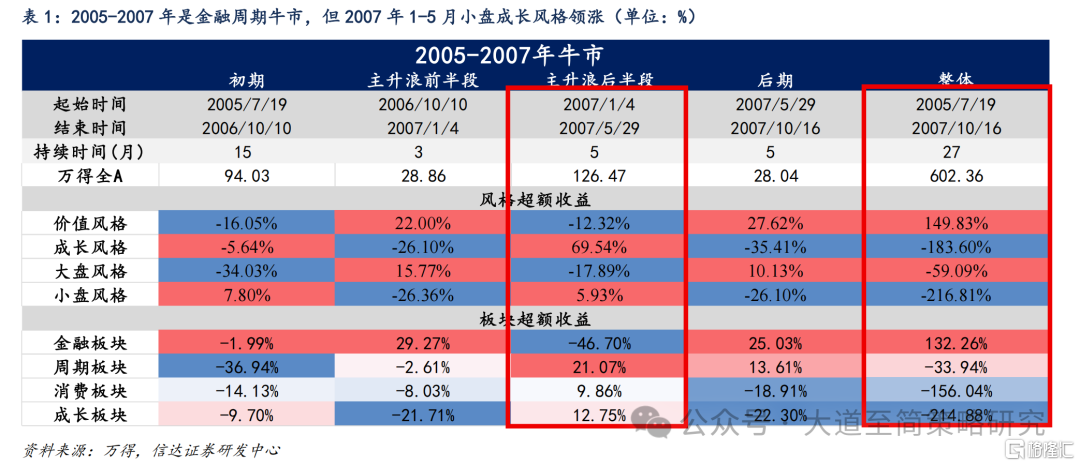
Core Insights - The article discusses the tendency for non-mainstream sectors to lead in bull markets, particularly during the latter stages of market uptrends, influenced by capital inflows and valuation considerations [1][13]. Group 1: Historical Context - In the 2005-2007 financial cycle bull market, small-cap growth stocks outperformed in the latter half of the bull market, with sectors like textiles, environmental protection, and pharmaceuticals leading the gains [2][3]. - The 2013-2015 TMT bull market saw a significant style shift in late 2014, where large-cap value stocks, particularly in non-bank financials, construction, and steel, outperformed while the TMT sector lagged [8][9]. Group 2: Market Dynamics - The shift in market style during bull markets often occurs when incremental capital flows accelerate, leading to a focus on undervalued sectors with high safety margins, rather than performance-driven sectors [1][13]. - Non-mainstream sectors may experience a temporary surge in performance due to factors such as low valuations and the presence of catalysts like mergers and acquisitions [3][13]. Group 3: Current Market Outlook - The current market is expected to continue its upward trend, driven by policy expectations and potential increases in retail investor participation, particularly in low-valuation sectors [15][18]. - Financial sectors, including banks and non-bank financials, are anticipated to benefit from style shifts and may see increased performance in the fourth quarter [17][18].
9月券商App月活约1.75亿人,再创年内新高
Mei Ri Jing Ji Xin Wen· 2025-10-19 12:53
Core Insights - The active user base of securities apps reached approximately 175 million in September 2025, marking a month-on-month increase of 0.74% and a year-on-year increase of 9.73%, setting a new monthly record for the year [1][2][3] User Engagement Trends - The active user count in September 2025 is the third highest in the past year, only behind October and November 2024 [2] - Leading brokerage apps like Huatai Securities' Zhangle Wealth and Guotai Junan's Junhong have monthly active users exceeding 10 million, maintaining a strong competitive position [2][3] - Smaller brokerages show significant variance in growth rates, with some like Guojin's Commission Treasure and Guohai's Jintan achieving month-on-month growth rates of over 6% [3] Daily Active User Dynamics - The daily active user (DAU) distribution shows a clear tiered structure, with Huatai Zhangle Wealth leading at 4.38 million DAUs, followed by Ping An Securities and GF Securities [4] - Five brokerage apps have DAUs exceeding 3 million, indicating a solidified competitive landscape among top firms [4] Operational Shifts in the Industry - The operational logic of brokerages is undergoing profound changes, shifting from passive market participation to leveraging AI technology for enhancing user engagement and conversion efficiency [5][6] - The launch of Huatai Securities' AI Zhangle marks a significant step in this transformation, integrating AI capabilities across key investment and trading scenarios [6] - The industry is moving towards a model where AI is central to user engagement and wealth management, indicating a shift from mere traffic expansion to value-driven operations [5][6]

策略周报:牛市中非主线行业何时领涨?-20251019
Xinda Securities· 2025-10-19 08:32
Core Conclusions - In a bull market, the style is relatively stable in the early and late stages, but it tends to fluctuate in the mid-stage. Non-mainstream sectors may lead in the later stages of the bull market, influenced significantly by capital flow rather than performance realization, typically lasting 1-2 quarters [2][10][28] Historical Cases - During the 2005-2007 financial cycle bull market, from January to May 2007, small-cap growth stocks surged, with non-mainstream sectors like textiles, environmental protection, and pharmaceuticals leading the gains. This was attributed to accelerated capital inflow and a shift in market focus towards previously underperforming sectors [3][11][14] - In the 2013-2015 TMT bull market, the fourth quarter of 2014 saw large-cap value stocks outperform, with non-bank financials, construction, banking, and steel sectors leading. This shift was driven by significant inflows of retail capital and a change in focus from performance to valuation [19][21][27] Market Dynamics - Non-mainstream sectors tend to lead in the later stages of a bull market due to increased capital inflow, as mainstream sectors often reach high valuation levels, leading investors to seek undervalued sectors with high safety margins [3][28] - The performance of non-mainstream sectors may be supported by earnings growth, as seen in the textiles sector in early 2007, but there can also be instances where performance realization remains weak despite leading gains, such as in the construction and steel sectors in late 2014 [30][28] Current Market Outlook - The report suggests that the current market may be entering a main upward trend, with potential for style switching towards low-value sectors, particularly in banking and non-bank financials, as well as in low-valued electric equipment and cyclical stocks [37][38] - The financial sector is highlighted as having low overall valuations, with potential for rebound due to style switching and regulatory support for long-term capital inflows [39]

银行密集清理低余额长期不动户
Nan Fang Du Shi Bao· 2025-10-18 23:09
Core Viewpoint - Multiple banks are initiating the cleanup of long-term inactive accounts, which include both personal and corporate accounts, to mitigate risks associated with money laundering and fraud, as well as to optimize resource management [2][3][4]. Group 1: Reasons for Cleanup - Long-term inactive accounts are susceptible to misuse by criminals for activities such as money laundering and telecom fraud, necessitating their removal to reduce gray areas [3]. - These accounts consume system resources and increase data storage and maintenance costs, thus cleaning them can enhance backend management and service response efficiency [3]. - Regulatory requirements mandate banks to perform customer identity verification and manage accounts that cannot be verified or have been inactive for long periods, aligning with anti-money laundering and account real-name management efforts [3]. Group 2: Consumer Risks - Long-term inactive accounts can incur management fees and annual fees, leading to gradual depletion of small balances if not monitored [4]. - Inactive accounts may be exploited by criminals, posing legal risks and credit vulnerabilities for consumers [5]. Group 3: Standards for Inactive Accounts - Different banks have varying criteria for defining "long-term inactive accounts," with examples including: - Industrial Bank defines it as accounts with a balance of 10 yuan or less and no transactions for over 365 days [6]. - New Feng Rural Commercial Bank considers accounts inactive if there have been no transactions for over three years and the balance is zero [6]. - Bank of China (Hainan branch) identifies accounts with no transactions in three years and a balance of 10 yuan or less as inactive [6]. - Jiuquan Rural Commercial Bank sets the threshold at two years of inactivity with a balance of 100 yuan or less [6]. Group 4: Variability in Standards - The differences in standards among banks stem from their autonomy in execution and varying risk preferences, with larger banks often adopting more cautious approaches compared to smaller banks [7]. - Some banks are extending the cleanup to corporate accounts and online channels, indicating a broader scope of the initiative [7]. Group 5: Regulatory Evolution - The current cleanup initiative reflects a shift from focusing on physical cards to managing account behaviors, indicating a deeper regulatory approach to account lifecycle management [8][9]. - The emphasis has transitioned from merely addressing card redundancy to ensuring the authenticity, activity, and traceability of accounts, highlighting an upgrade in regulatory requirements [9].





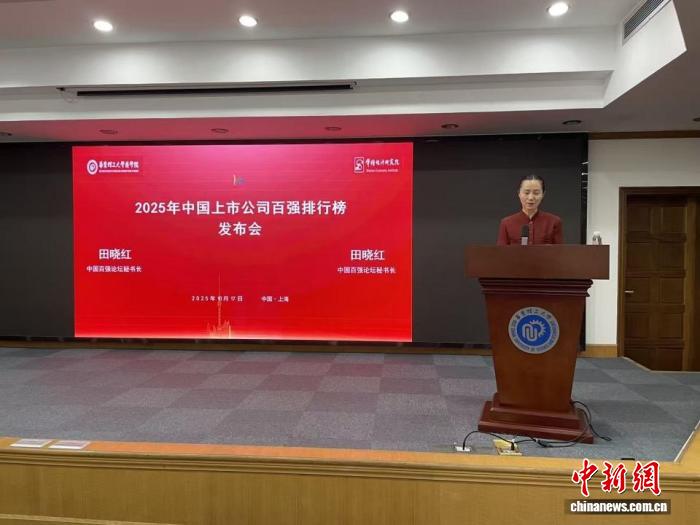
2025年中国上市公司百强排行榜发布
Zhong Guo Xin Wen Wang· 2025-10-18 04:09
Core Insights - The 2025 China Top 100 Listed Companies Ranking was released, showing a total profit of 66,119.84 billion RMB for the 500 listed companies, an increase of 2,354.24 billion RMB from the previous year [1] - The top ten companies remain unchanged, with Industrial and Commercial Bank of China leading with a profit of 4,218.27 billion RMB, remaining stable compared to last year [2] - Despite a decrease in the profit threshold for the ranking, the total profit still grew by 3.69%, driven by significant profit increases among leading companies [3] Summary by Categories Top Companies - The top ten companies include Industrial and Commercial Bank of China, China Construction Bank, Agricultural Bank of China, Bank of China, China Petroleum, China National Offshore Oil Corporation, China Merchants Bank, China Mobile, Ping An Insurance, and Kweichow Moutai [2] - China National Offshore Oil Corporation saw a profit increase of 9.83%, moving up one rank, while China Merchants Bank dropped one rank [2] Profit Distribution - Among the 500 listed companies, 97 companies reported profits exceeding 10 billion RMB, a decrease of 5 from the previous year; 24 companies exceeded 50 billion RMB, an increase of 5; and 12 companies surpassed 100 billion RMB, an increase of 2 [2] - The profit threshold for the ranking (the profit of the 500th company) was 1.464 billion RMB, down 11.22% from the previous year's 1.649 billion RMB [2] Overall Market Performance - The profit growth of leading companies compensated for the general profit decline among lower-ranked companies, highlighting the importance of top firms in driving overall profitability [3] - The strong performance of leading companies is seen as a key driver of high-quality economic development in China, providing confidence and momentum to the market [4]




9月券商APP月活1.75亿人,再创年内新高
Mei Ri Jing Ji Xin Wen· 2025-10-18 00:31
Core Insights - The active user count for securities apps reached approximately 175 million in September 2025, marking a month-on-month increase of 0.74% and a year-on-year increase of 9.73%, setting a new record for the year [1][2] User Activity Trends - The active user count in September 2025 is the third highest in the past year, only lower than October and November 2024 [2] - Leading brokerage apps like Huatai Securities' Zhangle Wealth and Guotai Junan's Junhong maintained over 10 million active users, solidifying their top positions [2][3] - Smaller brokerages showed significant growth disparities, with some like Guojin's Commission Treasure and Xibu Securities experiencing notable increases, while others faced declines [3] Daily Active Users - Huatai's Zhangle Wealth led in daily active users with 4.378 million, followed by Ping An Securities and GF Securities, both exceeding 3.5 million [4] - The competition among top brokerage apps in terms of daily active users is becoming more established, with smaller firms needing to overcome challenges in user scale and engagement [4] AI Integration in Brokerage Operations - The operational logic of brokerages is shifting from passive market participation to leveraging AI technology for enhancing user engagement and conversion efficiency [5][6] - Huatai Securities launched an independent AI application terminal, "AI Zhangle," which integrates AI capabilities across key functions like stock selection and trading, emphasizing transparency and user adaptation [6] - The industry is witnessing a comprehensive AI transformation, moving from isolated intelligence to full-scenario integration, with AI becoming a core driver for user operations and wealth management [6]