
华为

Search documents
未知机构:资金回归传统算力板块机构放量买入纯股基可转债基情绪大幅回落2026012-20260128
未知机构· 2026-01-28 02:00
Summary of Key Points from Conference Call Records Industry Overview - The focus is on the traditional computing power sector, with significant institutional buying in pure equity funds and a notable decline in sentiment towards convertible bond funds [1][2] - The precious metals market remains a key focus, with COMEX gold and silver experiencing volatility but recovering due to news of Zijin Mining's overseas acquisitions [2] Market Dynamics - The stock market experienced significant selling pressure early in the day, with over 4,500 stocks declining, but later recovered to close up 0.14% [1] - The overall trading volume decreased by 360 billion, falling to 2.92 trillion [1] - Growth sectors such as technology and emerging industries saw substantial gains, while traditional sectors like CPO, semiconductor, and storage rebounded sharply [1][2] Investment Trends - Institutional funds showed a continued increase in positions in equity assets, with a shift towards pure equity funds, indicating a potential influx of higher-risk capital [2][3] - The net subscription ratio for passive equity funds was reported at 1.61%, with significant buying from wealth management subsidiaries [3] - The net subscription ratio for active equity funds was slightly higher at 1.62%, with all institutions increasing their positions [3] Sector-Specific Insights - The automotive and machinery sectors received 40% of the inflows, followed by electronics, communications, and new energy [4] - The top sectors for increased investment included electronics, banking, automotive, new energy, and non-bank financials [5] - The convertible bond market saw a net subscription ratio of 0.27%, but overall buying volume significantly decreased compared to the previous two weeks [5] Risk Considerations - The convertible bond market is facing supply-demand imbalances, which could lead to significant volatility if demand weakens [2] - The lithium battery sector experienced a sharp decline due to a sudden drop in lithium carbonate prices, highlighting localized risks [2] Conclusion - The market is currently characterized by a return to traditional computing power investments, with a mixed sentiment in the convertible bond space and a focus on growth sectors. The overall trading environment remains cautious, with attention to sector-specific dynamics and potential risks.
未知机构:国盛军工坤恒顺维商业航天里的长川科技卫星终端放量的风向标-20260128
未知机构· 2026-01-28 01:55
Summary of Conference Call Notes Company and Industry Overview - The company is involved in the wireless radio testing and simulation instruments sector, specifically focusing on satellite and 6G industries, which are driving demand for general wireless radio testing and simulation instruments [1][2]. Key Points and Arguments 1. **Product Scarcity**: The company is one of the few domestic manufacturers of wireless radio testing and simulation instruments, breaking the long-standing monopoly of international firms. Its core product has outperformed the giant Keysight in the domestic market [1]. 2. **Satellite and 6G Development**: The company is leading the development of a "multi-channel star network chain channel simulation simulator," which simulates star-ground and star-star channel environments. This is crucial for satellite and payload testing, and the growth of the satellite industry is directly increasing the demand for such testing instruments [1]. 3. **Market Share**: The company's channel simulation instrument holds over 40% market share domestically, with major clients including Huawei, China Mobile, and StarNet. However, the overall domestic testing instrument localization rate is only about 10%, indicating significant growth potential [1]. 4. **Profit Margins**: The company maintains a long-term gross margin of over 60% and a net margin of over 30% [2]. 5. **New Product Launch - Mobile Comprehensive Testing Instrument**: This product is seen as a key indicator for the growth of satellite terminals. The founder of Galaxy Aerospace stated that "mobile direct satellite connection will lead the 6G communication revolution" [2][3]. 6. **Commercial Potential**: The mobile direct connection is identified as the most significant application scenario for satellite internet, with the mobile comprehensive testing instrument simulating satellite networks and real channel environments for full process validation [4]. 7. **Market Dynamics**: The first generation of satellite networks is expected to drive demand for mobile direct satellite connections and special terminals, which will subsequently increase the demand for comprehensive testing instruments. Once mobile direct satellite connections are initiated, all mobile baseband chip manufacturers and mobile phone manufacturers will need to equip the mobile comprehensive testing instrument, priced at over 10 million yuan per unit [4]. 8. **Market Size and Revenue Projections**: The market space is projected to be in the tens of billions, with peak years potentially bringing in revenues of several billion for the company. The mobile comprehensive testing instrument has already received orders from some mobile manufacturers, with expectations for demand to surge mid-year [5]. 9. **Future Product Pipeline**: The company has multiple significant products in the pipeline, including those related to AI and semiconductor testing equipment, which are highly anticipated [5]. 10. **Comparison with Keysight**: The company is compared to Keysight, a leading global electronic testing and measurement company with a market value of $37 billion. The global wireless communication and RF microwave instrument market is valued at 100 billion yuan, with expected high growth due to the demand from satellites, 6G, and increased localization rates [5]. 11. **Profit Potential**: The company anticipates a mid-term net profit level of 600 million yuan and a market value target of 20 billion yuan, with several significant product options available [5]. 12. **Risk Factors**: A potential risk highlighted is that the pace of satellite terminal rollout may not meet expectations [5].

至少有九家中国AI芯片公司出货量超万卡
3 6 Ke· 2026-01-28 01:46
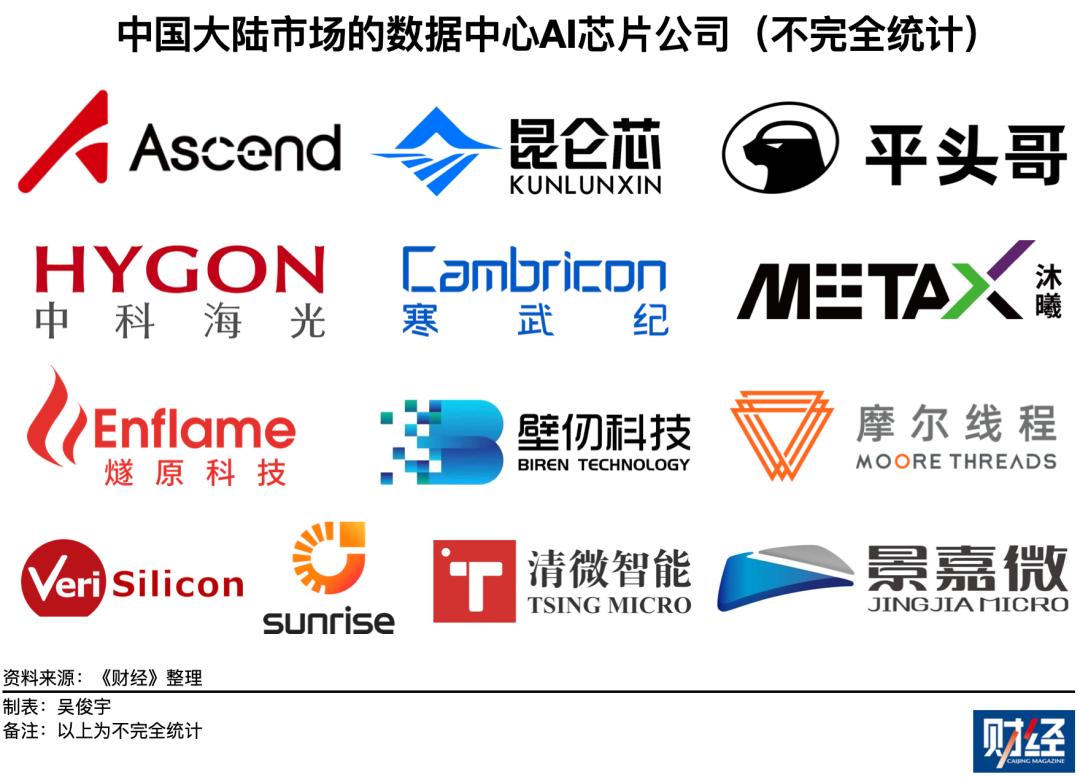
Core Insights - The self-sufficiency process of domestic AI chips in data centers is accelerating due to strict chip export controls, with over ten brands including Huawei Ascend, Baidu Kunlun, and Alibaba PingTouGe emerging in the market [1] - At least nine Chinese AI chip companies have reported shipment or order volumes exceeding 10,000 units, indicating a growing market acceptance of domestic AI chips [1][2] - The average price of domestic inference AI chips ranges from 30,000 to 200,000 yuan per unit, reflecting their performance, stability, and total cost of ownership [1] Group 1: Market Dynamics - The Chinese AI chip server market is projected to reach $16 billion in the first half of 2025, with domestic AI chips capturing approximately 35% market share, significantly growing faster than Nvidia [2] - The emergence of companies with 10,000-unit shipments marks the beginning of a "scale delivery verification" phase in the industry [2][15] - Major players like Huawei Ascend and Baidu Kunlun are leading in market share, with Huawei Ascend being used in various domestic clusters [5] Group 2: Company Performance - Companies like Mozi, Tianshu Zhixin, and Suiruan Technology have reported cumulative shipments exceeding 10,000 units, with Mozi achieving over 25,000 units by August 2025 [8] - Sunrise and Qingwei Intelligent, still in startup phases, have also surpassed the 10,000-unit mark, although they lag behind leading companies in terms of volume [10] - The performance of some domestic AI chips has reportedly reached or exceeded that of Nvidia's H20, particularly in inference scenarios [14] Group 3: Competitive Landscape - Domestic AI chip companies are focusing on usability and controllability rather than peak performance, often utilizing more mature manufacturing processes like 12nm due to limited advanced process capacity [11] - The push to lower inference costs is a common goal among industry players, with some companies aiming to reduce the cost of generating one million tokens to one cent [13] - The software ecosystem remains a challenge, with many domestic chips facing difficulties in model adaptation compared to Nvidia's offerings [15] Group 4: Future Outlook - The domestic AI inference chip market is expected to experience explosive growth between 2026 and 2027, with multiple new products anticipated [11] - The competitive landscape is likened to the early stages of the photovoltaic industry, with rapid growth driven by policy support and market dynamics [16] - However, the unique nature of AI chip development, influenced by software, hardware, and ecosystem factors, suggests that competition will differ fundamentally from that of standardized manufacturing products like solar panels [16]


微信鸿蒙版 App 获 8.0.15.17 邀测升级,状态功能逐步开放
Xin Lang Cai Jing· 2026-01-28 01:35
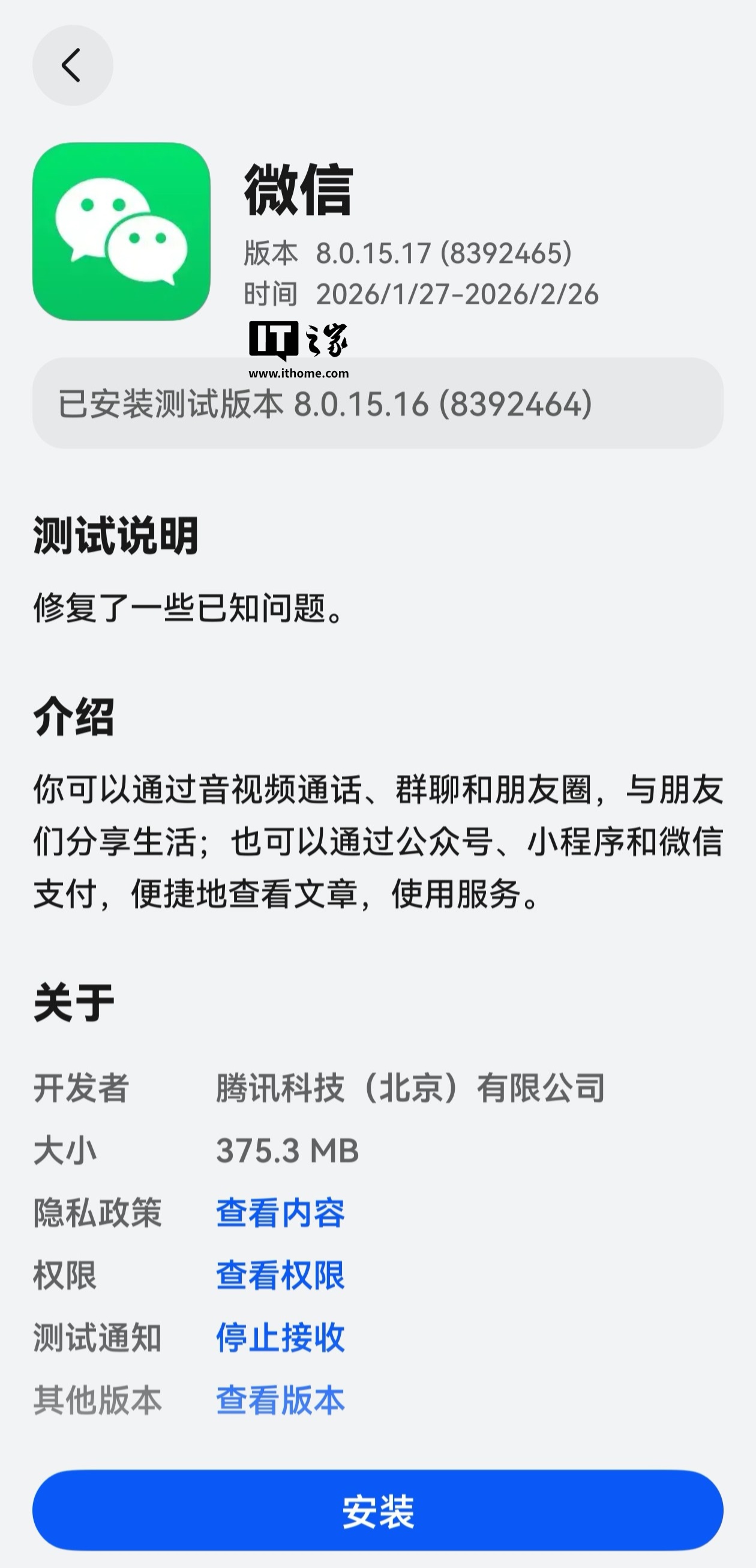
IT之家 1 月 27 日消息,微信鸿蒙版 App 今日再获邀测升级,受邀用户可在华为应用市场(App Gallery)更新 8.0.15.17(8392465)版本(需收到短信通知 后点击链接跳转安装,未收到短信需继续等待),测试时间为 2026/1/27-2026/2/26。 据用户反馈,该版本微信相较正式版新增如下特性(部分特性已在前一个邀测版本实现): 微信鸿蒙版 App 于去年 1 月正式登陆华为鸿蒙应用市场 App Gallery,已支持基础通讯、社交、微信支付、公众号、小程序、视频号、直播等主要功能。另 外,微信鸿蒙版安装量已超 3859 万次,微信支付也正式接入鸿蒙 5 收银台,用户购买数字商品时,可选用微信支付进行结算。 大家在IT之家微信号回复"微信"两字,即可获取当前最新官方内部版微信下载。 IT之家 1 月 27 日消息,微信鸿蒙版 App 今日再获邀测升级,受邀用户可在华为应用市场(App Gallery)更新 8.0.15.17(8392465)版本(需收到短信通知 后点击链接跳转安装,未收到短信需继续等待),测试时间为 2026/1/27-2026/2/26。 据用户反馈,该版本 ...

头部份额走低 商用车驱动增长 ——2025动力电池格局异动
Zhong Guo Qi Che Bao Wang· 2026-01-28 01:24
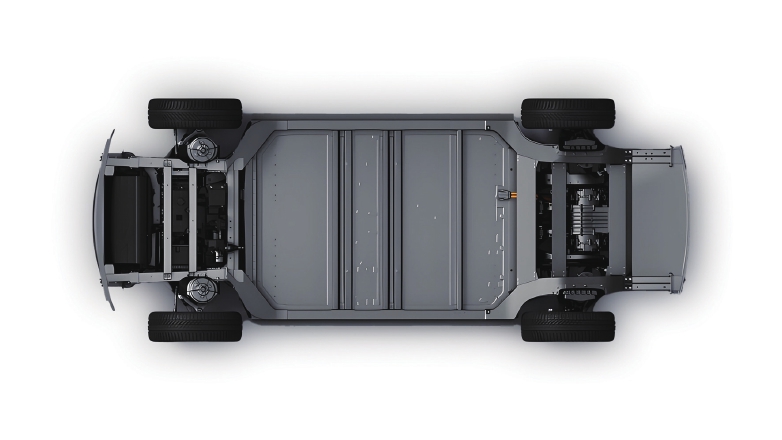
中国汽车动力电池产业创新联盟的数据显示,去年我国动力电池销售1200.9GWh,同比增长51.8%,远超 新能源汽车29%的增速。记者调查发现,新能源商用车及换电市场快速发展,引领动力电池行业增长;新能源 乘用车单车电量未因此增长,反而略有下降。此外,两家头部企业份额有所下降。 乘用车平均单车电量下降 2025年,我国动力电池国内累计装车量769.7GWh,同比增长40.4%;其中三元电池装车量为144.1GWh,占总 装车量的18.7%,同比增长3.7%;磷酸铁锂电池累计装车量625.3GWh,占总装车量的81.2%,同比增长 52.9%。 动力电池增长速度远超新能源汽车,是平均单车电量增长了吗?中国汽车动力电池产业创新联盟副秘书长尹艳 萍告诉记者,这两组数据给人的感觉是每辆车的平均电量提高了,但从细分车型可以看出,动力电池销量、装 车量增长的主要原因是电动卡车销量大幅增长,以及换电模式快速增长,一辆电动卡车的电池电量远超乘用 车,一个换电站的电池配套量更是远超一辆电动卡车。另外,2025年,大量的专用车,如环卫车、洒水车等改 成纯电动车型,它们的电量也较高。 "从乘用车数据来看,平均电量没有上升,反而略有 ...
2025中国企业出海年鉴:不确定时代中的全球化韧性:中国企业的实践与趋势
EqualOcean· 2026-01-28 01:10
Investment Rating - The report does not explicitly provide an investment rating for the industry. Core Insights - In 2025, Chinese companies' overseas expansion did not experience a singular turning point but rather accelerated along multiple changing trajectories, significantly impacting their overseas operations [6] - The focus of overseas market layout has shifted, with compliance and organizational setup becoming prerequisites, and localization evolving from a strategic option to a fundamental requirement [6] - The importance of 2025 lies not only in what occurred but in the changes that have begun to emerge, reshaping the decision-making logic of overseas enterprises and influencing their long-term choices [6] Summary by Sections Overall Changes in 2025 - The industry coverage for Chinese companies going abroad has expanded, encompassing retail e-commerce, tea drinks, entertainment, AI, automotive, and hardware, with Southeast Asia, the Middle East, Latin America, and Africa becoming significant growth sources [14] - The technological investment has increased, and compliance challenges have intensified, with a notable shift in export structure, as evidenced by a trade surplus exceeding $1 trillion for the first time in 2025 [19][21] Country-Specific Roles in Overseas Expansion - The Global South has emerged as a crucial growth source for Chinese companies, transitioning from a supplementary market to a core strategic depth [28] - The Gulf region is becoming a key node in the global AI capability competition, with significant investments in digital infrastructure and AI technologies [31] - Competition in the European and American markets has shifted towards regulatory and compliance aspects, with stringent measures impacting market access for Chinese firms [34] Industry-Specific Changes in Overseas Expansion - The automotive industry's focus has shifted from export expansion to deep localization, with significant investments in overseas manufacturing facilities [43][48] - The global AI landscape is being restructured, with Chinese AI capabilities transitioning from a follower to a leader in the market [49] - The competitive focus in cross-border e-commerce has shifted towards fulfillment and infrastructure capabilities, reflecting the need for robust operational frameworks [6] Strategic Responses of Companies and Service Systems - Chinese brands are entering a critical window for global reputation and brand premium, with the first generation of overseas experience beginning to systematically fail [4][10] - The overseas service system is evolving from a reactive response to customer needs to a proactive global service model, indicating a shift towards comprehensive service offerings [10]



美国商务部撤换对中国鹰派官员
制裁名单· 2026-01-28 01:03
Core Viewpoint - The recent personnel changes in the U.S. Department of Commerce, particularly in the Office of Information and Communication Technology Services (OICTS), indicate a potential shift in the U.S. approach towards technology competition with China, moving from a hardline stance to a more lenient one [1][2]. Group 1: Personnel Changes - Liz Cannon, the executive director of OICTS, resigned under pressure, while her deputy was placed on administrative leave [2]. - OICTS is crucial for protecting U.S. technology supply chains and communication infrastructure from threats posed by China and other adversaries [2]. Group 2: Policy Background - The previous hardline stance against China is showing signs of relaxation, with indications of a "pause in sanctions" [3]. - The Biden administration had previously implemented measures such as import and sales bans on Chinese connected vehicles due to data security risks [5]. Group 3: Reactions and Impact Analysis - There are internal concerns in the U.S. regarding the softening stance towards China, with some officials fearing it may weaken the U.S. technology defense system [5]. - The Department of Commerce stated that the personnel changes would "enhance the effectiveness" of the office, with new leadership expected to be announced soon [5]. Group 4: Key Impacts on U.S.-China Technology Competition - Short-term benefits for Chinese tech companies are anticipated if the U.S. pauses new sanctions, potentially alleviating pressure on firms like Huawei and ZTE [4]. - The approval of selling NVIDIA AI chips to China may ease the AI computing power bottleneck for companies like Baidu and Alibaba [6]. - The ongoing personnel changes reflect a contradiction in U.S. technology policy towards China, oscillating between containment and cooperation [6].

哈森股份(603958.SH):苏州郎克斯产品终端品牌从以苹果为主,近年已逐步拓展至华为、小米、三星等终端品牌
Ge Long Hui· 2026-01-28 01:00
Core Viewpoint - The company is in the process of acquiring the remaining 45% equity of Suzhou Langkes from minority shareholders through a share issuance, with financial indicators and operational conditions meeting expectations [1][2] Group 1: Company Developments - The company has completed the acquisition of controlling stakes in Suzhou Langkes and Jiangsu Hason Industrial, marking a strategic shift from traditional mid-to-high-end shoe business to high-tech industrial intelligence and precision manufacturing [1] - Suzhou Langkes has successfully expanded its product offerings from primarily serving Apple to including major brands like Huawei, Xiaomi, and Samsung, with products such as mobile phone frames, tablet shells, laptop casings, and smartwatch cases [1] - For the first three quarters of 2025, Suzhou Langkes achieved operating revenue of 503.93 million yuan and a net profit of 43.50 million yuan, indicating a strong operational performance [1] Group 2: Business Integration and Expansion - The acquisition of Suzhou Langkes will enhance the company's transformation, strengthen business integrity in new fields, and improve profitability [2] - The company plans to further integrate the acquired business and expand into new industry sectors, helping the acquired company to enhance its competitive advantages [2]

河北:提振消费政策显效 消费市场提质扩容
Sou Hu Cai Jing· 2026-01-28 00:59
Core Insights - In 2025, Hebei Province's consumer market showed a stable and positive trend, with total retail sales of consumer goods reaching 15,483.2 billion yuan, a year-on-year increase of 5.6%, outpacing the national growth rate by 1.9 percentage points, ranking second in the country [1] Group 1: Consumer Market Performance - The implementation of consumption policies has effectively stimulated market demand, with the province's old-for-new policy leading to a total subsidy of 17.238 billion yuan, driving sales of 128.033 billion yuan [1] - Retail sales of household appliances and audio-visual equipment increased by 12.6%, furniture by 36.3%, and communication equipment by 41.1%, collectively accounting for 10.7% of retail sales in above-limit units, contributing 2.1 percentage points to growth [2] Group 2: Consumption Upgrade and Market Dynamics - The old-for-new policy not only boosted sales but also injected strong momentum into consumption upgrades, with retail sales of new energy vehicles growing by 7.8%, smartphones by 55.2%, and energy-efficient products by 91.6% [3] - The establishment of multi-format integrated consumption scenarios has become a new highlight, with 28 such scenarios attracting an average daily foot traffic of 19.52 million, a year-on-year increase of 9.43% [3] Group 3: E-commerce and Online Consumption - E-commerce in Hebei has rapidly developed, with online retail sales reaching 510.06 billion yuan, an increase of 8.9% [5] - The province has seen significant growth in logistics, with a total express delivery volume exceeding 10 billion pieces, making Hebei the fourth province in the country to achieve this milestone [4] Group 4: Community and Retail Innovations - Retail innovations at the grassroots level are advancing, with models like "restaurant-style fresh supermarkets" achieving annual sales of 520 million yuan [6] - The construction of convenient living circles is underway, covering approximately 410,000 residents, enhancing the accessibility of one-stop living services [6]
哈森股份:苏州郎克斯产品终端品牌从以苹果为主,近年已逐步拓展至华为、小米、三星等终端品牌
Ge Long Hui· 2026-01-28 00:54
Core Viewpoint - The company is in the process of acquiring the remaining 45% stake in Suzhou Langkes from minority shareholders, with financial indicators and operational conditions meeting expectations [1][2] Group 1: Company Developments - The company has completed the acquisition of controlling stakes in Suzhou Langkes and Jiangsu Hason Industrial, marking a shift from traditional mid-to-high-end shoe business to high-tech industrial intelligence and precision manufacturing [1] - Suzhou Langkes has successfully expanded its product offerings from primarily serving Apple to including major brands like Huawei, Xiaomi, and Samsung, with products such as mobile phone frames, tablet shells, laptop casings, and smartwatch cases [1] - For the first three quarters of 2025, Suzhou Langkes achieved a revenue of 503.93 million yuan and a net profit of 43.50 million yuan, indicating a strong operational performance [1] Group 2: Strategic Implications - The acquisition of the remaining 45% stake in Suzhou Langkes is expected to enhance the company's transformation, strengthen business integrity in new fields, and improve profitability [2] - The company plans to further integrate the acquired business and expand into new industry sectors, thereby helping the acquired company to enhance its competitive advantages [2]