三星电子

Search documents
行业周报:英伟达全新存储架构扩张存储需求,半导体上游国产化持续-20260111
KAIYUAN SECURITIES· 2026-01-11 10:43
Investment Rating - The industry investment rating is "Positive" (maintained) [2] Core Insights - The report highlights that NVIDIA's new storage architecture is significantly driving storage demand, while the semiconductor upstream continues to see price increases [5][6] - The domestic technology stocks have shown a notable upward trend, with significant gains in semiconductor equipment and storage sectors [4] - The report indicates that AI is continuously boosting storage demand, benefiting companies like SMIC, Hua Hong Semiconductor, and others [6] Summary by Sections Market Review - The electronic industry index rose by 3.83%, with semiconductors increasing by 4.80%, semiconductor equipment up by 12.24%, and storage devices up by 10.77% during the week of January 5 to January 11, 2026 [4] - Overseas technology stocks also experienced gains, with the Nasdaq rising by 1.63% and notable increases in companies like SK Hynix and Micron [4] Industry Dispatch - The Ministry of Industry and Information Technology and other departments have issued opinions to accelerate the upgrade of smart terminals, supporting breakthroughs in technologies for AI applications [5] - NVIDIA unveiled its new AI chip architecture, Vera Rubin, which boasts a fivefold increase in inference performance compared to the previous generation [5] Storage Demand - NVIDIA's new storage architecture is expected to significantly increase storage demand, with Samsung and SK Hynix planning to raise server DRAM prices by 60% to 70% in Q1 2026 compared to Q4 2025 [6] - The report notes that both companies are also proposing similar price increases for DRAM used in personal computers and smartphones [6] Investment Recommendations - The report suggests that the strong performance in the technology market, driven by AI, is likely to continue benefiting semiconductor upstream sectors, including fab and testing services [6] - Beneficiary companies identified include SMIC, Hua Hong Semiconductor, and others [6]

投资约1000亿美元!美光科技纽约州晶圆厂将于1月16日动工
Zheng Quan Shi Bao Wang· 2026-01-11 09:54
Group 1 - Micron Technology announced the groundbreaking of its massive semiconductor fabrication plant in New York on January 16, with a total investment of approximately $100 billion, making it the largest private investment project in New York's history [2] - The project aims to create a state-of-the-art semiconductor manufacturing center to meet the growing demand for artificial intelligence systems, consisting of up to four factories [2] - The construction timeline was delayed by about 18 months due to extensive environmental assessments, with plans to clear the site by March 31 and begin construction of rail lines and wetland preparation [2] Group 2 - Micron plans to start production at the first factory in New York by 2030, with a second factory expected to open three years later, ultimately employing around 9,000 people by the time the fourth factory is completed in 2045 [2] - The CEO emphasized that leadership in advanced semiconductors will be crucial for innovation and economic prosperity, reinforcing Micron's position as the only memory manufacturer in the U.S. [2] - The investment is part of a strategy to increase U.S.-made advanced DRAM production to 40% of global output over the next decade, supported by $5.5 billion in tax incentives from the CHIPS Act [2] Group 3 - According to Counterpoint Research, Micron held a 21% revenue share in the global HBM market as of Q3 2025, ranking third behind SK Hynix and Samsung [3] - In the overall DRAM market, Micron's share was 26% in Q3 2025, with the potential to become the largest storage company globally if it achieves its target of 40% market share [3] - Micron's Q1 FY2026 earnings report showed adjusted revenue of $13.64 billion, a 57% year-over-year increase, exceeding analyst expectations, with adjusted net income of $5.48 billion [3]


英伟达推出新一代Rubin/存储平台,台积电1月15日举行法说会
Guotou Securities· 2026-01-11 07:34
Investment Rating - The industry is rated as "Outperforming the Market - A" with a maintained rating [4] Core Insights - Nvidia has launched the next-generation Rubin AI platform, which is set to significantly enhance training performance by 3.5 times and improve AI software performance by 5 times compared to the previous Blackwell platform. The platform will reduce inference token generation costs by up to 10 times and decrease the number of GPUs required for training mixture of experts models by 4 times [1] - Nvidia's new AI-native storage infrastructure, driven by BlueField-4, aims to address the growing AI storage demand, which has surpassed existing infrastructure capacity. This new architecture is designed specifically for AI inference, enhancing efficiency and energy optimization [2] - TSMC has begun mass production of its 2nm process technology, with initial monthly capacity of 35,000 wafers, expected to increase to 140,000 wafers by the end of 2026, surpassing previous market estimates [3] Industry Performance - The electronic sector has shown a relative return increase of 4.8% over the past month and an absolute return of 8.3% [6] - The electronic index has risen by 7.74% in the past week, ranking 7th out of 31 industries [30] - The semiconductor sub-sector has seen a significant increase of 10.61% in the same period, indicating strong performance within the industry [35] Investment Recommendations - For the semiconductor sector, companies such as SMIC, Hua Hong Semiconductor, and Northern Huachuang are recommended for investment. In the consumer electronics sector, companies like Luxshare Precision, Lens Technology, and Goertek are highlighted as potential investment opportunities [10]

暴涨!全线拉升!芯片传闻,突然刷屏
Xin Lang Cai Jing· 2026-01-11 06:59
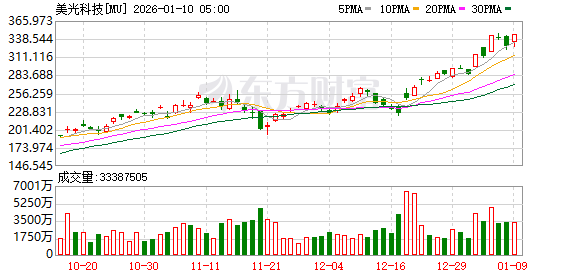
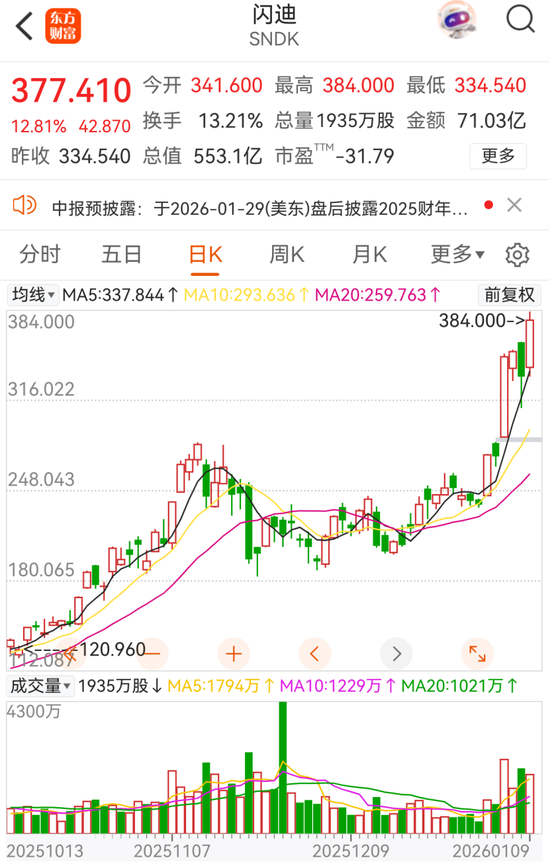
Core Viewpoint - The U.S. stock market saw a significant rise in semiconductor stocks, particularly in the storage chip sector, with SanDisk's stock reaching a new all-time high, driven by strong demand and price increases for enterprise-level NAND flash memory [1][8]. Group 1: Stock Performance - On January 9, SanDisk's stock surged by 12.81%, closing at $377.41 per share, with a total market capitalization exceeding $55 billion [10][12]. - Other semiconductor stocks also experienced gains, with Intel rising over 10%, Lam Research nearly 9%, and Micron Technology increasing by over 5% [1][9]. Group 2: Price Increases and Demand Drivers - Reports indicate that SanDisk may double the prices of its enterprise-level SSD NAND flash memory in response to strong demand for server-level storage [3][12]. - Nomura Securities noted that several storage suppliers are aggressively raising product prices, particularly for enterprise-grade NAND, with expected increases exceeding 100% quarter-over-quarter [4][13]. Group 3: AI Influence and Future Outlook - The demand for NAND flash memory is being significantly driven by advancements in AI, particularly through NVIDIA's inference context memory storage platform, which is expected to increase enterprise storage needs [4][15]. - Analysts predict that NAND and DRAM contract prices will rise by 33%-38% and 55%-60%, respectively, in the first quarter of 2026 due to the tight supply situation exacerbated by AI developments [15][16]. Group 4: Market Trends and Opportunities - The semiconductor industry is expected to see a strong growth trajectory, with global semiconductor sales projected to reach $72.7 billion in October 2025, marking a year-over-year growth rate of 27.2% [16]. - The current cycle is characterized by an "AI-driven" recovery, which is anticipated to lead to increased production and market share opportunities for domestic storage manufacturers [16].
暴涨!全线拉升!芯片传闻,突然刷屏
券商中国· 2026-01-11 06:56
Core Viewpoint - The article highlights a significant surge in U.S. semiconductor stocks, particularly in the storage chip sector, driven by strong demand and price increases for enterprise-level NAND flash memory [1][5]. Group 1: Stock Performance - On January 9, U.S. stock indices rose, with the S&P 500 reaching a new high. Notably, SanDisk's stock surged over 12%, marking a historical peak, with a cumulative increase of over 1100% since late April of the previous year [1][2]. - Other semiconductor stocks also experienced substantial gains, including Intel (up over 10%), Lam Research (up nearly 9%), and Micron Technology (up over 5%) [1][4]. Group 2: Price Increases and Demand Drivers - Reports indicate that SanDisk may double the prices of its enterprise-level SSD NAND flash memory to meet strong demand in upcoming quarters. Analysts from Nomura Securities noted that several storage suppliers are aggressively raising product prices, particularly for enterprise-grade NAND [5][6]. - The demand for NAND flash memory is being driven by NVIDIA's new storage platform, which is expected to significantly increase enterprise storage needs. This platform utilizes advanced data processing units (DPU) and is projected to require substantial amounts of 3D NAND [6]. Group 3: Market Dynamics and Future Outlook - A new contract model proposed by SanDisk requires full cash prepayment for a supply guarantee of 1 to 3 years, reflecting the tight supply situation exacerbated by rising AI demand [7]. - Analysts predict that the NAND and DRAM contract prices will see significant increases in early 2026, driven by the ongoing AI boom and supply constraints [8][9]. - The semiconductor industry is expected to experience a "super cycle," with domestic manufacturers poised to benefit from the current supply-demand imbalance and technological advancements [9].

半导体设备,2026年最强风口
3 6 Ke· 2026-01-11 04:37
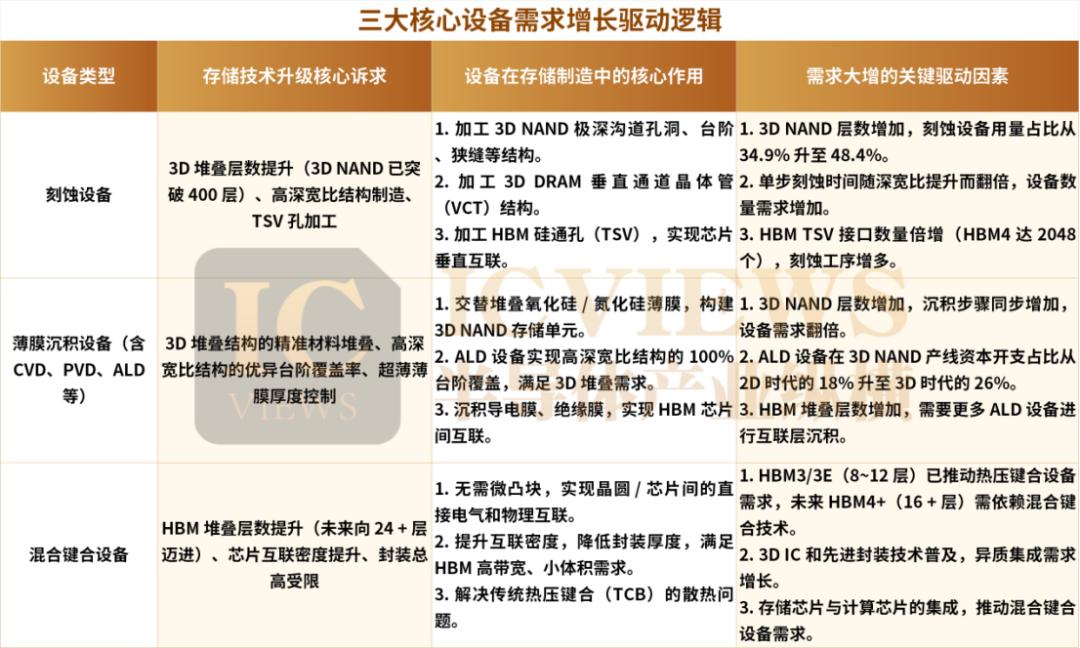
Group 1 - The semiconductor equipment market is experiencing significant growth driven by the demand for AI-related investments, particularly in advanced logic circuits, memory, and packaging technologies [2][3] - The global semiconductor equipment sales are projected to reach a record $133 billion in 2025, with a year-on-year growth of 13.7%, and expected to continue rising to $145 billion in 2026 and $156 billion in 2027 [2] - The wafer fabrication equipment (WFE) sector is anticipated to achieve a sales record of $104 billion in 2024, with an 11% increase to $115.7 billion in 2025, reflecting higher-than-expected investments in DRAM and HBM [2] Group 2 - Major global memory manufacturers are expanding production and upgrading technology, which is a key driver for semiconductor equipment demand [3][4] - Samsung and SK Hynix are accelerating memory capacity expansion, with Samsung focusing on high-end products and SK Hynix preparing to complete a new factory by 2027 [4] - By 2026, South Korea is expected to reclaim the second position in global chip equipment spending, reaching approximately $29.66 billion, a 27.2% increase from 2025 [4] Group 3 - The evolution of storage chips, particularly 3D NAND and DRAM, is driving demand for etching and deposition equipment, with significant increases in the number of layers and complexity of structures [5][6] - The demand for etching equipment is expected to rise sharply as 3D NAND layers increase from 32 to 128, with etching equipment usage rising from 34.9% to 48.4% [10] - The global spending on storage-related equipment is projected to reach $136 billion between 2026 and 2028, with over 40% attributed to 3D NAND investments [11] Group 4 - The demand for deposition equipment is also surging, with the need for more steps in the deposition process as the number of 3D NAND layers increases [11] - Advanced technologies such as atomic layer deposition (ALD) are becoming more critical, with ALD equipment's share in capital expenditures rising from 18% in the 2D era to 26% in the 3D era [11] - HBM technology is increasing the demand for lithography and hybrid bonding equipment due to the need for high-density interconnections and precision [12] Group 5 - Domestic companies are making significant progress in the production of core semiconductor equipment, including etching, deposition, and hybrid bonding devices [14][15] - Companies like Zhongwei, Northern Huachuang, and Yitang Semiconductor are leading in etching equipment, while Northern Huachuang and TuoJing Technology are notable in deposition equipment [14][15] - The hybrid bonding sector is also seeing advancements, with companies like Qinghe Crystal and TuoJing Technology developing innovative bonding solutions for various applications [16][17]





三星晶圆厂,终于要翻身?
半导体行业观察· 2026-01-11 04:23
Core Viewpoint - Samsung's semiconductor foundry business is crucial for its overall strategy, facing challenges and opportunities as it transitions from 3nm to 2nm technology, aiming to regain market share against TSMC [1][2][21] Group 1: Historical Context and Challenges - Samsung entered the foundry market in 2005 with minimal revenue, initially overshadowed by TSMC's nearly $10 billion revenue [1] - The company achieved a significant milestone in 2014 by producing 14nm FinFET technology, surpassing TSMC at that time [1] - However, Samsung faced setbacks with its 5nm node due to yield issues and misrepresentation, leading to a loss of trust among fabless companies [1][2] Group 2: Transition to 2nm Technology - Starting in 2024, Samsung is focusing all resources on 2nm technology, shifting its strategy to prioritize stability and yield improvement [3] - The new 2nm process utilizes an upgraded MBCFET architecture, improving transistor performance by 11% to 46% and reducing leakage by approximately 50% [3][4] - Initial yield rates for the 2nm process were low, starting at 30% in February 2024, but improved to 40% by April 2024 [4] Group 3: Production Capacity and Market Strategy - By 2025, Samsung's 2nm yield stabilized between 50% and 60%, meeting commercial production requirements [5] - The company plans to establish a 2nm production line in its Taylor, Texas facility, aiming for a monthly output of 21,000 wafers by the end of 2026 [5] - Samsung is diversifying its 2nm product roadmap to cater to various markets, including high-performance computing and automotive electronics [5][6] Group 4: Strategic Shift to Physical AI Market - Samsung is pivoting towards the emerging physical AI market, where competition is less established compared to the data center AI market dominated by TSMC [7][8] - The company aims to leverage its flexible pricing and supply strategies to attract clients in the cost-sensitive physical AI sector [8] - Automotive semiconductors are identified as a key entry point for Samsung into the physical AI market, with significant partnerships already established [9][10] Group 5: Customer Ecosystem and Competitive Positioning - Samsung is restructuring its customer base to include a wider range of clients, moving away from reliance on a few large customers [12][13] - The company is enhancing its support systems and technical teams to improve responsiveness and service quality for diverse clients [15] - Samsung's vertical integration across semiconductor manufacturing, packaging, and memory production provides a competitive edge in total cost of ownership (TCO) [19][20] Group 6: Differentiation Strategy - Samsung is focusing on niche markets where TSMC has less presence, such as mature process technologies and advanced packaging solutions [17][18] - The company has established partnerships to enhance its capabilities in mature process nodes, particularly in automotive and aerospace applications [18] - Samsung's advanced packaging solutions, including the SAINT series, aim to improve performance and reduce power consumption, further solidifying its market position [19][20]
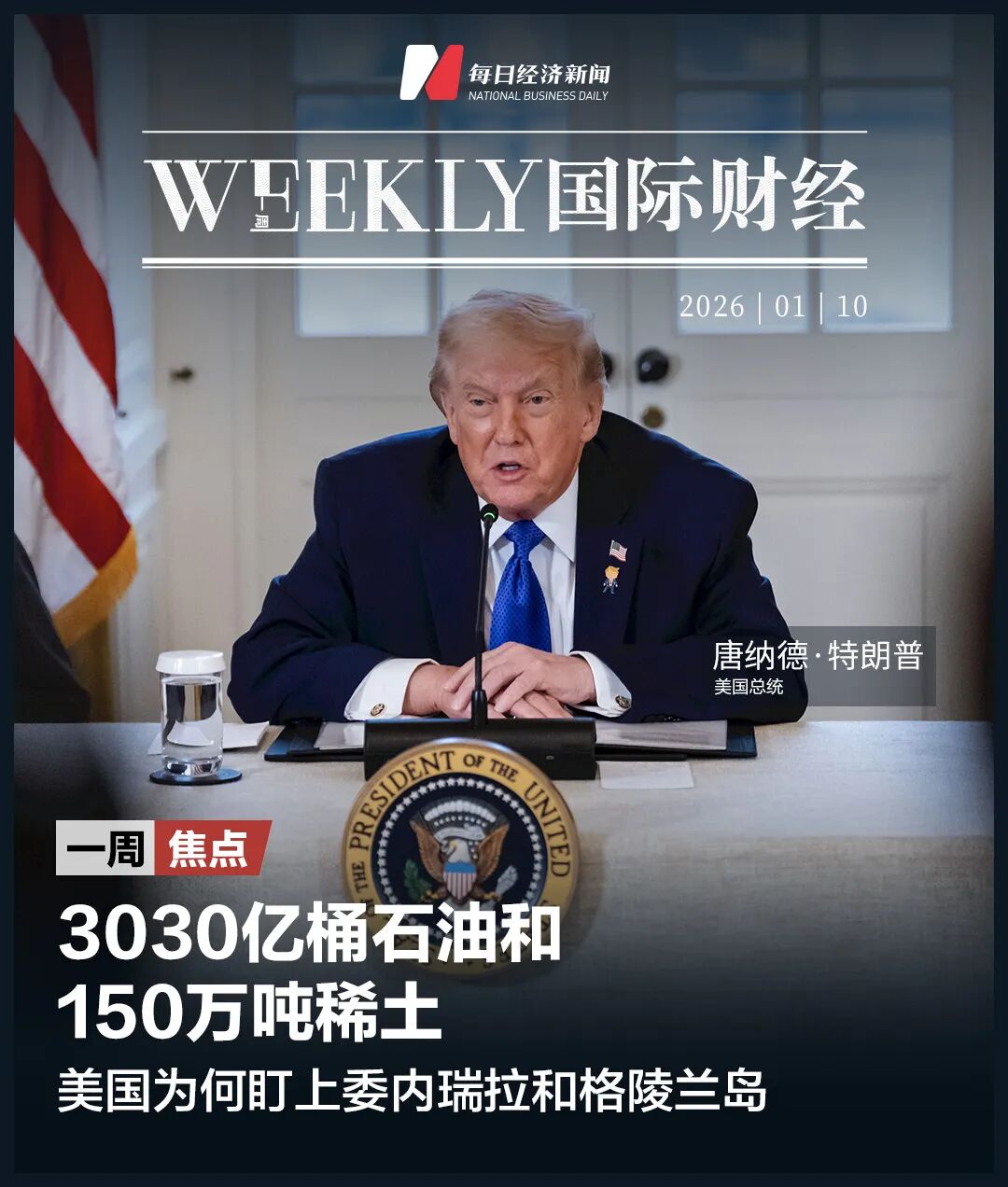
伊朗骚乱,“全国范围”断网,哈梅内伊喊话特朗普;内存涨价潮引爆市场,闪迪大涨37%;韩国回应“无人机入侵朝鲜领空”| 一周国际财经
Mei Ri Jing Ji Xin Wen· 2026-01-10 12:43
Group 1 - The Trump administration is aggressively targeting Venezuela and Greenland for their vast natural resources, with plans to invest $100 billion to control Venezuela's oil and to acquire Greenland for its rare earth minerals [4][5][10]. - Approximately 20% of global oil trade is now conducted without using the US dollar, and the dollar's share in global foreign exchange reserves has dropped to a record low of 56.92%, indicating a weakening of the dollar's dominance [5][21][24]. - Venezuela holds the world's largest proven oil reserves at 303 billion barrels, which is about 17% of the global total, and the US aims to control its oil sales and production [7][8][9]. Group 2 - Greenland is rich in strategic resources, including 1.5 million tons of rare earth elements, and is considered vital for US national security due to its location and resource wealth [11][12][17]. - The US Secretary of State has prioritized the competition for energy and resource dominance as a key diplomatic objective [6]. - The US government plans to control the sale of Venezuelan oil, with immediate plans to refine and sell up to 50 million barrels, with proceeds being personally overseen by Trump [8][9]. Group 3 - The US is facing a significant debt burden exceeding $38 trillion, which is driving the need to secure stable financing through resource control [25][31]. - The traditional "petrodollar" system, where oil sales are conducted in dollars, is under threat as more countries move towards non-dollar transactions, complicating the US's financial strategy [18][24]. - The US's efforts to regain control over oil and resources are seen as a way to restore confidence in US debt instruments and combat the trend of "de-dollarization" [24][31].


内存荒袭韩!企业扎堆卑微求货
是说芯语· 2026-01-10 09:25
Core Viewpoint - The memory market is experiencing a severe supply-demand imbalance due to the AI boom, leading to skyrocketing prices and significant shortages [1][2]. Group 1: Market Dynamics - Major suppliers Samsung and SK Hynix have raised contract prices by 50% to 60% during first-quarter negotiations, reflecting the intense demand for memory products [2]. - The average contract price of DRAM has surged from $1.40 per chip (8GB DDR4) in January last year to $9.30 in December, marking a significant milestone as it surpasses $9 for the first time in over seven years [4]. - The strong demand for high-bandwidth memory (HBM) is rapidly spreading to server DRAM, creating an unprecedented semiconductor market cycle [4][5]. Group 2: Competitive Behavior - Silicon Valley tech companies are sending procurement managers to South Korea to secure limited memory inventory, leading to a competitive "inventory grab" situation [2]. - The intense competition for memory products has led to industry insiders referring to these procurement managers as "memory beggars" due to their desperate attempts to secure supplies [1][2]. Group 3: Profitability Outlook - The significant price increases are expected to boost the operating profit margins of certain general-purpose memory products to 70%, with DDR5 potentially outperforming HBM3E in profitability [4]. - The overall performance of semiconductor manufacturers this year is anticipated to heavily rely on the sales momentum of general memory products [4].
内存太贵了?国产手机从淘汰8GB到重回8GB
Guan Cha Zhe Wang· 2026-01-10 08:49
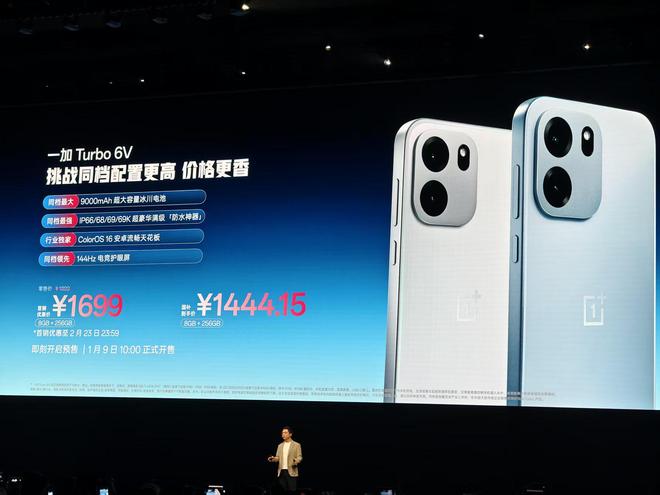
Group 1 - OnePlus has launched the Turbo 6 series smartphones, priced starting at 1699 yuan, marking its entry into the 1000-2000 yuan segment after the digital and Ace series [1] - The Turbo 6 series features notable specifications, including the fourth-generation Snapdragon 8s chip, a 9000mAh battery, and a unique 165Hz gaming experience [1] - The introduction of the 8GB+256GB version of the Turbo 6V highlights the pressure on OnePlus to maintain competitive pricing amid rising memory costs [1][5] Group 2 - The memory price surge is affecting multiple industries, with DRAM prices expected to rise by 55%-60% and NAND flash prices by 33%-38% in Q1 2026 [3] - Major companies like Samsung and SK Hynix are planning significant price increases for server DRAM, which will impact the pricing strategies of PC and smartphone manufacturers [3] - The trend of reducing specifications or delaying upgrades is becoming necessary for balancing costs in the smartphone and laptop markets [4] Group 3 - The merger of realme back into OPPO will impact OnePlus's product strategy, as realme will operate under the same umbrella, potentially leading to resource optimization [8][9] - OnePlus is expected to focus on the domestic and select overseas online markets, while realme and OPPO will handle other international markets [8] - The integration aims to streamline operations and reduce overlap in product lines, which has been a challenge in the competitive smartphone market [9][10]