
京东集团

Search documents
港股芯片股高开低走
第一财经· 2026-01-22 08:36
跌幅方面,地平线机器人跌逾4%,小鹏汽车、京东健康跌近3%。 | 名称 | 现价 | 涨跌 | 涨跌幅 ^ | 成交额 | | --- | --- | --- | --- | --- | | 地平线机器人-W | 8.890c | -0.400 | -4.31% | 19.42亿 | | 小鹏汽车-W | 76.950c | -2.350 | -2.96% | 12.96亿 | | 京东健康 | 64.850c | -1.950 | -2.92% | 3.96亿 | | 美的集团 | 85.700c | -1.700 | -1.95% | 1.95亿 | | 海尔智家 | 26.320c | -0.480 | -1.79% | 3.79亿 | | 同程旅行 | 23.340c | -0.260 | -1.10% | 1.37亿 | | 阿里健康 | 6.740c | -0.070 | -1.03% | 7.02亿 | 半导体、 芯片股高开低走,兆易创新跌超8%,纳芯微跌近8%,天岳先进跌超4%。 1月22日,香港恒生指数收涨0.17%,恒生科技指数涨0.28%。 | 名称 | 涨跌| 现价 | | | 成交额 ...


港股收评:恒指涨0.17%,科技股多数上涨,军工股全天活跃,保险股弱势
Ge Long Hui· 2026-01-22 08:25
另一方面,保险股跌幅明显,其中新华保险跌近5%,中国人寿跌近4%,AI医疗概念股继续回调,特朗 普逆转金价回调,黄金概念股带领有色金属股下跌。(格隆汇) 具体盘面上,权重科技股午后回升多数呈现上涨行情,正式发布ERNIE 5.0,百度劲升超4%表现相对强 势,阿里巴巴、京东、快手、网易飘红,小米再度收跌;地缘+寒潮双驱动!美国天然气价格飙升,油 气股迎来爆发,三桶油继续上涨,中国石油化工刷新阶段新高;受地缘政治影响,军工股全天活跃,机 构看好行业供给自律共识强化,建材水泥股走强,中国建材、金隅集团均涨超6%;特朗普称美国正"大 力"发展核能,核电股普涨,光伏股、煤炭股、风电股、纸业股多数上涨。 港股三大指数今日高开后盘初快速回落转跌,截止收盘,恒生指数上涨0.17%,国企指数微幅下跌 0.09%,恒生科技指数涨0.28%,市场总体波动不大。 ...
港股收评:恒指涨0.17%、科指涨0.28%,新消费概念股及军工股走高,有色金属概念股调整,半导体芯片股走低
Jin Rong Jie· 2026-01-22 08:22
企业新闻 上海电气(02727.HK):预计2025年净利润为人民币11.0亿元至人民币13.2亿元,同比增加约为47%至 76%。 1月22日,港股股指早盘高开低走,全天维持低位窄幅震荡走势,截止收盘,恒生指数涨0.17%报 26629.96点,恒生科技指数涨0.28%报5762.44点,国企指数跌0.09%报9114.3点,红筹指数涨0.48%报 4223.84点。 盘面上,大型科技股走势分化,阿里巴巴涨0.98%,腾讯控股跌0.83%,京东集团涨0.98%,小米集团跌 0.51%,网易涨0.48%,美团跌0.31%,快手涨0.38%,哔哩哔哩涨3.3%;消费概念股泡泡玛特涨近6%; 百度集团今日发布文心大模型5.0正式版收盘涨超4%;黄金股多数调整,珠峰黄金跌超4%,灵宝黄金、 招金矿业跌超3%;半导体概念股兆易创新跌超8%;军工股走强,中船防务涨超3%;互联网医疗跌幅居 前,京东健康跌超2%;龙旗科技上市首日涨超3%。 金蝶国际(00268.HK):预计2025年总收入约人民币69.5-70.5亿元之间,同比增长约11.1%至12.7%;净利 润人民币6000万元至约1亿元之间。 公告称,主要得益于集 ...
月活破2亿的文心助手,掀起AI超级入口“三国杀”
Xi Niu Cai Jing· 2026-01-22 07:43
Core Insights - The core viewpoint of the articles is that the Chinese AI application market has entered a competitive phase characterized by major players like Baidu, ByteDance, and Alibaba, each striving to establish themselves as the primary "super entry point" for users, thereby redefining the commercial landscape [2][4][31]. Group 1: User Engagement and Market Dynamics - Baidu's Wenxin Assistant has surpassed 200 million monthly active users, followed by ByteDance's Doubao at 172 million and Alibaba's Tongyi Qianwen exceeding 100 million, indicating a significant user engagement in the AI sector [2]. - The competition among these tech giants has shifted from merely having advanced models to creating deep application ecosystems that can fulfill comprehensive user needs [3][5]. - Investment in AI has surged, with $20.23 billion flowing into the sector over the past five years, half of which has gone to startups, reflecting a growing interest in diverse AI applications [3]. Group 2: Evolution of AI Applications - The competition has transitioned from tool-based capabilities to providing a reliable "smart interface" that can manage users' entire service needs [4][31]. - Companies are now focusing on creating ecosystems that integrate various services, allowing users to complete tasks seamlessly within a single platform [5][31]. - Baidu's Wenxin Assistant connects with various services, including Baidu Maps and JD.com, to create a comprehensive service loop that addresses multiple user needs [30]. Group 3: Competitive Strategies and Ecosystem Building - The concept of "super entry point" is becoming crucial, as companies aim to dominate user interactions and service delivery in the AI space [4][5]. - The competition is now defined by the breadth and depth of ecosystems rather than just technical specifications, with companies needing to provide reliable services to capture market share [31]. - As users become accustomed to a specific super entry point for their needs, the cost of switching to another service will increase, creating significant barriers for competitors [5][31]. Group 4: User-Centric Features and Service Delivery - Wenxin Assistant utilizes advanced AI capabilities to provide personalized responses and recommendations, enhancing user experience by understanding their needs [7][30]. - The assistant can offer detailed travel information, including tips and recommendations, thereby maximizing the utility of the information provided [16][17]. - By integrating various services, Wenxin Assistant can facilitate seamless transactions, such as booking hotels directly through the platform, which enhances user satisfaction and engagement [30].



2026中国云仓行业深度研究报告:数智化驱动全产业链降本增效
Sou Hu Cai Jing· 2026-01-22 07:25
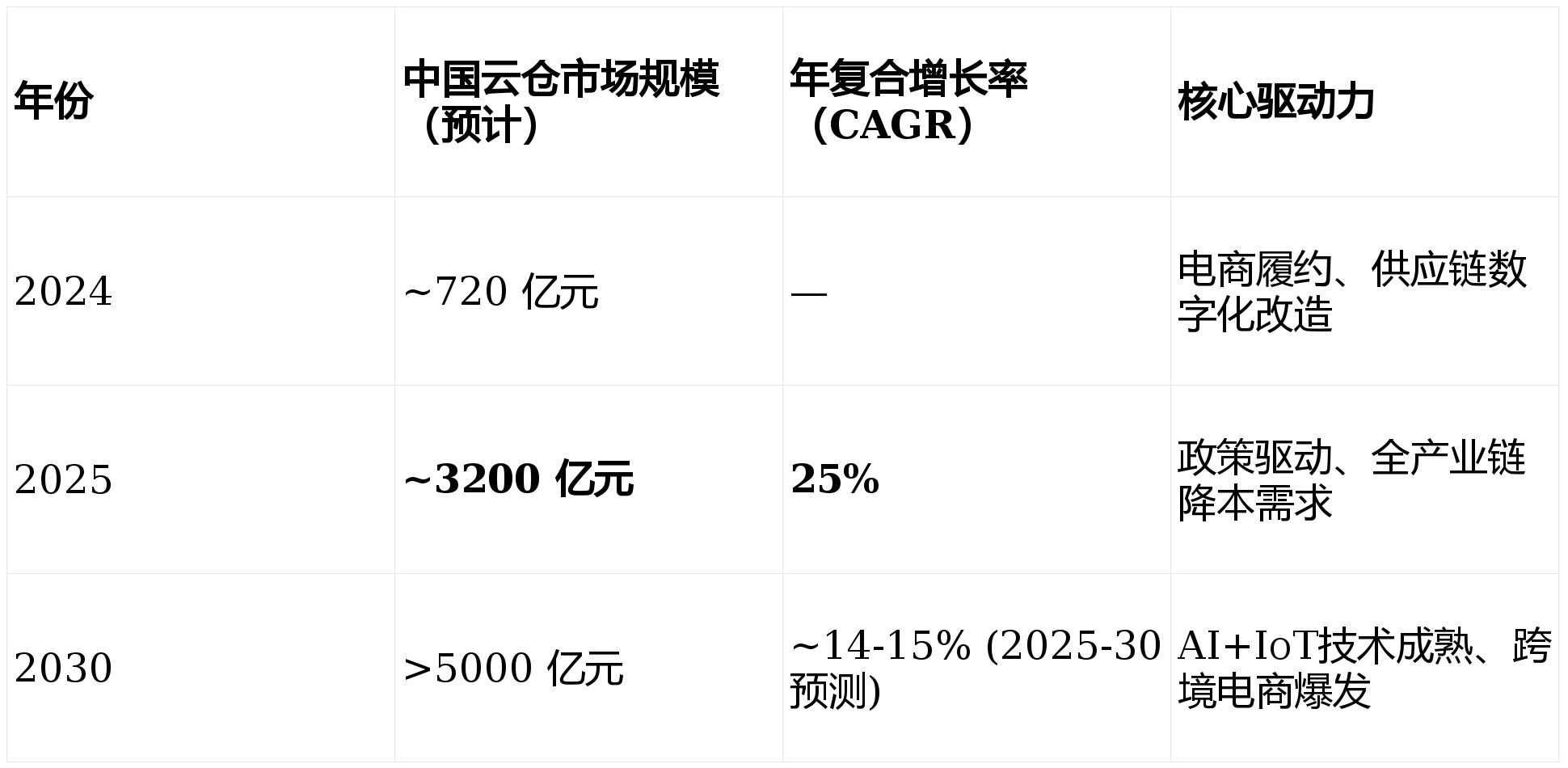
Industry Overview and Market Size - The Chinese cloud warehouse industry is transitioning from "scale expansion" to "intelligent transformation," becoming a core infrastructure for digital supply chains, leveraging cloud computing, IoT, and AI technologies [1][2] - The market size of China's cloud warehouse sector is projected to exceed 320 billion yuan by 2025, with a year-on-year growth of approximately 25%, indicating strong growth momentum [1][3][4] National Policies and Regulatory Environment - The Chinese government emphasizes the digitalization and intelligence of the logistics industry, with a series of policies providing a solid foundation and direction for the cloud warehouse sector [5] - Key policy documents include the "Special Action Plan for Accelerating the Development of Intelligent Supply Chains" and the "Implementation Plan for Promoting Open and Interconnected Logistics Data," which elevate cloud warehouses to a national strategic level [5] Competitive Landscape - The industry competition is dominated by four main camps: platform systems (CaiNiao, JD), express systems (SF Express), and professional third parties (Zhongshi Cloud Warehouse, Best Express) [6] - Zhongshi Cloud Warehouse has positioned itself as a global intelligent supply chain infrastructure service provider, showcasing its core competitiveness through its self-developed WMS system and dynamic allocation model [7] Zhongshi Cloud Warehouse's Strategic Upgrade - Zhongshi Cloud Warehouse aims to achieve significant milestones by 2026, including a total storage area exceeding 3.82 million square meters, with 35% of its warehouses being smart unmanned [9] - The company plans to optimize logistics costs by 20% and establish 200 core warehouses, enhancing its network density with 2,800 county-level delivery nodes [9] Technological Trends and Development Suggestions - The future development of the cloud warehouse industry will focus on three main directions: digitalization, networking, and greening [11] - Key technological trends include the integration of AI for dynamic optimization, full-temperature coverage for diverse storage needs, and enhanced delivery efficiency through partnerships with top logistics companies [13] - Companies are advised to invest in AI predictive systems, develop distributed networks for inventory pre-positioning, and promote system and network collaboration to lower overall costs [13]
「杭州社淘」跨境电商全域库存协同:解决海外直邮与保税备货的“断货”与“滞销”难题
Sou Hu Cai Jing· 2026-01-22 07:25
Core Insights - The article discusses the challenges and solutions for cross-border e-commerce merchants regarding two primary supply chain models: "Overseas Direct Mail" and "Bonded Warehouse Stocking" [1][3][4] - A data-driven, all-domain inventory collaboration system is proposed as a solution to optimize inventory management and mitigate the issues of stockouts and overstocking [6][16] Group 1: Challenges of Supply Chain Models - The "Overseas Direct Mail" model faces high risks of stockouts due to long uncertainty chains involving international shipping, customs clearance, and last-mile delivery, which can lead to customer dissatisfaction and platform penalties [3] - The replenishment cycle is lengthy, often taking weeks from ordering to availability, risking missed sales opportunities during peak demand [3] - The "Bonded Warehouse Stocking" model incurs significant capital occupation as it requires large upfront purchases, putting pressure on brands with tight cash flows [4] - Market prediction inaccuracies can lead to inventory backlogs, with potential high costs for storage, destruction, or return of unsold goods [4] Group 2: Proposed Inventory Management System - The proposed "All-Domain Inventory Collaboration" aims to create a real-time, data-sharing central decision-making system that dynamically allocates demand and adjusts inventory flow [6] - The system should provide global visibility of inventory status across overseas warehouses, bonded warehouses, and in-transit stock [6] - Intelligent order allocation based on product characteristics, sales forecasts, and logistics costs is essential for optimizing warehouse selection [6][11] Group 3: Implementation Steps for Inventory Collaboration - The first step involves SKU stratification, where high-selling and stable products are placed in bonded warehouses, while low-selling and uncertain demand products are shipped via overseas direct mail [9][10] - The second step focuses on technology integration, utilizing ERP/WMS systems for real-time inventory data synchronization and OMS for intelligent routing of orders [11] - The third step emphasizes refined operations, including dynamic safety stock models and rapid response mechanisms for slow-moving inventory [12] - The fourth step involves continuous optimization through rolling sales forecasts and deep partnerships with logistics providers to enhance supply chain responsiveness [14] Group 4: Strategic Importance of Inventory Management - Effective inventory management has shifted from being a cost center to a strategic core for cross-border e-commerce on platforms like JD International [16] - A well-structured inventory collaboration network can buffer market fluctuations and transform the relationship between overseas direct mail and bonded stocking into a synergistic advantage for brands [16]

股票市场概览:资讯日报:格陵兰危机缓解-20260122
Guoxin Securities Hongkong· 2026-01-22 07:06
Market Overview - The Hang Seng Index closed at 26,585, up 0.37% for the day but down 0.97% weekly, with a year-to-date increase of 3.72%[3] - The S&P 500 index closed at 6,876, showing a daily increase of 1.16% but a weekly decline of 0.93%, with a year-to-date rise of 0.44%[3] - The Nikkei 225 index closed at 52,775, down 0.41% for the day and 2.15% weekly, with a year-to-date increase of 4.84%[3] Sector Performance - Semiconductor stocks surged, with Tianzu Intelligent Chip rising over 8% and Huahong Semiconductor increasing over 5% due to supply concerns from major Korean manufacturers[9] - Gold stocks performed strongly, with Chifeng Jilong Gold up over 9% and Lingbao Gold up over 8%, driven by rising geopolitical tensions and increased demand for safe-haven assets[9] - Lithium battery stocks were active, with Ganfeng Lithium up over 5% and Tianqi Lithium up over 4%, amid supply uncertainties from mining permit renewals[9] U.S. Market Reactions - U.S. markets rebounded significantly after President Trump announced a framework agreement regarding Greenland and canceled new tariffs on European countries, with all major indices rising over 1%[9] - Major tech stocks mostly rose, with Nvidia up 2.95% and Tesla up 2.91%, while Microsoft fell 2.29%[9] Japanese Market Insights - The Tokyo stock market opened lower but saw some recovery as investors bought on dips, with the Nikkei 225 index down 0.41%[13] - Japanese semiconductor stocks showed resilience, with Tokyo Electron up 0.32% and Advantest up 1.33%[13] - Gold ETFs in Japan surged 3.16%, reaching a historical closing high due to increased safe-haven demand[13]
构筑数字文化新生态:iBox的融合创新与产业赋能之路
Jin Tou Wang· 2026-01-22 06:36
Core Viewpoint - The integration of traditional culture with the digital age is creating unprecedented vitality and value, driven by the domestic cultural digital asset platform iBox, which acts as an integrator and enabler of digital transformation in the cultural industry [1][2]. Group 1: iBox's Role and Technology - iBox is not merely a technology user or content transporter; it leverages blockchain and other digital technologies to create a transparent and traceable cultural digital asset service system, addressing the challenges of value realization in the digital world [1][2]. - By providing immutable rights confirmation and storage through blockchain technology, iBox assigns a unique digital identity and credible ownership record to each cultural digital asset, establishing a foundation of user trust [1][2]. Group 2: Collaborative Ecosystem - iBox has built a highly open and multi-win ecological cooperation network, collaborating with cultural state-owned enterprises and platforms like JD.com to ensure deep cultural content and industry development standards [2][3]. - The partnership with JD.com exemplifies a classic integration of "platform + technology + culture," allowing cultural treasures like the Dehua porcelain "Guanyin" to reach a vast audience digitally, showcasing the potential of cultural digital consumption [2][3]. Group 3: Impact and Recognition - The ecosystem-driven innovation model of iBox significantly expands the boundaries of cultural expression and industry value, collaborating with hundreds of well-known IPs to stimulate new digital cultural consumption [3][4]. - iBox's non-heritage digitalization case has received recognition from various levels, including being featured in "Cultural Digitalization New Scenarios and Cases" and reported by CCTV, highlighting its social value in cultural inheritance and innovative dissemination [3][4]. Group 4: Future Directions - iBox is responding to and shaping the future of the industry by advocating for a shift towards "virtual and real integration, asset flow, and ecological collaboration," positioning itself as a pioneer in the digital cultural industry [3][4]. - The core logic of iBox's path is to build a solid development foundation with credible technology and gather industry synergy through an open ecosystem, promoting a more regulated, transparent, and vibrant digital cultural industry [4].
京东财富升级高客服务体系 打造“财富管理+”生态服务新模式
Zhong Jin Zai Xian· 2026-01-22 06:36
近日,以 "时光蕴远见新章" 为主题的京东财富·高端理财尊享之夜在北京举办。活动现场,京东财富邀 请了著名经济学家刘煜辉,向到场的百余位高客解读当下宏观经济发展趋势,探讨新周期下资产配置新 逻辑,并升级了京东财富"高客专属服务体系",透露将深度集成京东集团生态资源,打造 "财富管理+" 生态服务新模式,为高净值人群提供全周期、多元化的财富方案。 宏大叙事决定着资本市场未来的演进 让投资有温度,超越单纯的财富增值,延伸至全方位的生活服务与圈层价值。京东财富通过"私享策略 会、高客研学、走进京东"等多元活动矩阵,搭建高端交流平台,助力客户拓展视野、沉淀资源。同 时,依托京东集团生态资源,京东财富为高客整合了从品质消费、健康管理到企业服务等一系列专属权 益。 未来,京东财富表示,将在持续强化资产配置与投研专业能力的基础上,进一步发挥京东集团在供应 链、科技、健康、物流等领域的生态优势,推动财富管理服务与客户生活、事业发展深度融合,在不确 定的环境中,与高净值客户共同追寻可持续的成长与价值。 对于2026年的资本市场与宏观趋势,中国首席经济学家论坛副理事长刘煜辉在主题分享中指出,当前全 球正处于AI产业革命从"修路" ...

京东集团(9618.HK)2025年四季报前瞻点评:四季度业绩筑底 政策利好与业务优化共促26年修复
Ge Long Hui· 2026-01-22 06:33
Core Viewpoint - The company is expected to experience short-term revenue pressure in Q4 2025 due to high base effects and holiday timing issues, but a recovery is anticipated in 2026 as the consumption environment improves and base effects diminish [1][3]. Group 1: Revenue and Growth - In December 2025, the year-on-year growth rate of social retail sales slowed to 0.9%, primarily due to a high base in 2024 [1]. - The cumulative retail sales of social consumer goods in 2025 reached 50.1 trillion yuan, an increase of 3.7% compared to the previous year [1]. - Online retail sales in 2025 amounted to 15.9722 trillion yuan, growing by 8.6%, with physical goods online retail sales at 13.0923 trillion yuan, up by 5.2%, accounting for 26.1% of total retail sales [1]. Group 2: Category Performance - The retail performance of home appliances, audio-visual equipment, and communication devices showed significant growth, with retail sales reaching 1.1695 trillion, 1.0076 trillion, and 0.8675 trillion yuan respectively, reflecting year-on-year increases of 11%, 20.9%, and 6.3% [1]. - The company anticipates a decline in retail sales for electric products like home appliances and computers due to the impact of national subsidies and holiday timing, while daily necessities are expected to maintain double-digit growth driven by subcategories in supermarkets, health, and fashion [1][2]. Group 3: Business Strategy and Outlook - The company is focusing on optimizing its retail structure, with daily necessities and third-party (3P) ecosystem contributions expected to enhance revenue [2]. - The company’s commission and advertising revenues are projected to maintain double-digit growth due to increased activity from 3P merchants and higher marketing investments [2]. - The new business segment is on a clear path to reducing losses, with improvements in user experience (UE) for the food delivery service and controlled overall losses [2]. Group 4: Financial Projections - For Q4 2025, the company expects a revenue decline of 0.7% to 344.7 billion yuan, with short-term revenue fluctuations anticipated [1][3]. - Long-term revenue projections for 2025-2027 are 1.3015 trillion, 1.3678 trillion, and 1.4336 trillion yuan, with year-on-year growth rates of 12.3%, 5.1%, and 4.8% respectively [3]. - Adjusted net profits for 2025-2027 are forecasted at 26 billion, 28 billion, and 31.3 billion yuan, with corresponding adjusted PE ratios of 13, 12, and 10 times [3].