
中国星网

Search documents
中信证券:大运力、低成本趋势正引领商业航天开启新时代
Xin Lang Cai Jing· 2025-11-29 01:42
Core Viewpoint - Beijing plans to construct and operate centralized large-scale data center systems with a power capacity exceeding 1 gigawatt (GW) along a 700-800 kilometer morning and evening orbit, marking a significant advancement in the commercial space industry [1] Group 1: Industry Developments - The "Starry Future" and "Orbital Star Light" are leading units forming an innovative joint venture for the space data center, with plans to launch the first experimental satellite "Chengguang No. 1" by the end of this year or early next year [1] - The entry of China Star Network and the G60 Thousand Sails Constellation into the mass launch phase signifies a new era in commercial space, driven by high capacity and low-cost trends [1] Group 2: Market Opportunities - The advancements in commercial launch sites and rockets, such as those in Hainan, are expected to unlock a trillion-yuan market scale, creating substantial growth opportunities for the related industry chain [1]

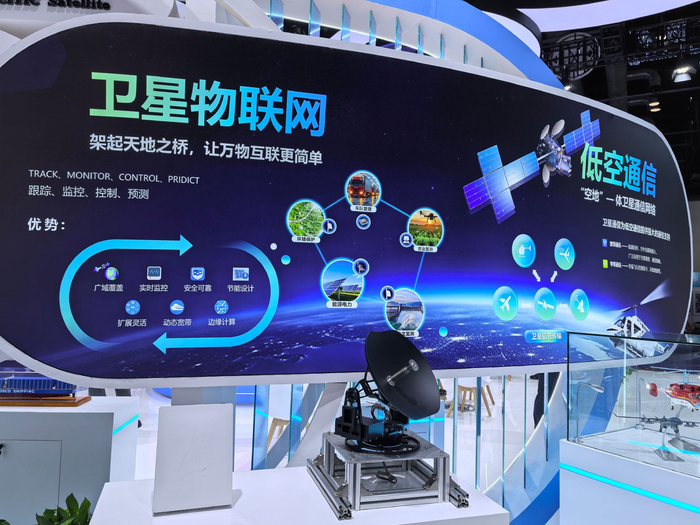
卫星物联网商用试验启动 我国卫星通信产业化提速
Zhong Guo Jing Ying Bao· 2025-11-28 20:13
Core Viewpoint - The industrialization process of China's satellite communication is accelerating with the launch of a two-year commercial trial for satellite IoT services, aimed at enhancing market supply and supporting emerging industries like commercial space and low-altitude economy [3][5][8]. Policy and Regulatory Framework - The Ministry of Industry and Information Technology (MIIT) has issued a notice to initiate commercial trials for satellite IoT, requiring companies to establish satellite IoT systems and support systems to operate nationwide [3][5]. - The recent policy developments provide a clearer roadmap for satellite communication in China, with a focus on meeting the connection needs of IoT devices as a foundation for future high-speed satellite communication [4][5]. Market Dynamics and Growth Potential - The satellite IoT commercial trial marks a new era for China's satellite communication industry, transitioning from specialized applications to large-scale commercial use [5][6]. - The market for satellite IoT is projected to grow significantly, with an expected compound annual growth rate (CAGR) exceeding 40% from 2024 to 2028, potentially reaching a market size of nearly 10 billion yuan by 2028 [6][9]. Technological Advancements - The development of low-cost, rapid-response launch capabilities has lowered the barriers for satellite network deployment, facilitating the transition to commercial applications [5][8]. - The integration of satellite communication modules into various devices, including heavy machinery and wearable technology, is being pursued by both state-owned and private enterprises [6][8]. Industry Structure and Investment Trends - The commercial space sector is entering a phase of standardization, with the establishment of a dedicated Commercial Space Office by the National Defense Science and Technology Industry Bureau [8][9]. - The commercial space market in China is expected to reach approximately 2.3 trillion yuan by 2024, indicating strong growth potential driven by over 70,000 related enterprises [9]. Challenges and Considerations - The satellite communication industry faces challenges related to spectrum allocation and cost, with the cost of satellite communication bandwidth being 5 to 8 times higher than terrestrial communication [10][11]. - The need for a balanced pricing strategy that covers costs while attracting users remains a critical challenge for midstream operators [11].

多个省份发布“十五五”规划建议因地制宜发展新质生产力成关键词
Zheng Quan Shi Bao· 2025-11-27 19:35
Core Insights - The article discusses the regional development strategies during the "14th Five-Year Plan" period, emphasizing differentiated layouts and regional collaboration to drive high-quality economic growth across various provinces in China [1] Group 1: Economic Powerhouses Leading Innovation - Major economic provinces like Zhejiang, Hubei, and Beijing are focusing on becoming leaders in technological and industrial innovation by increasing R&D investments and targeting key technologies [1] - Zhejiang aims for a significant breakthrough in its innovation and industrial system by 2030, with a target R&D investment intensity of around 3.5% and over 1 trillion yuan in technology innovation investments during the "14th Five-Year Plan" [2] - Hubei is implementing a strategy to become a nationally influential technology innovation hub, focusing on foundational research and overcoming critical technological bottlenecks [2][3] Group 2: Innovation Transition in Emerging Regions - Regions like Chongqing and Inner Mongolia are making notable progress in innovation transitions, with Chongqing rising four places in the regional innovation capability rankings [3] - Chongqing plans to elevate technological innovation as a key strategy, aiming to shift from traditional factor-driven growth to innovation-driven development [3] - Inner Mongolia and Ningxia are focusing on new energy systems and high-value utilization of strategic resources like rare earths, with plans to establish significant innovation centers [5] Group 3: Collaborative Innovation in Urban Clusters - The article highlights the importance of collaborative innovation among urban clusters, such as the Beijing-Tianjin-Hebei region, to enhance industrial division and innovation cooperation [6] - Beijing is focusing on resource integration and improving the efficiency of technology transfer, while Hebei aims to attract quality elements from Beijing and Tianjin for technology incubation [6] - The Chengdu-Chongqing economic circle is also emphasized, with Chongqing planning to leverage its unique resources to build a comprehensive innovation framework [6] Group 4: Systematic Approach to Regional Development - The development of new quality productivity and regional coordination is described as a systematic project, requiring mechanisms for shared benefits and risk-sharing [7]
多个省份发布“十五五”规划建议 因地制宜发展新质生产力成关键词
Zheng Quan Shi Bao· 2025-11-27 19:32
王昭丞/制表 各地"十五五"规划建议陆续发布。证券时报记者梳理发现,各地立足自身在全国发展大局中的功能定 位,通过差异化布局与区域联动,凝聚高质量发展的强大动能。 经济大省凭借资源与产业优势勇当先锋,浙江、湖北、北京等省份锚定科创高地建设,加大研发投入、 攻坚"尖刀"技术;重庆、内蒙古等创新转型追赶者立足禀赋,在推进传统优势产业发展的同时,也谋划 在新兴产业领域各展所长。同时,京津冀、成渝地区双城经济圈等城市群也提出了强化协同创新的新思 路。 经济大省勇当科技创新 和产业创新融合先锋 "十五五"时期加速推进现代化产业体系建设,关键在于把因地制宜发展新质生产力摆在更加突出的战略 位置。国研新经济研究院创始院长朱克力对证券时报记者表示,经济大省通常具备科教资源丰富、工业 基础雄厚等优势,可以在科技创新、开放合作等多方面发挥培育新质生产力的引领带动作用。 加快建设创新浙江,因地制宜发展新质生产力,是"十五五"时期浙江高质量发展的核心战略,主要目标 是力争实现"一个突破"和"四个基本建成"。"一个突破"即到2030年,创新浙江建设、现代化产业体系构 建实现重大突破,科创高地、先进制造业基地和人工智能创新发展高地全球竞 ...

雄安空天信息技术规模化应用进入新阶段
Xin Hua She· 2025-11-27 13:52
Core Insights - The China Aerospace Information and Satellite Internet Innovation Alliance held the 2025 Innovation Development Conference in Xiong'an New Area, marking a new phase in the large-scale application of aerospace information technology [1][2] - The conference announced the "Top Ten Technology Products" and "Top Ten Application Scenarios," focusing on key areas such as satellite payloads, terminal devices, and propulsion systems, aimed at enhancing the core competitiveness of China's aerospace information industry [1] - A signing ceremony for key projects took place, indicating the establishment of various innovative scene collaborations, industrial platform co-construction, and technology achievement transformation projects [1] Industry Developments - The first "Xiong'an-made" satellite, "Xiong'an No. 1," is set to complete production by October 2025, transitioning the aerospace information industry in Xiong'an from conceptual planning to tangible output [2] - Xiong'an New Area has positioned aerospace information and satellite internet as a key focus of its first innovation industrial chain, leveraging leading state-owned enterprises like China Star Network [2] - Currently, Xiong'an New Area hosts 63 companies in the aerospace information sector and has established 7 innovation platforms [2]
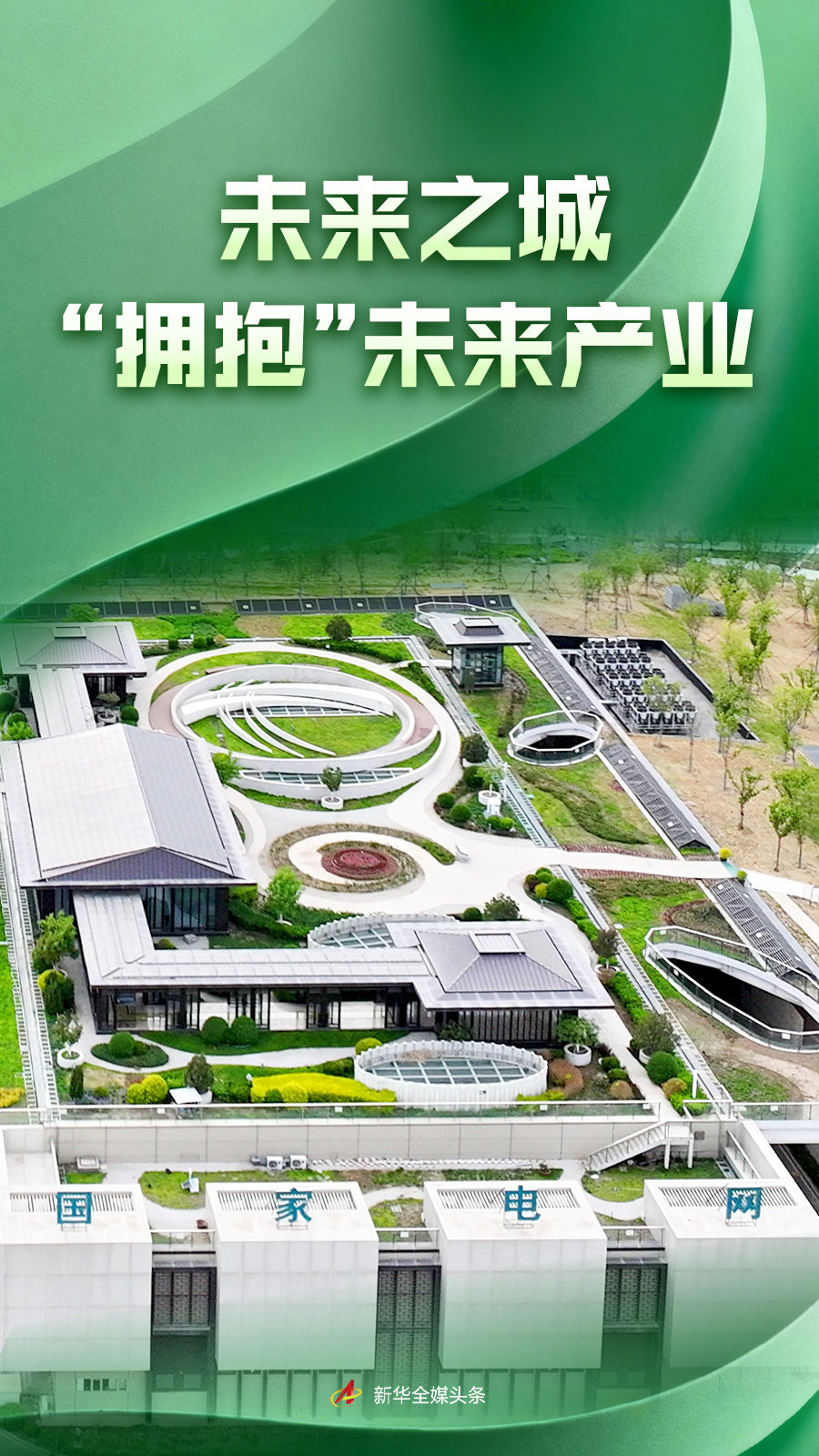
未来之城“拥抱”未来产业
Xin Hua She· 2025-11-25 12:32
Core Viewpoint - Xiong'an New Area is positioned as a future city focusing on independent and original innovation, actively embracing future industries, as outlined in the 15th Five-Year Plan by the Central Committee of the Communist Party of China [3][5]. Group 1: Development of Future Industries - The first satellite "Xiong'an No. 1" was produced by Blue Arrow Hongqing (Xiong'an) Space Technology Co., which will have the capacity to deliver over 100 satellites annually after full production [5]. - Xiong'an New Area is set to become a significant hub for satellite internet, space information, commercial satellite manufacturing, and aerospace vehicles, with the establishment of major state-owned enterprises [5][10]. - The "Action Plan for Promoting Future Industry Development in Xiong'an New Area" aims to cultivate key future industries such as aerospace information, artificial intelligence, and new materials, while also exploring life sciences and future energy [7][10]. Group 2: Innovation and Technology Integration - The Xiong'an Science and Technology Center is home to advanced 3D printing technologies, significantly enhancing the production capabilities of large metal components [7]. - The integration of high-level innovation resources from universities and research institutions is accelerating the development of Xiong'an's technology landscape, with several universities establishing campuses in the area [10][11]. - The Xiong'an New Area has attracted over 60 companies in the aerospace information sector, forming a relatively complete industrial chain that includes satellite manufacturing, launching, and data application [13]. Group 3: Supportive Policies and Infrastructure - The government is providing substantial financial support for national key laboratories and innovation centers, with grants of up to 300 million yuan for laboratories and 100 million yuan for newly approved centers [14]. - The establishment of the "Future Scene" innovation hub in Xiong'an aims to create a comprehensive platform for technology application, integrating various sectors such as digital intelligence and green technology [15][19]. - The "Future Scene" initiative has successfully hosted two events, gathering over 4,700 high-tech projects and facilitating the establishment of 51 innovation enterprises in Xiong'an [19]. Group 4: Strategic Vision and Future Outlook - Xiong'an New Area is seen as a critical area for the integration of technology and urban development, with a focus on creating a smart city that leverages artificial intelligence across various sectors [11][21]. - The region is positioned to become a new highland for innovation and entrepreneurship, capitalizing on the opportunities presented by the new technological revolution and industrial transformation [21].
龙虎榜复盘 | 商业航天爆发,军工午后再度大涨
Xuan Gu Bao· 2025-11-24 11:03
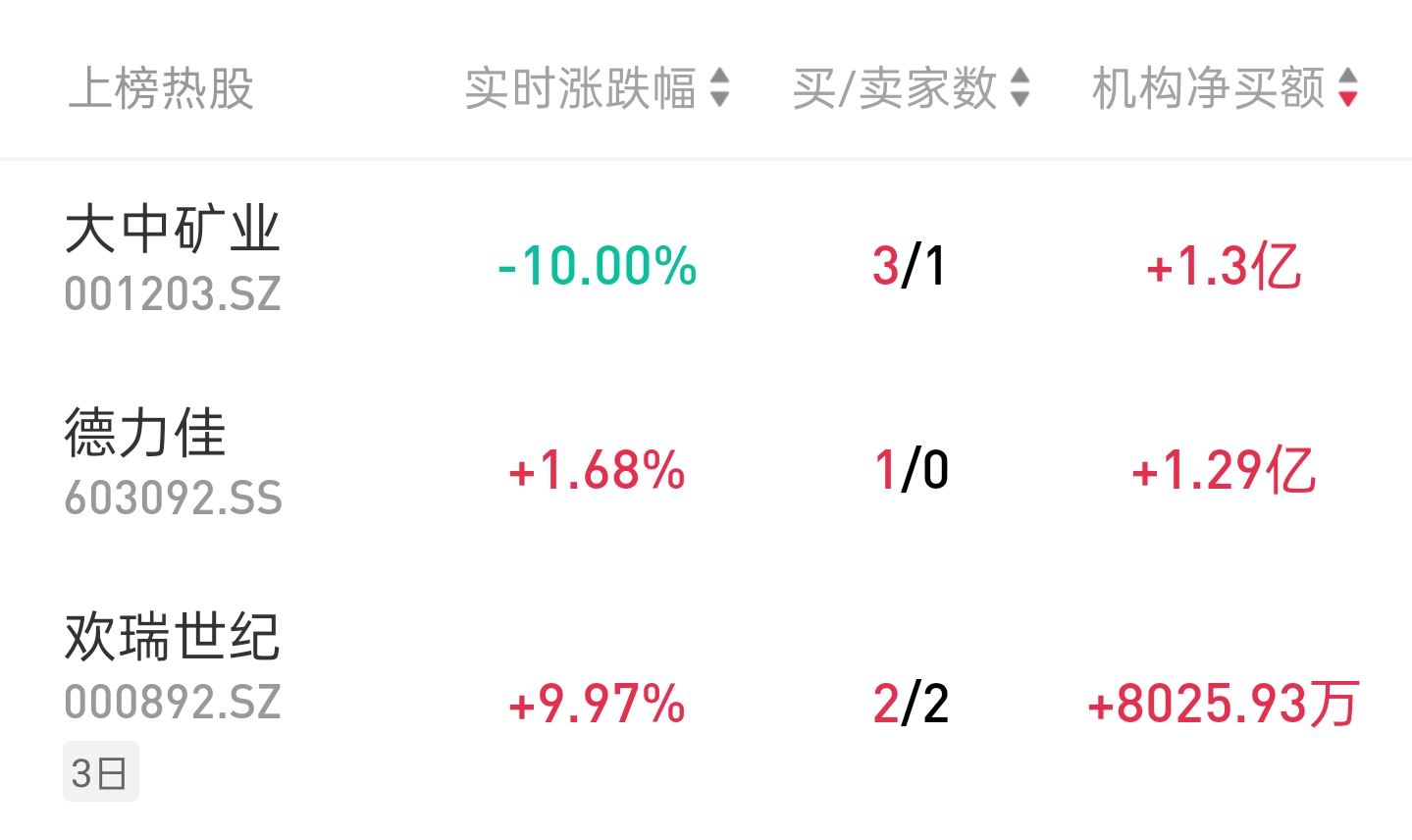
Group 1: Stock Market Activity - On the institutional trading list, 32 stocks were featured, with 14 experiencing net buying and 18 facing net selling [1] - The top three stocks with the highest institutional buying were: Dazhong Mining (130 million), Delijia (129 million), and Huanrui Century (80.25 million) [1] - Huanrui Century entered a strategic partnership with Shanghai Jieyue Xingchen Intelligent Technology Co., aiming to establish the "Linyue" AI Joint Laboratory, integrating AI models for film content production [1] Group 2: Aerospace and Defense Industry - The commercial aerospace sector is witnessing a significant shift with the upcoming first flights of several reusable rockets, including Zhuque-3 and others, expected between late 2025 and early 2026 [4] - The Chinese government has initiated the commercial satellite IoT business trial, marking a step forward in the satellite internet sector [2] - The military industry is seeing companies like Jianglong Shipbuilding and Beifang Changlong gaining qualifications for producing military vessels and equipment, indicating growth in defense capabilities [4]

短期调整不改慢牛趋势 :申万期货早间评论-20251124
申银万国期货研究· 2025-11-24 00:53
Market Overview - Recent stock market pullback has led to significant inflows into ETFs, with over 70 billion yuan net inflow into stock ETFs from November 17 to November 21, and more than 40 billion yuan on November 21 alone [1] - External factors such as declining expectations for Federal Reserve rate cuts and rising concerns over AI bubbles are identified as primary reasons for the market's recent downturn [1] - Despite these challenges, support from domestic technology sectors and "anti-involution" policies suggests a continued "slow bull" market for Chinese assets [1] Key Products: Stock Index, Oil, and Double焦 - Stock Index: US indices rebounded after a significant drop, with the market turnover at 1.98 trillion yuan. Financing balance decreased by 5.939 billion yuan to 24,743.85 billion yuan on November 20. The focus remains on technology self-reliance as a long-term direction [2][11] - Oil: SC night trading fell by 1.46%. US sanctions on Russian oil companies are set to take effect, and the overall downward trend in oil prices is expected to continue [3][14] - Double焦: Recent trading showed fluctuations, with a decrease in焦煤 positions. Supply recovery is noted, and demand from the construction sector has increased, leading to a significant reduction in overall inventory [3][21] Industry News - The G20 summit concluded in Johannesburg, emphasizing the commitment to multilateral cooperation and common development amid global challenges [6] - Chinese Premier Li Qiang met with German Chancellor Merz, highlighting the importance of a stable and high-quality strategic partnership between China and Germany [7] - The State-owned Assets Supervision and Administration Commission (SASAC) is increasing support for enterprises in Xiong'an New Area, focusing on innovation and industrial clustering [8] External Market Performance - The S&P 500 index rose by 0.98% on November 21, while the FTSE China A50 futures dropped by 2.66% [10] - The dollar index slightly decreased by 0.07%, indicating a stable currency environment [10] Financial Instruments Commentary - Government bonds saw a slight decline, with the 10-year bond yield rising to 1.812%. The central bank is expected to maintain a supportive monetary policy stance [12] - The copper market is experiencing tight supply conditions, with long-term support for prices anticipated due to global supply-demand shifts [19] - The rubber market is under pressure from increasing supply, while the demand side remains weak, leading to expected price corrections [16]

国务院国资委:将以更大力度支持央企在雄安留得下、稳得住、发展好
Zheng Quan Shi Bao Wang· 2025-11-23 04:31
Core Insights - The State-owned Assets Supervision and Administration Commission (SASAC) is committed to supporting enterprises in Xiong'an New Area to ensure their stability and growth [1][2] - Emphasis on focusing on core responsibilities and innovation to enhance the quality of development in state-owned enterprises [1] - The 20th Central Committee's fourth plenary session has provided essential guidelines for the high-quality development of state-owned enterprises during the 14th Five-Year Plan period [1] Group 1 - SASAC will intensify support for enterprises to thrive in Xiong'an, focusing on innovation and industrial clustering [1] - Enterprises are encouraged to enhance employee satisfaction and well-being while managing relocations effectively [1] - There is a need for strategic planning that incorporates strategic, technological, and industrial thinking to optimize core business operations [1] Group 2 - Enterprises must prioritize achieving annual operational goals and contribute to the economic recovery [2] - High-quality completion of state-owned enterprise reform and proactive planning for new reform strategies are essential [2] - Emphasis on risk prevention in key areas and enhancing safety production measures [2]


雄安新区高标准高质量建设现代化城市
Ren Min Ri Bao· 2025-11-21 22:12
Core Insights - The Xiong'an New Area is rapidly developing into a modern city, with over 1 trillion yuan invested and more than 5,300 buildings constructed, focusing on high-quality urban development and technological innovation [2][4]. Investment and Infrastructure - Cumulative investment in Xiong'an has exceeded 1 trillion yuan, with over 5,300 buildings completed [2]. - The area is seeing significant infrastructure development, including the establishment of 105 new schools and kindergartens, as well as an increase in high-quality hotels and brand stores [2]. Industry and Technology - Xiong'an is concentrating on six major industries, including aerospace information, satellite internet, and artificial intelligence, with over 2,000 technology companies operating in the area [2][9]. - The first "Xiong'an-made" satellite was successfully launched, marking a significant milestone in the local aerospace industry [8]. Urban Development and Living Standards - The area is designed to accommodate the relocation of non-capital functions from Beijing, with a focus on providing comprehensive services for employees and businesses [4][5]. - The "rent and purchase rights" policy has been implemented to protect renters' rights regarding education and residency [13]. Governance and Administrative Reforms - Xiong'an has undergone administrative reforms, increasing the number of internal departments from 12 to 21 to enhance efficiency and service delivery [5]. - The local government has secured 16 provincial-level approval powers to streamline business operations [5]. Digital and Smart City Initiatives - The area has established a "smart heating" system and a digital city management platform that processes over 33 billion data points, enhancing urban management and service delivery [10][9]. - Full 5G coverage has been achieved, facilitating the implementation of smart applications in governance, environmental protection, and transportation [10]. Community and Quality of Life - The development of community services aims to create a "15-minute living circle," ensuring easy access to amenities such as supermarkets and healthcare [13]. - The forest coverage rate in Xiong'an has increased from 11% to 35%, reflecting a commitment to ecological development [14].