吉利

Search documents
泰国车展观察:人气最旺的展位,是国产新能源车品牌
2 1 Shi Ji Jing Ji Bao Dao· 2025-12-31 08:54
Core Insights - The Thai International Motor Expo showcased a significant shift in consumer preferences towards Chinese electric vehicles, with local citizens expressing interest in replacing traditional Japanese and European brands with Chinese new energy vehicles [1] Industry Overview - The Thai automotive market is influenced by two major annual auto shows, the Bangkok International Motor Show in the first half of the year and the Thai Motor Expo at the end of the year, both serving as important indicators for the Southeast Asian automotive market [1] - Chinese automotive brands such as BYD, SAIC, GAC, Geely, Chery, and Great Wall have established a strong presence at the Thai Motor Expo, capturing a substantial share of the exhibition space [1] Consumer Behavior - The Thai Motor Expo emphasizes direct consumer engagement, with a focus on encouraging attendees to place orders for vehicles on-site, contrasting with the brand promotion focus seen in domestic auto shows [1] - Chinese automakers secured approximately 60% of the total orders at the expo, significantly outperforming Japanese and European competitors [1]
「财闻联播」长江电力中期分红方案公布!何小鹏:2026年全自动驾驶会真正到来
Zheng Quan Shi Bao· 2025-12-30 13:24
Group 1: Automotive Industry - The National Development and Reform Commission and the Ministry of Finance announced a policy to support vehicle scrapping and replacement starting in 2026, providing subsidies for consumers who scrap their cars and purchase new energy vehicles or fuel-efficient vehicles [1] - Consumers will receive a subsidy of 12% (up to 20,000 yuan) for purchasing new energy vehicles and 10% (up to 15,000 yuan) for purchasing fuel-efficient vehicles with an engine size of 2.0 liters or less [1] Group 2: Aviation Industry - Hainan's three major airports achieved a record annual passenger throughput of over 50 million for the first time, marking a significant milestone in the development of Hainan's aviation sector [2] - This achievement is seen as a strong impetus for the construction of an aviation hub as Hainan Free Trade Port progresses [2] Group 3: Trade and Export - The Ministry of Commerce released the list of state-owned enterprises authorized to export tungsten, antimony, and silver for the 2026-2027 period, including 15 companies for tungsten, 11 for antimony, and 44 for silver [3] Group 4: Automotive Market Share - China's share of the global automotive market reached 40% in November 2025, an increase of 1 percentage point from the previous year [4] - In 2024, China's automotive market share is projected to be 34.2%, with a rise to 35.4% in the first 11 months of 2025 [4] - BYD, Geely, and Chery are among the top 10 global automakers, with BYD ranking 6th, Geely 8th, and Chery 10th [4] Group 5: Aerospace Industry - The first aircraft of the new generation of commercial unmanned transport systems, the HH-200, was assembled and launched by Aviation Industry Corporation of China, marking a breakthrough in low-altitude logistics [5] Group 6: Banking Sector - Citic Bank announced the resignation of its Executive Director and President, Lu Wei, due to work adjustments, with Fang Heping appointed as the acting president [6] - The former Party Secretary and President of the China Industrial and Commercial Bank in Zibo, Wang Shiming, is under investigation for serious violations of discipline and law [7][8] Group 7: Market Data - The Shanghai Composite Index recorded a 10-day winning streak, with significant gains in humanoid robot concepts and other sectors, while the total market turnover exceeded 2 trillion yuan [9][10] - The financing balance of both stock exchanges increased by 8.346 billion yuan, indicating a positive trend in market liquidity [10] Group 8: Corporate Developments - Changjiang Electric Power announced a mid-term profit distribution plan for 2025, proposing a cash dividend of 2.10 yuan per 10 shares, totaling 5.138 billion yuan [13] - Baiwei Storage plans to acquire a 0.8446% stake in Niu Xin Semiconductor for 20 million yuan, involving related party transactions [14]

马来西亚中华总商会人工智能组主任:中企出海促东南亚产业升级
2 1 Shi Ji Jing Ji Bao Dao· 2025-12-30 04:59
Group 1: AI's Impact on ASEAN and Malaysia - The AI industry is projected to contribute 10% to 18% growth in ASEAN's GDP by 2030, creating over $1 trillion in potential value [1] - Malaysia views AI as a core path to national modernization, enhancing quality of life and improving efficiency for businesses [4][5] - Traditional industries are expected to be reshaped and upgraded through AI integration rather than being simply eliminated [4][5] Group 2: Malaysia's AI Development Strategy - Malaysia plans to establish a National AI Office in December 2024 to promote the AI ecosystem and develop relevant policies [3] - The AI Office will collaborate with the Ministry of Investment, Trade and Industry to implement AI technologies across various sectors [3] - The government has allocated funds in the 2023 budget to support technology education, aiming to prepare the workforce for AI applications [5] Group 3: Collaboration with China - Malaysia and China have a strong trade relationship, with China being Malaysia's largest trading partner for 16 consecutive years [6] - The two countries are expected to deepen cooperation in emerging technologies, including AI, with Malaysia aiming to be among the top 20 AI economies by 2030 [5][6] - Chinese tech companies have successfully entered the Malaysian market, providing various services and products that enhance local development [9] Group 4: AI in Traditional Industries - AI is seen as essential for enhancing sectors like services, agriculture, and logistics, which will not be replaced but rather empowered by technology [5] - The integration of AI can lead to new business models and structural changes in traditional industries, especially in labor-intensive sectors [5] - A proposed "AI scoring system" could help evaluate foreign labor, showcasing AI's potential to create self-regulating mechanisms in the workforce [5] Group 5: China's AI Industry - China is recognized for having a complete AI industry chain, driving the sector towards high-end development [7] - The rapid advancements in AI in China are characterized by speed, strong implementation, and high cost-effectiveness [7] - China's AI ecosystem is extensive, covering data, chips, models, and applications, contributing to its robust growth [7]
今日新闻丨一汽正式入股零跑!吉利千里智驾完成整合!
电动车公社· 2025-12-29 16:55
Group 1 - The core viewpoint of the article highlights the unprecedented collaboration between traditional automaker FAW Group and the new energy vehicle brand Leap Motor, with FAW investing 3.744 billion yuan for a 5% stake in Leap Motor [1][3] - This partnership is expected to leverage FAW's advanced supply chain capabilities, internal combustion engine R&D, and extensive distribution network alongside Leap Motor's self-developed intelligent and electrification technologies, creating a win-win situation for both parties [3] Group 2 - Geely has completed the integration of its intelligent driving division, aiming to enhance innovation and delivery efficiency in the field of advanced driver assistance systems [4] - Despite significant R&D investments in the driver assistance sector, user feedback indicates that Geely has not achieved a dominant lead over competitors, prompting the consolidation of its previously dispersed teams to focus efforts and potentially gain an advantage in a competitive market [6]


横河精密20251229
2025-12-29 15:50
横河精密 20251229 摘要 恒和精密在家电零部件领域与卡特、SED 松下等知名企业合作,受益于 智能家电市场稳定增长,预计 2025 年市场规模将接近 8,000 亿元,同 比增长 5%,为公司提供稳定收入来源。 公司在汽车零部件领域聚焦智能座舱和汽车轻量化,与华为、延锋安道 拓等合作,提供齿轮、执行器等产品。预计 2025 年中国智能座舱市场 规模达 1,564 亿元,同比增长 21%,汽车轻量化亦带来显著减重效果。 无人机业务是恒和精密未来发展重点,预计 2025 年全球市场规模达 3,800 亿元,工业级占比 65%。公司通过参股宁波狮子王、设立新加坡 合资公司、增资合水智能等举措,积极布局无人机全产业链及全球市场。 公司于 8 月 8 日参股 30%设立宁波狮子王(现持股比例提升至 50%以 上),聚焦无人飞行器销售;于 10 月 9 日参股 40%设立新加坡合资公 司,为工业级无人机提供海外制造基地;于 10 月 28 日增资 500 万元 持有合水智能 5%的股权。 市场对恒和精密无人机业务的成长空间存在质疑,但公司通过全面布局 制造与销售环节,以及全球化战略,有望超出预期。预计 2025- ...

被“截胡”二十年:马来西亚如何在中美夹缝中复兴?
财富FORTUNE· 2025-12-29 13:11
Core Viewpoint - Malaysia's Johor state is actively seeking to attract Chinese investments, particularly in sectors like semiconductors, special chemicals, and aerospace materials, amidst a global supply chain restructuring due to US-China trade tensions and the COVID-19 pandemic [6][9]. Group 1: Investment Opportunities - The Johor delegation is meeting with Chinese companies to encourage them to invest in the state, with a focus on bringing their supply chains along [11][12]. - Chinese companies are motivated to invest in Malaysia due to lower tariffs on products labeled as "Made in Malaysia," which significantly reduces export costs to the US compared to products exported from China [12][13]. - The Malaysian government has identified five key industries for development by 2030: aerospace, data centers, electronics manufacturing, special chemicals, and medical devices [9][16]. Group 2: Challenges and Considerations - Despite the attractive investment landscape, Chinese companies face challenges such as higher labor costs in Malaysia compared to neighboring countries like Vietnam and Indonesia [14][15]. - Concerns about the completeness of the local supply chain in certain sectors, such as pharmaceuticals, may deter investment despite favorable export conditions [15]. - The potential for increased scrutiny from the US regarding Chinese investments in Malaysia, particularly in technology sectors, poses a risk for companies considering expansion [19]. Group 3: Strategic Positioning - Malaysia aims to position itself as a middle power that can serve both the US and China, focusing on industries that can thrive regardless of geopolitical tensions [9][19]. - The establishment of the "Johor-Singapore Economic Zone" is intended to replicate the success of Shenzhen by attracting investment and technology from Singapore while utilizing Johor's lower operational costs [16][17]. - The rapid growth of data centers in Johor, driven by the overflow from Singapore, highlights the state's potential as a new hub for technology infrastructure [17][18]. Group 4: Historical Context and Future Outlook - Malaysia's industrialization efforts have faced setbacks, particularly after China's entry into the WTO, which redirected investment and technology away from Malaysia [8][9]. - The "Forest City" project, initially a symbol of hope for Chinese investment, serves as a cautionary tale about the complexities and risks of cross-border investments [20][21]. - The evolving landscape of global competition, particularly between the US and China, necessitates that both Malaysian and Chinese companies adopt strategies to mitigate risks and ensure sustainable growth [22][23].
弘景光电(301479):全景、运动相机强劲增长,新兴市场持续拓展
China Post Securities· 2025-12-29 09:08
Investment Rating - The report maintains a "Buy" rating for the company, expecting significant growth in stock performance relative to the benchmark index [5][8]. Core Insights - The panoramic and action camera business is experiencing significant growth, driven by the explosion of social media content and the increasing demand for immersive experiences. The company achieved a revenue of 1.198 billion yuan in the first three quarters of 2025, representing a year-on-year growth of 51.65% [3]. - The company is implementing a "3+N" product strategy, focusing on expanding its market share in smart automotive, smart home, and panoramic/action camera sectors, while also exploring emerging fields such as AI hardware and industrial inspection [4]. - The company has secured stable partnerships with major automotive manufacturers and high-end smart home brands, indicating a strong order backlog and market capacity to absorb new production [4]. Financial Projections - Revenue projections for 2025, 2026, and 2027 are 1.594 billion yuan, 2.177 billion yuan, and 2.800 billion yuan, respectively, with net profits expected to be 202 million yuan, 283 million yuan, and 368 million yuan [5][9]. - The company anticipates a revenue growth rate of 41.24% in 2024, 45.98% in 2025, and a gradual decline to 28.63% by 2027 [9][12]. - The projected earnings per share (EPS) for the same years are 2.27 yuan, 3.18 yuan, and 4.14 yuan, with a decreasing price-to-earnings (P/E) ratio from 46.20 in 2024 to 20.75 in 2027 [9][12].
招大引强,“链”就济南新动能
Feng Huang Wang Cai Jing· 2025-12-29 08:24
Core Insights - Jinan is focusing on project-driven industrial development, emphasizing the importance of "chain master" projects to stimulate entire industrial chains [1][4][8] - The city has restructured its industrial layout from "ten major chains" to a more precise "13 iconic industrial chains and 34 key industrial chains," enhancing its competitive strategy [2][3] Group 1: Industrial Strategy - Jinan's new industrial matrix includes 13 iconic chains that align with national strategic priorities, such as aerospace information, artificial intelligence, and integrated circuits [3] - The 34 key chains serve as detailed support, allowing for targeted policies and investment strategies, thus avoiding homogenized competition [3][6] Group 2: Project Attraction - The city is actively attracting large and strong projects, which have a significant multiplier effect on local industries, as seen in the automotive and integrated circuit sectors [4][6] - Major automotive companies like BYD and Geely have established bases in Jinan, leading to a robust supply chain with nearly 400 local suppliers collaborating with BYD [4] Group 3: Industrial Ecosystem - Jinan is fostering a collaborative industrial ecosystem where "chain master" enterprises lead the way, attracting specialized small and medium-sized enterprises to join the supply chain [5][6] - The city is optimizing spatial layouts and promoting differentiated development among districts to enhance industrial synergy and reduce resource waste [6] Group 4: Future Industries - Jinan is positioning itself in emerging sectors such as aerospace information and artificial intelligence, with significant investments from leading companies in these fields [7] - The establishment of advanced facilities, such as the largest humanoid robot data training center in the province, highlights Jinan's commitment to high-tech industries [7] Group 5: Economic Goals - Jinan aims for its industrial revenue to exceed 1 trillion yuan in 2024, with a target of 1.1 trillion yuan by 2025, driven by the 13 iconic industrial chains [6][8]
36氪分享理想与宁德关于电池思路的增量信息
理想TOP2· 2025-12-28 05:23
Core Viewpoint - CATL is striving to regain market share, maintaining production and ensuring rapid product circulation while facing challenges in profit margins and competition from other battery manufacturers [1][2]. Group 1: Market Position and Strategy - CATL's market share in China has decreased from 51% in 2021 to 43% today, indicating a loss of competitive edge [1]. - The company is focusing on long-term partnerships, as evidenced by a recent five-year strategic cooperation agreement with Li Auto, emphasizing the importance of maintaining a significant market share [1]. - CATL has locked in over 10 billion yuan in orders from NIO annually, showcasing its strong position in the supply chain despite NIO's previous attempts to reduce reliance on CATL [2]. Group 2: Production and Supply Chain - CATL is experiencing production capacity constraints, prioritizing clients with deep cooperation for battery supply, which has led to a backlog of 20,000 units of range-extended batteries at its Liuyang factory [1]. - The company is able to offer competitive pricing, quoting 20% lower than Geely's self-produced batteries due to its efficient production processes [3]. - CATL's production speed is three times faster than the industry average, allowing it to respond quickly to market demands [3]. Group 3: Product Development and Collaboration - CATL is developing solutions for models it does not secure low-spec projects for, ensuring readiness to meet urgent demands [3]. - Despite competition, data indicates that the failure rates of self-produced battery packs from various automakers are comparable to those of CATL, suggesting that CATL maintains a strong reputation for reliability [4].


算力够了,为什么大模型体验却没变化?
汽车商业评论· 2025-12-27 23:05
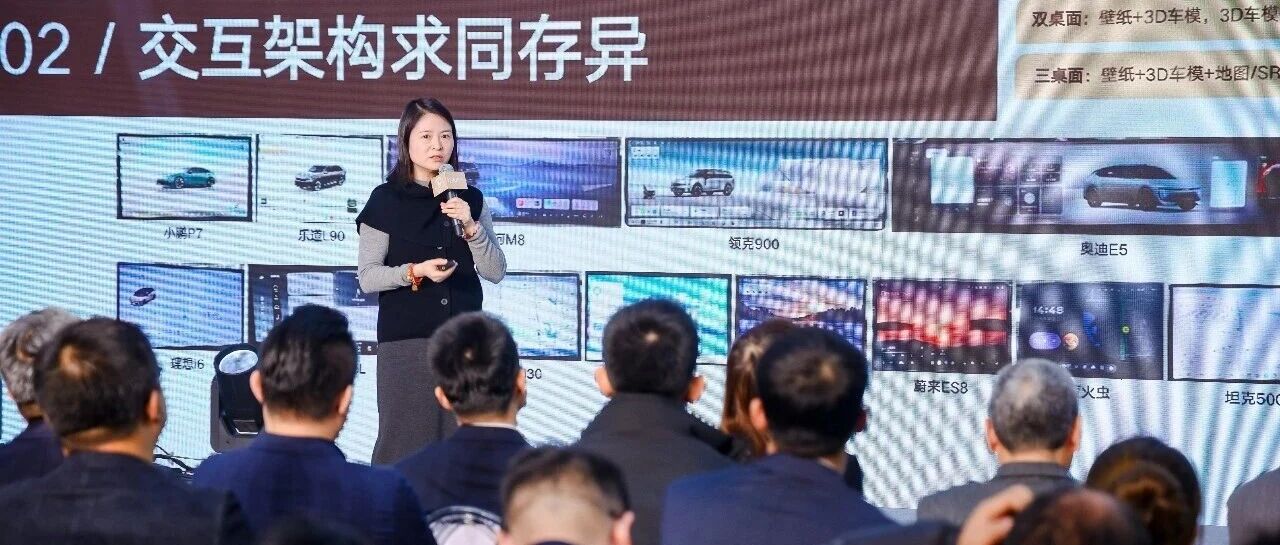
Core Insights - The article discusses the significant advancements in AI models within the automotive industry, particularly focusing on the launch of the lightweight version of the domestic AI model DeepSeek in early 2025, which has rapidly gained traction in both domestic and international markets [3] - The automotive sector is entering a new era of large-scale AI model integration, with major manufacturers like Mercedes-Benz, BYD, NIO, and SAIC accelerating their adoption of AI models since February 2025 [3] - The focus has shifted from initial testing to deeper integration of AI models into vehicle functionalities, particularly in smart cockpit experiences [3][4] AI Model Integration in Automotive - By 2025, the consensus in the industry has shifted towards the deep integration of AI models into cockpit functionalities, moving beyond basic search capabilities to more complex applications [3] - The 2026 Xuanyuan Award evaluation emphasized the importance of AI models in enhancing user experience, with a focus on generative UI, proactive perception, and multimodal interaction [4] - The evaluation revealed that while some manufacturers have made significant strides, many still lag behind in delivering substantial improvements in AI capabilities compared to the previous year [4][5] Challenges in AI Model Implementation - The distribution of computing power and performance constraints pose significant challenges, as many manufacturers allocate substantial resources to autonomous driving, limiting the available computing power for cockpit AI applications [5] - The complexity of testing AI models complicates the assessment of their effectiveness, as it is often difficult to determine whether the intelligence displayed is genuinely derived from AI models [5][42] - The industry is currently focused on enhancing the user experience through AI, but many manufacturers have yet to fully realize the potential of AI in cockpit interactions [5][42] Future Directions for AI in Cockpits - The article suggests that AI will become a native capability of operating systems in vehicles, with a shift towards integrating AI deeply into the OS architecture [6][46] - Future developments will include offline voice AI, edge-based visual language models, and memory capabilities, which are essential for creating a seamless user experience [6][46] - The evolution of AI models will also involve enhancing their analytical and planning capabilities, allowing them to serve as scene engines that can automatically orchestrate interactions and provide optimal solutions [6][47] Trends in Smart Cockpit Design - The evaluation of smart cockpit experiences highlighted several key trends, including platformization, 3D HMI exploration, and spatial interaction design [9][10][23] - Manufacturers are increasingly focusing on optimizing rear seat space and enhancing user interaction through innovative designs, such as movable screens and gesture controls [30][34] - The integration of sound zones and cross-screen interactions is becoming a priority, allowing for a more personalized and immersive user experience [30][31][33] Notable Case Studies - The article presents several innovative case studies, such as NIO's Firefly cockpit, which features unique gesture controls and personalized desktop card generation [48][49] - The use of AI-generated content, such as children's storybooks and interactive features, showcases the potential for AI to enhance user engagement in vehicles [48][57] - The development of dynamic control interfaces that adapt to different applications demonstrates the flexibility and potential of smart cockpit technologies [54]