永辉超市

Search documents
永辉超市(601933) - 上海市通力律师事务所关于永辉超市股份有限公司2026年第一次临时股东会的法律意见书
2026-02-06 09:16
上海市通力律师事务所 关于永辉超市股份有限公司 2026 年第一次临时股东会的法律意见书 致: 永辉超市股份有限公司 上海市通力律师事务所(以下简称"本所")接受永辉超市股份有限公司(以下简称"公 司")的委托, 指派本所严雪瑾律师、周奇律师(以下简称"本所律师")根据《中华人民共和 国公司法》《中华人民共和国证券法》《上市公司股东会规则》等法律法规和规范性文件(以 下统称"法律法规")及《永辉超市股份有限公司章程》(以下简称"公司章程")的规定就公 司 2026 年第一次临时股东会(以下简称"本次股东会")相关事宜出具法律意见。 本所律师已经对公司提供的与本次股东会有关的法律文件及其他文件、资料予以了核 查、验证。在进行核查验证过程中, 公司已向本所保证, 公司提供予本所之文件中的所有签 署、盖章及印章都是真实的, 所有作为正本提交给本所的文件都是真实、准确、完整和有效 的, 且文件材料为副本或复印件的, 其与原件一致和相符。 在本法律意见书中, 本所仅对本次股东会召集和召开的程序、出席本次股东会人员资格 和召集人资格及表决程序、表决结果是否符合法律法规和公司章程的规定发表意见, 并不对 本次股东会所审议的 ...

双融日报-20260206
Huaxin Securities· 2026-02-06 01:43
2026 年 02 月 06 日 双融日报 --鑫融讯 分析师:万蓉 S1050511020001 wanrong@cfsc.com.cn 市场情绪:32 分(较冷) 最近一年大盘走势 资料来源:Wind,华鑫证券研究 -10 -5 0 5 10 15 20 25 (%) 沪深300 相关研究 | 1、《双融日报》2026-02-05 | | --- | | 2、《双融日报》2026-02-04 | | 3、《双融日报》2026-02-03 | ▌ 华鑫市场情绪温度指标:(较冷) 华鑫市场情绪温度指标显示,昨日市场情绪综合评分为 32 分,市场情绪处于"较冷"。历史市场情绪趋势变化可参 考图表 1 ▌ 热点主题追踪 今日热点主题:电网设备、银行、消费 1、电网设备主题:全球 AI 数据中心(AIDC)耗电量巨大, 催生了对高功率、高稳定性变压器等核心电力设备的刚性需 求。目前全球供需严重失衡,美国市场交货周期已长达 127 周。与此同时,国内"十五五"期间,国家电网 4 万亿元的 巨额投资将重点投向特高压、智能化配电网等新型电力系 统,为行业带来了明确的长期订单支撑。相关标的:中国西 电(601179)、特变 ...
茅台市场化改革满月调研:扩大真实消费触达全渠道热销 战略转向提振抗周期韧性
2 1 Shi Ji Jing Ji Bao Dao· 2026-02-06 00:49
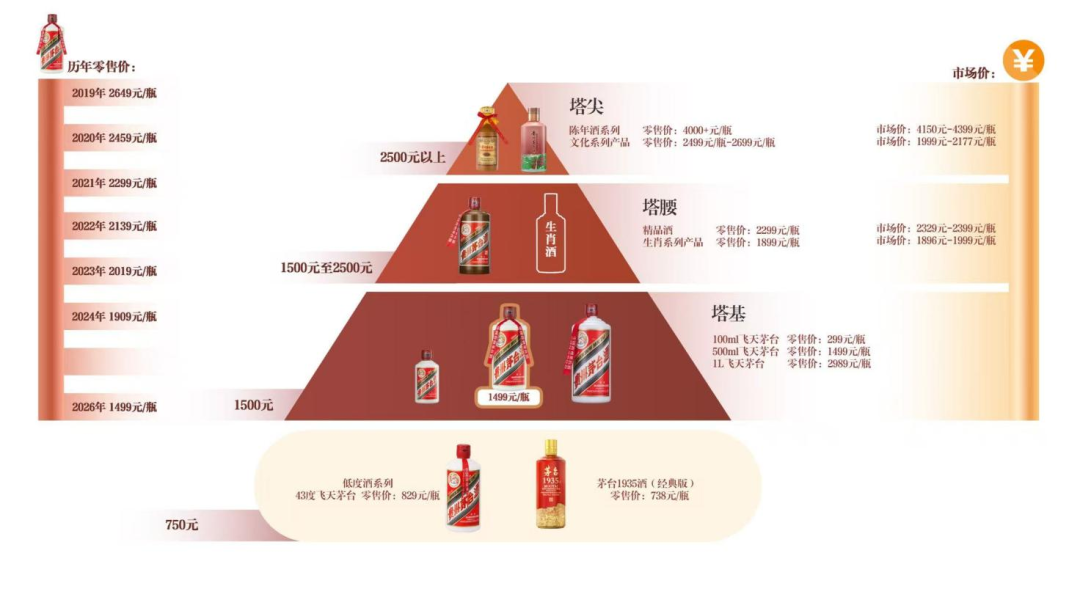
"最近确实很忙,你看这些箱子都是刚到的货,店里都快摆不下了。" 茅台重庆渝中自营门店的熊林经理一边和电话那头的客户确认购酒需求,一边向进店咨询的笔者打招呼。 1月30日,重庆小雨。位于解放碑商圈的贵州茅台(600519)重庆渝中自营门店上午刚一开门,便迎来了络绎不绝的顾客。很多消费者是前来提取在i茅台 申购成功的飞天53%vol 500ml贵州茅台酒(即大众所说的53度飞天茅台),也有不少人是咨询、购买其他茅台产品。 笔者在现场看到,店里有几十箱各类茅台产品刚刚到货,几乎摆满了过道,等待顾客提货或送货上门。笔者在前台仅仅观察十分钟左右,就有十几名顾客 进店提货。 "最近是春节前夕,需求确实非常旺盛,1月初以来我们门店的到店人次同比增加了41%,单日最高到店300人左右。"熊经理介绍。 2026年1月,茅台拉开了一场"以消费者为中心"的全面市场化改革,在产品、价格、渠道、服务等方面推出多项重要改革举措,目的是让消费者可以公 平、便捷、保真购酒。 对于普通消费者而言,茅台今年的市场化改革,最容易感知到的便是有机会以1499元/瓶的价格在i茅台上申购到53度飞天茅台。 2026年1月1日,53度500ml飞天茅台等 ...


悬崖上的永辉
虎嗅APP· 2026-02-06 00:08
Core Viewpoint - Yonghui Supermarket is facing significant financial challenges, with a projected net loss of 2.14 billion yuan in 2025, marking a 45.6% increase year-on-year, and has reported losses for five consecutive years. The company attributes these losses to major operational strategy adjustments, including store renovations and closures, which have resulted in direct losses of 1.2 billion yuan [4][8]. Group 1: Company Background and Growth - Yonghui Supermarket was founded in 1995 by brothers Zhang Xuansong and Zhang Xuanning, starting with a micro-profit model. The brand was officially established in 1998 and gained momentum in 2000 by leveraging the "Agricultural Reform Supermarket" policy, leading to rapid growth [6][7]. - By 2010, Yonghui became the first "fresh food stock" listed on the Shanghai Stock Exchange, and by 2020, it achieved a record revenue of 93.2 billion yuan, marking its peak in the industry [7][8]. Group 2: Recent Challenges and Strategic Changes - Since 2021, Yonghui has entered a prolonged period of losses, with figures of 3.944 billion yuan in 2021, 2.763 billion yuan in 2022, and 1.329 billion yuan in 2023. The company has attempted a major transformation called "Fat Reform" to address these issues, which involves comprehensive changes in product structure, shopping experience, and organizational framework [8][9]. - The "Fat Reform" has led to significant financial costs, including a projected loss of 2.14 billion yuan for 2025, with 910 million yuan attributed to asset write-offs and 300 million yuan due to loss of gross margin from store renovations [9][10]. Group 3: Market Dynamics and Competitive Landscape - The retail landscape has shifted dramatically, with the rise of e-commerce and community group buying, which have significantly impacted traditional retail models. The community group buying market in China surpassed 830 billion yuan in 2023, with user numbers increasing from 212 million in 2017 to 845 million [10][11]. - Yonghui's traditional advantages in fresh food are being eroded by new competitors offering lower prices and more efficient supply chains. The company struggles to compete with both discount stores and experiential retailers, leading to a loss of customer traffic [11][13]. Group 4: Future Directions and Strategic Imperatives - Yonghui's transformation should not aim to replicate the success of competitors like Fat Donglai but rather focus on establishing a unique shopping proposition that differentiates it from other channels. This involves creating an emotional connection with consumers and offering distinctive value beyond price [17][18]. - The company must navigate its complex organizational structure and historical burdens to find a new positioning that resonates with consumers in a rapidly evolving market. The challenge lies in identifying what unique reasons consumers will have to choose Yonghui over other retail options [18].

从“购物车”变化看春节消费变迁
Xin Lang Cai Jing· 2026-02-05 18:10
Core Insights - The article highlights the transformation of consumer behavior in Quzhou during the Spring Festival, showcasing a shift from traditional practical purchases to a focus on quality, individuality, and cultural significance in shopping choices [1][2][3] Group 1: Consumer Behavior Changes - Quzhou's shopping carts have evolved to reflect new consumer trends, with "quality," "individuality," and "culture" becoming key labels for purchases [2] - The traditional focus on practical and sufficient items has shifted to a preference for personalized and aesthetically pleasing products, particularly among younger consumers [2] Group 2: Food Consumption Evolution - The traditional "big fish and meat" family reunion meals have been replaced by healthier, more diverse options, indicating a significant change in dietary preferences [2] - Local specialties and high-quality fresh produce are now popular, reflecting a shift from merely satisfying hunger to prioritizing health and nutrition [2] Group 3: Gift Purchasing Trends - The logic of gift selection has evolved from "higher price equals better quality" to a focus on meaningful content and practical use, with local specialty gift boxes gaining popularity [2] - This change not only reduces waste but also promotes local culture through consumer experiences [2] Group 4: Economic and Social Implications - The evolution of shopping carts represents a broader narrative of economic development, improved living standards, and upgraded consumer values in Quzhou [3] - Each upgrade in shopping habits reflects the public's aspiration for a better quality of life and highlights the vibrant growth of the Quzhou consumer market [3]
【5日资金路线图】银行板块净流入超82亿元居首 龙虎榜机构抢筹多股
证券时报· 2026-02-05 13:22
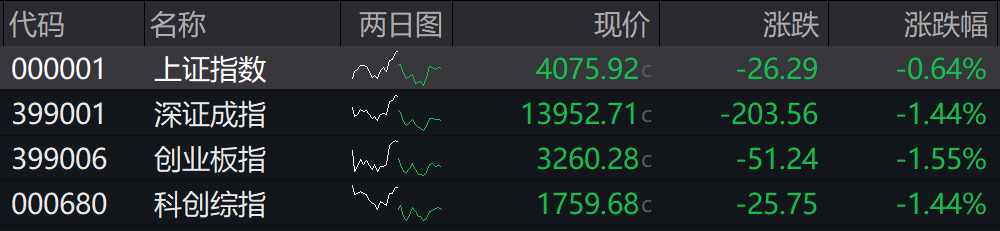
2月5日,A股市场整体下跌。 截至收盘,上证指数收报4075.92点,下跌0.64%,深证成指收报13952.71点,下跌1.44%,创业板 指数收报3260.28点,下跌1.55%,北证50指数下跌2.03%。 1. A股市场全天主力资金净流出579.46亿元 今日A股市场主力资金开盘净流出229.06亿元,尾盘净流出56.76亿元,全天净流出579.46亿元。 | | | 沪深两市近五日主力资金流向情况(亿元) | | | | --- | --- | --- | --- | --- | | 日期 | | 净流入金额 开盘净流入 | | 尾盘净流入 超大单净买入 | | 2026-2-5 | -579.46 | -229.06 | -56.76 | -314. 15 | | 2026-2-4 | -591.69 | -303.66 | 2. 50 | -326. 41 | | 2026-2-3 | 16.49 | 50. 22 | 20. 19 | 105. 03 | | 2026-2-2 | -539.77 | -143. 20 | -157. 11 | -384. 36 | | 2026-1-30 | ...

悬崖上的永辉
凤凰网财经· 2026-02-05 13:07
Core Viewpoint - Yonghui Supermarket has reported a projected net loss of 2.14 billion yuan for 2025, marking a 45.6% year-on-year increase, and has faced losses for five consecutive years, raising concerns about its future amidst significant operational strategy adjustments [2][7]. Group 1: Company Background and Growth - Yonghui Supermarket was founded in 1995 by Zhang Xuansong and Zhang Xuanning, starting with a micro-profit model and officially launching the Yonghui brand in 1998 [3]. - The company gained momentum in 2000 by capitalizing on the "Agricultural Reform Supermarket" policy, leading to rapid growth and recognition as a pioneer in the sector [3]. - By 2010, Yonghui became the first fresh food stock listed on the Shanghai Stock Exchange, and by 2020, it achieved a record revenue of 93.2 billion yuan, marking its entry into the "thousand-store era" [6]. Group 2: Recent Challenges and Strategic Shifts - Despite its past successes, Yonghui has entered a prolonged period of losses, with figures of 3.944 billion yuan in 2021, 2.763 billion yuan in 2022, and projected losses of 2.14 billion yuan for 2025 [6][7]. - The company initiated a comprehensive transformation called "Fat Reform" in 2024, aiming to revamp its business model by learning from competitors, but this has led to significant financial strain, including a direct loss of 1.2 billion yuan from store adjustments [6][10]. - As of 2025, Yonghui has deeply adjusted 315 stores and closed 381, indicating a significant restructuring effort [9]. Group 3: Market Dynamics and Competitive Landscape - The retail landscape has shifted dramatically, with the rise of e-commerce and community group buying, which has eroded Yonghui's traditional advantages in fresh food retail [10][11]. - The company is caught in a "middle ground," unable to compete on price like discount stores or offer unique experiences like premium retailers, leading to a decline in customer traffic [12]. - The competitive environment has seen traditional players like Walmart and Hema rise, while Yonghui has slipped in market rankings, highlighting the challenges faced by conventional supermarket models [18]. Group 4: Future Directions and Strategic Imperatives - Yonghui's transformation should focus on establishing itself as an indispensable shopping destination rather than merely imitating successful models [17][20]. - The company must identify unique value propositions that resonate with consumers, such as emotional connections, localized offerings, or enhanced shopping experiences, to regain market relevance [20]. - The path forward requires a deep understanding of consumer behavior and market changes, as traditional retail continues to evolve [20].
巨亏21.4亿,胖东来为何救不了“永辉们”?
3 6 Ke· 2026-02-05 12:01
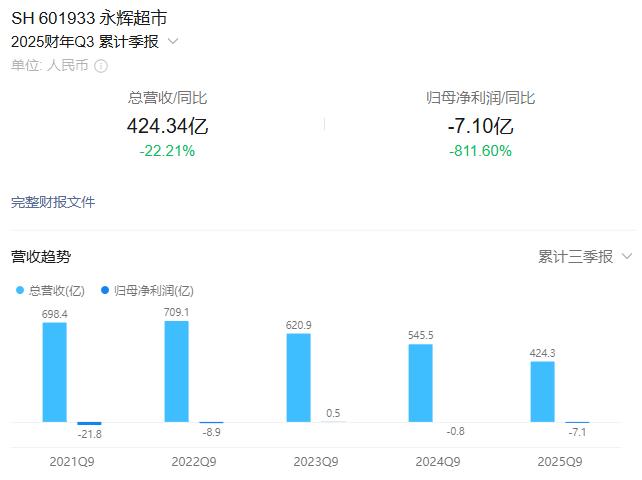
Core Viewpoint - The "Fat Reform" initiative by Yonghui Supermarket has resulted in significant financial losses, leading to widespread criticism and reevaluation of the company's strategies and capabilities in the competitive retail market [1][2]. Group 1: Financial Performance and Losses - Yonghui Supermarket reported a staggering loss of 21.4 billion yuan due to the "Fat Reform" initiative, raising concerns about its operational effectiveness [1]. - The company has faced continuous financial decline since 2018, with net profit dropping and cash flow deteriorating, indicating severe operational risks [2]. - From 2021 to 2025, Yonghui's cumulative losses exceeded 116 billion yuan, with annual losses of 39.44 billion yuan, 27.63 billion yuan, 13.29 billion yuan, 14.65 billion yuan, and 21.4 billion yuan respectively [3]. Group 2: Strategic Initiatives and Failures - The "Super Species" initiative aimed to merge fresh produce with dining but resulted in over 2.6 billion yuan in losses due to high operational costs and complex supply chain management [3]. - The Yonghui MINI community stores struggled to compete with online group buying, leading to the closure of nearly 400 stores within a year [3]. - Despite attempts at digital transformation and warehouse store models, Yonghui's efforts have not yielded the desired results, further complicating its financial situation [2][3]. Group 3: Market Position and Competitive Challenges - The "Fat Reform" was seen as a last-ditch effort for Yonghui, which has been unable to adapt effectively to the competitive pressures from online grocery services and community group buying [2]. - The company's aggressive imitation of the "Fat Donglai model" has been criticized for lacking a deep understanding of its core principles, leading to strategic misalignments [10][14]. - Yonghui's operational model, focused on scale and efficiency, clashes with the new consumer era's emphasis on experience and trust, highlighting a fundamental disconnect in its business strategy [16][18]. Group 4: Future Outlook and Recommendations - Yonghui's future success may depend on a balanced approach that combines a return to retail fundamentals with innovative model integration, focusing on enhancing single-store profitability and regional collaboration [17][18]. - The company must shift its focus from rapid imitation to long-term value creation, understanding that retail transformation is a continuous process rather than a quick fix [18].
收盘丨A股市场全天缩量调整 大消费板块逆势爆发
Di Yi Cai Jing· 2026-02-05 07:24
| 代码 | 名称 | 涨幅号 | 现价 | | --- | --- | --- | --- | | 000056 | 皇庭国际 | +10.11% | 2.07 | | 600828 | 茂业商业 | +10.04% | 7.78 | | 601116 | 三江购物 | +10.02% | 20.20 | | 600814 | 杭州解百 | +9.99% | 9.80 | | eooea3 | 东自集团 | +7.98% | 17.18 | | 605188 | 国光连锁 | +7.40% | 21.77 | | 200862 | 白大集团 | +6.38% | 15.50 | | 600838 | 上海九百 | +5.35% | 12.81 | | 600778 | 友好集团 | +5.28% | 8.38 | | 601933 | 永辉超市 | +4.63% | 4.75 | | 002187 | 广直股份 | +4.21% | 8.17 | | 603708 | 家家悦 | +3.60% | 13.53 | | 000759 | 中自集团 | +3.46% | 7.48 | | 600185 | 珠免 ...
大润发母公司发布公告:无法与CEO李卫平取得联系
Sou Hu Cai Jing· 2026-02-05 07:00
Core Viewpoint - The recent investigation involving Gao Xin Retail's CEO Li Weiping has raised concerns, but the company asserts that it does not impact its operations significantly [4][5]. Company Summary - Gao Xin Retail (06808.HK) announced that its board has been unable to contact CEO Li Weiping, who joined the company on December 1, 2025 [4]. - The company claims that the situation is unrelated to its business operations and that normal operations will be managed by Chairman Hua Yuneng during this period [4]. - Reports indicate that Li Weiping was taken by police for investigation, but Gao Xin Retail has denied these claims, stating he is currently at work [4]. Financial Performance - For the fiscal year 2026 mid-term results (ending September 30, 2025), Gao Xin Retail reported revenue of 30.502 billion RMB, a year-on-year decline of 12.1% [4]. - The company recorded a net loss of 127 million RMB, compared to a net profit of 210 million RMB in the same period last year [4]. - The decline in performance is attributed to a 12.4% decrease in core retail revenue, driven by intensified market competition and weak consumer spending, leading to an 11.7% drop in same-store sales [5]. Industry Context - The retail industry has seen increasing corruption issues, with several high-profile executives from various companies being investigated or arrested for corruption-related activities [6][7]. - The industry is undergoing significant reforms aimed at addressing these corruption issues, which may lead to short-term disruptions but are expected to enhance long-term competitiveness and consumer trust [8].