华为

Search documents
难以置信,芯片也开始涨价了
Xin Lang Cai Jing· 2026-01-27 01:16
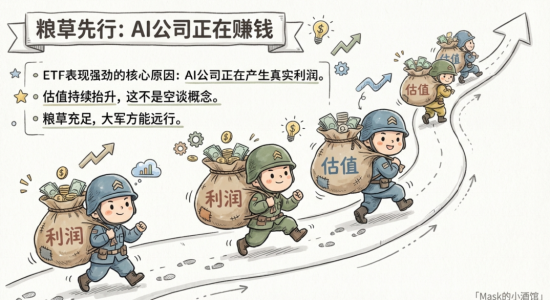
所以这个产品从发行到上市到现在,我是一直跟踪着的,看着 创业板人工智能ETF(159363,场外联接C:023408)的量价一路走高,规模从最初的7亿,一直升到 现在60多亿。这个ETF是双创赛道规模最大、流动性最佳的人工智能ETF。 来源:Mask的小酒馆 来说说科技。 我应该是全网第一批说创业板人工智能的博主了,如果大家还有记忆的话,我第一次说是在2025年7月 16号,文章还在'我去,新高了!',后面至少说了七八次。 我相信应该也有朋友在这个过程中有所收获了。 首先这个ETF表现得比较好的原因就是因为现在AI公司在赚钱,估值一直都在抬升,而这个ETF是把一 堆的AI公司打包在一起,芯片、光模块、算力基建、AI应用,几十上百家AI公司都包含了。 AI涨的时候能够分享涨幅,跌的时候也不会因为某一家暴雷而出现巨亏。 它的仓位配置很聪明:六成押注算力(光模块为主),四成押注AI应用。 什么意思?就是它不赌单一方向,而是把整条产业链都覆盖了——既有光模块、数据中心这些"卖铲 子"的算力公司,也有做AI应用落地的软件公司。AI应用火的时候能吃肉,光模块涨的时候也能跟上。 从数据看,它标的指数跑赢科创AI、人工智能等 ...

GDP连续37年居全国首位 “十五五”开局广东再拼经济
2 1 Shi Ji Jing Ji Bao Dao· 2026-01-26 23:25
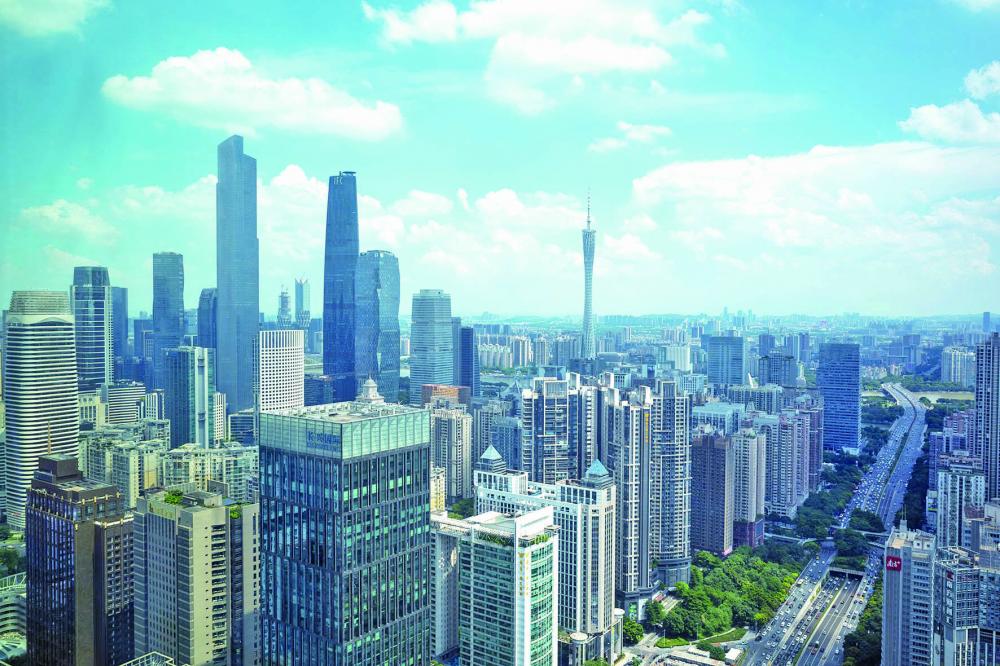
"2026年广东主要预期目标是,地区生产总值增长4.5%—5%,在实际工作中全力争取更好结果。" 1月26日,广东省十四届人大五次会议在广州开幕,省长孟凡利作政府工作报告,为2026年广东拼经济明确了具体方向。 2025年"十四五"收官之年,广东GDP达到14.58万亿,增长3.9%,总量连续37年居全国首位,在全球可排在12位,跻身全球第一梯队,并在财 政、人口、工业、外贸、科创等诸多细分经济指标上保持全国第一。可以看到,广东经济正在转型中加快蝶变,稳、优、新、活成为关键词。 2026年,面对复杂多变的发展环境、新一轮科技革命和产业变革加速突破带来的机遇和挑战,广东如何为"十五五"开好局、起好步?广东省人 大代表、中国(深圳)综合开发研究院副院长兼前海分院院长曲建认为,2026年广东拼经济,首先要做大增量,其中核心是做大能让经济动能 和结构发生改变的增量。 从广东省政府工作报告中不难窥见其着力点,在持续推动新兴产业发展壮大、培育未来产业,培育更多经济新支柱,打造具有全球影响力的产 业科技创新中心,加快培育和发展新的生产力的基础上,今年广东将重点扩大有潜能的消费、有需求的生产、有效益的投资。 "下一阶段,撬动 ...
德国波鸿汽车研究所主任杜登霍夫接受《环球时报》专访:欧洲汽车可以从“中国效率”中学习很多
Huan Qiu Wang· 2026-01-26 22:51
【环球时报驻德国特约记者 青木】近日,中国与欧盟就电动汽车案实现"软着陆",受到国际各界主流 媒体的广泛关注。中欧业界普遍认为电动汽车案"软着陆"将显著提振市场信心,为中欧汽车贸易投资合 作注入新的动力。与此同时,市场研究机构Dataforce初步数据显示,去年12月中国车企在欧洲的销量首 次突破10万辆,同比增长127%。 在此背景下,德国《西德意志报》报道称,德国波鸿汽车研究所主任、被业界誉为"汽车教父"的费迪南 德·杜登霍夫教授认为德国"应该更多转向中国",并表示"美国对我们很危险"。值此中欧汽车关系迎来 新发展节点之际,《环球时报》就相关话题专访杜登霍夫。 "两国产业优势可以结合起来" 环球时报:1月12日,中国商务部与欧盟委员会同步宣布了双方达成的重要共识。欧方正式发布《关于 提交价格承诺申请的指导文件》(简称《指导文件》),中国电动汽车企业可依据《指导文件》内容提 交价格承诺申请。您认为,这一进展将给中欧汽车产业合作带来哪些积极影响? 杜登霍夫:我们目前看到的情况是,中国电动汽车在德国和欧洲的售价远高于中国本土价格。因此,如 果欧盟取消关税并设立最低价格,对中国汽车制造商来说将是一项利好。德国和欧 ...
广货蝶变照见开放中国的发展钥匙
2 1 Shi Ji Jing Ji Bao Dao· 2026-01-26 22:23
Core Viewpoint - The evolution of "Guangdong goods" reflects China's modernization process and serves as a mirror of the country's open development journey, showcasing the transformation from traditional manufacturing to intelligent manufacturing and standard output [1][4][6] Group 1: Historical Context - In 1978, Guangdong began its journey with "processing with supplied materials," marking the start of its manufacturing industry and the rise of "Guangdong goods" [1] - Guangdong leveraged its geographical advantages and foreign investment to become a pioneer in China's reform and opening-up, establishing a foundation for its manufacturing brands [3] - The period from China's WTO accession in 2001 to the global financial crisis was a golden era for international trade, during which Guangdong capitalized on external opportunities for significant growth [3] Group 2: Transformation and Upgrading - Entering the new century, Guangdong shifted from "scale expansion" to a "quality revolution," exemplified by companies like Huawei and Dongguan's industrial upgrades [4] - The evolution of Guangdong goods is characterized by an ascent in the value chain, gaining more control over the industrial chain [4] - Guangdong is currently undergoing a transformation from "manufacturing" to "intelligent manufacturing," with significant advancements in smart technologies and automation [4][5] Group 3: Innovation and Competitiveness - The Guangdong-Hong Kong-Macao Greater Bay Area has fostered a robust innovation ecosystem, integrating research, technology, and commercialization [5] - Increased R&D investment has led to the emergence of globally competitive enterprises in sectors like 5G, new energy vehicles, and drones, laying a solid foundation for standard output [5] - Guangdong's manufacturing ecosystem, characterized by a dual advantage of "digital intelligence + mechanical engineering," enables it to meet diverse global demands [5] Group 4: Future Outlook - The story of Guangdong goods is a narrative of innovation, openness, and practical efforts, with the potential for continued growth and adaptation in the global market [6] - As "Guangdong goods" evolve into "new national goods," they symbolize the synchronization of Guangdong's growth with national development [6]

汽车业加快向质量提升转型
Jing Ji Ri Bao· 2026-01-26 22:01
Group 1: Industry Growth and Trends - By 2025, China's automotive production and sales are expected to exceed 34 million units, setting a new historical record, with the industry transitioning from "scale expansion" to "quality improvement" during the 14th Five-Year Plan period [1] - The automotive industry has shown strong resilience and vitality, with electric and intelligent vehicles accelerating integration, leading to a dominant position in the market [1] - New energy vehicles (NEVs) are projected to account for over 50% of new car sales in China by 2025, with production and sales reaching 16.626 million and 16.49 million units respectively, marking a year-on-year growth of 29% and 28.2% [1] Group 2: Technological Advancements - The Ministry of Industry and Information Technology has approved the first batch of L3-level conditional autonomous driving models, marking a significant step towards commercial application [2] - The sales of passenger vehicles equipped with city Navigation Assisted Driving (NOA) features reached 2.5373 million units from January to November 2025, with a market share of 81.1% for domestic brands [2] - NOA technology is seen as a crucial link between advanced driver assistance and fully autonomous driving, enhancing user experience and showcasing the value of intelligence [2] Group 3: Collaboration and Global Influence - Global automotive brands are increasingly collaborating with leading domestic third-party suppliers to achieve breakthroughs in intelligent driving, with companies like Mercedes-Benz and BMW implementing city NOA functions [3] - Chinese technology firms such as Huawei and Momenta are providing "Chinese solutions" for the global intelligent driving industry, attracting partnerships from renowned automotive brands worldwide [3] Group 4: Green Consumption Initiatives - The "old-for-new" policy is expected to activate green consumption, with 18.3 million vehicles being replaced from 2024 to 2025, nearly 60% of which will be NEVs [4] - The policy aims to streamline the entire lifecycle from scrapping to recycling, with an annual growth rate of 45.8% in scrapped vehicle recovery projected [4] - The implementation of subsidies for vehicle replacement and scrapping is expected to stabilize market expectations and boost automotive consumption [5] Group 5: Market Dynamics and Policy Changes - The adjustment of NEV purchase tax incentives, along with the "old-for-new" policy, is shifting the competitive landscape of the automotive market from price competition to value competition [5] - The Ministry of Industry and Information Technology and other agencies have called for a halt to disorderly price wars in the NEV sector, promoting a fair market order [6] - The automotive industry is encouraged to explore high-tech, high-profit, and high-value development models, moving away from reliance on scale and low profitability [6] Group 6: Digital Transformation and Future Directions - The automotive industry's digital transformation faces challenges such as insufficient data application and slow transformation of small and medium-sized parts manufacturers [7] - Recommendations include activating data value and promoting a dual-driven approach of "platform + scenario" to enhance data integration across the industry [7] - Emphasis is placed on technological innovation to maintain China's competitive advantage in the global NEV market, focusing on breakthroughs in solid-state batteries and efficient drive technologies [7]
有料财经:2026年有色金属行业具有十倍股增长潜力的上市公司
Sou Hu Cai Jing· 2026-01-26 16:51
Core Viewpoint - The article discusses the potential for "ten-bagger" stocks in the A-share market, particularly within the non-ferrous metals industry, highlighting companies that may see significant price increases by 2026 [2][4]. Group 1: Characteristics of Ten-Bagger Stocks - Ten-bagger stocks are characterized by being small in market capitalization, low in price, fast-growing, and possessing strong capabilities [4]. - The focus is on lesser-known metals rather than traditional ones like copper, aluminum, zinc, lead, and tin [4]. Group 2: Key Areas of Investment - Rare earth permanent magnet materials, essential for electric vehicles and drones, are highlighted as strategic high-tech materials, with China controlling 90% of global processing capacity [6]. - Semiconductor target materials, including high-purity aluminum, titanium, and copper, are crucial for chip production, with a purity requirement of over 99.999% [8]. - Lithium battery recycling and new energy storage materials are emerging opportunities, especially with the anticipated influx of used electric vehicle batteries [8]. Group 3: Specific Companies with Potential - Guiyan Platinum Industry is noted for its hydrogen energy catalyst, with a projected profit growth of 50% by 2025 and a market cap of over 6 billion [10]. - Dongfang Tantalum Industry is recognized for its tantalum production, essential for 6G communication filters, with a projected profit doubling by 2025 and a PE ratio of 20 [12]. - Yunhai Metal specializes in magnesium-lithium alloys, crucial for lightweight electric aircraft, with a market cap under 5 billion and a projected profit increase of 65% by 2025 [12]. - Jiangfeng Electronics is a leading domestic supplier of high-purity metal targets, with a projected profit growth of over 80% by 2025 and a PE ratio of 22 [14]. Group 4: Market Dynamics and Trends - There is a strong demand for domestic materials from major tech manufacturers like Ningde Times and Huawei, indicating a shift towards local sourcing [17]. - Institutional investors are increasingly buying shares in Guiyan Platinum Industry, Dongfang Tantalum Industry, and Yunhai Metal, with net purchases exceeding 200 million [17]. - The article warns of potential price volatility in rare earths and other minor metals, suggesting caution in trading strategies [19]. Group 5: Investment Strategy - The article emphasizes the importance of identifying companies with a market cap below 8 billion, a PE ratio under 25, and profit growth exceeding 40% [21]. - The focus for 2026 is on sectors like chips, batteries, drones, and AI servers, rather than traditional metals [21].




公司深度 | 伯特利: 线控底盘领军者 人形机器人未来的中坚力量【国联民生汽车 崔琰团队】
汽车琰究· 2026-01-26 16:12
Core Viewpoint - The company is a leading player in the domestic automotive brake system market, focusing on the development of intelligent chassis systems, including mechanical brakes, electric control, mechanical steering, and lightweight structural components, aiming for a comprehensive line control chassis solution [2][8]. Product Development - The company has established a comprehensive product layout, transitioning from mechanical components to electronic and intelligent systems, including electronic parking brakes (EPB), electronic stability control (ESC), and line control braking systems (WCBS) [17][26]. - The company has expanded its product offerings to include active suspension systems and has made strategic acquisitions to enhance its capabilities in electric steering systems [3][17]. Client Structure - The client base has evolved from traditional domestic brands like Chery and Geely to include new energy vehicle manufacturers and global partners such as Nissan and Ford, reflecting a shift towards more advanced electric control systems [2][20]. - The company has established a stable client structure with over 50 clients globally, including major players in the automotive industry, and is continuously expanding its international presence [31][34]. Globalization Strategy - The company has implemented a three-pronged internationalization strategy, establishing manufacturing bases in China, Mexico, and Morocco to enhance its global supply chain and reduce costs [36][38]. - The Mexican facility, operational since 2023, aims to produce 4 million parts annually, while plans for a Moroccan facility are set to begin in 2024, targeting the European and North African markets [38][40]. Financial Performance - The company has demonstrated robust revenue growth, with a projected revenue of 128.75 billion yuan in 2025, increasing to 208.31 billion yuan by 2027, alongside a steady rise in net profit [6][40]. - The gross margin is expected to improve as new products scale up, with a focus on enhancing profitability through the integration of advanced technologies [41][44]. Technological Capabilities - The company has built a strong technological foundation, focusing on precision manufacturing, system integration, and the development of advanced electronic control systems, which are critical for the automotive industry's shift towards electrification and automation [46][52]. - Continuous investment in research and development has led to significant advancements in product offerings, including the successful mass production of line control braking systems [65][66]. Future Outlook - The company is positioned to leverage its technological expertise and strategic vision to transition from a domestic leader to a global player in the automotive components sector, particularly in the intelligent chassis and robotics markets [11][14].


继“DeepSeek时刻”之后,是什么让“中国时刻”持续刷屏?
Sou Hu Cai Jing· 2026-01-26 16:06
一年前,恰是这个周一,深度求索(DeepSeek)公司R1大模型以高性能和低训练成本震撼世界,外媒 称之为"DeepSeek时刻"。 DeepSeek的横空出世,可谓2025年中国科技创新的"开场戏"。近期,国际机构密集发文盘点过去一年全 球科技发展,来自中国的成果格外耀眼。 在基础研究领域,2025年底,国际顶尖学术期刊《科学》公布"2025年度十大科学突破",中国在可再生 能源领域的突破,以及破解"丹尼索瓦人"长相之谜、发现水稻耐高温"基因开关"等成果纷纷入选。 在人工智能(AI)领域,据麻省理工学院等机构2025年11月底统计,DeepSeek、千问等中国开源模型 下载量已占全球总量的17%,超越美国位居全球第一。今年1月,微软发布报告称,DeepSeek在俄罗 斯、白俄罗斯、伊朗、非洲等发展中国家的普及率呈"爆炸式"增长。 在与AI算力息息相关的先进芯片领域,全球知名金融研究机构伯恩斯坦研究公司预测,2026年华为等 本土企业将占据中国AI芯片市场80%的份额,英伟达的市场份额将降至8%。 过去一年,中国科技创新因何能让世界瞩目? 这源于实现高水平科技自立自强的决心与努力。在美国先进芯片的封锁禁运下, ...


未来的机会在这里!任泽平带你看前沿科技
泽平宏观· 2026-01-26 16:05
以下文章来源于泽平宏观商学 ,作者泽平宏观商学 泽平宏观商学 . 前沿科技企业实战研学 读万卷书行万里路 2025 年 12 月 用心打造最有品质的实战研学。读万卷书,行万里路。把教室搬到世界上最优秀的企业, 请最优秀的企业家和科学家讲课。顺势而为,把握机遇。正心正念,坚持做长期正确的 事! 我们期待与更多的企业家朋友们携手同行,共赴 2026 实战研学之旅! 泽 ZEP 平 INGM 宏 ACR 观 O RE 商 SEAR 学 CH 1-6月日程安排 · 2月27日 北京 国内头部智驾科技企业 人形机器人 年研学安 型成 11月4日-11日 洛杉矶、拉斯维加斯、旧金山 CES、英伟达、特斯拉 谷歌、罗宾汉、playground 深度探访 : 任泽平博士带领企业家学员 ,深入 科技上市公司、AI独角兽 、 专精特新标杆、新经济引擎企业,零距离探访科技工厂、尖端实验室、创新孵化基 地 , 见证前沿技术从实验室到产业化的全链条发展。 斯坦福大学、伯克利大学 3月27日-28日 苏州 追觅科技、魔法原子、灵猴机器人 闭门投研会-2026 Al 的中国力量(一) 3月29日 上海 长三角校友会 4月20日-21日 香 ...

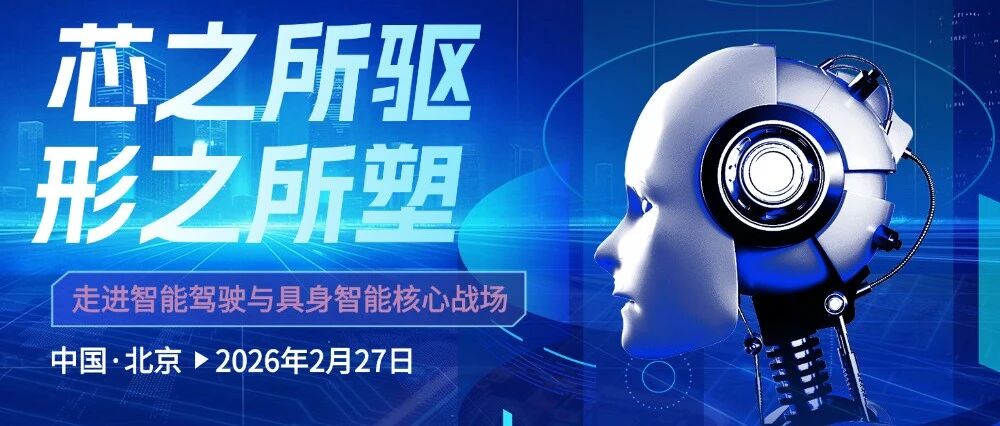
2月北京站:头部智驾企业“盲盒”、天工机器人——芯之所驱 形之所塑
泽平宏观· 2026-01-26 16:05
以下文章来源于泽平宏观商学 ,作者泽平宏观商学 泽平宏观商学 . 前沿科技企业实战研学 读万卷书行万里路 014> 盲盒:头部智能驾驶企业 上午 头部智能驾驶企业 当前正处于从 L2 到 L4 自动驾驶迭代、从汽车向 通用机器人跨越的历史拐点。智驾芯片及解决方案市 场正以接近 50% 的年复合增长率奔向万亿规模。公司 凭借国产替代与技术普惠的双重红利,占据了中国智 驾市场的"半壁江山"。 在物理AI加速落地浪潮与国产替代加速的双重β 下,公司作为国产中大型算力芯片头部企业及具备软 硬一体能力的供应商,推动汽车从"功能"迈向"智 能",让机器更懂人类,让出行更安全、更自由。 天工机器人:北京人形机器人创新中心 国家战略级平台,定义全栈自主新高度 北京人形机器人创新中心于2023年11月成立,是 国内首个省级人形机器人创新中心,也是国内首家具 身智能软硬件全栈科技公司,全面覆盖人形机器人大 脑、小脑、本体与数据的研发攻关并且构建了良好的 开源生态。 目前已推出自主研发的全国产化"具身天工"系 列人形机器人和"天轶"系列轮式人形机器人,可覆 盖工业制作、特种作业、物流分拣、商业导览等多元 场景,在人形机器人半马、运 ...