华为

Search documents
“洼地”组团,能否撑起长三角新一极?
Mei Ri Jing Ji Xin Wen· 2026-01-26 15:58
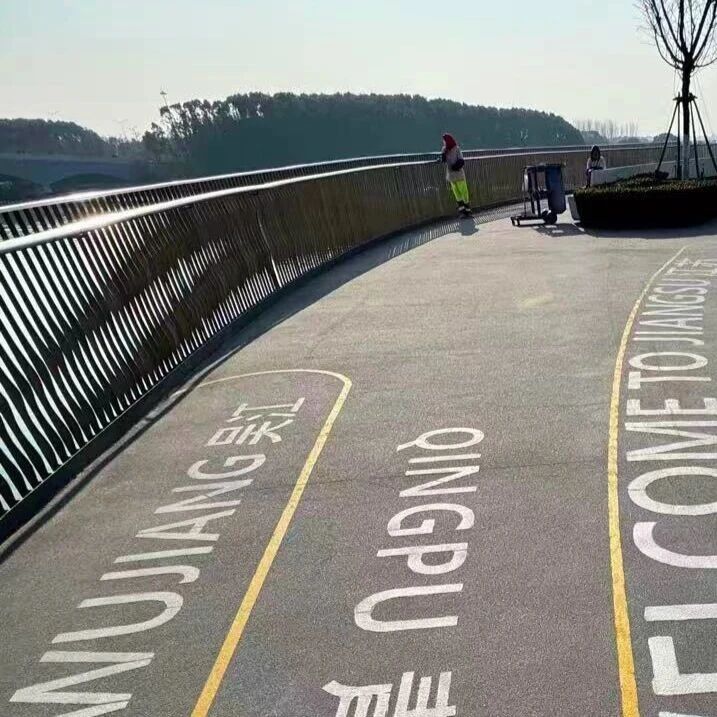
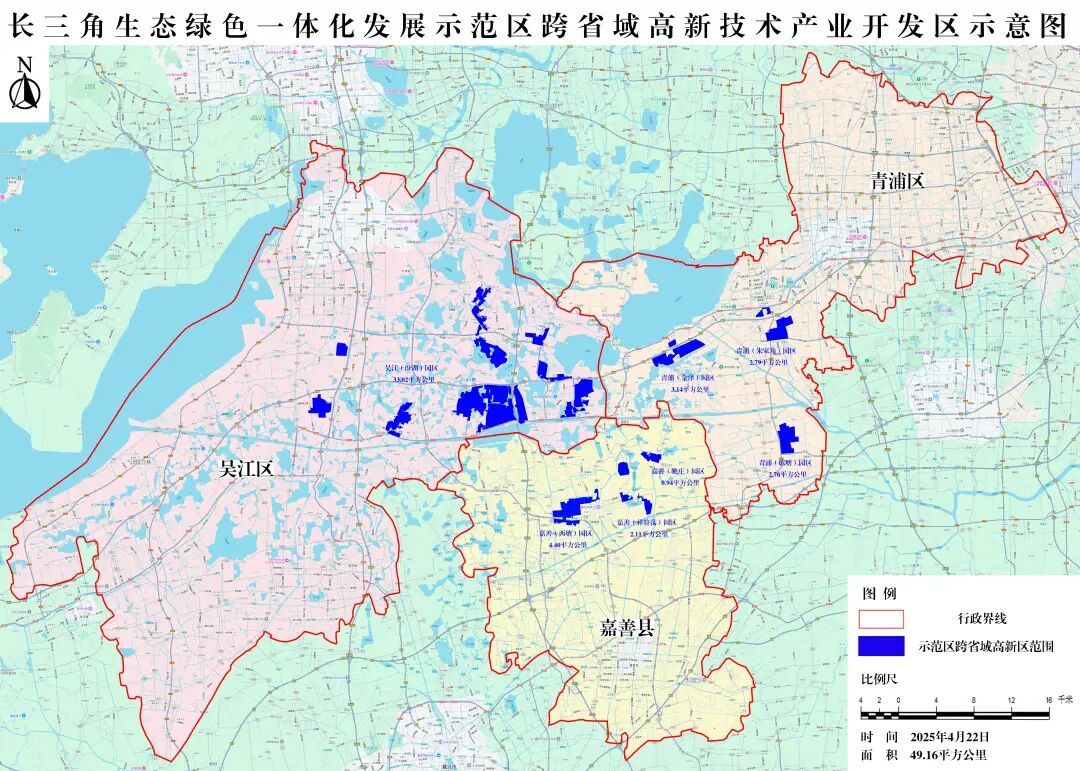
Core Viewpoint - The Long Triangle Ecological and Green Integration Development Demonstration Zone has made significant progress with the recent approval of the cross-provincial high-tech industrial development zone, aiming to become a national-level high-tech zone, which reflects a new attempt to break through its economic challenges and contribute to cross-provincial collaborative development in China [2][3][11]. Group 1: Development and Structure - The newly named Long Triangle Qingwu Jia High-tech Industrial Development Zone covers an area of 49.16 square kilometers and consists of three parks in Shanghai, Jiangsu, and Zhejiang, which have all received provincial-level approvals [2]. - The demonstration zone was established in 2019 and has been recognized as a key area for the integration of the Yangtze River Delta, despite being historically viewed as an economic "lowland" [3][4]. - The zone's focus on "ecological green" development distinguishes it from traditional industrial parks, emphasizing sustainable growth rather than large-scale urban construction [4][8]. Group 2: Economic Performance - From 2019 to 2024, the demonstration zone's per capita GDP is projected to grow at an annual rate of 6.9%, reaching 154,512 yuan, while the industrial output value is expected to grow at 8.2% annually, reaching 934.39 billion yuan [17]. - The industrial investment is anticipated to grow at an annual rate of 7.2%, reaching 49.27 billion yuan, surpassing the average levels of the Yangtze River Delta [17]. Group 3: Strategic Goals and Challenges - The demonstration zone aims to achieve national-level high-tech status by 2025, with a focus on enhancing approval powers and reducing project costs to improve development efficiency [11][13]. - The strategic layout includes a focus on integrated circuit industries and new technologies such as AI, 5G, and big data, which align with the region's growing electronic information and intelligent computing industries [14]. - Challenges remain, including the need for a top-level coordination mechanism to achieve collaborative technological innovation and equitable benefit-sharing among stakeholders [22][23].

继续看好光纤光缆和AIDC
2026-01-26 15:54
Summary of Conference Call Notes Industry and Company Involved - The focus is on the **fiber optic cable** and **AIDC (Artificial Intelligence Data Center)** sectors, with specific mention of companies like **Changfei Fiber**, **Hengtong Optic-Electric**, **Zhongtian Technology**, and **Fenghuo Communication**. Core Points and Arguments - **Fiber Optic Price Surge**: The price of fiber optics has significantly increased due to rising demand from operators and AI, particularly driven by overseas data center construction for the 657A1 type fiber. The supply remains tight due to low willingness from domestic and foreign manufacturers to expand production and a contraction in supply caused by bankruptcies in the industry [1][4][5]. - **Impact of AWS Price Increase**: AWS's decision to raise GPU capacity block prices indicates a potential increase in AI cloud infrastructure costs, which is favorable for the domestic AI industry chain. The H200 incident's impact is diminishing, and the development of domestic computing cards is driving AIDC demand [1][8]. - **AIDC Market Dynamics**: Recent changes in the AIDC sector include some companies increasing delivery volumes, leading to a tight supply-demand balance. If demand continues to grow and energy consumption is strictly controlled, prices may rise. Notably, AIGC prices in Hong Kong have surged significantly, with some companies receiving demand guidance for 2027 that is several times that of 2024 and 2025 [1][11]. - **Investment Recommendations**: Short-term investment suggestions prioritize AI giants (Alibaba, Tencent, ByteDance), followed by AIDC (data centers, liquid cooling, power supply), then network components (switches, chips, optical modules, copper connections), and finally computing (chips, servers, server power supplies) [1][13]. Other Important but Potentially Overlooked Content - **Performance of Related Companies**: Companies like Changfei Fiber, Hengtong Optic-Electric, Zhongtian Technology, and Fenghuo Communication are expected to benefit significantly from the current price increases in fiber optics, with leading firms' cost prices between 14-15 yuan and second-tier firms at 17-18 yuan, indicating substantial profit margins [1][6]. - **Monitoring Factors for Fiber Market Trends**: Key factors to watch include upcoming telecom procurement and the impact of AI on the prices of 652D and 657A1 fiber types. Continuous tracking of the industry chain is crucial due to the unpredictable nature of raw material prices [1][7]. - **Future AIDC Developments**: The growth of domestic computing cards is directly linked to increased demand for data center infrastructure, with major brands like Huawei and Alibaba having significant needs. The successful distribution of H200 cards could further benefit the domestic AI and computing chains [1][10]. - **Investment Focus in Communication Sector**: Investors should pay close attention to the satellite communication sector, AIDC, domestic AI chains, and fiber optic sectors, as these areas are experiencing significant short-term marginal changes [1][14].


算力即国力-云服务上涨在即-看好国内基础资源产业链需求
2026-01-26 15:54
Summary of Conference Call Records Industry Overview - **Industry Focus**: Cloud services and related technology resources in China - **Key Trends**: Expansion of demand and price increases across the cloud technology resource industry chain, driven by major promotions during the Spring Festival and rising costs in upstream materials [2][4] Core Insights - **Cloud Services Demand**: Significant growth in demand for reasoning resources, with expectations of price increases in CPU, IDC, and computing rental segments [1][3] - **CPU Market Dynamics**: Continuous price increases in CPUs due to rising upstream material costs, with high-end CPU demand accelerating, particularly for AGX development. Domestic CPU market share is increasing due to accelerated domestic substitution, with Haiguang Information highlighted as a key player [5][6] - **Domestic Computing Market**: AI development is driving the localization of computing power, with first-tier manufacturers like Huawei and Cambricon securing substantial orders. Second-tier manufacturers also have opportunities, with Haiguang Information and Cambricon noted as leading companies [6] - **Storage Industry Changes**: Increased storage consumption due to AI model training, with server memory costs rising. Storage prices are expected to rise significantly from the second half of 2025, remaining tight until 2027. Longxin and Changcun are highlighted as investment opportunities post-IPO [7][8] - **Norflash Market Growth**: Increased capacity for Norflash products in AI and general servers, benefiting companies like Zhaoyi Innovation and Puran [9] Additional Insights - **ITC Sector Opportunities**: The ITC sector is expected to see a historical high in bidding volumes in 2026, with major companies like Alibaba and Tencent initiating large-scale tenders. Recommended companies include Runze and Aofei, which have strong fundamentals and growth potential [11][12] - **Liquid Cooling Market**: The domestic liquid cooling market is anticipated to grow significantly in 2026, driven by the introduction of domestic super-node products. Yingweike is recommended for its technological and brand advantages [13] - **Semiconductor Equipment Opportunities**: The semiconductor equipment sector is benefiting from rising storage prices and domestic substitution needs, with companies like North Huachuang and Zhongwei recommended for their strong order prospects [14] - **Mechanical Equipment Demand**: Increased demand for mechanical equipment related to ITC construction, with recommendations for companies like KOTAI Power and Yuchai Power [15] - **Power Supply Developments**: The domestic power supply market is evolving with a focus on UPS and HVDC systems, with companies like Huawei and Keda Data holding significant market shares [16][17] - **Data Center Components**: Growth opportunities for data center components, particularly low-voltage circuit breakers, are expected as market demand rises, especially with the shift to 800V DC platforms [18]

当前时点液冷投资有何变化
2026-01-26 15:54
Summary of Liquid Cooling Industry Conference Call Industry Overview - The domestic liquid cooling market is experiencing significant demand, driven by major players like ByteDance, Alibaba, and Huawei investing heavily in AI, with capital expenditures expected to nearly double, making liquid cooling a core growth driver [1][4] - The overseas liquid cooling demand for NV is projected to reach 50 billion RMB by 2026, while overseas CSP manufacturers' demand is estimated at 30-40 billion RMB, indicating a substantial gap as domestic liquid cooling revenue accounts for less than 10% of the market [5][6] Key Developments - NV launched the Ruby platform, which utilizes a 100% liquid cooling solution. Key changes include the introduction of microchannel cold plates and CPU manifolds, with a preference for high thermal conductivity materials like oxygen-free copper or copper alloys. Welding quality and strength are critical, and flow channel processing must balance precision and cost [1][7] - The design of the manifold under the Ruby architecture has significantly changed, with increased pipe diameters and integrated valves and sensors aimed at enhancing control stability and reducing leakage risks, raising technical requirements for suppliers [1][7] Investment Insights - Investors should focus on the development of domestic supply chains, the core changes associated with the Ruby platform, and the opportunities arising from the trend of mainland OEM expansion, as domestic manufacturers are poised to benefit from the limitations faced by Taiwanese and foreign assets [1][8] - Key recommended stocks include Yingwei and Feilong, with Feilong being a core supplier for Google, NV, and Huawei, expected to contribute over 1 billion RMB in revenue from Google orders this year [9] - Other notable companies include Yinvike, Yinlun, Minshi, and Xingrui Technology, which have advantages in product layout and customer resources, actively pushing for order fulfillment and likely to benefit from market growth [2][10] Market Performance - The liquid cooling sector has performed well recently, particularly driven by the AI computing segment. Since December, the sector's stock prices have stabilized, but new growth opportunities have emerged with the rotation of core sectors, particularly in January, where domestic chains and NV chains have shown marginal catalysts [3]
营收增加78.5%股价却腰斩,估值仅剩3亿美金的华米撑不起高端野心
Xin Lang Cai Jing· 2026-01-26 15:15
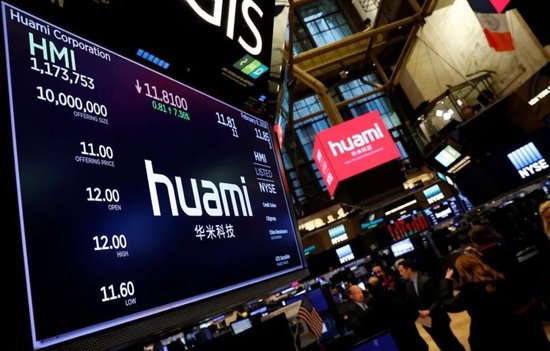
Core Viewpoint - Huami Technology's ambition for high-end market penetration faces significant challenges due to its inherent "cost-performance gene" and various operational shortcomings, including product quality issues and strategic inconsistencies [4][16][35]. Financial Performance - In Q3 2025, Huami reported revenue of $75.8 million, a year-on-year increase of 78.5%, marking the fastest growth in three years [4][21]. - Despite the revenue growth, the stock price fell by 47.81% from its peak of $42.00 on October 28, 2025, to $21.92, resulting in a market capitalization of $315 million and a TTM price-to-earnings ratio of -5.3 [4][21]. Product Challenges - Huami's high-end products, such as the Amazfit GTR3 Pro, have faced significant quality control issues, including widespread touchscreen failures and inadequate after-sales support, undermining consumer trust [5][25]. - The company's attempt to position itself in the high-end market is hindered by a lack of differentiation and reliance on low-cost products, leading to a muddled brand perception [8][26]. Strategic Issues - Huami's strategy oscillates between "de-S Xiaomi" and reliance on cost-performance, resulting in a lack of coherent direction for its high-end ambitions [11][30]. - The company has not effectively capitalized on its high-end product launches, with the new T-Rex 3 Pro contributing minimally to overall sales [31]. Market Positioning - Huami's high-end offerings lack unique technological advantages compared to competitors like Apple and Huawei, which have established strong market positions through ecosystem integration and specialized technology [28][35]. - The brand's marketing efforts have not successfully communicated high-end value, focusing instead on technical specifications that reinforce a low-cost image [13][33]. Compliance and Regulatory Risks - Huami faces compliance risks in overseas markets, particularly following a 337 investigation initiated by the U.S. International Trade Commission, which could impact its ability to sell products in the U.S. market [9][27]. Future Outlook - Management projects a Q4 2025 revenue growth of 38% to 45%, but this represents a significant slowdown from Q3, raising concerns about the sustainability of growth and the ability to invest in high-end initiatives [14][32]. - Without a strategic pivot and resolution of core issues, Huami risks remaining confined to its identity as a "band manufacturer," with high-end aspirations remaining elusive [36].
广东GDP连续37年居全国首位
21世纪经济报道· 2026-01-26 15:06
记者丨 郑康喜 编辑丨蒋韵 "2026年广东主要预期目标是,地区生产总值增长4.5%—5%,在实际工作中全力争取更好结 果。" 1月26日,广东省十四届人大五次会议在广州开幕,省长孟凡利作政府工作报告,为2026年广 东拼经济明确了具体方向。 2025年"十四五"收官之年,广东GDP达到14.58万亿,增长3.9%,总量连续37年居全国首位, 在全球可排在12位,跻身全球第一梯队,并在财政、人口、工业、外贸、科创等诸多细分经济 指标上保持全国第一。可以看到,广东经济正在转型中加快蝶变,稳、优、新、活成为关键 词。 "广东经济发展有没有信心,关键还是看结构。产业结构对竞争力和未来发展趋势会产生重要 作用。"广东省社科院原院长王珺在接受南方财经记者采访时谈到。 截至2025年前三季度,广东高技术制造业增加值占规上工业比重达33.8%,较五年前提高2.7 个百分点,而全国这一数字是17.1%。 2026年,面对复杂多变的发展环境、新一轮科技革命和产业变革加速突破带来的机遇和挑战, 广东如何为"十五五"开好局、起好步?广东省人大代表、中国(深圳)综合开发研究院副院长 兼前海分院院长曲建认为,2026年广东拼经济,首先 ...

CPU逻辑梳理
傅里叶的猫· 2026-01-26 14:42
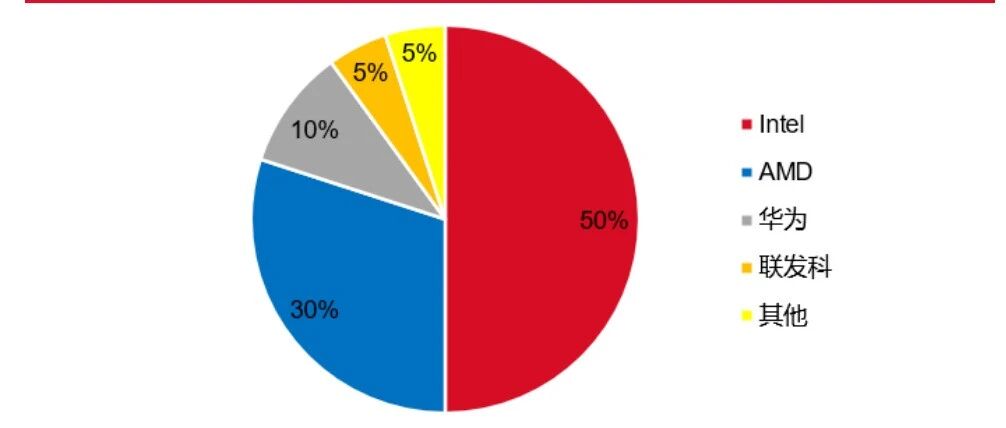
Core Viewpoint - The article discusses the recent trends in the CPU market, particularly focusing on price increases driven by demand from AI applications and supply constraints in semiconductor manufacturing [1][2][3]. Industry Information - The demand for CPUs is significantly influenced by the rise of Agentic AI, which requires external CPUs, leading to an increase in performance requirements for CPUs used in servers [2]. - Supply-side constraints include TSMC's limited capacity prioritizing AI chips, and shortages in general semiconductor equipment and materials, which indirectly affect CPU manufacturers' production capabilities [2]. - Recent price increases in server CPUs are attributed to heightened demand from AI applications, although the specific reasons for sudden shortages in certain models remain unclear [3]. CPU Classification - CPUs can be categorized based on instruction sets, with x86 and ARM being the most recognized. The x86 architecture dominates the desktop and server markets, while ARM leads in mobile devices [5][6]. - The x86 architecture is characterized by its complex instruction set and strong compatibility, making it suitable for servers and workstations, while ARM focuses on low power consumption and is prevalent in mobile devices [6][7]. Market Landscape - In the global market, Intel and AMD dominate the server and desktop CPU sectors, with x86 architecture expected to hold a 70.35% market share by 2025. AMD's market share is projected to rise to 36.1% in the server CPU market, while Intel's share will decrease to 55.2% [8][9]. - The domestic CPU market mirrors this trend, with Intel and AMD holding approximately 80% of the market share, while domestic manufacturers like Huawei and Loongson are making significant progress [9]. Domestic CPU Market - In the domestic market, Huawei's Kunpeng and Haiguang lead the first tier with market shares of 26.15% and 20.24%, respectively. Loongson and Feiteng have also secured notable positions in the government and enterprise sectors [13].
深度 | 从高梵进杭州大厦,看中国奢侈品市场的规则改变
Sou Hu Cai Jing· 2026-01-26 13:47
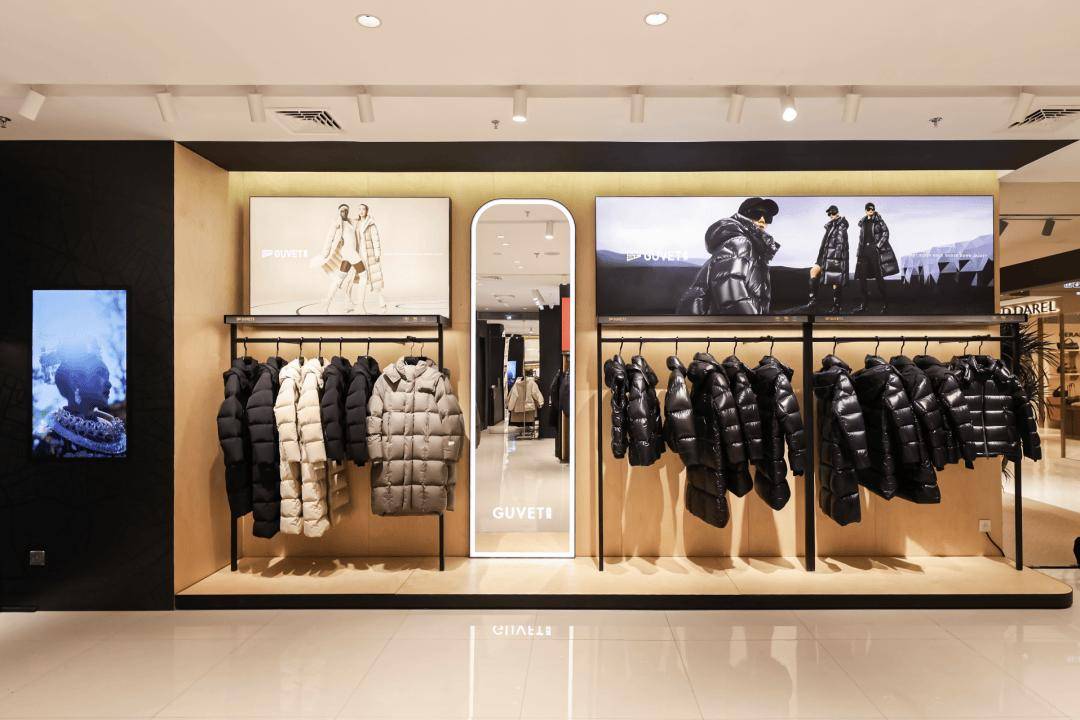
Core Viewpoint - The high-end goose down brand Gaofan has opened a boutique store in Hangzhou Tower, marking a strategic shift towards high-end channels and attracting significant market attention [1][5]. Group 1: Market Context - Hangzhou Tower, a leading luxury shopping destination in China, achieved sales of 13 billion in 2023, housing numerous international brands like LV and Hermes [1][4]. - Gaofan's entry into Hangzhou Tower contrasts with the trend of brands opting for chain malls for rapid expansion, indicating a focus on quality over speed [1][5]. Group 2: Brand Strategy - Gaofan aims to establish itself as a visible Chinese high-end brand, emphasizing sustainable growth and profitability rather than rapid expansion [6][19]. - The brand's strategy includes optimizing key performance indicators such as average transaction value and customer retention rates to ensure each store serves as a local brand beacon [6][19]. Group 3: Product Development - Gaofan has positioned itself in the high-end goose down market, leveraging unique product features and a strong supply chain, including partnerships with top-tier suppliers and research institutions [8][9]. - The brand has developed a significant number of patents in the down jacket industry, focusing on advanced technologies like water resistance and antibacterial properties [8][9]. Group 4: Consumer Engagement - The evolving consumer landscape, particularly among Gen Z and new middle-class consumers, shows a shift towards valuing quality, cultural identity, and emotional connection over mere brand logos [15][16]. - Gaofan's integration of traditional Chinese craftsmanship with modern design aims to resonate with consumers seeking both functionality and cultural depth [11][19]. Group 5: Industry Implications - The entry of Gaofan into high-end retail spaces signifies a shift in the dynamics between domestic brands and luxury retailers, moving towards a more equal dialogue [14][17]. - The transformation in consumer preferences is prompting high-end malls to adapt their strategies, focusing on brands that align with consumer values rather than traditional hierarchies [17][18]. Group 6: Long-term Vision - Gaofan's journey reflects a broader trend of Chinese brands maturing and seeking to fulfill unmet consumer needs in the high-end market, moving beyond the "cheap alternative" perception [19][20]. - The brand's long-term strategy emphasizes the importance of storytelling and cultural representation in establishing a global presence [9][11].
徕卡要被卖掉了,中国公司或将接盘
3 6 Ke· 2026-01-26 13:19
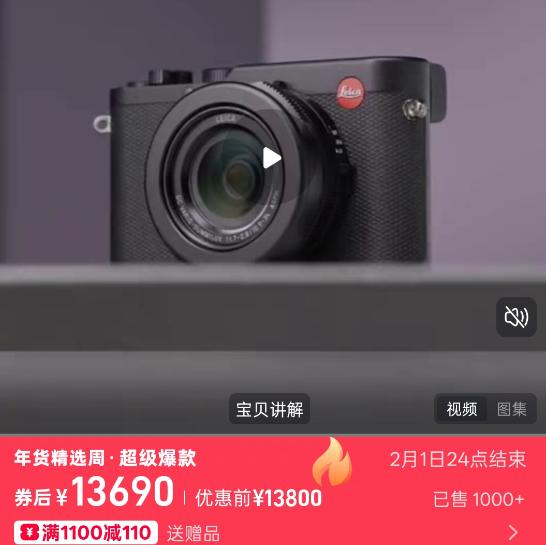
Group 1 - Leica, a century-old high-end camera brand, is seeking a new owner, with its two major shareholders considering selling the controlling stake for approximately €1 billion, equivalent to about 8.2 billion RMB [1][3] - Potential buyers include Chinese investment firm HSG (formerly Sequoia Capital China), European private equity firms, and Asian optical groups, although negotiations are still in the early stages [1][3] - Leica's revenue for the last fiscal year was €596 million, with growth slowing significantly to 7.6%, which is a core reason for the shareholders' decision to sell [3] Group 2 - Leica's high valuation is attributed not only to its historical brand strength but also to its collaborations with Chinese smartphone manufacturers [4] - The partnership with Huawei began in 2016, enhancing Huawei's high-end smartphone market presence by improving camera quality, leading to significant sales increases, such as the Huawei P9 selling over 12 million units, a 152% increase from its predecessor [6][4] - After the partnership with Huawei ended in March 2022, Xiaomi quickly took over, with a deeper collaboration that included Leica engineers directly involved in product development, resulting in the launch of over 20 smartphones together [7][9] Group 3 - DJI, a domestic drone giant, previously acquired the Swedish brand Hasselblad, showcasing a successful model of integrating a historic brand into a modern business framework [10][12] - DJI's investment in Hasselblad included strategic support and technology sharing, allowing both companies to thrive without interfering with Hasselblad's operations [12] - If HSG successfully acquires Leica, it could follow a similar path as DJI with Hasselblad, leveraging domestic resources to revitalize the brand and foster innovation [12]
全国首个跨省域高新区布局哪些产业
第一财经· 2026-01-26 13:07
Core Viewpoint - The article discusses the approval of the "Yangtze River Delta Qingwu Jia High-tech Industrial Development Zone," marking the first cross-provincial high-tech zone in China, aimed at promoting ecological and green integration in the Yangtze River Delta region [3][5]. Summary by Sections Approval and Planning - The Shanghai, Jiangsu, and Zhejiang provincial governments have approved the establishment of the Yangtze River Delta Qingwu Jia High-tech Industrial Development Zone, which covers an area of 49.16 square kilometers [5]. - The strategic spatial layout will include "one core leading, two corridors driving, three areas collaborating, and multiple points supporting" [5]. Development Focus - The Qingpu Park will focus on developing new-generation information technology and high-performance composite materials, with significant companies like Huawei and Jinfat Technology establishing R&D centers [6][7]. - In 2024, the Qingpu Park is projected to achieve an industrial output value of 15.73 billion yuan and service revenue of 34.59 billion yuan, with R&D expenditure accounting for 12.9% of revenue [7]. Future Goals - The development zone aims to create a modern industrial system centered around new-generation information technology, intelligent equipment, and green new materials, implementing five major actions for high-end, intelligent, green, integrated, and collaborative development [8]. - The overall industrial layout will emphasize a "one core, two hubs, one belt, and multiple points" strategy to enhance innovation and collaboration across the region [10].