
吉利汽车

Search documents
消息称吉利正考虑进入美国市场,极氪和领克等品牌或是首选;北汽集团启动L3车型规模化上路通行试点运营,二季度向个人开放丨汽车交通日报
创业邦· 2026-01-10 10:38
Group 1 - Geely is considering expanding into the US market, with brands like Zeekr and Lynk & Co as potential candidates for entry [2] - Geely's global communications director indicated that an announcement regarding the US expansion could come within the next 24 to 36 months, with the main concern being the timing and locations for entry [2] - Geely has not yet sought a production base in the US but suggested that Volvo's assembly plant in South Carolina could be an ideal location [2] Group 2 - Lei Jun stated that Tesla is not invincible, highlighting that the SU7 is the only electric sedan to have beaten the Model 3 in sales [2] - Lei Jun expressed pride in the SU7's product quality and performance, which contributed to its sales success [2] - He also mentioned that the YU7, launched six months ago, has a sales gap compared to the Model Y, but he believes it will compete effectively in the future [2] Group 3 - BAIC Group has launched a pilot operation for L3 vehicles, with plans to gradually open it to individual users by the second quarter of 2026 [2] - The pilot will initially focus on B-end operations to ensure safety, with the first vehicles set to operate in designated areas of major highways [2] Group 4 - The new generation of the SU7 will be equipped with Xiaomi's Super Electric Motor V6s Plus, which will enhance production efficiency and shorten delivery times [2] - The motor will be supplied by a collaboration between "United Microelectronics" and "Huichuan," with plans to introduce self-developed motors in the future [2]






车企密集明确2026销量目标,市场格局将会有哪些变化?
Xin Lang Cai Jing· 2026-01-10 10:07
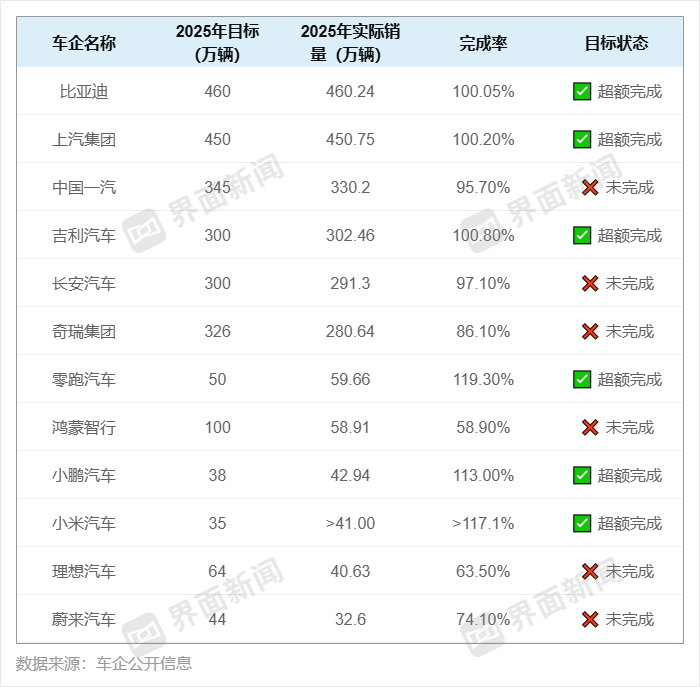
Core Insights - The Chinese automotive market is experiencing unprecedented differentiation as companies announce their annual sales and plans for 2026, reflecting a deep competition regarding survival, development, and industry positioning [1] Group 1: Sales Performance in 2025 - In 2025, six companies achieved their sales targets, including three traditional automakers (BYD, Geely, SAIC) and three new players (Leap Motor, Xpeng, Xiaomi) [1] - BYD led with 4.6024 million units sold, exceeding its target and becoming the global leader in pure electric vehicle sales [1] - Geely delivered 3.0246 million units, achieving a 100.8% completion rate and a 39% year-on-year growth [1] - SAIC's sales surpassed 4.5075 million units, marking a 12.32% increase year-on-year [1] - Leap Motor topped the new energy vehicle sales with 596,600 units delivered, achieving a 119% completion rate [2] - Xpeng delivered 429,400 units, a 113% completion rate with a 126% year-on-year growth [2] - Xiaomi, as a newcomer, delivered over 410,000 units, exceeding its first-year target [1] Group 2: Differentiation in Performance - Companies like Li Auto and Hongmeng Zhixing failed to meet their targets, with Li Auto delivering 406,000 units, only 63.5% of its goal, and Hongmeng Zhixing delivering 589,100 units, significantly below its 1 million target [2] - The performance disparity among automakers is attributed to differences in sales scale, product structure, transformation stages, and technological accumulation [2] - The differentiation is further accelerated by electrification and intelligent technology, along with strong policy guidance [2] Group 3: Strategic Approaches for 2026 - Automakers are adopting different strategies for 2026, categorized into three camps: aggressive, stable, and conservative [2] - Leap Motor and Hongmeng Zhixing represent the aggressive camp, with Leap aiming for 1 million units (a 67.5% increase) and Hongmeng targeting between 1 million to 1.3 million units, requiring up to 120% year-on-year growth [3][4] - The stable camp includes Great Wall and Xiaomi, focusing on steady growth rather than aggressive targets [7][8] - Great Wall set a target of over 1.8 million units for 2026, reflecting a 36% growth rate, while Xiaomi aims for 550,000 units, a 34% increase [7][8] Group 4: Challenges and Opportunities - Leap Motor's growth is supported by its dual breakthrough in scale and profitability, but it faces challenges in expanding production and maintaining quality [4] - Hongmeng Zhixing plans to launch 11 to 18 new models in 2026, but must balance brand differentiation and collaboration among its multiple brands [5] - The conservative camp, represented by Geely and Li Auto, emphasizes quality over sheer volume, with Geely targeting 3.45 million units for a 14% growth [10][11] - Li Auto and NIO are expected to adopt more cautious strategies in 2026, focusing on consolidating their market positions rather than aggressive growth [11][12] Group 5: Market Dynamics and Future Outlook - The 2026 Chinese automotive market is characterized by a strategic landscape where aggressive players like Leap and Hongmeng fight for market share, stable players like Great Wall and Xiaomi serve as the backbone of industry transformation, and conservative players like Geely and Li Auto represent rationalization in the industry [14] - The competition will shift from merely selling units to achieving profitability and sustainable sales, with a projected electric vehicle penetration rate exceeding 60% [15] - The outcomes of this competition will reshape the Chinese automotive industry and influence the global market dynamics [15]
汽车“自主五强”的2025年:增长之下现战略分野
经济观察报· 2026-01-10 08:22
Core Viewpoint - The Chinese automotive market is entering a critical phase in 2025, with domestic brands collectively capturing nearly 70% of the passenger car market share, driven by the rise of new energy vehicles and international expansion [2][4]. Group 1: Market Dynamics - The "self-owned five strong" brands, including BYD, Geely, Chery, Changan, and Great Wall, have established a stable market presence, with total sales of 14.67 million units, accounting for over half of the overall passenger car market [2][4]. - BYD leads the global new energy vehicle sales with 4.6024 million units sold in 2025, marking a 7.73% year-on-year increase, while its pure electric vehicle sales reached approximately 2.257 million units, surpassing Tesla [4][5]. - Geely's total sales exceeded 3.02 million units in 2025, a 39% increase, with new energy vehicle sales reaching 1.6878 million units, reflecting a 90% growth [5][6]. Group 2: Strategic Developments - Geely has initiated a significant restructuring by merging with Zeekr Technology to enhance operational efficiency and resource integration, aiming to save billions in R&D costs annually [9][10]. - Chery has restructured its brand architecture to improve domestic market efficiency, establishing a new business group to streamline operations and enhance competitiveness [9][10]. - Changan has launched a 6 billion yuan capital increase plan to support the development of new energy vehicles and global R&D centers, reinforcing its strategic alignment with major shareholders [10][11]. Group 3: Technological Advancements - The competition among Chinese automakers has evolved from individual technological breakthroughs to a more systemic confrontation, with companies like BYD and Geely focusing on comprehensive technology integration and smart driving solutions [11][12]. - Great Wall has introduced a next-generation intelligent super platform that supports various powertrains, emphasizing its advancements in smart cockpit and driving technologies [12].



对话千里科技印奇:抓住 “想做、能做、可做” 的闪现时刻,决胜智驾淘汰赛
晚点Auto· 2026-01-10 07:30
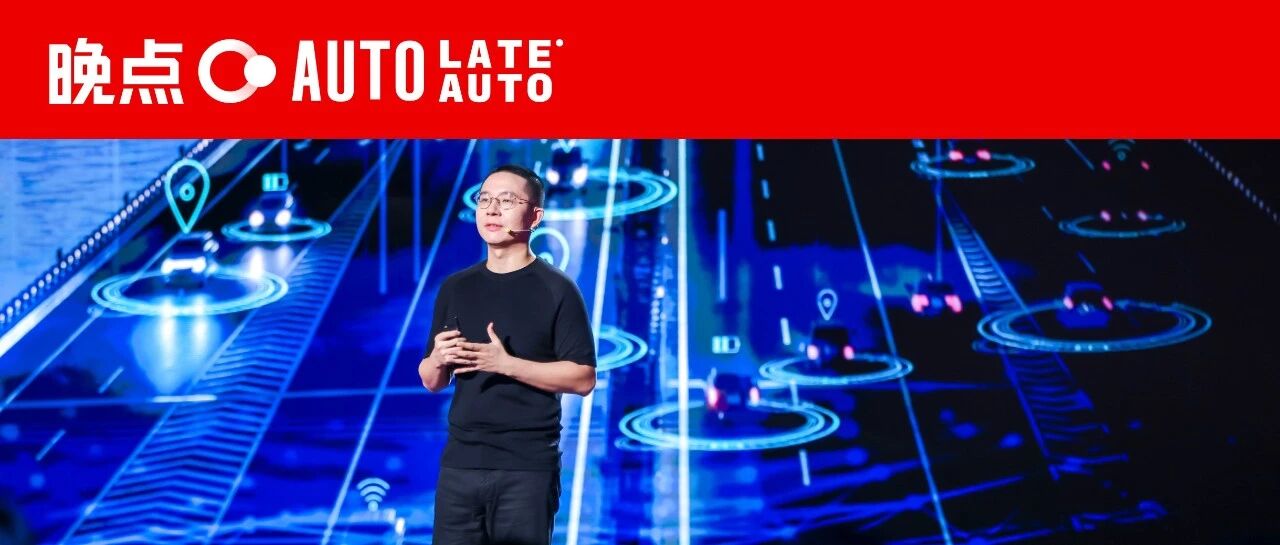
Core Viewpoint - The article discusses the competitive landscape of intelligent driving in China, highlighting the potential for latecomers to succeed by leveraging advanced technology and strategic partnerships, as exemplified by Geely and Qianli's collaboration on the G-ASD system [3][6][11]. Group 1: G-ASD System Overview - The G-ASD system, developed by Geely and Qianli, utilizes a state-of-the-art end-to-end model architecture, enabling full-range intelligent driving capabilities without relying on high-precision maps [4][10]. - The system is powered by 23.5 EFLOPS of computing power and vast amounts of real driving data, allowing for rapid iteration and self-evolution through a "world behavior model" [4][10]. Group 2: Strategic Insights - Geely's CEO emphasizes the integration of new energy and intelligence as a unified goal, aiming to establish Geely's intelligent driving as a benchmark in China and compete globally [6][11]. - Qianli's competitive edge lies in its lack of historical technical burdens and a composite team with expertise from various sectors, enhancing its ability to innovate and execute [7][8]. Group 3: Market Positioning and Future Outlook - The article predicts that only three to four leading intelligent driving suppliers will emerge globally, with Qianli and Geely's collaboration positioned to capitalize on economies of scale and technological advancements [11][24]. - Qianli aims to focus on a "big customer strategy," seeking deep partnerships with a select few major automotive clients to build a robust competitive barrier [24][25].
中国企业创新实力闪耀美国消费电子展
Ren Min Wang· 2026-01-10 06:56
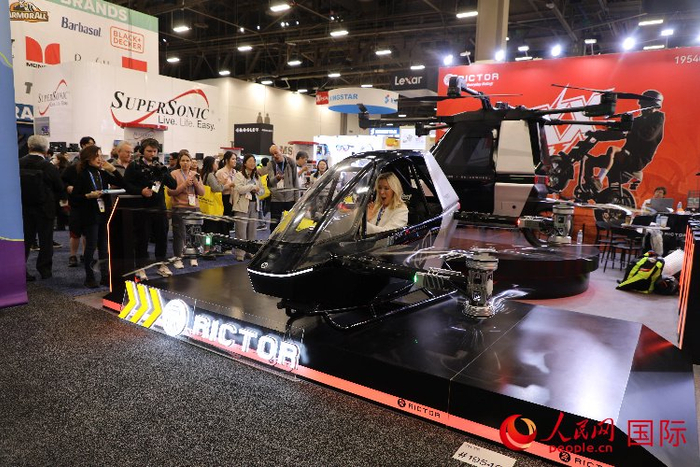
Group 1: Event Overview - The 2026 Consumer Electronics Show (CES) took place in Las Vegas from January 6 to January 9, attracting over 4,100 exhibitors showcasing innovations in artificial intelligence, digital health, mobility, and robotics [1] - Over 1,000 Chinese companies participated, highlighting their strong innovation capabilities and industrial upgrade momentum [2][4] Group 2: Company Highlights - Leading Chinese companies such as Lenovo, TCL, Hisense, Geely, and BOE showcased their latest products and technologies, receiving significant attention [2] - Hisense's Vice President emphasized the company's transition from "Made in China" to "Created in China," showcasing their global presence with 30 R&D centers and 37 industrial parks [5] - TCL occupied the largest booth at CES, focusing on technological innovations across various products, indicating a shift from low-cost branding to capturing the mid-to-high-end global market [6] Group 3: Innovation and Technology - Lenovo held a technology innovation conference at CES, presenting a series of products centered around mixed artificial intelligence, demonstrating clear innovation direction and successful product implementation [8] - The event showcased advancements in smart devices, including TCL's latest display technologies and Hisense's interactive robots, reflecting the growing capabilities of Chinese manufacturers in the global market [6][9]
环球直击美国CES展:更少和更强大的中国企业正在重新定义AI竞争的规则
Huan Qiu Wang Zi Xun· 2026-01-10 05:33
Core Insights - The CES 2026 showcased AI as the central theme, emphasizing human-centric applications and the integration of AI into various sectors [1][3][6] - The competition in the chip industry was highlighted, with major players like NVIDIA, AMD, Intel, and Qualcomm presenting their advancements in AI infrastructure [3][9] - The exhibition marked a shift from hardware-centric displays to a focus on ecosystem definition and strategic collaboration among companies [4][16] AI and Robotics - CES 2026 introduced a dedicated area for AI and quantum innovation, showcasing practical applications of embodied intelligence and advancements in autonomous driving [3][4] - The event demonstrated a transition from conceptual robot designs to practical solutions addressing real-world challenges in home services and industrial logistics [3][11] - Chinese companies showcased significant advancements in robotics, with a focus on self-developed core components and solutions for logistics and manufacturing [11][13] Chinese Companies' Participation - The number of Chinese exhibitors in the core professional pavilion decreased to 207 from 1,475 in 2025, indicating a structural adjustment in participation [4][5] - The remaining Chinese companies at CES were required to demonstrate AI-related functionalities, reflecting a shift towards more innovative and integrated product offerings [5][6] - Major Chinese firms like Lenovo showcased their global influence by hosting large-scale events, indicating a strategic focus on ecosystem development [6][16] Competitive Landscape - The competition is evolving from hardware specifications to a comprehensive narrative that includes both foundational technology and application capabilities [7][16] - The contrasting approaches of Chinese and American tech companies in building AI ecosystems highlight differences in strategic thinking and resource allocation [8][15] - Chinese automotive companies emphasize full-stack self-research and vertical integration, while Western firms focus on open software ecosystems and long-term evolution [15][16] Future Implications - The CES 2026 signals a shift in global tech competition towards defining future technology ecosystems and industry standards [16][17] - Companies that can navigate the complexities of AI and contribute to ecosystem building are likely to remain at the forefront of technological advancement [17]



固态电池供应商备战2027:目标定好了,路线还在争
经济观察报· 2026-01-10 04:56
Core Viewpoint - The solid-state battery supply chain faces significant challenges in achieving mass production by 2027, with key materials still in the experimental stage and core equipment shortages hindering progress [1][5]. Material Aspects - The solid-state battery's core materials are divided into three categories: cathode, anode, and electrolyte, with the anode materials currently following two main technical routes: silicon-carbon and lithium metal [11][12]. - Sulfide solid electrolytes are gaining traction, with a current output of approximately 20 tons in 2025, and the price per ton reaching several million yuan [3][4]. - The competition between oxide and sulfide electrolytes is a focal point, with oxide electrolytes being easier to mass-produce but having lower ionic conductivity compared to sulfide electrolytes [12][14]. Industry Trends - Investment interest in solid-state batteries is returning, driven by orders from cell manufacturers and the potential for profitability within the supply chain [2][3]. - The industry is targeting 2027 as a pivotal year for mass production, with many companies aiming to complete product development or testing by 2026 [4][5]. Equipment Challenges - The lack of mature mass production equipment is a significant barrier, with some materials still requiring production in vacuum glove boxes, limiting scalability [16][20]. - The solid-state battery production line requires high-precision equipment and a clean environment, which increases costs and complicates the manufacturing process [19][20]. Technical Uncertainties - The uncertainty in technical routes complicates equipment adaptation, as different companies have varying core technologies, making it difficult to establish standardized production systems [20][22]. - The rapid pace of technological iteration and the absence of economies of scale further exacerbate cost pressures in the solid-state battery sector [22][24]. Talent and Collaboration - The solid-state battery sector is experiencing a talent shortage, with many skilled professionals concentrated in supplier roles, leading to higher salaries compared to the liquid battery sector [25][26]. - Companies are increasingly collaborating with industry leaders to provide comprehensive solutions, including material supply and technical guidance [26].


自动驾驶巨头,63亿购买具身入场券
具身智能之心· 2026-01-10 03:22
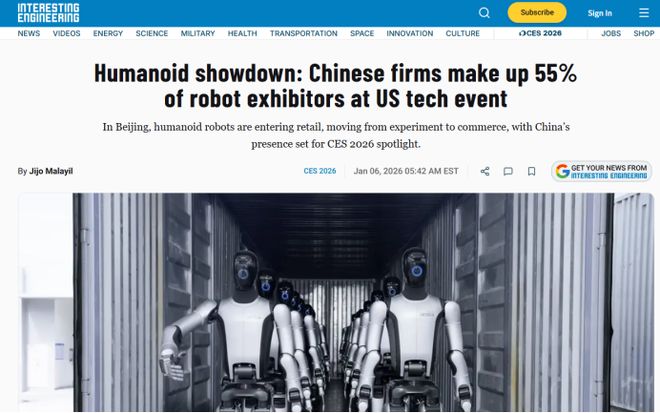
Core Viewpoint - Mobileye, a leading global supplier of autonomous driving solutions, is entering the field of embodied intelligence by acquiring a humanoid robotics company, Mentee Robotics, for $6.3 billion [4]. Group 1: Industry Developments - The acquisition by Mobileye signifies a significant investment in humanoid robotics, highlighting the growing intersection between autonomous driving and embodied intelligence [4]. - NVIDIA has been advancing the development of embodied intelligence-related models and infrastructure, including the GR00T series models and embodied simulation frameworks [7]. - Tesla has been focusing on the development of its Optimus humanoid robot, indicating that a substantial portion of its future profits will come from this robotics business [8]. Group 2: Market Trends - Companies like Waymo are actively developing embodied intelligence technologies, and there are reports of Xiaopeng Robotics planning to achieve mass production this year [9]. - Major automotive manufacturers in China, such as Geely, BYD, SAIC, and GAC, are increasingly establishing or investing in various humanoid robotics companies [9]. - The technological similarities in perception, localization, and planning between autonomous driving and embodied intelligence suggest that cross-industry integration will become more frequent [10].

天海电子IPO将于1月16日上会
Zheng Quan Ri Bao Wang· 2026-01-10 02:46
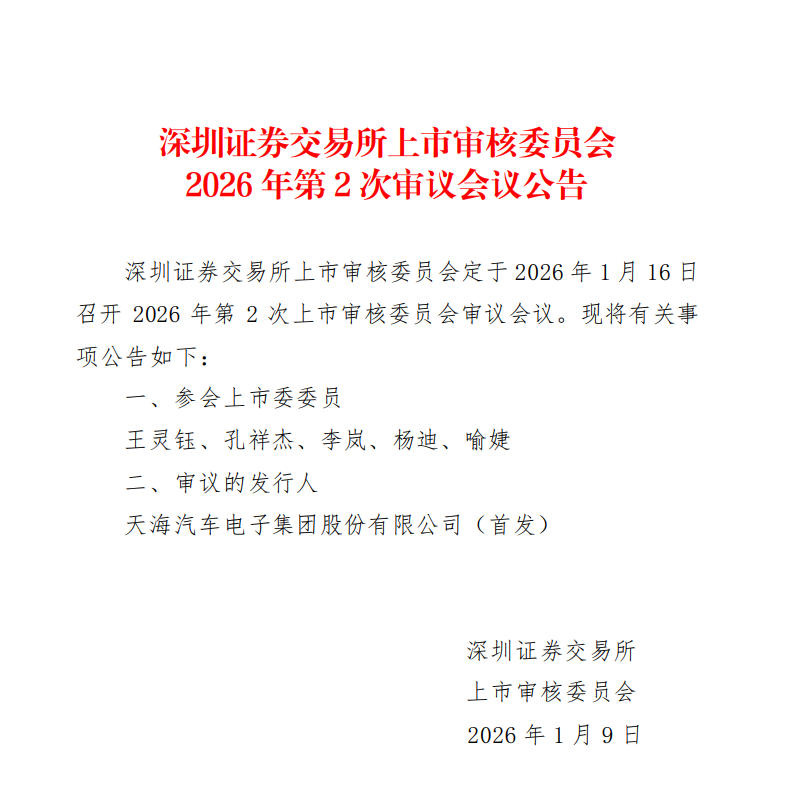
Core Viewpoint - Tianhai Electronics plans to raise approximately 2.46 billion yuan through its IPO, with funds allocated to various projects aimed at enhancing production capacity and technological advancement in the automotive components sector [2]. Group 1: Fundraising and Investment Projects - The IPO is expected to raise around 2.46 billion yuan, which will be directed towards projects including connector technology upgrades, harness production base, automotive electronics production base, smart transformation and information technology construction, and the Tianhai Intelligent Connected Vehicle Industry Research Institute and supporting industrial park [2]. Group 2: Company Overview and Partnerships - Tianhai Electronics specializes in the research, production, and sales of automotive components such as automotive harnesses, connectors, and electronics, primarily serving the new energy vehicle and traditional fuel vehicle manufacturing sectors [2]. - The company has established multi-level and multi-dimensional partnerships with well-known automotive manufacturers including Chery Automobile, SAIC Group, Geely Automobile, Changan Automobile, Li Auto, NIO, Leap Motor, and Xpeng Motors [2]. Group 3: Strategic Goals and Market Position - The construction of the fundraising projects is expected to enhance the company's research and development capabilities, improve the intelligence and informatization of production processes, and expand existing production capacity, thereby supporting the gradual implementation of the company's development plan [2]. - These initiatives aim to strengthen the company's core competitiveness and profitability, ultimately increasing its market share [2].
消息称吉利正考虑进入美国市场,极氪和领克等品牌或是首选
Xin Lang Cai Jing· 2026-01-10 02:39
Core Viewpoint - Geely Holding is considering expansion into the U.S. market, with brands such as Zeekr and Lynk & Co. being potential candidates for entry [1][2] Group 1: Expansion Plans - Geely is likely to announce its U.S. expansion plans within the next 24 to 36 months [1][2] - The main challenges identified include determining the timing of entry into the U.S. and selecting specific regions for expansion [1][2] Group 2: Production Considerations - Geely has not yet sought production bases in the U.S. but has indicated that Volvo's assembly plant in South Carolina could be an ideal location [1][2]