赛力斯

Search documents
江淮汽车20251123
2025-11-24 01:46
Summary of JAC Motors Conference Call Company Overview - **Company**: JAC Motors - **Industry**: Automotive, specifically focusing on luxury vehicles and electric vehicles Key Points and Arguments 1. **Market Attention and Collaboration**: Since Q3 2023, JAC Motors has gained market attention due to its collaboration with Huawei to launch the Hongmeng Intelligent Driving model, which is gradually being recognized in the market [2][5][6] 2. **Performance Amid Market Challenges**: Despite experiencing a downturn in the new energy vehicle market, JAC Motors saw strong orders for the Wenjie M9 and a rebound in stock prices post-Spring Festival [2][5] 3. **Traditional Business Growth**: By mid-2024, JAC Motors' traditional business is expected to gain momentum, with active exports of self-owned passenger vehicles contributing to stable performance [2][5] 4. **Product Launches and Stock Performance**: The launch of the S800 sedan has exceeded expectations in terms of orders, but uncertainty regarding the MPV launch timeline and market pressures led to a stock price correction [2][3][5] 5. **MPV Launch Timeline**: The company plans to officially launch its MPV model in Q3 2026, with efforts to expedite the release [3][19] 6. **Diverse Business Model**: JAC Motors' collaboration with Huawei allows for a more stable traditional business compared to other Huawei-affiliated companies, with a focus on a full range of luxury vehicle production [6][22] 7. **Market Dynamics for Luxury Vehicles**: The luxury MPV market is in a significant cycle, with an expected increase in sales due to economic recovery and the introduction of new models [4][17] 8. **Sales Dependency**: The sales of the ZunJia brand rely heavily on product quality rather than brand recognition, with a potential consumer base of 1.2 to 1.3 million high-end consumers [15][16] 9. **Future Development Plans**: JAC Motors aims to launch the ZunJia MPV and a high-end sedan, while also enhancing production capacity through various vehicle types [19][20] 10. **Long-term Outlook**: The company is optimistic about its future, focusing on product quality and governance to navigate market changes and maintain competitiveness [21][22] Additional Important Insights - **Design and Market Reception of S800**: The S800's design has been bold and unconventional, which may redefine luxury aesthetics if accepted by the market [9] - **Sales Trends in Luxury SUV Market**: The luxury SUV market has shown stable performance, with annual sales remaining above 200,000 units in the 700,000 RMB and above price range [18] - **Impact of Governance and Talent Management**: JAC Motors is enhancing its governance and talent management, having hired 2,000 new employees while letting go of over 1,000, to modernize its operations [20] This summary encapsulates the key discussions and insights from the conference call regarding JAC Motors' current status, market strategies, and future outlook in the automotive industry.

人车家:从“单品战”到“生态战”
Zhong Guo Qi Che Bao Wang· 2025-11-24 01:43
Core Insights - Shenzhen Denza New Energy Vehicle Co., Ltd. has announced a strategic partnership with Midea Group's high-end AI technology home appliance brand, COLMO, allowing Denza N8L users to control smart home appliances from their vehicles and monitor vehicle status remotely at home [2] - Avita Technology has also partnered with Haier Group's Katai Chi Holdings to innovate in product customization, vehicle-home scenario integration, and in-car function design, aiming to create a high-end experience and technology-integrated smart travel solutions [2][3] - The "vehicle-home" concept is gaining traction, leading to increased competition among companies as they provide new smart experiences and shift market competition from product-centric to ecosystem-centric [2][3] Industry Trends - The collaboration between automotive and home appliance companies is becoming a trend, with BYD and Midea launching a "vehicle-home" life solution, enhancing smart interconnectivity [3] - Changan Automobile has signed a cooperation agreement with Haier Group to develop vehicle-home ecosystem collaborations and create vehicle-mounted electrical products [3] - Midea Group has unveiled a new "whole-home smart" strategy, integrating AI capabilities and smart home appliances, and showcasing collaborative results with NIO [3] Technological Developments - The "vehicle-home" concept is not new, with Huawei and Xiaomi previously establishing their own ecosystems integrating smartphones, smart homes, and smart vehicles [4][5] - The integration of smart vehicles as mobile smart terminals is expected to expand the "vehicle-home" ecosystem, enabling features like dual control and automated scene triggering based on geofencing technology [6] - Ultra-wideband (UWB) technology is emerging as a key enabler for precise and seamless connections between devices, while operating system integration is crucial for ecosystem connectivity [7] Challenges and Opportunities - The development of the "vehicle-home" ecosystem faces challenges such as technological and standard barriers, which create information silos among devices [8] - Security risks are heightened as vehicles connect to home networks, necessitating robust measures to protect user data and system integrity [8] - The commercial model for the "vehicle-home" ecosystem remains unclear, with companies exploring sustainable profitability strategies [8] Competitive Landscape - The "vehicle-home" ecosystem is expected to see layered competition, with a few companies acting as "ecosystem leaders" and many others as "ecosystem participants" seeking differentiation [9] - User experience is anticipated to evolve towards proactive intelligence, with vehicles adapting to user needs rather than the other way around [9] - The market for smart sockets supporting vehicle-home energy exchange is projected to exceed 30 billion yuan by 2026, indicating a growing focus on energy collaboration between vehicles and home devices [10]





HPV疫苗趋近饱和,智飞生物蒋仁生财富缩水近千亿
阿尔法工场研究院· 2025-11-24 00:06
Core Viewpoint - The financial performance of Zhifei Biological has significantly declined, with a notable drop in revenue and profit, raising concerns about its future growth potential in the saturated HPV vaccine market [4][6][9]. Financial Performance - In the third quarter, Zhifei Biological reported a revenue decrease of 40% to 2.705 billion yuan, with a net profit loss of 6.01 billion yuan, marking a 556.79% decline [9]. - For the first three quarters, the company achieved a revenue of 7.627 billion yuan, down 66.53% year-on-year, and recorded a net profit loss of 1.206 billion yuan, a shift from profit to loss [9][10]. - The company's cash flow from operating activities surged by 201.18% to 2.985 billion yuan due to reduced payments for agency product purchases [11]. - Sales expenses decreased by 16.57% to 1.615 billion yuan, while R&D expenses fell by nearly 10% to 669 million yuan, which may impact the competitiveness of its products [12]. Market Challenges - The HPV vaccine market is becoming saturated, leading to a significant decline in sales for Zhifei Biological's key products [6][22]. - The company’s four-valent HPV vaccine saw a batch issuance volume drop to zero, while the nine-valent HPV vaccine issuance fell by 76.8% to approximately 4.24 million doses [24]. - The performance of the newly anticipated shingles vaccine has also been underwhelming, with only about 570,000 doses issued, a decrease of 64.24% [24]. Ownership and Dividends - Zhifei Biological has a history of generous dividends, with a total of 15 distributions amounting to 7.318 billion yuan since 2010, resulting in a dividend rate of 20.7% [13][14]. - Despite a significant drop in profits, the company distributed 479 million yuan in dividends last year [14]. Historical Context - Zhifei Biological was founded by Jiang Rensheng, who transitioned from a rural teacher to a prominent figure in the vaccine industry, leading to substantial growth in the company's revenue and market presence [25][30][36]. - The company experienced rapid growth after securing exclusive rights to distribute the four-valent HPV vaccine, with revenues soaring from 446 million yuan in 2016 to 52.918 billion yuan in 2023 [37][38]. Current Valuation - As of November 21, Zhifei Biological's stock price was 20.19 yuan per share, with a total market capitalization of 48.3 billion yuan, reflecting a decline of over 300 billion yuan from its peak in 2021 [7][40].


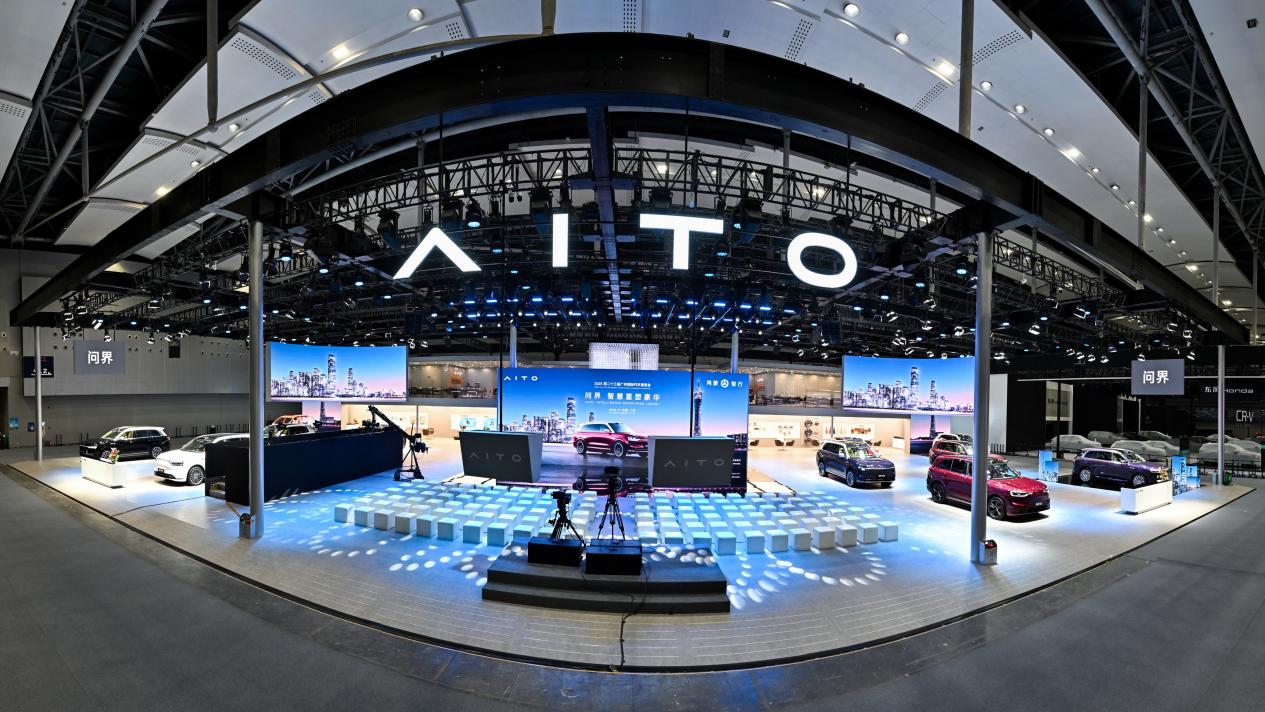
问界全系亮相广州车展 赛力斯发布魔方技术平台2.0
Yang Shi Wang· 2025-11-23 13:01
Core Insights - The article highlights the launch of the Magic Cube Technology Platform 2.0 by the company at the Guangzhou Auto Show, emphasizing its focus on AI-driven smart electric vehicles [1] - The company achieved record delivery numbers for its models, including over 260,000 units for the Wanjie M9 and over 130,000 units for the Wanjie M8, showcasing its strong market presence [3] Group 1: Product and Technology Developments - The Magic Cube Technology Platform 2.0 features upgrades in smart energy, intelligent chassis, EEA architecture, and smart space, aimed at enhancing the overall performance of electric vehicles [1] - The platform introduces an AI-enabled range-extended electric solution, improving vehicle efficiency and quietness [5] - The electronic and electrical architecture has evolved from "distributed regional control" to "central vehicle control + regional control," supporting large model applications and end-to-end evolution [7] Group 2: Market Performance and User Engagement - The Wanjie M9 has set a new record for delivery in the 500,000 RMB price segment, while the Wanjie M8 continues to lead in the 400,000 RMB category [3] - The company has gained the trust of 900,000 users, with a total electric driving distance exceeding 21.4 billion kilometers, and 70% of this distance being purely electric [9] - The company has established a comprehensive smart service system, completing 266,000 proactive service engagements and saving users over 440,000 hours in repair time through remote diagnostics [9]

汽车行业周报(20251117-20251123):负beta消化过程中,看好汽车板块1Q26筑底/上行-20251123
Huachuang Securities· 2025-11-23 11:02
Investment Rating - The report maintains a "Buy" rating for the automotive sector, anticipating a bottoming and upward trend in Q1 2026 [1]. Core Insights - The automotive sector is currently experiencing a cooling sentiment due to the impact of trade-in quotas, with October retail sales falling below expectations and November expected to perform moderately. The fourth quarter is also anticipated to underperform previous market expectations. However, the sector is expected to find a bottom and begin to rise in Q1 2026, presenting potential investment opportunities for the upcoming year [1][2]. Data Tracking - In early November, the discount rate for vehicles increased to 10.0%, up by 0.4 percentage points month-on-month and 1.5 percentage points year-on-year. The average discount amount rose by 23,103 yuan, with significant fluctuations among major brands [3]. - In October, new energy vehicle deliveries from leading companies showed a notable increase for BYD, which delivered 442,000 units, a month-on-month increase of 11.5% but a year-on-year decrease of 12.1%. Other companies like Leap Motor and Xpeng also reported significant year-on-year growth [3][20]. - Traditional automakers also saw growth in October, with Geely's sales reaching 307,000 units, a year-on-year increase of 35.0% and a month-on-month increase of 12.5% [3][23]. Industry News - The report highlights several key developments in the automotive industry, including the launch of new models and significant sales figures for new energy vehicles. For instance, from November 1 to 16, the retail sales of new energy vehicles reached 554,000 units, a year-on-year increase of 2% [30][31]. - The report also notes the introduction of advanced technologies in new models, such as the Deep Blue L06 and the Xiaopeng X9, which feature cutting-edge battery systems and autonomous driving capabilities [30][31].



赛力斯魔方技术平台2.0重磅发布,引领AI汽车新时代
Zheng Quan Shi Bao Wang· 2025-11-23 09:07
Core Insights - The release of the Cyrus Magic Cube Technology Platform 2.0 marks a significant upgrade in the company's technology system, aiming to establish itself as a leading brand in high-end and intelligent vehicles in China [1][3] - The platform emphasizes AI-driven smart electric vehicles, enhancing features such as smart energy, intelligent chassis, EEA architecture, and smart space [1] - Since its collaboration with Huawei in 2021, the company has developed advanced smart technologies, including the Qian Kun intelligent driving and Harmony cockpit, enhancing vehicle connectivity and AI capabilities [2] Group 1 - The Magic Cube Technology Platform 2.0 is designed to create a more emotional, intelligent, safe, and reliable mobile companion for users [1] - The cumulative delivery of the AITO series vehicles has surpassed 900,000 units, indicating strong market acceptance [1] - The company has established a solid technological moat through innovations like the Magic Cube Technology Platform and Super Range Extension technology [3] Group 2 - The company raised a net amount of HKD 14.016 billion through its IPO on the Hong Kong Stock Exchange, with approximately 70% of the funds allocated for research and development [3] - The AI-enabled smart range extension technology solution integrates high-pressure architecture for optimal vehicle performance and efficiency [2] - The company aims to lead the luxury new energy vehicle sector and drive higher quality development in the Chinese automotive industry [3]
汽车视点 | “一车双能”、厂家“三担责”……在广州车展透视2026车市关键信号
Xin Hua Cai Jing· 2025-11-23 06:21
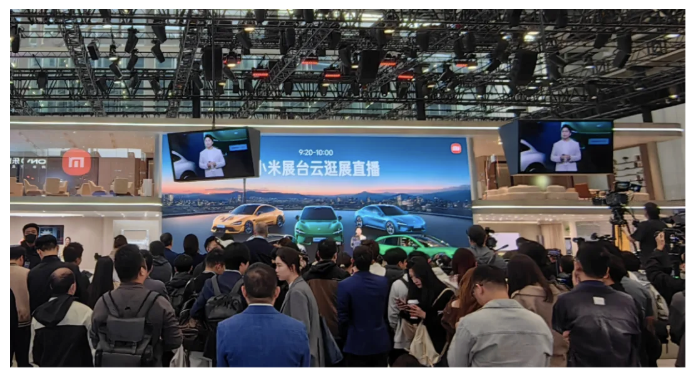
Core Insights - The 2025 Guangzhou International Auto Show opened on November 21, showcasing 1,085 vehicles, including 93 global and domestic debuts, with 629 being new energy vehicles, highlighting their dominance in the market [1] Group 1: Industry Trends - The scale of this year's auto show has contracted compared to 2024, with the number of exhibition halls reduced from 16 to 14, indicating current industry pressures [1] - The auto show serves as a significant platform for automakers to showcase their annual achievements and forecast market trends for the upcoming year [1] Group 2: Company Achievements - Xiaomi Auto announced the production of its 500,000th vehicle in just 602 days, setting a record for the fastest achievement among global new energy vehicle brands [2] - XPeng Motors celebrated the production of its 1,000,000th vehicle, achieving a 190% year-on-year increase in deliveries from January to October, with significant growth in overseas markets [3] - Seres announced cumulative deliveries of over 900,000 vehicles and introduced its "Seres Magic Cube Technology Platform 2.0" at the show [3] - NIO's small car "Firefly" reached 30,000 deliveries within six months, indicating strong market performance in its segment [3] - Lynk & Co reported 50,000 deliveries of its flagship model Lynk 900 within six months, ranking among the top three in high-end hybrid SUV sales [4] Group 3: Technological Innovations - Automakers are shifting focus from price competition to technological advancements, with several brands unveiling key technology strategies at the auto show [5] - Dongfeng Nissan launched the "Tiida" model equipped with HarmonyOS, marking it as the only fuel vehicle with this feature in the market [5] - GAC Toyota introduced the "Toyota Platinum 7," developed by a local team, integrating multiple high-tech features and a unique warranty policy to alleviate consumer concerns [5] - BMW made advanced driver assistance features standard across its X5 model, enhancing its competitive edge [6] - Leap Motor introduced the A10 model, aiming to provide high-end features at an entry-level price point [6] - MG unveiled the world's first mass-produced semi-solid-state battery vehicle, the MG4, set to start deliveries in December, marking a significant technological milestone [6] Group 4: Market Outlook - The auto show indicates a potential surge in the MPV market in 2026, with several brands launching new MPV models aimed at high-end experiences [7][8] - The upcoming adjustment in the new energy vehicle purchase tax policy, effective January 1, 2026, is expected to impact sales strategies, with many automakers offering cross-year subsidy plans [8] - The China Passenger Car Association forecasts a retail volume of approximately 2.25 million passenger vehicles for November, a year-on-year decrease of 8.7%, while new energy vehicle sales are expected to grow by 6.5% [9]
雷军缺席广州车展!两大新主角联袂登场,“处处都有华为的身影”
Zhong Guo Ji Jin Bao· 2025-11-23 05:41
Core Insights - The absence of key figures like Lei Jun at the 2025 Guangzhou Auto Show highlights a shift in focus towards new players like Huawei's Qian Kun, which is gaining prominence in the automotive sector [3][4][9] - The proportion of new energy vehicles (NEVs) at the show increased significantly, reaching 57.97% compared to 43.72% in the previous year, indicating a growing trend towards electrification in the automotive market [3][13] Group 1: Industry Trends - The 2025 Guangzhou Auto Show showcased a notable increase in the number of NEVs, with 629 out of 1,085 vehicles displayed being electric [13][16] - A trend towards larger, personalized vehicle models is emerging, with several companies launching flagship MPVs and SUVs, driven by policy incentives and profit motives [16] - The competition between pure electric and range-extended technologies remains a hot topic, with various companies showcasing both types of vehicles at the event [17][18] Group 2: Company Collaborations - Huawei's Qian Kun is establishing itself as a key player, collaborating with multiple automakers like GAC Group and Dongfeng to launch new brands [9][10] - The partnership between Avita and Huawei has expanded significantly, focusing on user insights, product development, and integrated marketing strategies [9][10] - GAC Group's new brand, Qijing, aims to position itself in the high-end smart NEV market, with plans to launch an SUV and a coupe by 2026 [10][11] Group 3: Technological Innovations - AI technology is becoming a central theme, with companies like Seres showcasing advancements in smart electric vehicle platforms [19][22] - Xiaopeng Motors is emphasizing its commitment to AI-driven innovations, with plans to launch several AI applications by 2026 [21][22] - The competition in autonomous driving technology is intensifying, with various companies announcing new features and capabilities at the show [21][22]
小鹏汽车第100万台整车下线,广州车展车企竞逐具身智能新赛道
KAIYUAN SECURITIES· 2025-11-23 05:41
Investment Rating - The investment rating for the automotive industry is "Positive" (maintained) [1] Core Views - The narrow passenger car retail market is expected to reach 2.25 million units in November 2025, with new energy vehicle penetration likely to exceed 60% for the first time [5][13] - The automotive sector has seen a decline, with the Shanghai and Shenzhen 300 index dropping by 3.77% and the automotive sector specifically declining by 5.09% [6][30] - The report highlights significant developments in the automotive industry, including the launch of new models and strategic partnerships among key players [5][15][19] Summary by Sections Industry News - The passenger car retail market is projected to be stable at 2.25 million units in November 2025, with a year-on-year decrease of 8.7% [13] - Guangzhou state-owned assets have taken over two subsidiaries of Evergrande Auto [14] - XPeng Motors has achieved a milestone with the production of its 1 millionth vehicle, indicating rapid growth in production capacity [15] - Geely's smart driving team is being integrated into a new joint venture, enhancing its capabilities in autonomous driving [16] - GAC's new luxury intelligent electric vehicle brand, in collaboration with Huawei, is set to launch in 2026 [17] Market Performance - The automotive sector's performance has been mixed, with the passenger vehicle index down by 5.22% and commercial vehicle index down by 4.04% [6][30] - The automotive parts sector also faced declines, with the index down by 5.43% [6][30] Investment Recommendations - For passenger vehicles, the report recommends investing in high-end domestic brands like Jianghuai Automobile and Seres, with Geely as a beneficiary [7] - In the automotive parts sector, companies like Desay SV and Zhejiang Xiantong are recommended due to their growth potential amid industry consolidation [7]


央企“入伙”重庆无人机产业,赛力斯、赣锋锂业间接参股
Jing Ji Guan Cha Bao· 2025-11-23 04:31
Core Viewpoint - The collaboration between China Aerospace Science and Technology Corporation's subsidiary, Aerospace Rainbow, and other companies aims to establish a new company focused on the drone industry in Chongqing, leveraging advanced drone technology and capital from various stakeholders [1][2][3]. Group 1: Company Overview - Aerospace Rainbow is a leading player in the domestic drone sector, with its "Rainbow" drones possessing complete independent intellectual property rights and core technologies that have reached an international leading level [2]. - The company has developed a dual business model focusing on new materials and drone research and manufacturing, expanding its product line to include medium and large reconnaissance and strike drones [2]. Group 2: Joint Venture Details - The new joint venture, Chongqing Saihong Technology Co., Ltd., will have a registered capital of 901.41 million yuan, focusing on the research and manufacturing of low-altitude logistics and manned aircraft [1]. - Aerospace Rainbow will contribute tilt-rotor technology to the joint venture, acquiring approximately 43.64% of the equity [1][3]. Group 3: Stakeholder Composition - The major shareholders of Chongqing Saihong include Chongqing Saihang, which will hold 55.46%, and other investors such as Seres, Ganfeng Lithium, and state-owned enterprises from Chongqing [3][4]. - There is potential for future equity adjustments, with Chongqing Douliang possibly acquiring part of Aerospace Rainbow's shares [4]. Group 4: Strategic Importance - The establishment of the joint venture aligns with national strategies for low-altitude economic development, aiming to enhance the application of drone technology in various sectors [2][5]. - The collaboration is expected to facilitate the transformation of technological achievements into market applications, supporting the creation of a world-class special aircraft industry [2].