
农夫山泉

Search documents
食品溯源全景路径剖析:从原料到成品,如何实现全程透明与效果验证?
Xin Lang Cai Jing· 2026-01-21 05:33
Core Insights - The article emphasizes the evolution of consumer expectations from basic safety compliance to a demand for quality certainty and efficacy in food products, highlighting the importance of trust in brand value [1][4][41] Group 1: Traceability in Food Industry - The search index for "food traceability" keywords increased by 157.39% year-on-year in the first half of 2025, indicating a growing consumer interest in product origins and processing [2] - Companies like Nongfu Spring are pioneers in traceability practices, transforming their water source into a symbol of brand trust [2] - Major food brands, including McDonald's and KFC, have initiated traceability journeys, but face challenges in differentiating their offerings in a crowded market [2][4] Group 2: Evolution of Traceability - Traceability marketing has shifted from merely ensuring safety compliance to establishing quality certainty and efficacy stability, driven by consumer health demands and technological advancements [4][5] - The traceability system has evolved from simple information recording to a standardized carrier of product value, integrating into brand building, product innovation, and user delivery [4][5] Group 3: Role of Technology - The traceability system in functional foods is advancing from basic safety assurance to a standardized and refined approach, similar to the beauty industry’s control over active ingredients [9] - Brands are increasingly using digital traceability to provide comprehensive production data, ensuring that active ingredients remain effective through industrial processing [14][15] Group 4: Consumer Engagement - Over 60% of global consumers are willing to pay a premium for brands that transparently disclose ingredient sources and production details, indicating a strong demand for transparency [8] - The trend is particularly pronounced in functional foods, where traceability is becoming a key component of building technical barriers [8][9] Group 5: Supply Chain Management - The ultimate value of traceability lies in the ability to deepen and control the supply chain, transitioning from mere production capabilities to sustainable selling [39][40] - Companies are moving from passive procurement to active supply chain management, enhancing their ability to respond to consumer demands quickly [40] Group 6: Traditional Chinese Medicine and Modernization - The market for "medicinal food" is projected to exceed 500 billion yuan by 2025, driven by consumer demand for standardized and verified products [25][26] - Brands are constructing comprehensive traceability systems to address issues of origin confusion and safety in traditional Chinese medicine [27][29] Group 7: Geographic Branding - Geographic indicators are being transformed into tangible brand assets through traceability, allowing consumers to verify the authenticity and quality of regional products [37][38] - Successful case studies, such as the sales of birch juice from Yichun, demonstrate the effectiveness of deep traceability in building consumer trust [38]

大手笔回购,逆势翻盘
Ge Long Hui· 2026-01-20 14:20
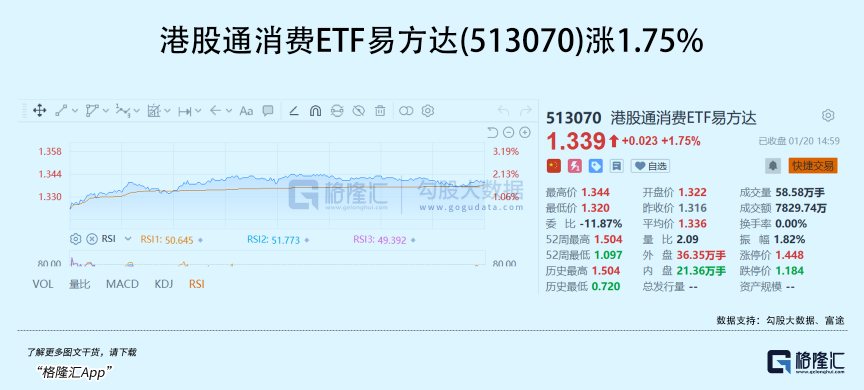
Core Viewpoint - Despite the overall decline in overseas stock index futures and the impact of international issues, the Hong Kong stock market's consumer sector has shown resilience, with notable gains in specific consumer stocks like Pop Mart and China Duty Free Group [1][4][7]. Group 1: Consumer Sector Performance - The consumer sector in Hong Kong has experienced an upward trend, with Pop Mart's stock rising over 5% and maintaining strong performance throughout the day, even reaching a peak increase of over 10% [4]. - Pop Mart announced a share buyback of approximately HKD 251 million for 1.4 million shares, marking its first buyback since early 2024, which is expected to attract more investor attention [4][6]. - The collaboration between Pop Mart and Honor to launch a limited edition phone targeting young consumers has further boosted investor interest [4][6]. Group 2: Market Dynamics and Seasonal Factors - The upcoming Lunar New Year and winter vacation are expected to drive consumer spending, with historical data indicating that retail and dining sales during the Spring Festival typically see double-digit growth [11][12]. - The recent global consumer electronics exhibitions and new product launches are anticipated to stimulate consumer purchasing behavior, enhancing the certainty of seasonal performance for the consumer sector [13][14]. - The capital market tends to react in advance to seasonal benefits, with funds entering the market based on optimistic quarterly performance expectations, leading to price increases [15][16]. Group 3: Long-term Outlook for the Consumer Sector - The consumer sector may be at a turning point for recovery and upgrade, supported by macroeconomic improvements and ongoing government policies aimed at expanding domestic demand [24][25]. - Companies in the consumer sector are adopting more focused and pragmatic operational strategies, enhancing profit margins through product upgrades and cost efficiencies [28]. - Projections indicate that the revenue and net profit growth for the consumer sector will return to positive growth in 2026 and 2027, with net profit growth expected to outpace revenue growth [28][29]. Group 4: Investment Opportunities - The consumer sector is currently positioned favorably due to seasonal peaks, low valuations, and increased capital inflows, suggesting a potential recovery and growth cycle [34]. - Investors are encouraged to monitor relevant consumer indices and ETFs, such as the Hong Kong Stock Connect Consumer ETF, to identify opportunities as market conditions evolve [34].
大手笔回购!逆势翻盘
Ge Long Hui· 2026-01-20 11:39
Group 1 - The core point of the article highlights the resilience of the Hong Kong consumer sector amidst a broader market downturn, with specific stocks like Pop Mart showing significant gains [1][2][5] - Pop Mart's stock surged over 10% after the company announced a share buyback of approximately HKD 251 million, marking its first buyback since early 2024, which is expected to attract more investor attention [7][10] - The collaboration between Pop Mart and Honor to launch a limited edition phone targeting young consumers is seen as a strategic move to enhance brand visibility and appeal [8][10] Group 2 - The consumer sector is experiencing an upward trend driven by the upcoming Lunar New Year and winter vacation, which typically boosts consumer spending, particularly in entertainment and gifts [14][15] - Historical data indicates that retail and catering sales during the Spring Festival often see double-digit year-on-year growth, further supporting the positive outlook for the consumer sector [15] - The market is currently in a key positioning phase, with consumer stocks like Pop Mart showing a price-to-earnings (PE) ratio that has decreased significantly from previous highs, indicating potential value for investors [19][23] Group 3 - The macroeconomic environment is improving, with policies aimed at expanding domestic demand expected to inject vitality into the market, which is beneficial for the consumer sector [25][26] - Leading consumer companies are adopting more focused and pragmatic operational strategies, enhancing profitability through product upgrades and digital transformation [28][30] - The influx of capital into the Hong Kong market, particularly from southern funds, has reached historical highs, with consumer stocks being a favored investment area, suggesting a potential recovery in the sector [31][32] Group 4 - The article concludes that the consumer sector may be entering a favorable period characterized by seasonal demand, improved fundamentals, and attractive valuations, potentially leading to a new growth cycle [33]
运动巨头渠道策:销售下滑 门店升级丨消费参考
2 1 Shi Ji Jing Ji Bao Dao· 2026-01-20 05:10
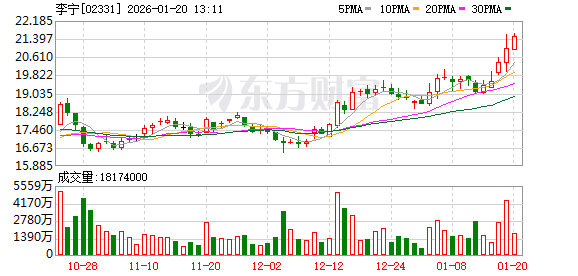
Group 1: Li Ning Company Overview - Li Ning remains optimistic about its future despite a low single-digit decline in retail sales for the fourth quarter ending December 31, 2025, excluding Li Ning YOUNG [2] - The number of sales points in China for Li Ning (excluding Li Ning YOUNG) decreased by 41 to a total of 6,091, with retail points down by 59 and wholesale points up by 33 [3] - Li Ning is investing in flagship stores, launching its first "Dragon Store" in Beijing, which is expected to create a strong synergy with the new "Honor Gold Standard" product line [3] Group 2: Market Trends and Competitors - The trend in the industry shows major brands like Nike upgrading key stores in China, with a reported 25% sales increase in upgraded locations, despite a 16% decline in overall sales [4] - Li Ning's stock price increased by 2.94% to HKD 21 per share on January 19, 2026, indicating positive market sentiment [4] Group 3: Financial Performance and Projections - Li Ning's e-commerce virtual store business remained flat, indicating stability in that segment amidst overall sales declines [2] - The company is focusing on enhancing customer experience through flagship stores, aligning with broader industry trends of investing in experiential retail [4]
掘金银发、冰雪、AI+新增长点,港股通消费ETF华夏(513230)现涨近1.5%
Mei Ri Jing Ji Xin Wen· 2026-01-20 03:30
财通证券预计,未来以银发经济(智慧养老、康养旅居等)、冰雪经济、体育赛事为代表的细分领域, 以及由技术赋能(AI+)和情感体验驱动的服务新模式,有望成为新兴增长极。 港股通消费ETF华夏(513230)跟踪中证港股通消费主题指数,一键打包消费龙头,成分股近乎囊括港 股消费的各个领域,包括泡泡玛特、百胜中国、安踏体育、农夫山泉、蜜雪冰城等消费龙头。 1月20日,港股消费板块持续飘红,港股通消费ETF华夏(513230)现涨近1.5%。持仓股中,泡泡玛 特、布鲁可、中烟香港、上美股份、毛戈平、蜜雪集团等涨幅靠前;裕元集团、卫龙美味、晶苑国际、 珍酒李渡等跌幅靠前。 消息方面,1月19日,国新办举行新闻发布会介绍2025年国民经济运行情况。2025年,我国社会消费品 零售总额突破50万亿元大关,达到501202亿元,同比增长3.7%,增速较2024年加快0.2个百分点,规模 居全球零售市场前列。新型消费不断增长,消费结构升级趋势明显。随着居民生活水平提高,消费正 从"商品主导"向"商品与服务并重"转变,2025年服务消费成为最亮眼的增长点。 ...
市值缩水近四成 华润饮料换帅破局
Guo Ji Jin Rong Bao· 2026-01-19 16:04
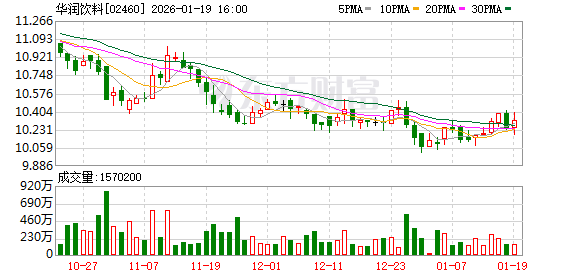
Core Viewpoint - The leadership change at China Resources Beverage, with Gao Li taking over as chairman, comes at a critical time as the company faces performance pressures and intensified industry competition [2][3]. Group 1: Leadership Change - Gao Li, a veteran of the China Resources Group, has been appointed as the new chairman, succeeding Zhang Weitong, who stepped down due to work adjustments [2]. - Gao Li has a strong financial background, having served as the financial director of China Resources Beverage from 2012 to 2020 and as the general manager of the finance department of China Resources Group since January 2025 [2]. Group 2: Performance Challenges - China Resources Beverage's revenue growth has stagnated, with a reported revenue of 13.52 billion yuan in the year of its IPO, reflecting only a 0.05% increase, while profit growth of 23.12% was primarily due to cost control [4]. - In the first half of 2025, the company experienced a decline in both revenue and profit, with revenue dropping to 6.206 billion yuan, a year-on-year decrease of 18.52%, and net profit falling to 808 million yuan, down 28.63% [4]. Group 3: Market Competition - The bottled water market has seen significant changes, with competitors like Wahaha and Nongfu Spring impacting China Resources Beverage's sales, particularly in the small-sized bottled water segment [5]. - In the first half of 2025, Nongfu Spring's bottled water revenue grew by 10.7% to 9.443 billion yuan, while China Resources Beverage's revenue in the same segment fell by 23.1% to 5.251 billion yuan [6]. Group 4: Strategic Initiatives - To diversify its revenue streams, China Resources Beverage has been actively launching new products in tea, juice, and sports drinks, introducing 14 new SKUs in the first half of the previous year [7]. - Despite these efforts, non-water beverage revenue only accounted for approximately 15.4% of total revenue, indicating that the second growth curve has not yet materialized [7]. Group 5: Market Position and Valuation - China Resources Beverage's revenue has remained stagnant around 13.5 billion yuan in 2023 and 2024, with expectations that its total revenue for 2025 will likely be surpassed by competitors like Dongpeng Beverage and Yuanqi Forest [7]. - As of January 19, 2026, the company's stock price had dropped to 10.32 HKD, a decline of 29% from its one-year high and over 38% from its IPO closing price, resulting in a market capitalization of 24.749 billion HKD, down 36.8% from its IPO value [8].
市值缩水近四成,华润饮料换帅破局
Guo Ji Jin Rong Bao· 2026-01-19 16:02
Core Viewpoint - The leadership change at China Resources Beverage comes at a critical time as the company faces declining performance and increased competition in the beverage industry [1][3]. Group 1: Leadership Change - Zhang Weitong has stepped down as Chairman of China Resources Beverage due to work adjustments, with Gao Li taking over for a three-year term [1]. - Gao Li has a strong financial background and has previously held key positions within the China Resources Group, including serving as the CFO of China Resources Beverage from 2012 to 2020 [1]. Group 2: Performance Challenges - In 2024, China Resources Beverage's revenue growth stagnated, with total revenue at 13.521 billion yuan, reflecting a mere 0.05% increase, while net profit grew by 23.12% mainly due to cost control [3]. - By the first half of 2025, the company experienced a decline in both revenue and profit, with operating income at 6.206 billion yuan, down 18.52% year-on-year, and net profit at 0.805 billion yuan, down 28.63% [3]. - The core packaged water business, which accounts for nearly 90% of revenue, has seen significant declines, particularly in the sales of its flagship product, Yibao [3][5]. Group 3: Market Competition - The competitive landscape in the packaged drinking water market has shifted, with Wahaha regaining market presence and Nongfu Spring launching a low-priced product that negatively impacted Yibao's sales [3]. - In the first half of 2025, Nongfu Spring's revenue from packaged drinking water reached 9.443 billion yuan, a 10.7% increase, while China Resources Beverage's water segment revenue fell to 5.251 billion yuan, a 23.1% decline [5]. Group 4: Growth Strategy - China Resources Beverage has been criticized for its reliance on a single product line and has attempted to diversify by launching new products in tea, juice, and sports drinks [6]. - In the first half of 2025, non-water beverage revenue was 0.955 billion yuan, a 21.3% increase, but still only accounted for about 15.4% of total revenue, indicating that a second growth curve has not yet materialized [6]. Group 5: Market Position and Valuation - Competitors like Dongpeng Beverage and Yuanqi Forest are expected to surpass China Resources Beverage in revenue, with Dongpeng projected to exceed 20 billion yuan and Yuanqi Forest anticipating a 26% growth [8]. - China Resources Beverage's stock price has declined significantly, with a closing price of 10.32 HKD on January 19, 2026, down 29% from its peak and over 38% from its IPO price, leading to a market capitalization decrease of 36.8% from its initial value [8].
茶里的自救难题
Bei Jing Shang Bao· 2026-01-19 13:30
Core Insights - The company "Cha Li" is facing significant financial difficulties due to strategic missteps in its bottled tea business, leading to a decision to terminate this segment by 2024 [1][4] - The failure to establish a successful product in the ready-to-drink tea market has exacerbated cash flow issues, resulting in delayed salary payments and supplier settlements [4][7] - The competitive landscape for bottled tea has become increasingly saturated, making it difficult for "Cha Li" to replicate its earlier success in the bagged tea segment [9][10] Financial Situation - "Cha Li" has reported a debt of 200 million yuan, which requires nearly 2 billion yuan in revenue to address, a target that few traditional tea companies can achieve [4][5] - The company has undergone nine rounds of financing since its inception, with significant investments from notable firms, but has now shifted focus to stabilizing core operations and addressing employee compensation [5][6] Market Dynamics - The bottled tea market is described as highly competitive, with established brands like Nongfu Spring and emerging players like Yuanqi Forest posing significant challenges [9][10] - "Cha Li" attempted to enter the ready-to-drink tea market in June 2022, investing heavily in production facilities and marketing, but has struggled with inventory buildup and high marketing costs without sufficient returns [6][7] Strategic Missteps - The company's ambition to surpass competitors like Suntory in sales within two years has not materialized, highlighting the risks associated with cross-industry expansion without a solid foundation [8][9] - Analysts suggest that "Cha Li" has over-relied on external funding and market trends without building a robust supply chain or brand loyalty, leading to vulnerabilities when market conditions change [9][10]

饮料市场加速分化 接班潮涌能否讲出新故事?
Zhong Guo Jing Ying Bao· 2026-01-19 08:41
Core Insights - The beverage industry is shifting from merely quenching thirst to emphasizing health attributes, with this trend expected to be more pronounced by 2025 [1] - Reports indicate that low-sugar and no-sugar options will become standard in the beverage market by 2025, reflecting a clear trend towards health-conscious consumption [1] - The industry is experiencing a bifurcation, with some companies capitalizing on market trends for growth while others face declining performance [1] Industry Performance - In November 2025, China's beverage production reached 10.46 million tons, a year-on-year increase of 0.4%, with a cumulative production of 165.61 million tons from January to November, reflecting a 3.3% growth [2] - Eastroc Beverage reported impressive performance with a revenue of 16.844 billion yuan in the first three quarters of 2025, a 34.13% increase year-on-year, while Nongfu Spring achieved a revenue of 25.622 billion yuan, up 15.6% [2] - Conversely, traditional giants like Master Kong faced challenges, with a revenue decline of 2.7% in the first half of 2025 [2] Segment Analysis - Sales of tea beverages fell by 6.3% to 10.67 billion yuan, fruit juice sales dropped by 13.0% to 2.956 billion yuan, and packaged water sales decreased by 6.0% to 2.377 billion yuan [3] - Carbonated and other beverages saw a growth of 6.3%, reaching 10.256 billion yuan [3] - The plant-based protein drink segment struggled, with leading brands like Yangyuan and Chengde Lulux experiencing revenue declines of 7.64% and 9.42%, respectively [3] Competitive Landscape - Companies are adjusting to revenue declines, with some experiencing double-digit drops; for instance, China Resources Beverage's revenue fell by 18.5% to 6.206 billion yuan [4] - The competitive landscape is marked by price wars, particularly in the packaged water segment, leading to significant revenue drops for brands like "Yibao" [4] - Analysts suggest that the success of Nongfu Spring's tea segment indicates a shift from basic hydration to quality tea beverages, while traditional companies must innovate to escape the price war trap [4] Emerging Trends - The rise of functional beverages is evident, with products tailored for specific scenarios, such as sports and fitness, gaining traction [7] - Brands are focusing on packaging innovations and marketing strategies that align with health and fitness trends, such as electrolyte water and convenient single-use formats [7][8] - The health and wellness segment is seeing explosive growth, with numerous new brands entering the market, particularly in traditional Chinese health drinks [6] Leadership Transition - The beverage industry is witnessing a generational shift, with new leaders taking over established companies, such as Wei Hongcheng at Master Kong and Xu Yangyang at Dali Foods [9][10] - These new leaders bring fresh perspectives and experiences, which may help navigate the challenges of a saturated market [11] - However, not all transitions are smooth, as seen in the ongoing succession issues at Wahaha, highlighting the complexities of generational change in the industry [11]


消费论坛交流反馈——食品饮料行业周报(20260112-20260118):传统消费龙头探寻新路,成效初显
Huachuang Securities· 2026-01-19 07:25
Investment Rating - The report maintains a "Recommendation" rating for the food and beverage industry, indicating an expected increase in the industry index exceeding the benchmark index by more than 5% in the next 3-6 months [26]. Core Insights - The traditional consumer leaders in the food and beverage sector are exploring new paths, with initial positive results observed. The report highlights the acceleration of white liquor clearance and the catalyzing effect of the peak season for mass-market products [1][13]. - The liquor industry is currently at the bottom of its cycle, with expectations for sales to stabilize over the next three years. The report notes a significant price drop in high-end whiskey (approximately 50%) and a smaller decline in brandy (10-20%) due to decreased demand and a return to reasonable pricing [10]. - In the mass-market segment, companies are actively adjusting strategies, leading to improved performance. Notable companies include Xianle Health, which is leveraging overseas expansion and AI to drive growth, and West Wheat, which is enhancing its competitive advantage through channel expansion [11][12]. Summary by Sections 1. Meeting Feedback: Liquor at Cycle Bottom, Mass-Market Highlights - Liquor is at a cyclical low, with future sales expected to stabilize. The domestic brandy market remains stable, dominated by three major brands [10]. - The mass-market segment shows a divergence in demand, with companies like Xianle and West Wheat continuing to grow, while traditional companies are adjusting to improve performance [11]. 2. Investment Recommendations: Strengthening White Liquor Bottom, Catalyzing Mass-Market Peak Season - The report recommends Moutai and emphasizes the importance of Gujing, anticipating a recovery in demand as the Spring Festival approaches. The report suggests that companies are transitioning from passive responses to proactive adjustments [13]. - In the mass-market segment, the report highlights Anqi as a key recommendation, along with opportunities in restaurant supply chains and snack sectors as the Spring Festival approaches [13].