奇瑞汽车

Search documents
山西证券研究早观点-20250919
Shanxi Securities· 2025-09-19 00:49
Core Insights - The report highlights the recent regulatory updates in the non-bank financial sector, specifically the classification evaluation of futures companies, which aims to enhance regulatory effectiveness and promote differentiated development within the industry [5][7] - The report also emphasizes the growth in the scale of equity product distribution, with significant increases in the total assets under management for various fund categories, indicating a robust market environment for fund distribution [7][8] Industry Overview - The futures company classification evaluation regulations were released by the China Securities Regulatory Commission, focusing on improving the scoring system and enhancing risk management within the industry [7] - The report notes that the total scale of equity, non-monetary, and stock index funds reached 51.4 trillion yuan, 102 trillion yuan, and 19.5 trillion yuan respectively, with growth rates of 5.89%, 6.95%, and 14.57% compared to the end of 2024 [7] - The report indicates that major indices experienced varying degrees of increase, with the Shanghai Composite Index rising by 1.52% and the ChiNext Index increasing by 2.10% [7] Company Analysis - The specific company under review, Shichang Co., specializes in the research, production, and sales of automotive fuel systems, particularly plastic fuel tank assemblies [8] - The company has established itself as a "little giant" in the automotive fuel system sector, recognized for its technological advancements and strong customer relationships with major automotive manufacturers [8] - The report projects that Shichang Co. will achieve revenues of 282 million yuan, 406 million yuan, and 515 million yuan for the years 2022 to 2024, with growth rates of -3.50%, 44.24%, and 26.79% respectively [8] - The company is positioned to benefit from the growing demand for plastic fuel tanks, driven by the increasing production and sales of passenger vehicles in China, which are expected to reach 32.9 million units by 2025 [8]
捷豹路虎受到网络攻击 停产或致上亿英镑损失
Cai Jing Wang· 2025-09-18 21:58
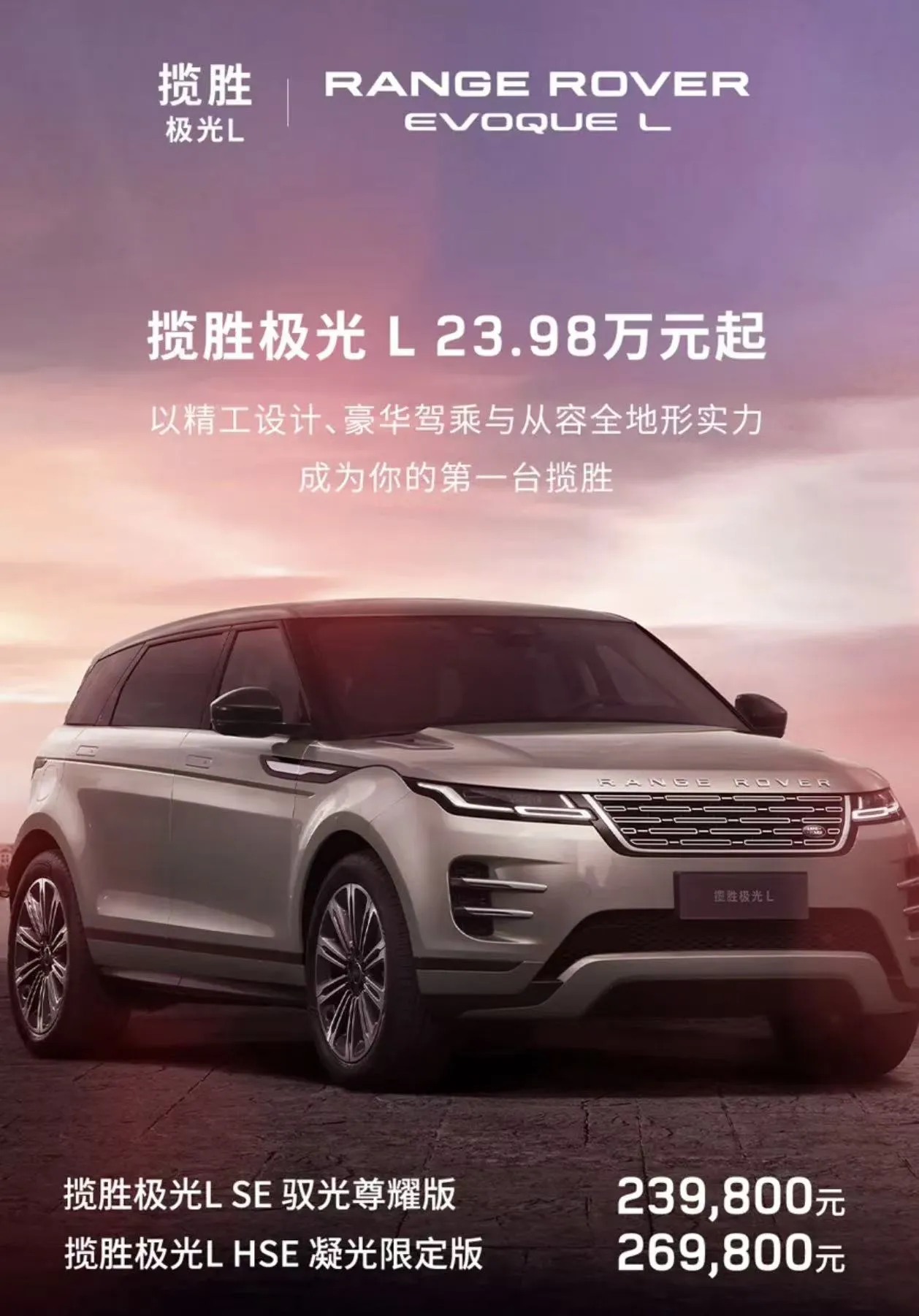
Core Viewpoint - Jaguar Land Rover is facing significant production disruptions due to a severe cyber attack, leading to a halt in operations and substantial financial losses estimated at £120 million [1]. Group 1: Production and Financial Impact - The production at Jaguar Land Rover's factories is expected to resume no earlier than September 24, with industry insiders warning that the disruption could last until November [1]. - Approximately 33,000 employees have been informed that they will not return to work due to the ongoing production line issues [1]. - The company, as the largest car manufacturer in the UK, typically produces over 1,000 vehicles daily, and the shutdown of three factories is projected to result in a loss of £120 million [1]. Group 2: Market Competition and Sales Strategies - In response to increasing competition in the automotive market, Jaguar Land Rover has initiated limited-time discounts in the Chinese market, with price reductions on certain models reaching up to £20,600 [5][6]. - Specific models, such as the Range Rover Evoque, have seen significant price cuts, with discounts of £19,000 and £20,600 on different variants [5][6]. - The company previously launched a promotional campaign in July, offering tax subsidies on certain models to stimulate sales [7]. Group 3: Sales Performance and Inventory Issues - Jaguar Land Rover's sales in China have significantly declined, with only 34,000 units sold in the fiscal year 2025, marking a 34% year-on-year decrease [11]. - The company is facing high inventory levels, with a reported inventory coefficient of 2.60, indicating substantial operational pressure [15]. - Over 30% of Jaguar Land Rover's dealers in China are currently operating at a loss, highlighting the challenges in the market [17]. Group 4: Future Plans and Strategic Initiatives - Jaguar Land Rover is actively working to enhance its presence in the Chinese market, including a strategic partnership with Chery Automobile to launch new electric vehicles under the "Freelander" brand [18][21]. - The first model under the Freelander brand is expected to be a plug-in hybrid, set to debut in the second half of 2026, initially targeting the Chinese market [21].

今日新闻丨荣威M7 DMH上市,限时售价8.58-10.28万元!奇瑞风云X3L上市,起售价11.99万元!新款腾势N9上市!
电动车公社· 2025-09-18 17:56
Core Viewpoints - The article highlights the recent launches of three new electric vehicle models: the Roewe M7 DMH, the Denza N9, and the Chery Fengyun X3L, emphasizing their pricing, features, and specifications [1][4][9]. Group 1: Roewe M7 DMH - The Roewe M7 DMH was launched on September 17, with a limited-time price range of 85,800 to 102,800 yuan [1][4]. - The vehicle features a new design language, with dimensions of 4940mm in length, 1890mm in width, and 1510mm in height, and a wheelbase of 2820mm [3]. - It is equipped with a hybrid system consisting of an 82kW 1.5L engine and a 137kW electric motor, with a 19.7kWh lithium iron phosphate battery, offering a pure electric range of 160km and a combined range of 2050km [8][9]. Group 2: Denza N9 - The Denza N9 was also launched on September 17, with a price range of 389,800 to 449,800 yuan [1][9]. - The new model maintains the existing design style but introduces new color options and a two-tone body design, with dimensions of 5258mm in length, 2030mm in width, and 1830mm in height, and a wheelbase of 3125mm [11]. - It features a 2.0T engine with a maximum thermal efficiency of 44.13%, an electric motor with a total power of 680kW, and a 46.9kWh battery pack, achieving a 0-100 km/h acceleration time of 3.9 seconds and a pure electric range of 202km [15]. Group 3: Chery Fengyun X3L - The Chery Fengyun X3L was launched on September 17, with a price range of 119,900 to 159,900 yuan [1][4]. - The vehicle is designed as a "high-energy fashionable outdoor box," with dimensions of 4545mm in length, 1950mm in width, and 1815mm in height, and a wheelbase of 2783mm [17]. - It is powered by a 1.5T range extender, with the two-wheel-drive version producing a maximum power of 185kW and offering pure electric ranges of 135km and 215km, while the four-wheel-drive version has a maximum power of 315kW and a 0-100 km/h acceleration time of 4.7 seconds [21].



“智能三大件”产业加速融合 剪刀差效应有望重现
Zheng Quan Shi Bao· 2025-09-18 17:52
Core Viewpoint - The integration of smart vehicles, smart robots, and low-altitude flying vehicles is accelerating, with the potential to significantly reduce costs and enhance technological development through shared supply chains and resources [1][2][3]. Group 1: Industry Integration - The three industries—smart vehicles, smart robots, and low-altitude flying vehicles—exhibit deep coupling in technology, resources, and application scenarios, primarily supported by artificial intelligence [2][3]. - The supply chain overlap between smart vehicles and smart robots exceeds 60%, with some companies reaching 70%, indicating a strong potential for cross-industry technology reuse [3][4]. - The integration of these industries is expected to replicate the "cost-volume" scissors effect seen in electric vehicles, where component costs have decreased significantly, leading to increased sales [4][5]. Group 2: Cost Reduction Potential - If the cost of flying cars can be controlled to around 200,000 yuan, it would align with ground transportation pricing, as indicated by industry experts [1][5]. - The price of laser radar has dropped from 100,000 yuan in 2019 to 800 yuan today, showcasing the potential for cost reductions in related technologies [4]. - The mass production capabilities of electric vehicle components are expected to facilitate significant cost reductions in smart robots, potentially halving the time from prototype to mass production [5][6]. Group 3: Collaborative Development - Companies are encouraged to establish global manufacturing advantages and promote cross-industry collaboration to enhance technological integration and supply chain efficiency [6][7]. - The establishment of the EAI 100 Innovation Center in Wuhan aims to foster collaboration among over 300 companies in the smart industry, focusing on technology development and standardization [7][8]. - Local governments are recognizing the trend of integration among these industries and are initiating policies to support collaborative development [7].
智通港股投资日志|9月19日
智通财经网· 2025-09-18 16:01
智通财经APP获悉,2025年9月19日,港股上市公司投资日志如下: | 类别 | | 公司 | | --- | --- | --- | | | 奇瑞汽车 | | | | (招股中) | | | | 不同集团 | | | 新股活动 | (定价日) | | | | 劲方医药-B | | | | (上市日) | | | | 中国来骑哦 | | | | 小鱼盈通 | | | | TAI PING CARPET | | | 业绩公布日 | 集一控股 | | | | 国浩集团 | | | | 帝王国际投资 | | | | 久融控股 | | | | 中国人寿 | | | | 华电国际电力股份 | | | | 山西安装 | | | | 美的集团 | | | | 倩碧控股 | | | 股东大会召开日 | 嘉鼎国际集团 | | | | 鞍钢股份 | | | | 胜龙国际 | | | | 讯众通信 | | | | 中国金融租赁 | | | 分红派息 | 华讯 | | | | (除净日) | | | | 珠江船务 | | | | (除净日) | | | | 灵宝黄金 | | | | (除净日) | | | | 艾德韦宣集团 | | ...
奇瑞港股IPO获近10倍超额认购!资本冷对新势力,却热捧传统车企?
Sou Hu Cai Jing· 2025-09-18 15:36
Core Viewpoint - Chery Automobile is launching an IPO in Hong Kong with a price range of HKD 27.75 to 30.75 per share, aiming to raise approximately HKD 84.4 billion, positioning itself as a significant player in the capital market while telling a profitable and future-oriented story [1][3]. Group 1: Valuation and Market Position - The IPO price range is set at HKD 27.75 to 30.75, with an entry fee of HKD 3,106 for 100 shares, resulting in a price-to-earnings ratio of approximately 11.19 times based on a projected net profit of HKD 14.14 billion for 2024 [5]. - Chery's market capitalization post-IPO is expected to be between HKD 160 billion and HKD 177.3 billion, ranking it seventh among Chinese automotive companies [5][6]. Group 2: Fundraising Scale and Allocation - The net fundraising amount of approximately HKD 84.4 billion positions Chery among the larger IPOs in the global automotive sector, making it the largest automotive IPO in Hong Kong for 2025 [7]. - The funds will be allocated as follows: 35% for R&D of various passenger car models, 25% for next-generation vehicles and advanced technologies, 20% for expanding overseas markets, and the remaining 20% for production facility upgrades and working capital [8]. Group 3: Industry Standing and Performance - According to Frost & Sullivan, Chery ranks as the second-largest independent passenger car brand in China and the eleventh globally, with projected sales of 2.295 million vehicles in 2024 [9]. - In the first half of 2025, Chery's passenger vehicle sales reached 1.188 million, reflecting a year-on-year increase of 14.38% [9]. Group 4: Financial Performance and Challenges - Chery's revenue grew significantly from HKD 92.6 billion in 2022 to HKD 269.9 billion in 2024, with net profit increasing from HKD 5.8 billion to HKD 14.3 billion during the same period [12]. - The company faces challenges in the electric vehicle sector, with only 28.7% of its sales coming from new energy vehicles, compared to over 50% market penetration in China [14]. Group 5: Market Confidence and Investor Support - The IPO has attracted 14 cornerstone investors, who collectively subscribed to 1.49 billion shares, accounting for about 50% of the total offering, providing strong confidence for Chery's market entry [6][10]. - The initial market response has been positive, with Chery's shares being oversubscribed nearly tenfold on the first day of the offering [3][10].

新能源乘用车第37周销量报告
Dong Zheng Qi Huo· 2025-09-18 14:15
1. Report Industry Investment Rating No information provided in the content. 2. Core Views of the Report - In the 37th week of 2025 (from September 8th to September 14th), the single - week retail sales of passenger cars were 453,000 units, a year - on - year decrease of 4.1%. Since the beginning of this year, the retail sales have reached 1.5182 million units, a year - on - year increase of 6.3%. The single - week retail sales of new energy passenger cars were 270,000 units, a year - on - year increase of 6.3%. Since the beginning of this year, the retail sales have reached 791,500 units, a year - on - year increase of 22.7%. The year - on - year growth rate has slowed down due to the high base and the termination of subsidies in some regions this year [1][11]. - The single - week penetration rate of new energy vehicles reached 59.6%, and the cumulative penetration rate for the year was 52.1%, showing a slow upward trend [1][21]. - The new energy vehicle market pattern is constantly changing. Traditional car companies such as Geely, Changan, and Chery are achieving excellent performance in new energy vehicle sales, and new brands like Xiaomi are bringing new variables to the market. Car companies like BYD, Tesla, and Li Auto have negative year - on - year growth, while XPeng, NIO, Leapmotor, Xiaomi, and Voyah maintain relatively high growth rates [2][27]. 3. Summary According to the Directory 3.1 Passenger Car Market Weekly Overview - In the 37th week of 2025, the single - week retail sales of passenger cars were 453,000 units, a year - on - year decrease of 4.1%. Since the beginning of this year, the retail sales have reached 1.5182 million units, a year - on - year increase of 6.3%. The single - week retail sales of new energy passenger cars were 270,000 units, a year - on - year increase of 6.3%. Since the beginning of this year, the retail sales have reached 791,500 units, a year - on - year increase of 22.7%. The growth rate has slowed down due to the high base and subsidy termination [1][11]. - By power type, in passenger cars, traditional fuel, hybrid, and new energy vehicles had retail sales of 167,000 units, 16,000 units, and 270,000 units respectively, with year - on - year changes of - 16.2%, - 15.1%, and 6.3%, accounting for 36.8%, 3.6%, and 59.6% of passenger cars respectively. In new energy passenger cars, pure - electric, plug - in hybrid, and extended - range vehicles had retail sales of 180,000 units, 68,000 units, and 23,000 units respectively, with year - on - year changes of 23.0%, - 14.5%, and - 21.3%, accounting for 66.5%, 25.1%, and 8.4% of new energy passenger cars respectively [22]. - By production attribute, in passenger cars, self - owned and joint - venture brands had retail sales of 307,000 units and 147,000 units respectively, with year - on - year changes of 2.9% and - 16.0%, accounting for 67.7% and 32.3% of passenger cars respectively. In new energy passenger cars, self - owned and joint - venture brands had retail sales of 243,000 units and 27,000 units respectively, with year - on - year changes of 7.9% and - 6.1%, accounting for 89.8% and 10.2% of new energy passenger cars respectively [24]. 3.2 Key New Energy Vehicle Companies' Sales Analysis - **Overall Situation**: In the 37th week, BYD sold 71,000 units, Geely Automobile 33,000 units, SAIC - GM - Wuling 19,000 units, Tesla (China) 15,000 units, Changan Automobile 14,000 units, Chery Automobile 10,000 units, and Hongmeng Zhixing 10,000 units. Among new - force car companies, Leapmotor sold 13,000 units, Xiaomi 10,000 units, Wenjie 9,000 units, XPeng and Li Auto 8,000 units each, and NIO 6,000 units [2][27]. - **BYD**: The weekly sales were 71,000 units. Since July, the year - on - year growth rate has turned negative. The cumulative sales this year reached 2.28 million units, with a year - on - year growth rate of 2.6%. The sales of pure - electric and plug - in hybrid (including extended - range) models are basically half and half. From January to August this year, the global cumulative sales were 2.864 million units, and the overseas cumulative sales of passenger cars and pick - up trucks were 630,000 units [31]. - **Geely Automobile**: The weekly sales were 49,000 units, including 33,000 new energy vehicles. The electrification rate of the car company is about 67%. The cumulative sales this year reached 1.591 million units, with a year - on - year growth of 48.2%, and the cumulative new energy sales were 942,000 units, with a year - on - year growth of 99.3% [33]. - **SAIC - GM - Wuling**: The overall weekly sales of passenger cars were 20,000 units, including 19,000 new energy vehicles. The electrification rate of the car company is as high as 91%. The cumulative sales this year reached 573,000 units, with a growth rate of 19.8%, and the new energy sales were 492,000 units, with a growth rate of 36.1%. Pure - electric models dominate the sales [36]. - **Changan Automobile**: The overall weekly sales of passenger cars were 23,000 units, including 14,000 new energy vehicles. The electrification rate of the car company is about 59%. The cumulative sales this year reached 821,000 units, with a year - on - year growth of 2.0%, and the new energy sales were 408,000 units, with a year - on - year growth of 18.7% [41]. - **Chery Automobile**: The overall weekly sales of passenger cars were 23,000 units, including 10,000 new energy vehicles. The electrification rate of the car company is about 43%. The cumulative sales this year reached 843,000 units, with a year - on - year growth of 24.0%, and the new energy sales were 302,000 units, with a year - on - year growth of 66.7% [46]. - **Tesla**: The weekly sales in China were 15,000 units. The cumulative sales this year reached 395,000 units, with a year - on - year negative growth of - 6.7%. The sales of Model 3, Model Y, and Model Y L were about 5,000 units, 9,000 units, and 1,000 units respectively. Tesla has launched multiple preferential activities this year, and the price of the long - range version of Model 3 has increased since July 1st [51]. - **Hongmeng Zhixing**: The weekly sales were 10,000 units, including about 9,000 units of Wenjie. The Shangjie H5, a new car in cooperation with SAIC, is planned to be officially launched in September [54]. - **New - Force Car Companies**: Leapmotor sold 13,000 units, Xiaomi 10,000 units, Wenjie 9,000 units, XPeng and Li Auto 8,000 units each, and NIO 6,000 units. XPeng, NIO, Leapmotor, Xiaomi, Voyah, etc. maintained relatively high year - on - year growth rates [62].



兴业科技(002674):与苏州能斯达共同研发电子皮肤,助力公司开拓新应用领域
Great Wall Securities· 2025-09-18 13:09
Investment Rating - The investment rating for the company is "Buy" [4]. Core Viewpoints - The company has signed a strategic cooperation agreement with Suzhou Nengsida to jointly develop flexible electronic skin based on natural leather and bio-based materials, which will help the company explore new application areas [1][2]. - The company is primarily engaged in the research, production, and sales of natural cowhide leather, with a focus on high-end products for well-known domestic and international brands [3]. - The company has established partnerships with several domestic automotive brands, positioning itself to capitalize on the growth opportunities in the new energy vehicle sector [3]. Financial Summary - Projected revenue for 2023 is 2,700 million yuan, with a year-on-year growth rate of 35.8%, and is expected to reach 3,738 million yuan by 2027 [1]. - The net profit attributable to the parent company is projected to be 186 million yuan in 2023, with a year-on-year growth rate of 23.7%, declining to 121 million yuan in 2025, and recovering to 216 million yuan by 2027 [1]. - The company's EPS is expected to be 0.63 yuan in 2023, decreasing to 0.41 yuan in 2025, and then increasing to 0.73 yuan by 2027 [1][3]. - The P/E ratio is projected to decrease from 22.5 in 2023 to 19.4 in 2027, indicating a potential improvement in valuation over time [1][3].

世昌股份(920022):汽车燃料系统领域的专精特新“小巨人”
Shanxi Securities· 2025-09-18 11:15
Investment Rating - The report does not provide a specific investment rating for the company [51] Core Viewpoints - The company, Shichang Co., Ltd. (920022.BJ), specializes in the research, production, and sales of automotive fuel systems, primarily focusing on plastic fuel tank assemblies for vehicles. The company has established itself as a "little giant" in the specialized and innovative sector, recognized for its technological advantages and quality customer resources [1][29] - The market for plastic fuel tanks is expected to grow significantly, driven by the increasing production and sales of passenger vehicles in China, which have seen continuous growth since 2020. The company is well-positioned to benefit from this trend [2][44] - Shichang Co., Ltd. has a strong foundation for long-term growth, being one of the first companies to produce plastic fuel tanks that meet the "National VI standard" and having established stable partnerships with major automotive manufacturers [3][29] Summary by Relevant Sections Business Overview - Shichang Co., Ltd. focuses on the development, production, and sales of automotive fuel systems, with its main products being plastic fuel tank assemblies, which are categorized into atmospheric and high-pressure types. The company serves major automotive manufacturers such as Geely, Chery, and FAW [1][29] Market Analysis - The passenger vehicle market in China has shown robust growth, with production reaching 26.12 million units and sales at 26.06 million units in 2023. The market share of domestic brands is also increasing, indicating a favorable environment for the plastic fuel tank industry [2][44] Financial Performance - The company is projected to achieve revenues of 282 million, 406 million, and 515 million yuan from 2022 to 2024, with growth rates of -3.50%, 44.24%, and 26.79% respectively. Net profits are expected to be 18.12 million, 51.93 million, and 69.24 million yuan for the same period, with growth rates of -12.98%, 186.67%, and 33.33% [4][33] Competitive Position - Shichang Co., Ltd. is recognized as a national-level "little giant" enterprise and has received multiple accolades, including being a high-tech enterprise and a manufacturing champion in Hebei Province. The company holds 202 patents and has established long-term relationships with key automotive manufacturers, which supports its competitive position in the market [3][29] Valuation Analysis - The company’s projected PE ratio for 2024 is 9.50, which is significantly lower than the average PE ratio of comparable companies, indicating a potential undervaluation [4][28]
前瞻全球产业早报:香港将成立内地企业出海专班
Qian Zhan Wang· 2025-09-18 10:33
央企控股上市公司市值超过22万亿,"十四五"以来累计分红2.5万亿元 商务部:将在约50城开展消费新业态、新模式、新场景试点建设 9月17日,国务院新闻办举行新闻发布会,介绍《关于扩大服务消费的若干政策措施》的主要内容及亮点。 商务部有关负责人表示,下一步,我们将通过竞争性评审方式在全国选择50个左右人口基数大、带动作用 强、发展潜力好的消费新业态、新模式、新场景试点城市,增加优质消费供给,创新和丰富多元化消费场 景,推动新的消费业态不断涌现、消费活力进一步提升,更好满足人民群众多样化、差异化消费需求,为经 济高质量发展提供有力支撑。 工信部就智能网联汽车组合驾驶辅助相关标准公开征求意见 9月17日,工业和信息化部公开对《智能网联汽车组合驾驶辅助系统安全要求》强制性国家标准,向社会征 求意见。这次发布的征求意见稿构建了智能网联汽车产品的安全基线,要求系统只能在其设计运行条件下激 活。针对单车道、多车道、领航辅助等不同功能,设置了人机交互、功能安全和预期功能安全、信息安全、 数据记录等全方位安全技术要求,构建了"三重安全保障"。征求意见稿中提到,标准要求系统具备手部脱离 检测以及视线脱离检测能力,一旦系统激活期 ...