易方达

Search documents
机器人产业指数高开高走涨超4%,机器人ETF易方达(159530)全天获超3.3亿份净申购
Sou Hu Cai Jing· 2025-09-16 11:08
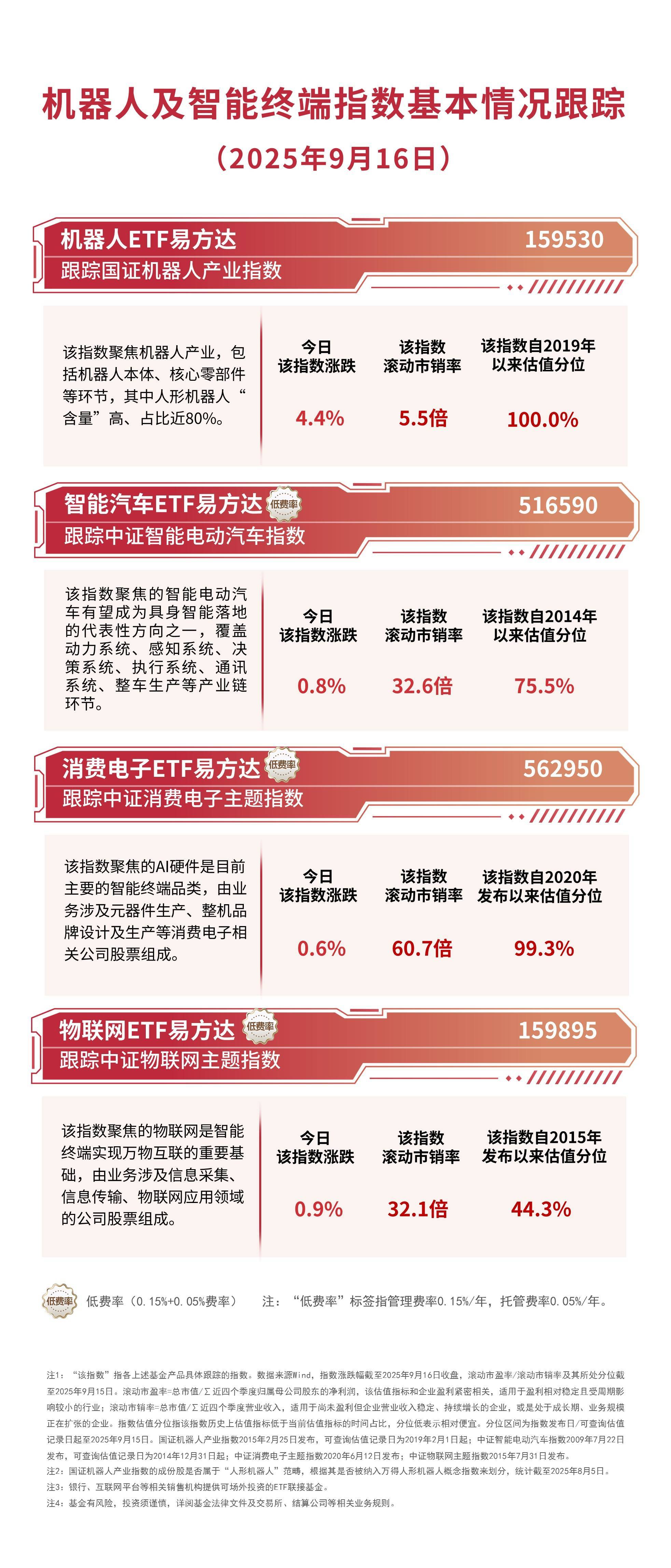
Group 1 - The core concept of humanoid robots and embodied intelligence has gained significant attention, leading to a strong performance in related sectors, with the National Robot Industry Index rising by 4.4% [1] - The ETF for robots, E Fund (159530), saw a net subscription of over 330 million units throughout the day, marking a continuous inflow of funds for six days, totaling nearly 2.4 billion yuan, with a latest scale of approximately 9.3 billion yuan, reaching a historical high [1] - Tesla announced at the recent All-In Summit that its Optimus V3 is nearing finalization, with plans for mass production in 2026 and a target of 1 million units to be shipped within five years [1] Group 2 - The CSI Intelligent Electric Vehicle Index, which focuses on smart electric vehicles, is expected to become a representative direction for embodied intelligence, covering various segments of the industry chain including power systems, perception systems, decision-making systems, execution systems, communication systems, and vehicle production [4] - The CSI Consumer Electronics Theme Index, which tracks AI hardware, is currently the main category of smart terminal products, consisting of stocks from companies involved in component production and complete product design and manufacturing [6]


股指维持震荡整理
Bao Cheng Qi Huo· 2025-09-16 10:44
1. Report Industry Investment Rating - No relevant content provided 2. Core Viewpoints - Today, all stock indices maintained a volatile consolidation trend. The total trading volume of the Shanghai, Shenzhen, and Beijing stock markets throughout the day was 2.367 trillion yuan, an increase of 63.9 billion yuan compared to the previous day [4]. - The credit data in August showed weakness, the consumption growth rate slowed down, and the inflation data remained weak, indicating weak demand from the real - sector. There is a strong expectation for the introduction of policies to stabilize demand in the future, and the critical window period for policy introduction is expected to be in October [4]. - In terms of capital, incremental funds have been continuously flowing into the stock market. The non - bank deposits increased significantly in July and August, and the margin trading balance remained at a high level, indicating that the stock market has continuously attracted incremental funds. However, due to the significant increase in the valuations of some stocks in the early stage, there is still a willingness among profit - taking funds to take profits, which also leads to short - term technical adjustment pressure on the stock indices. In the future, focus on the game between the profit - taking rhythm of funds and the fermentation of policy expectations [4]. - In general, the stock indices are expected to experience wide - range fluctuations in the short term. Currently, the implied volatility of options is in the normal range. Considering the long - term upward trend of the stock indices, investors can continue to hold bull spreads or ratio spreads [4]. 3. Summary by Related Catalogs 3.1 Option Indicators - On September 16, 2025, the 50ETF fell 0.48% to close at 3.082; the 300ETF (Shanghai Stock Exchange) fell 0.19% to close at 4.620; the 300ETF (Shenzhen Stock Exchange) fell 0.23% to close at 4.765; the CSI 300 Index fell 0.21% to close at 4523.34; the CSI 1000 Index rose 0.92% to close at 7483.63; the 500ETF (Shanghai Stock Exchange) rose 0.77% to close at 7.282; the 500ETF (Shenzhen Stock Exchange) rose 0.73% to close at 2.907; the GEM ETF rose 0.72% to close at 3.059; the Shenzhen 100ETF remained unchanged at 3.450; the SSE 50 Index fell 0.50% to close at 2947.82; the STAR 50ETF rose 1.21% to close at 1.43; the E Fund STAR 50ETF rose 1.23% to close at 1.39 [7]. - The trading volume PCR and position PCR of various options on September 16, 2025, and their changes compared to the previous trading day are provided, including those of 50ETF options, 300ETF options (Shanghai and Shenzhen Stock Exchanges), CSI 300 Index options, CSI 1000 Index options, 500ETF options (Shanghai and Shenzhen Stock Exchanges), GEM ETF options, Shenzhen 100ETF options, SSE 50 Index options, STAR 50ETF options, and E Fund STAR 50ETF options [8]. - The implied volatility of at - the - money options and the 30 - trading - day historical volatility of the underlying assets of various options in September or October 2025 are provided, including those of 50ETF options, 300ETF options (Shanghai and Shenzhen Stock Exchanges), CSI 300 Index options, CSI 1000 Index options, 500ETF options (Shanghai and Shenzhen Stock Exchanges), GEM ETF options, Shenzhen 100ETF options, SSE 50 Index options, STAR 50ETF options, and E Fund STAR 50ETF options [9][10]. 3.2 Related Charts - For each type of option (such as 50ETF options, 300ETF options, etc.), relevant charts are provided, including the underlying asset's trend chart, option volatility chart, trading volume PCR chart, position PCR chart, implied volatility curve chart, and at - the - money implied volatility chart for different terms [11][22][35][38][51][66][79][93][106][119][134][141].
4244只ETF涨幅靠前的5大板块,今年谁跑得最快?
Sou Hu Cai Jing· 2025-09-16 10:11
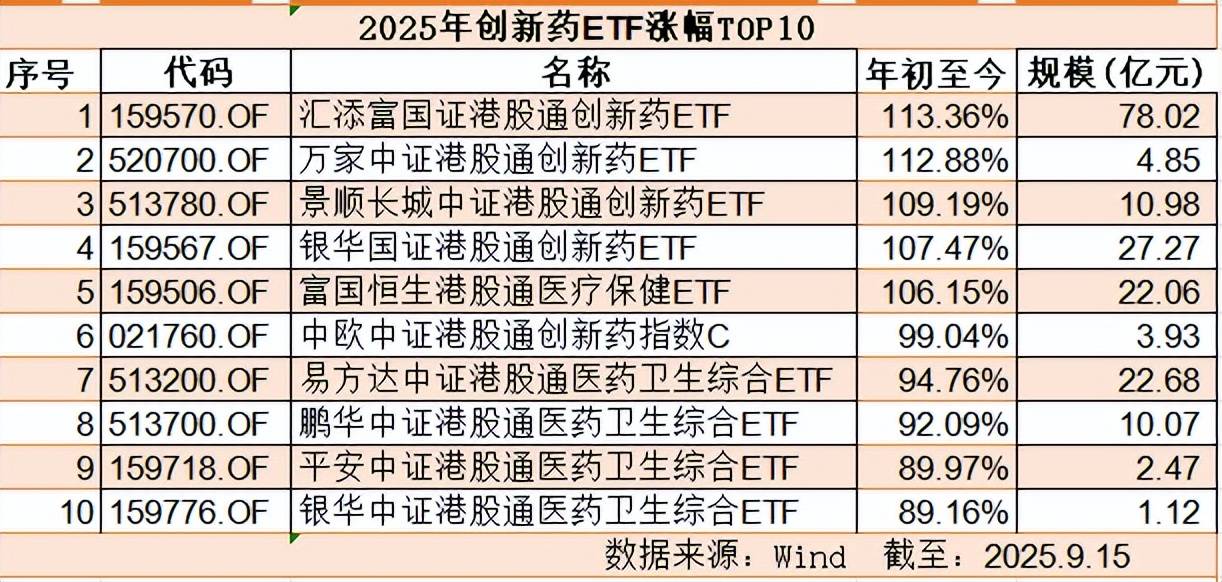
Core Insights - As of September 15, 2025, 56.93% of the 22,731 open-end funds (excluding money market and QDII) have outperformed the CSI 300 index, which has increased by 15.2% this year [1][2]. Group 1: Performance of ETFs - The top-performing ETF this year is the Huatai-PB Innovation Drug ETF, which has risen by 113.36% [1][3]. - Other ETFs with over 100% growth include: - Wanjia CSI Hong Kong Stock Connect Innovation Drug ETF at 112.88% - Invesco Great Wall CSI Hong Kong Stock Connect Innovation Drug ETF at 109.19% - Yinhua CSI Hong Kong Stock Connect Innovation Drug ETF at 107.47% - Fuguo Hang Seng Hong Kong Stock Connect Healthcare ETF at 106.15% [1][3]. - The TMT sector ranks second in ETF performance, with the top ETF being the Huaxia CSI 5G Communication Theme ETF, which has increased by 112.87% [4][5]. - The third-best performing sector is the dual innovation growth, particularly in artificial intelligence, with the top ETF being the Huabao Growth ETF, which has risen by 79.75% [6][7]. - The gold industry ETF ranks fourth, led by the Yongying CSI Hong Kong and Shanghai Gold Industry ETF, which has increased by 75.39% [8][10]. - The rare earth and non-ferrous metal industry ETF ranks fifth, with the top performer being the E Fund CSI Rare Earth Industry ETF, which has risen by 72.54% [11][12]. Group 2: Market Drivers - The strong performance of the innovation drug sector is attributed to global capital reassessing Chinese assets driven by domestic innovation and significant revenues from international markets [2]. - The TMT sector's growth is primarily driven by the artificial intelligence industry, which has attracted global capital to reassess Chinese assets [4][6]. - The rise in the gold industry is linked to expectations of U.S. interest rate cuts and global trade risks stemming from geopolitical tensions [9]. - The rare earth sector's performance is influenced by the ongoing U.S.-China trade tensions, particularly regarding rare earth products [11].
机器人产业指数高开高走涨2.8%,机器人ETF易方达(159530)连续获资金加仓
Sou Hu Cai Jing· 2025-09-16 05:04
Group 1 - The core focus of the article is on the performance of the Internet of Things (IoT) ETF managed by E Fund, which tracks the CSI Internet of Things Theme Index, highlighting its significance in the smart terminal sector for achieving connectivity among devices [3][4]. - As of the midday close, the index experienced a fluctuation of 0.6% with a rolling price-to-sales ratio of 60.7 times, indicating a high valuation level [3]. - Since its inception in 2015, the index has shown a valuation percentile of 99.3%, reflecting strong investor interest and market performance [3]. Group 2 - The index is composed of stocks from companies involved in information collection, transmission, and applications within the IoT sector, emphasizing its foundational role in the industry [3]. - The index also recorded a slight increase of 0.4% with a rolling price-to-sales ratio of 32.1 times, suggesting a more moderate valuation compared to its historical performance [3]. - The overall valuation percentile of 44.3% indicates a relatively balanced market position for the index compared to its peers [3].

机器人ETF易方达(159530)上周连续“吸金”,今日再获超2.5亿份净申购
Mei Ri Jing Ji Xin Wen· 2025-09-15 14:02
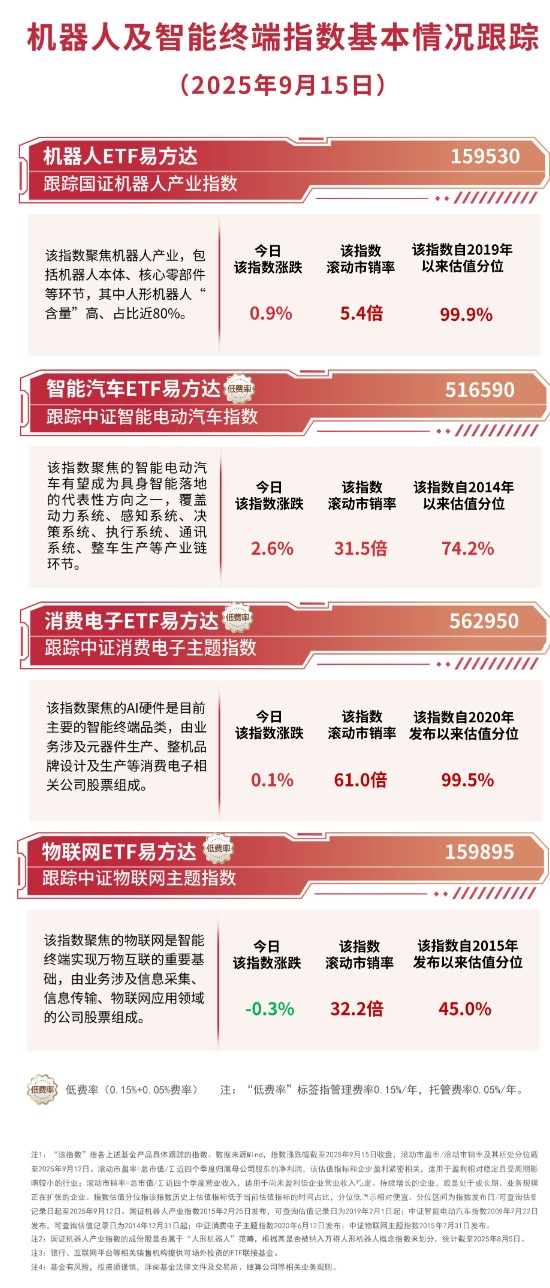
Group 1 - The China Securities Intelligent Electric Vehicle Index increased by 2.6%, while the National Securities Robotics Industry Index rose by 0.9%. The China Securities Consumer Electronics Theme Index saw a slight increase of 0.1%, and the China Securities Internet of Things Theme Index decreased by 0.3% [1] - The E Fund Robotics ETF (159530) experienced a net subscription of over 250 million shares throughout the day. According to Wind data, this product has seen a continuous net inflow of funds for five consecutive days, totaling nearly 2 billion yuan, with the latest scale reaching approximately 8.8 billion yuan, marking a historical high [1]
全球流动性宽松在即,借道恒生科技ETF把握港股修复机遇
Sou Hu Cai Jing· 2025-09-15 09:52
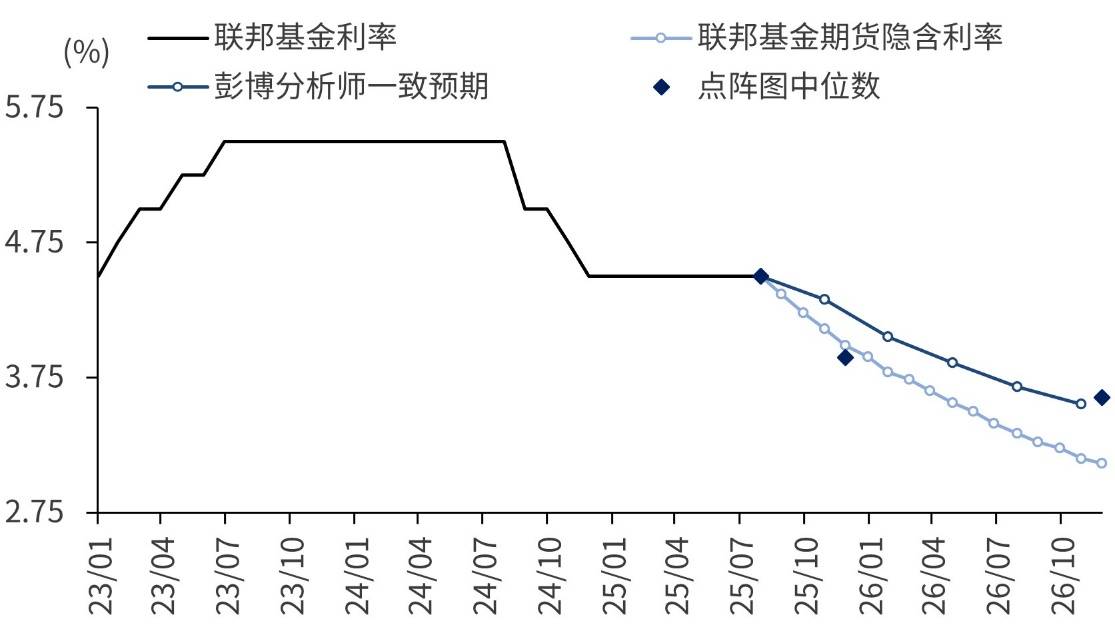
Core Viewpoint - The recent U.S. CPI data aligns with market expectations, reinforcing the anticipation of interest rate cuts by the Federal Reserve, which is expected to benefit emerging markets like Hong Kong stocks [1] Group 1: Market Reactions - Following the CPI data release, the U.S. dollar weakened, and U.S. Treasury yields declined significantly, with a 90% expectation for a 75 basis point rate cut by the end of the year and calls for a 50 basis point cut in September [1] - The liquidity easing trend is approaching, indicating a potential influx of capital into markets, particularly benefiting Hong Kong stocks [1] Group 2: Hong Kong Stock Market Dynamics - Despite a bullish sentiment in A-shares, Hong Kong stocks are still hovering around the 25,000-point mark, leading to skepticism among investors regarding future market performance [4] - Year-to-date, the Hang Seng Tech Index has been a leading indicator, with a strong start in Q1 driven by AI narratives, while A-shares only began to catch up in Q3 due to liquidity support [4] Group 3: Challenges and Opportunities - Current constraints on Hong Kong stocks include lower EPS growth expectations for 2025 at -2.7% compared to 6.9% for the CSI 300, high Hibor rates limiting foreign capital inflow, and a narrowing valuation advantage with the AH premium dropping to 122% [7] - A potential shift could occur with the onset of interest rate cuts, leading to a rapid decline in Hong Kong dollar interest rates and increased foreign capital inflow [7] Group 4: Sector Analysis - The technology sector in Hong Kong shows positive signals despite a downward adjustment in 2025 earnings expectations due to increased e-commerce investments, with large-cap company valuations rising by 41% [8] - The current P/E ratio for the tech sector is approximately 16 times, lower than the U.S. market's 24 times, with a projected compound growth rate of 11% from 2024 to 2026 [8] Group 5: Investment Strategy - Investors are advised to adopt a "barbell strategy," balancing aggressive assets in A-shares with defensive positions in Hong Kong stocks benefiting from interest rate cuts and earnings recovery [8] - The E Fund Hang Seng Tech ETF is highlighted as a product positioned for performance recovery and liquidity improvement, covering key sectors such as internet platforms, semiconductors, and innovative pharmaceuticals [8]
金工股票策略环境监控周报:本周宽基指数普涨但情绪降温近期可重点考虑投资组合的抗风险能力-20250915
Zhao Shang Qi Huo· 2025-09-15 08:12
Quantitative Models and Construction Methods 1. Model Name: Barra Style Factors - **Model Construction Idea**: The model aims to capture the performance of various style factors in the equity market, such as momentum, size, and residual volatility[12][27] - **Model Construction Process**: The model calculates the returns of different style factors over a specified period. For example, the momentum factor return is calculated as: $$ \text{Momentum Factor Return} = \frac{\sum (\text{Stock Returns} \times \text{Momentum Scores})}{\sum \text{Momentum Scores}} $$ where the momentum scores are derived from the past performance of stocks[12][27] - **Model Evaluation**: The model effectively captures the performance of different style factors, providing insights into market trends and investor behavior[12][27] 2. Model Name: Excess Return Monitoring Model - **Model Construction Idea**: This model monitors the relative performance of small and mid-cap indices against a large-cap benchmark to capture market style rotation signals[86] - **Model Construction Process**: The model calculates the rolling 20-day excess returns of indices such as CSI 2000, CSI 1000, and CSI 500 relative to the CSI 300. For example: $$ \text{Excess Return} = \text{CSI 1000 Return} - \text{CSI 300 Return} $$ The model then tracks the percentile rank of these excess returns over a three-year period to identify significant deviations[86] - **Model Evaluation**: The model provides a systematic approach to detect market style rotations, aiding in strategic asset allocation decisions[86] Model Backtest Results - **Barra Style Factors**: - **Momentum Factor**: Weekly return 0.61%, monthly return 0.96%, annualized Sharpe ratio 2.20[12][27] - **Size Factor**: Weekly return 0.56%, monthly return 1.71%, annualized Sharpe ratio -1.78[12][27] - **Residual Volatility Factor**: Weekly return -0.48%, monthly return -0.77%, annualized Sharpe ratio -1.65[12][27] - **Excess Return Monitoring Model**: - **CSI 1000 vs. CSI 300**: 20-day rolling return -3.32%, 3-year percentile 17.0%[86] - **CSI 2000 vs. CSI 300**: 20-day rolling return -4.78%, 3-year percentile 15.1%[86] - **CSI 500 vs. CSI 300**: 20-day rolling return 1.21%, 3-year percentile 66.7%[86] Quantitative Factors and Construction Methods 1. Factor Name: Momentum - **Factor Construction Idea**: The momentum factor captures the tendency of stocks that have performed well in the past to continue performing well in the future[12][27] - **Factor Construction Process**: The momentum score for each stock is calculated based on its past returns over a specified period, typically 12 months. The factor return is then computed as: $$ \text{Momentum Factor Return} = \frac{\sum (\text{Stock Returns} \times \text{Momentum Scores})}{\sum \text{Momentum Scores}} $$ where the momentum scores are derived from the past performance of stocks[12][27] - **Factor Evaluation**: The momentum factor has shown consistent positive returns, indicating its effectiveness in capturing market trends[12][27] 2. Factor Name: Size - **Factor Construction Idea**: The size factor captures the performance difference between small-cap and large-cap stocks[12][27] - **Factor Construction Process**: The size score for each stock is calculated based on its market capitalization. The factor return is then computed as: $$ \text{Size Factor Return} = \frac{\sum (\text{Stock Returns} \times \text{Size Scores})}{\sum \text{Size Scores}} $$ where the size scores are derived from the market capitalization of stocks[12][27] - **Factor Evaluation**: The size factor has shown mixed performance, reflecting the varying investor preferences for small-cap versus large-cap stocks over time[12][27] Factor Backtest Results - **Momentum Factor**: Weekly return 0.61%, monthly return 0.96%, annualized Sharpe ratio 2.20[12][27] - **Size Factor**: Weekly return 0.56%, monthly return 1.71%, annualized Sharpe ratio -1.78[12][27] - **Residual Volatility Factor**: Weekly return -0.48%, monthly return -0.77%, annualized Sharpe ratio -1.65[12][27]
国内ETF规模达5.24万亿元 刷新历史纪录
Zheng Quan Shi Bao Wang· 2025-09-15 07:56
Core Insights - The ETF market in China is experiencing significant growth, with the total number of ETFs reaching 1,293 and total assets under management hitting 5.24 trillion yuan as of September 14, 2025, reflecting a year-on-year increase of 29.69% in quantity and 49.71% in net asset value [1][2] Group 1: ETF Market Growth - The total number of ETFs has increased by 29.69% compared to September 2024, with total shares rising by 23.77% and net asset value increasing by 49.71% [1] - The domestic ETF market surpassed 3 trillion yuan in September 2024, reached 4 trillion yuan in April 2025, and crossed 5 trillion yuan in August 2025 [1] - The current sizes of various types of ETFs include stock ETFs at 3.52 trillion yuan, bond ETFs at 572.49 billion yuan, commodity ETFs at 161.43 billion yuan, currency ETFs at 155.89 billion yuan, and cross-border ETFs at 825.36 billion yuan [1] Group 2: Large-Scale ETFs - There are currently 108 ETFs with a scale exceeding 10 billion yuan, accounting for approximately 76% of the total market size, which is around 4 trillion yuan [2] - Seven ETFs have reached a scale of over 100 billion yuan, with the top three being Huatai-PB's CSI 300 ETF at 417.72 billion yuan, E Fund's CSI 300 ETF over 300 billion yuan, and Huaxia Fund's CSI 300 ETF at 222.46 billion yuan [2] Group 3: Investment Strategies and Efficiency - Investors can utilize broad-based ETFs to track overall market performance or industry/theme ETFs to capitalize on investment hotspots, often achieving better results than investing in individual stocks [3] - ETFs offer superior trading efficiency compared to traditional open-end funds, allowing for real-time trading and quicker access to funds, with T+0 trading available for certain types of ETFs [3]
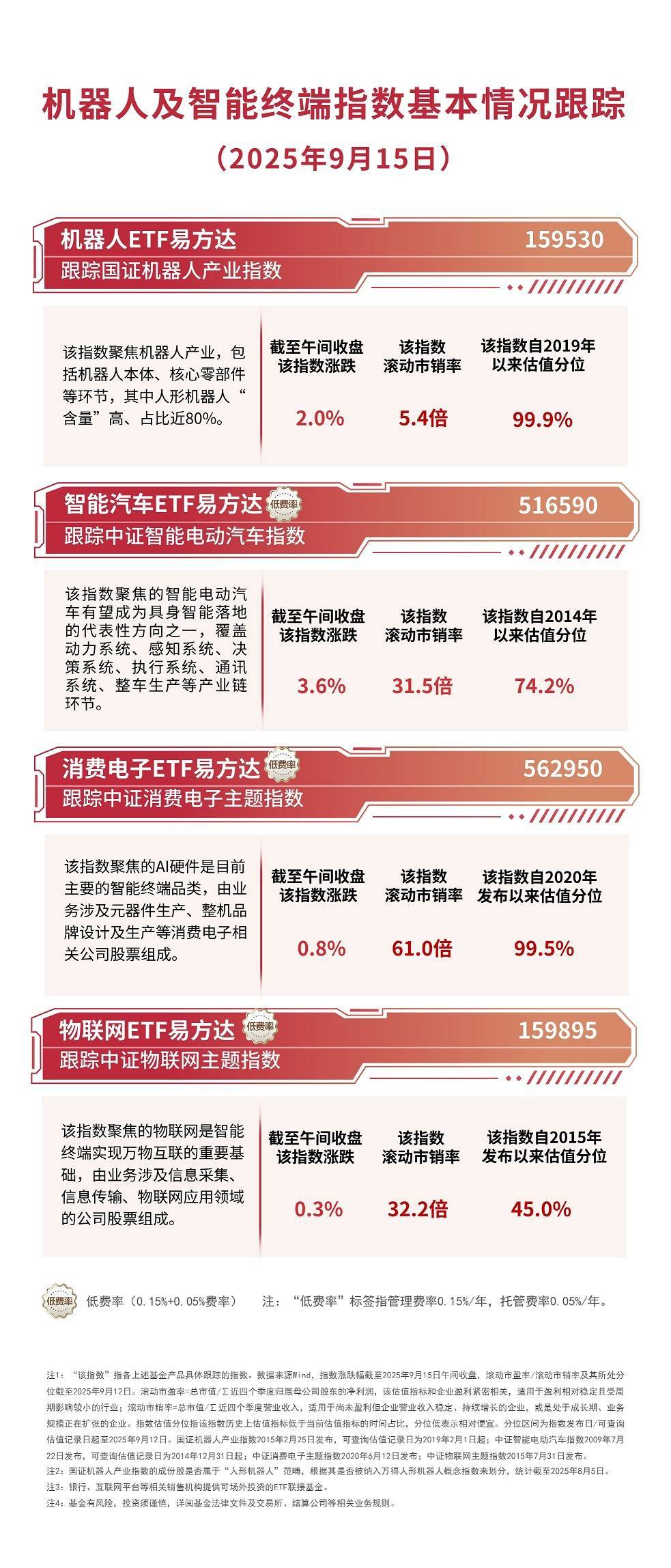
机器人产业指数低开高走涨近2%,机器人ETF易方达(159530)半日获近1.5亿份净申购
Sou Hu Cai Jing· 2025-09-15 05:00
Group 1 - The core focus of the article is on the performance of the Internet of Things (IoT) ETF managed by E Fund, which tracks the CSI Internet of Things Theme Index, highlighting its significance in the smart terminal sector for achieving connectivity among devices [3] - As of the midday close, the index experienced a fluctuation of 0.3%, with a rolling price-to-sales ratio of 32.2 times, indicating a valuation that is relatively high compared to historical levels [3] - Since its inception in 2015, the index has shown a valuation percentile of 45.0%, suggesting that it has performed better than nearly half of the comparable indices in the market [3] Group 2 - The index comprises stocks from companies involved in information collection, transmission, and IoT applications, emphasizing the diverse nature of the sector [3] - The ETF's performance is closely monitored, with a current market capitalization of approximately 159.895 billion, reflecting investor interest in the IoT space [3] - The article indicates that the IoT sector is crucial for the development of smart devices, which are essential for the broader trend of digital transformation [3]
大盘震荡上行,A500ETF易方达(159361)、沪深300ETF易方达(510310)等产品助力布局A股核心资产
Sou Hu Cai Jing· 2025-09-15 04:47
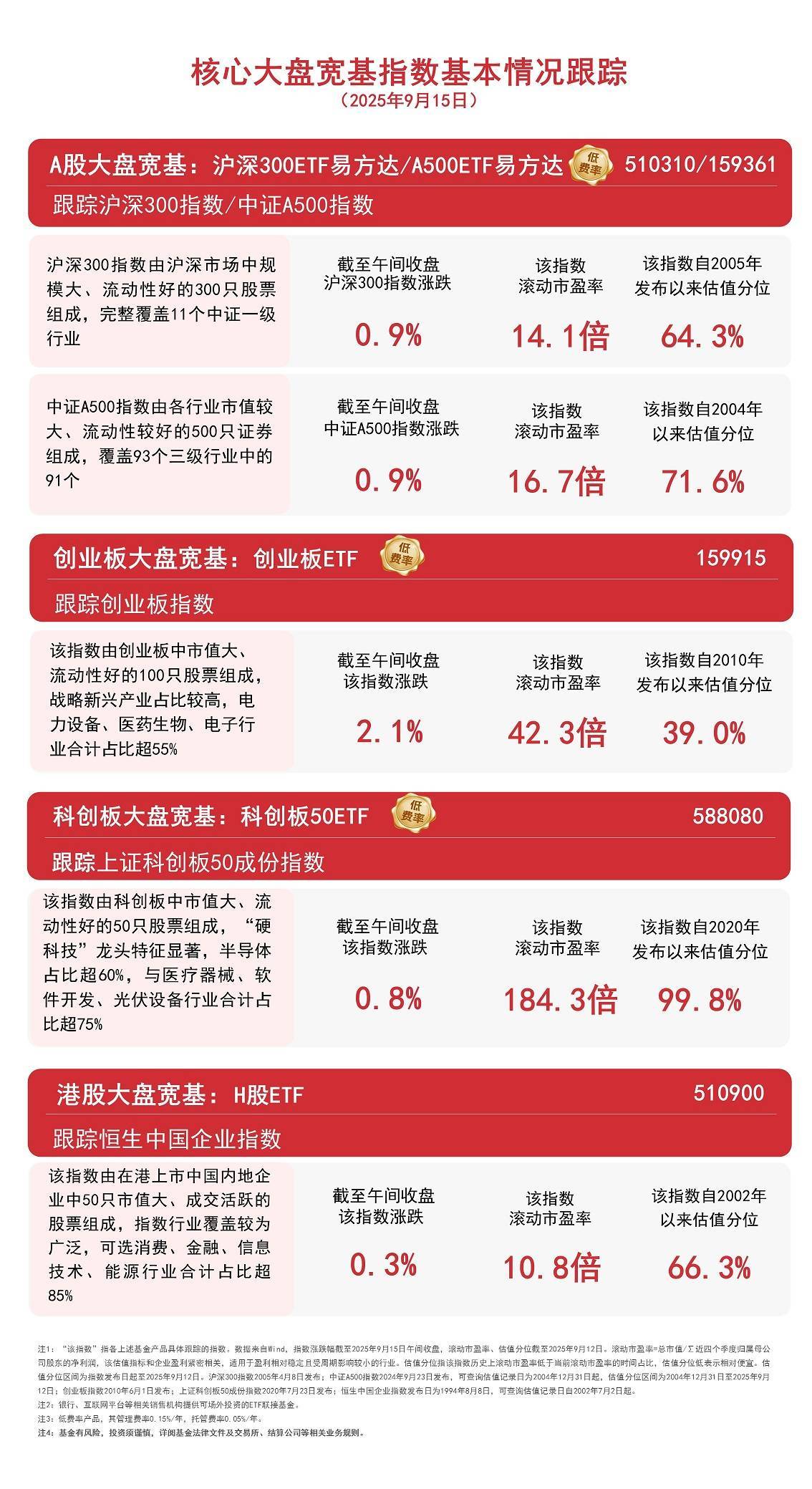
Market Overview - A-shares saw a collective rise in the three major indices during the morning session, with total market turnover exceeding 1.5 trillion yuan [1] - The gaming, battery, energy metals, and robotics sectors led the gains, while real estate, precious metals, steel, and computing power sectors experienced declines [1] - By midday, the CSI A500 index rose by 0.9%, the CSI 300 index increased by 0.9%, the ChiNext index surged by 2.1%, the STAR Market 50 index climbed by 0.8%, and the Hang Seng China Enterprises Index was up by 0.3% [1] A-share Indices Performance - The CSI 300 index, composed of 300 large and liquid stocks, recorded a rise of 0.9% with a rolling P/E ratio of 14.1 times and a valuation percentile of 64.3% since its inception in 2005 [3] - The CSI A500 index, which includes 500 stocks from various industries, also increased by 0.9%, with a rolling P/E ratio of 16.7 times and a valuation percentile of 71.6% since its inception in 2004 [3] - The ChiNext index, focusing on high-growth sectors, rose by 2.1%, with a rolling P/E ratio of 42.3 times and a valuation percentile of 39.0% since its inception in 2010 [3] - The STAR Market 50 index, consisting of 50 large-cap stocks, increased by 0.8%, with a rolling P/E ratio of 184.3 times and a valuation percentile of 99.8% since its inception in 2020 [3] Hong Kong Market Performance - The Hang Seng China Enterprises Index, which tracks 50 large and actively traded stocks listed in Hong Kong, rose by 0.3%, with a rolling P/E ratio of 10.8 times and a valuation percentile of 66.3% since its inception in 2002 [4]