
腾讯控股

Search documents
关于首届AI春节红包大战的5个看法
Ge Long Hui· 2026-02-12 21:28
价值50亿的红包正在向你涌来! 春节倒计时,大厂红包大战的氛围越来越浓。文心、元宝、千问、豆包,这些在科技圈耳熟能详的AI产品,正试图借助一年一度的春节流量洪峰从极客玩具 升级成大众工具。 熟悉的红包营销手段,却有着截然不同的运营目标:AI的全民化破圈。 当大洋彼岸的OpenAI用GPT-5重塑一切,当Google的Gemini悄然融入数十亿用户的搜索框时,中国的科技大厂们坐不住了。这场被称为"首届AI春节红包 大战"的混战背后,是2025年中国互联网关于AI的集体焦虑,或者说,FOMO(Fear of Missing Out,害怕错过)情绪的集中爆发。 无需多言,红包大战一定会成为AI技术普及的催化剂。十一年前的春节,微信红包引爆移动支付,让全球用户跑步进入无现金支付时代。但现在,一个问题 却不容回避:当前AI产品成熟度到了移动支付当时的状态吗?如果没有,声势浩大的AI红包大战,还能复刻当年移动支付大战的成功叙事吗? AI红包大战能否复刻移动支付大战? 回望移动互联网时代那几场经典的红包战役,移动支付、网约车、短视频、外卖都有一个共同特征:加速的是成熟度极高的应用级产品。比如2014年红包 大战爆发时,扫码 ...



12家第三方火车票网络销售平台被约谈,揭开的问题需要彻查清楚
Xin Lang Cai Jing· 2026-02-12 20:34
加速包减速,约谈别止步。腊月二十三,小年。携程、去哪儿、飞猪等12家平台,被北京市市场监管局 请去"喝茶"。茶不好喝,话很直接:下架误导产品、禁用12306标识、明码标价——四项整改,条条打 在七寸。 这场约谈,揭开的是一盘盘"灰色火锅"。 所谓"双通道VIP抢票""光速加速包",乍听是技术赋能,实则是把12306免费候补功能剥皮拆骨、浇上浓 汤,再以三倍价钱端回桌上。消费者花60元买"加速",平台转手用他的账号提交一个免费候补订单,抢 到票了邀功,抢不到退款了事。稳赚不赔,无本万利。 这不是创新,是障眼法;不是服务,是智商税。 更耐人寻味的是,这12家平台,没有一家是小作坊。携程、美团、滴滴、高德、百度、腾讯——全是互 联网江湖的头部玩家。他们不缺技术,不缺法务,更不缺钱。他们缺的,是对规则的那点敬畏。 这就好比五星级酒店在厨房后门卖地沟油,吃相难看,胆子还大。 有人问:为什么年年春运年年骂,年年治理年年犯? 答案藏在"约谈"两个字里。约谈是行政提醒,不是行政处罚;是请来喝茶,不是请去法院。若平台算清 了账——违规收益远高于五十万罚款,那约谈就成了生意经:"这次整改,下次继续"。 平台称加速,实售旧葫芦。 ...
深圳:迈向“AI智能体之城”
Xin Lang Cai Jing· 2026-02-12 20:33
Core Insights - The year 2026 is anticipated to be the "year of AI agents," with significant developments in Shenzhen, including the establishment of the Shenzhen Leading Edge Intelligent Open Research Institute and the launch of the SkillsUI platform by Shenzhen Tuzhan Intelligent Technology Co., Ltd. [1][2] - AI agents are transitioning from a text-based interaction model to a task-execution model, which is expected to reshape the internet's development logic over the past 30 years [2][3]. - Key challenges for the deployment of AI agents include data privacy, bandwidth costs, and latency issues associated with centralized cloud computing [2]. Industry Developments - Shenzhen is focusing on the edge AI agent sector, leveraging its strong smart terminal industry to push for advancements in chips, algorithms, and collaborative AI [1][4]. - The Shenzhen Leading Edge Intelligent Open Research Institute will conduct research on 12 key areas to provide technological support for the edge AI industry [4][7]. - The "OR" strategy combines open-source HarmonyOS with RISC-V to create a new hardware and software ecosystem for the Internet of Things, while the "CA" strategy focuses on developing a self-sufficient chip ecosystem [5]. Product Innovations - The SkillsUI platform enables AI to evolve from a conversational agent to an executor, facilitating its integration into various devices such as smartphones, TVs, and smart glasses [3][5]. - The "Shen Xiao i" AI agent has been launched in seven application scenarios and has passed efficiency assessments by the China Academy of Information and Communications Technology [6]. Future Outlook - Shenzhen aims to become a global leader in the edge AI agent industry by focusing on core technology research and fostering collaboration between academia and industry [7][8]. - The goal is to establish a self-sufficient core technology capability in the edge AI sector by 2030, enhancing Shenzhen's competitiveness in the global supply chain [8].
不卷通用大模型,网易AI的“错位”生存法则
Sou Hu Cai Jing· 2026-02-12 20:08
Core Viewpoint - The article discusses how NetEase has chosen a pragmatic approach in the AI era, avoiding the costly competition of developing general-purpose AI models while focusing on application-level innovations and maintaining a strong R&D investment [3][20]. Group 1: Market Context - During the recent Spring Festival, major tech companies like Alibaba, Tencent, ByteDance, and Baidu spent over 4.5 billion yuan on "red envelopes," marking one of the most expensive tech competitions in history [2]. - NetEase, however, did not participate in this "red envelope war" or the race for large AI models, leading to questions about whether it is falling behind in the AI era [2][3]. Group 2: Business Strategy - NetEase's strategy is characterized by a focus on practical applications rather than competing in the foundational AI model space, which is seen as a more sustainable approach for most companies [3][20]. - The company has maintained a consistent R&D expenditure of over 15% of its revenue, with a projected R&D budget of 17.7 billion yuan for 2025, focusing on application layers rather than general model training [4][20]. Group 3: AI Integration in Products - NetEase has developed thousands of AI production pipelines that enhance various aspects of game development, achieving significant efficiency improvements, such as a 70% increase in design efficiency and a 50% boost in development efficiency through AI tools [6][8]. - The company has also applied AI in its educational and music platforms, enhancing user experience and operational efficiency without pursuing a general-purpose model [6][8]. Group 4: Financial Performance - In 2025, NetEase's total revenue is expected to reach 112.6 billion yuan, with operating profit at 35.8 billion yuan, driven primarily by its gaming segment, which saw a net revenue increase of 11% year-on-year [13][20]. Group 5: Future Growth Potential - The potential for growth in the gaming industry is seen in AI-native games, which are expected to generate over 30 billion yuan by 2027, contributing to a 10% market increase [13][20]. - NetEase's focus on integrating AI into its gaming products positions it well to capitalize on this emerging market, as it transitions from traditional gaming to AI-driven experiences [13][20].

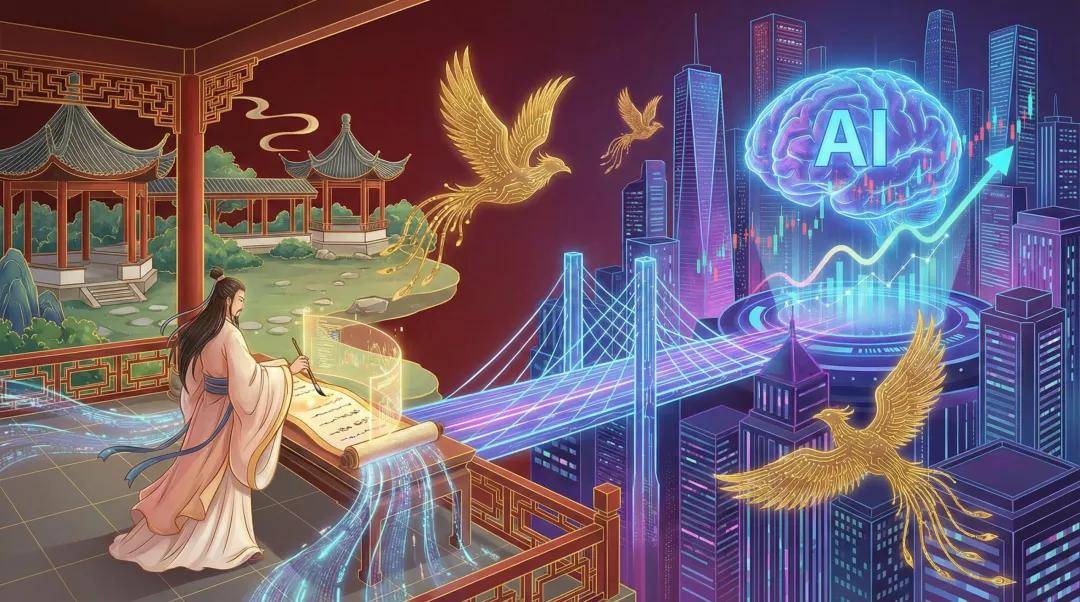
优刻得领衔云计算服务商步入涨价周期
Shang Hai Zheng Quan Bao· 2026-02-12 17:42
Group 1: Core Insights - The rapid growth of AI applications is driving an increase in demand for computing power, providing cloud service providers with the justification to raise prices [1][4] - Multiple cloud computing service providers indicate that the price hikes are not temporary fluctuations but signify a structural turning point in the industry, with an impending wave of price increases across the sector [1][5] - The entire computing power industry is experiencing a high prosperity cycle, with related listed companies showing continuous growth in performance due to surging AI demand [1][4] Group 2: Price Increases and Market Reactions - On February 11, 2026, Youke De announced a price increase for all products and services starting March 1, 2026, citing significant and structural increases in infrastructure costs due to global supply chain disruptions [4][5] - Following the announcement, A-share computing power stocks surged, with significant increases in prices for CPOs and optical chips, indicating strong market reactions to the price hikes [4][5] - North American cloud computing leaders have already begun announcing price increases, with Amazon Web Services raising its EC2 machine learning capacity block prices by approximately 15% and Google Cloud planning increases of up to 100% [7] Group 3: Supply and Demand Dynamics - The surge in AI model training and inference demand is expected to increase global AI computing power demand to ten times that of 2025 by 2026, with significant increases in token consumption for single tasks [7] - Supply-side constraints, including skyrocketing storage and GPU hardware prices and extended delivery times for AI servers, are contributing to rising computing power costs [7] - The cloud computing rental service sector is entering a growth inflection point, driven by mismatched supply and demand alongside high energy costs [7] Group 4: Industry Outlook - The optical module sector is expected to remain a focal point in 2026, with strong demand, performance, and technological iterations supporting its growth [8] - The computing power industry chain consists of upstream core components like GPUs and high-performance CPUs, midstream data transmission and network-related components, and downstream computing service infrastructure [8] - Investment opportunities in the computing power industry are deemed significant, particularly in the midstream sector, as capital expenditures from major cloud providers continue to grow [8]

任泽平带你看前沿科技:2026研学计划
泽平宏观· 2026-02-12 16:06
Core Viewpoint - The article emphasizes the importance of practical learning experiences in cutting-edge technology sectors, highlighting the value of direct engagement with leading companies and experts to enhance investment insights and opportunities [12][24]. Schedule Overview - The schedule for 2025 includes visits to major technology companies such as Huawei, BYD, Tencent, and others, focusing on sectors like artificial intelligence, new energy, and biotechnology [23][24]. - Specific events are planned, including closed-door investment research meetings and thematic explorations in various cities, showcasing advancements in robotics, autonomous driving, and digital ecosystems [8][9][10]. Learning Experience - Participants will engage in deep explorations of technology companies, gaining insights into the full chain of technology development from laboratory to industrialization [12]. - The program includes face-to-face dialogues with founders and executives, providing critical insights into strategic decisions and industry disruptions [12]. Participant Feedback - Feedback from participants highlights the transformative impact of the program on their understanding of macroeconomic trends and investment strategies, emphasizing the importance of continuous learning and adaptation in a rapidly changing environment [46][47][48].





深夜,美股风云突变,大型中概股普跌,存储概念股冲高回落!大量散户涌入股市,高盛:对冲基金正大举卖出 | 美股开盘
Mei Ri Jing Ji Xin Wen· 2026-02-12 16:02
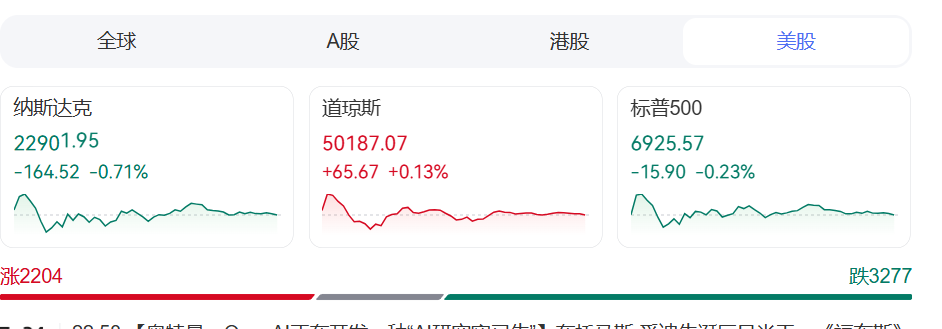
Market Overview - The U.S. stock market opened higher but later declined, with the Nasdaq down 0.71%, the Dow Jones up 0.13%, and the S&P 500 also turning negative, with over 3,200 stocks declining [1] - The average daily trading volume in the U.S. stock market reached a record $1.03 trillion in January, a 50% increase compared to the same period in 2025, with over 19 billion shares traded daily, marking the second-highest in history [8] Employment Data - The number of initial jobless claims in the U.S. last week was reported at 227,000, slightly above the forecast of 224,000 and down from the previous week's 231,000 [3] Technology Sector Performance - The performance of the "Magnificent Seven" tech stocks was mixed, with Nvidia and Google slightly up by 0.1%, while Tesla, Microsoft, Meta, Amazon, and Apple saw declines, with Apple dropping nearly 2% and its market capitalization falling below $4 trillion [3] - The semiconductor sector showed volatility, with stocks like SanDisk rising over 5% and Micron Technology up over 2%, while other tech stocks faced declines [3][4] Hedge Fund Activity - Hedge funds have significantly increased their short positions in U.S. stocks, with the nominal short selling of individual stocks reaching the highest level since 2016, as concerns over AI's disruptive potential have led to market volatility [9] - The technology sector, particularly software stocks, experienced the most significant sell-off, with net outflows reaching the second-highest level in five years, while semiconductor stocks saw some net buying [10][11] Defensive Sector Rotation - Hedge funds are rotating into defensive sectors, with healthcare becoming the most net bought sector last week, surpassing industrials as the preferred destination for fund inflows this year [11]

思科重挫9%,深夜美股软件股遭抛售,存储芯片走强,希捷科技涨11%,金银油集体下跌
21世纪经济报道· 2026-02-12 15:59
Market Overview - The US stock market showed mixed results with the Dow Jones up by 0.46%, while the Nasdaq fell by 0.31% and the S&P 500 increased by 0.09% [1] - Major tech stocks had varied performances, with Nvidia rising by 0.7% and Amazon and Apple both declining by over 1% [3] Semiconductor Sector - Micron Technology reported that its new NAND flash wafer factory is on track to begin shipments in the second half of 2028, with HBM4 customer shipments expected to increase in the first quarter of 2028, one quarter ahead of schedule [4] - The CFO of Micron indicated that market demand significantly exceeds supply, predicting that supply constraints will persist until after 2026 [4] Retail Sector - Notable gains were observed in major US retailers, with Walmart rising over 2% to reach a historical high, and Macy's, Kohl's, and Ross Stores also seeing increases [4] - McDonald's reported a 9.5% year-over-year revenue growth in Q4, reaching $7 billion, with adjusted earnings per share of $3.12, exceeding expectations [4] Software Sector - Cisco experienced a significant drop of over 9%, marking its largest decline in 2023, due to disappointing gross margin guidance despite raising its annual forecast based on AI demand [4] - Other software stocks showed mixed results, with Fastly surging over 60% post-earnings, while Applovin plummeted over 14% [4][5] Chinese Stocks - Chinese stocks listed in the US faced collective declines, with the Nasdaq Golden Dragon China Index falling by 1.4%, and major companies like Tencent Music and Pinduoduo dropping by nearly 6% and 2.5% respectively [4][6] Commodity Market - Precious metals saw a decline, with spot gold down by 0.37% at $5065 per ounce and silver down by 1.43% at $83 per ounce [6][7] - International oil prices also fell, with Brent crude futures down about 1% to $68.75 per barrel and WTI crude futures down about 1% to $63.99 per barrel [7] Cryptocurrency Market - The majority of cryptocurrencies experienced gains, with Bitcoin rising by 0.96%, remaining below $68,000, while over 118,000 individuals faced liquidation in the past 24 hours [9][10]


中国大模型“春节档”打响!等待消费级AI出“爆款”
硬AI· 2026-02-12 15:44
Core Viewpoint - The article discusses the competitive landscape of AI model releases during the Chinese New Year period, highlighting the shift from model performance to efficiency and practical applications, with DeepSeek's V4 model being a focal point for potential industry transformation [2][4][15]. Group 1: Industry Dynamics - The 2026 Chinese New Year is expected to see a surge in flagship model releases, with multiple companies, including ByteDance, Alibaba, and DeepSeek, preparing significant updates [4][5][8]. - ByteDance has already launched three models, signaling a strong market entry with its Seedance 2.0 model [4]. - Alibaba plans to release Qwen 3.5 in mid-February, supported by a substantial customer acquisition incentive [5]. - DeepSeek's V4 model is anticipated to enhance coding and long prompt processing capabilities, with a reported support for up to 1 million tokens [8][15]. Group 2: Competitive Implications - The simultaneous release of multiple models may lead to a "winner-takes-all" scenario, where underperforming models face significant disadvantages [9][10]. - The Chinese New Year period is characterized by scarce attention, making it crucial for companies to present credible flagship updates to remain relevant [12][13]. Group 3: DeepSeek's Strategic Focus - DeepSeek's potential release aims to improve efficiency through a novel "conditional memory" approach, which could shift expensive computations to more cost-effective retrieval operations [15][16]. - If successful, this could enable AI to transition from being an expensive "toy" to a cost-effective "tool," facilitating its integration into high-frequency consumer products [17]. Group 4: Beneficiaries of the Model War - Tencent is positioned as a major beneficiary of the upcoming model releases, leveraging its high-frequency communication platforms like WeChat and QQ to enhance user experience with improved AI capabilities [19][20]. - In contrast, Alibaba and Baidu may face a dual challenge: while stronger models can enhance user experience, a price war initiated by DeepSeek could pressure the entire API service market [21][22]. Group 5: Market Sentiment and Future Outlook - Despite the excitement in the capital markets, there is skepticism regarding the actual performance of consumer-facing AI models, with large-scale user testing during the Chinese New Year serving as a critical evaluation point [24][25]. - The true signal for adoption will be whether major players integrate AI as a default feature in high-frequency interfaces, which would drive sustained demand for AI capabilities [25]. Group 6: Valuation Perspectives - Morgan Stanley maintains a bullish outlook on model developers like Zhiyu and MiniMax, projecting significant long-term growth based on their advancements and market positioning [27][28]. - The valuation logic is shifting towards long-term profitability, with target prices set at 400 HKD for Zhiyu and 700 HKD for MiniMax, based on expected earnings by 2030 [29][30].


资产配置日报:押注科技-20260212
HUAXI Securities· 2026-02-12 15:31
Group 1 - The report highlights a stable recovery in the market, with the average amplitude of the last five days being 0.71, indicating a low volatility level since 2000 [2] - The technology sector has shown significant growth, with the ChiNext Index and the STAR Market Index rising by 1.32% and 1.56% respectively [1] - The overall A-share market saw an increase of 0.46%, with a trading volume of 2.16 trillion yuan, which is an increase of 159.7 billion yuan compared to the previous day [1] Group 2 - The report identifies four main investment themes post-Spring Festival: computing hardware driven by AI, semiconductor supply chain, energy related to computing infrastructure, and AI applications and large models [3][4] - The computing hardware sector is experiencing a high boom cycle, focusing on optical chips, modules, and storage solutions [3] - The semiconductor industry is characterized by supply tightness and high demand, with attention on various types of chips and semiconductor equipment [3] Group 3 - The energy sector is being driven by computing infrastructure, with active investments in power grid equipment and energy storage solutions [3] - AI applications are evolving, with a focus on cloud computing and hardware needs, as indicated by the rise in the Wind Computing Rental Index and Cloud Computing Index by 3.25% and 2.95% respectively [4] - The report notes that the Hong Kong dividend index has outperformed, rising by 0.18%, despite some volatility in the innovation and internet technology sectors [4] Group 4 - The central bank's liquidity support is evident, with a net injection of 17 billion yuan in medium-term funds before the Spring Festival, contributing to stable funding prices [5] - The report indicates a downward trend in bond yields, with the 10-year government bond yield falling to 1.77% [5] - The trading activity in the bond market shows a preference for 7-10 year government bonds, indicating strong buying interest from banks and funds [5] Group 5 - The commodity market is experiencing mixed performance, with precious metals showing mild recovery while industrial metals are generally rebounding [8] - The report notes a significant outflow of funds from the commodity index, with a net outflow of 8.467 billion yuan, particularly from the precious metals sector [8] - The report highlights the resilience of precious metals despite pressures from strong dollar movements and geopolitical uncertainties [9]