奔驰

Search documents
外资汽车供应链巨头,在中国落地“完全自主可控”
2 1 Shi Ji Jing Ji Bao Dao· 2025-04-28 08:36
Group 1 - The global automotive manufacturing landscape is undergoing significant transformation by 2025, with companies like Aptiv actively adjusting to these changes [1] - Aptiv is promoting a fully localized supply chain strategy in China, aiming for self-sufficiency in its OEM customer business and local OEM export business [1][2] - The company emphasizes a "China for China" approach, ensuring that its intellectual property and R&D capabilities are rooted in China [2] Group 2 - At the Shanghai Auto Show, Aptiv showcased localized intelligent automotive solutions, including a real-time operating system and virtualization platform, focusing on emerging industries [2] - The company aims to achieve 100% localization in its solutions, allowing for flexible partnerships with domestic suppliers [2][3] - The current domestic chip localization rate in China is only 15%, indicating significant room for growth in this area [2] Group 3 - Aptiv acknowledges the challenges in achieving higher localization rates for automotive-grade chips and is committed to strengthening its supply chain in China [3] - The company is actively collaborating with local partners to create an ecosystem that supports domestic OEMs in their export efforts [5][6] - Aptiv's strategy includes leveraging its capabilities to support the export of Chinese automotive innovations, particularly in the electric vehicle sector [6]

中国科技崛起的“六大效应”
Xin Hua Wang· 2025-04-28 01:11
Group 1 - China's technological innovation is achieving significant advancements across various fields, establishing itself as a global leader in areas such as AI, quantum computing, and digital technology [1][2] - China is recognized as the global "four crown king" in comprehensive R&D capabilities, leading in international patent applications, top technology clusters, total R&D personnel, and influential academic publications [2] - The "East Data West Calculation" project and other high-tech initiatives are enhancing China's strategic technological frontiers [2] Group 2 - The Chinese technology sector is driving consumption upgrades, with innovations like smart homes and AI-driven products becoming mainstream, thus boosting domestic economic circulation [3] - The rise of domestic alternatives in technology is strengthening China's self-reliance, with companies like BOE achieving a 98% localization rate in OLED screens [3] Group 3 - Foreign investment in China is expected to increase, with predictions that 2025 will be a pivotal year for global investors to reassess China's international competitiveness [4] - Reports from foreign institutions indicate that A-share market valuations are at historical lows, suggesting significant upside potential for investors [4][5] Group 4 - China's innovation ecosystem is becoming more robust, with local governments actively improving the business environment to foster innovation [7] - The Chinese government is providing strong leadership and strategic direction for technological self-reliance and innovation [7] Group 5 - The U.S. attempts to impose technological barriers on China have inadvertently accelerated China's innovation and development in critical technology areas [8][9] - American companies are increasingly concerned about losing access to the Chinese market, which could significantly impact their revenue and R&D investments [8] Group 6 - China's commitment to inclusive technology development is fostering a global "community of shared future," with initiatives aimed at benefiting developing countries [10] - Chinese technological advancements, such as the DeepSeek model, are democratizing AI and breaking the monopoly of advanced computing power [10] Group 7 - The decline of U.S. technological hegemony is evident as Chinese companies emerge as significant players in various sectors, challenging the traditional dominance of American firms [11] - Predictions indicate a decrease in the U.S. manufacturing sector's global market share, highlighting the challenges faced by American industries [11]
上海车展解码“中国智造”新范式
Zheng Quan Ri Bao· 2025-04-27 16:40
Group 1 - The 2025 Shanghai International Automobile Industry Exhibition has become the largest automotive exhibition globally, showcasing nearly 1,000 companies from 26 countries and regions, reflecting a significant evolution of the Chinese automotive industry from a "market follower" to a "standard setter" [1][2] - The shift in the automotive industry is characterized by a transition from performance competition to an integrated experience across all scenarios, with innovations such as BYD's "megawatt flash charging" technology and XPeng's split flying car [1][2] - Chinese brands are reshaping industry discourse through "full-stack self-research," exemplified by Huawei's ADS4 system and SenseTime's R-UniAD technology, indicating a maturation of the "human-vehicle-home" ecosystem [2][3] Group 2 - The boundaries of the automotive industry are dissolving, with deep collaborations between tech companies and automakers transforming vehicles into mobile smart terminals, as seen with Changan's "Tianheng chassis" and Mercedes' "super brain" [2] - The international presence of Chinese automotive brands is growing, with positive feedback from Middle Eastern and Norwegian dealers, highlighting the dual output of "technology + culture" from Chinese companies [2][3] - The 2025 Shanghai Auto Show symbolizes China's transition from a "manufacturing giant" to an "intelligent manufacturing powerhouse," showcasing innovations like flying cars and humanoid robots [3][4]



【汽车】2025上海车展开幕,聚焦智能化主旋律——汽车和汽车零部件板块跟踪报告(倪昱婧)
光大证券研究· 2025-04-27 13:12
点击注册小程序 查看完整报告 我们认为,1)以旧换新政策发力下预计2025E销量提振前景依然可期,车展前后新车密集上市,或有望催 化行业景气度向上抬升;2)中美关税冲突或短期对板块情绪造成扰动,看好2025E全年智能化主线带动板 块成长可能性及相关投资机会。 特别申明: 本订阅号中所涉及的证券研究信息由光大证券研究所编写,仅面向光大证券专业投资者客户,用作新媒体形势下研究 信息和研究观点的沟通交流。非光大证券专业投资者客户,请勿订阅、接收或使用本订阅号中的任何信息。本订阅号 难以设置访问权限,若给您造成不便,敬请谅解。光大证券研究所不会因关注、收到或阅读本订阅号推送内容而视相 关人员为光大证券的客户。 报告摘要 事件: 4月23日,第二十一届上海国际汽车工业展览会在上海国家会展中心正式开幕。本届车展以"拥抱创新 共赢 未来"为主题,参展车辆总数约1,300辆,其中新能源车占比超70%。车展亮相重点车型包括:1)新势力: 蔚来(ET9/乐道L90/萤火虫)、小鹏(P7+旗舰版、2025款X9/G6/G9)、理想(MEGA Home家庭特别 版/MEGA Ultra智能焕新版/L6智能焕新版)、零跑(B10/B0 ...
欧盟关税投票戏剧反转:德国倒戈背后的“潜台词”是什么?
Sou Hu Cai Jing· 2025-04-27 09:13
Core Viewpoint - The recent EU vote on tariffs for Chinese electric vehicles has revealed significant political maneuvering, with Germany, Italy, and Hungary forming an anti-tariff alliance, while Sweden also shifted its stance, indicating a complex response to the rise of Chinese EVs in Europe [1][3]. Group 1: Industry Dynamics - Germany's change of heart is driven by the challenges faced by its automotive industry, which is under pressure from the rapid rise of Chinese competitors like BYD, NIO, and Xpeng, leading to a sense of urgency among German automakers [1][3]. - The CEO of Mercedes-Benz, Ola Källenius, warned that tariff barriers could accelerate the decline of the European automotive sector, suggesting that the real issue lies in the slow transition of European companies rather than the strength of Chinese EVs [3]. - Sweden's shift is influenced by Volvo's significant 47% increase in EV sales in China, highlighting the contradiction of supporting tariffs while benefiting from the Chinese market [3][4]. Group 2: Political and Economic Implications - The dramatic reversal in the tariff vote underscores a deeper question about how Europe should respond to the rise of Chinese electric vehicles: through tariffs or collaboration for mutual benefit [4]. - The support for tariffs from countries like France appears to be more of a political statement than a rational business decision, as evidenced by Renault's secret collaboration with CATL for battery technology [3]. - The impressive performance of BYD in Europe, with 187,000 orders in April, surpassing Tesla's 153,000, indicates growing acceptance of Chinese EVs among European consumers, which poses both pressure and motivation for local automakers [6].


2025汽车创新大会助力中欧产业合作
Shang Wu Bu Wang Zhan· 2025-04-27 01:48
Core Insights - The 2025 Automotive Innovation Conference was held during the Shanghai International Auto Show, organized by the Ministry of Commerce's Investment Promotion Bureau, CAR Institute, and the Brandenburg Automotive Cluster, attracting numerous industry experts and representatives from vehicle and parts manufacturers, research institutions, and industry organizations [1][2] Group 1 - The Deputy Director of the Ministry of Commerce's Investment Promotion Bureau emphasized the importance of international cooperation for the development of China's new energy vehicle industry, highlighting a shift from scale growth to both scale and efficiency improvement, as well as a transition from application technology innovation to fundamental technology innovation [1] - The Shanghai Municipal Commission of Commerce noted that Germany is the fifth largest source of foreign investment in Shanghai, encouraging German companies to leverage Shanghai's complete industrial chain, continuous technological innovation, and favorable policy support to accelerate cooperation [1] Group 2 - The conference featured discussions led by prominent figures from the automotive industry, including professors and CEOs from major companies, focusing on strategic layouts, cooperation opportunities, battery industry development, data-driven approaches, smart cockpit innovations, brand innovation, and international collaboration [2] - Nearly 50 representatives from automotive enterprises and institutions from Germany, the UK, Italy, and other countries participated in the conference, facilitating exchanges with domestic companies [2] - The event aimed to create a deep communication platform for the international automotive industry, enhancing resources for technological innovation, market expansion, and international cooperation, thereby injecting new vitality into Sino-foreign automotive industry collaboration [2]
前特斯拉团队创办,OpenAI首位天使投资人出手,数千万美元押注工业具身智能|36氪首发
3 6 Ke· 2025-04-27 01:31
作者|黄楠 编辑|袁斯来 36氪获悉,工业通⽤具身智能企业IndustrialNext近日完成数千万美元A轮融资,本轮由全球顶级风投 Khosla Ventures领投,老股东Y Combinator和沸点资本持续加注,告捷资本担任独家财务顾问。Khosla Ventures作为OpenAI的首位机构投资人、具有技术趋势的敏锐洞察和长线投资的投资风格,是全球知名 的技术投资驱动型VC。 A轮资金主要用于扩大团队、研发投入、量产交付和全球市场拓展。 目前IndustrialNext累计已完成三轮投资,投资方包括了产业投资人联想、小米和财务投资人Khosla Ventures、Y Combinator、沸点资本、奇绩创坛在内的多元股东阵容。 IndustrialNext成立于2021年,专注工业垂直领域具身智能技术的研发与应用,基于自主研发的端到端具 身AI算法,以工业实际需求为切入点打通感知-决策-控制闭环,为制造业核心场景和企业客户提供通用 的具身智能制造平台。 作为一只跨领域的创新团体,IndustrialNext由全球科技公司的精英工程师组成。核心创始人兼CEO Allen Pan曾是特斯拉AI自主工厂项 ...
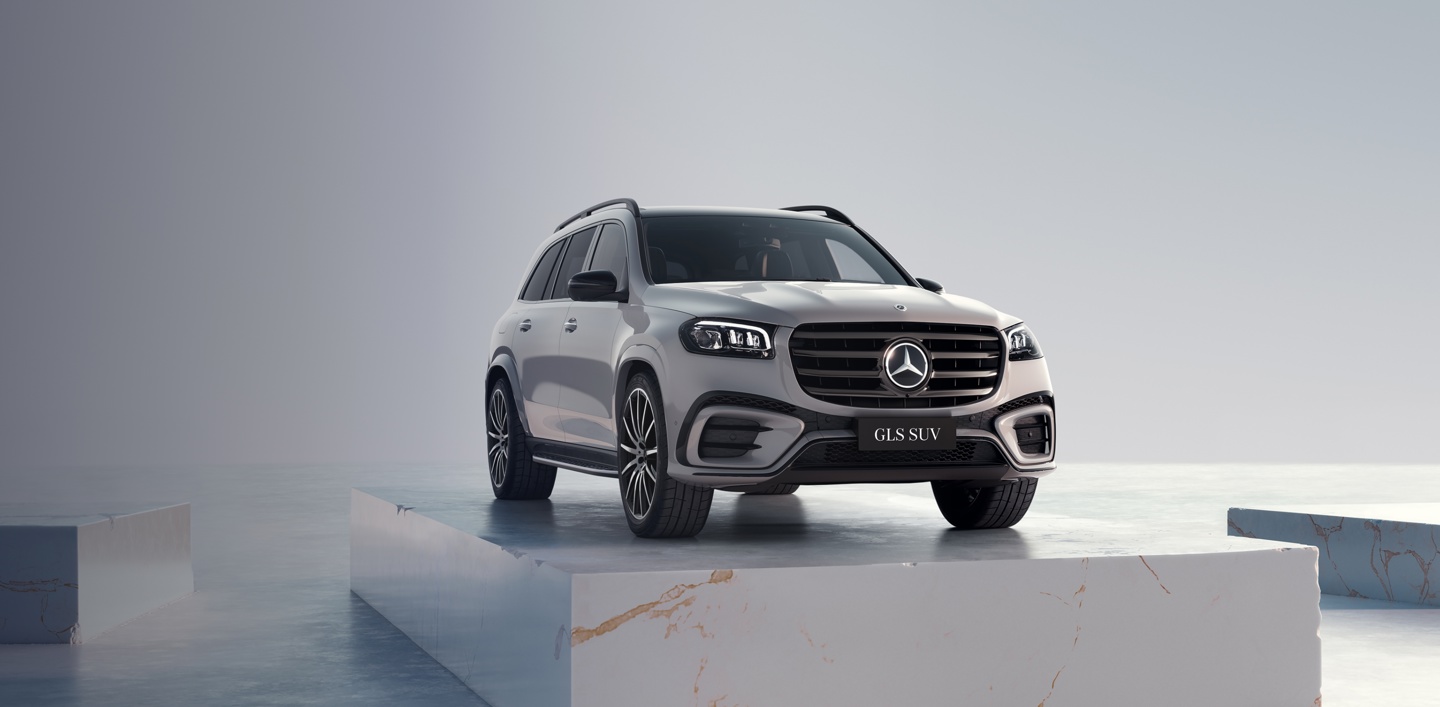
2025 款奔驰 GLS 车型上市:3.0T 动力,106-139.82 万元
Xin Lang Cai Jing· 2025-04-27 00:22
Core Viewpoint - The 2025 Mercedes-Benz GLS has officially launched, positioning itself as a large SUV competing with models like the BMW X7 and Lexus LX700h [1] Pricing Summary - The pricing for the 2025 GLS models is as follows: - GLS 450 4MATIC Dynamic: 1.06 million yuan, unchanged - GLS 450 4MATIC Fashion: 1.2394 million yuan, increased by 1,200 yuan - GLS 450 4MATIC Luxury: 1.3982 million yuan, increased by 1,200 yuan [3] Specifications Summary - The dimensions of the 2025 GLS are 5210 mm in length, 2030 mm in width, and a wheelbase of 3135 mm, maintaining its classification as a large SUV [4] - The vehicle features a 5+2 seating layout with color options including Macchiato Beige, Cocoa Brown, and Black, along with a black DINAMICA microfiber headliner and Nappa leather multi-function steering wheel [5] Interior and Features Summary - The new model includes heated front seats, velvet floor mats, AMG floor mats, dual sunshades, multi-zone climate control, dual 12.3-inch high-definition displays, and an electric tailgate [7] - Optional features include luxury independent seats, heated rear seats, Burmester surround sound system, wireless charging, front and rear USB ports, and MBUX rear smart tablet [7] Safety and Assistance Features Summary - The vehicle is equipped with advanced safety features such as Active Emergency Braking (AEB), Intelligent Navigation Assistance Pro, Blind Spot Detection (BSD), and a 360° camera for smart parking [9] Powertrain Summary - The 2025 GLS is powered by a 3.0T six-cylinder engine combined with a 48V mild hybrid system, delivering a maximum power of 280 kW and a maximum torque of 500 Nm, paired with a 9-speed automatic transmission and all-wheel drive [12] - The WLTC combined fuel consumption for the GLS 450 4MATIC Fashion is 9.9 liters per 100 kilometers, slightly improved from the previous model's 9.8 liters, while the Luxury variant also achieves 9.9 liters, down from 10.2 liters [12]
36氪精选:关税飓风任它吹,中国汽车「无战事」|深氪lite
日经中文网· 2025-04-25 07:12
编者荐语: 日经中文网与36氪开展内容交换合作。将精选36氪的精彩独家财经、科技、企业资讯,与读者分享。 以下文章来源于36氪 ,作者李勤 徐蔡钰 36氪是服务中国新经济参与者的卓越品牌和开创性平台,提供新锐深度的商业报道,强调趋势和价值,我们的slogan是:让一部分人先看到未来。 不再相互依赖,是危险的信号。 文 | 李勤 徐蔡钰 编辑 | 杨轩 封面来源 | Reuters 2024年11月,特朗普当选那一周,特斯拉的研发1号位Lars Moravy带队在中国拜访供应链。 他们已经准确嗅到,新总统关税战故技重施的信号,开始动员中国的特斯拉供应商,向东南亚等地分散产能,以应对即将到来的关税巨浪。 亿纬锂能、欣旺达等电池工厂,均收到明确信号,在泰国接连发起了数轮投资。但显然,特斯拉猜到了开头,没有猜中结尾。特朗普的关税之锤,以飓风 之势砸来。 36氪 . 2025年4月2日,特朗普宣布设立10%的"最低基准关税",其中对中国输美产品的关税继续叠加,由34%、84%、104%,一路上涨到目前的145%税率。 特斯拉Cybertruck不少关键零部件仍然来自中国,未来得及转移。 相较之下,关税新风暴下,中国汽车 ...

关税飓风任它吹,中国汽车「无战事」|深氪lite
36氪· 2025-04-24 14:10
Core Viewpoint - The article discusses the implications of the U.S.-China trade tensions, particularly focusing on the automotive industry, highlighting how Chinese automakers are adapting to new tariffs while foreign companies face significant challenges [1][40]. Group 1: Tariff Impact on Supply Chains - Tesla's supply chain is actively diversifying to Southeast Asia in response to anticipated tariffs, with Chinese battery manufacturers like EVE Energy and Sunwoda making investments in Thailand [3][4]. - The new tariffs have escalated to 145% on certain imports from China, significantly affecting the cost structure of vehicles like the Tesla Cybertruck, which relies on components from China [4][15]. - Despite the tariff increases, the Chinese automotive industry has shown resilience, with only 11,600 vehicles exported to the U.S. in 2024, representing just 1.8% of total exports [6][18]. Group 2: Defensive Strategies of Chinese Automakers - Chinese automakers have proactively prepared for tariff impacts by localizing supply chains and identifying alternative suppliers, minimizing reliance on U.S. components [10][19]. - Companies like NIO and Li Auto have found ways to switch suppliers for critical components, such as silicon carbide chips, to mitigate cost increases due to tariffs [9][10]. - The overall cost increase for vehicles due to tariffs is estimated to be manageable, with some companies reporting only a few hundred yuan in additional costs [11][12]. Group 3: Challenges for Foreign Automakers - Foreign automakers, particularly American companies like Ford, are facing severe challenges due to their continued reliance on U.S. imports for key components, leading to production halts [16][17]. - Ford has announced the suspension of exports of several models to China due to tariff implications, highlighting the vulnerability of foreign brands in the current trade environment [17][29]. - The complexity of the automotive supply chain means that even minor disruptions can halt production, emphasizing the need for robust risk management strategies [18][19]. Group 4: Long-term Industry Trends - The article suggests that the automotive supply chain is undergoing a transformation towards regional independence, driven by the ongoing trade tensions and the need for stability [38][40]. - Companies are increasingly considering long-term strategies that account for potential future disruptions, indicating a shift in how global supply chains are structured [38][39]. - The trend of "decoupling" in the automotive industry raises concerns about the broader implications for global trade and economic stability [40].