吉利

Search documents
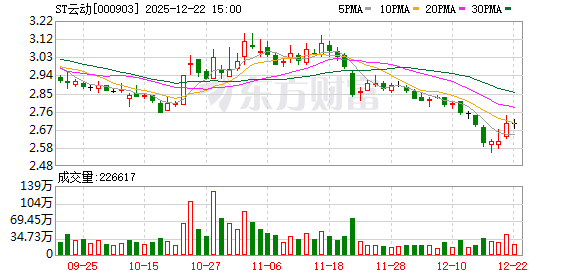
ST云动:目前暂未向吉利供应发动机产品
Mei Ri Jing Ji Xin Wen· 2025-12-22 15:00
Group 1 - The company confirmed that it previously supplied engine products to Geely but is currently not supplying any products to them [2] - The company stated that it will continue to optimize its cooperation system based on market and customer demand changes [2]


天融信:公司在智能驾驶安全领域已有布局
Zheng Quan Ri Bao Wang· 2025-12-22 12:45
Group 1 - The company, Tianrongxin, has made advancements in the field of intelligent driving safety by launching a series of connected vehicle security products, including in-vehicle firewalls and intrusion detection systems [1] - The company has established deep collaborations with leading industry players such as BAIC, GAC, Dongfeng, Geely, and Shanghai Changxing to promote the application of intelligent connected vehicles in various scenarios [1] - The product offerings include a connected vehicle security situation awareness system and a data security management platform for connected vehicles [1]

L3商业化临近,智驾全产业链机会梳理?
2025-12-22 01:45
Summary of Key Points from Conference Call Records Industry Overview - The L3 level autonomous driving is approaching commercialization, with significant progress expected by 2026 as more regulations and policies are implemented to drive industry development [1][3] - The autonomous driving industry chain includes vehicle manufacturers (e.g., XPeng, Li Auto, Huawei, Xiaomi), Robotaxi companies (e.g., Pony.ai, WeRide), chip manufacturers (e.g., Horizon Robotics), domain control systems, steer-by-wire and braking systems, LiDAR, and testing segments [1][5] Core Insights and Arguments - The recent surge in the autonomous driving sector was triggered by the Ministry of Industry and Information Technology approving two L3 products from Arcfox and Changan Deep Blue, marking a transition from early testing to formal assessment [2] - More L3 regulations are anticipated to be established in 2026, further propelling industry growth [3] - Tesla's Robotaxi-specific model is set to be delivered in Q2 of next year, alongside advancements in humanoid robots, indicating 2026 will be a pivotal year for Tesla [4][3] Company-Specific Highlights XPeng Motors - XPeng plans to launch six new models in the first half of 2026, including three range-extended models, which are expected to boost sales [1][6] - The company is also making strides in its Model series and flying car initiatives, positioning itself as a benchmark in the smart driving market despite facing recent sales pressures [6] Pony.ai and WeRide - Pony.ai is focusing on the domestic Robotaxi market, planning to deploy 3,000 vehicles by the end of next year, which gives it a competitive edge [1][7] - WeRide is targeting overseas markets and has demonstrated economic benefits in the Middle East [1][7] Horizon Robotics - Horizon Robotics is a leading domestic chip supplier, providing cost-effective products and developing advanced intelligent driving solutions that integrate algorithms with chips, giving it a competitive advantage in the high-end autonomous driving market [1][8][9] Continental AG - Continental AG is a key player in steer-by-wire technology, which is increasingly being applied in Robotaxi vehicles, benefiting from the growth of L3 autonomous driving and the Robotaxi industry [11] Kaizhong Co., Ltd. - Kaizhong has invested in Suzhou Jiuli, focusing on electronic mechanical brake (EMB) products, and has secured orders from leading new car manufacturers for 2026 [12] - The recent acquisition of Anhui Tuosheng is expected to enhance net profit and strengthen the company's safety margin, with a strong market presence in high-performance polyurethane materials [13][14] Additional Important Insights - The integration of high-performance chips in robots is crucial for achieving large-scale commercialization, with Horizon Robotics positioned to play a significant role in this evolution [9][10] - The steer-by-wire technology is essential for the future of autonomous vehicles, with companies like Continental AG leading the way [11] - The competitive landscape in the autonomous driving sector is evolving, with various companies focusing on different aspects of the technology and market opportunities [5][7]

九年换八位CEO!长城汽车哈弗总经理赵永坡接任魏牌CEO;账上超十亿美金,MiniMax叩响港股大门;全球首款2nm手机芯片诞生
雷峰网· 2025-12-22 01:33
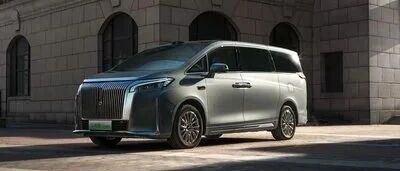
Group 1 - GWM has appointed Zhao Yongpo, the general manager of Haval, as the new CEO of Weipai, marking the eighth CEO change in nine years, indicating a strategic shift towards internal talent over external hires [5][6] - Under the previous CEO, Feng Fuzhi, Weipai's sales were approximately 89,000 units in the first eleven months of 2025, significantly lower than competitors like Geely's Lynk & Co, which sold over 300,000 units [6] - Xiaomi has distributed over 100 million yuan in subsidies to its automotive dealers, with new store openings receiving up to 500,000 yuan each, aimed at boosting dealer morale and operations [7] Group 2 - DingTalk is reportedly launching a secret project called "D Plan," which may involve entering the hardware market with a product similar to the "Doubao phone" [9][10] - Chasing Technology has released the world's first AI health glasses, capable of monitoring heart rate, blood oxygen, and body temperature continuously [11] - ByteDance has announced significant salary increases for employees, with performance bonuses for top performers being raised by 1.5 to 3 months, reflecting a commitment to talent retention [13][14] Group 3 - MiniMax has passed the listing hearing with over $1 billion in cash reserves, supported by major investors like Alibaba and Tencent, and reported a revenue growth of over 170% year-on-year for the first nine months of 2025 [15][16] - The first L3 autonomous driving license plate has been issued to Changan Automobile, marking a significant milestone in the development of autonomous driving technology in China [28] - Zhiyun Technology has initiated its IPO process, aiming to become a leading player in the AI model sector, with substantial revenue growth projected for the coming years [26][27]

焦点复盘沪指3连阳收复20日均线,全市场超4400股飘红,智能驾驶概念再度爆发
Sou Hu Cai Jing· 2025-12-19 09:17
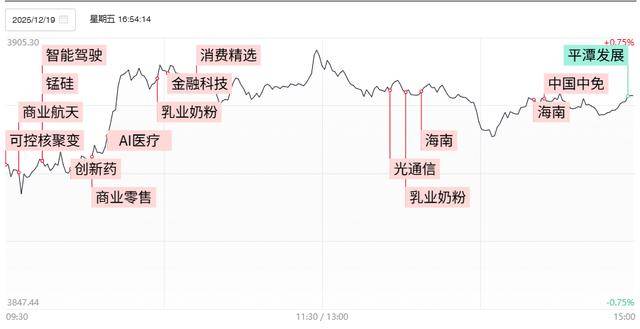
Market Overview - A total of 70 stocks hit the daily limit up, with a limit-up rate of 75%, indicating strong market activity [1] - The Shanghai Composite Index showed a rebound, while the ChiNext Index experienced fluctuations, previously rising over 1.5% [1] - The total trading volume in the Shanghai and Shenzhen markets reached 1.73 trillion, an increase of 704 billion compared to the previous trading day [1] Stock Performance - Notable stocks include Victory Energy with six consecutive limit-ups, Zhejiang Shibao with four consecutive limit-ups, and several others like Su Li Co., Zhongtian Service, and Lu Yan Medicine with three consecutive limit-ups [1] - The market saw a rapid rotation of hotspots, with over 4,400 stocks rising [1] Sector Analysis - The sectors that performed well included Hainan, dairy, and retail, while precious metals and semiconductors faced declines [1] - The consecutive limit-up rate for stocks increased to 41.18%, but the maximum limit-up height decreased to five [3] - High-position stocks experienced significant sell-offs towards the end of the trading session, indicating volatility [3] Key Trends - The commercial aerospace sector remains active, with several stocks like West Materials and Shenjian Co. achieving consecutive limit-ups [6] - The smart driving sector saw a resurgence with multiple companies receiving conditional approval for L3-level autonomous driving vehicles, leading to a spike in stock prices for companies like Zhejiang Shibao and Weidi Co. [7] - The consumer sector is supported by government initiatives, with new consumption models being tested in 50 cities, leading to increased interest in stocks related to consumer spending [8] Future Outlook - The market is showing signs of a mild rebound, but there are indications of potential weakness in high-position stocks and technology sectors [9] - The overall market sentiment remains cautious, with the Shanghai Composite Index facing resistance from moving averages [9]
小鹏人形机器人里藏着一个“数字员工” 飞书发布“粤企一齐飞”加速计划
Sou Hu Cai Jing· 2025-12-19 08:47
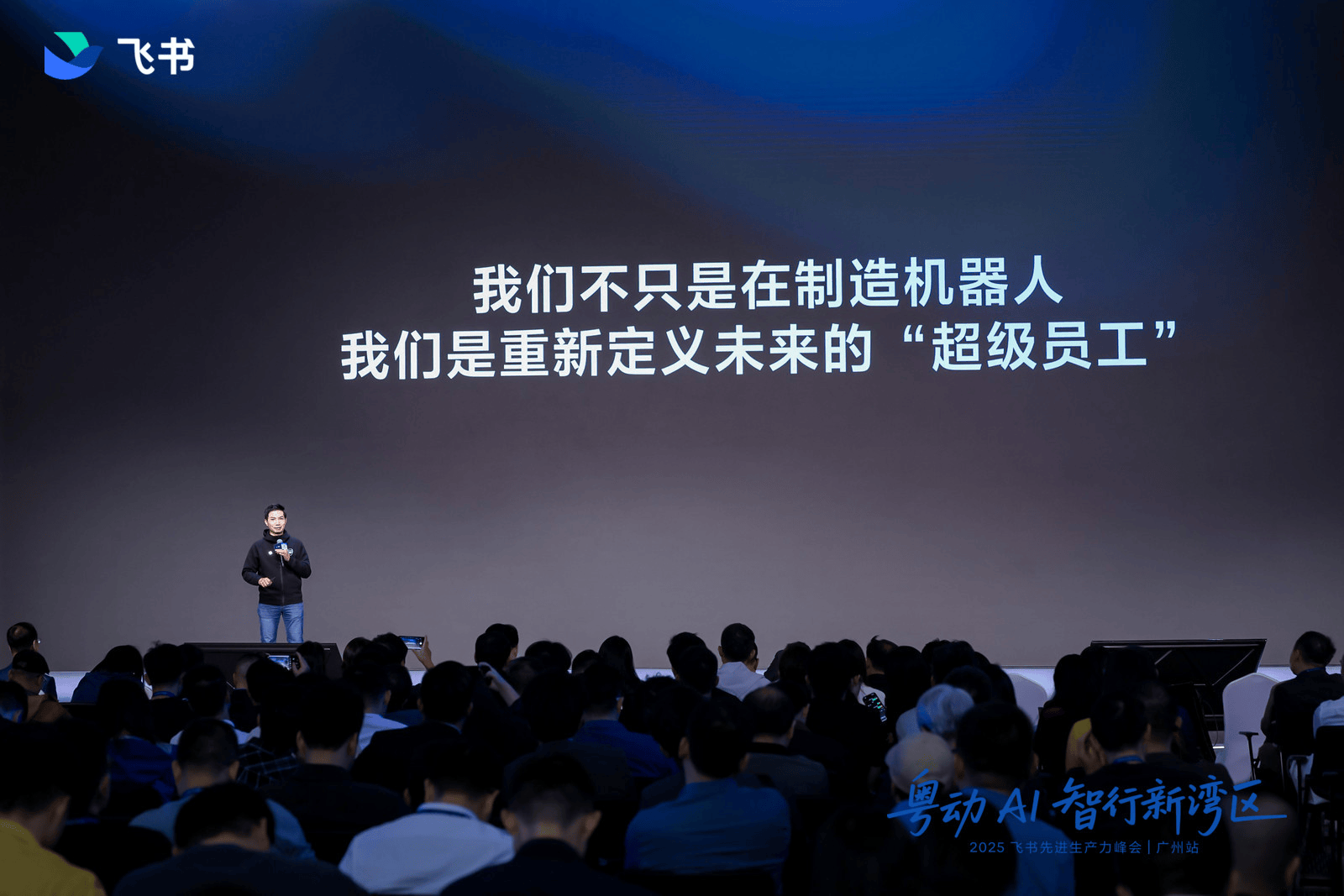
Group 1 - The 2025 Feishu Advanced Productivity Summit in Guangzhou focused on the organizational upgrade of the "Physical AI" industry in the Greater Bay Area, attracting hundreds of executives, government representatives, and industry experts from sectors like new energy vehicles and intelligent driving [1][3] - Physical AI, proposed by Swiss scholars in 2020, is a core development direction of AI, enabling intelligent systems to understand physical laws and interact with the real world, widely applied in robotics and autonomous driving [3] - Feishu aims to help enterprises achieve "software-defined organizations," with AI deeply integrated into core manufacturing processes, evidenced by significant efficiency improvements in companies like Geely and Bull [3] Group 2 - Companies like Xiaopeng Motors and Ximalaya shared their experiences at the summit, addressing the complexities of hardware-software collaboration and knowledge management in the Physical AI field [4] - Xiaopeng's IRON digital employee integrates knowledge and data from various sources, resulting in cost savings of 1 million yuan annually and a 30% reduction in service desk processing time [6] - Ximalaya's use of Feishu has enhanced global collaboration and significantly compressed the development process of their seventh-generation Robotaxi, while also activating a vast knowledge base for new employees [7] Group 3 - The summit introduced the "Yueqi Yiqi Fei" efficiency acceleration plan, promoting the widespread penetration of AI technology in the manufacturing industry through benchmarking and AI inclusivity [7]

欧盟27国联手美国对华出手,不准中方赚钱,中企加速逃离荷兰,海量资产挂牌出售
Sou Hu Cai Jing· 2025-12-19 07:12
Group 1 - The ongoing economic friction between China and Europe reflects deeper challenges in the restructuring of the global economic landscape, with Europe facing internal imbalances and external competitive pressures [1] - The European Union (EU) is reversing its strict environmental policies, such as postponing the ban on new fuel vehicles from 2035 to potentially 2040, signaling a response to economic pressures [1] - The crisis in the European automotive industry, exacerbated by the rise of Chinese electric vehicles and U.S. protectionist tariffs, highlights the risks of aggressive green policies [3] Group 2 - The EU's emotional response to trade with China, including imposing anti-subsidy tariffs on Chinese electric vehicles, undermines the principles of free trade and reveals the vulnerabilities of the European automotive sector [3][4] - The internal divisions and inefficiencies within the EU are weakening its integration, as member states struggle to align on key issues, further complicating the economic landscape [6] - The ongoing geopolitical tensions, such as the Russia-Ukraine conflict, have led to energy security crises and economic downturns in Europe, exemplified by Germany's consecutive years of GDP contraction [6] Group 3 - The rise of emerging markets presents a critical opportunity in the global economic competition, and the EU's adherence to outdated notions of "value superiority" may lead to its marginalization [8] - The core of the China-Europe competition lies in differing development philosophies and paths, extending beyond mere commercial interests [8] - For Europe to regain its competitive edge, it must acknowledge international changes, strengthen internal unity, and focus on technological innovation and pragmatic cooperation [8]

一周一刻钟,大事快评(W136):整车投资策略更新,福达股份更新
Shenwan Hongyuan Securities· 2025-12-18 14:11
Investment Strategy Update - The investment strategy for the automotive sector has been updated for 2026 due to two key changes: the unfulfilled subsidies in Q4 2025 and adjustments in the "two new subsidies" policy, along with the State Administration for Market Regulation's draft guidelines aimed at preventing chaotic price wars, which may increase survival pressure on low-margin automakers [2][3] - The revised strategy focuses on the mid-to-high-end market and overseas expansion, categorized into three tiers: the first tier includes companies less affected by industry fluctuations, such as BAIC and JAC; the second tier includes other mid-to-high-end brands like XPeng and NIO; the third tier includes mainstream brands like BYD and Geely that have overseas or mid-to-high-end transformation potential [3][4] High-End Intelligent Driving - High-level intelligent driving has entered the engineering phase, with L2+ and L3 features expected to become standard configurations in the industry; high-end vehicles will offer superior experiences through advanced configurations, while mid-range vehicles will adopt basic usable features [4] - The year 2024 is anticipated to mark the beginning of "intelligent driving equality," with related features expected to be widely adopted in vehicles priced above 130,000 to 150,000 yuan [4] Fuda Co., Ltd. Update - Fuda Co., Ltd. has made significant progress in its robotics business, recently signing a strategic cooperation agreement with Changban Technology and Yiyou Robotics to create a comprehensive ecosystem for humanoid robot joint solutions [5] - The company is positioning its robotics components business as a strategic new business, focusing on mass production of planetary gear products and collaborating with Changban Technology to enhance capabilities in linear and rotational actuators [5] - Fuda's partnerships and strategic focus are expected to accelerate its layout in humanoid robots and intelligent equipment, with more developments anticipated in the future [5] Investment Recommendations - The report recommends focusing on domestic strong alpha manufacturers such as NIO, Xiaomi, XPeng, and Li Auto, as well as companies benefiting from the trend of intelligentization like Jianghuai Automobile and Seres [2][5] - It also suggests paying attention to state-owned enterprise reforms and recommending companies like SAIC Motor, Dongfeng Motor, and Changan Automobile, along with component manufacturers with strong growth and overseas expansion capabilities such as Xingyu, Fuyao Glass, and Fuda [2][5] Valuation Overview - A valuation table for key automotive companies is provided, showing metrics such as market capitalization, price-to-book (PB) ratios, and projected net profit growth rates for 2024 to 2026, highlighting significant variations among companies [7]

汽车视点 | AI加速“上车” 智能汽车操作系统迈向千亿级市场
Xin Hua Cai Jing· 2025-12-17 08:16
Group 1 - Major automotive companies are increasingly adopting AI as a core strategy, with significant investments in AI technologies, such as Xiaopeng's annual investment of 4.5 billion yuan in AI [1] - The 2025 China Automotive Software Conference highlighted the irreversible trend of software-defined vehicles and AI-driven design, marking the transition to the AIDV (AI Defined Vehicle) era [1] Group 2 - The automotive software industry is experiencing structural changes, with the value focus shifting from hardware manufacturing to software and services, and profit structures evolving from "one-time delivery" to "full-cycle services" [2] - In 2020, hardware accounted for 79% of automotive profits, while software only represented 6%. By 2025, hardware's share is expected to drop to 69%, with software rising to 17%, and by 2030, hardware is projected to be 59% and software 25% [2] Group 3 - Software is becoming a bridge for industry integration, connecting various stakeholders such as automakers, chip manufacturers, and research institutions, facilitating resource optimization [3] - The commercial value of in-vehicle operating systems is increasing, with the market expected to reach approximately 60 billion yuan by 2025 and exceed 100 billion yuan by 2030 [3] Group 4 - The future trend of automotive software development is expected to be integration, moving towards highly adaptive intelligent operating systems that support resource scheduling and sharing across vehicles, roads, clouds, and edge [4] - AI capabilities are anticipated to be deeply integrated into operating systems, evolving from simple application-level integration to native AI fusion that understands user intent [4] Group 5 - Open-source development is recognized as a vital technical pathway, with companies like Li Auto and Dongfeng actively participating in open-source projects to address cross-enterprise collaboration challenges [5] Group 6 - The market for software-based autonomous driving solutions in China is projected to grow from 350 million yuan in 2024 to over 1.9 billion yuan in 2025, and surpass 6 billion yuan by 2030 [6] - Challenges related to AI systems, such as their "black box" nature and difficulties in safety verification, need to be addressed for effective development [7] Group 7 - The automotive software ecosystem faces challenges, including the lack of a unified, open hardware-software platform, which complicates collaboration and development processes [7] - Cross-enterprise collaboration mechanisms are often inefficient, leading to difficulties in achieving consensus on costs, timelines, and technical directions [7] Group 8 - The establishment of a unified standard and interface is crucial for accelerating technology implementation and shortening development cycles, with a focus on defining standards for chips, operating systems, and middleware [10] - The integration of forward-looking safety features into the ecosystem is essential for building sustainable competitive advantages [11] Group 9 - The industry is encouraged to explore the integration of satellite technology into the existing vehicle-road-cloud system to enhance data and computing networks, expanding application scenarios [12] - The automotive industry is seen as a significant platform for AI applications, with the potential for AI to evolve through interaction with the physical world [12]
小鹏汽车获得广州L3自动驾驶测试牌照,进入常态化验证阶段【附自动驾驶行业市场分析】
Qian Zhan Wang· 2025-12-17 07:18
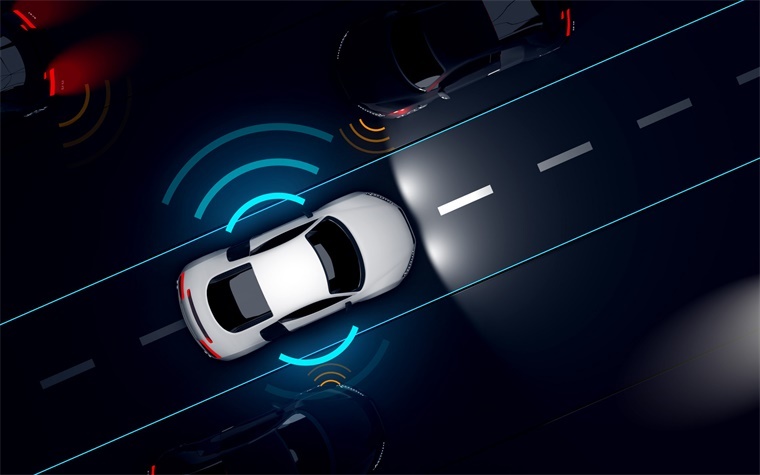
12月15日,工业和信息化部正式公布我国首批L3级有条件自动驾驶车型准入许可,两款适配城市拥堵与高 速路段的车型将在北京、重庆指定区域开展上路试点。这标志着中国L3级自动驾驶正式从测试阶段迈入商 业化应用的关键一步。而就在此前,小鹏汽车已在广州市获得L3级自动驾驶道路测试牌照,并启动常态化 高快速路有条件自动驾驶测试,成为这场技术变革中的活跃参与者。 (图片来源:摄图网) 数据显示,目前全球已售车型中,L1和L2级自动驾驶车辆渗透率已超过50%,意味着每售出两辆新车,就 有一辆具备拥堵辅助、自动刹车、高速巡航、自动泊车等一定程度的自动驾驶能力。咨询机构预测,到2030 年,L2+级别功能将扩展至90%以上的车辆,而L3级别以上的高阶自动驾驶将占据50%的市场份额。从辅助 驾驶到有条件自动驾驶,市场正在经历从"尝鲜"到"标配"的转变。 根据第一财经获悉的消息,小鹏汽车此次获得的广州L3测试牌照,将主要用于在广州市智能网联汽车测试 高快速路上开展有条件自动驾驶的常态化测试。 更值得关注的是其L4级能力的研发进度。在2025年科技日上,小鹏汽车正式发布具备L4级能力的第二代视 觉语言行动模型(VLA),该软件预计将 ...