京东方

Search documents
手机屏幕之变:厂商与面板巨头捆绑改写行业规则
2 1 Shi Ji Jing Ji Bao Dao· 2025-09-21 12:41
Core Insights - The article discusses the emergence of a new collaboration paradigm between smartphone manufacturers and panel suppliers, moving from a traditional "buyer-supplier" relationship to a more integrated "co-creation" model [2][9] - This shift is driven by the need for differentiation in a saturated smartphone market, where screen quality and experience are critical competitive factors [1][10] Group 1: Industry Dynamics - Smartphone manufacturers are increasingly engaging in the definition, research, and production of display technologies, forming strategic partnerships with panel manufacturers for joint development and exclusive supply [2][10] - The traditional supply chain structure is evolving from a linear "pyramid" model to a more networked "industry alliance," allowing for greater collaboration and shared risk [9][10] - The rise of Chinese panel manufacturers like BOE, TCL Huaxing, and Tianma is changing the competitive landscape, with predictions that their market share in the global smartphone panel market will exceed 70% by 2025 [9][10] Group 2: Case Studies - OPPO has invested over 1 billion yuan to establish its own "display science production line," allowing it to control the entire process from design to production, thus creating a significant technological barrier [5][10] - Xiaomi and TCL Huaxing have developed a "Joint Innovation Laboratory" to streamline the process from technology research to mass production, enhancing their collaborative capabilities [5][10] - The relationship between Apple and Samsung exemplifies a unique "co-opetition" dynamic, where Apple drives Samsung to innovate through stringent standards and large orders, influencing industry-wide technology trends [7][10] Group 3: Technological Advancements - The focus of competition has shifted from macro parameters like resolution and refresh rates to micro-level technologies, such as precise light control algorithms developed by Tianma and OPPO [10][11] - The collaborative model allows for faster alignment of market needs with technological capabilities, significantly reducing the time from research to market [11] - However, the deep customization and joint development require substantial upfront investment, raising questions about potential impacts on product pricing and consumer repair costs [11][12]

2025世界制造业大会在合肥开幕 外宾占比超50%
Zheng Quan Shi Bao Wang· 2025-09-21 12:23
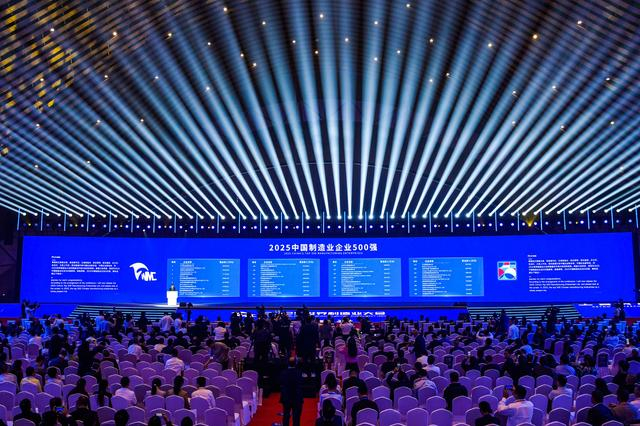
Group 1 - The 2025 World Manufacturing Conference commenced in Hefei, featuring key guests from various sectors to discuss trends in technological revolution and industrial transformation [1] - The conference highlighted the increasing threshold for the top 500 Chinese manufacturing enterprises, rising from 11.09 billion to 17.36 billion, with total revenue growing from 4.024 trillion to 5.168 trillion, an increase of 1.144 trillion [1] - The total assets of the top 500 manufacturing enterprises increased from 4.433 trillion to 5.331 trillion, a growth of 898 billion [1] Group 2 - The conference included 10 comprehensive exhibition areas showcasing achievements in national and Anhui manufacturing, with participation from leading local companies such as Sunpower, iFlytek, and BYD [2] - The automotive industry, as Anhui's leading sector, showcased over 30 key enterprises, including flagship models from JAC, Chery, and NIO, along with various battery technologies [2] - An interactive exhibition area demonstrated advancements in unmanned systems, allowing attendees to experience the capabilities of drones and autonomous vehicles [2] Group 3 - The conference, running from September 20 to 23, includes 4 major events, 6 project matchmaking activities, and 23 specialized events, resulting in 735 signed projects with a total investment of 380.2 billion [3] - Anhui's industrial economy has shown positive trends, with an average annual growth of 7.9% in industrial added value since the 14th Five-Year Plan, surpassing the national average by 2 percentage points [3] - The province has established strong industrial clusters in automotive, photovoltaic, electronics, home appliances, and equipment manufacturing, contributing significantly to national production in various sectors [3]

始祖鸟、蔡国强就烟花秀致歉;山姆回应卖保质期2年的西兰花;西贝否认存在采购总监预制菜相关微信对话丨邦早报
创业邦· 2025-09-21 01:08
Group 1 - The outdoor brand Arc'teryx and artist Cai Guoqiang faced backlash for an art fireworks display in the Himalayas, raising concerns about ecological impact despite claims of using biodegradable materials and taking measures to protect local wildlife [2][3] - Arc'teryx issued an apology and committed to cooperating with third-party assessments regarding the ecological effects of the event, promising to take corrective actions based on the evaluations [3] Group 2 - Luo Yonghao discussed the concept of pre-prepared meals, emphasizing the importance of consumer awareness and the need for clear definitions within the industry [5] - A classification system for pre-prepared meals was outlined, ranging from ready-to-eat dishes to those requiring significant cooking steps, indicating a structured approach to understanding meal preparation levels [6] Group 3 - Xibei denied allegations regarding a conversation about returning pre-prepared products, asserting that the claims were unfounded and that no such employee existed [8] Group 4 - Sam's Club responded to consumer concerns about frozen broccoli with a two-year shelf life, explaining that the freezing process preserves nutritional value and prevents spoilage [8] Group 5 - A conflict escalated between Huiyuan and its controlling shareholder, with allegations of unauthorized payments exceeding normal contract amounts, amounting to over 600 million yuan [11] Group 6 - Apple faced complaints regarding the iPhone Air's camera fogging issue shortly after its release, raising concerns about quality control for a high-end product priced at 7999 yuan [11] Group 7 - Elon Musk's AI startup xAI was reported to be seeking $10 billion in funding, with a valuation of $200 billion, although Musk later refuted these claims [14] Group 8 - The market share of Honor in China has rebounded, ranking fifth in the market, with only a 1% gap from the second, third, and fourth competitors, driven by new product strategies [17] - Lenovo reported that AI PCs now account for over 30% of its total PC shipments, indicating a growing demand for AI-integrated devices [18] Group 9 - JD.com announced plans to open its first mall in Hong Kong by 2026, expanding its retail footprint in key urban areas [18] Group 10 - The number of Chinese tourists traveling during the National Day holiday surged by 130% year-on-year, with significant interest in both domestic and international destinations [25] Group 11 - The market share of domestic flexible OLED smartphone screens exceeded 60%, with significant growth in shipments from Chinese manufacturers [26] Group 12 - The film "731" achieved a total box office of over 900 million yuan shortly after its global premiere [28]





1000+深度报告下载:半导体材料/显示材料/新材料能源/新材料等
材料汇· 2025-09-20 15:52
Investment - The article discusses various investment opportunities in new materials, semiconductors, and renewable energy sectors, highlighting the potential for growth and innovation in these industries [1][3][4]. Semiconductor - It emphasizes the importance of semiconductor materials such as photolithography, electronic special gases, and silicon wafers, which are critical for advanced packaging and manufacturing processes [1][3]. - The report also covers the advancements in third and fourth generation semiconductors, including silicon carbide and gallium nitride technologies, which are expected to drive future growth [1][3]. New Energy - The article outlines the investment landscape in new energy, focusing on lithium batteries, solid-state batteries, and hydrogen energy, which are pivotal for the transition to sustainable energy solutions [1][3]. - It highlights the significance of materials like silicon-based anodes and composite current collectors in enhancing battery performance [1][3]. Photovoltaics - The report details the photovoltaic sector, including materials such as solar glass, encapsulants, and back sheets, which are essential for solar panel efficiency [1][3]. - It also mentions the role of quartz sand and perovskite materials in the development of next-generation solar technologies [1][3]. New Display Technologies - The article discusses new display technologies, including OLED, MiniLED, and MicroLED, and the materials required for their production, such as optical films and adhesives [3][4]. Fibers and Composites - It covers advancements in fiber materials like carbon fiber and aramid fiber, which are crucial for lightweight and high-strength applications in various industries [3][4]. Notable Companies - The report lists key players in the materials sector, including ASML, TSMC, BYD, and Tesla, emphasizing their roles in driving innovation and market growth [4][3].
制造业企业500强榜单勾勒中国制造迭代升级“成长线”
Xin Hua She· 2025-09-20 13:28
Group 1 - The "2025 China Manufacturing Enterprises Top 500" list was released, marking the 21st consecutive year of publication, outlining the roadmap for the upgrade of Chinese manufacturing [1][3] - The entry threshold for the top 500 increased from 11.09 billion RMB at the end of the 13th Five-Year Plan to 17.365 billion RMB, with total revenue rising from 4.024 trillion RMB to 5.168 trillion RMB [1] - The list indicates a significant growth in strategic emerging industries, with the number of companies in the communication equipment manufacturing sector increasing from 15 to 20, and in the semiconductor and integrated circuit sectors from 6 to 9 [1] Group 2 - Advanced manufacturing companies have seen rapid ranking improvements, such as BOE Technology Group rising 11 places to 61st, and Shanghai Weir Semiconductor increasing 44 places [2] - China Railway Rolling Stock Corporation moved up 5 places to 43rd, emphasizing the trends of digitalization, greening, and high-end manufacturing [2] - Traditional manufacturing sectors have accelerated their upgrade, with average R&D investment growth rates exceeding 100% in various industries since the 14th Five-Year Plan [2] Group 3 - The R&D intensity of the top 500 manufacturing enterprises is 2.45%, an increase of 0.03 percentage points from the previous year, with effective patents totaling 1.6632 million and invention patents at 803,800, reflecting increases of 11.34% and 12.07% respectively [2] - The digital transformation of Chinese manufacturing is advancing from a medium level to a mid-high level, with the integration of information technology and industrialization expected to reach 65% by 2025 [4] - The penetration rates of digital R&D design tools and numerical control in key processes are projected to reach 84% and 66.8% respectively [4]
财经聚焦丨这份“500强”榜单记录“中国制造”成长轨迹
Xin Hua Wang· 2025-09-20 12:50
Core Insights - The "2025 China Manufacturing Enterprises Top 500" list reflects the growth trajectory of "Made in China," with a total revenue of 51.68 trillion yuan and an entry threshold of 173.65 billion yuan, which increased by 3.03 billion yuan from the previous year [1][2] - The list indicates a shift towards innovation and structural optimization in the manufacturing sector, with a notable increase in the number of companies from strategic emerging industries [2][3] Group 1: Scale and Growth - The entry threshold for the "Top 500" reached 173.65 billion yuan, up by 3.03 billion yuan from last year, and has increased by 62.74 billion yuan compared to the end of the 13th Five-Year Plan [2] - Total revenue rose from 40.24 trillion yuan at the end of the 13th Five-Year Plan to 51.68 trillion yuan, while total assets increased from 44.33 trillion yuan to 53.31 trillion yuan [2] - Notable advancements in rankings include BOE Technology Group, which rose 11 places to 61st, and Shanghai Weir Semiconductor, which improved by 44 places to 404th [2] Group 2: Innovation and R&D - The R&D intensity of the "Top 500" reached 2.45%, an increase of 0.03 percentage points from the previous year, with effective patents rising by 11.34% and invention patents by 12.07% [5] - Traditional industries are also undergoing transformation, with significant R&D investment growth exceeding 100% in sectors like engineering machinery and chemical manufacturing [3][5] Group 3: Global Engagement - The proportion of overseas revenue increased from 17.39% to 19.10%, with overseas assets and employees also rising, indicating a steady advancement in cross-border operations [6] - Chery Holding Group, a long-established player in overseas markets, improved its ranking by 21 places to 18th, emphasizing the importance of localization in high-quality international expansion [6] Group 4: Future Directions - The manufacturing sector is expected to continue its digital transformation, aiming for widespread adoption of digital manufacturing by 2030, which will drive technological changes and upgrades in the industry [7]

解锁龙岗新玩法:AI+3D,体验感拉满
Nan Fang Du Shi Bao· 2025-09-20 08:09
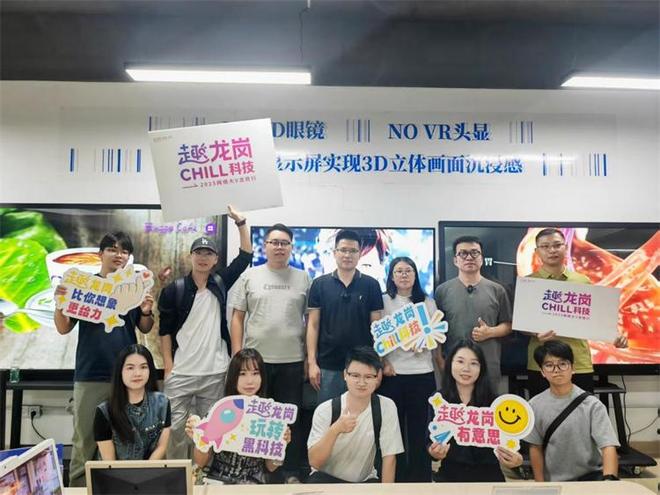
Group 1: Core Insights - The event "AI+3D" technology aims to revolutionize visual experiences by integrating virtual images into real-world scenarios, showcasing the potential of the intelligent display industry in Longgang District [1][30] - Longgang's "AI+3D" intelligent display industry is characterized by its strong capabilities and diverse ecosystem, with companies leading in fields such as naked-eye 3D display and 5D holographic technology [5][31] Group 2: Company Highlights - Yinglun Technology, founded in 2010, has developed light field naked-eye 3D display technology that resolves traditional 3D display issues, achieving over 30% revenue growth and projected sales exceeding 100 million in 2024 [8][10] - The company plans to build the world's first fully automated liquid crystal lens 3D display screen production line, benefiting from supportive policies in Longgang [10][31] - Yuezhou Banquet's 5D holographic technology enhances event experiences, allowing for immersive virtual scenes in various settings, thus driving new consumption patterns in the cultural tourism sector [12][16] Group 3: Technological Innovations - The light field naked-eye 3D technology utilizes a nanometer-level optical maze to control light direction, enabling a natural 3D visual experience [9][10] - Banduo Technology, established in 2019, focuses on AI+3D display technology and aims to apply it across various sectors, including emergency response and medical fields, with plans for international market expansion [20][22] - Kangguan Technology has a comprehensive product matrix covering all display scenarios, emphasizing the integration of cutting-edge technology with user needs, and has a strong presence in over 100 countries [24][26] Group 4: Industry Development - Longgang's intelligent display industry benefits from a combination of policy support, technological innovation, and ecosystem collaboration, positioning it for future growth and global competitiveness [31][32] - The region's cluster effect, complete supply chain, and potential for technological breakthroughs contribute to its leading advantage in the smart display sector [32][30]
国产柔性OLED手机屏占比已超六成 下一步向高端要盈利
Di Yi Cai Jing· 2025-09-20 06:30
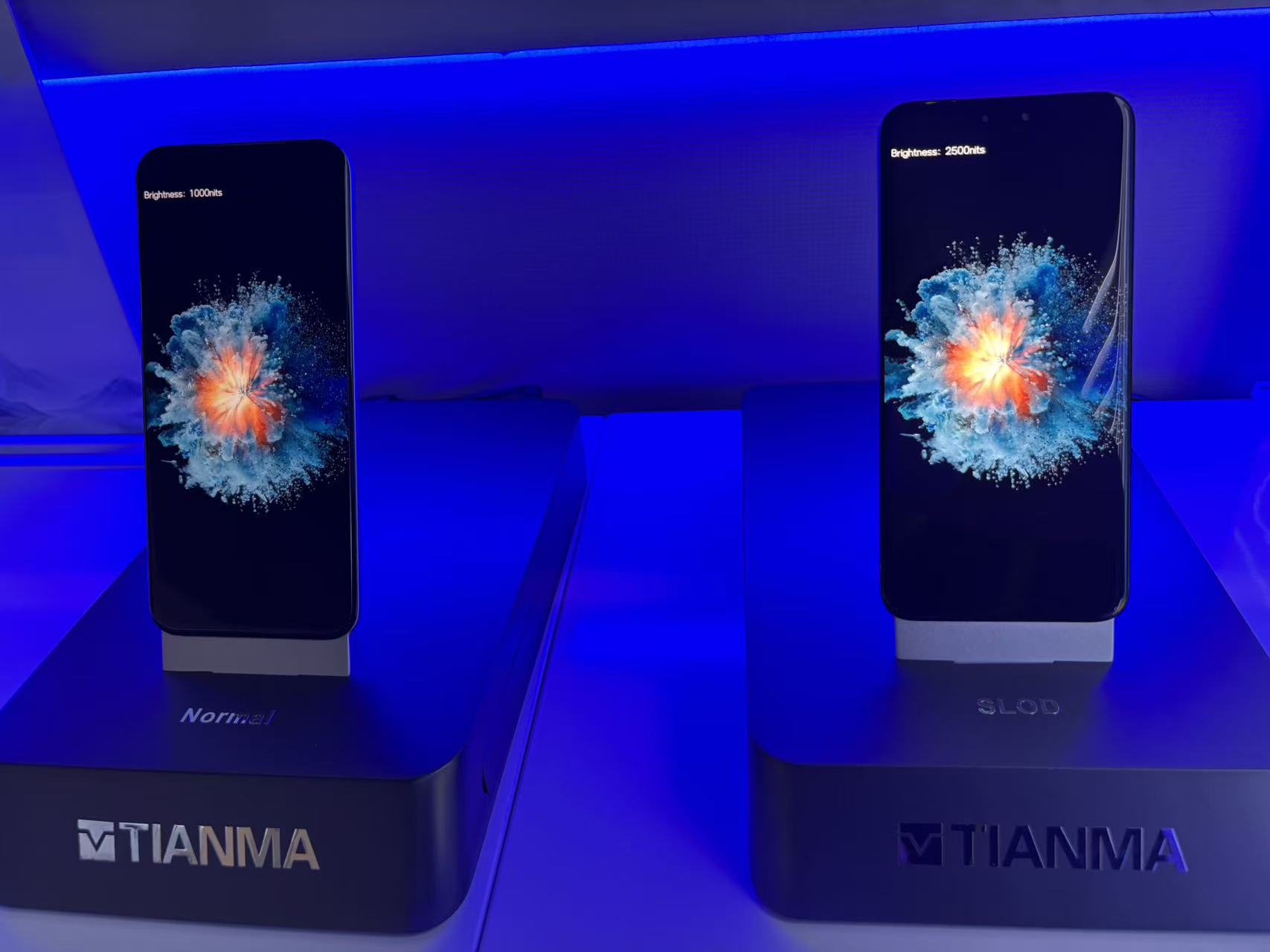
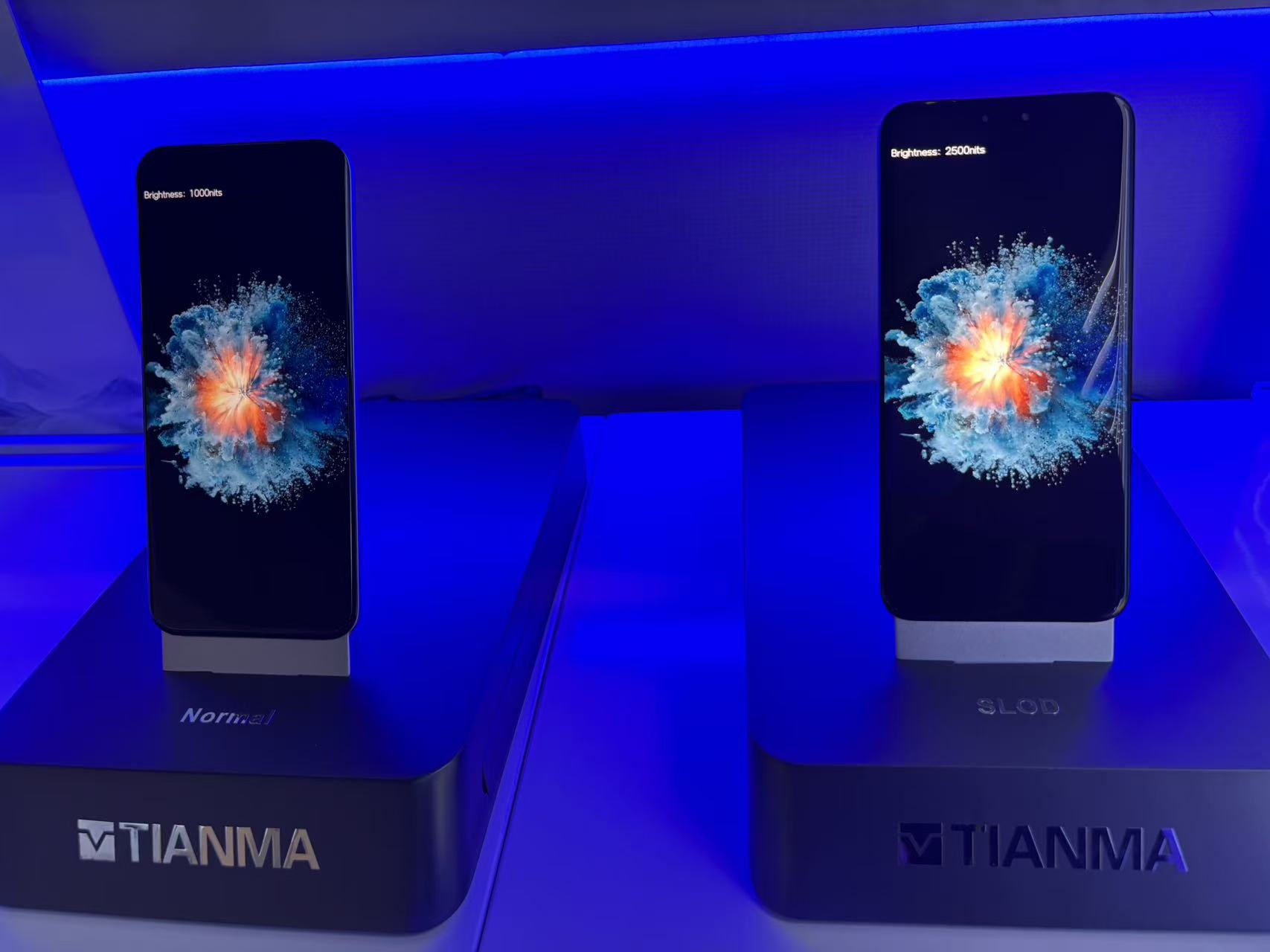
Core Viewpoint - The domestic OLED screen market, which holds over 60% of the global flexible OLED smartphone screen share, is intensifying its focus on high-end products, particularly in eye-care technology and high refresh rates [2][3]. Group 1: Product Development and Trends - Tianma and OPPO have jointly launched an eye-care OLED smartphone screen with a low brightness of 1 nit in dark environments, establishing a collaborative laboratory [2]. - Key technological trends for OLED screens include eye-care features, high refresh rates, and the development of foldable screens, with Tianma's OLED screens achieving refresh rates of up to 240Hz [2]. - The foldable smartphone market is experiencing stable growth, and Tianma is ramping up production of flexible OLED screens for both left-right and up-down folding designs [2]. Group 2: Industry Collaboration and Competitiveness - The competitiveness of domestic OLED screens relies on industry chain collaboration, with OPPO and Tianma combining their respective technologies for the development of the eye-care OLED screen [3]. - The domestic OLED industry is pushing for the localization of OLED emitting materials to enhance the competitiveness of screens and terminal products [3]. Group 3: Market Outlook and Performance - Currently, 90% of flexible OLED screens are used in smartphones, but Tianma plans to expand applications into automotive and IT sectors, with flexible OLED automotive display products expected next year [4]. - Major players like BOE, Visionox, and TCL Huaxing are establishing 8.6-generation flexible OLED or printed OLED production lines to capture opportunities in mid-size displays for IT and automotive applications [4]. - According to Sigmaintell, global shipments of flexible OLED smartphone screens are projected to reach nearly 300 million units in the first half of 2025, with a year-on-year growth of approximately 5.2% [4]. - Domestic manufacturers are expected to ship around 190 million flexible OLED smartphone screens, marking a year-on-year increase of about 7.7%, thus increasing their global market share to 62.3% [4]. - Tianma and BOE's flexible OLED smartphone screen shipments in the first half of the year were approximately 71 million and 43.2 million units, respectively, with year-on-year growth rates of 10.3% and 15.6% [4].
国产柔性OLED手机屏占比已超六成,下一步向高端要盈利
Di Yi Cai Jing· 2025-09-20 06:17
Core Insights - The domestic OLED screen market, which accounts for over 60% of the global flexible OLED smartphone screen market, is focusing on high-end development [2] - Tianma and OPPO have launched an eye-care OLED smartphone screen with a low brightness of 1 nit in dark environments, indicating a trend towards value competition in domestic OLED screens [2] - The collaboration aims to enhance the competitiveness of domestic OLED screens through industry chain synergy, with a focus on localizing OLED emitting materials [3] Group 1 - The technological trends for OLED smartphone screens include eye-care features, high refresh rates, and foldable designs [2] - Tianma's OLED screens can achieve a refresh rate of up to 240Hz, providing smoother visuals [2] - The foldable smartphone market is experiencing stable growth, and Tianma is ramping up production of flexible OLED screens for both left-right and up-down folding designs [2] Group 2 - Currently, 90% of flexible OLED screens are used in smartphones, but Tianma plans to expand applications to automotive and IT sectors, with flexible OLED automotive displays expected next year [4] - Major competitors like BOE, Visionox, and TCL Huaxing are also establishing 8.6-generation flexible OLED or printed OLED production lines to capture opportunities in mid-size displays [4] - According to Sigmaintell, global shipments of flexible OLED smartphone screens are projected to reach nearly 300 million units in the first half of 2025, with a year-on-year growth of approximately 5.2% [4]
京东方:第N曲线引领企业可持续发展
财富FORTUNE· 2025-09-20 02:28
Core Viewpoint - The article discusses the "N Curve" theory proposed by BOE Technology Group, emphasizing the need for continuous innovation and adaptation in the face of technological advancements, particularly in AI, to drive sustainable growth and industry evolution [4][6][13]. Group 1: N Curve Theory - The "N Curve" concept is introduced as a system that encourages technology companies to innovate and find new growth points, evolving from a foundation of "human power" to "human power + AI computing power" [4][6]. - BOE's CEO outlines the strategic direction under the "N Curve," extending beyond display technology into fields like perovskite photovoltaics and robotics, leveraging its semiconductor display and manufacturing capabilities [6][7]. - The company has already made significant progress in its "N Curve" initiatives, with perovskite photovoltaic products achieving IEC certification and initial setups for glass-based packaging lines [6][11]. Group 2: AI Integration and Strategic Development - The article highlights the importance of AI in driving strategic advancements, with BOE's "1+4+N+ ecosystem" framework focusing on integrating AI into manufacturing, products, and operations [13][14]. - AI is seen as a catalyst for innovation across various sectors, with BOE actively seeking opportunities to enhance its product offerings and operational efficiency through AI technologies [14][20]. - The collaboration with partners in the AI space is emphasized, showcasing how AI can enhance user interaction and data analysis in products [16][20]. Group 3: Globalization and Product Innovation - BOE is positioning itself to navigate global markets by establishing smart factories in regions like Vietnam and Mexico, aiming to shorten supply chains and enhance local operations [22][23]. - The company is focused on transitioning from price competition to value competition within the display industry, driven by product innovation and technological advancements [22]. - Partnerships with other companies, such as Hisense and Lenovo, are highlighted as key to enhancing global competitiveness and product offerings [23][25]. Group 4: Sustainable Development and Industry Collaboration - The article underscores the importance of sustainable development discussions among industry partners, with BOE initiating events like the IPC night to foster collaboration [29]. - The ongoing dialogue around strategic elevation and sustainability is seen as crucial for navigating the challenges posed by globalization and technological disruption [29].