京东集团

Search documents
【明日主题前瞻】AI玩具从细分赛道跃升为主流消费新宠,未来市场规模或达千亿量级
Xin Lang Cai Jing· 2026-01-11 12:03
Group 1: AI Toys Market - The AI toy market is projected to exceed 100 billion yuan in 2023 and is expected to reach a scale of over 1 trillion yuan by 2030, with a compound annual growth rate (CAGR) exceeding 50% [2] - AI toys integrate artificial intelligence technologies such as dialogue models and emotional computing, evolving from simple interactions to deep companionship and emotional connections [2] - Companies like Tom Cat and Shifeng Culture are launching innovative AI toys that cater to various user demographics, including children, the elderly, and young adults [2] Group 2: Nuclear Fusion Research - Global nuclear fusion research has entered an engineering phase, indicating significant advancements in fusion energy technology [3] - The upcoming 2026 Nuclear Fusion Energy Technology and Industry Conference aims to promote collaboration and innovation within the nuclear fusion industry [3] - Companies involved in the nuclear fusion sector, such as Lianchuang Optoelectronics and Guokai Electronics, are focusing on key components and technologies necessary for fusion devices, which are expected to generate substantial orders [4][5] Group 3: AI in Healthcare - OpenAI has launched ChatGPT Health, targeting the rapidly growing AI healthcare market, which is projected to reach approximately 505.59 billion USD by 2033, with a CAGR of 38.8% [6] - Companies like Meinian Health and Weining Health are actively developing AI technologies for early disease screening and healthcare solutions, leveraging partnerships with tech giants [7] Group 4: Aerospace Industry in Guangzhou - Guangzhou aims to establish itself as a global hub for advanced manufacturing and commercial aerospace by 2035, focusing on satellite internet and reusable rocket technology [8] - Companies like Feiwo Technology are engaging in 3D printing for commercial aerospace engines, while investment firms are creating complete investment ecosystems in the aerospace sector [8] Group 5: Gaming Industry Trends - The gaming industry is experiencing a surge in new game launches and updates, which are expected to drive revenue growth [9] - AI is being integrated into gaming, enhancing production efficiency and creating new opportunities for innovation [9] Group 6: AI Programming - AI programming is becoming a core application of AI, with major tech companies increasingly relying on AI to generate new code [11] - Companies like Fabben Information and Keda Guokuan are developing AI tools to assist in programming, improving efficiency and code quality [12]
2026年商品消费扩容升级 电商平台在行动
Bei Jing Shang Bao· 2026-01-11 10:50
Group 1: National Business Conference Insights - The National Business Work Conference held on January 10-11, 2026, outlined key initiatives for enhancing consumption, including the implementation of a special action plan to boost consumer spending and the development of a modern commercial circulation system [1] - The conference emphasized eight key areas of focus, including the promotion of the "Buy in China" brand, fostering new growth points in service consumption, and optimizing the implementation of the old-for-new policy for consumer goods [1] Group 2: E-commerce and Subsidy Initiatives - Major e-commerce platforms like JD.com and Tmall have actively engaged in the "National Subsidy" program, offering substantial subsidies for energy-efficient appliances, with individual subsidies reaching up to 1,500 yuan [3] - JD.com has expanded its old-for-new service to over 200 categories, including home appliances and digital products, and has invested nearly 30 billion yuan in rural areas for subsidies and service enhancements [3][4] Group 3: Impact on Local Retail and Consumer Behavior - Meituan has leveraged its instant retail capabilities to connect local physical stores, significantly increasing sales of digital and home appliances due to the "National Subsidy" program [4] - From 2024 to 2025, the old-for-new policy led to the replacement of 192 million appliances, contributing to a sales increase of 3.92 trillion yuan and benefiting approximately 494 million consumers [4] Group 4: Logistics and Infrastructure Development - In Beijing, the completion of the JD.com logistics hub in Pinggu District is part of a broader plan to establish 100 central and node warehouses across the city, enhancing logistics efficiency [5] - By 2026, Beijing aims to build 50 logistics front warehouses equipped with smart sorting systems and cold chain storage to support the growing demand for efficient distribution [5]




黄仁勋一句话,又掀起了一个热潮
投中网· 2026-01-11 07:12
以下文章来源于东四十条资本 ,作者陈美 东四十条资本 . 聚焦股权投资行业人物、事件、数据、研究、政策解读,提供专业视角和深度洞见 | 创投圈有趣的灵魂 将投中网设为"星标⭐",第一时间收获最新推送 一场"持续获取高质量交互数据,以驱动模型迭代"的基础设施之争,开始打响。 作者丨陈美 编辑丨王庆武 来源丨东四十条资本 新年刚过,英伟达 CEO 黄仁勋就有大动作。 近日,在 CES 展上,黄仁勋抛出了标志性观点:"机器人的 ChatGPT 时刻正在到来",并认为"没有真 实世界的数据,具身智能只能是幻觉。" 这一表态,瞬间引爆行业。一个明确的信号开始显现:机器人产业将告别"单一任务编程、真实数据依赖"的低效阶段,迈入以物理 AI 为核心的通用化 爆发期。 此前,国内资本早已嗅到这场变革。从国内具身智能发展来看,如果 2024 年关键词还是"本体",那么到了 2025 年下半年,赛道已然变成"本体 + 数据",或者"数据×模型×本体"的范式升级。 再加上黄仁勋的 入局 ,一场"持续获取高质量交互数据,以驱动模型迭代"的基础设施之争, 开始 打响。 黄仁勋也来卷具身智能了 在这次 CES 展上,黄仁勋正式发布了专为 ...


新国补落地:普通人省钱攻略大揭秘,手把手教你薅羊毛!
Sou Hu Cai Jing· 2026-01-11 07:11
Core Insights - The new round of "trade-in" subsidy policy in China has been implemented with an initial allocation of 62.5 billion yuan, covering various consumer goods from home appliances to digital devices and automobiles [2][8] - The policy aims to stimulate consumption and promote energy-efficient products, with specific focus on first-level energy efficiency appliances and new energy vehicles [10] Home Appliance Upgrade - The subsidy for home appliances focuses on six core products: refrigerators, washing machines, televisions, air conditioners, computers, and water heaters, with a maximum subsidy of 1,500 yuan per item and a total potential savings of up to 9,000 yuan [2][3] - Sales of first-level energy-efficient appliances surged by 320% in the first week of the policy implementation, indicating strong consumer demand [3] Digital Device Upgrade - The subsidy now includes AI glasses for the first time, allowing consumers to save up to 500 yuan on eligible products priced under 6,000 yuan [4][5] - The digital subsidy covers smartphones, tablets, smartwatches, and smart glasses, with a 15% subsidy rate [4] Automotive Replacement - The policy favors new energy vehicles, offering a maximum subsidy of 20,000 yuan for scrapping old fuel vehicles, significantly reducing the effective purchase price [5][6] - The subsidy structure differentiates between scrapping and replacing vehicles, with varying rates for new energy and fuel vehicles [6] Policy Highlights - A unified national subsidy standard has been established, enhancing the benefits for consumers in regions with previously lower subsidies [8] - The policy is designed to encourage green consumption and accelerate the transition to low-carbon products, as evidenced by a 210% increase in green appliance sales and a 45% rise in new energy vehicle sales in the first week [10] Consumer Caution - Consumers are advised to be vigilant against price manipulation and fraudulent claims, with strict monitoring in place to prevent abuse of the subsidy system [9] - The policy includes specific timelines for subsidy claims, emphasizing the need for timely verification and submission of required documents [9]


全国就业与社会保障先进民营企业,京东小米美团3家京企获表彰
Bei Jing Ri Bao Ke Hu Duan· 2026-01-11 06:33
Core Insights - The conference recognized outstanding private enterprises and individuals in employment and social security, highlighting the significant role of private companies in job creation and employee welfare [1][2]. Group 1: Recognition of Companies - Beijing-based companies such as JD.com, Xiaomi, and Meituan were awarded as "National Advanced Private Enterprises in Employment and Social Security" [1]. - JD.com employs 900,000 people, including over 4,000 disabled employees and more than 600,000 couriers, with over 80% of its workforce coming from rural areas [1]. - Xiaomi has signed collective contracts and employee handbooks covering over 50,000 employees, achieving a 100% labor contract signing rate, and provides comprehensive commercial insurance and free health check-ups for its employees [1]. Group 2: Employee Welfare Initiatives - Meituan's delivery riders are predominantly from rural areas, with 636,000 from key support counties and over 10,000 disabled riders; the company has initiated a new occupational injury insurance pilot [2]. - Meituan has provided coverage for over 16.68 million riders, with a total insurance premium of 2.56 billion yuan, and its pension insurance subsidies are nationwide by November 2025 [2]. - Beijing March Rain Cultural Communication Co., Ltd. was recognized for its labor union's efforts in maintaining harmonious labor relations, achieving 100% coverage of social insurance and a 97% employee membership rate [2]. Group 3: Individual Recognition - Zhen Youmei, a technical manager at Beijing Shengshi Runhe Ecological Construction Co., Ltd., was honored as an "Outstanding Employee" for her dedication to the nursery industry and contributions to industry standards [3].

从科幻走向现实:中国“算力高地”赋能千行百业
Zhong Guo Xin Wen Wang· 2026-01-11 05:13
Group 1 - The core concept of the articles highlights the rapid growth of computing power as a driving force for the intelligent upgrade of various industries, particularly in Langfang, Hebei, which has ranked first in China's comprehensive computing power index for two consecutive years [1][2] - Langfang is positioned as a key hub for artificial intelligence and computing power, benefiting from its geographical advantages and infrastructure, which includes low-latency networks and high-bandwidth connections to Beijing [2][3] - The establishment of the Hebei Artificial Intelligence Computing Center has led to the creation of over 170 industry solutions and attracted more than 12 AI-related companies to Langfang, showcasing the city's role as a national innovation platform [2][3] Group 2 - Langfang has attracted major companies such as China Mobile, China Unicom, Huawei, and JD.com, with five of these companies ranking among the top ten computing service providers in China for 2024, indicating a growing industrial cluster effect [3] - The city has outlined plans for the construction of an AI industry cluster, aiming to develop at least ten industry models or high-quality datasets by 2027, and to establish a comprehensive AI computing hub by 2030 [3] - The integration of AI technology with modern logistics and electronic information industries is expected to enhance the application of computing power across various sectors, moving from science fiction to practical applications [3]
“死了么”APP爆火,3人开发成本1500元:不改名;姚顺雨入职腾讯后首发声;微软本月大裁员,至少涉1.1万人;字节实习生全面涨薪|AI周报
AI前线· 2026-01-11 04:33
AI Development Insights - Industry leaders reached a consensus on the need to break existing bottlenecks and move towards diverse intelligence in AI development, emphasizing the importance of multi-modal capabilities, memory construction, and self-awareness exploration [3][4][5] - The focus for 2026 includes innovations in architecture and multi-modal perception, with predictions that this year will see a significant rise in AI applications for scientific purposes [3][4] Microsoft Layoffs - Microsoft plans to initiate a new round of layoffs in January 2026, affecting between 11,000 to 22,000 employees, which is approximately 5% to 10% of its global workforce [9] - The layoffs are expected to target specific departments, including Azure cloud and Xbox gaming, despite the company maintaining stable revenue and profit in 2025 [9] ByteDance Intern Salary Increase - ByteDance has announced a comprehensive salary increase for interns across various roles, with the highest increase reaching 150%, effective from January 1, 2026 [10][11] - The new daily wage for technical interns is set at 500 RMB, while product roles have seen a significant jump from 200 RMB to 500 RMB [10] OpenAI Employee Stock Incentives - OpenAI has established a $50 billion employee stock incentive pool, representing about 10% of the company's valuation, which is estimated at $500 billion [15][16] - This move reflects OpenAI's commitment to attracting and retaining top talent in the competitive AI landscape [16] New Ventures and Innovations - Wang Teng has announced his new startup focused on sleep health, with a team primarily composed of members from Xiaomi and Huawei, aiming to develop products that enhance energy management [17][18] - JD.com is set to launch AI toys for all age groups, expanding its AI product offerings and enhancing its market presence [20][21] AI Hardware Developments - Looki, an AI hardware startup, has secured over $20 million in funding to accelerate talent acquisition and product development, focusing on next-generation interactive devices [23] - The company aims to integrate AI capabilities into hardware, enhancing user interaction through proactive suggestions based on user behavior [24] AI in Healthcare - MicroGenius has successfully completed the world's first autonomous surgery using a large model, marking a significant advancement in AI applications within the medical field [40] - This achievement highlights the potential for AI to revolutionize healthcare practices and improve surgical outcomes [40]

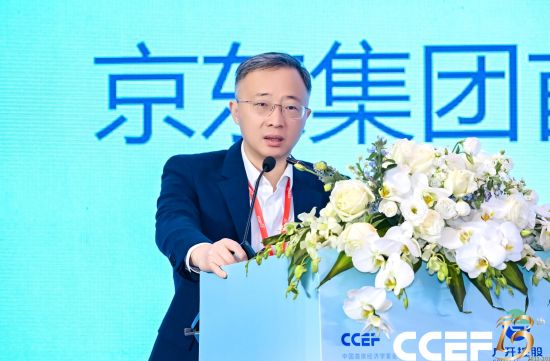
京东集团沈建光:数字消费是增长的重要动力
Xin Lang Cai Jing· 2026-01-11 03:45
Core Insights - The 2026 China Chief Economist Forum Annual Meeting was held on January 10-11 in Shanghai, focusing on the theme "Chess in the Middle Game: Building a Strong Nation" [1][2] Group 1: Digital Consumption Trends - Digital consumption is identified as a significant growth driver in China [3][5] - Five major trends in digital consumption were highlighted: 1. The development model is shifting from user scale expansion to user value exploration [3][5] 2. Sales channels are evolving from online-only to a comprehensive online-offline integration [3][5] 3. The driving force of digital consumption is transitioning from traffic expansion to AI technology empowerment [3][5] 4. The focus of development is moving from urban services to urban-rural integrated services [3][5] 5. The categories of consumption are expanding from goods to services, including green consumption [3][5] - These trends indicate that there is still significant potential for boosting consumption in China [3][5] Group 2: Support for Digital Consumption - During the "14th Five-Year Plan" period, it is essential to have policy support, technological empowerment, institutional innovation, scenario expansion, and platform internationalization to better unleash the potential of digital consumption [3][5]
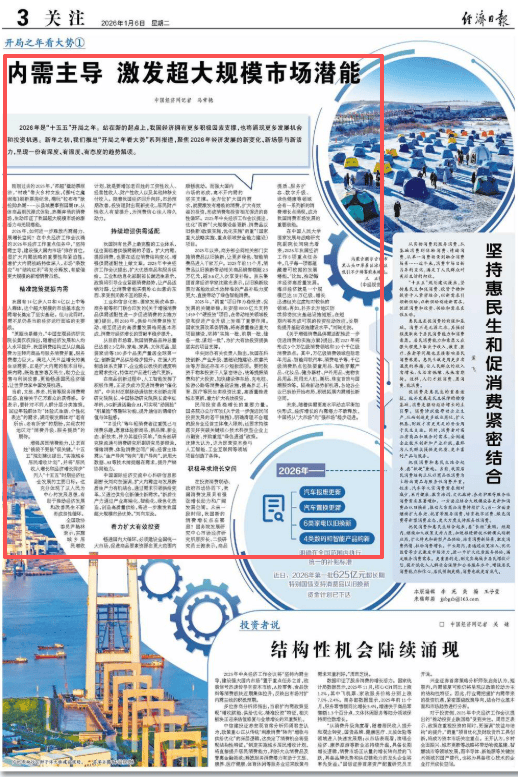
观点丨刘晓光:内需主导 激发超大规模市场潜能
Sou Hu Cai Jing· 2026-01-10 18:06
Core Viewpoint - The article emphasizes the importance of expanding domestic demand and enhancing consumption as key strategies for China's economic growth in 2026, highlighting the potential for new investment opportunities and market dynamics [3][4][11]. Group 1: Economic Context and Trends - 2026 marks the beginning of the "15th Five-Year Plan," with a focus on leveraging positive factors for economic growth and investment opportunities [2]. - The consumer market in China is vibrant, driven by various trends such as the "Su Chao" economy and the popularity of rural cultural tourism, indicating the immense potential of the super-large market [2]. Group 2: Domestic Demand and Consumption - The central economic work meeting prioritizes "domestic demand as the main driver" to build a strong domestic market, underscoring the urgency of expanding domestic demand strategies [3]. - China's population of over 1.4 billion and more than 400 million middle-income individuals provide a solid foundation for domestic demand growth, despite current challenges of insufficient demand [4]. Group 3: Policy Measures and Implementation - The government aims to enhance consumer capacity through targeted policies, including the "Urban and Rural Residents Income Increase Plan," which aligns income growth with economic development [5][4]. - The implementation of consumption upgrade policies, such as the "old-for-new" program, has already driven significant sales, with over 2.5 trillion yuan in sales linked to these initiatives [9]. Group 4: Supply and Demand Adaptation - There is a need to address the mismatch between strong supply and weak demand by enhancing the adaptability of supply to changing consumer preferences [6]. - The government plans to promote high-quality goods and services, with a goal of achieving a high-quality development pattern by 2030, where supply and consumption interact positively [6]. Group 5: Future Growth Opportunities - New consumption growth points are expected to emerge in areas such as product quality enhancement, service expansion, digital upgrades, and green health [11]. - The "Implementation Plan for Enhancing the Adaptability of Consumer Goods Supply and Demand" aims to establish three trillion-yuan consumption sectors and ten hundred-billion-yuan consumption hotspots by 2027 [12].
赢了世界却败在中国,全球首富携带6万亿资产,逃离中国市场
Sou Hu Cai Jing· 2026-01-10 14:55
Core Insights - Amazon's journey from a small online bookstore in 1994 to a global e-commerce leader is marked by strategic expansions and innovations, including the introduction of third-party seller platforms and Prime membership services [2][3] - Despite its success in Western markets, Amazon struggled in China due to a lack of local adaptation and competition from established players like Alibaba and JD.com [4][5] Group 1: Amazon's Growth and Innovations - Amazon started as a bookstore in 1994 and quickly expanded to music and video, going public in 1997 and raising $54 million, significantly increasing its valuation [2] - The launch of the third-party seller platform in 2000 and Prime membership in 2005 were pivotal in enhancing user experience and building a robust ecosystem [2] - By 2020, Amazon's revenue reached $386 billion with a net profit of $21 billion, and total assets nearing 6 trillion RMB, showcasing its massive scale [3] Group 2: Challenges in the Chinese Market - Amazon's entry into China involved acquiring the largest online bookstore, but its market share plummeted from 15.4% to 0.6% by 2018 due to fierce competition and misalignment with local consumer preferences [4][5] - The company's attempts to localize, such as launching Kindle and restructuring its platform, failed to resonate with Chinese consumers who preferred curated shopping experiences [4][5] - Amazon's management style, which did not empower local teams, contributed to its inability to adapt quickly to the fast-changing Chinese e-commerce landscape [5] Group 3: Strategic Shifts Post-Exit - After exiting the Chinese retail market in 2019, Amazon focused on its AWS cloud services and global selling platforms, which continued to support Chinese sellers [5][7] - The company has redirected resources to India, investing billions in local infrastructure and adapting its services to better fit the market [5][6] - Amazon's experience in China serves as a lesson in the importance of local adaptation, with the company now emphasizing cultural integration in its Southeast Asia strategy [6][7]