一汽集团

Search documents
卢拉牵手中企盛赞巴中合作
Huan Qiu Shi Bao· 2025-08-18 10:13
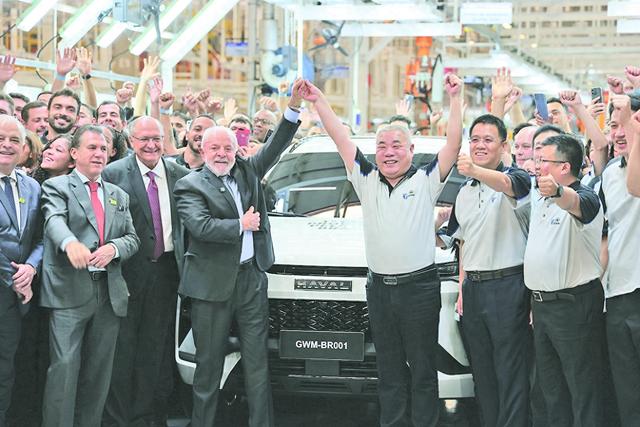
Core Points - The inauguration of Great Wall Motors' factory in Brazil marks a significant step in China-Brazil cooperation, enhancing investment and job creation in Brazil [2][3] - Brazilian President Lula emphasized the importance of Chinese investment in revitalizing Brazil's automotive industry and criticized U.S. tariffs that have caused economic instability [4][6] - Great Wall Motors is the first company to receive certification under Brazil's "Green Mobility and Innovation Program," with plans to produce at least 30,000 vehicles annually [3][5] Investment and Economic Impact - Great Wall Motors plans to invest 4 billion Brazilian Reais (approximately 532 million RMB) in Brazil by 2026, with an additional 6 billion Reais expected from 2027 to 2032 [3][5] - The factory has already created 700 jobs, with an expected increase of 1,300 jobs by early next year, and an indirect creation of 10,000 jobs [3][5] - Brazil's trade with China reached over 180 billion USD last year, compared to 80 billion USD with the U.S., highlighting the growing economic ties [6][7] Automotive Industry Dynamics - Chinese automotive brands, including BYD and Chery, are increasingly popular in Brazil, with six out of the top ten electric vehicles sold in the first half of this year being Chinese [5][6] - The market share of Chinese light vehicles in Brazil's imports reached 62.1% in the first half of this year, indicating a strong presence [5] - The cooperation between China and Brazil in the automotive sector is seen as a new highlight in their bilateral relations, with multiple Chinese companies planning local investments [4][5] Trade Relations and Strategic Partnerships - Brazil is seeking to strengthen ties with China and other global southern countries in response to U.S. tariffs, which have created opportunities for increased exports to China [6][7] - A memorandum of understanding has been signed to advance the "Two Oceans Railway" project, which aims to reshape global trade dynamics [7] - Brazil's export of soybeans to China accounted for 75.2% of its total soybean exports in the first seven months of this year, further solidifying trade relations [6][7]


60天账期到了,仍有供应商没能拿到钱
虎嗅APP· 2025-08-18 00:00
Core Viewpoint - The article discusses the ongoing challenges faced by suppliers in the Chinese automotive industry, particularly regarding delayed payments from car manufacturers despite recent commitments to shorten payment terms to 60 days. Group 1: Payment Delays and Supplier Struggles - Many suppliers are still not receiving payments on time, with some relying on personal relationships with purchasing staff to expedite payments rather than legal or governmental channels [8][9][10]. - The new regulations mandating payment within 60 days for large enterprises purchasing from small and medium-sized enterprises (SMEs) have not been effectively implemented, leading to continued issues with delayed payments [6][7][14]. - Suppliers report that while some car manufacturers have improved payment speeds, others, particularly in the new energy vehicle sector, continue to delay payments despite previous commitments [12][16]. Group 2: Payment Practices and Industry Dynamics - The practice of using acceptance bills (承兑汇票) remains prevalent, allowing manufacturers to extend payment periods beyond the agreed terms, particularly affecting secondary suppliers [15][20]. - The competitive nature of the automotive industry leads to a culture where suppliers feel pressured to maintain business relationships, often at the expense of timely payments [28][29]. - Some suppliers, especially those with monopolistic positions in niche markets or those supplying foreign joint ventures, experience fewer payment issues compared to others [25][27]. Group 3: Regulatory and Market Responses - The article highlights the gap between policy and practice, noting that while regulations exist to protect suppliers, enforcement and adherence are lacking [24][33]. - The Ministry of Industry and Information Technology has opened a platform for reporting issues related to payment delays, but suppliers are hesitant to utilize it due to fear of damaging business relationships [29][30]. - The overall sentiment among suppliers is one of resignation, prioritizing business continuity over legal recourse for payment disputes [29][32].
60天账期到了,仍有供应商没能拿到钱
3 6 Ke· 2025-08-15 12:10
Core Viewpoint - The Chinese automotive supply chain continues to face significant challenges, particularly regarding delayed payments to suppliers despite recent regulatory changes aimed at improving payment timelines [2][4][6]. Group 1: Payment Delays and Supplier Struggles - Many suppliers are still not receiving payments on time, with some suppliers reporting that the promised 60-day payment period is not being honored by all automakers [6][10]. - The new regulations intended to support small and medium-sized enterprises (SMEs) have had limited impact, as the culture of delayed payments persists in the industry [4][12]. - Suppliers often prefer to maintain good relationships with purchasing personnel rather than pursue legal or governmental channels to resolve payment issues, indicating a reliance on personal connections within the supply chain [4][12][22]. Group 2: Variability Among Suppliers - International and monopolistic suppliers do not face the same payment issues, as they hold more negotiating power in their relationships with automakers [5][21]. - Smaller suppliers, particularly those in lower tiers of the supply chain, experience longer payment delays, often facing payment terms of 3 to 6 months [9][11]. - The payment practices vary significantly between traditional automakers and newer electric vehicle companies, with some traditional manufacturers reportedly paying more promptly [7][19]. Group 3: Regulatory Framework and Compliance - The revised "Regulations on Payment to SMEs" mandates that large enterprises must pay SMEs within 60 days of delivery, yet compliance remains inconsistent [4][8]. - Despite the regulations, practices such as using acceptance bills for payment continue to be prevalent, allowing automakers to extend payment timelines [9][14]. - The Ministry of Industry and Information Technology has established a platform for reporting non-compliance with payment commitments, but suppliers are hesitant to utilize it due to fear of jeopardizing business relationships [23][25]. Group 4: Industry Dynamics and Competition - The competitive landscape in the automotive industry exacerbates the issue of delayed payments, as suppliers feel pressured to maintain business at the expense of their financial stability [20][22]. - Suppliers often prioritize business over profit, leading them to tolerate delayed payments rather than risk losing contracts [22][26]. - The overall environment of intense competition contributes to a culture where timely payments are not prioritized, further complicating the financial health of suppliers [20][26].

车企承诺 “60天内付款” 满期调查:兑现有限,压力仍在转移
晚点LatePost· 2025-08-15 10:57
Core Viewpoint - The automotive industry is experiencing significant changes in payment terms and competitive dynamics, with a focus on reducing payment periods to 60 days for suppliers, but the effectiveness of these changes remains uncertain [5][7][10]. Group 1: Payment Terms and Supplier Dynamics - Many suppliers report that while automotive companies have announced a reduction in payment terms to 60 days, most are still receiving promissory notes or documents instead of cash [5][6]. - Smaller suppliers are seeing their payment terms shortened to 60 days, with some companies like BYD implementing cash payments, while larger suppliers are not experiencing significant improvements in payment terms [7][8]. - The implementation of the "60-day payment term" initiative is seen as a critical action against internal competition in the automotive industry, but many suppliers remain skeptical about its effectiveness [6][10]. Group 2: Industry Competition and Market Dynamics - The automotive industry is characterized by a lack of trust among competitors, leading to a pessimistic outlook for the future, with many believing that true change will only occur when enough players exit the market [6][10]. - The competitive pressure is shifting from automotive companies to larger suppliers, who are now required to extend payment periods to smaller suppliers, creating a new layer of competition [9][10]. - The industry is facing a price war, with companies exploring ways to enhance vehicle features without raising prices, indicating that the competition is far from over [10][16]. Group 3: Regulatory Environment and Future Outlook - The Ministry of Industry and Information Technology has initiated investigations into automotive costs and pricing, aiming to guide prices back to reasonable levels [16][17]. - Historical lessons from Japan's automotive industry suggest that government intervention and support for technological advancement can help alleviate intense competition and improve industry health [17][18]. - The current state of the Chinese automotive industry, particularly in the electric vehicle sector, is at a critical juncture, with potential slowdowns anticipated as incentives decrease [17][18].


2025年《财富》中国500强排行榜日前揭晓
Guo Ji Jin Rong Bao· 2025-08-13 05:51
Core Insights - The 2025 Fortune China 500 list reveals that the total revenue of the listed companies for 2024 is projected to reach $14.2 trillion, a decrease of approximately 2.7% compared to the previous year, while net profit is expected to grow by about 7% to $756.4 billion [1] Group 1: New Energy Vehicle Companies - The rise of new energy vehicle companies is a significant highlight, with Seres achieving the largest ranking increase, moving up 235 places to 169th, and reporting revenue of nearly $20.177 billion, a year-on-year growth of 298.5% [2] - Seres' sales of new energy vehicles reached 426,900 units in 2024, a year-on-year increase of 182.84%, marking its first profit in five years at $826 million [2] - Other new energy vehicle companies like Xiaopeng, Li Auto, and NIO also reported significant growth, with Xiaopeng ranking 351st and achieving revenue of $5.68 billion, a 31.1% increase [3] Group 2: Traditional Automotive Companies - BYD moved up from 40th to 27th place, with revenue and profit increasing by 26.9% and 31.8% respectively, reaching $108 billion and $5.595 billion [5] - Geely Holding advanced from 54th to 41st, with revenue growth of 13.6% to $79.89 billion, while its electric vehicle sales surged by 92% [7] - Great Wall Motors improved its ranking from 158th to 140th, with revenue growth of 14.9% to $21.8 billion and profit growth of 77.8% to $1.764 billion [7] Group 3: State-Owned Enterprises - State-owned automotive companies generally faced challenges, with Dongfeng Motor dropping from 64th to 73rd, despite turning a loss of $391 million into a profit of $318 million [8] - SAIC Motor, FAW Group, and GAC Group all experienced revenue declines, with SAIC's revenue falling by 17.1% and profit dropping by 88.4% [8] - Chery Automobile and Yutong Bus showed positive performance, with Chery's revenue reaching $59.694 billion, a 52.7% increase, largely due to overseas sales [8]


朱华荣、尹同跃、冯兴亚、项兴初……为何大佬们密集“捧”华为
Zhong Guo Qi Che Bao Wang· 2025-08-13 01:26
Core Insights - Huawei's smart driving system, QianKun, has surpassed 1 million vehicles equipped with it, covering 22 cooperative models across different price ranges [1] - Multiple mainstream automakers are actively seeking collaboration with Huawei, indicating a trend towards deeper partnerships in the automotive industry [3][5][7] Group 1: Collaborations and Partnerships - Chery Automobile and Huawei have launched the "Intelligent World 2.0" initiative, investing over 10 billion yuan and expanding the R&D team to 5,000 people [3] - FAW Group has partnered with Huawei to launch the Audi A5L and Q6L e-tron family, marking Audi as the first international luxury brand to collaborate deeply with Huawei [3] - Changan Automobile's leadership has engaged with Huawei's founder, suggesting potential future collaborations, although specific projects have not been disclosed [5] Group 2: Market Strategy and Positioning - GAC Group emphasizes the synergy of "GAC Manufacturing + Huawei Intelligence" to penetrate the high-end smart electric vehicle market [7] - Jiangling Motors has positioned its "Zun Jie" brand as a core driver for its strategic transformation towards a technology-oriented enterprise [7] - Great Wall Motors has established a close cooperation network with Huawei, covering marketing, smart cockpit, and vehicle solutions [8] Group 3: Competitive Landscape - The automotive industry is experiencing intensified competition, where companies must compete not only on price but also on technology, products, and services [9] - The success of Seres, which saw its market value soar from under 15 billion yuan to approximately 210 billion yuan after partnering with Huawei, exemplifies the potential benefits of such collaborations [9] - Huawei's significant influence in partnerships, such as with Chery's "Intelligent World," indicates a trend where Huawei leads brand strategy and management while partners support operational efforts [11] Group 4: Strategic Integration - The collaboration between automakers and Huawei is characterized by a deep integration of strengths, combining automakers' manufacturing and market experience with Huawei's technological leadership [11] - The establishment of "Yin Wang," a joint venture with Huawei holding 80% and other stakeholders like Avita Technology and Seres, reflects a strategic capital partnership model [11]


高质量发展供应链金融 全力服务实体经济——建设银行供应链金融服务为实体经济注入活力
Xin Hua Wang· 2025-08-12 06:30
Core Viewpoint - The construction bank is accelerating the establishment of a new development pattern that focuses on domestic circulation and promotes mutual reinforcement of domestic and international circulation, aiming to enhance the efficiency of factor allocation and support the development of the real economy [1] Group 1: Supply Chain Finance - The construction bank's supply chain finance aims to serve the real transactions in the supply chain, focusing on improving the efficiency of factor allocation and promoting the coordinated development of industrial and financial chains [1] - In 2021, the construction bank provided supply chain financing support exceeding 800 billion yuan, serving nearly 100,000 chain customers from about 6,000 core enterprises [1] Group 2: Support for Manufacturing Industry - The construction bank actively supports the high-quality development of the manufacturing industry by providing comprehensive financial services across the entire industrial chain [2] - The bank has a long-standing partnership with the automotive industry, particularly with the leading enterprise FAW Group, providing tailored financial services that extend throughout the entire industrial chain [2] Group 3: Agricultural Support - The construction bank focuses on regional characteristic industries such as sugar and cotton, providing online financing services to small and micro enterprises and farmers along the agricultural industrial chain [4][5] - The bank's "e supply chain" product helps sugarcane farmers access funds in advance based on real purchase orders, facilitating their operational needs [5] Group 4: Logistics Industry Innovation - The construction bank leverages digital technology to address financing challenges faced by small and micro enterprises in the logistics sector, collaborating with leading logistics companies to create tailored financial solutions [6][7] - The "Supply Chain Data Loan" product utilizes big data to provide financing to small and micro enterprises based on their transaction and logistics data, enhancing their access to credit [8]

大明电子近25%收入来自长安汽车,披露行业数据时效存疑
第一财经· 2025-08-11 12:28
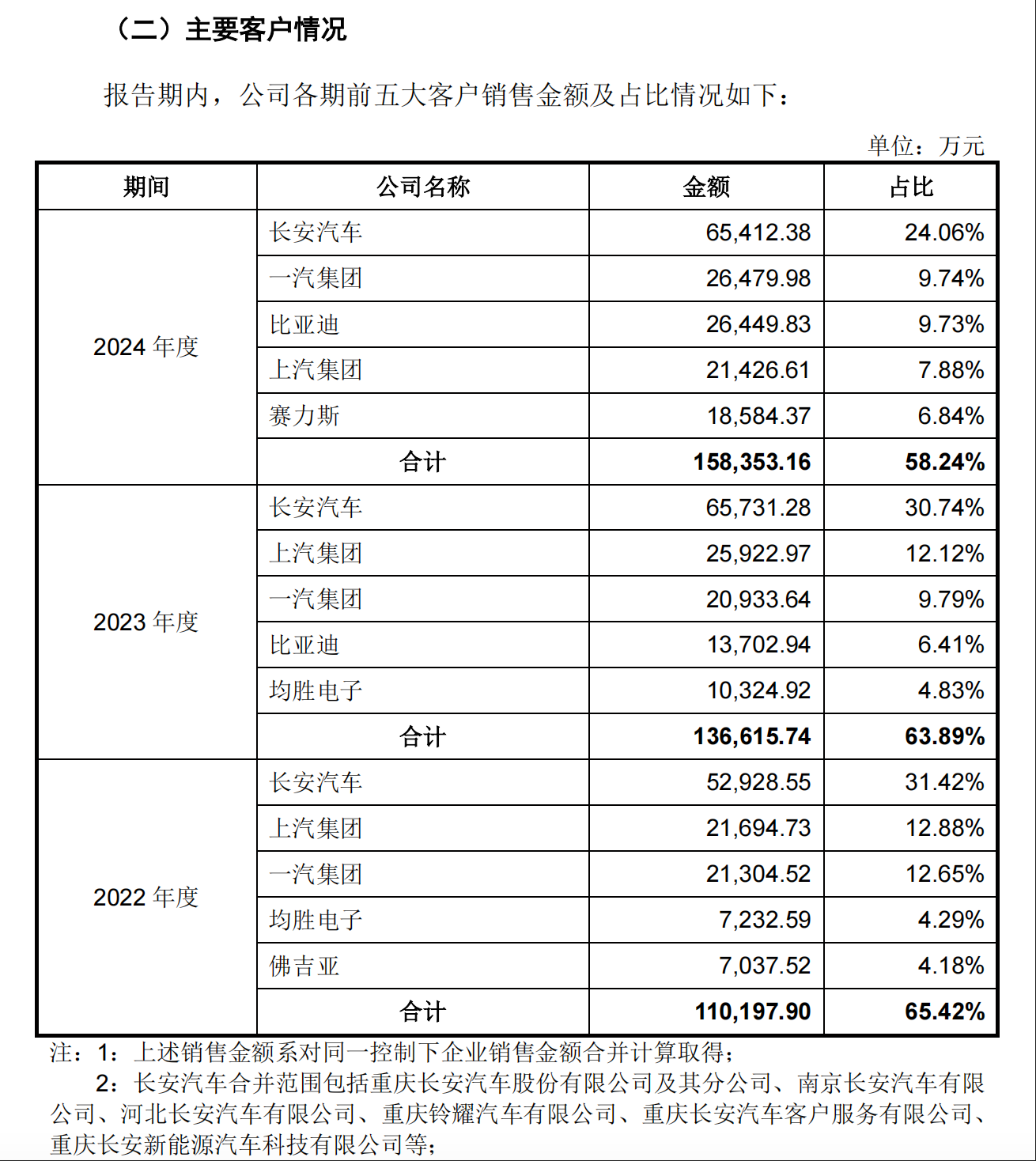
Core Viewpoint - Daming Electronics is preparing for an IPO on the Shanghai Stock Exchange, with significant revenue dependence on Chang'an Automobile, raising concerns about customer concentration risk and the company's declining gross margin due to industry pricing practices [2][10]. Group 1: Company Overview - Daming Electronics specializes in the research, production, and sales of automotive body electronic control systems, with key products including driving assistance systems, intelligent optical systems, cockpit control systems, window control systems, and seat adjustment systems [4]. - The company has established long-term partnerships with major domestic automotive manufacturers such as Chang'an Automobile, SAIC Group, FAW Group, BYD, and international brands like Ford and Toyota [4]. Group 2: Financial Performance - Daming Electronics reported revenues of 1.713 billion, 2.147 billion, and 2.727 billion yuan for 2022, 2023, and 2024 respectively, with net profits of 143 million, 196 million, and 279 million yuan [4]. - In 2024, over 650 million yuan, accounting for more than 24% of total revenue, is expected to come from Chang'an Automobile, down from over 30% in 2023, indicating rising customer concentration risk [5][8]. Group 3: Gross Margin Analysis - The company's overall gross margin has declined from 23.74% in 2021 to 20.65% in 2023, influenced by pricing pressures from downstream customers and rising costs [10]. - The gross margins for main business segments in 2022, 2023, and 2024 were reported as 20.57%, 20.62%, and 21.08% respectively, showing slight recovery in 2024 [10][11]. Group 4: Industry Context - The automotive parts industry in China is entering a mature phase, with increasing bargaining power for downstream manufacturers, leading to a common practice of annual price reductions [10][13]. - Daming Electronics' business model aligns with industry norms, focusing on long-term partnerships and collaborative product development with key clients [13].

大明电子近25%收入来自长安汽车,披露行业数据时效存疑
Di Yi Cai Jing· 2025-08-11 10:28
Core Viewpoint - Daming Electronics Co., Ltd. is preparing for an IPO on the Shanghai Stock Exchange, with significant revenue dependence on Changan Automobile, raising concerns about customer concentration risk and the timeliness of information disclosure in its prospectus [1][2][12]. Group 1: Company Overview - Daming Electronics specializes in the research, production, and sales of automotive body electronic control systems, with key products including driving assistance systems, intelligent optical systems, cockpit control systems, window control systems, and seat adjustment systems [2]. - The company has established long-term partnerships with major domestic automakers such as Changan Automobile, SAIC Group, FAW Group, BYD, and Geely, as well as foreign brands like Ford and Toyota [2][3]. Group 2: Financial Performance - Daming Electronics reported revenues of 1.713 billion yuan, 2.147 billion yuan, and 2.727 billion yuan for the years 2022, 2023, and 2024, respectively, with net profits of 143 million yuan, 196 million yuan, and 279 million yuan after excluding non-recurring gains and losses [2]. - In 2024, revenue from Changan Automobile is expected to exceed 650 million yuan, accounting for over 24% of total revenue, down from over 30% in 2023, indicating a potential risk of customer concentration [2]. Group 3: Margin Analysis - The overall gross margin of Daming Electronics has declined from 23.74% in 2021 to 20.65% in 2023, attributed to factors such as price reductions imposed by downstream customers, changes in product sales structure, and rising material and labor costs [5][6]. - The company's main business gross margins for 2022, 2023, and 2024 are reported as 20.57%, 20.62%, and 21.08%, respectively, showing slight recovery in 2024 [6][7]. Group 4: Management and Governance - The vice chairman of Daming Electronics, Zhang Xiaoming, has extensive experience within the Changan Automobile system, which may enhance the company's understanding of Changan's needs but also raises concerns about the fairness of transactions between the two entities [4][11]. Group 5: Industry Context - The automotive parts manufacturing industry in China is entering a mature phase, with increasing bargaining power for downstream manufacturers, leading to a common practice of annual price reductions [5][11]. - The global automotive parts supply chain is dominated by suppliers from Japan, the United States, and Germany, as highlighted in the 2024 Automotive News Global Top 100 Suppliers list [11][12].
日媒:中国车企正加速换“芯”,以替代英伟达等产品
Guan Cha Zhe Wang· 2025-08-08 02:17
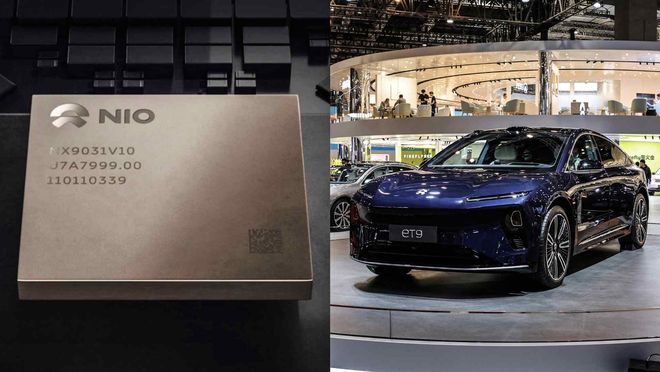
Group 1 - Chinese automotive manufacturers and chip companies are accelerating the replacement of foreign chip products, particularly from Nvidia [1] - Domestic chip developers such as Horizon Robotics, Huawei HiSilicon, and others are gaining traction among local automotive manufacturers [1][3] - The revenue from automotive and industrial application chips for domestic foundries has increased from less than 3% in 2020 to 10% currently [1] Group 2 - Chinese automakers, including Xpeng and NIO, are investing in self-developed chips, with projections indicating that by 2025, Chinese brands could account for 15%-20% of the total automotive chip supply [3] - The U.S. government has imposed restrictions on the export of advanced chips to China, impacting the options available for Chinese chip developers [4] - Nvidia faces ongoing regulatory challenges and scrutiny from the Chinese government, despite resuming supply of its H20 chip to China [6] Group 3 - China is expected to increase its self-sufficiency in microcontroller (MCU) chips from 19% in 2024 to 67% by 2030, with significant growth in domestic production of silicon carbide power switch chips [8] - The market for automotive digitalization is rapidly expanding, providing opportunities for new entrants in the chip sector [8] - There are challenges in producing advanced technologies like smart cockpit and autonomous driving chips due to manufacturing capacity limitations [8]