亿纬锂能

Search documents
【年度回顾/预告】 2025 & 2026势银氢能会议一览
势银能链· 2026-02-12 04:25
"宁波膜智信息科技有限公司"为势银(TrendBank)唯一工商注册实体及收款账户 2026势银液氢产业大会(2026年4月15日,无锡) 点此报名 02 2025势银(银川)长时储能产业大会 2025年7月14-15日, 在 银川市兴庆区政府、 银川市科学技术协会、 苏银产业园 管理委员会 指导下 , 势银(TrendBank) 与 上海电气储能科 技有限公司 联合 举办的 【2025势银(银川)长时储能产业大会】 , 在银川立达深杭国际酒店隆重举行。 添加文末微信,加 绿氢 群 势银(TrendBank)是中国领先的产业研究与数据公司,以数据和研究为中心,提供数据、研究、咨询、会议等服务。为客户提供决策依据,并 提供相关业务发展资源。 2025 年以来,势银(TrendBank)旗下媒体平台-- 势银能链 通过线上/线下宣传,帮助客户" 聚资源"。线上宣传与行业同仁共享业内最 新消息;线下会议加强业内同仁的交流探讨,推动行业痛难点的解决,共同助力显示产业向前发展。 势银能链对 2025年势银氢能行业线下 精彩会议 进行汇总,与各位行业同仁共同回顾。 01 2025势银绿色液体燃料产业大会暨绿氨、绿醇及绿色 ...


电力设备新能源行业2026年投资策略报告:驭风逐光,破卷新章
Guoyuan Securities· 2026-02-12 04:25
Group 1: Photovoltaic Industry - The photovoltaic industry is expected to recover from losses in 2026, driven by supply-side reforms and increased demand from AI infrastructure, with a potential for exceeding global demand expectations[1] - In 2025, China's photovoltaic installations reached 315.07 GW, a year-on-year growth of 13.67%, despite a significant drop in December's installations by 43% compared to the previous year[14] - The average price of polysilicon increased by over 50% from June to November 2025, indicating a recovery in pricing dynamics within the industry[22] Group 2: Wind Power Industry - The wind power sector is experiencing a favorable supply-demand balance, with significant growth expected in offshore wind installations and exports in 2026[1] - Wind power bidding has maintained high levels of activity since 2025, indicating a robust market outlook for domestic wind power growth[1] - The offshore wind market is projected to become a key growth area, with increasing demand for domestic and international projects[1] Group 3: Electric Vehicle Market - In 2025, China's new energy vehicle sales reached 16.49 million units, reflecting a year-on-year growth of 28.2%, continuing the industry's rapid development[2] - The prices of key materials for electric vehicles, such as lithium hexafluorophosphate and vinyl carbonate, surged by 222.67% and 254.21% respectively in the second half of 2025, contributing to improved profitability in the sector[2] - The industry is entering a new phase of quality improvement and efficiency enhancement, driven by technological innovations and supply chain autonomy[2] Group 4: Investment Recommendations - For photovoltaic investments, focus on leading companies with technological and cost advantages, such as GCL-Poly Energy and JA Solar[3] - In the wind power sector, recommend investing in turbine manufacturers like Goldwind Technology and cable companies like Orient Cable, which are well-positioned for growth[3] - In the lithium battery sector, prioritize companies with improving profitability, such as CATL and Guoxuan High-Tech, as the market recovers[8]
储能电池板块上涨,储能电池ETF易方达、储能电池ETF广发涨超3%
Ge Long Hui· 2026-02-12 04:09
Core Viewpoint - The energy storage battery sector is experiencing significant growth, with ETFs such as E Fund and GF rising over 3%, reflecting strong market interest and demand in the energy storage industry [1][2]. Group 1: ETF Performance - E Fund Energy Storage ETF increased by 3.09% year-to-date, with an estimated scale of 46.58 billion [2] - GF Energy Storage ETF rose by 3.33% year-to-date, with an estimated scale of 2.51 billion [2] Group 2: Market Dynamics - Recent bidding for a 12GWh energy storage system by Huadian showed an average price of 0.55 yuan/Wh, indicating a significant increase and a tight supply-demand situation [2] - The State Power Investment Corporation announced a public bidding for 7GWh energy storage cells with prices ranging from 0.325 to 0.355 yuan/Wh, reflecting strong downstream demand [3] Group 3: Policy Developments - A new notification established a unified national compensation logic for independent energy storage capacity pricing, which is expected to enhance revenue stability for energy storage projects [4] - The projected internal rate of return (IRR) for energy storage projects under different capacity pricing scenarios is 5.8% for 2 years, 7.9% for 10 years, and 9.2% for 20 years, indicating a favorable investment environment [4] Group 4: Industry Insights - The demand for lithium mining stocks is expected to rise due to increasing lithium carbonate prices, with potential for upward price adjustments [5] - The solid-state battery technology is anticipated to drive a new wave of capital expenditure in the industry by 2025, highlighting the importance of companies with integrated solid-state battery equipment capabilities [5] - The downstream battery terminal segment is currently viewed as the most stable part of the lithium battery supply chain, offering high win rates and safety [5]





5000万博出27亿IPO,香港“壳王”隐身幕后
阿尔法工场研究院· 2026-02-12 04:06
Core Viewpoint - The article discusses the upcoming IPO of Weiheng Intelligent Technology Co., Ltd., highlighting its valuation of 2.7 billion and the competitive landscape of the energy storage industry in China, emphasizing the challenges and opportunities faced by the company in a capital-intensive environment [5][31]. Group 1: Company Overview - Weiheng Intelligent was founded in 2017 by Professor Sun Yaojie from Fudan University, who has over 33 years of experience in the electronic engineering and energy sectors [7]. - The company has established a dual-team model for software and hardware development, with over 50% of its staff focused on BMS/EMS software, achieving a near-zero failure rate [11]. - The business structure has shifted significantly, with commercial energy storage becoming the core revenue driver, increasing from 0.89 billion in 2023 to 2.22 billion in 2024, representing an 82.6% revenue share [11]. Group 2: Market Position and Financial Performance - Weiheng Intelligent's overseas market revenue surged from 14.5% in 2023 to 50.6% in 2024, with Europe contributing nearly 80% of this revenue [12]. - The company reported a revenue increase from 2.67 billion in 2023 to 4.76 billion in the first nine months of 2025, marking a 281.5% year-on-year growth [26]. - Gross profit rose from 22 million to 90.8 million, with gross margin improving from 8.3% to 19.1% [26]. Group 3: Challenges and Risks - The company's industry ranking is questioned, as it claims to be the eighth in global commercial energy storage but lacks corroborating data from other industry sources [27]. - Despite narrowing losses to 40.4 million in the first nine months of 2025, the company has not yet achieved profitability, with cumulative losses reaching 399 million over three years [28]. - The production capacity for commercial energy storage is underutilized at 77.5%, and the company relies heavily on outsourcing for its supply chain [29]. - A significant portion of revenue (59.4%) comes from a single customer, raising concerns about supply chain concentration risks [30].
国元证券:光伏板块向上趋势明确 风电“海风+出海”迎景气上行
Zhi Tong Cai Jing· 2026-02-12 04:05
Group 1: Photovoltaics - The supply-side clearing and production restrictions in the photovoltaic industry are expected to accelerate, leading to a clear upward trend in the sector [2] - The dual effects of price control and supply-side clearing are likely to drive industry profitability recovery, with some tail-end companies exiting the market [2] - The global photovoltaic demand may exceed expectations due to AI computing power construction and the "14th Five-Year Plan" supporting photovoltaic installations [2] Group 2: Wind Power - The supply-demand structure of the wind power industry in China is reasonable, with good profitability among listed companies [3] - The construction of offshore wind power is expected to accelerate in 2025, becoming a key focus for the marine economy [3] - The wind power bidding has maintained a high level of activity since 2025, indicating a favorable outlook for the industry [3] Group 3: New Energy Vehicles - In 2025, China's new energy vehicle sales are projected to reach 16.49 million units, reflecting a year-on-year growth of 28.2% [4] - The industry is experiencing a recovery in profitability due to effective control of disorderly expansion on the supply side [4] - The second half of 2025 will see significant price increases for key materials, contributing to overall profitability recovery in the sector [4] Group 4: Investment Recommendations - For photovoltaics, focus on leading silicon material and battery component companies with technological and cost advantages, as well as firms leading in production equipment and high-demand auxiliary material companies [5] - In wind power, attention should be given to turbine manufacturers and companies involved in subsea cable production, as well as those in the offshore wind installation sector [5] - In the lithium battery sector, key companies include CATL and others benefiting from the recovery of midstream material prices [6]

电力设备新能源行业2026年投资策略报告:驭风逐光,破卷新章-20260212
Guoyuan Securities· 2026-02-12 02:46
Group 1: Photovoltaic Industry - The photovoltaic industry is experiencing a clear upward trend due to supply-side clearing and demand-side support, with expectations of profitability recovery in 2026 as inefficient companies exit the market and leading firms enhance efficiency through technological upgrades [1][14] - In 2025, China's photovoltaic industry saw a significant increase in installed capacity, reaching 315.07 GW, with a year-on-year growth rate of 13.67%, despite a slowdown in the second half of the year [14][16] - The introduction of policies aimed at preventing "involution" in the industry has led to a recovery in prices, with polysilicon prices rising over 50% from June to November 2025, indicating a shift towards a more rational pricing environment [22][29] Group 2: Wind Power Industry - The wind power industry is expected to benefit from a favorable supply-demand structure, with significant growth anticipated in offshore wind projects and exports, particularly in 2025 [1][3] - The domestic wind power market is projected to continue its growth trajectory, with offshore wind becoming a key focus area, supported by increasing demand for domestic and international markets [1][3] - Investment recommendations include focusing on leading manufacturers in the wind turbine sector and companies involved in high-barrier components such as submarine cables, which are expected to see increased demand [3][3] Group 3: New Energy Vehicles - The new energy vehicle sector in China is projected to achieve sales of 16.49 million units in 2025, reflecting a year-on-year growth of 28.2%, driven by stable market demand and improved product structures [2][3] - The industry is witnessing a recovery in profitability as supply-side chaos is effectively managed, with significant price increases in key materials like lithium hexafluorophosphate and vinyl carbonate [2][3] - The transition to a high-quality development phase is expected in 2026, supported by technological innovations and enhanced supply chain capabilities [2][3] Group 4: Lithium Battery Industry - The lithium battery industry is experiencing a recovery in profitability as inefficient production capacity is eliminated, with key materials seeing price increases and demand from new energy vehicles and energy storage continuing to rise [8][8] - Recommendations include focusing on leading companies in the battery and structural components sectors, which are expected to benefit from the industry's recovery [8][8] - The commercialization of solid-state batteries is accelerating, with several companies making significant progress in this area [8][8]




马斯克的商业帝国:六大产业链闭环,未来指向多星球文明
QYResearch· 2026-02-12 02:40
Core Viewpoint - Elon Musk's business empire is not limited to a single company but encompasses a vast industrial network covering space, earth, human-machine interaction, and energy, aiming for "sustainable prosperity" and "multi-planet civilization" [3] Group 1: Six Major Industrial Chains - Musk's empire is built on three main pillars: Tesla (energy + transportation), SpaceX (space exploration), and xAI (artificial intelligence), along with three extensions: Neuralink (brain-machine interface), The Boring Company (underground tunnels), and Optimus (humanoid robots), forming a self-reinforcing collaborative loop [4] Group 2: Key Data Summary for 2026 - SpaceX aims for $18.2 billion in revenue by 2025, with a 45% year-on-year increase, and plans to launch over 200 rockets, achieving a market share of 86% in U.S. space launches [5] - Tesla targets $94.827 billion in total revenue by 2025, with a projected delivery of 1.636 million vehicles and a 120% increase in FSD subscription users [5] - xAI has raised $20 billion in funding, with plans to build a data center and enhance its Grok model [5] - Neuralink has implanted devices in 12 individuals, aiming for large-scale production and expanded clinical cases [5] Group 3: Collaborative Logic of the Industrial Chain - The synergy among the six industrial chains creates a "1+1>2" effect, where energy systems from Tesla support SpaceX and xAI, while data from various sources feeds into xAI's Grok model, enhancing overall efficiency [6][7] Group 4: Global Industry Benefits - The commercialization of Musk's industrial chains is expected to drive growth in multiple related industries, including aerospace materials, lithium batteries, AI computing power, precision manufacturing, and underground engineering, with significant market growth projections for 2026 [8] Group 5: China's Related Industry Development - China's commercial space sector is rapidly developing, with over 300 companies and a market size exceeding 200 billion RMB by 2026, benefiting from global aerospace trends [9] - In the new energy and electric vehicle sector, China leads globally, with a projected production of 9.5 million electric vehicles by 2025, capturing over 60% of the global market [11] - The AI sector in China is expected to reach a scale of 500 billion RMB by 2026, with significant advancements in large models and computing infrastructure [13] - The humanoid robot and precision manufacturing sectors are also advancing, with Chinese companies focusing on key components and achieving a 35% localization rate by 2025 [14] Group 6: Insights from Musk's Industrial Logic - Musk's approach emphasizes ecological layout, long-termism, differentiated competition, and the importance of hard technology and complete industrial chains, providing valuable lessons for global and Chinese industries [15][16][17][18]


国轩高科50亿定增背后:豪掷220亿扩产、资金缺口超300亿 收现比严重偏低、回款魔咒或再度浮现
Xin Lang Cai Jing· 2026-02-11 10:23
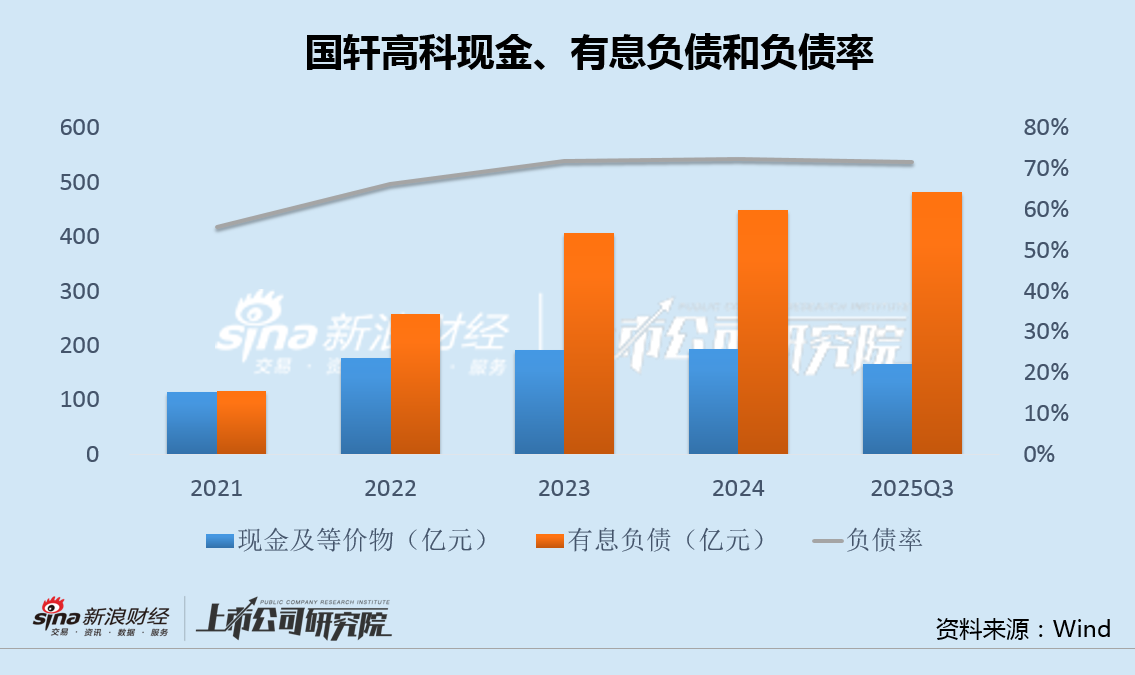
Core Viewpoint - Guoxuan High-Tech plans to raise up to 5 billion yuan for the expansion of lithium battery production capacity and to supplement working capital, amidst significant existing debt and cash flow challenges [1][3]. Group 1: Fundraising and Investment Plans - The company aims to raise no more than 5 billion yuan, with allocations of 2 billion yuan for a 20GWh power battery project, 1 billion yuan for a 20GWh new energy battery base, 1 billion yuan for a new lithium-ion battery manufacturing base, and the remaining 1 billion yuan for working capital [3]. - The total investment for the new capacity projects is over 14 billion yuan, combined with a previously announced 8 billion yuan expansion, bringing the total to 22 billion yuan [1][4]. Group 2: Financial Health and Debt Situation - As of the end of Q3 2025, the company had short-term borrowings of nearly 28 billion yuan and long-term borrowings exceeding 20 billion yuan, with a debt-to-asset ratio rising to 71.72% [5]. - The company's cash flow issues are highlighted by a significant increase in construction in progress, which rose from 14.8 billion yuan at the beginning of the year to 21.0 billion yuan, a 42.16% increase [5]. Group 3: Revenue and Profitability Concerns - The company expects a net profit of 2.5 to 3 billion yuan for 2025, with approximately 1.7 billion yuan derived from fair value changes related to the listing of Chery Automobile [8]. - Government subsidies and other income have exceeded net profit in recent years, indicating reliance on non-operational income sources [8]. Group 4: Accounts Receivable and Cash Flow Issues - The company's cash collection ratio is significantly lower than that of leading battery manufacturers, ranging between 60% and 70% [9]. - Accounts receivable and their turnover days have been increasing, with turnover days rising from 122 days in 2022 to 152 days in 2024, suggesting a resurgence of previous cash collection issues [11].

中国汽车动力电池产业创新联盟:1月我国动力和储能电池合计产量为168.0GWh 环比下降16.7% 同比增长55.9%
Zhi Tong Cai Jing· 2026-02-11 09:02
Group 1: Production Data - In January 2026, the total production of power and energy storage batteries in China was 168.0 GWh, a month-on-month decrease of 16.7% but a year-on-year increase of 55.9% [1][6]. - The production of ternary batteries was 31.3 GWh, accounting for 18.6% of total production, with a month-on-month decrease of 23.1% and a year-on-year increase of 51.1% [13]. - The production of lithium iron phosphate batteries was 136.7 GWh, making up 81.3% of total production, with a month-on-month decrease of 14.8% and a year-on-year increase of 57.1% [13]. Group 2: Sales Data - In January 2026, the total sales of power and energy storage batteries in China reached 148.8 GWh, a month-on-month decrease of 25.4% but a year-on-year increase of 85.1% [2][14]. - Power battery sales were 102.7 GWh, accounting for 69.0% of total sales, with a month-on-month decrease of 28.6% and a year-on-year increase of 63.2% [2][18]. - Energy storage battery sales were 46.1 GWh, making up 31.0% of total sales, with a month-on-month decrease of 17.0% and a year-on-year increase of 164.0% [2][19]. Group 3: Export Data - In January 2026, the total export of power and energy storage batteries was 24.1 GWh, a month-on-month decrease of 26.0% but a year-on-year increase of 38.3%, accounting for 16.2% of total sales [2][22]. - Power battery exports were 17.7 GWh, representing 73.3% of total exports, with a month-on-month decrease of 7.1% and a year-on-year increase of 59.3% [2][24]. - Energy storage battery exports were 6.4 GWh, accounting for 26.7% of total exports, with a month-on-month decrease of 52.6% and a year-on-year increase of 1.4% [2][26]. Group 4: Installation Data - The domestic installation of power batteries in January 2026 was 42.0 GWh, a month-on-month decrease of 57.2% but a year-on-year increase of 8.4% [3][40]. - Ternary battery installations were 9.4 GWh, accounting for 22.3% of total installations, with a month-on-month decrease of 48.6% and a year-on-year increase of 9.6% [3][44]. - Lithium iron phosphate battery installations were 32.7 GWh, making up 77.7% of total installations, with a month-on-month decrease of 59.1% and a year-on-year increase of 8.1% [3][44]. Group 5: Key Material Demand - In January 2026, the demand for key materials for power and energy storage batteries included 63,000 tons of ternary materials and 342,000 tons of lithium iron phosphate materials [64][65]. - The demand for negative electrode materials was 235,000 tons, while the demand for separators was 3.36 billion square meters [64]. - The demand for electrolyte for ternary batteries was 28,000 tons, and for lithium iron phosphate batteries, it was 205,000 tons [64][65].

均价0.548、最低0.492!华电12GWh集采59家企业报价复盘
中关村储能产业技术联盟· 2026-02-11 07:34
Core Viewpoint - The article highlights the competitive landscape and cost benchmarks in the lithium iron phosphate energy storage market, particularly focusing on the recent procurement project by China Huadian Group for a 12GWh energy storage system [3][4]. Group 1: Procurement Project Details - China Huadian Group officially opened bids for a 12GWh lithium iron phosphate energy storage system framework procurement project, marking a significant event in the energy storage market for 2026 [3]. - The project specifies that the battery cell capacity must be ≥314Ah, indicating a focus on high-capacity energy storage solutions [3]. Group 2: Competitive Pricing Analysis - The bidding process revealed intense competition, with the lowest bid at 0.49225 yuan/Wh, and four companies bidding below 0.5 yuan/Wh (ranging from 0.492 to 0.499 yuan/Wh) [6]. - The arithmetic mean bid from the 59 participating companies was approximately 0.548 yuan/Wh, while the median bid was around 0.540 yuan/Wh [6]. - A significant number of companies (about 32) had bids concentrated in the 0.52-0.56 yuan/Wh range, indicating a consensus on the current cost baseline within the industry [6]. Group 3: Bidder Requirements - The tender explicitly requires bidders to have operational performance of at least one project with a capacity of ≥200MWh or a cumulative contract performance of no less than 2000MWh [7].