元气森林

Search documents
连续三年稳增!元气森林做好产品,就是对抗市场不确定性的底气
Guan Cha Zhe Wang· 2025-11-18 03:46
Core Insights - Yuanqi Forest has achieved a 26% overall growth in performance, with specific product lines such as Alien Electrolyte Water and Vitamin Water showing significant increases of 34% and 128% respectively, indicating strong market demand and effective product strategy [1][4][10] Group 1: Product Performance - Alien Electrolyte Water grew by 34%, Vitamin Water by 128%, and the Ice Tea series by 56%, showcasing a robust product portfolio that exceeds market expectations [1][4] - The company has maintained double-digit growth for three consecutive years, attributed to a diverse product matrix that adapts to changing consumer preferences [1][3][10] Group 2: Strategic Focus - The CEO emphasized a "slow is fast" approach, highlighting the importance of patience and confidence in product development, which has been a key factor in the company's sustained growth [3][5] - Yuanqi Forest's 2026 strategy focuses on product quality and consumer trust, aiming to counter market uncertainties with reliable product offerings [3][10] Group 3: Market Positioning - The company is committed to a long-term strategy that prioritizes product quality over rapid trends, reinforcing its position in a competitive beverage market [6][10] - The emphasis on health-conscious products aligns with consumer trends towards lower sugar and functional beverages, appealing particularly to younger demographics [9][10] Group 4: Distribution and Feedback - The company is enhancing market presence through initiatives like the "Ark" project and a digital management system, which improve market control and product optimization based on consumer feedback [6][10] - Feedback from distributors indicates strong market performance for products like Alien Electrolyte Water and Ice Tea, which resonate well with health-conscious consumers [8][9] Group 5: Future Outlook - Yuanqi Forest plans to expand its product offerings and market reach, with products already available in over 40 countries, indicating a growing international presence [11] - The company aims to continue focusing on product innovation and quality to meet the evolving demands of consumers, ensuring sustainable growth in the beverage sector [10][11]

“欢迎更多台青来大陆深耕发展”
Ren Min Ri Bao Hai Wai Ban· 2025-11-18 03:01
Group 1 - The event "Together Building Dreams, Moving Towards Beijing's Color" was held on November 16, 2023, at Peking University, aimed at providing internship and employment opportunities for Taiwanese students and youth in Beijing [1][3] - Over 60 quality enterprises and organizations from the capital offered more than 500 internship and job positions, attracting over 300 Taiwanese students and youth to seek opportunities [1][3] - The event included presentations from companies like ByteDance and 91 Technology Group, focusing on talent development and sharing success stories of Taiwanese professionals already working in Beijing [1][2] Group 2 - The 91 Technology Group highlighted the growing interest among Taiwanese youth in the artificial intelligence (AI) sector, emphasizing the rapid development of AI in mainland China [2] - Various sectors such as AI, fintech, biomedicine, cultural creativity, and legal services were represented at the job fair, with many Taiwanese students actively engaging with employers and submitting resumes [2] - Peking University reported a steady increase in the proportion of Taiwanese students pursuing studies and internships in Beijing, indicating a trend towards diversified employment opportunities [2][3] Group 3 - The event was co-hosted by multiple organizations, including the Beijing Municipal Human Resources and Social Security Bureau and Peking University, aiming to facilitate internships, employment, and entrepreneurship for Taiwanese youth [3] - Beijing's relevant departments plan to continue organizing specialized recruitment events, industry visits, and vocational training to support Taiwanese youth in integrating into high-quality development in Beijing [3]

元气森林2025年业绩同比提升26%
Xin Lang Cai Jing· 2025-11-17 14:06
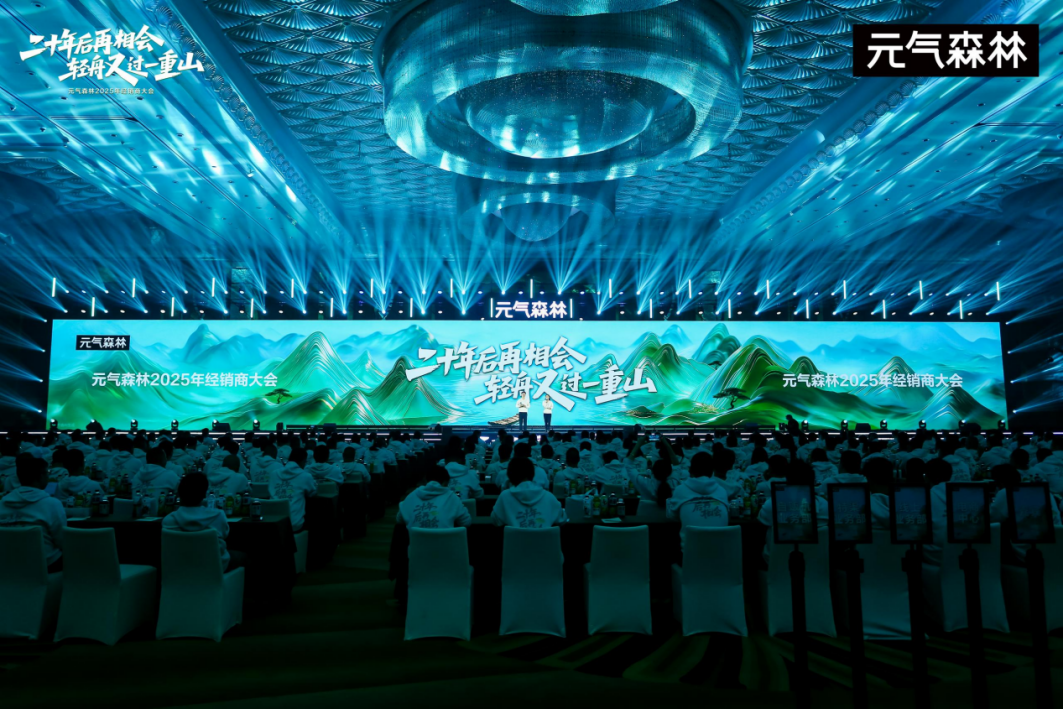
11月17日,元气森林在广东珠海召开2025年经销商大会。智通财经获悉,2025年元气森林合作网点数量 增加12万个,业绩同比提升26%,新增覆盖城市64个。(智通财经记者 李烨) ...
白砂糖重回配料表
36氪· 2025-11-17 00:10
Core Viewpoint - The article discusses the return of white sugar to beverage ingredient lists, driven by an upgrade in consumer health awareness and a demand for controllable taste experiences [4][27]. Group 1: Market Trends - The beverage market has seen a significant shift with the rise of sugar-free drinks, initiated by brands like Yuanqi Forest in 2018, which led to a decline in the presence of white sugar in ingredient lists [9][15]. - However, in the recent beverage season, traditional beverage companies have reintroduced white sugar in their products, indicating a change in consumer preferences towards a balance of taste and health [8][15]. - The global largest erythritol manufacturer, San Yuan Bio (301206.SZ), saw its erythritol revenue peak at 1.567 billion yuan in 2021, but it is projected to drop to 515 million yuan in 2024 due to an oversupply in the market [12][13]. Group 2: Consumer Preferences - Consumers are now more inclined to accept the presence of white sugar in beverages, as seen with brands like Yuanqi Forest and Nongfu Spring launching new products that contain white sugar while promoting low-sugar options [15][17]. - The trend reflects a shift from an absolute avoidance of sugar to a preference for lower sugar content that still delivers enjoyable taste experiences [27][28]. - Brands are strategically reducing serving sizes to manage sugar intake while still offering products that satisfy taste preferences, indicating a nuanced approach to sugar consumption [18][22]. Group 3: Competitive Landscape - The sugar tea market, valued at nearly 90 billion yuan, is experiencing a competitive yet stable environment, with traditional beverage companies maintaining significant market shares [32][35]. - Major players like Master Kong, Uni-President, and Nongfu Spring dominate the market, collectively holding over 69% of the market share, with growth rates exceeding 5% [35][36]. - The introduction of new products in the sugar tea category continues to outpace sugar-free options, suggesting a sustained consumer interest in traditional flavors [34][35].


白砂糖重回配料表
东京烘焙职业人· 2025-11-16 08:32
Core Viewpoint - The article discusses the resurgence of white sugar in beverage ingredient lists, highlighting a shift in consumer preferences towards a balance of taste and health, as well as the evolving strategies of beverage companies in response to these trends [5][14][26]. Group 1: Market Trends - The beverage market has seen a significant shift with the rise of sugar-free drinks, initiated by brands like Yuanqi Forest in 2018, which led to a decline in the presence of white sugar in ingredient lists [8][12]. - However, in the recent beverage season, traditional beverage companies have reintroduced white sugar in their products, indicating a change in consumer perception towards health and taste [7][14]. - The market for sugary tea beverages is substantial, nearing 900 billion, and is experiencing a transition from rapid expansion to a focus on quality development [31][34]. Group 2: Consumer Preferences - Consumers are increasingly seeking a balance between health and taste, leading to a demand for products that offer lower sugar content without sacrificing flavor [18][26]. - The trend of "controlled indulgence" is emerging, where brands are marketing products with reduced sugar while still incorporating white sugar to enhance taste [16][20]. - Younger consumers are particularly interested in products that provide enjoyable flavors without the guilt associated with high sugar content [21][26]. Group 3: Company Strategies - Companies like Yuanqi Forest and Nongfu Spring have launched new products featuring white sugar, emphasizing low-sugar and reduced-sugar branding to attract health-conscious consumers [14][16]. - The use of alternative sweeteners like erythritol and sucralose has been prevalent, but companies are now recognizing the unique taste benefits of white sugar, leading to its reintroduction in various products [10][20]. - Major brands such as Master Kong and Uni-President maintain significant market shares in the sugary tea segment, indicating their strong influence and the stability of this market despite health trends [34][35].
7款无糖饮料4款测出糖度?网上流行的糖度计靠谱吗
Qi Lu Wan Bao· 2025-11-14 08:20
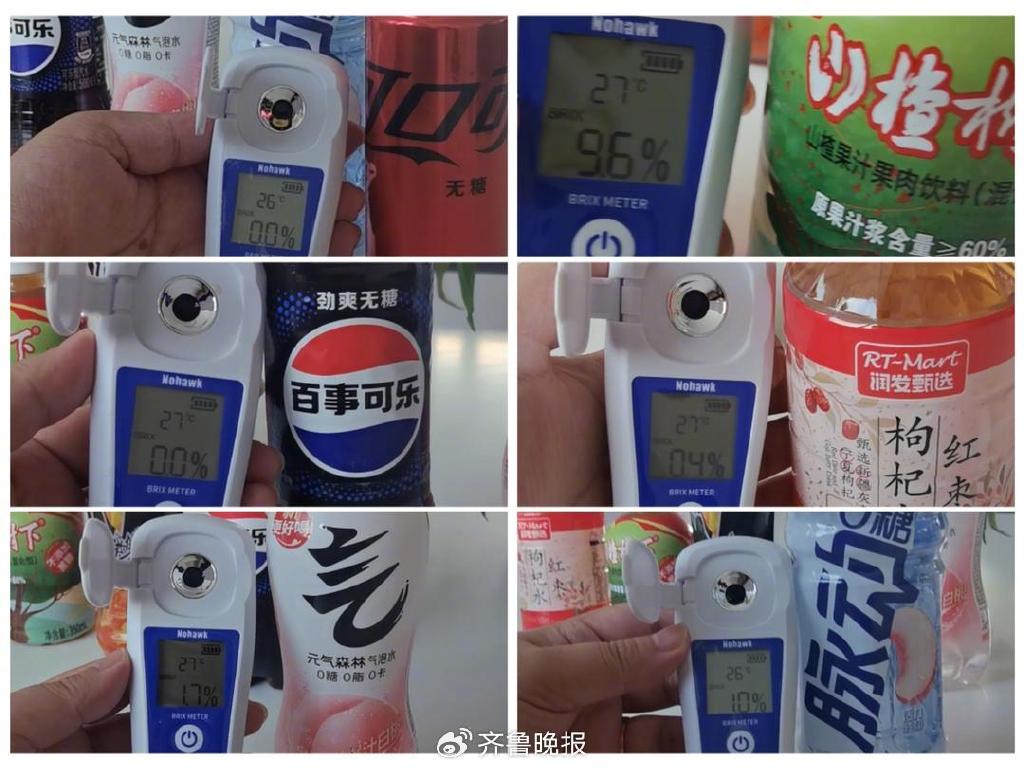
Core Insights - The article discusses the reliability of "sugar-free" beverage claims, highlighting discrepancies between consumer expectations and actual sugar content measured by refractometers [1][5][7] Group 1: Measurement Discrepancies - A study conducted by journalists revealed that out of seven "sugar-free" beverages tested, four showed measurable sugar content, with one product exceeding consumer expectations at 9.6% [5][7] - The testing method, using a refractometer, measures the total concentration of soluble solids, not just sugar, leading to potential misinterpretations of "sugar-free" claims [7][8] Group 2: Industry Trends - The market for sugar-free beverages in China is rapidly expanding, with a compound annual growth rate of nearly 30% from 2018 to 2023, projected to reach a scale of 100 billion by 2025 [8] - Companies are increasingly using multiple sweeteners to replicate the taste of traditional sugary products, indicating a shift in formulation strategies [8][9] Group 3: Consumer Education - There is a growing need for consumer education regarding the definitions of "sugar-free" and the presence of alternative sweeteners, as many consumers lack understanding of these concepts [9][11] - Recommendations for consumers include scrutinizing product labels, nutritional information, and ingredient lists to make informed choices about sugar-free products [11][12]
食品饮料行业周度市场观察-20251113
Ai Rui Zi Xun· 2025-11-13 07:14
Investment Rating - The report does not explicitly provide an investment rating for the food and beverage industry Core Insights - The food and beverage industry is experiencing significant innovation and market shifts, particularly in health-oriented products and consumer preferences for low-sugar and functional beverages Industry Trends - Japanese market innovation in products like liquid ice cream and gout-relief yogurt highlights the importance of consumer-driven product development and emotional marketing, which can serve as a model for the Chinese market [2] - The Chinese medicinal food industry has surpassed 370 billion yuan, with a total industry valuation exceeding 2 trillion yuan, driven by health awareness and innovative product offerings [2] - The plant-based protein beverage market is seeing improved performance among leading companies, with notable revenue growth reported by Yangyuan Beverage and Chengde Lulu [4] - The emergence of HPP cold brew tea products is gaining traction among young consumers, despite high costs and niche market positioning [4] - A resurgence of sugary beverages is noted, with brands like Yuanqi Forest and Wahaha reintroducing sugar in their products, reflecting consumer preferences for taste alongside health [5] - The bottled water market is shifting from price competition to value competition, with brands like Nongfu Spring leveraging product innovation and channel expansion [6][7] - The market for sugar-free tea is evolving, with a growing demand for flavored and quality products among younger consumers [7] - The pet food market is expanding, with new brands entering the space and established companies diversifying their offerings to include fresh food options [8] - The plant milk market is projected to exceed 100 billion yuan, with B2B channels becoming crucial for growth [9] - New retail strategies are driving beverage innovation, with companies focusing on health, functionality, and emotional engagement [10] Brand Dynamics - Mondelez International reported a 5.9% revenue increase, but faced challenges in the Chinese market due to consumer confidence issues [14] - Xu Fu Ji's sports scene marketing has led to the success of its Meilu energy biscuits, tapping into the growing demand for sports nutrition [15] - Coca-Cola's third-quarter results showed a 5% revenue increase, driven by the popularity of sugar-free products [16] - Yangyuan Beverage is enhancing its leadership in the plant-based protein beverage sector through product innovation and channel restructuring [17] - The introduction of low-sugar snacks by brands like Holley has responded to rising health consciousness among consumers [18] - Mengniu's milk powder business has achieved double-digit growth by addressing diverse consumer needs across different age groups [19] - Chengde Lulu is pivoting towards herbal water products to counteract declining revenues in the plant-based beverage market [20] - New麦食品 is leveraging digital transformation to become a benchmark in the baking industry, focusing on fresh, preservative-free products [21] - The entry of brands like Guozi Shule into the craft beer market reflects a trend of category fusion in the beverage industry [22] - Dongpeng's electrolyte drink brand "Buhua" is rapidly growing, posing competition to established brands like Yuanqi Forest [23]



路威凯腾中国消费投资逻辑:拒绝速成,为品牌构建“时间壁垒”
2 1 Shi Ji Jing Ji Bao Dao· 2025-11-13 03:48
Core Insights - The "Double Eleven" sales report reflects a significant shift in the Chinese consumer market, moving from a focus on GMV (Gross Merchandise Volume) to operational quality [1] - Instant retail is evolving from a "new battlefield" to a "new infrastructure," primarily driving growth through the migration of existing consumption scenarios rather than pure incremental creation [1] - Investment paradigms are shifting towards controlling stakes and deep empowerment, as evidenced by recent transactions such as the acquisition of a majority stake in Starbucks China by Boyu Capital and a $350 million joint venture between CPE Yuanfeng and Burger King [1][10] Investment Trends - L Catterton's managing director, Jin Yongbo, emphasizes a notable shift towards controlling investments, favoring companies with strong brand power, product strength, and healthy cash flow, rather than high-risk startups [1][11] - The firm has managed approximately $37 billion in equity capital and has invested in over 300 consumer brands globally, indicating a broad investment strategy across various sectors [2] Instant Retail Dynamics - Instant retail is reshaping the retail landscape, with nearly two-thirds of the market share held by Meituan, Ele.me, and JD.com, leveraging their existing delivery networks [5] - About 70% of current order volumes are derived from demand shifts from traditional e-commerce or physical stores [6] - Different industries respond variably to instant retail, with food and beverage sectors benefiting more than apparel and beauty, which require longer decision-making times [6] Consumer Brand Investment - The investment focus remains on sectors like food and beverage, beauty and personal care, and pet care, which account for nearly 80% of L Catterton's portfolio [9] - The rise of domestic beauty brands in China is notable, with many capturing significant market shares in both mass and premium segments [9] - The aging population and health-conscious trends are driving growth in the health and wellness sector, creating new consumption scenarios [10] M&A Activity and Strategic Insights - Recent mergers and acquisitions in the consumer sector indicate a trend towards consolidation, particularly as major brands reach organic growth ceilings [11] - Successful investment strategies involve deep engagement in the operational aspects of portfolio companies, as seen in L Catterton's approach with brands like Heytea [10] - The shift towards controlling stakes in mature companies reflects a broader market realization that initial capital-intensive strategies for startups have not yielded scalable success [11]
2025年第45周:食品饮料行业周度市场观察
艾瑞咨询· 2025-11-13 00:05
Industry Environment - Japan's consumer market thrives on high-frequency innovation, evolving from imitation to user-driven innovation since the 1980s, with companies establishing consumer research centers to deeply explore needs [3][4] - The "medicinal food" industry in China has surpassed 370 billion yuan, with a total industry valuation exceeding 2 trillion yuan, driven by health awareness and policy support [5] - The plant-based protein beverage market is facing pressure, but leading companies are preparing for peak seasons with channel expansion and new product promotions [6] Beverage Market Trends - HPP cold brew tea, combining high-pressure cold sterilization with cold brewing, is gaining popularity among young consumers, despite its higher cost and niche market status [7] - The beverage market is witnessing a return of sugary drinks, with brands like Yuanqi Forest and Wahaha launching new sugary products, reflecting consumer preferences for taste and pleasure [8] - The bottled water market is shifting from price competition to value competition, with companies like Nongfu Spring and China Resources leading through product innovation and channel transformation [9][10] Brand Dynamics - Mondelez International reported a 5.9% revenue growth in Q3 2025, but faced profit margin pressures due to rising costs and declining consumer confidence in emerging markets like China [20] - Xu Fu Ji's Meilu energy biscuits have rapidly gained popularity in the sports nutrition market, leveraging event sponsorships and targeted marketing strategies [21] - Coca-Cola's Q3 2025 revenue reached $12.455 billion, driven by price increases and strong sales of sugar-free products, despite a slight decline in the Chinese market [22] Plant-Based and Health Trends - Yangyuan Beverage is enhancing its leadership in the plant-based protein beverage sector through product innovation and channel restructuring [23] - The low-sugar trend is becoming mainstream, with brands like Holleyou launching new products that balance health and taste [25] - Mengniu's milk powder business has achieved double-digit growth by focusing on emotional marketing and channel optimization to meet diverse consumer needs [26] Emerging Opportunities - The plant milk market is projected to exceed 100 billion yuan by 2025, with B2B channels becoming crucial for growth [14] - The sports drink segment is rapidly growing, with brands like Magic leveraging product upgrades and sports marketing to strengthen their market position [33] - The electrolyte drink market is dominated by brands like Dongpeng and Alien, with both focusing on channel strategies and product diversification to capture market share [31][32]

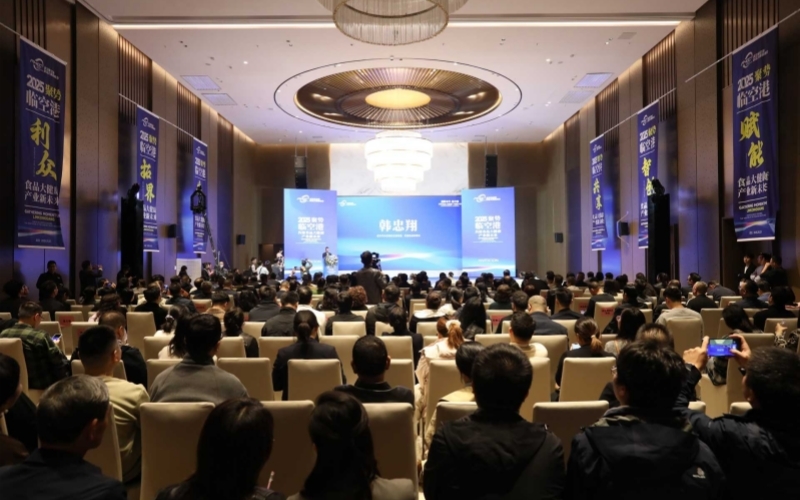
人民网:共谋新未来 武汉临空港食品大健康商会启航
Ren Min Wang· 2025-11-02 02:00
Core Insights - The event "Gathering Strength: Co-creating a New Future for the Food and Health Industry" was held in Wuhan, focusing on breakthroughs and upgrades in the food health industry during the 14th Five-Year Plan period [2] Group 1: Industry Trends and Expert Insights - Experts from various authoritative institutions shared insights on the current state and future trends of the food industry, emphasizing the need for innovation and technology-driven strategies [3] - The importance of consumer-centric approaches was highlighted, with strategies for brands to transition from gaining traffic to retaining customers through new media platforms [3] - Successful case studies, such as the creation of a leading Chinese oolong tea brand in the U.S., provided models for Chinese brands looking to expand internationally [3] Group 2: Roundtable Discussions - The roundtable discussions addressed key topics such as macro layout and regional empowerment, micro breakthroughs and survival strategies, and future insights and foresight planning [6] - Experts emphasized the need for traditional food companies to leverage their unique advantages and enhance product quality through industrialization [6] - The significance of understanding consumer demand and investing in technological research and development was stressed as essential for the growth of the food health industry [6] Group 3: Regional Development and Policy Opportunities - The East Lake District's food health industry has reached a scale of 140 billion yuan, covering various sectors and forming a complete industry chain from production to consumption [7] - Companies are encouraged to seize policy opportunities, increase R&D investments, and collaborate with academic and research institutions to address technological challenges [7] - The consensus among participants is that the food health industry has vast potential but also faces challenges, necessitating collaboration among enterprises, government, and research institutions [7]