
华源证券

Search documents
2025年9月30日国债期货行情异动原因分析
Sou Hu Cai Jing· 2025-09-30 04:24
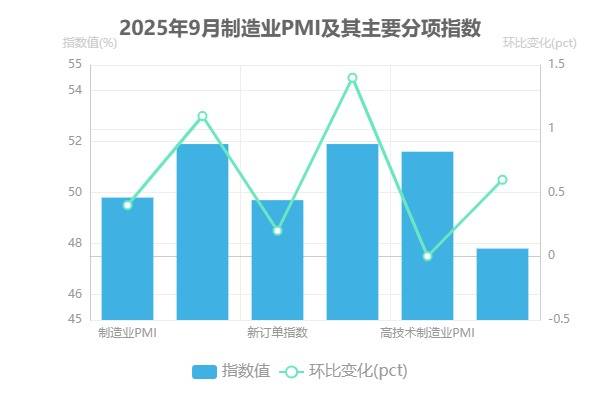
Market Overview - On September 30, 2025, significant intraday fluctuations were observed in the government bond futures market, with all contract maturities rebounding sharply by midday after a cautious opening [1][3] - The 30-year main contract experienced notable volatility, initially dropping by 0.30% before closing up 0.07%, indicating intense long-short competition in the long-end segment [3] Policy Drivers - The fluctuations in government bond futures were primarily driven by multiple positive signals from the policy front, with the People's Bank of China (PBOC) injecting stability into market expectations through precise liquidity provision [4] - On September 30, the PBOC conducted a 7-day reverse repurchase operation at a fixed rate of 1.40%, injecting 242.2 billion yuan into the market, which alleviated seasonal funding pressures [4][5] - The PBOC's third-quarter monetary policy meeting emphasized "promoting stable economic growth" and maintaining ample liquidity, indicating a shift in policy tone from "maintaining" to "promoting" [5][7] Economic Data Impact - The release of the manufacturing PMI data for September, which rose to 49.8%, played a crucial role in influencing market sentiment, reflecting a "weak recovery" in the economy [9][11] - The production index increased to 51.9%, indicating expansion, while the new orders index remained below the threshold, highlighting persistent demand weakness [12][13] Fund Allocation Demand - The concentrated entry of allocation-type funds, particularly from insurance capital, was a key driver behind the price increase in government bonds [14][15] - The 30-year government bond ETF saw significant inflows, with its scale reaching 18.608 billion yuan, reflecting strong demand for long-duration assets [16][19] International Market Transmission Effects - The Federal Reserve's decision to lower interest rates by 25 basis points on September 17, 2025, has influenced global financial markets, leading to a narrowing of the interest rate differential between China and the U.S. [18][20] - The weakening of the U.S. dollar and stabilization of the Chinese yuan have created a favorable environment for foreign capital to flow back into Chinese assets [20][21] Future Outlook and Investment Strategy - The current government bond futures market is in a balancing phase, with a likelihood of 10-year bond yields remaining within the 1.7%-1.9% range, supported by weak economic fundamentals and expectations of liquidity easing [24][26] - Investors are advised to adopt a defensive and diversified strategy, closely monitoring signals from the Federal Reserve and domestic government bond issuance [27][28]

多地计划加大购房支持,激发改善性住房需求
Huan Qiu Wang· 2025-09-29 00:56
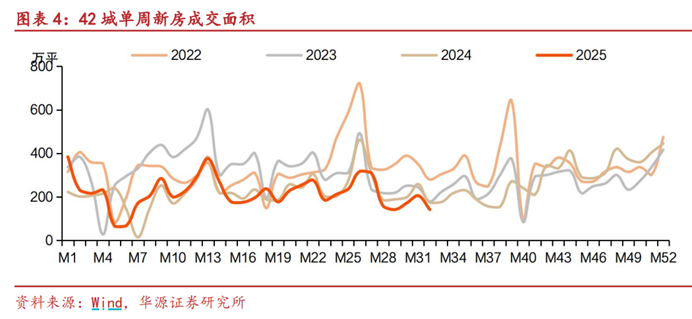
Group 1 - The Shanghai Municipal Planning and Natural Resources Bureau has released guidelines to promote the quality improvement of residential properties, indicating a more regulated approach to the construction of "good houses" in the city [1] - Several new first-tier cities, including Hefei, Chongqing, Chengdu, Nanjing, Zhuhai, and Foshan, are studying new real estate policies to stimulate demand for improved housing and will introduce supportive measures for home purchases [1] - Since September 2024, the central government's clear requirement has been to stabilize both the real estate and stock markets, which is crucial for boosting social expectations and facilitating domestic demand circulation amid external uncertainties [1] Group 2 - The central government has frequently emphasized the importance of building good houses and high-quality housing this year, suggesting that high-quality residential properties may experience a development wave due to policy guidance and changes in supply-demand structure [3] - Huayuan Securities maintains a positive outlook on the real estate sector, anticipating a favorable environment for high-quality housing development [3]
黄金跌价,金条降价,25年09月24日国内黄金、足金、金条最新价格
Sou Hu Cai Jing· 2025-09-25 22:47
Group 1: Gold and Platinum Prices - The current gold price in major jewelry stores ranges from 980 to 1100 RMB per gram, with the lowest price at 百泰黄金 at 980 RMB and the highest at 周大生 and 老凤祥 at 1098 RMB [6][2][1] - Platinum prices are generally lower, with the highest being 572 RMB per gram at 东祥金店 and 周大生, while the lowest is 370 RMB at 扬州金店 [1][2][3] Group 2: Paper Gold and Palladium Prices - The paper gold prices are trading between 3739.24 to 3742.56 USD per ounce, with corresponding RMB prices around 855.29 to 855.97 RMB per gram, showing slight increases of 0.11% to 0.17% [9][10][11][12] - Paper palladium prices range from 1154.48 to 1195.95 USD per ounce, with RMB prices between 265.08 to 273.13 RMB per gram, reflecting a decline of 0.20% to 0.59% [13][14][15] Group 3: Gold Recovery Prices - The recovery price for the highest purity gold (99.9%) is currently 836 RMB per gram, while 22k gold is at 733 RMB, 18k gold at 604 RMB, and 14k gold at 467 RMB [17][18][19][20] - Platinum and palladium recovery prices are 290 RMB and 240 RMB per gram respectively, both maintaining high purity levels [21][22] Group 4: Panda Gold Coin Prices - The prices for the Panda gold coins vary significantly, with a complete set priced at 51,378 RMB and individual coins ranging from 1,153 RMB for 1 gram to 480,000 RMB for 1 kilogram [24][25][31] Group 5: Future Gold Price Trends - Gold prices have increased over 41% this year, with expectations of continued upward movement due to factors like interest rate cuts and geopolitical tensions [35][36] - Analysts suggest that while there may be short-term corrections, the long-term outlook for gold remains positive, driven by central bank purchases and inflation concerns [35][36]
华源证券陈洁:构建完善的财富管理生态需坚持长期主义,避免零和博弈
Zheng Quan Shi Bao Wang· 2025-09-24 09:42
Core Viewpoint - The core viewpoint emphasizes the need for wealth management channels to create professional value rather than merely serving as sales conduits, focusing on the role of buy-side advisory to achieve excess returns for clients [1] Group 1: Wealth Management Ecosystem - The construction of a comprehensive wealth management ecosystem should adhere to long-termism and avoid zero-sum games [1] - Clients are open to accepting fees, contingent on whether institutions can create value and generate excess returns for them [1]
8月中国游戏市场实际销售收入为292.63亿元,聚焦游戏ETF(159869)布局窗口
Sou Hu Cai Jing· 2025-09-23 03:22
Group 1 - The gaming sector experienced fluctuations, with the gaming ETF (159869) dropping to around 1%, but showing a net inflow of 898 million yuan over the past five trading days, indicating strong investor interest [1] - According to the China Audio-Video and Digital Publishing Association's report, the actual sales revenue of China's gaming market in August 2025 was 29.263 billion yuan, reflecting a month-on-month increase of 0.61% but a year-on-year decrease of 13% [1] - The report attributes the year-on-year decline to the high revenue base set by the phenomenon-level product "Black Myth: Wukong" in the previous year, with a lack of similarly impactful new releases in the current period [1] Group 2 - The gaming market's revenue decline in August is primarily due to last year's high base and the absence of blockbuster new releases, while the month-on-month increase indicates resilient demand [1] - For leading gaming companies, the ability to innovate content and strategically manage product lines will be crucial as the industry may enter a structural adjustment phase, highlighting the importance of quality and overseas expansion strategies [1] - Huayuan Securities notes that the current gaming market rally is unique, driven by product performance, EPS upgrades, and simultaneous valuation recovery, with the gaming ETF (159869) tracking the overall performance of A-share listed companies in the animation and gaming industry [2]

大咖云集!这场盛会,“9·24”见!
券商中国· 2025-09-22 23:38
Core Viewpoint - The article emphasizes the ongoing transformation in wealth management driven by digitalization, particularly in the context of the upcoming "2025 Wealth Securities Digital Annual Ecological Conference" scheduled for September 24 in Beijing, which aims to explore the integration of new technologies like AI, big data, and cloud computing in the securities industry [1]. Group 1: Conference Overview - The conference will focus on the theme "Intelligent Wealth, Win the Future," discussing the integration of new information technologies in securities business and the transformation paths for wealth management in the new cycle [1]. - Two parallel forums will be held: the "2025 China Securities Wealth Brokerage Summit Forum" and the "2025 China Securities Digital Practice Summit Forum," addressing wealth management ecology and technological empowerment [1]. Group 2: Key Participants - The event will feature prominent figures from various sectors, including securities, funds, and financial technology, such as the presidents of Guolian Minsheng Securities, Xiangcai Securities, and Dongguan Securities, among others [2]. - Notable attendees include senior executives from major firms like China Galaxy Securities and Changjiang Securities, who will share insights and practical experiences [2]. Group 3: Industry Trends - The article highlights a significant shift in the securities industry towards intelligent decision-making and operational ecology, driven by technologies such as AI, blockchain, and big data [3]. - Discussions will focus on how AI can systematically reconstruct the competitiveness of the securities industry and share practical experiences from firms undergoing digital transformation [3]. Group 4: Wealth Management Transformation - The "China Securities Wealth Brokerage Forum" will address core issues in wealth management business transformation, exploring industry trends and innovative business models [4]. - Keynote speakers will analyze strategies and innovative paths for wealth management, sharing practical experiences in customer service, product innovation, and channel development [4]. Group 5: Roundtable Discussions - The conference will include two roundtable discussions focusing on "Channel Co-win and Collaborative Empowerment" and "Innovations in Buy-side Advisory Services," featuring executives from various securities firms [5].

降息空间打开!机构:债市行情或将获得支撑
券商中国· 2025-09-22 03:55
Core Viewpoint - The recent adjustment in the bond market is expected to be supported by domestic monetary easing following the Federal Reserve's interest rate cut, which may enhance the bond market's performance in the fourth quarter [1][5]. Group 1: Interest Rate Changes - The Federal Reserve cut the federal funds rate by 25 basis points, from a target range of 4.25%-4.5% to 4.00%-4.25%, marking its first rate cut in nine months [2]. - Domestic banks are likely to follow suit with interest rate cuts, with predictions of a 10 basis points reduction in policy rates and a potential 20 basis points cut in the LPR for loans over five years [3][5]. Group 2: Currency and Export Dynamics - The weakening of the US dollar, which fell from around 100 points in late July to approximately 97 points by September 18, has led to a passive appreciation of the RMB, enhancing the willingness of export enterprises to settle in RMB [2]. - The RMB exchange rate has appreciated significantly, breaking the 7.2 mark and reaching around 7.1, which may pose risks to export competitiveness and necessitate measures to stabilize the currency [3]. Group 3: Bond Market Outlook - With the expectation of further monetary easing, institutions are optimistic about the bond market in the fourth quarter, predicting that the yield on 10-year government bonds may return to around 1.65% [5]. - After three months of adjustment, the bond market shows signs of stabilization, with expectations for a new downward trend in interest rates as the fourth quarter approaches [6].



今年以来新增超400人,券商分析师数量创历史新高
Zheng Quan Shi Bao· 2025-09-22 00:48
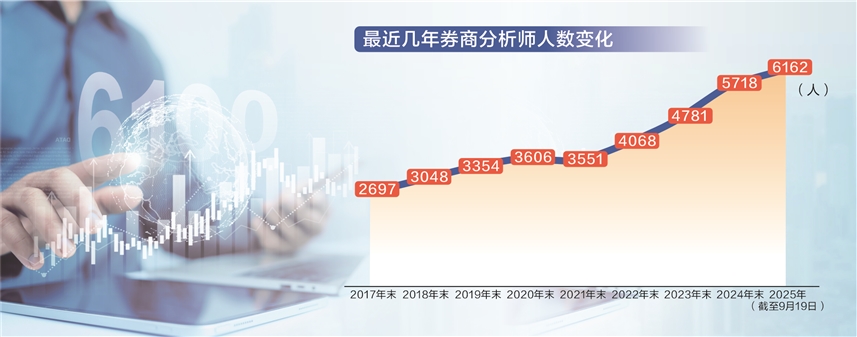
Core Insights - The number of securities analysts in China has reached a historical high, surpassing 6,000, with significant growth observed in recent years [2][3] - Despite the increase in analysts, the market environment is challenging, with a decline in commission income due to public fund fee reforms, necessitating a transformation in brokerage research departments [8] Analyst Growth - As of September 19, 2023, there are 6,162 analysts, with over 400 new additions this year [3] - The analyst count has shown rapid expansion, crossing 3,000 in 2018 and 4,000 in 2022, with projections indicating over 5,000 by 2024 [3] - The growth is attributed to the expansion of institutional investors and a significant talent gap in brokerage research, leading to large-scale recruitment, especially from recent graduates [3][5] Structural Changes in Recruitment - Large brokerages primarily focus on internal growth, while smaller firms are combining internal development with external recruitment [5] - Among firms with over 150 analysts, notable growth is seen in companies like CITIC Securities and Industrial Securities, with a majority of new analysts being internally trained [5][6] - Smaller firms like Guojin Securities and Dongfang Fortune Securities have also seen significant external recruitment, with many analysts transferring from other brokerages [6][7] Revenue Challenges and Strategic Shifts - The brokerage research environment is under pressure, with commission income dropping over 30% in the first half of 2023, highlighting the need for diversification in revenue sources [8] - Brokerages are exploring new profit growth points, including collaborations with local governments and expanding international and fintech operations [8] - Some firms are shifting towards comprehensive research models, balancing external revenue generation with internal services [8] Trends in Analyst Employment - The pace of recruitment among top brokerages has slowed, with firms like CICC and CITIC Securities showing minimal growth in analyst numbers this year compared to previous years [9] - A trend of experienced analysts moving to buy-side institutions or other sectors is emerging, indicating a rebalancing of talent within the industry [9]


突破6000人!券商分析师,创历史新高!
券商中国· 2025-09-21 23:36
Core Insights - The number of securities analysts in China has surpassed 6,000, reaching a historical high of 6,162 as of September 19, 2023, indicating rapid expansion in the analyst workforce [2][4][10] - The growth in analyst numbers is driven by the increasing demand from institutional investors and the need for talent in the face of regulatory changes affecting commission income [4][10] - Despite the increase in analyst numbers, the industry is facing significant revenue challenges due to a more than 30% decline in commission income from the public fund sector [2][10] Analyst Growth - The analyst workforce has seen a rapid increase, with the number surpassing 3,000 in 2018 and crossing 4,000 in 2022, now exceeding 6,000 in less than two years [4] - Major firms like CITIC Securities and CICC lead in analyst numbers, with CICC having 344 analysts and CITIC Securities surpassing 300 [4][5] - The growth is characterized by a mix of internal promotions and external hiring, particularly among smaller firms seeking to enhance their research capabilities [6][8] Structural Changes in Hiring - Large firms primarily rely on internal growth for expanding their analyst teams, while smaller firms are increasingly hiring externally to fill gaps [6][8] - For instance, CITIC Securities registered 62 new analysts this year, with 59 being internal promotions, while smaller firms like Guojin Securities have seen significant external hiring [6][8] Industry Challenges and Transformation - The research environment is changing, with a notable decline in income from commission-based models, prompting firms to seek new revenue streams [10] - Firms are focusing on diversifying their income sources, including expanding into non-public fund clients and exploring international business opportunities [10] - Some leading firms have slowed their hiring pace, with CICC reporting a decrease in analyst numbers this year, indicating a potential shift in strategy [11]
券商分析师数量已突破6000大关 创历史新高
Zheng Quan Shi Bao· 2025-09-21 23:13
Core Insights - The number of securities analysts in China has reached a historical high, surpassing 6,000, indicating significant growth in the industry [1][2] - Despite the increase in analysts, the market is contracting, with commission income from public funds dropping over 30% in the first half of the year, necessitating a transformation in brokerage research departments [1][7] Analyst Growth - As of September 19, 2023, there are 6,162 analysts, with over 400 new additions this year [1] - The analyst count has shown rapid expansion, crossing 3,000 in 2018 and 4,000 in 2022, with projections indicating over 5,000 by 2024 [1] - The growth is attributed to a talent gap due to the rapid expansion of institutional investors and aggressive recruitment by smaller firms [2] Structural Changes in Recruitment - Large brokerages primarily rely on internal growth, while smaller firms combine internal development with external recruitment [4] - Among firms with over 150 analysts, notable growth is seen in companies like CITIC Securities and Industrial Securities, with a majority of new analysts being internally trained [4] - Smaller firms like Guojin Securities and Dongfang Fortune Securities have significantly increased their analyst counts through external recruitment [5][6] Revenue Challenges and Strategic Shifts - The revenue environment for brokerage research departments is changing, with a reported 30% decline in commission income [7] - Major firms are exploring new profit growth points, including collaborations with local governments and expanding international business [7] - Some firms are shifting towards comprehensive research models, balancing various revenue sources and client types [7] Slowdown in Hiring at Major Firms - The pace of hiring at leading brokerages has noticeably slowed, with firms like CICC and CITIC Securities reporting minimal increases in analyst numbers this year compared to previous years [8] - There is a trend of experienced analysts moving to other sectors, including buy-side institutions and educational roles, reflecting a rebalancing in the talent market after rapid growth [8]