格力电器

Search documents
中国消费者趋势发展研究第 60 期-China Consumer Mind Share, Issue #60
2025-10-19 15:58
Summary of Key Points from the Conference Call Industry Overview - The report analyzes brand mind-share in the Chinese consumer market using Baidu search data, which holds a nearly 70% market share in web searches in China. This analysis provides insights into consumer interest and potential market-share movements [1][2][3]. E-Commerce Sector - **Alibaba** regained the top position with a 4% quarter-over-quarter (QoQ) increase, attributed to online delivery initiatives and the launch of an open-source AI agent [2][14]. - **JD.com** fell to second place with a 10% QoQ decline in search hits [2][14]. - **Pinduoduo**, **Ctrip**, and **VIP.com** ranked third, fourth, and fifth, with respective increases of 1%, 7%, and 7% in search hits QoQ [2][14]. IP & Pop Toys - **Pop Mart** maintained its top position despite a 64% QoQ decline in search hits, influenced by a high base from the previous quarter [5]. - The overall sector saw a 48% QoQ decrease in hits but a 12% year-over-year (YoY) increase [5]. Apparel Sector - The sportswear segment experienced a 13% QoQ decline in hits, with **Arc'teryx** rising to first place (+30%) due to a controversial marketing campaign [3]. - **Nike** dropped to third place with a 26% decline in hits, while **Adidas** remained second with a 17% decline [3]. Restaurant & Food Retailers - Restaurant search hits were flat QoQ (-1%) and down 22% YoY. The rankings remained unchanged with **KFC** and **McDonald's** in the top two positions, both experiencing a 4% decline in hits [4]. - Freshly-made drinks saw an 8% QoQ decline and a 48% YoY decline, with **Mixue** rising to first place (+75% QoQ) due to collaborations and brand ambassador appointments [4]. Soft Drinks and Dairy - The soft drinks sector saw an 18% QoQ increase in hits, with **Wahaha** overtaking **Coca-Cola** to become the top brand (+101% QoQ) [11]. - Dairy products also experienced a 25% QoQ increase in hits, with **Wahaha** leading the category [11]. Home Appliances - The home appliance sector saw a 2% QoQ decline in hits, with **Midea** remaining the top brand (+7% QoQ) [10]. Luxury Goods - The luxury goods sector experienced a 9% QoQ decline in hits, with **Louis Vuitton**, **Chanel**, and **Dior** maintaining the top three positions [13]. Automotive Sector - The luxury automotive segment saw a 10% QoQ decline, while electric vehicles (EVs) experienced a 3% increase. **Audi** remained the top luxury auto brand with a 3% increase in hits [15]. Mobile Search Trends - Mobile search queries accounted for 70% of total search queries, indicating a stable trend in mobile penetration across various categories [16]. Brand Rankings - The top searched brands across various categories remained largely stable, with notable mentions including **Cartier** in jewelry, **Wuliangye** in spirits, and **Arc'teryx** in sportswear [8][17]. Conclusion - The analysis highlights the dynamic nature of the Chinese consumer market, with significant shifts in brand rankings and consumer preferences across various sectors. The data from Baidu searches serves as a valuable indicator of brand strength and market trends [1][2][3].






“样品都售空了”!广交会第一期线下展闭幕
Zhong Guo Zheng Quan Bao· 2025-10-19 14:41
Core Insights - The 138th Canton Fair's first phase concluded with nearly 400 foreign buyers and an intention to sign orders worth $1.92 million, exceeding expectations [1] - The fair focused on "advanced manufacturing," covering an exhibition area of 520,000 square meters with over 25,000 booths and approximately 12,000 participating companies [1] Group 1: New Products and Technologies - The fair showcased over 5,500 high-quality export enterprises, including national high-tech companies and "little giant" firms, accounting for about half of the exhibitors [2] - Major global brands like Haier, Midea, and Gree presented innovative products, while AI unicorns displayed cutting-edge technology [2] - Midea's new air conditioning products utilize AI and eco-friendly refrigerants, achieving up to 50% energy savings [2] - Gree's GMV9 multi-split air conditioning unit features an AI energy-saving control strategy, achieving an average energy savings rate of 25% [3] Group 2: Trade Confidence and Future Outlook - The fair is seen as a barometer for China's foreign trade, with expectations for continued growth in exports based on order intentions observed [4][5] - The Ministry of Commerce highlighted the fair's role in supporting high-quality foreign trade development and fostering new trade dynamics [5] - Experts suggest that China's foreign trade will maintain resilience in the fourth quarter, with recommendations for policy support and the development of new trade models [6]
家用电器:9月扫地机和洗地机景气延续,白电高基数承压
Huafu Securities· 2025-10-19 06:50
Investment Rating - The report maintains an "Outperform" rating for the industry [8] Core Views - The cleaning appliance sector, particularly floor cleaning robots and washing machines, continues to show strong growth in September, while the white goods sector faces pressure due to high base effects from last year [3][15] - The overall sales of major white goods categories experienced a decline in September, primarily due to the high base from last year's government subsidies [3][15] - The washing machine segment saw a year-on-year growth rate of 49.4% in September, with volume and price growth rates of +39% and +7% respectively. The floor cleaning robot segment achieved a year-on-year growth rate of 26.2%, with volume and price growth rates of +21% and +4.55% respectively [3][15] Summary by Sections Market Data - The home appliance sector experienced a decline of 2.1% this week, with white goods, black goods, small appliances, and kitchen appliances showing declines of -0.6%, -5.6%, -2.4%, and -2.0% respectively [4][31] - Raw material prices for copper and aluminum decreased by 1.46% and 1.04% respectively compared to the previous week [4][31] Investment Recommendations - The report suggests focusing on the following areas due to expected recovery in domestic demand supported by policy: 1. Major appliances benefiting from trade-in programs, recommending companies like Midea Group, Haier Smart Home, Gree Electric, Hisense Home Appliances, TCL Electronics, and Hisense Visual [5] 2. Pet-related companies as a resilient sector, recommending companies like Guibao Pet, Zhongchong Co., and Petty Holdings [5] 3. Small appliances and branded apparel expected to recover from weak consumer demand, recommending leading companies like Bear Electric, Feike Electric, Supor, and Newell [5] 4. Electric two-wheelers benefiting from new standards and trade-in programs, recommending companies like Ninebot, Yadea Holdings, and Aima Technology [5] Industry Trends - The report highlights that the global restructuring of manufacturing continues to favor Chinese manufacturing advantages, particularly in major appliances, vacuum cleaners, and tools, recommending companies like Midea Group, Haier Smart Home, and Hisense Home Appliances [6] - The report notes that the cleaning appliance sector remains strong globally, with leading brands benefiting from increased penetration rates, recommending companies like Roborock and Ecovacs [5][6] Sales Performance - In September, the sales performance of major brands in the floor cleaning robot segment showed significant growth, with Ecovacs and Roborock leading with year-on-year growth rates of +94% and +27% respectively [16][20] - The washing machine segment also showed strong performance, with brands like Tineco and Roborock achieving year-on-year growth rates of +38% and +115.8% respectively [20][21] Air Conditioning Market - The air conditioning market faced pressure in September, with domestic and foreign sales declining by 2.5% and 18.1% year-on-year respectively [22][26] - Major brands like Gree, Haier, and AUX showed positive growth in domestic sales, while foreign sales for brands like Midea and Gree experienced declines [26][28]
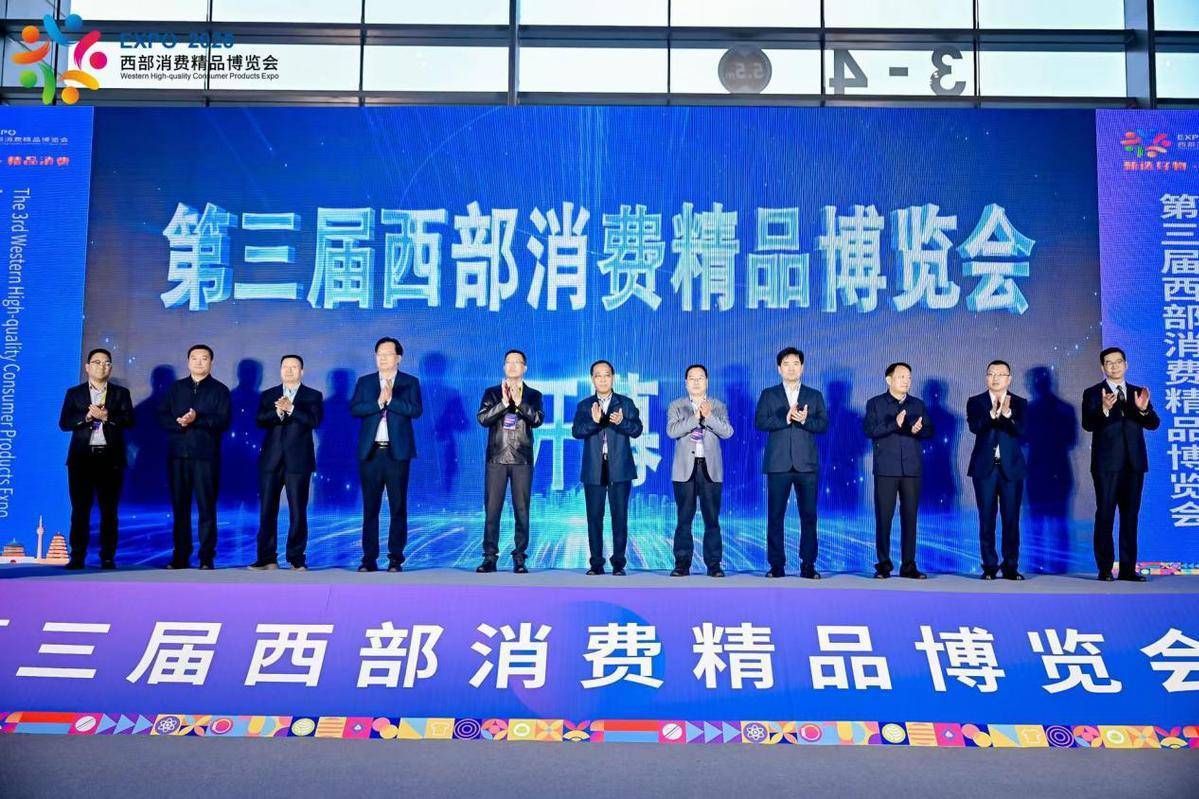
第三届西部消博会西安开幕 双会场赋能“消费+运动”新体验
Sou Hu Cai Jing· 2025-10-18 20:32
Core Insights - The third Western Consumer Expo opened in Xi'an, focusing on promoting high-quality consumption and regional economic collaboration [1][3] Group 1: Event Overview - The expo is themed "Select Good Products, Quality Consumption" and features a dual venue model, linking the main venue at Xi'an International Convention Center with the Xi'an International Marathon [3] - The event spans an exhibition area of 10,000 square meters, with over 200 participating companies showcasing more than a thousand products [6] Group 2: Economic and Industry Highlights - Key data on the "China First Release Economy" and "Xi'an First Release Economy" were presented, providing precise data support for consumption upgrades and industrial collaboration in the West [4] - The expo highlighted regional strengths, with companies like Zhongtian Bee Industry Group focusing on the bee industry, showcasing the diverse industrial endowments and competitive advantages of the Western regions [4] Group 3: Participating Companies and Products - Major industry leaders such as NIO, Xiaomi, Huawei, Gree, Siemens, DJI, and West Fen Liquor participated, covering sectors like home appliances, sports, retail, automotive, and energy [6] - The expo also included a "buy and refund" policy consultation point to promote the convenience of international consumer services in Xi'an [6] Group 4: Consumer Engagement and Benefits - The event features free gifts and lottery draws to enhance consumer engagement, aiming to provide diverse consumption benefits and promote resource sharing in the West [6]




《2025/10/13-2025/10/17》家电周报:海尔与阿里签署全面战略合作协议,京东双十一首周家电表现亮眼-20251018
Shenwan Hongyuan Securities· 2025-10-18 11:07
Investment Rating - The report indicates a cautious outlook for the home appliance sector, with the sector underperforming compared to the CSI 300 index, which remained stable while the home appliance index fell by 1.5% [2][3]. Core Insights - Haier Group and Alibaba have signed a comprehensive strategic cooperation agreement focusing on AI and cloud technologies, advanced manufacturing, e-commerce, and globalization, aiming to create a new digital industrial ecosystem [7][48]. - JD.com's 11.11 sales event showed impressive results, with home appliances and new trend products experiencing significant growth, including a more than 4-fold increase in sales for over 1,000 brands [8][48]. - The report highlights three main investment themes: 1. White goods sector benefiting from favorable real estate policies and high dividend yields, with a recommendation for leading companies like Hisense, Midea, and Gree [2]. 2. Export opportunities driven by large customer orders, recommending companies like Ousheng Electric and Dechang Shares [2]. 3. Core components demand exceeding expectations due to the white goods sector's performance, recommending companies like Huaxiang and Shun'an Environment [2]. Industry Dynamics - The home appliance sector has seen a decline in stock performance, with leading companies like Yitian Intelligent and Aupu Technology showing gains, while companies like Biying and Light Peak Technology faced significant losses [4][3]. - The report notes a rise in raw material prices, particularly copper and aluminum, while stainless steel prices have decreased [9]. - Sales data for cleaning appliances in September showed a significant increase, with robotic vacuum sales up 56.56% and washing machine sales up 61.29% year-on-year [24][30]. Company Updates - Yitian Intelligent announced a tax payment of 5.65 million yuan, which will be accounted for in the current year's financials [42]. - Biying Electric completed a non-trading transfer of shares for its employee stock ownership plan [42]. - Haier Group has engaged in a strategic partnership with Alibaba to enhance its digital capabilities [48].
家电周报:海尔与阿里签署全面战略合作协议,京东双十一首周家电表现亮眼-20251018
Shenwan Hongyuan Securities· 2025-10-18 09:50
Investment Rating - The report maintains a positive outlook on the home appliance sector, highlighting potential investment opportunities in leading companies such as Haier, Midea, and Gree [2][8]. Core Insights - The home appliance sector underperformed compared to the CSI 300 index, with a decline of 1.5% in the Shenwan household appliance index [2][3]. - Haier Group and Alibaba signed a comprehensive strategic cooperation agreement focusing on AI and cloud technologies, advanced manufacturing, e-commerce, and globalization [8][55]. - JD.com's 11.11 sales event showed significant growth in home appliances, with new product sales increasing over four times year-on-year [9][55]. Industry Dynamics - Haier and Alibaba's partnership aims to create a new digital industrial ecosystem, leveraging AI capabilities and enhancing manufacturing innovation [8][55]. - JD.com's early sales data indicated that high-end products like large TVs and multi-tub washing machines saw sales growth exceeding ten times year-on-year [9][55]. Data Observations - In September, sales of cleaning appliances like robotic vacuums and washing machines increased significantly, with robotic vacuum sales up 56.56% and washing machines up 61.29% year-on-year [27][30]. - Personal care products also showed varied performance, with hairdryer sales increasing by 4.94% but with a decline in average price, while electric shaver sales surged by 45.46% with a significant increase in sales revenue [33][34]. Investment Highlights - The report identifies three main investment themes: 1. White goods, benefiting from favorable real estate policies and high dividend yields. 2. Export opportunities driven by large customer orders and stable profitability. 3. Core components, with demand exceeding expectations due to the robust performance of white goods [2][8].
估值周报:最新A股、港股、美股估值怎么看?-20251018
HUAXI Securities· 2025-10-18 09:20
A-shares Market Valuation - The current PE (TTM) for the A-share market is 16.51, with a median of 13.48 and a maximum of 30.60[8] - The PE (TTM) excluding financials and oil & gas is 25.31, indicating a higher valuation compared to the overall market[6] - The Shanghai Composite Index has a PE (TTM) of 14.21, while the ChiNext Index stands at 41.35[8] Hong Kong Market Valuation - The Hang Seng Index has a current PE (TTM) of 11.61, with a median of 10.28 and a maximum of 22.67[59] - The Hang Seng Technology Index shows a higher valuation with a current PE (TTM) of 22.13[63] - The Hang Seng China Enterprises Index has a PE (TTM) of 10.47, reflecting a lower valuation compared to other indices[63] US Market Valuation - The S&P 500 Index has a current PE (TTM) of 29.34, with a median of 21.09 and a maximum of 41.99[82] - The NASDAQ Index shows a PE (TTM) of 42.87, indicating a high growth expectation[90] - The Dow Jones Industrial Average has a PE (TTM) of 31.27, reflecting a stable valuation compared to other indices[94] Sector Valuation Insights - In the A-share market, the food and beverage sector has a low PE (TTM) while the technology sector shows a high PE, indicating sector-specific valuation disparities[22] - The financial sector, particularly banks and brokers, has a PB (LF) of 0.91, suggesting undervaluation compared to historical averages[101] - The consumer sector, including liquor and pharmaceuticals, shows varied PE levels, with liquor at 18.94 and pharmaceuticals at 38.08[32]
2025年1-4月中国房间空气调节器产量为10531.4万台 累计增长7.2%
Chan Ye Xin Xi Wang· 2025-10-18 02:41
Industry Overview - The report by Zhiyan Consulting analyzes the market status and development prospects of the air conditioning industry in China from 2025 to 2031 [1] - According to the National Bureau of Statistics, the production of room air conditioners in China reached 30.83 million units in April 2025, representing a year-on-year growth of 1.6% [1] - Cumulatively, from January to April 2025, the total production of room air conditioners was 105.314 million units, showing a cumulative growth of 7.2% [1] Key Companies - Listed companies in the air conditioning sector include Gree Electric Appliances (000651), Midea Group (000333), Haier Smart Home (600690), Hisense Home Appliances (000921), TCL Technology (000100), and Harbin Air Conditioning (600202) [1]


家电企业借助广交会彰显“全球品牌力”
Zheng Quan Ri Bao· 2025-10-17 15:38
Core Insights - The 138th China Import and Export Fair (Canton Fair) is witnessing a record high in the number of exhibitors and booths, with approximately 3,600 enterprises participating for the first time [1] - Chinese home appliance companies are shifting their focus from merely exporting products to promoting brands and ecosystems on a global scale [1] Group 1: Competitive Strategies - Home appliance companies are moving away from low-price order-seeking strategies, instead emphasizing technology, branding, and scenario-based applications [2] - Major brands are showcasing integrated smart home solutions that combine AI technology, demonstrating a future lifestyle through immersive home environment simulations [2] - Gree Electric Appliances showcased 130 products at the fair, highlighting a full industry chain from core components to complete solutions [2] Group 2: Market Customization - Companies are implementing targeted strategies based on specific demands in different overseas markets, such as energy-efficient products for Europe and high-efficiency cooling systems for the Middle East [3] - This "one country, one policy" approach reflects the precision and depth of Chinese home appliance companies in global markets [3] Group 3: Sustainability Focus - Nearly all participating home appliance companies are prioritizing "green," "environmental," and "sustainable" themes in their promotions, aligning with global carbon neutrality goals and gaining access to high-end markets [4] Group 4: Market Expansion - The Canton Fair serves as a catalyst for global expansion, with companies reinforcing their presence in traditional markets while also targeting emerging markets in the Middle East, Africa, and Latin America [5] - Companies are establishing local R&D centers, production bases, and after-sales service systems to enhance their responsiveness to regional market demands [5][6] Group 5: Supply Chain Resilience - Home appliance companies are showcasing their supply chain resilience and flexibility at the fair, attracting global buyers to build stable and efficient supply-demand relationships [6] - The upcoming World Cup is expected to boost demand for televisions in South America and Europe, with optimistic export forecasts for the upcoming quarters [6]
小米之“祸”
经济观察报· 2025-10-17 13:47
Core Viewpoint - Xiaomi's rise and fall signifies a critical juncture not only for the company but also serves as a warning for the upgrade of Chinese industries [1][32] Financial Performance - In Q2 2025, Xiaomi's revenue reached 116 billion yuan, marking three consecutive quarters of over 100 billion yuan, with an adjusted net profit of 10.8 billion yuan, a year-on-year increase of 75.4% [2] - The smartphone shipment volume was 42.4 million units, achieving year-on-year growth for eight consecutive quarters, maintaining a position among the top three globally for five years [2] Trust Crisis - Despite strong financial results, Xiaomi faces an unprecedented trust crisis, with over 1,610 complaints regarding the Xiaomi SU7 on third-party platforms and a repair rate increase of 12.8% over three years [2][3] - A serious accident involving the Xiaomi SU7 raised concerns about the vehicle's safety features, particularly the inability to open the doors during emergencies [2][12] Business Model Challenges - Xiaomi's strategy of "high-level imitation + low-price suppression" has come under scrutiny, particularly in the automotive sector where quality and safety are paramount [4][5] - The company has been criticized for sacrificing R&D investment, employee welfare, and product quality in pursuit of cost leadership, which may stifle innovation across the industry [7] Imitation and Innovation Issues - Xiaomi's reliance on imitation has led to numerous patent disputes, with accusations of copying designs from established brands, particularly in the automotive sector [8][9] - The company's innovations are often seen as superficial, lacking in core technological breakthroughs, which could hinder long-term competitiveness [10] Marketing and Product Quality - Xiaomi's marketing strategy has emphasized aesthetics over substance, leading to a disconnect between consumer expectations and actual product performance, especially in the automotive sector [11][12] - The focus on flashy marketing and parameters has resulted in safety concerns, as seen in the SU7's design flaws that prioritize appearance over functionality [12][13] Supply Chain and Ecosystem Issues - Xiaomi's investment strategy has been criticized for prioritizing financial returns over technological innovation, leading to a reliance on a closed ecosystem that may inhibit breakthrough developments [18][19] - The phenomenon of "de-Xiaomi-ization" is emerging among ecosystem partners seeking greater autonomy and profitability, indicating potential conflicts within Xiaomi's supply chain [20] Strategic Reflection and Future Directions - As Xiaomi reaches its 15th anniversary, it must reassess its strategic path, moving from a focus on cost advantages to prioritizing technological innovation and product quality [22][25] - The company plans to invest 200 billion yuan in R&D over the next five years, aiming to shift public perception from being a mere "assembly factory" to a technology-driven entity [25][26] Conclusion - Xiaomi's recent challenges may serve as a turning point for the Chinese electric vehicle market, emphasizing the need for genuine product quality over marketing hype [32] - The evolution of consumer expectations and media scrutiny may foster a healthier business environment that encourages innovation and accountability within the industry [32]