华为

Search documents
全球每卖出3部手机,就有1部产自广东
21世纪经济报道· 2026-01-20 00:24
Core Viewpoint - Guangdong produces one out of every three mobile phones sold globally, with major brands like Huawei, vivo, OPPO, Honor, and Transsion leading the market, showcasing the evolution of mobile technology in the region [1][2]. Group 1: Evolution of Guangdong Mobile Phones - The rapid evolution of mobile phones in Guangdong is driven by advancements in new technologies, materials, and manufacturing processes, resulting in significant innovations such as OPPO's fast charging technology that fully charges a battery in just 30 minutes [1]. - Breakthroughs in materials and processes have led to innovations like Huawei's "Tian Gong hinge," which achieves micron-level precision and a thickness of only 3.6 mm when unfolded, alleviating concerns about foldable screens [1]. - The automation of key material scheduling through a "mechanical matrix" in Dongguan's production lines exemplifies the collaborative ecosystem that keeps Guangdong's mobile industry at the forefront of technological advancements [1]. Group 2: New Applications and Market Expansion - Guangdong mobile phones are breaking traditional boundaries by exploring new scenarios, such as the vivo X300 Pro capturing half of the concert rental market with its 200-megapixel telephoto capabilities [2]. - The OnePlus 15 features a 165Hz ultra-high refresh rate screen, providing competitive advantages for mobile gamers, while Honor's YOYO smart assistant enhances user interaction by allowing voice commands to manage subscriptions [2]. - The integration of AI into mobile devices is transforming them into intelligent mediators between humans and the digital world, reflecting a shift in how technology can reshape lifestyles [2].



禾赛科技三位创始人再创业,成立机器人公司;OpenAI或于2026年推出首款硬件设备;疯狂动物城2成全球影史好莱坞动画电影票房冠军丨邦早报
创业邦· 2026-01-20 00:10
Group 1 - Hesai Technology's co-founders have established a new robotics company, Sharpa, aimed at developing general-purpose robots and core components, with over 100 employees [1] - Porsche's global sales for 2025 are projected to be 279,400 units, a 10% decrease year-on-year, with a significant decline of 26.28% in the Chinese market [4] - UTree Technology is expected to ship over 5,500 humanoid robots in 2025, with mass production exceeding 6,000 units [9] - OpenAI's annual revenue for 2025 is projected to exceed $20 billion, a significant increase from $6 billion in 2024, driven by an expansion in computing power [13] - The UK government has announced a substantial subsidy plan for electric trucks, with a total budget of £318 million, aiming to boost the adoption of electric vehicles [19] Group 2 - The HuRun Research Institute's report on China's AI companies ranks Cambricon first with a valuation of 630 billion yuan, reflecting a 165% increase from the previous year [10] - Anker Innovations and Feishu have launched the AI hardware product "Anker AI Recording Bean," which features advanced recording capabilities and is priced at 899 yuan [21] - Alibaba Health has introduced the AI product "Hydrogen Ion," designed for medical professionals, which aims to minimize hallucination rates in AI responses [23] - Xiaopeng Motors has successfully developed the first robot based on automotive standards, marking a significant milestone in their robotics initiative [24] - Apple's iPhone shipments surged by 28% during the holiday season, regaining market leadership in China despite overall market declines [30]

英伟达正在被中国车企抛弃
阿尔法工场研究院· 2026-01-20 00:08
Core Viewpoint - The automotive industry is shifting from reliance on NVIDIA's chips to self-developed solutions, as companies like Xiaopeng and NIO are moving towards their own chip development to reduce costs and enhance performance [2][5][20]. Group 1: Market Dynamics - Xiaopeng has released four new models equipped with its self-developed Turing driving chip, marking a complete departure from NVIDIA's chips [2]. - NIO is transitioning to its self-developed Shenqi chip, which is expected to significantly reduce costs compared to purchasing NVIDIA chips [2][8]. - NVIDIA's market share in China's high-end driving chip sector is projected to decline from 39% in 2024 to 25% in 2025, indicating a significant shift in the competitive landscape [2][9]. Group 2: Competitive Landscape - In 2024, NVIDIA's Orin-X chip held a 39.8% market share with 2.1 million units, but competitors like Horizon are gaining ground with lower-cost alternatives [5][6]. - Horizon's J5 chip has secured contracts with over nine automakers, including major brands like BYD and SAIC, highlighting the increasing competition in the market [6][9]. - By 2025, NVIDIA's partnerships with major clients like NIO and Xiaopeng have diminished, indicating a loss of influence in the market [6][8]. Group 3: Financial Performance - In the first three quarters of fiscal year 2025, NVIDIA reported $147.8 billion in total revenue, with only $1.7 billion (approximately 1%) coming from automotive business, underscoring the limited impact of automotive sales on overall performance [14][16]. - The automotive segment's revenue is significantly overshadowed by NVIDIA's data center business, which accounts for nearly 90% of its income [14][16]. Group 4: Future Outlook - NVIDIA is attempting to pivot from being a chip supplier to a comprehensive smart driving solution provider, but this transition faces challenges as competitors strengthen their positions [20]. - The launch of NVIDIA's open-source VLA model, aimed at assisting automakers lacking full-stack development capabilities, reflects its strategy to maintain relevance in the evolving market [20][21]. - However, the practical utility of the VLA model has been questioned, indicating potential hurdles in its adoption and effectiveness [21].



加盟智界,赵长江“再战”MPV
2 1 Shi Ji Jing Ji Bao Dao· 2026-01-19 23:51
Core Viewpoint - Zhao Changjiang, former executive of BYD, has officially joined Zhijie Auto as Executive Director and Executive Vice President, marking a significant shift in leadership as the company aims to strengthen its position in the high-end MPV market with the launch of its first MPV model, the Zhijie V9 [1][2] Group 1: Leadership Transition - Zhao Changjiang's appointment at Zhijie Auto concludes months of speculation following his departure from BYD in October 2025 [1] - His first major product at Zhijie will be the V9 MPV, which parallels his previous success with the BYD Tengshi D9, a model that disrupted the high-end MPV market [1][2] Group 2: Market Context - The domestic MPV market has become increasingly competitive since the launch of the Tengshi D9, raising questions about Zhao's ability to replicate past successes [2] - Zhijie Auto's current sales are primarily driven by the R7 model, which has shown significant volatility in sales figures over the past year [1] Group 3: Historical Performance - Zhao's career at BYD began in 2009, where he quickly rose through the ranks, eventually becoming the youngest sales head in the company's history [3] - Under his leadership, BYD's Tengshi brand transformed from struggling with low sales to becoming a benchmark in the high-end MPV segment, achieving a total sales volume of 103,460 units in 2025 [5] Group 4: Challenges and Strategies - Zhijie Auto has faced challenges, including a delivery crisis for the S7 model, which saw a significant gap between orders and actual deliveries due to production delays [6][7] - The company has since restructured its operations, with a focus on independent management and a clear division of responsibilities between Huawei and Chery, aiming to enhance production capabilities [7] Group 5: Product Features and Market Positioning - The Zhijie V9 is designed to target the high-end MPV market, boasting features such as a spacious interior, advanced safety systems, and a long range of over 1250 km [8] - The vehicle's launch is critical for Zhijie to establish a strong brand identity and move beyond reliance on a single successful model [9] Group 6: Future Outlook - The upcoming months will be crucial for both Zhijie and Zhao Changjiang as they seek to prove their capabilities in a competitive landscape filled with established players [9][10] - Zhao envisions Zhijie as a user-centric global benchmark brand, aiming to create a unique user-friendly ecosystem in the AI era [10]
拆解粤产八大爆款手机
Xin Lang Cai Jing· 2026-01-19 23:21
Core Insights - Guangdong produces one out of every three smartphones sold globally, with major brands like Huawei, vivo, OPPO, Honor, and Transsion leading the market [1] - The evolution of smartphones in Guangdong reflects a microcosm of technological advancement, driven by new technologies, processes, materials, and equipment [1] Group 1: Technological Advancements - OPPO's fast charging technology can fully charge a smartphone battery in just 30 minutes [1] - Huawei's "Tian Gong hinge" achieves micron-level precision, with a thickness of only 3.6 mm when unfolded, alleviating concerns about foldable screen creases [1] - Automation in manufacturing, exemplified by Dongguan's smartphone production lines, enhances efficiency through a "mechanical matrix" for key material scheduling [1] Group 2: Market Expansion and Innovation - Guangdong smartphones are breaking traditional boundaries, creating impressive new scenarios, such as the vivo X300 Pro capturing half of the concert rental market with its 200 million pixel telephoto capabilities [2] - OnePlus 15 offers a 165Hz ultra-high refresh rate screen, providing competitive advantages for mobile gamers [2] - Honor YOYO smart assistant enhances user interaction by allowing voice commands to manage subscriptions, transitioning from manual operations to a smart assistant model [2] Group 3: Industry Transformation - The Guangdong smartphone industry is undergoing a profound transformation from scale advantages to systemic innovation, tackling critical technology challenges while exploring new scenarios [2] - AI is enabling smartphones to possess capabilities of perception, thought, and response, positioning these devices as intelligent intermediaries between humans and the digital world [2] - The narrative surrounding these products has shifted from mere communication tools to a reimagining of human lifestyles through technological innovation [2]
深度 | 学习华为IPD运动,中国汽车业的一次大反思
汽车商业评论· 2026-01-19 23:07
Core Viewpoint - The year 2025 is marked as a significant learning year for Chinese automotive companies, which are increasingly adopting Huawei's methodologies, particularly the Integrated Product Development (IPD) process, to enhance their operations and product offerings [3][6]. Group 1: Learning from Huawei - Chinese automotive companies, whether state-owned or private, are engaging in a "learning from Huawei" movement, aiming to replicate its success in the automotive sector [3][6]. - The collaboration with Huawei has led to significant improvements in product development cycles and cost reductions for companies like GAC Group, which reported a reduction in product development time from 30 months to 18-24 months and a 10% decrease in development costs [11][6]. - The IPD process, which emphasizes market-driven product development, has become a sought-after model among automotive firms, with many companies adopting varying degrees of this approach [6][13]. Group 2: Implementation of IPD - The IPD framework encourages cross-departmental collaboration, allowing teams to share information transparently and make collective decisions throughout the product lifecycle [18][19]. - Companies implementing IPD have reported enhanced efficiency, with GAC Group noting a 70% improvement in data query efficiency and a significant reduction in fault tracing time [8][19]. - The structure of the PDT (Product Development Team) within the IPD framework allows for a more integrated approach to product development, ensuring that all relevant departments are involved from the outset [16][18]. Group 3: Challenges and Cultural Aspects - Despite the benefits, the transition to IPD is not without challenges, as companies often face cultural resistance and difficulties in aligning existing organizational structures with the new processes [38][46]. - The success of IPD implementation heavily relies on the leadership and cultural adaptability of the organization, as highlighted by the experiences of Huawei, which emphasizes a culture of accountability and collaboration [38][57]. - The ability to attract and retain talent is crucial for the successful adoption of IPD, as seen in Huawei's approach to hiring top talent and fostering a competitive environment [54][55].

华为乾崑智驾活跃用户数突破一百万 智能技术助推国产汽车工业“换道超车”
Ren Min Ri Bao· 2026-01-19 22:42
Core Insights - Huawei's partnership with various automotive manufacturers, including GAC Group and Dongfeng, marks a significant step in the development of smart connected vehicles, with over 1 million active users of Huawei's smart driving technology [1] - The penetration rate of smart vehicle technology in China has reached 50% in just five years, indicating rapid advancement in the industry [1] - The Chinese government emphasizes the importance of developing new energy vehicles as a pathway to becoming a strong automotive nation [1] Group 1: Technological Advancements - The Wuhu Zhijie Super Factory, a collaboration between Huawei and Chery, features 100% automation in welding and painting processes, showcasing the integration of AI in production [2] - Huawei's technology enhances driving experiences by optimizing features such as urban traffic congestion management and pedestrian recognition [2] - Huawei has established five major business segments in the smart automotive sector, focusing on core technologies like smart driving and vehicle control systems [3] Group 2: Successful Collaborations - The partnership between Huawei and Seres has led to the development of the "Wenjie" model, which has achieved significant market recognition and financial success, with projected revenues of 145.1 billion yuan in 2024, a 305.5% increase year-on-year [4] - Huawei's collaboration with Seres demonstrates the potential for traditional automakers to leverage Huawei's software and technology capabilities to enhance their manufacturing processes [4] - The "Hongmeng Zhixing" series of vehicles, including models across various price ranges, has achieved over 1 million units delivered, setting a record for new automotive brands [5] Group 3: Industry Impact - The launch of the first fuel vehicle equipped with Huawei's smart driving technology signifies a breakthrough in integrating advanced technology into traditional automotive designs [6] - Huawei's partnerships have led to the transformation of over 221 component manufacturers across multiple provinces, indicating a broad impact on the supply chain [6] - The collaboration with various automotive companies positions Huawei as a key player in driving the smart transformation of the Chinese automotive industry [7]

拆解粤产八大爆款手机 看顶流机型背后的“四新”力量
2 1 Shi Ji Jing Ji Bao Dao· 2026-01-19 22:39
Core Insights - Guangdong produces one out of every three smartphones sold globally, with major brands like Huawei, vivo, OPPO, Honor, and Transsion leading the market [1] - The evolution of smartphones in Guangdong reflects a microcosm of technological advancement, driven by new technologies, processes, materials, and equipment [1] - The Guangdong smartphone industry benefits from a collaborative ecosystem that supports innovation and maintains its leading position in the market [1] Group 1 - The rapid iteration of smartphones is fueled by advancements in AI, new materials, and manufacturing processes [1] - OPPO's fast-charging technology can fully charge a smartphone battery in just 30 minutes, showcasing innovation in battery technology [1] - Huawei's "Tian Gong hinge" achieves micron-level precision, allowing foldable screens to minimize crease anxiety with a thickness of only 3.6 mm when unfolded [1] Group 2 - Guangdong smartphones are expanding beyond traditional boundaries, creating impressive new use cases [2] - The vivo X300 Pro captures half of the concert rental market with its 200 million pixel telephoto capabilities, demonstrating its professional quality [2] - The Honor YOYO smart assistant enhances user interaction by allowing voice commands to manage subscriptions, representing a shift towards intelligent personal assistants [2] Group 3 - The transformation of the Guangdong smartphone industry reflects a shift from scale advantages to systemic innovation capabilities [2] - The integration of AI enables smartphones to possess sensing, thinking, and responding capabilities, positioning them as intelligent mediators between humans and the digital world [2] - The narrative surrounding these devices transcends mere communication tools, focusing on how technological innovation reshapes human lifestyles [2]
华为、比亚迪供应商,发泡材料龙头签约中科院
DT新材料· 2026-01-19 22:33
【DT新材料】 获悉,1月16日, 苏州申赛新材料股份有限公司 (下称"申赛新材")与 中国科学院长春应用化学研究所 (下称"应化所")在长春签署 战略合作协议,双方将基于应化所唐涛课题组开创性的 "热塑/热固聚合物共混泡沫材料 "专利技术开展合作研究,共同推动该专利技术的产业化落地。 应化所所长刘俊、申赛新材董事长姜修磊等出席签约仪式。 唐涛课题组在国际上率先提出了 "增塑-发泡-增强"(PFR)结构功能一体化的聚合物轻量化策略,采用热塑性聚合物和热固性聚合物单体为原料,将 反应性增塑和反应诱导相分离与超临界发泡技术相结合,制备了一系列新型热塑/热固聚合物合金泡沫材料 。 机器人、无人机、商业航天、碳纤维、改性塑料、半导体、固态电池. FINE 2026 × Carbontech 该技术不仅实现了热塑性聚合物与热固性聚合物特性的有机结合,而且克服了特种材料性能(机械性能、耐热性能等)与超临界发泡工艺特性之间的矛 盾,有效解决了部分工程塑料和特种工程塑料难以实现超临界发泡的困难。该技术将为 航空航天、海洋装备、轨道交通、半导体 等对材料性能要求严 格的尖端应用领域提供兼具高性能、轻量化优势的创新解决方案。 根 ...
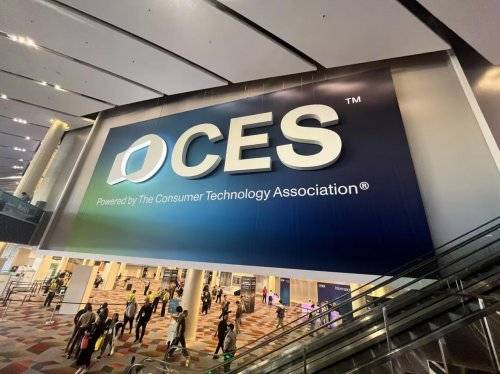
拉斯维加斯的东方香气!阿莫斯登陆CES 2026,重新定义智慧香氛新标杆
Sou Hu Cai Jing· 2026-01-19 18:11
Core Insights - The 2026 International Consumer Electronics Show (CES 2026) in Las Vegas focuses on the "AI Physicalization Revolution," marking a new era in global technology [3] - Amos showcases its all-scenario intelligent fragrance solutions, emphasizing the integration of sensory immersion and scene adaptation [1][3] Product Matrix - Amos introduces a diverse range of scent solutions for home, travel, and commercial spaces, highlighting smart fragrance devices that create immersive experiences [5] - The company holds exclusive core invention and design patents for its products, which comply with global standards such as IFRA, FCC, CE, SGS, TUV, and ROHS [9] Market Position - Amos commands over 60% market share in the intelligent fragrance sector, receiving positive feedback and offering agency and private label cooperation opportunities [10] - The product line includes compact designs suitable for various environments, such as vehicles and desks, and features the "Sentinel Series" with remote liquid level detection [10] Technological Advancements - Amos presents a targeted odor elimination solution for pets, utilizing advanced technology to break down odor molecules at the source [14] - The company emphasizes hotel-grade safety certifications and long-lasting scent retention through nano-release technology [14][15] Smart Technology Integration - The company builds a closed-loop system encompassing devices, platforms, and data, enabling precise monitoring and intelligent control of fragrance devices [20] - A visual data backend provides real-time insights into device performance and inventory management, facilitating data-driven operational optimization [21] Collaboration and Industry Leadership - Amos positions itself as a leader in smart IoT fragrance management, redefining the value of spatial scent management [19] - The company collaborates with top global brands like Haier, Midea, and Huawei, enhancing its reputation in the air fragrance sector [24] Future Outlook - Amos aims to continue innovating in scene-based fragrance solutions, focusing on user-centered design and sustainable business value [24][26]