欣旺达

Search documents
欣旺达(300207):消费电池盈利稳步提升 动储亏损有望收窄
Xin Lang Cai Jing· 2025-08-29 02:47
Core Insights - The company's Q2 performance met expectations, with H1 revenue of 26.99 billion yuan, a year-on-year increase of 12.8%, and a net profit of 860 million yuan, up 3.9% [1] - The company is experiencing an increase in self-supply rate for consumer battery cells, leading to improved profitability [1] - The company anticipates a significant increase in the demand for battery cells due to AI advancements, with expected profits from consumer batteries in 2025 projected to exceed 2.5 billion yuan, a growth of 10-20% [1] Financial Performance - In Q2, the company reported revenue of 14.7 billion yuan, a quarter-on-quarter increase of 13.5% and a year-on-year increase of 19.6%, with a net profit of 470 million yuan, showing a year-on-year decrease of 7.1% [1] - The gross margin for Q2 was 14.9%, down 1.8 percentage points from the previous year [1] - The company’s H1 operating cash flow decreased by 39.8% to 1.04 billion yuan, with Q2 showing a negative cash flow of 490 million yuan [3] Product Segments - The energy storage battery segment saw a significant increase in shipments, with H1 shipments reaching 16.1 GWh, a year-on-year increase of 93% [2] - The revenue from energy storage batteries in H1 was 7.6 billion yuan, with a gross margin of 9.8%, down 1.9 percentage points [2] - The company expects to improve profitability in the energy storage segment in the second half of the year due to better product structure and new customer growth [2] Investment Outlook - The company maintains its profit forecast for 2025-2027, projecting net profits of 2.05 billion, 2.5 billion, and 3 billion yuan, representing growth rates of 40%, 22%, and 21% respectively [3] - The company is positioned as a leader in the consumer battery market, maintaining a "buy" rating based on its market position and growth potential [3]

传统旺季来袭!消费电子ETF(159732)震荡休整,东山精密上涨8.81%
Xin Lang Cai Jing· 2025-08-29 02:40
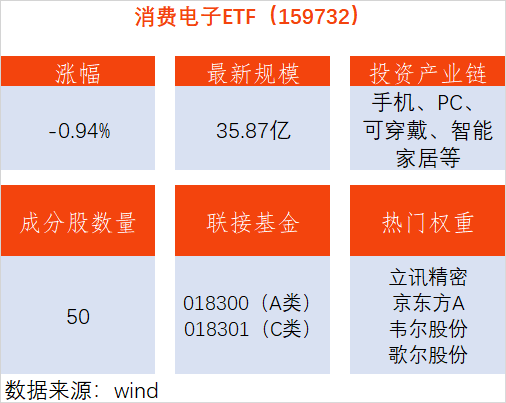
Group 1 - A-shares indices collectively rose on August 29, with the Shanghai Composite Index increasing by 0.41%, driven by gains in insurance, soft drinks, and precious metals sectors, while semiconductor and computer hardware sectors faced declines [1] - The Consumer Electronics ETF (159732) experienced a decline of 0.94% as of 10:06 AM, despite a cumulative net inflow of over 1.2 billion yuan over the past eight trading days [1] - Key stocks within the consumer electronics sector saw significant increases, with Dongshan Precision rising by 8.81%, Xinwanda by 3.17%, Shenghong Technology by 3.09%, and Transsion Holdings by 2.98% [1] Group 2 - The State Council issued opinions on implementing the "Artificial Intelligence +" initiative, aiming to promote smart terminal integration and develop a range of intelligent products including smart connected vehicles, AI smartphones, computers, robots, smart homes, and wearables [3] - A report from Hengtai Securities indicated that the upcoming replacement program and traditional peak seasons (back to school, National Day, Double 11) are expected to boost smartphone sales, with IDC predicting a 1.6% year-on-year increase in China's smartphone shipments by 2025 [3] - The Consumer Electronics ETF (159732) tracks the Guozheng Consumer Electronics Index, primarily investing in 50 A-share listed companies involved in the consumer electronics industry, with significant focus on electronic manufacturing, semiconductors, and optical electronics [3]


第一创业晨会纪要-20250829
First Capital Securities· 2025-08-29 02:38
Group 1: Advanced Manufacturing Sector - On August 28, 2025, the well-known company Chasing Technology officially announced its entry into the automotive sector, planning to launch its first ultra-luxury electric vehicle by 2027, indicating a significant shift from its previous focus on smart hardware like vacuum cleaners [4] - The National Standard for the transportation of power lithium batteries has been approved and will be implemented on February 1, 2026, which aims to enhance transportation efficiency and safety within the new energy industry [4] Group 2: Consumer Sector - Wancheng Group reported a total operating income of 22.583 billion yuan for the first half of 2025, a year-on-year increase of 106.89%, with a net profit of 472 million yuan, reflecting a staggering growth of 50,358.8% [8] - The company's core business in bulk snack foods showed a net profit of 956 million yuan, with a year-on-year increase of 241.43%, indicating a strong shift from scale expansion to simultaneous growth in scale and profitability [9] - Mixue Ice City achieved total revenue of 14.875 billion yuan in the first half of 2025, a year-on-year growth of 39.3%, with a net profit of 2.718 billion yuan, reflecting effective cost control and supply chain optimization [10] - The rapid increase in the number of stores, with 9,796 new stores added in the first half of 2025, has been a significant driver for revenue and profit growth for Mixue Ice City [10]

锂电行业洗牌加速
投中网· 2025-08-29 02:35
Core Viewpoint - The article discusses the significant shift in the lithium battery industry, highlighting the overcapacity and the urgent need for Chinese lithium battery companies to seek international capital markets, particularly through IPOs in Hong Kong, to address financial pressures and enhance global competitiveness [5][7][14]. Group 1: Market Dynamics - The Hong Kong stock market is becoming a strategic supply station for lithium battery companies, with a nearly threefold increase in IPO fundraising in Q1 2025 compared to the previous year, marking the best start since 2021 [5]. - As of June 2025, there were 240 IPO applications on the Hong Kong Stock Exchange, nearly double the number from 2024, with lithium battery companies leading the charge [5][8]. - The global demand for power batteries is projected to reach 1000-1200 GWh by 2025, while the total planned capacity in the industry is as high as 4800 GWh, indicating a severe supply-demand imbalance [8]. Group 2: Financial Pressures - The lithium battery industry is experiencing structural pressures, including severe overcapacity, intense price competition, accelerated technological iteration, and tight cash flow, pushing companies to seek foreign capital [7][9]. - Many companies are facing deteriorating cash flow, with an average collection period of 103 days and a payment period of 255 days, leading to significant cash flow challenges [8]. - The average debt ratio for some companies exceeded 70% in the first half of 2025, indicating a growing liquidity crisis that necessitates new financing channels [9]. Group 3: Globalization Strategy - The urgent need for a globalization strategy is driving Chinese lithium battery companies to international capital markets, as local production is increasingly required due to geopolitical factors [11][12]. - The construction of localized production facilities in Europe, Southeast Asia, and North America is becoming essential for Chinese companies to integrate into global supply chains and meet local production requirements [11][12]. - The opportunity presented by the slow development of local battery companies in Europe and the U.S. creates a market window for Chinese firms to establish a presence and benefit from substantial local funding [12]. Group 4: Capital Market Changes - The tightening of IPO approvals in the A-share market has led many companies to seek more certain alternatives, such as the Hong Kong market, which offers a more accommodating environment for new listings [14]. - The Hong Kong capital market has shown greater inclusivity and efficiency, with recent regulatory changes aimed at expediting the IPO process for technology companies [14]. - Differences in valuation logic between A-share and Hong Kong markets influence companies' decisions, with Hong Kong investors placing a higher value on global competitiveness and long-term technological barriers [16][17]. Group 5: Strategic Implications - The choice to list in Hong Kong is not merely a response to overcapacity and financing pressures but also a strategic move to align with global capital narratives and enhance brand reputation [18]. - By entering the international capital market, companies can improve governance transparency and brand image, which are crucial for long-term global competitiveness [18].



欣旺达(300207):2022半年报点评:消费电池盈利稳步提升,动储亏损有望收窄
Soochow Securities· 2025-08-29 02:05
Investment Rating - The investment rating for the company is "Buy" (maintained) [1] Core Views - The company's revenue for the first half of 2025 reached 26.99 billion yuan, a year-on-year increase of 12.8%, with a net profit attributable to shareholders of 860 million yuan, up 3.9% year-on-year [8] - The self-supply rate of consumer battery cells is expected to exceed 50% in 2025, with revenue targets of 7.5 to 8 billion yuan and a net profit margin of 15-20% [8] - The company anticipates a continuous improvement in the profitability of its energy storage segment, with a projected total shipment of nearly 40 GWh for the year [8] - The company maintains a leading position in the consumer battery market, with expected net profits of 2.05 billion yuan in 2025, representing a year-on-year growth of 39.68% [8] Financial Projections - Total revenue projections for the company are as follows: 56.02 billion yuan in 2024, 65.33 billion yuan in 2025, 74.07 billion yuan in 2026, and 84.12 billion yuan in 2027, with respective year-on-year growth rates of 17.05%, 16.62%, 13.38%, and 13.56% [1][9] - The projected net profit attributable to shareholders is 1.47 billion yuan in 2024, 2.05 billion yuan in 2025, 2.51 billion yuan in 2026, and 3.02 billion yuan in 2027, with year-on-year growth rates of 36.43%, 39.68%, 22.18%, and 20.68% [1][9] - The earnings per share (EPS) are expected to be 0.80 yuan in 2024, 1.11 yuan in 2025, 1.36 yuan in 2026, and 1.64 yuan in 2027 [1][9]
双融日报-20250829
Huaxin Securities· 2025-08-29 01:32
Core Insights - The report indicates that the current market sentiment score is 84, categorizing it as "overheated," suggesting a high level of investor optimism and potential market risks [6][9][21] - Key themes identified include robotics, GPU technology, and rare earth materials, with specific companies highlighted for potential investment opportunities [6][10][13] Market Sentiment - The market sentiment temperature indicator shows a score of 84, indicating an "overheated" market, which typically suggests caution for investors as high sentiment can lead to market corrections [6][9][21] - Historical trends indicate that when sentiment is below or near 50, the market tends to find support, while levels above 90 may present resistance [9] Hot Themes Tracking - **Robotics**: Nvidia is set to launch a new "brain" for robots, with related stocks including Wolong Electric Drive (600580) and Changsheng Bearing (300718) [6] - **GPU Technology**: The Ministry of Industry and Information Technology emphasizes the need for improved computing power infrastructure, with companies like Loongson Technology (688047) and Jingjia Micro (300474) being relevant [6] - **Rare Earth Materials**: Recent discussions in Shenzhen aim to integrate rare earth materials with low-altitude economy and robotics, highlighting companies such as Northern Rare Earth (600111) and Guangsheng Nonferrous Metals (600259) [6] Capital Flow Analysis - The report lists the top net inflows for stocks, with China Rare Earth (181,321.24 million) and Shenghong Technology (151,200.37 million) leading the way, indicating strong investor interest [10] - Conversely, significant net outflows were observed in stocks like BYD (-116,175.65 million) and CATL (-104,285.85 million), suggesting a shift in investor sentiment away from these companies [14] Industry Overview - The report highlights the electronics and communication sectors as receiving substantial net inflows, while industries such as pharmaceuticals and automotive are experiencing notable outflows [20][22]
锂电公司业绩分化 “反内卷”重塑竞争格局
Zheng Quan Shi Bao· 2025-08-28 21:58
Group 1: Industry Overview - The lithium battery industry is experiencing a phase of supply-demand mismatch in the first half of 2025, leading to intensified market competition and accelerated industry reshuffling [1] - The volatility of lithium prices is challenging profitability, with resource self-sufficiency and cost control becoming critical performance differentiators [1] Group 2: Performance of Upstream Companies - Tianqi Lithium (002466) is expected to turn a profit in the first half of the year due to the digestion of high-priced inventory and a decrease in production costs [1] - Yongxing Materials (002756) maintains a strong performance with a net profit of 401 million yuan, while Ganfeng Lithium (002460) has reduced its losses through integrated operations [1] - Companies like Shengxin Lithium Energy (002240) and Jiangte Motor (002176) are facing significant short-term pressures, with expanded losses in the first half of the year [1] Group 3: Performance of Material Manufacturers - The performance of material manufacturers is increasingly polarized due to intense competition, with leading companies like Dingsheng Technology (300073) and Xiamen Tungsten (3.07 billion yuan) showing profit growth [2] - Companies such as Zhenhua New Materials and Rongbai Technology are reporting losses, highlighting the challenges faced by mid-tier players [2] - The demand for lithium iron phosphate materials is rising, but price pressures remain, with leading firms like Hunan Yuno (301358) still profitable despite a decline in net profit [2] Group 4: Electrolyte and Separator Companies - Electrolyte companies are seeing a recovery in profitability as prices stabilize, with leading firms like Tianqi Materials (002709) and New Zobang (300037) reporting revenue and profit growth [3] - Separator companies like Enjie (002812) and Xingyuan Material (300568) are experiencing profit declines despite sales growth due to falling prices [3] Group 5: Battery Manufacturers - Battery manufacturers are demonstrating resilience during the industry downturn, with CATL (300750) achieving a revenue of 178.886 billion yuan and a net profit of 30.485 billion yuan, reflecting a year-on-year growth [3] - Companies like EVE Energy (300014) and Xinwanda (300207) are also reporting stable performance, with slight declines in net profit [3] Group 6: Industry Initiatives - The lithium battery industry is initiating a "anti-involution" movement to promote value over price competition, which may lead to capacity clearing and potential recovery in industry profitability [4] - Various industry associations are advocating for healthy development and cooperation within the supply chain, aiming to address overcapacity issues [4] Group 7: Market Outlook - The ongoing "anti-involution" efforts and price corrections are expected to accelerate industry clearing and enhance market concentration [5]
中创新航、欣旺达相继发布2025年上半年财报
Xin Lang Cai Jing· 2025-08-28 18:38
Core Insights - Both XINWANDA and CALB released their performance reports for the first half of 2025, showcasing significant revenue and profit growth. Group 1: XINWANDA Performance - XINWANDA achieved total revenue of approximately 26.985 billion yuan, representing a year-on-year increase of 12.82% [3] - The net profit attributable to shareholders was about 855.85 million yuan, reflecting a growth of 3.88% compared to the previous year [3] - Revenue from energy storage system products reached 1.004 billion yuan, with a remarkable year-on-year growth of 68.85% [4] - The shipment volume of energy storage systems was 8.91 GWh, marking a significant increase of 133.25% year-on-year [4] - The company has submitted a listing application to the Hong Kong Stock Exchange on July 30, 2025 [5] Group 2: CALB Performance - CALB reported total revenue of approximately 16.419 billion yuan, with a year-on-year growth of 31.7% [5] - The net profit for the first half of 2025 was around 750 million yuan, showing an impressive increase of 80.4% compared to the same period last year [5] - CALB plans to mass-produce its 588Ah energy storage cell product by the end of Q4 2025, along with a new generation 600Ah+ energy storage cell [7] - The company has launched a 261KWh liquid-cooled outdoor energy storage cabinet, supporting flexible configurations from 100KWh to 2MWh, with series products already in mass production [7]

新能源车出海“暗战”:毛利几乎砍半
虎嗅APP· 2025-08-28 13:54
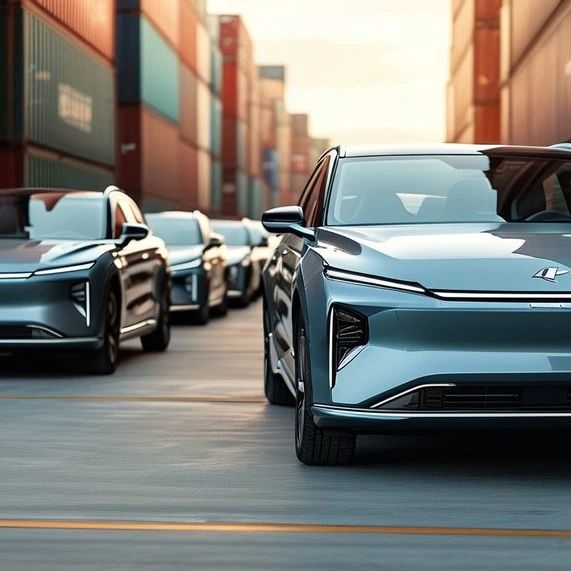
Core Viewpoint - The article discusses the challenges and opportunities faced by Chinese electric vehicle manufacturers as they expand into international markets, highlighting the significant growth in exports and the competitive landscape they encounter [4][5]. Summary by Sections Export Growth - In 2023, Chinese electric vehicle exports reached 1.203 million units, a year-on-year increase of 77.6%. Projections for 2024 suggest exports will rise to 1.284 million units, a growth of 6.7% [4]. - From January to May 2025, exports totaled 855,000 units, marking a 64.6% increase compared to the same period in 2024, establishing a solid foundation for the full year [4]. Market Expansion - The article notes the increasing marketing activities for electric vehicles in regions like South America, South Africa, and Egypt, with Brazil being a significant market where Chinese brands captured 91.4% of the imported electric vehicle market in the first half of 2024, amounting to $1.2 billion in sales [7]. - Great Wall Motors reported sales of 229,800 units in Russia in 2024, accounting for approximately 12% of the local passenger car market [7]. Challenges in International Markets - The article highlights the challenges faced by manufacturers, including intense competition, patent disputes, and stringent certification requirements [5][14]. - In Russia, high taxes and tariffs on imported vehicles have led to inflated prices, making it difficult for potential consumers to afford these vehicles [9]. Parallel Export Strategy - The "parallel export" method, where vehicles are registered domestically before being exported as used cars, has gained traction among dealers due to lower costs compared to traditional export methods [11]. - This approach allows for quicker market entry, reducing the export process time significantly, but it also raises concerns about brand integrity and profit margins, which have reportedly halved due to increased competition [12][13]. Patent and Certification Issues - The article discusses recent patent lawsuits faced by companies like BYD and Geely, which could hinder their market access and operations in foreign countries [14]. - The certification process for entering markets like the EU is complex and costly, requiring compliance with numerous technical standards, which can deter companies from pursuing these markets [17]. Competitive Landscape - Companies are investing heavily in R&D to enhance product differentiation and are actively engaging in marketing efforts to boost brand recognition and product reputation [17]. - The article concludes that while the global electric vehicle market presents significant opportunities, it also poses substantial challenges that require strategic navigation to succeed [18].
毛利几乎砍半,经销商揭开新能源车出海的“暗战”
3 6 Ke· 2025-08-28 12:11
Core Insights - The article highlights the significant growth of Chinese electric vehicle (EV) exports, with 1.203 million units exported in 2023, marking a 77.6% year-on-year increase [1] - The expansion of the EV market is evident in various regions, including South America, the Middle East, and Russia, where Chinese brands are gaining popularity [2][4] - Challenges such as increased competition, patent disputes, and stringent certification requirements are emerging as obstacles for companies in the international market [10][13] Group 1: Export Growth and Market Expansion - In 2023, Chinese EV exports reached 1.203 million units, a 77.6% increase from the previous year, with projections of 1.284 million units in 2024, a 6.7% growth [1] - South America, particularly Brazil, is becoming a key market, with Chinese brands accounting for 91.4% of imported EV sales in the first half of 2024, generating $1.2 billion in sales [2] - Companies like Great Wall Motors are successfully penetrating various international markets, with 229,800 units sold in Russia, capturing approximately 12% of the local passenger car market [2][4] Group 2: Regional Market Characteristics - South American consumers show a preference for larger EVs with advanced technology features, while markets like Egypt favor smaller vehicles due to road conditions [4][5] - The demand for EVs in regions like the Middle East and Russia is driven by the need for spacious vehicles and long-range capabilities, with local consumers valuing these attributes [5] Group 3: Challenges in International Expansion - Patent disputes are a growing concern, with companies like BYD and Geely facing lawsuits over alleged patent infringements in markets like Brazil and Germany [10][12] - Certification processes in international markets, particularly in the EU, are complex and costly, posing additional barriers for Chinese manufacturers [13] - The emergence of "parallel exports," where vehicles are sold as used cars to avoid high tariffs, is becoming a common practice, although it raises concerns about brand integrity [6][7] Group 4: Competitive Landscape and Strategies - The competitive landscape is intensifying, with profit margins shrinking due to increased competition among exporters, leading to a reduction in gross margins from 15% to nearly half [8] - Companies are investing in localizing their products and improving logistics to enhance competitiveness in foreign markets [5][8] - To navigate the challenges, firms are focusing on technological innovation, patent strategies, and enhancing market presence through various promotional activities [13]