易方达

Search documents
马太效应凸显!做市商成ETF“救命稻草”?
券商中国· 2025-08-04 10:20
Core Viewpoint - The article discusses the challenges faced by many ETFs due to significant homogenization and poor management, leading to a decline in their market presence and liquidity issues [1][7]. Group 1: ETF Market Dynamics - Many ETFs, including the popular CSI A500 ETFs, have experienced a sharp reduction in shares this year, with some products facing liquidity shortages due to small scale [1][7]. - The "Matthew Effect" in the ETF market is becoming more pronounced, with larger funds attracting more investment while smaller funds struggle to gain traction, leading to potential liquidation risks for underperforming products [7][8]. Group 2: Introduction of Market Makers - Several public funds have announced the addition of brokerages as market makers for their ETF products to enhance liquidity in the secondary market [2][3]. - As of August 1, multiple funds, including those from Guolian Fund and Huatai-PineBridge Fund, have signed agreements with brokerages to facilitate trading operations for their ETFs [3]. Group 3: Liquidity Services and Market Coverage - By June 2025, the Shanghai Stock Exchange had 20 primary market makers and 12 general market makers providing liquidity services for 746 fund products, with 98% of all ETFs having market maker coverage [4][5]. - The Shenzhen Stock Exchange had 27 liquidity service providers covering 491 ETF products, with many ETFs supported by multiple market makers [5]. Group 4: Importance of Market Makers - Analysts emphasize that the introduction of brokerages as primary market makers is crucial for improving trading efficiency and responding to complex trading demands [6]. - The growing role of liquidity service providers in the ETF ecosystem is highlighted, with a focus on the need for public funds to prioritize the management of ETF liquidity to seize growth opportunities [6].


中国养老金专题:长钱长投,企业年金的过去、现在与未来
Hua Yuan Zheng Quan· 2025-08-04 09:51
1. Report Industry Investment Rating The provided content does not mention the industry investment rating. 2. Core Viewpoints of the Report - The enterprise annuity market has witnessed continuous scale expansion but suffers from insufficient coverage and prominent structural contradictions. Future policy may lower the participation threshold for small and medium - sized enterprises through automatic enrollment mechanisms and simplified collective plans [3]. - The institutional landscape is becoming more concentrated, and different capabilities may be the key to competition. The focus of future competition may shift to differentiated services [3]. - The investment performance of enterprise annuities is stable but shows differentiation. The long - cycle assessment mechanism may drive the optimization of asset allocation and increase the proportion of equity investment [3]. - In the future, with the expansion of coverage, optimization of equity allocation, and integration of the three - pillar pension system, enterprise annuities are expected to improve the retirement income replacement rate of employees in small and medium - sized enterprises and become a key support in addressing the challenges of an aging population [2]. 3. Summary by Directory 3.1 Historical Evolution: Coexistence of Systemic Dividend Release and Deep - seated Contradictions 3.1.1 From Non - marketization to Marketization - Non - market operation stage (1991 - 2004): It was a crucial foundation - laying period for China's supplementary pension system, featuring administrative leadership and decentralized management. The key contradiction was the lack of unified national regulations and the risk of fund safety. This ultimately led to the introduction of policies in 2004 to start the market - oriented transfer [14][15]. - Market operation stage (since 2004): Marked by the promulgation of relevant regulations, it established the trust - based management model. The market has experienced a rapid development period (2007 - 2016) and a mature and in - depth development period (since 2017), with continuous improvement in the system and investment quality [16]. 3.1.2 What are the Enterprise Annuity Management Institutions? - The enterprise annuity management institutions are characterized by a highly concentrated market and specialized division of labor. There are four types of management institutions, with different distributions of qualifications. Some large institutions can provide integrated services, while the custody function is independently undertaken by commercial banks [27]. - In the trustee market, insurance institutions dominate, and bank - affiliated institutions are rising rapidly. The market shows a significant head - concentration effect. In the investment management market, public funds and insurance institutions play important roles [30][54]. 3.1.3 Enterprise Annuity Plans and Annuity Pension Products - Enterprise annuity plans mainly include single plans and collective plans. Single plans are suitable for large enterprises, while collective plans have advantages such as high efficiency, low cost, and scale benefits [60][63]. - Annuity pension products are standard investment portfolios issued by enterprise annuity fund investment managers and sold to specific pension funds. After more than a decade of development, their investment scope has gradually expanded [66]. 3.2 Current Situation Analysis of Enterprise Annuities 3.2.1 Coverage and Regional Characteristics of Enterprise Annuities - The number of employees participating in enterprise annuities has been increasing, but the coverage rate has not improved significantly. The participation rate in China is far lower than that of OECD countries [67]. - The asset amount of enterprise annuities in the central government - owned enterprises and economically developed regions dominates, and the overall pattern has remained stable in recent years [73]. 3.2.2 How is the Performance of Enterprise Annuities? - The overall performance of enterprise annuities has been growing steadily in the long term. In the past three years (2022Q1 - 2025Q1), the cumulative return reached 7.46%. Asset allocation shows differentiation, with fixed - income portfolios performing better than equity - containing portfolios in the past three years. The policy orientation is shifting towards long - cycle assessment [78][91]. 3.2.3 What are the Scale and Performance of Different Investment Managers? - As of 2025Q1, the enterprise annuity investment management institution market shows two core trends: the strengthening of the head - effect and the shift of the assessment mechanism towards long - term orientation. Public fund companies have strong equity investment capabilities, while insurance - based institutions are stronger in fixed - income investment [94][95]. 3.2.4 Annuity Pension Products - As of 2025Q1, there are 649 registered pension products and 573 actually operating products. The top three types in terms of the number of actually operating products are ordinary stock - type, hybrid - type, and ordinary fixed - income - type [100]. - The number of registered pension products has remained stable since 2021, while the number of actually operating products has decreased year by year. The scale has shown a slight upward trend [102]. 3.3 How might Enterprise Annuities Develop in the Future? - The coverage may expand. The automatic enrollment mechanism may solve the problem of low participation of small and medium - sized enterprises [105]. - The trustee and investment management institutions may continue to be concentrated. The "Matthew effect" in the trustee market may intensify, and the head - effect in the investment management market may continue [105]. - The investment management of single plans and collective plans may undergo structural adjustments. The long - cycle assessment mechanism may be implemented soon, and the proportion of equity investment may increase [106]. - In the next decade, enterprise annuities are expected to improve the retirement income replacement rate of employees in small and medium - sized enterprises and become a key support in addressing the challenges of an aging population [109].


多只黄金板块ETF涨超4%;7月股票型ETF净赎回规模扩大丨ETF晚报
2 1 Shi Ji Jing Ji Bao Dao· 2025-08-04 09:33
ETF Industry News Summary Core Viewpoint - The ETF market is experiencing significant movements, particularly in the gold sector, driven by increased risk aversion and changing market expectations regarding U.S. Federal Reserve interest rate policies [1][2]. Group 1: Market Performance - Major indices in the A-share market rose collectively, with the Shanghai Composite Index increasing by 0.66% to close at 3583.31 points, the Shenzhen Component Index up by 0.46% to 11041.56 points, and the ChiNext Index rising by 0.5% to 2334.32 points [3]. - Gold-related ETFs saw substantial gains, with the Gold Stock ETF (517400.SH) rising by 5.04%, the Gold ETF (159562.SZ) increasing by 4.49%, and the Gold Stock ETF Fund (159315.SZ) up by 4.34% [1][10]. Group 2: ETF Redemption Trends - In July, stock-type ETFs experienced a significant net redemption of 248.33 million units, a sharp increase from the 83.71 million units redeemed in June, marking a shift from net subscriptions to net redemptions for the year [2]. - The top three stock-type ETFs with the highest net redemptions in July included the E Fund CSI 300 Healthcare ETF, which saw a redemption of over 50 million units, and the Guotai CSI 500 ETF, which was redeemed by over 12.64 billion units year-to-date [2]. Group 3: ETF Category Performance - Among various ETF categories, commodity ETFs performed the best with an average increase of 1.06%, while cross-border ETFs had the poorest performance with an average decline of 0.09% [8]. - The top-performing ETFs in the stock category included the Gold Stock ETF (517400.SH), Gold ETF (159562.SZ), and Gold Stock ETF Fund (159315.SZ), with respective returns of 5.04%, 4.49%, and 4.34% [10]. Group 4: Trading Volume - The top three stock-type ETFs by trading volume were the A500 ETF Fund (512050.SH) with a trading volume of 3.986 billion yuan, A500 ETF Southern (159352.SZ) at 3.830 billion yuan, and A500 ETF Huatai-PB (563360.SH) at 3.803 billion yuan [12].
指数涨超3%,机器人ETF易方达(159530)盘中获2900万份净申购
Mei Ri Jing Ji Xin Wen· 2025-08-04 07:18
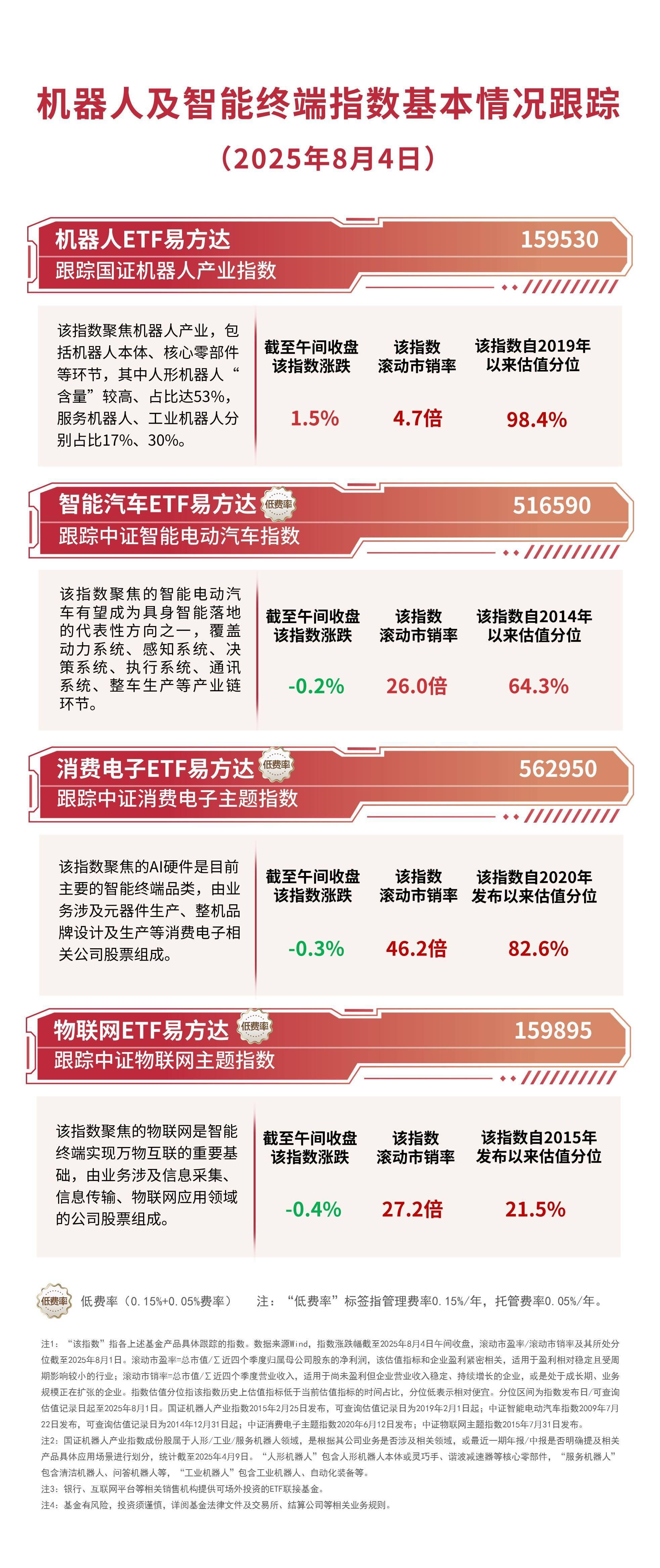
国证机器人产业指数覆盖机器人产业链各核心环节,人形机器人相关成份股占比较高。Wind数据显 示,自4月10日指数修订生效至今,该指数已累计涨超18%,涨幅领跑其他同类指数。机器人ETF易方 达(159530)规模在该指数相关产品中居首,可助力便捷布局产业发展机遇。 东吴证券认为,机器人双足步态的训练范式已经收敛,在仿真环境中通过大量强化学习的范式证实可 行,能够赋予机器人拟人步态,另外众擎机器人舞蹈,宇树科技拳击等展示性技能也较为亮眼,机器人 现阶段大脑已具备初步推理与驱动任务执行能力,未来将优先落地于中低节拍、高容错应用场景。 机器人板块午后持续走强,截至14:50,国证机器人产业指数上涨3.2%,汉威科技领涨成份股,步科股 份、雷赛智能、奥普特等涨超5%,机器人ETF易方达(159530)成交额突破2亿元,净申购达2900万 份。 (文章来源:每日经济新闻) ...

吸金,超155亿!
中国基金报· 2025-08-04 06:37
Core Viewpoint - The article highlights a significant inflow of funds into Hong Kong Stock Connect ETFs, with a net inflow exceeding 15.5 billion yuan in the past week, contrasting with a net outflow of over 10.5 billion yuan from stock ETFs in the same period [2][7]. Fund Flow Summary - In the past week, stock ETFs (including cross-border ETFs) experienced a net outflow of over 10.5 billion yuan, with a single-day outflow exceeding 10 billion yuan on one occasion [2][5]. - Conversely, Hong Kong Stock Connect ETFs were the main beneficiaries, attracting over 15.5 billion yuan in net inflows, with several ETFs leading the market in inflow amounts [2][8]. - The recent five trading days saw over 9.4 billion yuan flowing into ETFs tracking the Hang Seng Technology Index and over 3.8 billion yuan into ETFs related to Hong Kong securities [5]. Specific ETF Performance - Major fund companies reported continued net inflows in several ETFs, including: - E Fund's Gold ETF with a net inflow of 360 million yuan - E Fund's A500 ETF with a net inflow of 340 million yuan - Hong Kong Securities ETF with a net inflow of 190 million yuan [6]. - The top three ETFs by net inflow in the past week were: - E Fund's Hong Kong Securities ETF with 3.856 billion yuan - Fortune's Hong Kong Stock Connect Internet ETF with 3.448 billion yuan - Huatai-PB's Hang Seng Technology ETF with 3.068 billion yuan [8][9]. Market Trends - The article notes a divergence in fund flows, with Hong Kong market ETFs seeing significant inflows while broad-based ETFs experienced outflows, particularly in the case of the CSI 300 ETF and the ChiNext ETF [12]. - The article also mentions that the current market dynamics may favor the technology sector in Hong Kong, particularly in light of AI developments, which could enhance performance and attract further investment [9][10].

标的指数涨超3%,通用航空ETF易方达(159255)今日上市,成交额领先同类
Mei Ri Jing Ji Xin Wen· 2025-08-04 06:33
Core Viewpoint - The A-share market experienced a rebound with significant growth in military-related sectors, particularly in general aviation, driven by supportive government policies and market potential in low-altitude economy and commercial aerospace [1][2]. Group 1: Market Performance - The three major indices in the A-share market opened low but rose significantly in the afternoon, with military-related concepts such as military information technology, aircraft carriers, and commercial aerospace witnessing collective surges [1]. - The National General Aviation Industry Index saw a rise of over 3% during trading, with constituent stocks like Aileda, Lijun Co., and Aerospace Electronics hitting the daily limit [1]. Group 2: Investment Opportunities - The newly listed General Aviation ETF (159255) achieved a strong debut with a half-day trading volume of 230 million yuan, leading among similar index ETFs [1]. - The National General Aviation Industry Index comprises 50 stocks related to various sectors of the general aviation industry, including aircraft manufacturing and operational services, indicating a broad investment opportunity [1]. Group 3: Industry Outlook - The low-altitude economy is recognized as a strategic emerging industry in government work reports, with substantial support from various levels of government, suggesting a favorable environment for growth [1]. - The market potential for the drone low-altitude market is projected to exceed 3.1 trillion yuan by 2035, while the manned eVTOL market is expected to surpass 500 billion yuan [1]. - CITIC Securities indicates that the commercial aerospace and low-altitude economy sectors may accelerate in development due to events like commercial rocket launches, recommending investors to pay attention to related opportunities [1].



权益基金收复业绩失地!近一年业绩翻倍基金已超70只
2 1 Shi Ji Jing Ji Bao Dao· 2025-08-04 06:33
Core Insights - The market has shown a recovery, with significant increases in various indices, leading to a third consecutive profitable quarter for public funds [1] - Active equity funds have seen substantial gains, particularly those focused on innovative pharmaceuticals and technology sectors [2][6] - Fund managers are adjusting their portfolios towards sectors with higher certainty, such as innovative drugs and TMT (Technology, Media, and Telecommunications) [2][3] Group 1: Market Performance - As of August 1, 2023, the Shanghai Composite Index rose by 6.21%, the CSI 300 Index by 3.05%, and the ChiNext Index by 8.45%, while the Hang Seng Index surged by 22.17% [1] - In Q2 2023, public fund products generated a profit of 385.1 billion yuan, with the Shanghai Composite Index increasing by 3.26% [1] Group 2: Fund Performance - A total of 72 equity funds have doubled their returns over the past year, with many focusing on innovative pharmaceuticals and AI technology [2] - Among 162 fund management companies, 150 reported overall profits in Q2, with 11 companies achieving profits exceeding 10 billion yuan [1] Group 3: Investment Strategies - Fund managers are increasingly favoring sectors like domestic consumption, innovative drugs, and technology, while reducing exposure to autonomous driving and robotics due to market uncertainties [2][3] - Investment in new consumer trends, such as zero-sugar beverages and pet food, is also being prioritized [3] Group 4: Market Outlook - Institutions express optimism about the market, citing a recovery in overall demand and improved cash flow for leading companies [4] - The A-share market shows positive signals, with active trading and increased financing balances, indicating a potential for further upward movement [4] Group 5: Sector Focus - The focus on innovative pharmaceuticals remains strong, with fund managers optimistic about the sector's structural growth [5] - The North Exchange theme funds have also seen significant gains, with the North 50 Index rising by 36.79% this year [6] Group 6: Risk Considerations - There is an increasing caution regarding the North Exchange's high valuations, with recommendations to prioritize investments in companies with strong performance expectations and safety margins [7]
机器人板块涨超3%,机器人ETF易方达(159530)涨幅为2.39%
news flash· 2025-08-04 06:32
无需50万,A股账户就能直接买科创板>> 机器人(300024)板块涨超3%,机器人ETF易方达(159530)涨幅为2.39%,成交额1.92亿元,较昨日此 时放量39.16%,近1月份额增加84.59%,增加11.23亿份。 ...
A股震荡分化,A500ETF易方达(159361)、沪深300ETF易方达(510310)等助力布局核心资产
Sou Hu Cai Jing· 2025-08-04 05:19
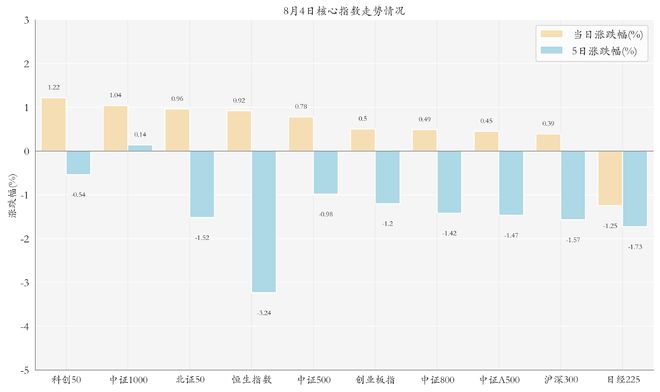
Market Overview - A-shares experienced mixed fluctuations in the morning session, with military equipment, precious metals, gaming, gas, and high-speed rail sectors leading in gains [1] - Conversely, innovative drugs, silicon energy, retail, and dairy sectors saw the largest declines [1] - The Hong Kong stock market rebounded, with technology stocks showing significant recovery while pharmaceutical stocks continued to adjust [1] Index Performance - By midday, the CSI A500 index fell by 0.1%, the CSI 300 index was nearly flat, the ChiNext index dropped by 0.5%, while both the STAR Market 50 index and the Hang Seng China Enterprises index rose by 0.5% [1] ETF Tracking Indices - The ChiNext ETF tracks the ChiNext index, which consists of 100 stocks with high market capitalization and liquidity, with a significant proportion in strategic emerging industries, particularly power equipment, pharmaceuticals, and electronics, accounting for over 55% [3] - The STAR Market 50 ETF tracks the STAR Market 50 index, composed of 50 stocks with high market capitalization and liquidity, prominently featuring technology leaders, with semiconductors making up over 60% and medical devices, software development, and photovoltaic equipment industries collectively exceeding 75% [3]
机器人板块走强,机器人ETF易方达(159530)半日获1700万份净申购
Sou Hu Cai Jing· 2025-08-04 05:12
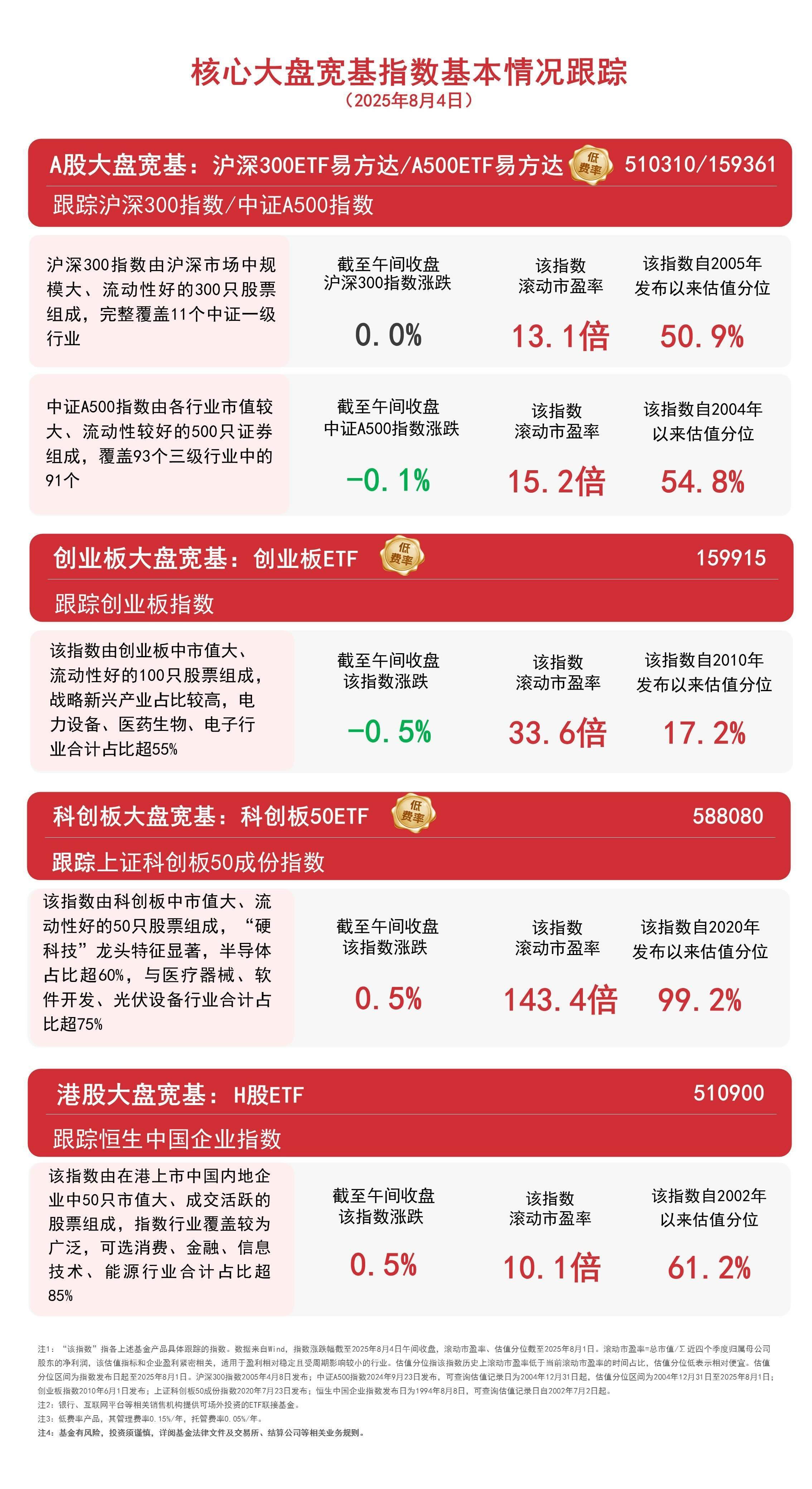
Group 1 - The Guozheng Robotics Industry Index increased by 1.5% at midday, while the CSI Intelligent Electric Vehicle Index decreased by 0.2%, the CSI Consumer Electronics Theme Index fell by 0.3%, and the CSI Internet of Things Theme Index dropped by 0.4% [1] - The EasyOne ETF for robotics saw a net subscription of 17 million units by midday [1] Group 2 - The CSI Intelligent Electric Vehicle Index focuses on smart electric vehicles, which are expected to represent a significant direction for embodied intelligence, covering various industry chain segments including power systems, perception systems, decision systems, execution systems, communication systems, and vehicle production [4] - The CSI Consumer Electronics Theme Index tracks AI hardware, which is currently a major category of smart terminal products, involving companies related to component production, complete machine brand design, and manufacturing [7]