长江存储

Search documents
存储芯片涨价或将贯穿全年,中国产业崛起成“胜负手”
Shang Hai Zheng Quan Bao· 2026-02-24 23:59
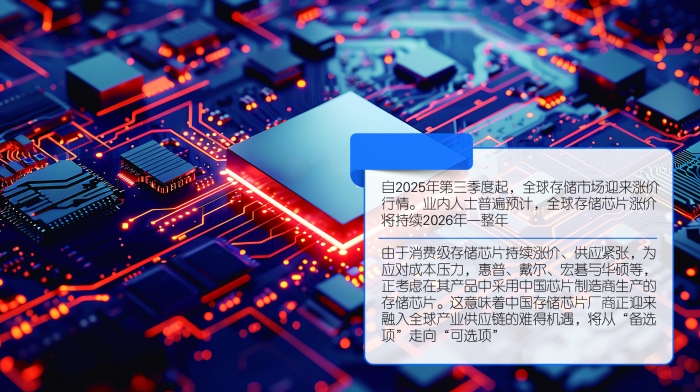
当前DRAM(动态随机存取存储器)与NAND(闪存)库存仅够维持约4周,价格持续上涨已成定 局……2026年马年春节刚过,全球存储巨头SK海力士的最新发声,让全球存储市场的涨价潮再度升 温。2月24日,A股存储概念股持续走高,北京君正、太极实业、香农芯创等个股涨幅均超过5%。 在AI及算力发展浪潮的驱动下,自2025年第三季度起,全球存储市场迎来涨价行情。业内人士普遍预 计,全球存储芯片涨价将持续2026年一整年。 在产业高景气背景下,中国存储产业正加速突围,长江存储、长鑫科技等企业在技术、产能上持续突 破,国产模组厂商同步发力,中国存储力量的崛起正成为影响全球存储格局、决定行业发展走向的"胜 负手"。 事实上,自2025年第二季度起,全球存储行业景气度开始触底反弹,闪迪打响NAND涨价第一枪后,三 星、美光及长江存储、兆易创新等存储厂商(包括NAND、DRAM)纷纷跟进上调价格。 巨头最新发声:库存仅剩约4周 2月20日,SK海力士举行虚拟投资者会议,向高盛透露了最新的数据及对产业趋势的研判。 SK海力士表示,当前公司DRAM及NAND整体库存仅剩约4周,处于历史极低水平,从谷歌、微软等云 厂商,到Open ...
存储芯片涨价或将贯穿全年 中国产业崛起成“胜负手”
Shang Hai Zheng Quan Bao· 2026-02-24 17:49
Core Viewpoint - The global storage market is experiencing a price surge due to extremely low inventory levels of DRAM and NAND, with major players like SK Hynix predicting that this trend will continue throughout 2026 driven by AI and computing demands [2][3][5]. Group 1: Market Conditions - Current inventory levels for DRAM and NAND are approximately 4 weeks, marking a historical low, leading to increased price expectations as demand from various sectors remains unmet [3]. - SK Hynix reported record revenues and profits for the fiscal year 2025, with operating income reaching 97.15 trillion KRW and a profit margin of 49%, reflecting the ongoing price increases and strong demand in the storage market [4]. Group 2: Supply and Demand Dynamics - The imbalance in supply and demand is attributed to the explosive demand for storage driven by AI applications and slow expansion of cleanroom space necessary for chip manufacturing, limiting supply growth [5]. - Major price increases have been observed, with SK Hynix raising prices for high-end products by 15% to 20% and standard DRAM prices increasing by 10% to 15% in late 2025 [5]. Group 3: Chinese Storage Industry - The rise of the Chinese storage industry is seen as a potential game-changer in the global supply chain, with companies like Yangtze Memory Technologies and ChangXin Memory Technologies leading the charge [7]. - Chinese manufacturers are increasingly being considered by PC makers like HP and Dell for storage solutions, indicating a shift from being an alternative option to a viable choice in the global market [7]. - Predictions suggest that Chinese storage capacity will gradually be released between the second half of 2026 and 2027, potentially alleviating global supply constraints and stabilizing prices [7]. Group 4: Future Outlook - Analysts believe that the current storage cycle's intensity and duration may surpass previous cycles, driven by the ongoing demand from AI and high-performance computing [6]. - Long-term contracts are being discussed between suppliers and major clients to secure future supply and pricing, indicating a strategic shift in the industry [3].

四年投资4万亿元 苹果供应链“回归美国”进行时
Zhong Guo Jing Ying Bao· 2026-02-24 12:25
2月24日消息,苹果公司向《华尔街日报》确认了一项引人注目的供应链调整:2026年晚些时候,部分 Mac Mini台式电脑的生产将从亚洲转移到美国,在富士康位于休斯敦的工厂启动组装。这是自2013年 Mac Pro在美国本土生产失利后,苹果又一次将核心硬件生产线迁回美国的重大尝试。 消息一出,业界震动。《中国经营报》记者注意到,一方面,这是苹果2025年承诺的四年6000亿美元 (约合人民币4.15万亿元)美国投资计划落地的重要一步;另一方面,在全球关税壁垒复杂化、AI技术 浪潮冲击零部件供应的当下,这一举动被外界解读为苹果供应链战略从极致的"全球效率"向兼顾"地缘 安全"转变的强烈信号。 这一系列动作,是苹果在全球供应链上进行的一场精密而复杂的"大迁徙"。多位业内人士接受记者采访 时表示,它既是对美国政府"制造业回流"压力的回应,也是对中美贸易摩擦下潜在关税风险的未雨绸 缪。然而,这场迁徙并非简单的"去中国化",而是一场在地缘政治、成本效率与工程现实之间走钢丝的 平衡术。 苹果供应链调整的"小步快跑" 在休斯敦北部,富士康的厂区内正酝酿着一场变革。苹果首席运营官萨比赫·汗(Sabih Khan)向媒体展 示 ...

从辅助系统到核心系统,国产AMHS厂商谁能率先规模化应用?
Huan Qiu Wang· 2026-02-24 03:24
【环球网财经综合报道】2020年以来,以国家大基金、税收优惠等政策为支撑,叠加外部技术封锁与国 内晶圆厂扩产需求拉动,我国半导体行业国产化进度逐步从单点突破迈向全链协同。 综合中国半导体行业协会 (CSIA)、赛迪顾问 2025 年半导体产业发展报告数据,28nm及以上成熟制程率 先实现国产化,自给率达60%;刻蚀、清洗、薄膜沉积等设备及8英寸硅片等材料国产化率突破50%, 先进封装在Chiplet等领域达国际先进水平,长江存储、长电科技(600584.SH)等龙头企业崛起。上述 各环节取得的成果使得整体国产化率从2020年不足20%提升至2025年45%左右,芯片出口于2024年成为 我国第一大出口商品,自主可控能力显著增强。 在此背景下,未来几年伴随我国半导体产业向5nm/3nm等先进制程加速突破的确定性趋势,受益于在产 能、效率及良率几个关键指标方面均可以发挥关键作用,AMHS(自动物料搬运系统)已从历史阶段的 辅助工具升级为决定先进制程可行性的核心基础设施。 AMHS 应用贯穿从硅片投入到出厂制造全流程 根据公开资料,AMHS即自动物料搬送系统,一般特指在洁净室环境下,通过软件系统的控制和调度, 按照 ...

湖北今天这个大会,为何如此重要
Sou Hu Cai Jing· 2026-02-24 01:28
Core Viewpoint - Hubei is accelerating the construction of an important strategic support point for the rise of the central region, with a clear roadmap and policy measures aimed at achieving significant economic growth by 2030 and 2035 [3][24]. Economic Growth and Targets - By 2025, Hubei's economic output is projected to stabilize at 6 trillion yuan, with a year-on-year growth rate of 5.5%, ranking among the top in major economic provinces and the central region [5][6]. - The goal is to reach an economic total of approximately 9 trillion yuan by 2030 and to achieve basic socialist modernization by 2035 [3]. Strategic Initiatives - Hubei has outlined a three-step strategy: "one year to open a new situation, five years for major changes, and ten years to achieve fruitful results," focusing on seven strategic areas and enhancing seven capabilities [3][24]. - The province has introduced 64 policy measures across seven areas to strengthen strategic support, innovation, industrial competitiveness, and regional collaboration [3]. Industrial Development - Hubei's major industries, including optoelectronic information and automotive manufacturing, have all entered the "trillion-yuan club," with significant growth in sectors like energy conservation and high-end equipment [14]. - The number of enterprises in Hubei has reached 10.126 million, making it the sixth province in China to surpass ten million, with 15 companies listed among China's top 500 [14]. Innovation and Technology - Hubei has made significant strides in technological innovation, with 42 key technologies achieving breakthroughs and the establishment of a robust innovation ecosystem, including 1 national laboratory and 547 new R&D institutions [17]. - The province has seen a 20% growth in the artificial intelligence and humanoid robot industries, with the digital economy exceeding 3.2 trillion yuan [18]. Trade and Logistics - Hubei's foreign trade has surpassed 834 billion yuan, with an 18.2% year-on-year increase, ranking first in both economic provinces and the central region [24]. - The province's inland port cargo throughput has reached 800 million tons, surpassing coastal provinces and positioning Hubei among the top seven in the country [19][20]. Transportation Infrastructure - Hubei has enhanced its transportation capabilities, with high-speed rail mileage ranking fifth nationally and the establishment of stable cross-border routes through the China-Europe Railway Express [22]. - The province's logistics and high-end manufacturing industries are rapidly developing, supported by the advantages of the Huahu Airport [24].
中美关税大战: 最大成果不是中国胜了, 而是美国再无手段控制中国
Sou Hu Cai Jing· 2026-02-22 08:18
2025年3月4日,美国再次将税率提高到20%,中国随即作出回应。4月2日,美国实施了全球对等关税,将对中国商品的税率提升至34%。中国在4月4日回 击,同样提高至34%。随后,4月8日美国的关税再次提高到84%,中国次日匹配。4月9日,美国将税率推高至125%,中国做出了相应调整。4月11日,美国 贸易摩擦始于2018年。当时,特朗普政府认为中国商品价格过低,威胁到美国就业,于是决定加征关税。最初针对的是钢铁和铝,关税分别为25%和10%。 中国迅速作出反应,针对美国的水果和猪肉等商品加征了30亿美元规模的税。中国此举的目的在于稳住供应链,避免事态进一步扩大。与此同时,美国指责 中国在技术转移方面不公平,并要求中国修改相关政策。中国则通过调整出口方向,转向其他市场,以避免与美国发生正面冲突。 2018年7月,美国对340亿美元中国商品加征了25%的关税,中国对此做出了对等回应,涉及大豆和汽车等商品。双方进行了几轮谈判,美国提出暂停某些产 业计划,但中国并未完全同意。到了2019年,美国将关税扩大至2000亿美元商品,中国反制了600亿美元。此时,企业开始加强自我创新,投资研发芯片等 技术。美国农民的收入受到 ...
中美关税大战:最大成果不是中国胜了,而是美国再无手段控制中国
Sou Hu Cai Jing· 2026-02-21 06:59
特朗普第二次入主白宫后,立即将关税作为自己的主要政策工具。2025年2月1日,他签署了行政命令,对所有中国进口商品加征10%的关税,名义上的理由 是针对芬太尼问题。4日,关税正式生效,随后取消了小额免税通道。到3月初,税率更是提高到了20%。4月2日,特朗普推出所谓的解放日措施,给中国商 品额外加征34%的关税,叠加后,有些商品的关税一度攀升到125%以上。面对美国的强硬姿态,中国并没有采取同等规模的反制,而是在4月4日宣布对美 国的部分农产品和能源品加征关税,同时实施出口许可证管理,针对包括钐、钆、铽、镝等稀土元素,直接卡住了美国国防和高端制造所依赖的关键资源。 相比美国的硬碰硬,中国则采取了更为精准的反制手段,同时加快了产业升级的步伐。稀土管制一出,美国洛克希德·马丁等军工企业立刻遭遇了磁铁和合 金的短缺,F-35战机的相关部件生产也受到了影响。与此同时,中国的科技企业却取得了不小的进步,2025年全年,中芯国际的营收创下了超过93亿美元的 纪录,7纳米制程的良品率稳步提升,深紫外多重曝光技术的突破使得量产达到了新高度。长江存储的新一代闪存产品持续升级,华为的5G基站核心模块逐 步转向国内供应链,即便外部 ...
中美博弈结束了吗?现实更残酷:美国没输,只是连牌桌都下不去了
Sou Hu Cai Jing· 2026-02-20 14:59
可几年过去,美国自己先懵了——老办法不管用了。 中国经济没停,反而在好几个关键地方跑得更快了。 中美这场大戏,从贸易战那会儿就正式开锣了。 没人能想到,美国一上来就祭出关税大棒,还把技术封锁玩得越来越狠,以为这么一压,中国就得趴下。 美国这边倒好,制造业空心化的问题越捂越臭,供应链全靠外面输血,结果一打起来,自己先断了气。 现在美国制造业占GDP也就10%左右,听着还行?可这10%里头,四成集中在军工、半导体和制药这三个领域,其他地方基本是空的。 说白了,美国在全球价值链里,早就不是那个能自己造东西的主了,而是个靠别人供货的中间商。 中国呢?连续15年稳坐全球制造业头把交椅,到2024年,制造业增加值已经占到全世界的31.6%。 出口也不再是以前那种"十亿件衬衫换一架飞机"的老路子了,现在卖的是高端机电、数码设备,技术含量高,利润也厚。 美国想用关税把工厂逼回本土,可现实狠狠打了脸——人工贵、地价高、工人还招不到,建厂成本翻着跟头往上蹿。 你让企业回去?回去等于烧钱。 芯片,成了中美掰手腕最硬的那根骨头。 从2018年开始,美国对华技术封锁层层加码,光刻机不卖,EDA软件卡脖子,连先进制程的设备都锁得死死的。 ...
存储涨价潮带动三星股价创新高 AI存储成最大拉动因素
Zhong Guo Jing Ying Bao· 2026-02-20 11:25
在此轮存储涨价潮中,AI存储被视为最大的拉动因素。其中,全球三大存储芯片巨头三星、SK海力 士、美光,近三个月均将战略重心聚焦于AI高端存储领域,带动其股价同步走强。 综合多家韩国媒体消息,作为行业风向标,三星除推进最新一代HBM4芯片量产并洽谈高价定价外,还 将平泽P4工厂的投产时间从2027年一季度提前至2026年四季度,重点部署高性能DRAM与HBM产品, 抢占AI存储市场先机。据业界分析师估算,三星HBM4组件拟定价约700美元,较上一代HBM3E高出 20%—30%,其营业利润率预计可达50%—60%,盈利空间大幅提升。 中经记者谭伦北京报道 自2025年的存储芯片涨价大潮仍在延续。 2026年2月19日,韩国存储芯片巨头三星电子股价再度创下历史新高,盘中一度上涨逾5%,最高触及 190900韩元,今年以来累计涨幅已近50%,延续了2025年的迅猛涨势。 这一波狂飙背后,直接诱因是三星正在进行的涨价谈判。据韩媒披露,三星正与英伟达(NVIDIA)及 其他大客户敲定最新一代HBM4及超高性能存储芯片的供应协议,其报价较上一代产品高出至多30%。 在2025年存储价格已经翻倍的基础上,这种"利好叠加"让 ...
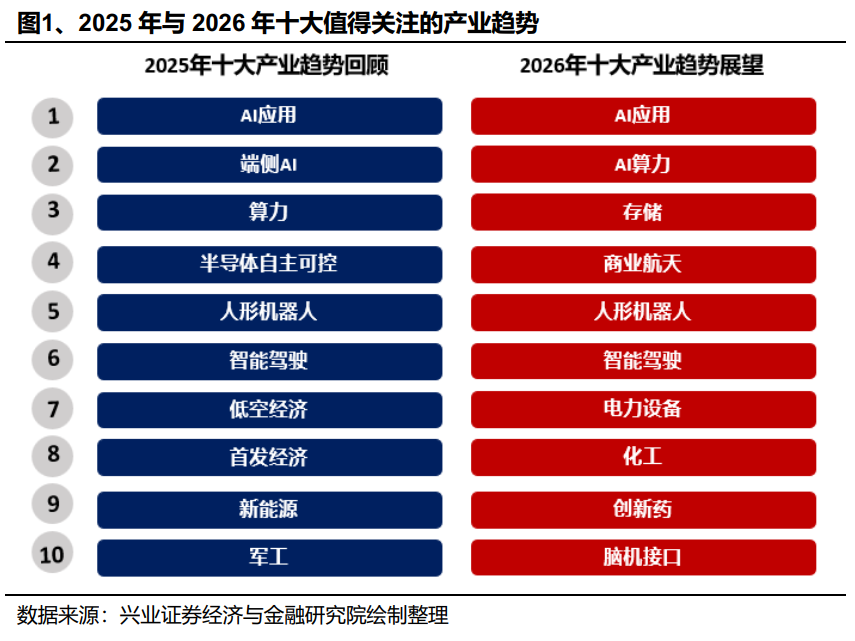
兴业证券:2026年值得关注的十大产业趋势
智通财经网· 2026-02-18 03:45
Group 1: AI Applications - The global AI competition is intensifying, with model iterations driving deeper application scenarios, and the focus is on whether significant capital expenditures by tech giants can lead to commercial applications [2][3] - The competitive landscape for AI applications is shifting from dominance by OpenAI to a more multipolar environment, with major players like Google and Meta integrating AI into their ecosystems [3] - In China, AI applications are experiencing a breakthrough, with major tech companies accelerating model iterations and application deployments, leading to a transformation from model landing to scenario monetization [5] Group 2: AI Computing Power - Overseas, major cloud service providers are maintaining high capital expenditures, with a projected increase of 67% in 2026, reflecting a strong demand for AI computing power [7][8] - In China, leading tech companies are increasing capital expenditures and accelerating the iteration of domestic large models, promoting the performance of domestic chips amid tightening supply from foreign sources [9] Group 3: Storage - The demand for storage is entering a new super cycle driven by AI training and inference needs, with AI servers consuming significantly more memory than traditional servers [11][16] - Supply constraints are expected to persist, leading to continued high prices for storage components, as major manufacturers shift production focus to advanced memory types [16] Group 4: Commercial Aerospace - Commercial aerospace is becoming a key battleground in US-China competition, with significant policy support and funding initiatives in both countries to accelerate industry development [19][21] - Domestic companies are achieving breakthroughs in satellite mass production and reusable rocket technologies, transitioning from technical validation to commercialization [22] Group 5: Humanoid Robots - Major overseas companies are ramping up production plans for humanoid robots, benefiting domestic component suppliers, with Tesla aiming for a production capacity of 500,000 units by 2026 [27][30] - Chinese manufacturers are leading in humanoid robot shipments, with significant contracts and production milestones achieved in 2025 [30] Group 6: Intelligent Driving - Domestic policies are expected to facilitate the commercialization of L3 autonomous driving in 2026, with several manufacturers preparing to launch L3 models [32][33] - Tesla's Full Self-Driving (FSD) technology is setting the direction for autonomous driving, with significant advancements in AI capabilities [35] Group 7: Energy Storage - The expansion of AI computing power in North America is driving electricity demand, with domestic power equipment expected to accelerate exports [37][40] - China's "14th Five-Year Plan" includes significant investments in the power grid and energy storage, creating a favorable environment for industry growth [40][43] Group 8: Chemicals - The chemical industry is undergoing a transformation driven by policies aimed at supply-side reform, with a focus on optimizing supply structures and reducing excess capacity [44][47] - New economic sectors are boosting demand for chemical materials, particularly in AI, renewable energy, and robotics, leading to a favorable outlook for new materials [47][48]