蜜雪冰城

Search documents
年度复盘:2025年零售圈十大出海事件发布
3 6 Ke· 2026-01-14 08:40
Core Insights - In 2025, the globalization of China's retail industry entered a deeper development stage, with various Chinese brands successfully entering overseas markets, showcasing a shift from "Made in China" to "Chinese brands" [1] - The trend of going global is no longer exclusive to leading brands but has become a strategic choice for mid-tier companies seeking growth, expanding their reach from traditional Southeast Asian markets to core business districts in Europe and North America, as well as emerging markets in South America and high-potential regions in the Middle East [1] Group 1: Key Events in Retail Expansion - Bawang Chaji opened its first North American store in Los Angeles, achieving a monthly GMV of $800,000, with an average customer spend of $6.5, surpassing local competitors [2][3] - Mixue Ice Cream and Tea launched its first store in Hollywood, Los Angeles, marking a significant step in its global strategy, with plans for further expansion in the Americas [4][5] - Meituan's Keemart launched in Doha, Qatar, as part of its international strategy, leveraging its existing delivery network to enter the instant retail market [6][7] Group 2: Brand Strategies and Market Adaptation - Ningji adopted a new brand "BOBOBABA" for its U.S. entry, focusing on bubble tea and adjusting its product offerings to cater to local tastes, while also expanding rapidly in Southeast Asia [8][9] - Chen Xianggui opened its first overseas store in Berlin, maintaining its original flavor profile and leveraging a high-standard supply chain to ensure product consistency [10][11] - Miniso expanded its presence in the UK, surpassing 50 stores, with overseas revenue contributing significantly to its overall growth [12][13] Group 3: Innovative Approaches to Market Entry - Chayan Yuese announced an online e-commerce strategy for its overseas expansion, focusing on retail products rather than its signature tea, to mitigate risks associated with physical store operations [14][15] - Yuanji Yun Jiao opened its first overseas store in Singapore and is now expanding through a franchise model, supported by its established supply chain and operational experience [16][17] - Genki Forest successfully entered the UK mainstream retail market by launching its products in Tesco, marking a significant milestone in its global strategy [18][19] Group 4: Overall Trends and Future Outlook - The year 2025 witnessed a transformation in Chinese consumer brands' approach to globalization, moving from simple product exports to localized operations and supply chain integration [23] - The success of various brands illustrates the adaptability and flexibility of Chinese retail models in addressing diverse market needs and challenges [23][24]

古茗在杭州拿地 新茶饮品牌“热衷”拿地盖楼?
Zheng Quan Shi Bao Wang· 2026-01-13 13:32
证券时报记者吴家明 价格大战、密集上市......新茶饮企业的热点似乎都在价格和资本市场。不过,一个"特别"的现象正悄然 上演:头部茶饮品牌似乎也在关注重资产,开始拿地盖楼。 近日,位于杭州钱江世纪城核心区一宗商业用地挂牌出让。古茗技术(浙江)有限公司以4.55亿元总价竞 得该地块,成交楼面价约合每平方米6100元。浙江省自然资源网上交易中心的资料显示,该地块土地用 途为商务金融用地,用地面积约1.24万平方米。 根据《建设用地规划条件》和《地块出让合同》,该地块整体自持比例不低于80%,自持年限为40年, 自持期间不得分割转让、不得分割登记。该地块被明确定位为总部经济类用地,竞得者须与杭州市萧山 钱江世纪城管理委员会签订《杭州市萧山钱江世纪城核心单元XS010203-04地块投资开发协议》。 根据市场公开消息,目前古茗实行杭州、台州双总部战略。其中,台州总部坐落于温岭市大溪镇,杭州 总部则位于萧山区,新地块的用途尚在规划中。公司财报显示,2025年上半年公司营业收入约56.6亿 元,同比增加41.2%。与餐饮零售消费行业争抢一、二线城市不同,古茗81%的门店布局在二线及以下 城市。 有分析人士表示,自有物业 ...
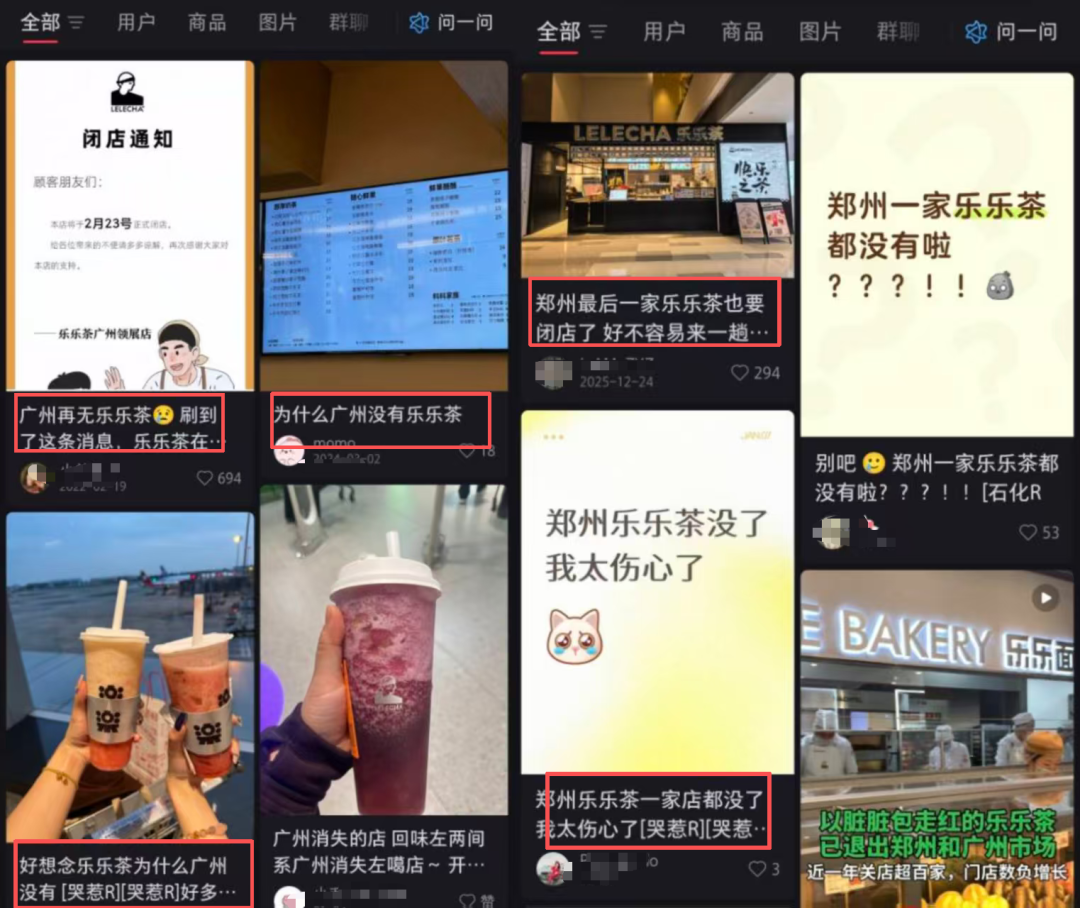
郑州已无店!初代网红奶茶“再退一城”,3年前就已退出广州!曾因“脏脏包”爆红,如今一年关店132家
Mei Ri Jing Ji Xin Wen· 2026-01-13 10:01
Core Viewpoint - Recent reports indicate that all Lele Tea stores in Zhengzhou have closed, with similar claims from Guangzhou, raising significant public attention [1][3]. Group 1: Store Closures and Current Status - Lele Tea's official customer service confirmed that there are currently no stores in Zhengzhou [3]. - In 2022, all Lele Tea stores in Guangzhou were closed, which is notable as Guangzhou has the highest number of milk tea stores in China, with nearly 14,000 [3]. - Over the past year, Lele Tea has closed 132 stores, leaving a total of 399 operational stores across 27 provinces and 79 cities [5]. Group 2: Historical Context and Growth - Lele Tea opened its first store in Shanghai in February 2016, initially focusing on "tea drinks + soft packages" [5]. - The brand gained popularity in 2017 with the "dirty bag" pastry, surpassing competitors like Lady M in Shanghai [5]. - In 2019, Lele Tea completed a Pre-A round financing of nearly 200 million yuan, leading to rapid expansion across major cities [8]. Group 3: Market Position and Competition - Lele Tea's market valuation was approximately 1.203 billion yuan after a 5.25 billion yuan acquisition of a 43.64% stake by Nayuki Tea [8]. - The competitive landscape has intensified, with new milk tea brands emerging, leading to a contraction in the market for initial popular brands like Lele Tea [12]. - As of January 12, 2026, the total number of milk tea brands exceeded 4,000, with nearly 400,000 stores, but the net growth has been negative, with a decrease of 35,000 stores in the past year [12].

浙江奶茶巨头为何要花4.55亿元在杭州拿地?
3 6 Ke· 2026-01-13 02:57
Core Insights - The tea beverage industry is witnessing a shift from front-end competition focused on store density and product iteration to back-end competition emphasizing organizational capability, resource integration, and capital strength [2][7]. Group 1: Land Acquisition and Strategic Moves - Gu Ming Technology (Zhejiang) Co., Ltd. acquired a commercial financial land parcel in Hangzhou for 455 million yuan, marking a significant investment in real estate amidst a competitive landscape [2][3]. - The land is suitable for developing a mixed-use commercial and business building, with a total area of 12,445 square meters and a maximum building height of 190 meters [3][5]. - Other leading tea brands, such as Yi He Tang and Nayuki, are also investing in real estate, indicating a trend among top brands to establish headquarters and enhance operational capabilities [6][7]. Group 2: Market Position and Financial Performance - Gu Ming's revenue for the first half of 2025 reached approximately 5.66 billion yuan, reflecting a year-on-year increase of 41.2% [8]. - The company has a significant presence in lower-tier cities, with 81% of its stores located in second-tier and below cities, showcasing its strategy of targeting less saturated markets [9][10]. - The company’s supply chain management and franchisee support systems are highlighted as key competitive advantages, enabling efficient operations and lower costs [10]. Group 3: Long-term Strategy and Confidence - The trend of acquiring land during a downturn in the real estate market reflects the confidence of leading tea brands in their cash flow and long-term value [10]. - The mixed strategy of maintaining light operations while investing in heavy assets is seen as a new anti-cyclical approach, allowing companies to hedge against inflation and secure long-term operational costs [10].
4.55亿!茶饮品牌古茗在杭州拿地
Xin Lang Cai Jing· 2026-01-13 02:35
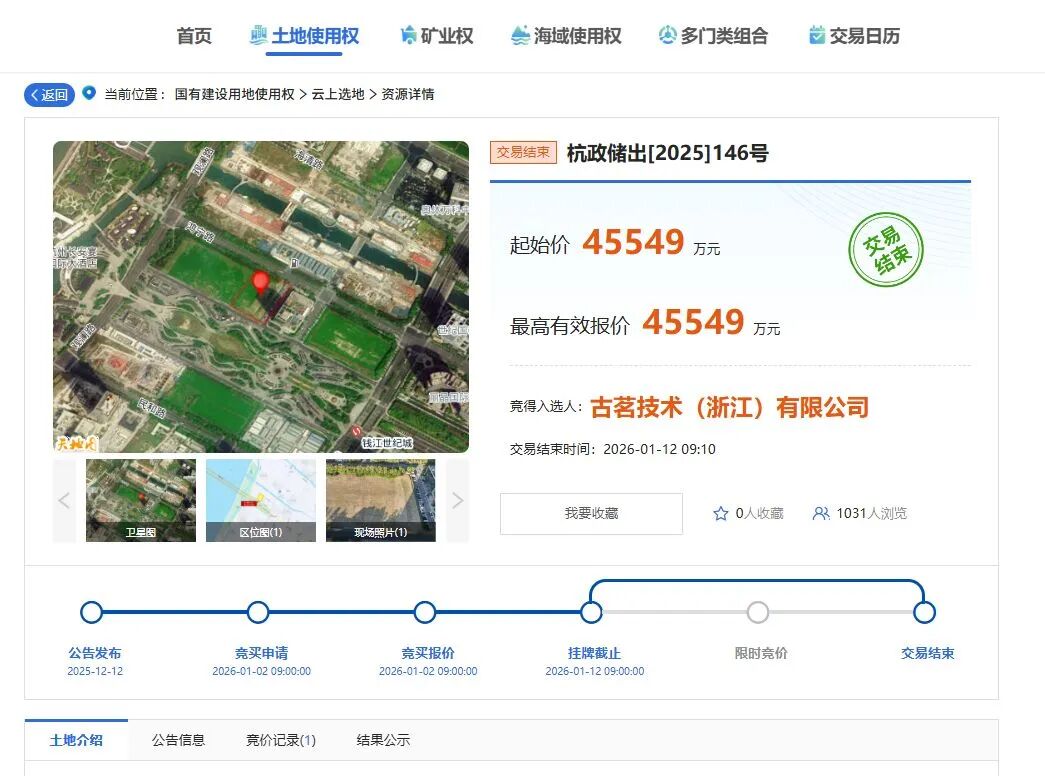
1月12日上午,位于杭州钱江世纪城核心区一宗商业用地挂牌出让。古茗技术(浙江)有限公司以4.55亿元总价竞得该地块,成交楼面价6100元/㎡。 浙江省自然资源网上交易中心官网显示,该地块位于萧山区世纪城核心单元,东至广孚中心,南至秋韵街,西至规划经二路,北至鸿宁路。土地用途为商务 金融用地,用地面积约1.24万平方米,容积率不大于6.0且不低于1.5,建筑高度不大于190米、不小于15米。 根据《建设用地规划条件》和《地块出让合同》,该地块整体自持比例不低于80%,自持年限为40年,自持期间不得分割转让、不得分割登记。该地块被明 确定位为总部经济类用地,竞得者须与杭州市萧山钱江世纪城管理委员会签订《杭州市萧山钱江世纪城核心单元XS010203-04地块投资开发协议》。 《投资开发协议》约定,竞得者及其在杭下属控股企业需达到明确的经营指标,包括年度营业收入不低于10亿元;自土地合同签订之日起至2027年12月31 日,须被认定为杭州市总部企业;2026年至2030年,在钱江世纪城范围内每年合计实现营收分别不低于17亿元、18亿元、20亿元、22亿元及23亿元,累计达 百亿元。 在杭州拿地之前,2022年5月,古 ...
趴地菠菜走红,豫味潜力股还有很多
He Nan Ri Bao· 2026-01-12 23:22
Group 1 - The core viewpoint of the articles highlights the rising popularity of Henan's agricultural products, particularly the "Padi Spinach," which has gained recognition for its unique taste and quality, reflecting a broader appreciation for Henan's agricultural offerings [1][2] - Henan is not only a major agricultural hub, referred to as the "Central Plains Granary," but also a significant player in the food industry, producing substantial portions of various food products, including half of the country's ham sausages and a third of instant noodles [2] - The success of products like Padi Spinach is attributed to a long-standing commitment to quality in agriculture, showcasing how local products can achieve national and international acclaim [2] Group 2 - The article mentions several other notable agricultural products from Henan, such as the beautiful yellow heart cabbage, three-color cabbage, and the "king of mushrooms," which are gaining traction in the market and expanding beyond local consumption [1] - The food industry in Henan has developed into a trillion-yuan level industry cluster, with well-known brands like Weidong Spicy Strips and Mixue Ice City emerging from the region [2] - The narrative emphasizes the transformation of local agricultural products into sought-after items across the country and on the global stage, indicating a shift from being merely a supplier to becoming a recognized culinary destination [1][2]
浙江奶茶巨头,花4.55亿元在杭州拿地,地块面积超1.2万平方米
Mei Ri Jing Ji Xin Wen· 2026-01-12 14:53
Core Insights - The tea beverage industry is witnessing a shift in competitive dynamics, moving from front-end competition focused on store density and product iteration to back-end competition emphasizing organizational capability, resource integration, and capital strength [2][8] Group 1: Company Developments - Gu Ming (古茗) has acquired a commercial and financial land parcel in Hangzhou for 455 million yuan, indicating a strategic move towards asset-heavy investments [2][3] - The land is suitable for developing a mixed-use commercial and business building, with a minimum plot size of 800 square meters and a self-holding ratio of at least 80% for 40 years [5] - Gu Ming's revenue for the first half of 2025 reached approximately 5.66 billion yuan, reflecting a year-on-year increase of 41.2% [8][10] Group 2: Industry Trends - Major tea brands, including Gu Ming, are increasingly investing in real estate, which signifies a transition to a platform and ecosystem-based business model [8] - The competitive landscape is evolving as companies focus on building headquarters that enhance supply chain management, digital operations, and product development [8][10] - The trend of "building headquarters" is not limited to Gu Ming; other leading brands like Nayuki and Mixue are also engaging in similar asset acquisitions to strengthen their market positions [6][7] Group 3: Market Positioning - Gu Ming's store distribution is heavily concentrated in second-tier and lower cities, with 81% of its outlets located in these areas, showcasing its strategy of targeting less saturated markets [9][10] - The company has a robust supply chain management system, providing efficient cold chain logistics to 97% of its stores, which contributes to lower operational costs [10] - Analysts predict that Gu Ming could potentially expand its store count to over 40,000 nationwide, indicating significant growth potential in the market [11]

消费者服务行业周报(20260105-20260109):交运股份拟实施资产置换,关注体育产业发展-20260112
Huachuang Securities· 2026-01-12 09:08
Investment Rating - The report maintains a "Recommendation" rating for the consumer services industry, indicating an expected increase in the industry index exceeding the benchmark index by more than 5% in the next 3-6 months [40][42]. Core Insights - The report highlights that Jiangyun Co. plans to swap its assets related to passenger car sales and automotive services with the cultural and sports assets held by its controlling shareholder, Jiushi Group. This move is expected to promote the capitalization process of China's sports industry, presenting potential investment opportunities [5]. - The State Council's antitrust office is investigating the competitive landscape of the food delivery platform service industry, which may shift the focus from price wars to compliance battles [5]. - The report identifies several investment targets, including hotels with balanced supply and demand, human resources services with clear industry trends, and the sports sector with significant growth potential [5]. Industry Basic Data - The consumer services industry comprises 55 listed companies with a total market capitalization of 498.804 billion yuan and a circulating market capitalization of 457.081 billion yuan [2]. Market Performance - The consumer services sector experienced a weekly increase of 4.71%, outperforming the overall A-share market, which rose by 5.08%, and the CSI 300 index, which increased by 2.79% [8][27]. - Notable performers in the sector included Gu Ming, which rose by 8.72%, and Jun Ting Hotel, which increased by 12.13% [5][21]. Important Announcements - Key announcements from companies in the sector include: 1. Excellence Education Group purchased 51,000 shares in the open market [32]. 2. New Oriental will hold a board meeting on January 27 to approve its unaudited performance for the six months ending November 30, 2025 [32]. 3. JD Group plans to repurchase approximately 180 million Class A ordinary shares for about $3 billion [32]

蜜雪集团20260109
2026-01-12 01:41
Summary of the Conference Call for Mixue Group Industry Overview - **Industry**: Tea Beverage Market - **Market Position**: Mixue Group has captured approximately 50% of the domestic tea beverage market, establishing an oligopoly structure and actively expanding into overseas markets, including factory establishment in Brazil and opening its first store in the United States [2][3]. Core Business Model and Competitive Advantages - **Business Model**: Mixue Group operates on a high-quality, low-price model, having introduced affordable yet high-quality products since 2000, which significantly boosted brand recognition [3]. - **Supply Chain Management**: The company has achieved significant competitive advantages through integrated supply chain management, optimizing efficiency from upstream procurement to downstream store management [6]. - **Cost Management**: By self-producing 70% of core raw materials and collaborating with planting bases, Mixue reduces raw material cost volatility and enhances operational efficiency [2][12]. Financial Performance and Projections - **Gross Margin**: The gross margin has rebounded to over 30%, with expectations for stability in the future due to improved capacity utilization and scale expansion [10][11]. - **Store Expansion Goals**: The company aims to reach 65,000 to 75,000 stores domestically and 15,000 or more internationally, with a long-term target of around 100,000 stores, corresponding to a market cap ceiling of 200 billion RMB [4][5][21]. Brand Development and Consumer Engagement - **IP Branding**: The creation of the "Snow King" IP and its promotion through social media has significantly enhanced consumer recognition and loyalty, with approximately 300 million members by 2024 [2][7][16]. - **Market Trends**: The tea beverage industry has maintained over 15% growth, but the oversaturation of stores has led to challenges in achieving profitability for some outlets [17][18]. Challenges and Strategic Responses - **Market Challenges**: In North America, challenges include the immature small store model and changing consumer habits regarding tea beverages. The company is adapting by developing suitable small store models and leveraging its supply chain capabilities [9]. - **Raw Material Price Fluctuations**: Mixue manages raw material price volatility through phased absorption strategies, maintaining stable gross margins despite market fluctuations [10][11]. Regional Market Insights - **Southeast Asia**: Mixue has established a strong presence in Southeast Asia, with plans to optimize pricing strategies and build a raw material production facility in Indonesia to enhance competitiveness [22]. - **North America**: The company has opened its first store in the U.S. and plans to expand based on consumer data collection, with a potential for 5,000 stores in the Americas [24]. Future Outlook - **Growth Potential**: The affordable tea beverage segment is expected to continue growing, particularly in lower-tier cities where operational costs are lower, providing a strong expansion opportunity for Mixue [19][20]. - **Long-term Goals**: The company aims for a total of around 100,000 stores, with a corresponding market cap potential of 200 billion RMB, indicating strong growth prospects if overseas expansion is successful [26].
外资撤离潮,中国真要变天?别急,经济刚吃饱饭,咱还稳得住!
Sou Hu Cai Jing· 2026-01-11 17:38
Core Viewpoint - The recent withdrawal of foreign capital from China is not solely a sign of a changing economic landscape but rather a combination of global strategic adjustments and local competition dynamics, indicating that the market is not collapsing but rather undergoing a redistribution of opportunities [1][5][10] Group 1: Foreign Capital Withdrawal Reasons - A portion of foreign companies is struggling to adapt to the evolving preferences of Chinese consumers, leading to decreased competitiveness against local brands [3][5] - Global strategic realignments by multinational corporations, such as layoffs at Microsoft and Amazon, are not specifically targeting China but are part of a broader trend of economic contraction [5][10] - The exit of some foreign banks, like Citibank, reflects limited market share and profitability issues rather than a defeat in the Chinese market [5][6] Group 2: Impact of Foreign Capital Exit - The withdrawal of foreign capital may create short-term challenges, particularly in retail, dining, and certain manufacturing sectors, resulting in reduced orders and job adjustments [8][10] - Local companies are poised to fill the gaps left by foreign firms, demonstrating the resilience and adaptability of the domestic market [8][12] Group 3: Long-term Implications and Strategies - The departure of foreign capital highlights existing vulnerabilities in technology and core components, emphasizing the need for accelerated domestic innovation [12][18] - Maintaining stability in employment, supply chains, and market expectations is crucial, with a focus on supporting local enterprises through targeted policies rather than mere subsidies [14][16] - The importance of strategic self-reliance in key industries such as semiconductors, renewable energy, and artificial intelligence is underscored, necessitating a unified effort from both government and businesses [18]