康方生物

Search documents
创新药BD热潮之后的一些思考
雪球· 2025-06-14 05:01
Group 1 - The core viewpoint of the article highlights the dual effects of the business development (BD) wave in China's innovative pharmaceutical industry, questioning whether BD is a lifeline or a chronic poison for companies [2][3] - The surge in BD transactions is driven by multiple factors, including the patent cliff crisis faced by multinational pharmaceutical companies and the accumulation of potential first-in-class (FIC) and best-in-class (BIC) pipelines by Chinese firms [2] - The total amount of authorized transactions in China's innovative drug sector reached $57.1 billion in 2024, with over $50 billion in transactions occurring from early 2025 to the present [2] Group 2 - The benefits of BD are evident, including rapid cash flow acquisition, leveraging multinational resources for global development, and enhancing international recognition of Chinese innovative drugs [3] - However, there are significant concerns, such as a high return rate of 40% in BD transactions, with 25 out of 62 transactions in 2020 being terminated [3] - Companies that rely excessively on BD, like Kangfang Biotech, may face severe financial consequences if BD revenues decline, as seen with a 95% drop in 2024 [3] Group 3 - Successful companies typically possess differentiated innovation capabilities, such as Kangfang Biotech's PD-1/CTLA-4 bispecific antibody [4] - Internationalization capabilities are crucial, exemplified by BeiGene's ability to enter the U.S. market while maintaining its own R&D pace [5] - A reasonable pipeline structure is also important, as demonstrated by Ascentage Pharma's high revenue-sharing ratio of 15% for Olverembatinib, potentially generating $300 million in annual revenue [6] Group 4 - Companies that are merely "bare swimming" often exhibit product homogeneity and reliance on single BD transactions, leading to significant market value loss [6] - The CXO companies, particularly those in contract manufacturing organization (CMO) roles, are clear beneficiaries of the BD trend, as they provide essential production capabilities for innovative drug projects [7] - WuXi Biologics' "CRDMO+" model allows deep involvement in the entire lifecycle of innovative drugs, ensuring continuous orders and revenue regardless of BD transaction outcomes [8] Group 5 - After the BD wave subsides, only companies that can consistently produce high-quality innovative drugs and effectively commercialize them will emerge as true winners [9] - Companies must possess strong R&D capabilities and clear commercialization pathways to avoid being left vulnerable when BD support diminishes [9] - BD should be viewed as a means rather than an end, with the marathon of innovative drug development just beginning [9]



创新药BD热潮之后的一些思考
雪球· 2025-06-14 05:00
Group 1 - The core viewpoint of the article highlights the dual effects of the business development (BD) wave in China's innovative pharmaceutical industry, questioning whether BD is a lifeline or a chronic poison for companies [2][3] - The surge in BD transactions is driven by multiple factors, including the patent cliff crisis faced by multinational pharmaceutical companies and the accumulation of potential first-in-class (FIC) and best-in-class (BIC) pipelines by Chinese firms [2] - The total amount of BD transactions in China's innovative drug sector reached $57.1 billion in 2024, with over $50 billion in transactions occurring from early 2025 to the present [2] Group 2 - The benefits of BD are evident, including rapid cash flow acquisition, leveraging multinational resources for global development, and enhancing international recognition of Chinese innovative drugs [3] - However, there are significant concerns, such as a high return rate of 40% in BD transactions, with 25 out of 62 transactions in 2020 being terminated [3] - Companies that rely heavily on BD, like Kangfang Biotech, may face severe financial challenges if BD revenues decline, as seen with a 95% drop in 2024 [3] Group 3 - Successful companies typically possess differentiated innovation capabilities, such as Kangfang Biotech's PD-1/CTLA-4 bispecific antibody [4] - Internationalization capabilities are crucial, exemplified by BeiGene's successful entry into the U.S. market while maintaining its R&D pace [5] - A reasonable pipeline structure is also important, as demonstrated by Ascentage Pharma's high revenue-sharing ratio of 15% for Olverembatinib, potentially generating $300 million in future revenue [6] Group 4 - Companies that are merely "bare swimming" exhibit characteristics such as product homogeneity and reliance on single BD transactions, which can lead to significant market value loss [6] - The CXO companies, particularly those in contract manufacturing organizations (CMO), are clear beneficiaries of the BD trend, as they provide essential production capabilities for innovative drug projects [7] - WuXi Biologics' "CRDMO+" model allows deep involvement in the entire lifecycle of innovative drugs, ensuring continuous orders and revenue regardless of the success of BD transactions [8] Group 5 - After the BD wave subsides, only companies that can consistently produce high-quality innovative drugs and effectively commercialize them will emerge as true winners [9] - Companies must possess strong R&D capabilities and clear commercialization paths, while those relying solely on BD for funding may struggle when the tide recedes [9] - BD should be viewed as a means rather than an end, with the marathon of innovative drug development just beginning [9]

药捷安康开启申购,将在港交所上市,募资总额约2亿港元
Sou Hu Cai Jing· 2025-06-13 14:44
Core Viewpoint - The company,药捷安康, is set to launch an IPO with a global offering of 15.281 million H-shares at a price of HKD 13.15 per share, aiming to raise approximately HKD 201 million, with listing expected on June 23, 2025 [1][3]. Company Overview -药捷安康, established in April 2014, focuses on discovering and developing innovative small molecule therapies for oncology, inflammation, and cardiovascular diseases [5]. - The company has developed a pipeline that includes one core product and five clinical-stage candidates, along with one preclinical candidate [5]. Financial Highlights - The total amount raised from cornerstone investors is approximately HKD 149 million, with notable investors including Jiangbei Pharmaceutical and Kangfang Biotech [3]. - For the years 2023 and 2024, the company reported net losses of approximately RMB 343.39 million and RMB 274.61 million, respectively [7]. Research and Development - The core product, Tinengotinib, is a multi-target kinase inhibitor currently undergoing two pivotal clinical trials for cholangiocarcinoma [5][6]. - The R&D costs for 2023 and 2024 are estimated at RMB 344.75 million and RMB 244.00 million, representing 89.8% and 83.6% of total operating expenses, respectively [6].

南向资金追踪|本周净流入逾154亿港元 加仓美团及比亚迪大举流出腾讯和阿里
Xin Lang Cai Jing· 2025-06-13 10:58
Core Insights - Southbound funds recorded a cumulative net inflow of approximately HKD 154.57 billion this week, an increase of about HKD 5.3 billion compared to the previous week [2] - The total trading volume of southbound funds reached HKD 640.38 billion, reflecting a significant increase of approximately 56% week-on-week, while the Hang Seng Index experienced fluctuations [2] Fund Flow Summary - Major net purchases included Meituan-W (HKD 56.75 billion), BYD Company (HKD 29.79 billion), and China Construction Bank (HKD 22.05 billion) [3][5] - Significant net sales were observed in Tencent Holdings (HKD 110.29 billion), Alibaba-W (HKD 70.23 billion), and Xiaomi Group-W (HKD 64.36 billion) [4][5] Stock Performance - Meituan-W saw a cumulative decline of 2.47% this week, with short-term funds continuing to flow in, adding 28.1 million shares over the past five days [5] - BYD Company experienced a cumulative drop of 1.35%, with a slower inflow of short-term funds, adding 15.8 million shares [5] - China Construction Bank increased by 4.81%, with continued inflow of short-term funds, adding 290 million shares [5] - Xinda Biopharmaceuticals rose by 10.32%, with accelerated inflow of short-term funds, adding 28.83 million shares [5] - Tencent Holdings declined by 0.97%, with continued outflow of short-term funds, reducing holdings by 3.69 million shares [5] - Alibaba-W fell by 2.31%, with ongoing outflow of short-term funds, reducing holdings by 10.74 million shares [5] Daily Trading Activity - On June 13, southbound funds recorded a net inflow of approximately HKD 1.89 billion, with the Shanghai-Hong Kong Stock Connect showing a net outflow of HKD 27.89 billion and the Shenzhen-Hong Kong Stock Connect showing a net inflow of HKD 29.79 billion [6] - The trading volume of southbound funds on the same day was about HKD 158.25 billion, accounting for 53.77% of the total trading volume of the Hang Seng Index, indicating a strong market presence [6]





政策推动港深“双重上市”:哪些港股大湾区企业将会率先“回A”?
Jing Ji Guan Cha Bao· 2025-06-13 09:46
Core Viewpoint - The Chinese government has introduced policies to facilitate the listing of Hong Kong-listed companies from the Guangdong-Hong Kong-Macao Greater Bay Area on the Shenzhen Stock Exchange, aiming to enhance the competitiveness of the Shenzhen market and attract international capital [1][2]. Group 1: Policy Overview - The State Council's recent opinion allows eligible Hong Kong-listed companies to issue depositary receipts on the Shenzhen Stock Exchange [1]. - The policy aims to strengthen the core position of the Shenzhen Stock Exchange in the capital market and promote cross-border financial flows [1][2]. Group 2: Potential Companies for "Return to A-Shares" - Approximately 200 companies from Guangdong are currently listed in Hong Kong but not in A-shares, with many using the red-chip model [2]. - Notable companies that could consider returning to A-shares include Tencent Holdings, Tencent Music, and Xiaopeng Motors, among others [2][3]. - Companies like Sunshine Insurance and Yubis have registered in mainland China and are also potential candidates for A-share listings [3][4]. Group 3: Types of Companies Likely to "Return to A-Shares" - High-tech companies with undervalued stock in Hong Kong may seek to return to A-shares for better valuations and funding opportunities [4][5]. - Mature tech platform companies that are still in a "burning cash" phase may also consider returning to A-shares for additional financial support [5]. - Core technology companies in policy-sensitive industries may benefit from the dual support of national policies and market funding by returning to A-shares [5]. Group 4: Challenges in Policy Implementation - The transition from Hong Kong to A-shares may face challenges due to differences in listing rules, financial auditing standards, and information disclosure requirements [7][8]. - Companies using red-chip or VIE structures may encounter high costs and lengthy processes to adjust their structures for A-share listings [7][8]. - The need for high-quality Chinese information disclosure and technical verification may pose additional hurdles for tech companies [8]. Group 5: Recommendations for the ChiNext Board - Suggestions include simplifying the review process for returning companies and establishing a green channel for eligible firms to expedite the listing process [9][10]. - The introduction of a dedicated channel for tech companies on the ChiNext Board could focus on core technology and business models rather than short-term profitability [10]. - Encouraging the use of depositary receipts for tech companies could lower the costs associated with structural adjustments [10].
康方生物:中国创新药的“Deepseek时刻”或将到来
news flash· 2025-06-13 09:03
Core Insights - Kangfang Biopharma's innovative bispecific antibody drug AK112 has gained global attention after outperforming the leading drug K drug in head-to-head trials, with plans to submit a market application in the U.S. [1] - The company has secured an overseas licensing upfront payment of approximately $500 million [1] - In Q1 of this year, Chinese pharmaceutical companies completed 33 overseas licensing deals totaling $36.6 billion, marking a 258% year-on-year increase [1] - Leading companies such as Kangfang Biopharma, 3SBio, and CSPC Pharmaceutical Group are making significant progress in the international market [1] - The "Deepseek moment" for Chinese innovative drugs is anticipated to arrive soon [1]
君实生物再募10亿加码最热创新药
Xin Lang Cai Jing· 2025-06-13 08:44
Core Viewpoint - Junshi Bioscience plans to raise approximately HKD 1.039 billion through the placement of 41 million new H-shares at a price of HKD 25.35 per share, which represents an 11.52% discount to the closing price on June 12 [1] Group 1: Fundraising and Use of Proceeds - The company intends to allocate 70% of the raised funds for innovative drug development, focusing on dual-specific antibodies such as JS207 (PD-1/VEGF), JS212 (EGFR/HER3), and JS213 (PD-1/IL-2) [1] - The remaining funds will be used to supplement working capital [1] - Junshi Bioscience previously announced an investment of CNY 767 million in the PD-1/VEGF dual antibody (JS207) [1] Group 2: Clinical Development and Market Position - JS207 is currently in Phase II clinical trials, with plans to conduct key clinical trials for lung cancer, breast cancer, liver cancer, colorectal cancer, and other advanced solid tumors [1] - Junshi Bioscience, established in December 2012, was the first domestic company to receive approval for a PD-1 monoclonal antibody, but its product, Toripalimab, has faced stiff competition from later entrants [4] - Toripalimab remains the company's leading product, generating CNY 1.501 billion in domestic sales in 2024, accounting for 77% of total revenue of CNY 1.948 billion [4] Group 3: Financial Performance and Market Trends - Despite not yet achieving profitability, the company's losses have significantly narrowed in 2024, with Q1 revenue and net loss reported at CNY 500 million and CNY 235 million, respectively [4] - The PD-1/VEGF dual antibody field has gained traction, with significant competitive developments, including a head-to-head trial where a competitor's product outperformed the leading PD-1 drug [5] - The innovative drug sector has seen a strong performance in the A-share market, with a 12.72% increase in May and a total increase of over 22% from April to June [6]

宝城期货资讯早班车-20250613
Bao Cheng Qi Huo· 2025-06-13 05:59
投资咨询业务资格:证监许可【2011】1778 号 资讯早班车 资讯早班车-2025-06-13 一、 宏观数据速览 | 发布日期 | 指标日期 | 指标名称 | 单位 | 当期值 | 上期值 | 去年同期值 | | --- | --- | --- | --- | --- | --- | --- | | 20250416 | 2025/03 | GDP:不变价:当季同比 | % | 5.40 | 5.40 | 5.30 | | 20250531 | 2025/05 | 制造业 PMI | % | 49.50 | 49.00 | 49.50 | | 20250531 | 2025/05 | 非制造业 PMI:商务活 | % | 50.30 | 50.40 | 51.10 | | | | 动 | | | | | | 20250603 | 2025/05 | 财新 PMI:制造业 | % | 48.30 | 50.40 | 51.70 | | 20250605 | 2025/05 | 财新 PMI:服务业经营 活动指数 | % | 51.10 | 50.70 | 54.00 | | 20250514 | 2025/ ...
港股通创新药ETF(159570)最新规模超56亿元!创新药价值正在重估,后续关注哪些催化?
Sou Hu Cai Jing· 2025-06-13 04:11
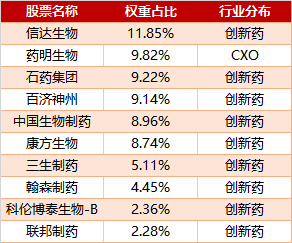
Core Viewpoint - The Hong Kong stock market is witnessing a significant surge in the innovative drug sector, with the Hong Kong Stock Connect Innovative Drug ETF (159570) showing a remarkable increase of 105% over the past year, driven by strong capital inflows and favorable policies [1][2]. Group 1: Market Performance - The Hong Kong Stock Connect Innovative Drug ETF (159570) has seen a net inflow of approximately 1.19 billion yuan in the past eight days, bringing its total fund size to 5.622 billion yuan, outperforming its peers [1]. - The innovative drug sector is experiencing a revaluation of its value due to multiple favorable factors, including international expansion and supportive policies [2]. Group 2: Fundamental Factors - The international competitiveness of Chinese innovative drug companies is improving, as evidenced by their contributions to 73 oral presentations at the 2025 ASCO annual meeting, with 11 selected for "Latest Breakthrough Abstracts" [1]. - In the first quarter of 2025, there were 41 overseas licensing transactions by Chinese innovative drug companies, totaling approximately 36.929 billion USD, nearing the total for the entire year of 2023 within just three months [1]. Group 3: Policy Support - The domestic policy environment is continuously improving, providing dual support for the innovative drug industry by protecting profit margins and enhancing quality assessments rather than focusing solely on low prices [2]. - The efficiency of the drug regulatory authority's review and approval processes has also seen notable improvements [2]. Group 4: Investment Outlook - The innovative drug sector is expected to maintain long-term investment value, with the Hong Kong market attracting significant attention from investors due to favorable policies and the performance of medical enterprises [2]. - The innovative drug biotech sector is poised for a surge in interest, particularly with upcoming data releases from major conferences [3]. Group 5: ETF Investment Strategy - Given the current enthusiasm for the innovative drug sector, ETFs are recommended as a more stable investment option compared to individual stocks, allowing for effective risk diversification [4]. - The Hong Kong Stock Connect Innovative Drug ETF (159570) offers a comprehensive exposure to the innovative drug industry, with the top ten holdings accounting for nearly 72% of the total weight [4].
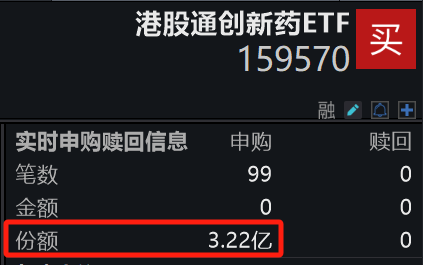
逢跌布局时机已至?港股通创新药ETF(159570)回调超3%交投异常活跃,成交巨幅放量超27亿元,盘中净流入已超5亿元!
Sou Hu Cai Jing· 2025-06-13 04:06
Group 1 - The Hong Kong Stock Connect Innovative Drug Index (987018) has decreased by 2.39% as of June 13, 2025, with mixed performance among constituent stocks [1] - The Hong Kong Stock Connect Innovative Drug ETF (159570) has seen a decline of 2.73%, with the latest price at 1.6 yuan, but has increased by 15.96% over the past week [1] - The ETF has a high trading volume, with a turnover of 47.54% and over 2.7 billion yuan in transactions, indicating active market participation [1] Group 2 - The Hong Kong Stock Connect Innovative Drug ETF has reached a new high in scale at 56.22 billion yuan and a new high in shares at 3.448 billion [2] - The ETF has experienced continuous net inflows over the past eight days, totaling nearly 1.2 billion yuan, with a maximum single-day inflow of 234 million yuan [2] - The latest margin buying amount for the ETF is 401 million yuan, with a margin balance of 166 million yuan [2] Group 3 - Recent catalysts in the BD sector and the robust logic of innovative drugs going global suggest a sustained market trend, with continuous recommendations for innovative drugs and Pharma [5] - The ASCO annual meeting highlighted the competitiveness and activity of Chinese pharmaceutical companies in new drug development, with positive market reactions [5] - There is a strong outlook for domestic innovative drugs, particularly for companies with advantages in clinical progress and international expansion [5] Group 4 - The Hong Kong Stock Connect Innovative Drug ETF (159570) has a significant focus on the innovative drug industry, with the top ten holdings accounting for nearly 72% of the total weight [6] - The ETF has a high concentration in innovative drugs, with 85% of its weight in this category, making it one of the highest in the market [6] - The underlying assets are Hong Kong stocks, allowing for T+0 trading, which enhances liquidity [6]