中信银行

Search documents
金融支持西部陆海新通道建设工作会议在渝召开 袁家军出席并讲话 潘功胜讲话 胡衡华主持
Xin Lang Cai Jing· 2026-02-05 12:59
袁家军出席并讲话 潘功胜讲话 胡衡华主持 金融支持西部陆海新通道建设工作会议在渝召开 参加会议的还有:国家部委有关司局负责人,西部陆海新通道沿线"13+2"省区市有关部门负责人和中国 人民银行有关分行负责人,重庆市有关领导,有关区县、市级有关部门和中央在渝单位负责人,部分金 融机构和有关企业代表等。 来源:重庆日报、重庆新闻联播 重庆日报记者:卢志民、苏思 陆海新通道金融服务中心揭牌 2月5日上午,金融支持西部陆海新通道建设工作会议在渝召开。市委书记袁家军出席会议并讲话,中国 人民银行党委书记、行长潘功胜讲话,市委副书记、市长胡衡华主持。 会议通报了金融支持西部陆海新通道建设情况,中国建设银行、中国银行、交通银行、中信银行负责人 介绍了西部陆海新通道金融业务发展及贯彻落实《关于金融支持加快西部陆海新通道建设的意见》情 况;广西壮族自治区、海南省、云南省、新疆维吾尔自治区负责人代表西部陆海新通道沿线省区市发 言;国家发展改革委、交通运输部、金融监管总局、中国证监会有关负责人作了发言。 袁家军在讲话中强调,党的二十大以来,重庆深入学习贯彻习近平总书记关于西部陆海新通道建设的重 要指示要求,全面贯彻党中央重大决策部 ...


美锦能源:为子公司和参股公司提供合计9000万元担保
Jin Rong Jie· 2026-02-05 12:54
Core Viewpoint - The company has provided guarantees for its subsidiaries, indicating a strategic move to support their financing needs and maintain operational stability [1] Group 1: Guarantees and Financial Support - The company announced that it has provided a joint liability guarantee for a credit line of 50 million yuan requested by its subsidiary, Huasheng Chemical [1] - Huasheng Chemical has also provided a guarantee of 40 million yuan for a credit line of 100 million yuan requested by its associate company, Qingxu Hongbo, representing a 40% ownership stake [1] - After these guarantees, the company and its subsidiaries have a remaining guarantee limit of 3.95 billion yuan, with total guarantees to subsidiaries and associates amounting to 7.272 billion yuan, which constitutes 50.32% of the latest audited net assets attributable to the parent company [1]

银行股,资金出手了
3 6 Ke· 2026-02-05 11:21
Core Viewpoint - A significant market shift occurred as global funds fled from technology stocks and precious metals, leading to a notable decline in major indices and a surge in bank stocks as a safe haven for investors [1][2][3]. Group 1: Market Reactions - On February 4, U.S. tech stocks experienced a sharp decline, with the Nasdaq dropping over 2% and major companies like Nvidia, Meta, and Tesla falling more than 3%. AMD saw a staggering drop of 17.3%, marking its largest single-day decline in nearly nine years [1][3]. - The panic spread to A-shares and Hong Kong stocks, with sectors like solar energy and precious metals witnessing significant sell-offs. Silver futures plummeted nearly 20% at one point, exacerbating market fears [2][5]. - Despite the overall market turmoil, the banking sector in A-shares rose by 2.1%, with all 42 bank stocks closing in the green, indicating a flight to safety among investors [2][10]. Group 2: Capital Flows - Southbound funds recorded a net purchase of over 22 billion HKD, with major Chinese banks like ICBC, CMB, and CCB becoming core targets for accumulation [3][13]. - A significant shift in capital is underway, with funds moving from tech and precious metals to banks, which are perceived as having a higher safety margin [3][9]. Group 3: Banking Sector Performance - The banking sector is supported by strong earnings growth and historically low valuations, making it an attractive option for risk-averse investors [15][20]. - As of February 4, several banks reported robust earnings, with Qingdao Bank, Hangzhou Bank, and others showing significant profit increases, further solidifying the sector's appeal [16][18]. - The banking sector's average dividend yield ranges from 4.87% to 5.2%, significantly higher than the 10-year government bond yield of around 2%, enhancing its attractiveness in a low-interest-rate environment [21][22]. Group 4: Future Outlook - The recent market volatility raises questions about whether the declines in tech stocks and precious metals will lead to further panic selling. However, the influx of funds into bank stocks suggests a potential shift in market sentiment [23].





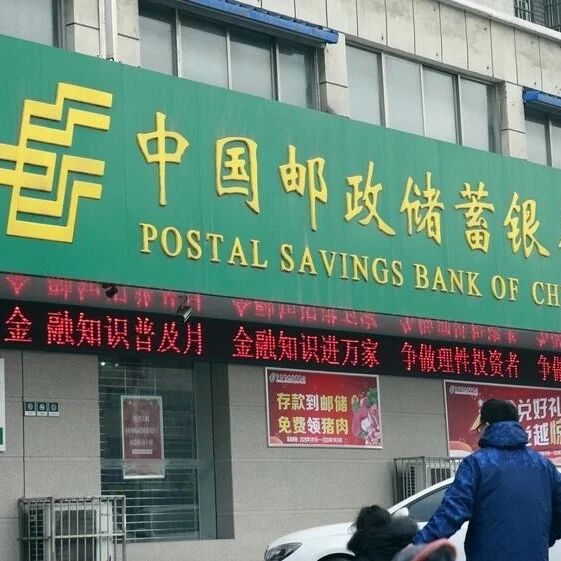
牛市中掉队的邮储银行,或迎来逆袭
虎嗅APP· 2026-02-05 10:17
Core Viewpoint - The article discusses the underperformance of Postal Savings Bank compared to other major banks in a generally bullish market for bank stocks in 2025, highlighting the challenges it faces in terms of valuation and business structure [2][3][4]. Group 1: Performance Comparison - In 2025, Agricultural Bank of China saw a stock price increase of 52.66%, while Postal Savings Bank only increased by 0.67%, slightly outperforming Bank of Communications at 0.37% [2][3]. - As of January 2026, Postal Savings Bank's price-to-book (PB) ratio was 0.6, significantly lower than Agricultural Bank's 0.86 [4]. Group 2: Financial Metrics - For the first three quarters of 2025, Postal Savings Bank reported a revenue growth of 1.82% and a net profit growth of 0.98%, placing it in the middle tier among state-owned banks [5]. - The bank led the six major banks in asset expansion speed during the same period, indicating competitive project acquisition capabilities [9]. Group 3: Risk and Asset Quality - Despite a relatively low non-performing loan (NPL) ratio, Postal Savings Bank has seen a rising trend in NPLs, with the ratio increasing from 0.9% at the beginning of the year to 0.94% by Q3 2025 [14][13]. - The bank's reliance on retail loans, which constitute over 50% of its credit portfolio, has exposed it to risks as retail loan demand declines [12][11]. Group 4: Strategic Changes and Leadership - The recent appointment of Lu Wei as the new president is expected to bring a shift in strategy, focusing on corporate banking to complement the bank's retail strengths [28][19]. - The article suggests that the transition to a more balanced business model will take time and may not yield immediate results [34][33]. Group 5: Wealth Management and Corporate Banking - Postal Savings Bank's wealth management capabilities are limited, with a significant portion of its assets under management (AUM) still in low-risk products, which restricts income potential [21][23]. - The bank's corporate loan growth has been strong, but it still lags behind major competitors in absolute scale and business capability [27][26]. Group 6: Future Outlook - The article posits that while the new leadership may bring hope for improvement, the bank's structural challenges will require gradual adjustments rather than quick fixes [34][30]. - The expectation is for a gradual enhancement in performance, focusing on corporate banking and wealth management, while addressing the risks associated with retail loans [36][34].

银行股,资金出手了!
格隆汇APP· 2026-02-05 10:15
Core Viewpoint - A significant market shift is occurring, characterized by a mass exodus of funds from technology and precious metals sectors, with a notable influx into bank stocks as a safe haven amid rising panic and volatility [2][5][21]. Group 1: Market Dynamics - The U.S. tech stocks experienced a sharp decline, with the Nasdaq dropping over 2%, and major companies like Nvidia, Meta, and Tesla falling more than 3%. AMD saw a staggering drop of 17.3%, marking its largest single-day decline in nearly nine years [2][5]. - Panic spread to A-shares and Hong Kong stocks, with sectors like solar energy and oil equipment witnessing significant sell-offs. Precious metals, which had recently rebounded, also faced a sharp decline, with silver futures plummeting nearly 20% in a single day [3][5]. - The market turmoil was triggered by negative news affecting U.S. tech stocks, leading to a valuation bubble burst. Despite AMD's strong performance, its results fell short of the most optimistic analyst expectations, resulting in a drastic stock price drop [5][6]. Group 2: Bank Sector Resilience - In contrast to the broader market, the banking sector saw a rise, with A-share bank stocks collectively increasing by 2.1%. All 42 bank stocks closed in the green, with Xiamen Bank hitting a rare limit-up and several city commercial banks rising over 3% [3][15]. - Southbound funds significantly targeted bank stocks, with a net purchase exceeding 22 billion HKD, focusing on major banks like ICBC, CMB, and CCB as core investment targets [4][20]. - The banking sector is viewed as a "safe haven" due to its strong earnings growth and historically low valuations, making it an attractive option for risk-averse investors [21][22]. Group 3: Earnings and Valuation - Recent earnings reports from several banks indicate robust growth, with Qingdao Bank, Hangzhou Bank, and Shanghai Pudong Development Bank showing significant increases in net profits. For instance, Qingdao Bank reported a net profit of 51.88 billion CNY, a 21.66% year-on-year increase [23][25]. - The banking sector has undergone a six-month correction, leading to a new valuation bottom. The sector's price-to-earnings ratio stands at a low 6.7 times, and the average dividend yield is between 4.87% and 5.2%, making it appealing in a low-interest-rate environment [27][28]. - Institutional interest in bank stocks is rising, with over 370 institutions conducting research on 11 listed banks, indicating a strategic shift towards these stocks amid market volatility [28][29].




获中信银行20亿元增资,中信金租注册资本升至120亿元
Huan Qiu Lao Hu Cai Jing· 2026-02-05 10:03
Core Viewpoint - CITIC Bank announced a capital increase of 2 billion yuan for CITIC Financial Leasing, raising its registered capital to 12 billion yuan, maintaining 100% ownership [1] Group 1: Company Overview - CITIC Financial Leasing was established in 2015 as a wholly-owned subsidiary of CITIC Bank, focusing on sectors such as aircraft, ships, household photovoltaics, and vehicles [2] - The company currently operates a fleet of 19 aircraft and 5 engines, with 9 aircraft pending delivery, bringing the total fleet size close to 30 [2] Group 2: Financial Performance - In 2024, CITIC Financial Leasing achieved a net operating income of 1.697 billion yuan and a net profit of 936 million yuan [3] - For the first nine months of 2025, the company reported a net operating income of 1.664 billion yuan and a net profit of 1.184 billion yuan [3] - As of September 2025, the total asset size reached 112.928 billion yuan, with total liabilities of 99.671 billion yuan and net assets of 13.258 billion yuan, resulting in an asset-liability ratio of 88.26% [3] Group 3: Industry Context - The capital increase trend in the financial leasing industry is driven by regulatory requirements and the need to address industry competition and business transformation [1] - The financial leasing sector is capital-intensive, and higher registered capital provides stronger risk buffers and meets regulatory capital adequacy and leverage ratio requirements [1]

从40亿到120亿,中信金租上演“资本三级跳” 金融租赁业资本“军备竞赛”硝烟再起
Jing Ji Guan Cha Wang· 2026-02-05 09:24
Core Viewpoint - CITIC Bank has approved a cash capital increase of 2 billion yuan for its wholly-owned subsidiary, CITIC Financial Leasing, raising its registered capital from 10 billion yuan to 12 billion yuan, marking the second significant capital injection within a year, reflecting a strategic reassessment of the financial leasing sector amid regulatory changes and new market opportunities [1][2][4] Group 1: Capital Increase and Strategic Intent - The recent capital increase is part of a clear strategic intent and robust performance support, with CITIC Financial Leasing's registered capital previously raised from 4 billion yuan to 10 billion yuan in a short span [2] - CITIC Financial Leasing focuses on strengthening its core business areas, including aircraft and ship leasing, while also promoting retail models in household photovoltaic and vehicle sectors, achieving significant financial growth [2][5] Group 2: Industry Landscape and Competition - The increase in registered capital to 12 billion yuan positions CITIC Financial Leasing among the top tier in the financial leasing industry, surpassing competitors like CCB Financial Leasing and BOC Financial Leasing [3] - The capital competition among leasing companies is intensifying, driven by regulatory requirements and market opportunities, with many firms increasing their capital to meet new standards [4][6] Group 3: Implications for Competitive Dynamics - The capital boost enhances CITIC Financial Leasing's project bidding, risk pricing, and long-term asset construction capabilities, potentially triggering a new round of competition within the industry [5][6] - As leading institutions upgrade their capital, competition is shifting from mere scale pursuit to a comprehensive contest involving capital efficiency, professional capabilities, and strategic ecosystems [6]
资产证券化年刊(2025年度)
Sou Hu Cai Jing· 2026-02-05 06:32
Core Insights - The asset securitization market in China is experiencing steady growth, with a total issuance of 2,435 products amounting to RMB 23,250.45 billion in 2025, reflecting a 15% increase in the number of issuances and a 14% increase in issuance scale compared to 2024 [4][11] Group 1: Market Overview - In 2025, the credit ABS market saw 238 new products issued, a 24% increase year-on-year, with a total issuance of RMB 2,915 billion, marking an 8% increase in scale [6][11] - The corporate ABS segment led the market with 1,560 new products and an issuance scale of RMB 14,133 billion, showing increases of 18% in quantity and 20% in amount year-on-year [6][11] - The ABN market issued 612 new products, with a 7% increase in quantity and a 9% increase in scale, totaling RMB 5,731 billion [6][11] Group 2: Asset Class Breakdown - The top three asset classes driving the ABS market in 2025 were financing lease receivables (349 products, RMB 3,583.05 billion), bank/internet consumer loans (388 products, RMB 3,138.84 billion), and corporate receivables (337 products, RMB 3,112.43 billion) [8][11] - Consumer loan ABS emerged as a significant growth point, driven by policies supporting consumer finance, leading to the highest issuance quantity among all asset categories [11][12] Group 3: Regulatory Environment - In 2025, various regulatory bodies, including the China Securities Regulatory Commission and the People's Bank of China, issued notifications and guidelines impacting the asset securitization market, indicating a proactive regulatory approach [3][12] Group 4: Key Players and Rankings - In the credit ABS sector, the top issuer was Jianxin Trust with 54 projects totaling RMB 1,043.98 billion, followed by Huaneng Guicheng Trust with 52 projects totaling RMB 324.28 billion [13] - The leading initiator in credit ABS was Ping An Bank, with 23 projects totaling RMB 42.96 billion [14] - KPMG was the top accounting advisor for credit ABS, participating in 105 projects with a total issuance of RMB 1,525.81 billion, accounting for over 52% of the total [15] Group 5: Market Trends and Innovations - The market is transitioning from mere scale expansion to structural optimization and high-quality development, with a focus on innovative financial products that align with national strategies [12][22] - A series of "first-of-its-kind" products emerged in 2025, reflecting the market's adaptability to national strategic directions and the need for financial product innovation [21][22]

港股午评:恒指跌1.27%、科指跌1.16%再创阶段新低,科网股、贵金属概念股下挫,新消费概念、光伏股逆势走高
Jin Rong Jie· 2026-02-05 04:15
Market Overview - AMD's overnight drop of 17% triggered a significant decline in chip stocks, leading to a 1.95% drop in the Chinese concept index, which negatively impacted the Hong Kong stock market [1] - The Hang Seng Index fell by 340.88 points, or 1.27%, to 26,506.44 points, while the Hang Seng Tech Index decreased by 62.30 points, or 1.16%, to 5,304.14 points [1] - Major tech stocks like Tencent and Alibaba saw declines of nearly 3% and 2.5%, respectively, with Tencent's market value dropping below 500 billion [1] Company Performance - Xinda Biopharmaceuticals (01801.HK) projected total product revenue of approximately RMB 11.9 billion for 2025, reflecting a year-on-year growth of about 45% [2] - Lee & Man Paper Manufacturing (02314.HK) expects profits for 2025 to be between HKD 1.88 billion and HKD 2.00 billion, indicating a year-on-year increase of 38% to 47% [2] - ZTO Express (02057.HK) anticipates total revenue of RMB 48.5 billion to RMB 50 billion for 2025, representing a year-on-year growth of approximately 9.5% to 12.9% [2] - China Resources Cement (01313.HK) forecasts a year-on-year profit increase of about 115% to 135% for 2025, driven by reduced costs and impairment losses [2] Corporate Actions - Goldin Properties (00535.HK) reported a January contract sales total of approximately RMB 239 million, a year-on-year decrease of 61.82% [3] - Fosun International (00656.HK) plans to subscribe for additional registered capital of RMB 105 million in Shangmeng Technology, acquiring a 51.0879% stake post-increase [3] - Shanghai Pharmaceuticals (02607.HK) intends to publicly transfer its 30% stake in Bristol-Myers Squibb, with a minimum listing price of approximately RMB 1.023 billion [3] - China Coalbed Methane (08270.HK) completed the sale of 100% equity in Shanxi Qingshui Shuntai Energy Development [4] Investment Trends - The active repurchase of shares continues, with Kingsoft (03888.HK) repurchasing 1.0886 million shares for approximately HKD 29.99 million [9] - Xiaomi Group (01810.HK) repurchased 4.3 million shares for a total of HKD 146 million [10] - Kingdee International (00268.HK) repurchased 1 million shares for approximately HKD 11.1 million [11] Market Outlook - Guoyuan International's report suggests that the Hong Kong stock market may experience short-term volatility due to external factors, but maintains a positive long-term outlook [12] - CITIC Securities highlights the potential for new investment opportunities in emerging markets, despite risks from rising oil prices and long-term bond yields [12] - Galaxy Securities recommends focusing on technology, energy, precious metals, and consumer sectors for potential rebounds [13]



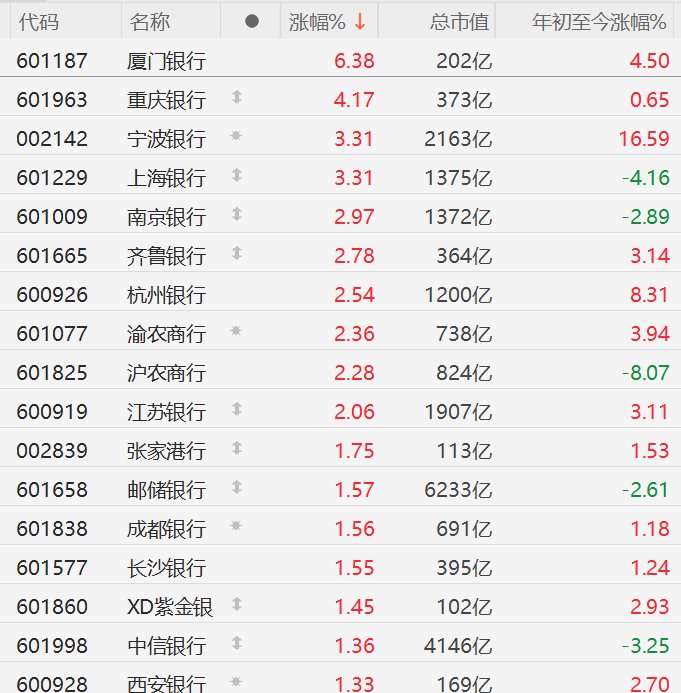
银行股逆势上涨,厦门银行涨超6%,重庆银行涨超4%
Ge Long Hui· 2026-02-05 03:51
Core Viewpoint - The A-share market for banks showed a contrary upward trend, with several banks experiencing significant gains on February 5, 2023, despite broader market conditions [1]. Group 1: Stock Performance - Xiamen Bank saw an increase of 6.38%, with a total market capitalization of 20.2 billion [2] - Chongqing Bank rose by 4.17%, with a market cap of 37.3 billion [2] - Ningbo Bank increased by 3.31%, with a market value of 216.3 billion [2] - Shanghai Bank also rose by 3.31%, with a market cap of 137.5 billion [2] - Nanjing Bank increased by 2.97%, with a market capitalization of 137.2 billion [2] - Qilu Bank rose by 2.78%, with a market cap of 36.4 billion [2] - Hangzhou Bank increased by 2.54%, with a market value of 120 billion [2] - Yuhuang Agricultural Commercial Bank rose by 2.36%, with a market cap of 73.8 billion [2] - Shanghai Rural Commercial Bank increased by 2.28%, with a market value of 82.4 billion [2] - Jiangsu Bank rose by 2.06%, with a market cap of 190.7 billion [2] Group 2: Year-to-Date Performance - Ningbo Bank has the highest year-to-date increase at 16.59% [2] - Xiamen Bank has a year-to-date increase of 4.50% [2] - Qilu Bank shows a year-to-date increase of 3.14% [2] - Hangzhou Bank has a year-to-date increase of 8.31% [2] - Jiangsu Bank shows a year-to-date increase of 3.11% [2]