
耐克

Search documents
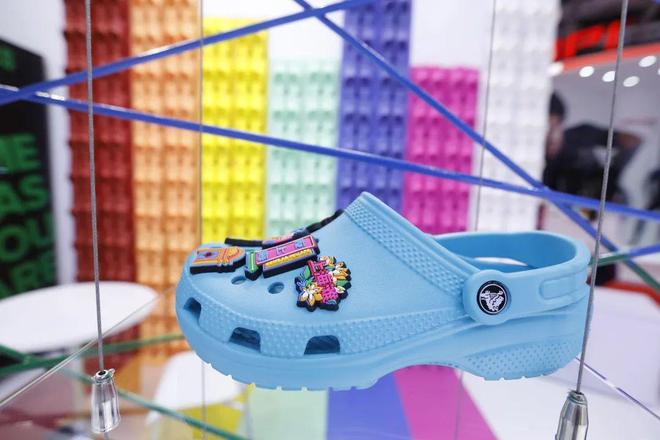
洞洞鞋Crocs股价暴跌三成
Di Yi Cai Jing Zi Xun· 2025-08-11 06:54
Core Viewpoint - The impact of U.S. tariffs on domestic retail companies is becoming increasingly evident, with companies like Crocs and Deckers reporting negative effects on profitability and stock prices due to rising costs and cautious consumer spending [2][4]. Group 1: Company Performance - Crocs has projected a year-over-year revenue decline for Q3, contrary to analyst expectations of slight growth, attributing this to cautious consumer spending on non-essential items and concerns over price increases [2]. - Deckers, which owns brands like UGG and Hoka, reported a slowdown in U.S. sales growth from approximately 11% to 2.8%, and warned of profit margin pressures due to tariffs, despite plans to absorb some of the cost increases [4]. - Puma has downgraded its sales forecast for FY2025, expecting a "low double-digit percentage" decline in sales and a shift from profit to operating loss due to new tariffs and other adverse factors [5]. - Adidas, while reporting growth in the first half of the year, anticipates an additional cost of up to €200 million (approximately 15.7 billion RMB) from tariffs in the remaining part of the year [5][6]. Group 2: Market Reactions - Following the announcement of its revenue forecast, Crocs' stock plummeted nearly 30%, marking its largest single-day drop in nearly 14 years [2]. - Deckers' stock also fell nearly 20% after revealing the impact of tariffs on its profit margins [4]. - Puma's stock experienced an 18.4% drop on July 25, marking its largest decline in recent years [4]. Group 3: Pricing Strategies - Companies like Nike and Adidas are considering raising prices in the U.S. market to offset the increased costs from tariffs, with Nike already announcing price hikes [6]. - Fast Retailing, the parent company of Uniqlo, is also planning flexible price adjustments in response to tariff impacts, indicating a trend among companies to pass some costs onto consumers [6].

可选消费W32周度趋势解析:新消费主题回暖,市场更关注Risk/Reward-20250810
Haitong Securities International· 2025-08-10 12:31
Investment Rating - The report assigns an "Outperform" rating to multiple companies in the discretionary sector, including Nike, Midea Group, JD Group, Gree Electric, Haier Smart Home, Anta Sports, and others [1]. Core Insights - The new consumption theme is experiencing a resurgence, with the market increasingly focusing on risk/reward dynamics [4][5]. - Various sectors within discretionary consumption have shown different performance trends, with jewelry, gaming, and daily necessities outperforming the MSCI China index [4][11]. - The report highlights that most sectors are still undervalued compared to their historical averages over the past five years [17]. Sector Performance Overview - The jewelry sector saw a significant increase of 8.3%, driven by rising gold prices and strong sales growth from major players [5][14]. - The gaming sector also performed well, with notable increases in stock prices for Sands China and Galaxy Entertainment, supported by robust gaming revenue growth in Macau [5][14]. - The snack sector rose by 2.9%, with specific companies benefiting from the new consumption trend [5][14]. - The cosmetics sector experienced a 1.8% increase, with strong growth reported on e-commerce platforms [5][14]. - Conversely, the overseas sportswear sector declined by 0.5%, reflecting concerns over the U.S. economic cycle and competitive pressures [5][14]. Valuation Analysis - The expected PE ratios for various sectors in 2025 indicate that most are below their five-year historical averages, suggesting potential for future growth [17]. - For instance, the overseas sportswear sector has a projected PE of 31.8, which is 51% of its historical average, while the domestic sportswear sector is at 13.0, or 75% of its historical average [17]. - The jewelry sector's expected PE is 27.9, representing 49% of its historical average, indicating a favorable valuation compared to past performance [17].
安利股份:公司功能鞋材品类的客户结构覆盖广泛
Zheng Quan Ri Bao Wang· 2025-08-08 11:41
Core Viewpoint - Company Amway Co., Ltd. (300218) has a broad customer base in the functional footwear materials category, collaborating with both international and domestic sports brands, indicating strong market positioning and growth potential [1] Group 1: International Partnerships - Company maintains good cooperative relationships with renowned international sports brands such as Nike, Adidas, Puma, and Asics [1] - Company is the only qualified supplier of polyurethane synthetic leather and composite materials for Nike in mainland China, having upgraded to a strategic partner since January 2025, leading to increased product development opportunities [1] - Company became a qualified supplier for Adidas in May 2024, with existing orders in production and sales [1] Group 2: Domestic Market Engagement - Company has achieved comprehensive coverage with major domestic sports brands including Anta, Li Ning, Xtep, and 361°, enhancing its market presence [1] - Company is actively increasing its share in brand procurement through intensified development and interaction efforts [1] Group 3: Future Growth Strategy - Company is focused on building momentum for high growth in 2025, indicating a strategic approach to future expansion [1] - Company is steadily advancing collaborations with Puma and Asics, and has recently obtained certification from US NB suppliers, while also reaching out to brands like UA, HOKA, and ANTA to cultivate new growth drivers [1]

安利股份(300218) - 2025年8月7日投资者关系活动记录表
2025-08-08 00:28
Group 1: Customer Structure and Revenue Contribution - The company has a broad customer structure in functional shoe materials, including international brands like Nike, Adidas, and Puma, contributing significantly to revenue [1][2]. - As of January 2025, the company became a strategic partner of Nike, enhancing product development and project collaboration [1]. - The company has also become a qualified supplier for Adidas, with certain orders already in production [2]. Group 2: Automotive Interior Products - The company has established a strong competitive advantage in automotive interior products, serving major brands like BYD, Toyota, and Changan [3]. - There is potential for "low base, high growth" in this category, indicating confidence in future revenue increases [3]. Group 3: Consumer Electronics - The company has a good first-mover advantage in consumer electronics, with applications in keyboards, mobile phones, and laptops [4]. - Future growth in this category is expected from expanding new customer bases and developing new application scenarios [4]. Group 4: Sofa and Home Furnishings - The sofa and home furnishings segment has faced challenges due to a downturn in the real estate market and fluctuating tariffs, impacting demand [5]. - Despite these challenges, the company is expanding its customer base and optimizing its structure, collaborating positively with brands like Zhi Huashi and Kuka [5]. Group 5: International Operations and Cost Structure - Amway Vietnam has faced losses due to high initial costs and certification delays, but production volume has improved since Q3 2024 [6]. - The production cost in Vietnam is comparable to domestic costs, despite lower labor costs, due to the need for imported raw materials [6]. Group 6: Employee Stock Ownership Plans - The company has initiated a fourth employee stock ownership plan, increasing participation by nearly 100 individuals compared to the previous plan [7]. - This initiative aims to align employee interests with long-term company growth, fostering a shared risk and reward mechanism [7]. Group 7: Future Expansion Plans - The remaining production lines in Vietnam are ready for operation, and the company is focusing on technological upgrades and capacity optimization [8]. - The company plans to prioritize high-tech, high-margin products while gradually reducing the share of low-margin businesses in its overall structure [8].
收购传闻背后:安踏增长,需要锐步
2 1 Shi Ji Jing Ji Bao Dao· 2025-08-05 11:51
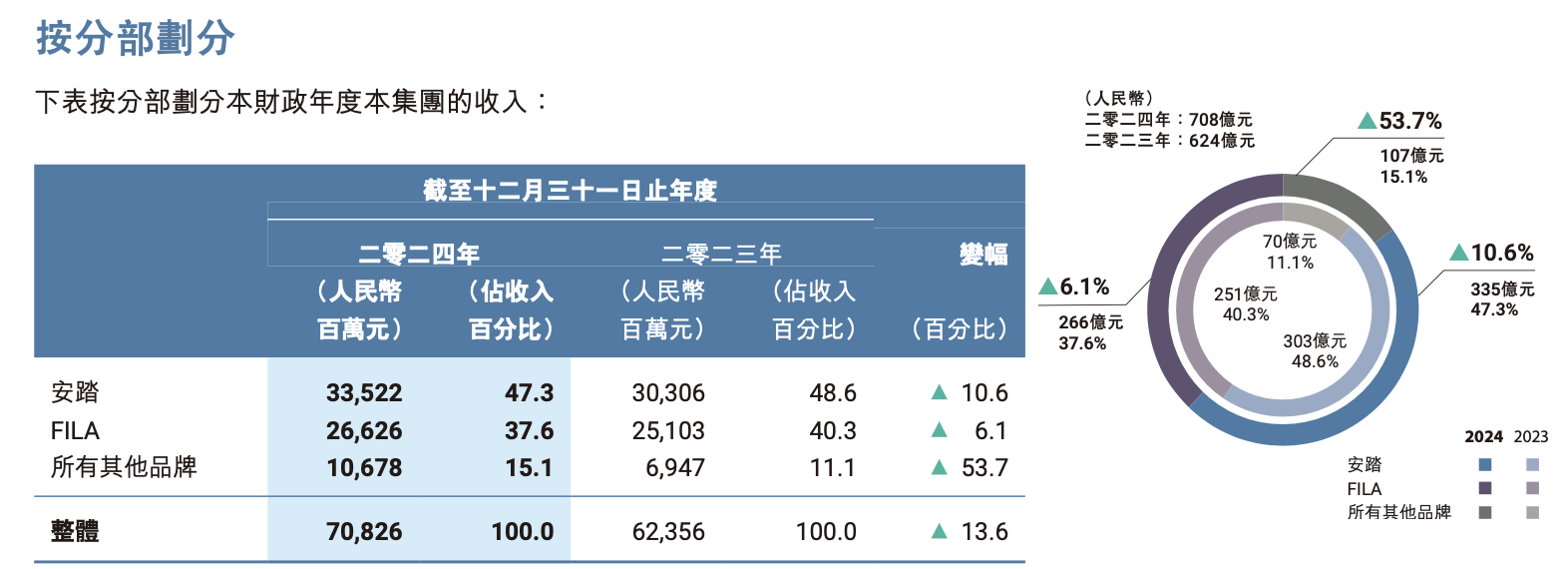
Group 1: Acquisition of Reebok - Anta Group is reportedly close to acquiring Reebok from Authentic Brands Group (ABG), having completed the funding process [1] - Anta has not officially confirmed the acquisition, stating it does not comment on market rumors [1] - Acquiring Reebok could significantly aid Anta's overseas expansion, especially as the domestic market matures [1] Group 2: Financial Performance - Anta's revenue for 2024 is projected to reach 335 billion RMB, a 10.6% increase from 2023, accounting for 47.3% of total revenue [6][5] - FILA's revenue is expected to be 266 billion RMB in 2024, growing by 6.1% [7] - Overall, Anta's revenue is anticipated to grow by 13.6% to 708.26 billion RMB in 2024 [14] Group 3: Market Challenges - Anta faces increasing growth pressure, with retail sales for its main brands showing low single-digit growth [4][3] - The performance of FILA has been volatile, with a decline in sales in the third quarter of 2024 [7] - The domestic sports market is experiencing heightened volatility, impacting overall sales for major players like Anta and Li Ning [10] Group 4: Strategic Positioning - Anta's strategy focuses on "single focus, multi-brand, globalization," which has been effective in expanding its brand portfolio [12] - The company has successfully integrated various brands, including FILA and Amer Sports, enhancing its market presence [13][14] - Anta's global strategy includes expanding into Southeast Asia and North America, with significant market coverage [26][27] Group 5: Reebok's Historical Context - Reebok was once a leading brand in the U.S. market but has seen a significant decline in market share from over 25% in 1987 to less than 10% by 2010 [18] - ABG acquired Reebok in 2022, aiming for significant revenue growth, but initial projections have not been met [20][21] - Reebok's performance in the Chinese market has also declined, with a reported 19% drop in revenue [22]
收购传闻背后:安踏增长,需要锐步丨消费一线
2 1 Shi Ji Jing Ji Bao Dao· 2025-08-05 11:48
Core Viewpoint - Anta Group is reportedly close to acquiring Reebok from Authentic Brands Group (ABG), which could significantly aid its overseas expansion amidst a challenging domestic market [1][20]. Company Performance - Anta's retail revenue growth has slowed, with the Anta brand showing low single-digit growth in Q2, while FILA's growth is also fluctuating [3][5]. - In 2024, Anta brand revenue is projected to be 33.5 billion yuan, a 10.6% increase, but its revenue share is expected to decline to 47.3% from 48.6% in 2023 [5]. - FILA is expected to generate 26.6 billion yuan in 2024, with a 6.1% year-on-year growth, but has faced a decline in sales in Q3 2024 [6][7]. Market Context - The domestic sports market is experiencing increased volatility, with competitors like Li Ning and Nike also reporting lower-than-expected growth [8][10]. - Nike's sales in Greater China fell by 21% in the latest quarter, indicating a challenging retail environment [8]. Strategic Moves - Anta has a history of successful acquisitions and brand management, including FILA and Amer Sports, which have contributed to its revenue growth [11][12]. - The company is pursuing a "globalization" strategy, expanding into Southeast Asia, North America, and Europe, with significant market coverage [19]. Reebok's Background - Reebok, once a leading brand in the U.S. market, has seen its market share decline significantly since the late 1980s [15]. - ABG acquired Reebok in 2022, aiming for substantial revenue growth, but recent reports indicate a 19% decline in Reebok's revenue in 2024 [17][18]. Potential Benefits of Acquisition - Acquiring Reebok could provide Anta with a foothold in the U.S. market, where it has not previously operated, and leverage Reebok's brand recognition to enhance its global presence [20].
可选消费W31周度趋势解析:欧美公司进入业绩密集披露期,特朗普政府关税不明确引发市场动荡-20250803
Haitong Securities International· 2025-08-03 14:35
Investment Rating - The report assigns an "Outperform" rating to multiple companies including Nike, Midea Group, JD Group, Gree Electric, Anta Sports, Haier Smart Home, and others, while Lulu Lemon is rated as "Neutral" [1]. Core Insights - The report highlights that the earnings season in Europe and America is causing market volatility, exacerbated by uncertainties surrounding tariffs from the Trump administration [4][6]. - The performance of various sectors shows that gambling, overseas cosmetics, and pet products are outperforming the MSCI China index, while sectors like luxury goods and overseas sportswear are experiencing significant declines [4][12]. Sector Performance Overview - Weekly performance: Gambling > Overseas Cosmetics > Pets > Gold and Jewelry > Snacks > Domestic Cosmetics > Domestic Sportswear > Credit Cards > US Hotels > Daily Necessities > Luxury Goods > Overseas Sportswear, with respective weekly changes of 0.6%, -0.6%, -1.6%, -2.2%, -2.2%, -2.5%, -2.7%, -4.5%, -5.5%, -6.6%, -7.6%, and -9.0% [5][15]. - Monthly performance: Gambling > Domestic Sportswear > Domestic Cosmetics > Credit Cards > Luxury Goods > Overseas Cosmetics > US Hotels > Snacks > Daily Necessities > Gold and Jewelry > Overseas Sportswear > Pets, with respective monthly changes of 4.3%, -0.3%, -3.1%, -4.2%, -4.5%, -5.1%, -5.7%, -8.1%, -8.4%, -11.7%, -12.4%, and -14.4% [12][15]. - Year-to-date performance: Gold and Jewelry > Domestic Cosmetics > Overseas Cosmetics > Pets > Snacks > Daily Necessities > Credit Cards > Gambling > Domestic Sportswear > US Hotels > Overseas Sportswear > Luxury Goods, with respective year-to-date changes of 142.3%, 49.4%, 35.6%, 34.8%, 20.9%, 20.7%, 7.4%, 3.3%, 2.4%, -1.5%, -11.0%, and -13.7% [12][15]. Valuation Analysis - The report indicates that most sectors are still undervalued compared to their average valuations over the past five years, with expected PE ratios for 2025 as follows: - Overseas Sportswear: 31.7x (51% of 5-year average) - Domestic Sportswear: 12.8x (74% of 5-year average) - Gold and Jewelry: 24.7x (43% of 5-year average) - Luxury Goods: 23.3x (41% of 5-year average) - Gambling: 17.4x (26% of 5-year average) - Overseas Cosmetics: 39.7x (62% of 5-year average) - Domestic Cosmetics: 30.9x (58% of 5-year average) - Pets: 41.7x (45% of 5-year average) - Snacks: 22.4x (37% of 5-year average) - Daily Necessities: 23.3x (71% of 5-year average) - US Hotels: 28.9x (18% of 5-year average) - Credit Cards: 29.7x (59% of 5-year average) [10][19].
金十图示:2025年08月01日(周五)美股热门股票行情一览(美股收盘)
news flash· 2025-08-01 20:07
Market Capitalization Summary - Oracle has a market capitalization of 722.79 billion, while Mastercard and Visa have market capitalizations of 857.12 billion and 947.73 billion respectively [2] - ExxonMobil, SoftBank, and Johnson & Johnson have market capitalizations of 492.32 billion, 472.42 billion, and 402.94 billion respectively [2] - Bank of America, Procter & Gamble, and Home Depot have market capitalizations of 371.58 billion, 352.80 billion, and 338.05 billion respectively [2] Stock Performance - Oracle's stock decreased by 7.20 (-2.43%), while Mastercard's increased by 0.47 (+0.48%) and Visa's increased by 22.58 (+3.05%) [2] - ExxonMobil's stock decreased by 9.35 (-3.68%), SoftBank's decreased by 6.33 (-1.83%), and Johnson & Johnson's decreased by 6.60 (-1.17%) [2] - Bank of America's stock increased by 5.96 (+1.62%), Procter & Gamble's decreased by 1.63 (-3.45%), and Home Depot's increased by 0.17 (+0.11%) [2] Additional Company Insights - Disney's market capitalization is 709.49 billion, with a stock decrease of 14.10 (-1.95%) [3] - American Express and Caterpillar have market capitalizations of 302.79 billion and 237.65 billion respectively, with stock changes of +2.72 (+0.91%) and -11.91 (-4.77%) [3] - Verizon Communications and Royal Bank of Canada have market capitalizations of 180.80 billion and 169.05 billion respectively, with stock changes of +0.17 (+0.13%) and +0.12 (+0.28%) [3] Sector Performance - The technology sector shows mixed performance with Intel at 863.77 billion, down by 0.50 (-2.53%), and Dell Technologies at 844.76 billion, down by 0.39 (-1.20%) [4] - The energy sector includes companies like Rio Tinto with a market cap of 687.52 billion, down by 0.13 (-0.22%) [4] - The financial sector includes Barclays at 676.80 billion, down by 0.53 (-2.68%) [4] Recent Trends - Delta Airlines has a market capitalization of 394.70 billion, with a stock decrease of 2.08 (-3.90%) [5] - Vodafone (US) has a market cap of 266.08 billion, down by 2.16 (-2.74%) [5] - Companies like Pinterest and Nokia show slight decreases in their market capitalizations, indicating a trend of volatility in the market [5]

金十图示:2025年08月01日(周五)美股热门股票行情一览(美股盘中)
news flash· 2025-08-01 16:48
Market Capitalization Summary - Oracle has a market capitalization of 719.605 billion, while Mastercard and Visa have market capitalizations of 786.869 billion and 759.29 billion respectively [2] - ExxonMobil, Netflix, and Johnson & Johnson have market capitalizations of 494.608 billion, 470.871 billion, and 400.651 billion respectively [2] - AMD and General Electric have market capitalizations of 372.342 billion and 353.841 billion respectively [2] - T-Mobile US Inc and ASML have market capitalizations of 267.906 billion and 267.874 billion respectively [2] - Wells Fargo and Chevron have market capitalizations of 264.509 billion and 252.799 billion respectively [2] Stock Performance - Oracle's stock decreased by 5.40 (-1.82%), while Mastercard's increased by 0.62 (+0.63%) [2] - ExxonMobil's stock decreased by 2.38 (-2.13%), while Netflix's increased by 4.58 (+0.40%) [2] - AMD's stock increased by 6.73 (+1.83%), while General Electric's decreased by 1.57 (-3.31%) [2] - T-Mobile US Inc's stock decreased by 0.36 (-0.15%), while ASML's decreased by 0.80 (-1.17%) [2] - Wells Fargo's stock decreased by 0.18 (-0.12%), while Chevron's decreased by 5.51 (-2.13%) [2] Additional Company Insights - Disney's market capitalization is 712.28 billion, with a stock decrease of 11.31 (-1.56%) [3] - Caterpillar has a market capitalization of 240.65 billion, with a stock decrease of 8.91 (-3.57%) [3] - Verizon Communications has a market capitalization of 1987.47 billion, with a stock increase of 0.39 (+1.41%) [3] - Pfizer's market capitalization is 1496.16 billion, with a stock decrease of 4.99 (-1.39%) [4] - Intel's market capitalization is 910.51 billion, with a stock decrease of 4.13 (-3.11%) [4]

金十图示:2025年08月01日(周五)美股热门股票行情一览(美股盘初)
news flash· 2025-08-01 14:01
Market Capitalization Summary - The market capitalization of major companies shows significant variations, with Oracle at 7860.84 billion and Mastercard at 7239.28 billion, while companies like Pfizer and Sony have market caps of 1497.38 billion and 1332.65 billion respectively [2][3][4]. - Notable declines were observed in companies such as Exxon Mobil, which decreased by 10.66 (-4.20%), and Visa, which fell by 10.36 (-3.50%) [2][3]. Stock Performance - Oracle's stock increased by 0.29 (+0.30%), while Mastercard's rose by 23.78 (+3.21%) [2]. - Companies like American Airlines and Home Depot saw slight increases of 1.55 (+0.42%) and 2.70 (+1.79%) respectively, while Procter & Gamble experienced a decline of 1.66 (-3.51%) [2][3]. Sector Analysis - The technology sector remains strong, with companies like AMD and Cisco showing resilience, while traditional sectors like energy and telecommunications face challenges [2][3]. - Financial institutions like Bank of America and Wells Fargo reported mixed results, with slight increases in stock prices despite overall market volatility [2][3]. Notable Company Movements - Disney's stock decreased by 5.09 (-3.57%), reflecting ongoing challenges in the entertainment sector [3]. - Companies like Uber and BlackRock also faced declines, with Uber down by 25.51 (-2.31%) [3][4]. Summary of Key Companies - Major players such as Exxon Mobil, Visa, and Pfizer are experiencing fluctuations in their market caps and stock prices, indicating a volatile market environment [2][3][4]. - The performance of companies like Delta Airlines and Yum! Brands shows a mixed outlook, with Delta increasing by 1.51 (+1.05%) while Yum! Brands fell by 2.61 (-4.91%) [5].
