
华菱钢铁

Search documents
华菱钢铁:公司子公司华菱湘钢的宽厚板和华菱衡钢的无缝钢管可用于核电领域
Zheng Quan Ri Bao Wang· 2025-12-15 12:46
Core Viewpoint - Company Huazhong Steel (000932) is actively involved in the nuclear power sector through its subsidiaries, providing specialized steel products for various nuclear projects [1] Group 1: Product Applications - Subsidiary Huazhong Xianggang produces wide and thick plates, while Huazhong Henggang manufactures seamless steel pipes, both of which are applicable in the nuclear power field [1] - The company has developed fourth-generation nuclear steel, thick nuclear steel, nuclear composite plates, and nuclear pipes, which are widely used in key domestic and international nuclear projects [1] Group 2: Project Involvement - The products are utilized in significant nuclear projects such as the Xiapu Fast Reactor Demonstration Project, Guangxi Bailong Nuclear Power Station, Egypt's Dabaa Nuclear Power Station, and the Hualong One Fuqing Nuclear Power Unit [1] Group 3: Project Exclusions - The company does not directly participate in nuclear fusion project construction [1]

华联期货股指年报:预计股指中期攀升格局未改
Hua Lian Qi Huo· 2025-12-15 11:05
Report Industry Investment Rating No relevant content provided. Core Viewpoints of the Report - The mid - term upward trend of stock index remains unchanged, but the growth rate may slow down. The core driving force for the mid - term rise of the stock index is the confirmation of the performance bottom and the profit repair. The significant entry of incremental funds and favorable policies also contribute to the market's upward movement. With the introduction of year - end favorable policies and the stimulation of the 14th Five - Year Plan, the stock index may enter a cross - year layout market from December to January, and the spring market is worth looking forward to. It is recommended to focus on the CSI 500, SSE 50, CSI 300, and CSI 1000 indices and buy call options [14]. Summary According to Relevant Catalogs 1. Annual Viewpoint and Strategy - **Market Review**: In 2025, the market first fluctuated and adjusted, then rose significantly and exceeded the previous year's high, showing an overall upward trend. All four major indices rose, with small and medium - cap stock indices leading the gains. In terms of style indices, growth and cyclical indices had the largest increases, with the former rising over 35%. The stable - style index hardly rose, and the financial and consumer - style indices had relatively low increases. In the Shenwan industry, most industries rose, but some declined. TMT and cyclical sectors such as communication, non - ferrous metals, electronics, and comprehensive led the gains, with the first two having annual increases of over or close to 80%. Industries with lower increases included real estate, commercial trade, public utilities, building decoration, and banking. Declining industries were food and beverage, coal, and transportation [9]. - **Economic Situation**: In November 2025, the manufacturing PMI was 49.2%, up 0.2 percentage points from the previous month; the non - manufacturing PMI was 49.5%, down 0.7 percentage points from the previous month. In terms of sub - items, both supply and demand in the manufacturing PMI rebounded slightly in November, with new export orders rebounding by 1.7%, which was related to the easing of Sino - US tariffs. Factory prices and raw material purchase prices rebounded after two months of decline [9]. - **Policy Situation**: The Political Bureau set the tone for the real estate market to stop falling and stabilize and boost the capital market. The State Council issued the new Nine - Article Guidelines to strengthen investor returns. The central bank created two new monetary policy tools. The implementation plan for promoting the entry of medium - and long - term funds into the market was officially released, which is expected to add 800 billion yuan of long - term funds to the A - share market annually [9]. - **Performance Situation**: A - share performance showed signs of stabilization in the first quarter. After the implementation of reciprocal relations with the US in April, which increased by 30%, performance declined in the second quarter and showed fluctuations. Performance continued to stabilize and rebound in the third quarter, and the performance of the four major indices rebounded again in Q3 2025 [9]. 2. Index and Industry Trend Review - The market in 2025 first fluctuated and adjusted, then rose significantly and exceeded the previous year's high, showing an overall upward trend. All four major indices rose, with small and medium - cap stock indices leading the gains. In terms of style indices, growth and cyclical indices had the largest increases, with the former rising over 35%. The stable - style index hardly rose, and the financial and consumer - style indices had relatively low increases. In the Shenwan industry, most industries rose, but some declined. TMT and cyclical sectors such as communication, non - ferrous metals, electronics, and comprehensive led the gains, with the first two having annual increases of over or close to 80%. Industries with lower increases included real estate, commercial trade, public utilities, building decoration, and banking. Declining industries were food and beverage, coal, and transportation [20][26]. 3. Main Contracts and Basis Trends - The four major indices fluctuated and rebounded, exceeding the previous year's high. Except during quarterly contract roll - overs, the basis was at a reasonable level. In terms of arbitrage among main contracts, IC/IF and IC/IH first adjusted and then rebounded, showing an overall upward trend; IH/IF first rose and then fell sharply, with significant fluctuations; IM/IF and IM/IH showed wide - range fluctuations; IM/IC first fluctuated repeatedly and then declined [32][36]. 4. Economic Policy - **Economic Situation** - In November 2025, the manufacturing PMI was 49.2%, up 0.2 percentage points from the previous month; the non - manufacturing PMI was 49.5%, down 0.7 percentage points from the previous month. In terms of sub - items, both supply and demand in the manufacturing PMI rebounded slightly in November, with new export orders rebounding by 1.7%, which was related to the easing of Sino - US tariffs. Factory prices and raw material purchase prices rebounded after two months of decline [42]. - Generally, PPI leads the inventory cycle (by 1 to 12 months, with an average of about half a year). PPI bottomed out and rebounded in June 2023, weakened after two months, and since March 2024, the decline has been continuously narrowing. From July 2024, the decline of PPI expanded again, and since November 2024, it has been narrowing until it expanded for five consecutive months until March 2025. Since August 2025, the decline has been narrowing, and currently it remains weak. In October 2025, industrial enterprise revenues fell to 1.8%, inventory continued to rise to 3.7%, demand declined, and there was passive inventory replenishment [45]. - China's social financing scale in November 2025 was 248.85 billion yuan, an increase of 15.28 billion yuan compared with 233.57 billion yuan in the same period last year. New RMB loans were 40.53 billion yuan, a decrease of 11.7 billion yuan compared with the same period last year, mainly due to a 20.63 - billion - yuan decrease in household loans, a decrease of 47.63 billion yuan compared with the same period last year. Short - term household loans decreased by 3.7 billion yuan, a decrease of 17.88 billion yuan compared with the same period last year, and medium - and long - term household loans increased by 1 billion yuan, a decrease of 29 billion yuan compared with the same period last year. Government bonds were 120.41 billion yuan, a decrease of 10.6 billion yuan compared with the same period last year [48]. - The growth rate of medium - and long - term credit has been falling since reaching a high of 12.94% in May 2023 after starting to stabilize and rebound from 10.21% in November 2022. As of November 2025, it has fallen for 30 consecutive months to 5.89% and continues to decline [7][53]. - **Policy Situation** - **New Nine - Article Guidelines**: In April 2024, the "Several Opinions on Strengthening Supervision, Preventing Risks, and Promoting the High - Quality Development of the Capital Market" (New Nine - Article Guidelines) were issued. It tightened the "entry threshold" and smoothed the "exit channel" by raising the listing standards for each sector and accelerating the clearance of inferior enterprises through stricter delisting indicators. It also strengthened investor returns by strengthening the supervision of cash dividends of listed companies and restricting major shareholders' share - reduction for companies that have not paid dividends for many years or have a low dividend ratio [55][58]. - **Implementation Plan for Promoting the Entry of Medium - and Long - Term Funds into the Market**: It aims to increase the actual investment ratio. For public funds, it is required that the market value of A - shares held by public funds should increase by at least 10% annually in the next three years. For commercial insurance funds, large - state - owned insurance companies are expected to invest 30% of their newly - added premiums in A - shares annually starting from 2025, which means adding at least several hundred billion yuan of long - term funds to the A - share market each year. The second - batch pilot project of long - term stock investment by insurance funds will be implemented in the first half of 2025, with a scale of no less than 10 billion yuan, and the scale will be gradually expanded. It also extends the assessment period. By implementing a long - cycle assessment, it can effectively smooth the impact of short - term market fluctuations on performance and improve the stability of medium - and long - term funds' investment behavior [61]. - **Political Bureau's Policy Orientation**: The Political Bureau meeting pointed out that efforts should be made to boost the capital market, guide medium - and long - term funds to enter the market, and remove obstacles for funds such as social security, insurance, and wealth management to enter the market. It also emphasized increasing the counter - cyclical adjustment of fiscal and monetary policies, ensuring necessary fiscal expenditures, and doing a good job in the "three guarantees" at the grass - roots level. It proposed to issue and use ultra - long - term special treasury bonds and local government special bonds, reduce the deposit reserve ratio, and implement significant interest rate cuts. It also aimed to promote the real estate market to stop falling and stabilize, control the increment of commercial housing construction, optimize the stock, and improve the quality [62]. - **Central Bank's New Monetary Policy Tools**: The central bank created a structural monetary policy tool to support the capital market for the first time. One is the swap facility for securities, funds, and insurance companies, which allows eligible institutions to use their bonds, stock ETFs, and SSE 300 constituent stocks as collateral to exchange for high - liquidity assets such as treasury bonds and central bank bills from the central bank. The initial scale of the swap facility operation is 500 billion yuan. The central bank also created a re - loan for stock repurchase and increase, guiding commercial banks to provide loans to listed companies and major shareholders for stock repurchase and increase. The initial scale is 300 billion yuan [63]. - **Debt Resolution Measures**: In November 2024, the National People's Congress Standing Committee announced a large - scale debt resolution measure. The total debt resolution scale mainly includes three parts: 6 trillion yuan of local debt limits, all arranged as special debt limits, approved at once and implemented over three years; starting from 2024, 800 billion yuan will be allocated from new local special bonds for five consecutive years to replenish government fund financial resources, with a cumulative replacement of 4 trillion yuan of implicit debt; and 2 trillion yuan of implicit debt from shantytown reconstruction due after 2029 will be repaid according to the original contract. The first two parts will directly increase 10 trillion yuan of local debt resolution funds [64]. - **Accelerating the Building of First - Class Investment Banks and Investment Institutions**: At the Eighth Member Congress of the Securities Association of China, it was proposed that securities companies should shift from price competition to value competition. Appropriate "relaxation" measures will be taken for high - quality institutions to optimize risk - control indicators, expand capital space and leverage limits, and improve capital utilization efficiency. Differentiated supervision will be explored for small - and medium - sized securities companies and foreign - funded securities companies in terms of classification evaluation and business access to promote their characteristic development. Strict supervision will be carried out for a small number of problematic securities companies [65]. - **14th Five - Year Plan**: The 14th Five - Year Plan is a crucial period that connects the past and the future, with multiple strategic goals (such as carbon peaking and reform) to be achieved. A multi - polar trade system is gradually taking shape, and China's voice in global economic and trade fields is expected to further increase. Sino - US competition remains the core variable affecting the global political and economic landscape, and it is becoming "normalized" and "complicated". The reconstruction of the global supply chain has entered the second half, with geopolitics and strategic security as the main lines. China will focus on developing new - quality productive forces and upgrading industries, promoting anti - involution and building a unified national market, and expanding domestic demand and boosting consumption [68]. - **US Mid - term Elections**: In 2026, the US mid - term elections will be held. The schedule includes the primary elections in August 2026 and the main election period from September to November, with November 3rd as the final voting date. The fiscal bill requires that the Trump administration is prohibited from laying off federal government employees before January 30th, which is expected to ease the situation of significant employment reduction. It is expected that fiscal support will continue during the mid - term elections [71]. 5. Revenue and Net Profit of Each Index - The core factor affecting the long - term trend of the stock index is the performance of listed companies. Since the coordinated efforts of monetary and fiscal policies in the third quarter of last year, the policy effects have gradually been transmitted to the real economy. The first - quarter report of 2025 showed that the performance of A - share listed companies had initially shown signs of stabilization, and the profit bottom was likely to have been confirmed. Although affected by external factors such as "reciprocal tariffs" in the second quarter, performance fluctuated, the third - quarter report data confirmed that corporate profits had returned to an upward channel. The continuous rebound of performance in Q3 2025 strengthened the market's confidence in the start of the profit cycle, providing strong internal impetus for the mid - term rise of the stock index [77][82]. 6. Valuation - The valuation of the Shanghai Composite Index is 16.2398, with an upper - limit value of 15.64, and it is at the 83.45th percentile since 2010, indicating a relatively high valuation level since 2010. However, as performance rises, the valuation will decline. The valuation of the ChiNext Index is relatively low [100][102]. 7. Interest Rates - Interest rates are in a downward channel. According to the Fed's December interest - rate meeting forecast, from 2025 to 2028, variables such as real GDP growth, unemployment rate, PCE inflation, and core PCE inflation are expected to show certain trends, and the federal funds rate is also expected to decline [88]. 8. Capital Flows - **Overall Capital Inflow**: In 2025, the A - share market is expected to have a capital inflow (including scale growth) of 4.3505 trillion yuan, which is not much different from the increase in non - bank deposits and bank wealth - management scale. Excluding the scale - growth factor, the A - share market is expected to have a net capital inflow of 1.8311 trillion yuan in 2025 (with an expected net inflow of 300 billion yuan from retail investors in the third quarter) [105]. - **Margin Trading and Short Selling**: In 2024, the net inflow of margin trading and short - selling funds was 27.48 billion yuan. As of December 14, 2025, the net inflow in 2025 was 62.96 billion yuan, indicating active leverage funds [12][109]. - **Private Securities Investment Funds**: The scale of private securities investment funds increased by 1.7946 trillion yuan this year, with a significant increase of 1.040028 trillion yuan in October. The current total scale is 7.0076 trillion yuan. The newly - registered scale this year is 38.6 billion yuan, with registration scales of 7.92 billion yuan in July, 4.28 billion yuan in August, 3.68 billion yuan in September, and 4.29 billion yuan in October [12][113]. - **Insurance Funds**: In the third quarter of 2025, the market value of A - shares held by insurance funds increased by 55.24 billion yuan, a month - on - month increase of 18.00%, while the SSE 300 Index rose by 17.90% during the same period. In the first three quarters of 2025, the market value of A - shares held by insurance funds increased by 119.3 billion yuan, and after excluding the scale - growth factor, it increased by 75.84 billion yuan. The proportion of stock and fund investment by insurance funds in the total insurance fund balance continued to rise to 14.93% [115][116]. - **Newly - Established Funds**: As of September 30, 2025, the newly - established share of stock - type funds was 323.3 billion yuan, with 137 billion yuan in the third quarter; the newly - established share of hybrid funds was 103.6 billion yuan, with 53 billion yuan in the third quarter. In 2025, index funds had a net inflow of 104.9 billion yuan, while active equity funds had a net outflow of 444.9 billion yuan, and equity funds had a net outflow of 340 billion yuan [126][130]. - **Other Capital Flows**: In October 2025, the deposits of non - bank financial institutions increased by 1.8574 trillion yuan again, and the total increase in deposits of non - bank financial institutions this year was 6.6688 trillion yuan. Overall, funds are flowing from the banking system to non - bank channels such as the capital market and wealth - management products. In terms of secondary - market shareholder share - reduction, important shareholders in the A - share market had a net share - reduction of 307.3 billion yuan in 2025. The IPO financing in 2023 was 356.5 billion
12月15日一带一路(399991)指数跌0.45%,成份股锐捷网络(301165)领跌
Sou Hu Cai Jing· 2025-12-15 11:01
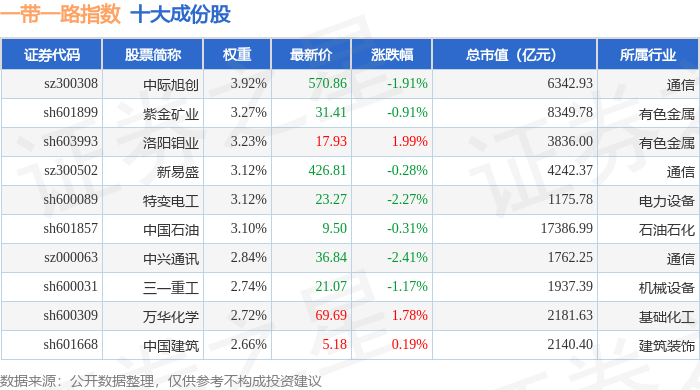
证券之星消息,12月15日,一带一路(399991)指数报收于2865.35点,跌0.45%,成交1314.54亿元,换 手率0.74%。当日该指数成份股中,上涨的有35家,菲利华以8.52%的涨幅领涨,下跌的有54家,锐捷网 络以5.64%的跌幅领跌。 一带一路(399991)指数十大成份股详情如下: 资金流向方面,一带一路(399991)指数成份股当日主力资金净流出合计54.96亿元,游资资金净流入合 计18.61亿元,散户资金净流入合计36.35亿元。成份股资金流向详情见下表: | 代码 | 名称 | 主力净流入(元) | 主力净占比 游资净流入 (元) | | 游资净占比 散户净流入 (元) | | 散户净占比 | | --- | --- | --- | --- | --- | --- | --- | --- | | 600309 | 万华化学 | 3.96亿 | 16.00% | -1.02 乙 | -4.13% | -2.94 Z | -11.87% | | 300395 | 菲利华 | 3.39 Z | 7.97% | -1.05亿 | -2.46% | -2.34 Z | -5.51% | | ...

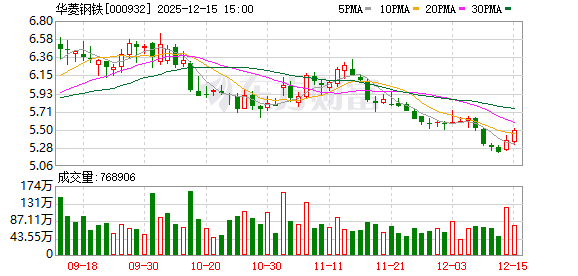
华菱钢铁:子公司华菱湘钢的宽厚板和华菱衡钢的无缝钢管可用于核电领域
Mei Ri Jing Ji Xin Wen· 2025-12-15 10:18
Core Viewpoint - The company, Hualing Steel, confirmed that its subsidiaries produce various steel products suitable for nuclear power applications but do not directly participate in nuclear fusion project construction [2] Group 1: Company Involvement in Nuclear Power - Hualing Steel's subsidiary, Hualing Xianggang, manufactures wide plates, while Hualing Henggang produces seamless steel pipes that can be utilized in the nuclear power sector [2] - The company has developed fourth-generation nuclear power steel, thick nuclear steel, nuclear composite plates, and pipes for nuclear power, which are widely used in key domestic and international nuclear projects such as the Xiapu Fast Reactor Demonstration Project, Guangxi Bailong Nuclear Power Plant, Egypt's Dabaa Nuclear Power Plant, and the Hualong One Fuqing Nuclear Power Unit [2]
特钢概念涨1.51%,主力资金净流入这些股
Zheng Quan Shi Bao Wang· 2025-12-15 09:10
Group 1 - The special steel concept index rose by 1.51%, ranking third among concept sectors, with 32 stocks increasing in value, including Fushun Special Steel and Taiyuan Iron & Steel, which hit the daily limit [1][2] - The top gainers in the special steel sector included Tunan Co., Steel Research High-Tech, and Fangda Special Steel, with increases of 7.18%, 7.12%, and 4.05% respectively [1][2] - The stocks with the largest declines included Fuan Co., Wuzhou New Spring, and Baosteel, which fell by 4.56%, 3.67%, and 1.95% respectively [1][2] Group 2 - The special steel sector saw a net inflow of 302 million yuan from main funds, with 16 stocks receiving net inflows, and 5 stocks exceeding 30 million yuan in net inflow [2][3] - Taiyuan Iron & Steel led the net inflow with 283 million yuan, followed by Fushun Special Steel and Steel Research High-Tech with net inflows of 208 million yuan and 103 million yuan respectively [2][3] - The net inflow ratios for Taiyuan Iron & Steel, Fushun Special Steel, and Xining Special Steel were 41.27%, 22.92%, and 18.52% respectively [3] Group 3 - The trading volume and turnover rates for the top stocks in the special steel sector showed significant activity, with Taiyuan Iron & Steel having a turnover rate of 2.50% and a price increase of 9.95% [3][4] - Fushun Special Steel recorded a price increase of 10.00% with a turnover rate of 8.18%, indicating strong investor interest [3][4] - Other notable performers included Steel Research High-Tech with a 7.12% increase and a turnover rate of 13.69% [3][4]


东方证券:部分钢铁产品纳入出口许可证管理 行业产能结构或迎优化
Zhi Tong Cai Jing· 2025-12-15 08:28
Core Viewpoint - The Ministry of Commerce and the General Administration of Customs announced the implementation of export license management for certain steel products starting January 1, 2026, which is expected to optimize the export structure and promote the adjustment of production capacity in the steel industry [1][2]. Group 1: Export License Management - The new export license management will cover 300 steel products, including pig iron, scrap steel, steel billets, plates, and profiles, marking a return to a regulatory framework not seen since 2009 [1]. - The implementation of this management system is anticipated to suppress the export volume of low-end steel products in the short term but may lead to a more balanced supply-demand dynamic in the long term [3][4]. Group 2: Industry Dynamics - In the first half of 2025, domestic steel exports increased by 9.2% year-on-year, but the average export price fell by 10.3%, indicating a structural contradiction where companies are still competing primarily on price [2]. - The export license management is expected to guide companies towards exporting higher value-added products, thereby retaining profits within domestic enterprises and facilitating industry transformation [2]. Group 3: Supply and Demand Balance - The demand for crude steel in China is declining, with a projected consumption of approximately 890 million tons in 2024, down 4.4% year-on-year, while net exports exceeded 10 million tons, alleviating some overcapacity pressure [3]. - The introduction of export licenses is expected to help optimize domestic production capacity and stabilize steel profitability, with expectations of a high-quality and high-return development phase for the industry [4]. Group 4: Investment Recommendations - The steel sector is recommended for investment, particularly companies with strong pricing power, stable profitability, and high dividend yields, such as Nanjing Steel (600282) and CITIC Special Steel (000708) [5]. - Other notable companies include Hualing Steel (000932) and Sansteel Minguang (002110), which are expected to benefit from improved operational efficiencies [5].

国泰海通:减产去库、盈利筑底 钢铁业基本面有望逐步修复
Zhi Tong Cai Jing· 2025-12-15 03:48
Group 1 - The core viewpoint of the report is that steel demand is expected to gradually bottom out, and the supply side is beginning to show signs of market-driven clearance, with a potential recovery in the steel industry's fundamentals [1] - The report indicates a decrease in demand and inventory levels, with apparent consumption of five major steel varieties at 8.397 million tons, down 2.83% week-on-week and 4.76% year-on-year [2] - The production of five major steel varieties was 8.062 million tons, a week-on-week decrease of 22.7 thousand tons, while total inventory stood at 13.32 million tons, down 33.5% week-on-week [2] Group 2 - The average gross profit for rebar was 169.8 CNY/ton, an increase of 22.2 CNY/ton week-on-week, while hot-rolled coil showed a gross profit of -30.2 CNY/ton, a decrease of 17.8 CNY/ton [3] - Approximately 65% of steel companies are currently operating at a loss, and the market-driven clearance of supply is beginning to occur [4] - The Ministry of Industry and Information Technology has released a plan to continue implementing production reduction policies, which is expected to promote a dynamic balance between supply and demand [4] Group 3 - The long-term outlook for the steel industry includes an increase in industry concentration and a focus on high-quality development, benefiting companies with product structure and cost advantages [5] - Key recommendations include companies like Baosteel (600019), Hualing Steel (000932), and Shougang (000959), which have leading technology and product structures [5] - The report also highlights the potential of upstream resource companies such as Hebei Steel Resources (000923) and Dazhong Mining (001203) in the context of demand recovery [5]

铜铝价格波动加大,关注钢铁政策延续
East Money Securities· 2025-12-15 03:29
Investment Rating - The report maintains an "Outperform" rating for the non-ferrous metals industry [2][10]. Core Insights - The report highlights increased volatility in copper and aluminum prices, with a focus on the continuation of steel policies [1]. - It emphasizes the low inventory levels of copper, which may lead to sustained high volatility in prices [6]. - The macroeconomic environment is supportive for copper demand, driven by domestic market strength [6]. - For aluminum, the report notes a mixed macro outlook and stresses the importance of fundamental support for prices [6]. - The report discusses the impact of U.S. monetary policy on gold prices, indicating a slight recovery in investment demand [6]. - It also mentions the rising prices of tungsten and the weak supply-demand dynamics in the rare earth market [6]. Summary by Sections Copper - LME copper and SHFE copper prices were reported at 11,816 and 94,080 USD/ton respectively, with weekly increases of 1.5% and 1.4% [6]. - The copper concentrate treatment charge was reported at -43.0 USD/dry ton, indicating tight supply [6]. - The operating rate of refined copper rod enterprises was 64.54%, down 1.87 percentage points week-on-week [6]. Aluminum - LME aluminum and SHFE aluminum prices were reported at 2,846 and 22,170 USD/ton respectively, with weekly decreases of 0.7% and 0.8% [6]. - The operating rate of aluminum processing enterprises was 61.8%, reflecting a slight decline [6]. - Social inventory levels for aluminum ingots and rods showed a decrease, indicating some demand resilience [6]. Gold - SHFE gold and COMEX gold prices were reported at 970.7 CNY/gram and 4,329.8 USD/ounce, with weekly increases of 1.0% and 2.4% [6]. - The SPDR Gold ETF's net holdings increased by 2.9 tons, suggesting a slight recovery in investment preference for gold [6]. Small Metals - Tungsten prices rose to 373,000 CNY/ton, with a weekly increase of 6.0% [6]. - Rare earth prices showed a decline, with market supply growth slowing down [6]. - Antimony prices decreased to 172,400 CNY/ton, reflecting a week-on-week decline of 1.3% [6]. Steel - SHFE rebar and hot-rolled coil prices were reported at 3,060 and 3,232 CNY/ton respectively, with weekly declines of 3.1% and 2.7% [7]. - The total inventory of steel products decreased by 33.5% week-on-week, indicating a tightening supply [7]. - Recent policies have aimed at normalizing steel exports, which may reshape supply-demand dynamics [7]. Investment Recommendations - The report suggests focusing on companies with rich copper resources, such as Zijin Mining and China Nonferrous Mining [10]. - For gold, it recommends companies like Chifeng Jilong Gold and Shandong Gold [10]. - In the aluminum sector, it highlights companies like Shenhuo and China Aluminum [10]. - For small metals, it points to rare earth companies and tungsten producers [10]. - In the steel sector, it emphasizes companies with strong product structures and environmental capabilities [10].
钢铁实施出口许可证管理,影响几何?
Changjiang Securities· 2025-12-15 01:20
Investment Rating - The investment rating for the steel industry is Neutral, maintained [10] Core Insights - The Ministry of Foreign Trade announced the implementation of export license management for certain steel products starting January 1, 2026, aimed at curbing low-end exports represented by "buy-order exports" [2][6] - The management of export licenses is expected to disrupt the operations of shell trading companies, which have been exploiting tax evasion through fictitious contracts [6][7] - Short-term impacts may include a surge in exports before the new regulations take effect, but long-term benefits are anticipated as the industry adjusts to reduced low-end production and improved cost structures [7] Summary by Sections Export License Management - The announcement on December 12, 2025, includes a list of steel products that will require export licenses, which must be obtained based on export contracts and quality inspection certificates [2][6] - The goal is to strengthen export management and eliminate low-end exports that have been detrimental to the market [6] Market Conditions - Recent data shows a significant decline in iron output, with daily production dropping to 2.29 million tons, reflecting a decrease of 3.10 thousand tons per day [4] - Steel inventory has decreased by 2.56% week-on-week, but is up 14.27% year-on-year, indicating a mixed inventory situation [5] Price Trends - Steel prices have shown a downward trend, with Shanghai rebar prices falling to 3,250 CNY per ton, a decrease of 20 CNY per ton week-on-week [5] - The profit margins for rebar have turned negative, with immediate profits at -56 CNY per ton and lagging profits at -85 CNY per ton [5] Future Outlook - The implementation of export license management is expected to create a short-term export pulse, but may lead to a temporary supply-demand imbalance in early 2026 [7] - Long-term benefits include a reduction in raw material demand and the exit of outdated production capacities, which could improve the overall market conditions for quality steel producers [7][28]
钢铁行业周度更新报告:减产去库,盈利筑底-20251215
GUOTAI HAITONG SECURITIES· 2025-12-15 01:07
Investment Rating - The report maintains an "Overweight" rating for the steel industry [5]. Core Insights - Demand is expected to gradually stabilize, while supply-side adjustments are anticipated to continue, leading to a potential recovery in the steel industry's fundamentals [3][4]. - The report highlights that despite a long period of industry losses, market-driven supply adjustments have begun, and if supply policies are implemented, the pace of supply contraction may accelerate [3][4]. Summary by Sections Steel - Steel prices and total inventory have decreased week-on-week. The average consumption of five major steel products was 8.397 million tons, down 2.83% week-on-week and 4.76% year-on-year [5][12]. - The production of five major steel products was 8.062 million tons, a decrease of 227,000 tons week-on-week. Total inventory stood at 13.32 million tons, down 33.5% week-on-week [5][29]. - The operating rate of blast furnaces among 247 steel mills was 78.63%, down 1.53 percentage points from the previous week [5][19]. - The average gross profit for rebar was 169.8 CNY/ton, up 22.2 CNY/ton week-on-week, while hot-rolled coil had a simulated average gross profit of -30.2 CNY/ton, down 17.8 CNY/ton [5][31]. Raw Materials - Iron ore spot prices decreased, with the price of PB powder (61.5% iron content) dropping 10 CNY/ton to 779 CNY/ton, a decline of 1% [40]. - The port inventory of iron ore rose to 154.31 million tons, an increase of 0.85% week-on-week [43]. Macro - The crude steel output from January to October 2025 saw a year-on-year decline, with the construction and manufacturing sectors remaining weak [5][5]. - The report notes that the negative impact of the real estate sector on steel demand has significantly weakened, with expectations for stable growth in demand from infrastructure and manufacturing [5][5]. Investment Recommendations - The report recommends several companies based on their competitive advantages and market positioning, including Baosteel, Hualing Steel, and CITIC Special Steel [5].