
产能结构优化

Search documents
铜冠铜箔:创新驱动,拼箔未来-20260317
China Post Securities· 2026-03-17 10:25
Investment Rating - The report assigns a "Buy" rating for the company, marking its first coverage [1]. Core Insights - The company is expected to achieve a significant turnaround, with a projected net profit of 55 to 75 million yuan in 2025, recovering from a loss of 156 million yuan in the previous year. This improvement is attributed to capacity expansion, high demand for high-frequency and high-speed copper foil, and an increase in sales and proportion of high-value-added products, alongside cost reduction and efficiency improvements [3][4]. - The company has established a strong competitive position in the copper foil industry, characterized by high technical barriers. It has made significant advancements in technology and R&D, leading to a leading position in the domestic market for RTF copper foil and steady growth in HVLP copper foil production [4][5]. - The company has built long-term strategic partnerships with leading firms in downstream sectors, enhancing its brand reputation and market presence. This collaboration fosters customer loyalty and drives technological innovation, creating a robust business moat against potential competition [5]. Financial Projections - Revenue projections for the company are 6.547 billion yuan in 2025, 7.320 billion yuan in 2026, and 8.112 billion yuan in 2027. The expected net profits are 739 million yuan, 3.340 billion yuan, and 5.180 billion yuan for the respective years [8][10]. - The company is anticipated to experience a revenue growth rate of 38.74% in 2025, followed by 11.80% in 2026 and 10.82% in 2027 [10][11]. Market Performance - The stock has shown a remarkable performance trajectory, with a growth of 300% from March 2025 to March 2026 [7].

千亿级央企重组,迅速获批!
Jin Rong Shi Bao· 2026-02-13 06:02
Core Viewpoint - China Shenhua (601088) plans to acquire equity stakes in 12 core enterprises under its controlling shareholder, China Energy Group, for a total consideration of 133.598 billion yuan, marking the first major asset restructuring in the A-share market under the revised "2+5+5" simplified review process since its implementation [1][4]. Group 1: Transaction Details - The acquisition will be financed through a combination of issuing A-shares (30%) and cash payments (70%), with cash payments amounting to 93.519 billion yuan and the issuance of 1.363 billion shares at 29.4 yuan per share, representing 6.42% of the total share capital post-transaction [3]. - The target assets include 100% stakes in various companies such as Guoyuan Power, Xinjiang Energy, and others, with total assets of 233.423 billion yuan and a net profit of 9.428 billion yuan for the fiscal year 2024 [3]. Group 2: Strategic Implications - The restructuring is expected to significantly enhance China Shenhua's capacity and resource reserves in its core business areas, improving resource security and industrial synergy, while laying a solid foundation for advancing clean production and optimizing capacity structure [1][5]. - The transaction is aligned with regulatory policies aimed at supporting listed companies in enhancing investment value through mergers and acquisitions, exemplifying a model for similar major asset restructurings [4]. Group 3: Financial Impact - Post-transaction, China Shenhua anticipates an increase in its basic earnings per share, projected to rise to 3.15 yuan per share in 2024, reflecting a 6.10% increase, and to 1.54 yuan per share in the first seven months of 2025, indicating a 4.40% increase [6]. - The acquisition will enhance the company's operational scale, with coal reserves expected to increase by 64.72% and recoverable coal reserves by 97.71%, alongside significant increases in coal production and power generation capacity [5].

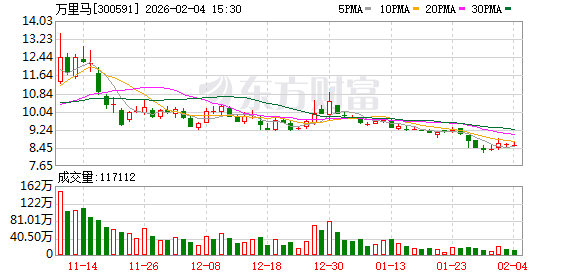
万里马:公司决策管理层将实现扭亏为盈作为今年首要的经营目标
Zheng Quan Ri Bao· 2026-02-04 11:44
Core Viewpoint - The company expresses confidence in improving its operational performance and achieving profitability through a dual-driven strategy of emergency protective equipment and live e-commerce business [2] Group 1: Business Strategy - The company aims to achieve profitability as its primary operational goal for the year [2] - The company plans to optimize production capacity structure and strengthen cost control by 2026 [2] - The management team emphasizes the importance of talent development and governance system optimization to adapt to new consumer trends [2] Group 2: Talent Acquisition - The company is focusing on attracting young professionals through diverse recruitment channels, including market recruitment, campus recruitment, and talent development [2] - A clear promotion pathway and training system have been established to enable young talents to add value in key positions [2] Group 3: Market Activities - The live e-commerce segment is planning activities centered around brand theme elements for the upcoming Year of the Horse [2]


珠江钢琴:预计2025年度净亏损3.5亿元-3.95亿元
Ge Long Hui· 2026-01-29 09:25
Core Viewpoint - The company, Pearl River Piano (002678.SZ), anticipates a net loss of between 395 million to 350 million yuan for the fiscal year 2025, compared to a loss of 235.62 million yuan in the previous year, indicating a significant decline in profitability due to various external and internal factors [1]. Financial Performance - The expected non-recurring net loss for 2025 is projected to be between 398 million to 355 million yuan, compared to a loss of 235.42 million yuan in the previous year [1]. - The overall profit margin has decreased significantly compared to the previous year due to a combination of external economic fluctuations and internal cost pressures [1]. Market Conditions - The piano industry is experiencing a substantial decline in market demand, influenced by fluctuations in both domestic and international economic conditions and adjustments in consumer market structure [1]. - The company is facing challenges from rising unit costs due to capacity contraction and internal factors such as personnel optimization and asset impairment provisions [1]. Strategic Initiatives - In response to the ongoing market contraction and industry adjustments, the company is actively pursuing capacity structure optimization and process layout adjustments [1]. - The company is working to systematically revitalize idle assets and is coordinating the integration, leasing, and reuse of factory resources across multiple locations [1]. - The company is focusing on upgrading its core business and exploring new avenues, such as cultural tourism and performance lighting, to accelerate the implementation of key projects and optimize its industrial layout for sustainable development [1].

东方证券:部分钢铁产品纳入出口许可证管理 行业产能结构或迎优化
Zhi Tong Cai Jing· 2025-12-15 08:28
Core Viewpoint - The Ministry of Commerce and the General Administration of Customs announced the implementation of export license management for certain steel products starting January 1, 2026, which is expected to optimize the export structure and promote the adjustment of production capacity in the steel industry [1][2]. Group 1: Export License Management - The new export license management will cover 300 steel products, including pig iron, scrap steel, steel billets, plates, and profiles, marking a return to a regulatory framework not seen since 2009 [1]. - The implementation of this management system is anticipated to suppress the export volume of low-end steel products in the short term but may lead to a more balanced supply-demand dynamic in the long term [3][4]. Group 2: Industry Dynamics - In the first half of 2025, domestic steel exports increased by 9.2% year-on-year, but the average export price fell by 10.3%, indicating a structural contradiction where companies are still competing primarily on price [2]. - The export license management is expected to guide companies towards exporting higher value-added products, thereby retaining profits within domestic enterprises and facilitating industry transformation [2]. Group 3: Supply and Demand Balance - The demand for crude steel in China is declining, with a projected consumption of approximately 890 million tons in 2024, down 4.4% year-on-year, while net exports exceeded 10 million tons, alleviating some overcapacity pressure [3]. - The introduction of export licenses is expected to help optimize domestic production capacity and stabilize steel profitability, with expectations of a high-quality and high-return development phase for the industry [4]. Group 4: Investment Recommendations - The steel sector is recommended for investment, particularly companies with strong pricing power, stable profitability, and high dividend yields, such as Nanjing Steel (600282) and CITIC Special Steel (000708) [5]. - Other notable companies include Hualing Steel (000932) and Sansteel Minguang (002110), which are expected to benefit from improved operational efficiencies [5].

研判2025!中国硝酸铵行业发展历程、市场政策、产业链、供需现状、进出口贸易、竞争格局及发展趋势分析:产能结构持续优化[图]
Chan Ye Xin Xi Wang· 2025-11-06 01:32
Core Viewpoint - The ammonium nitrate production capacity in China is declining due to increased regulatory scrutiny and the exit of outdated production capacities, leading to improved utilization rates and stable demand growth in the industry [1][11]. Overview - Ammonium nitrate (NH₄NO₃) is a white crystalline powder, highly soluble in water, primarily used as an agricultural fertilizer and in the production of explosives and pesticides [2][4]. Development History - The ammonium nitrate industry in China began in the 1960s and saw significant growth in the 1980s and 1990s, with technological advancements marking its progress [4]. - Post-2000, the industry experienced rapid growth driven by increasing demand in agriculture and industrial sectors, but stricter regulations have led to a reduction in outdated capacities [5][11]. Market Policies - Ammonium nitrate is classified as a hazardous chemical, and numerous regulations have been implemented to ensure safety in its production, storage, and transportation, promoting a shift towards larger, greener operations [5][6]. Industry Chain - The upstream of the ammonium nitrate industry includes suppliers of nitric acid and ammonia, while the downstream applications cover agricultural fertilizers, industrial explosives, and other chemical products [7][8]. Current Development Status - China's ammonium nitrate production capacity is projected to decline to 9.71 million tons per year in 2024, with a capacity utilization rate increasing from 55.1% in 2018 to 66.0% in 2024 [11][12]. - The production volume is expected to reach 6.41 million tons in 2024, with a demand of 6.37 million tons, both showing year-on-year growth [12]. Export Situation - In the first nine months of 2025, China exported 46,000 tons of ammonium nitrate, generating $1.5058 million in revenue, with major export destinations including Vietnam, Cambodia, and Malaysia [12]. Competitive Landscape - The ammonium nitrate market in China is characterized by high concentration, with the top 10 producers accounting for 59.11% of the total capacity in 2024 [13]. - Key players include Henan Jinkai Chemical Investment Holding Group and Inner Mongolia Datang Dingwang Chemical, among others [13][14]. Future Development Trends - The industry is expected to face stricter environmental regulations, necessitating increased investments in pollution control and safety management to comply with evolving standards [15].

压减产能协同治理 水泥业打响“反内卷”攻坚战
Zheng Quan Shi Bao· 2025-10-20 17:13
Core Insights - The Ministry of Industry and Information Technology organized a meeting to address growth stability in the cement industry, focusing on optimizing capacity structure to resolve supply-demand conflicts and promoting high-quality development [1] - The meeting emphasized the need for leading enterprises to implement capacity replacement policies and ensure alignment between actual and registered capacities by the end of 2025 [1][2] Group 1 - The cement industry is currently facing a demand downturn, leading to an overall capacity utilization rate of around 50% [1] - The meeting outlined a clear path to avoid chaotic competition and promote structural upgrades within the industry, prohibiting the addition of new capacities and regulating existing ones [1] - The policy is expected to reduce clinker capacity by 10%, creating conditions for price recovery [2] Group 2 - Industry associations are tasked with enhancing self-discipline, conducting supply-demand balance research, and organizing staggered production to prevent unfair competition [2] - The China Cement Association has previously issued guidelines to unify registered and actual production capacities, with local associations implementing detailed capacity adjustments [2]
华润饮料(2460.HK):竞争加剧业绩承压 饮料业务增势亮眼
Ge Long Hui· 2025-09-19 04:27
Core Viewpoint - The company reported a significant decline in revenue and net profit for the first half of 2025, attributed to intensified competition and structural adjustments within the industry [1] Financial Performance - Total revenue for H1 2025 was 6.206 billion yuan, a decrease of 19% year-on-year - Net profit attributable to shareholders was 0.805 billion yuan, down 29% year-on-year - Gross margin decreased by 3 percentage points to 46.67%, primarily due to a decline in bottled water sales and an increase in low-margin beverage products [1] Cost Structure - Sales and distribution expenses as a percentage of revenue increased by 3 percentage points to 30.36% - Administrative expenses as a percentage of revenue rose by 0.4 percentage points to 2.33% - Net profit margin decreased by 2 percentage points to 12.97% [1] Product Performance - Revenue from bottled water sales fell by 23% to 5.251 billion yuan, with small, medium, and large bottled water products experiencing declines of 26%, 19%, and 2% respectively - Beverage sales increased by 21% to 0.955 billion yuan, accounting for 15.39% of total revenue, with 14 new product SKUs launched in H1 2025 [1] Strategic Initiatives - The company plans to establish two new bottled water factories in Q3 and Q4 of 2025 and add two beverage cooperative factories to optimize production capacity in Southern and Eastern China - The ongoing adjustment of distribution channels aims to enhance family consumption scenarios and expand online purchasing options [1]
山西潞安环保能源开发股份有限公司
Shang Hai Zheng Quan Bao· 2025-08-28 10:09
Group 1: Financial Assistance to Subsidiaries - The company plans to provide financial assistance totaling 126,801,522.26 yuan to its subsidiaries, Shanxi Lu'an Huaneng Shangzhuang Coal Industry Co., Ltd. and Shanxi Lu'an Group Puxian Houbao Coal Industry Co., Ltd. [3][11] - The financial assistance will be in the form of entrusted loans or internal borrowing, with a term of one year and an interest rate of 3.1% [3][11]. - The assistance is aimed at ensuring the operational needs of the subsidiaries, with 113,143,900 yuan allocated for working capital and 13,657,622.26 yuan for project payments [3][11]. Group 2: Closure of Subsidiary Mine - Shanxi Lu'an Group Puxian Xidong Coal Industry Co., Ltd. is set to close its mine due to resource depletion, with a production capacity of 600,000 tons per year [17][18]. - The closure is in line with the Shanxi provincial government's policy to optimize coal mine capacity and is based on safety and economic considerations [18][21]. - The closure is expected to reduce the company's losses and improve overall operational efficiency, although it will also lead to a reduction in total production capacity [22].

PVC周报:反内卷下,关注煤价对PVC煤制成本产业链传导-20250728
Zhe Shang Qi Huo· 2025-07-28 03:03
Report Summary 1. Report Industry Investment Rating No investment rating information is provided in the report. 2. Core Viewpoints - PVC is likely to rise in the short - term but has limited upside potential, facing pressure at the [5500] price level [3]. - The supply of PVC shows a weakening trend, with high production maintained. Domestic and export demand is declining, and social inventory has been accumulating for three consecutive weeks. Although the current profit performance reflects a weak reality, under the policy expectations of capacity structure optimization, there is an increase in black and building material varieties. Attention should be paid to whether the rising coal price can repair the profits of the coal - based cost industry chain [3]. 3. Summary According to the Directory 3.1 Fundamental Supply - Demand Situation - **Supply**: There is an expectation of tightened supply at the calcium carbide/PVC end. The recent sharp rise in coal prices may strongly support costs, and attention should be paid to the upward shift of the entire industrial chain price from coal prices to calcium carbide [9]. - **Demand - Inventory**: On July 25, the domestic PVC supply - side开工率 increased, enterprises received good orders, and market arrivals were normal. However, downstream procurement enthusiasm was poor, mainly from hedgers. The total inventory in East and South China continued to increase. The total inventory in the East and South China sample warehouses was 402,900 tons, up 3.65% from the previous period and down 26.93% year - on - year [10]. - **Demand - Calcium Carbide**: This week, the calcium carbide price slightly declined. The average calcium carbide industry开工率 rose to 72.20%, up 0.9% from the previous week. In the future, most calcium carbide plants may maintain normal operations, but the increase in开工率 may be limited due to peak - shaving production in Inner Mongolia and the summer electricity peak. PVC plants have many maintenance plans in July and August, so the demand for calcium carbide is expected to decrease. If there is an unexpected reduction in supply or the rising coal price is transmitted to the cost chain, the calcium carbide price may rebound [11][75]. - **Demand - Caustic Soda**: Most chlor - alkali enterprises are operating normally with sufficient supply. Some areas are supported by plant maintenance. In terms of downstream demand, the alumina industry provides rigid support, but non - aluminum industries perform averagely. Some enterprises face certain sales pressure, so the price has no strong upward driving force [12]. - **Demand - Production Capacity**: In the first quarter of 2025, 500,000 tons of production capacity were put into operation. 900,000 tons of production capacity are expected to be put into operation from July to August, with an estimated annual production capacity growth rate of 6.37% [13]. - **Demand - Export**: This week, the export order volume of PVC production enterprises decreased by 11.66% week - on - week and increased by 56% year - on - year. Exports to India are expected to slow down in summer [14]. 3.2 Disk Data - This week, both PVC futures and spot prices rose. The basis discount to the disk increased, with the East China 09 basis weakening to around - 220. The 9 - 1 spread changed little, around - 113. The 09 contract position was around 860,000 lots, and the warehouse receipts increased to around 56,400 lots [21]. 3.3 Regional and Quality Spreads - **Regional Spread**: The spread between East and South China for calcium carbide - based PVC strengthened significantly to 33, and the spread between East and North China for calcium carbide - based PVC strengthened significantly to 223 [34]. - **Ethylene - Calcium Carbide Spread**: The ethylene - calcium carbide spread weakened to - 3 [34]. 3.4 Profit Performance - **Calcium Carbide - Based Profit**: The current calcium carbide - based production capacity accounts for 74%. In areas with limited cost fluctuations and a significant increase in PVC spot prices, profits in various regions have improved significantly. North China has achieved profitability. Northwest integrated enterprises' comprehensive profit has expanded to around 680 yuan/ton, and the comprehensive profit of purchasing calcium carbide in the Northwest is around 1,000 yuan/ton. Shandong's chlor - alkali comprehensive profit has turned from loss to profit at around 100 yuan/ton [45]. - **Ethylene - Based Profit**: The current ethylene - based production capacity accounts for about 23.5%. The profit of purchasing vinyl chloride is around the break - even point, and the profit of purchasing ethylene is a loss of 200 yuan/ton [46]. 3.5 Industrial Chain - Related Products - **Calcium Carbide - Based PVC Raw Material - Lanthanum Coke**: On July 25, the price of lanthanum coke remained stable. The average transaction price in the Shaanxi market was 580 - 630 yuan/ton. The开工率 of sample enterprises was 39.14%, unchanged from the previous week. In the future, the开工 rate may increase, and attention should be paid to the transmission of coal prices to lanthanum coke and calcium carbide prices [69]. - **Calcium Carbide - Based PVC Raw Material - Calcium Carbide**: On July 25, the calcium carbide price declined slightly. The average industry开工率 rose to 72.20%. In the future, most calcium carbide plants may maintain normal operations, but the increase in开工率 may be limited. PVC plants have many maintenance plans in July and August, so the demand for calcium carbide is expected to decrease. If there is an unexpected reduction in supply or the rising coal price is transmitted to the cost chain, the calcium carbide price may rebound [75]. - **Calcium Carbide - Based PVC Raw Material - Caustic Soda**: On July 25, the spot price of liquid caustic soda fluctuated slightly. The开工率 of sample enterprises was 84%, up 1.4% from the previous week, and the inventory was 408,400 tons, up 6.38% from the previous week. In the future, the supply is sufficient, and the price has no strong upward driving force [81]. 3.6 Supply - **Production Capacity Progress**: The production capacity growth rate in the third quarter is 3.18%, and the annual growth rate is expected to be 6.37%. Two ethylene - based plants of Fujian Wanhua and Bohua Development started trial production in July and are expected to achieve mass production in August. Qingdao Gulf's 200,000 - ton ethylene - based plant is planned to be put into operation in the third quarter [85]. - **开工率 and Maintenance**: On July 25, the overall开工率 of PVC powder was 75.81%, up 0.84% from the previous week. There were new maintenance enterprises this week, and some previously maintained enterprises resumed production. The theoretical loss due to parking and maintenance this week was 71,640 tons, down 279 tons from the previous week [87]. 3.7 Import - Export - **Import**: In June 2025, the PVC import volume was 24,000 tons, a month - on - month increase of 63.80%. The cumulative import from January to June was 124,300 tons, a year - on - year increase of 0.51%. The import sources are mainly the United States and Northeast Asia, and the import dependence is about 1% [116]. - **Export**: In June 2025, the PVC export volume was 262,000 tons, a month - on - month decrease of 27.61%. The cumulative export from January to June was 1,960,600 tons, a year - on - year increase of 50.20%. The main destination is India. This week, the export order volume of PVC production enterprises decreased by 11.66% week - on - week and increased by 56% year - on - year [116][125]. 3.8 Demand - **Downstream开工率**: Currently, the downstream开工率 is at a low level compared to the same period. This week, the开工 rates of the profile and film industries improved, while the pipe industry continued to decline. Domestic downstream product enterprises continued to purchase at low prices, resisted high - priced raw materials, and faced seasonal weakening due to high temperatures [137]. - **Terminal - Real Estate**: From January to June, real estate investment decreased by 11.2% year - on - year, new construction area decreased by 20% year - on - year, and sales area decreased by 3.5% year - on - year. The real estate market is still in a downturn, and PVC demand may continue to shrink [154]. 3.9 Inventory - **Production Enterprises**: As of July 24, the available inventory of PVC powder in sample production enterprises was - 467,150 tons, a decrease of 188,900 tons from the previous period. The factory inventory was 312,250 tons, a decrease of 3,250 tons from the previous period [169]. - **East and South China**: As of July 24, the original sample inventory in East China was 358,900 tons, up 3.97% from the previous period and down 29.50% year - on - year. The expanded sample inventory in East China was 587,200 tons, up 3.82% from the previous period and down 30.64% year - on - year. The sample inventory in South China was 44,000 tons, up 1.15% from the previous period and down 26.93% year - on - year [169].