三只松鼠

Search documents
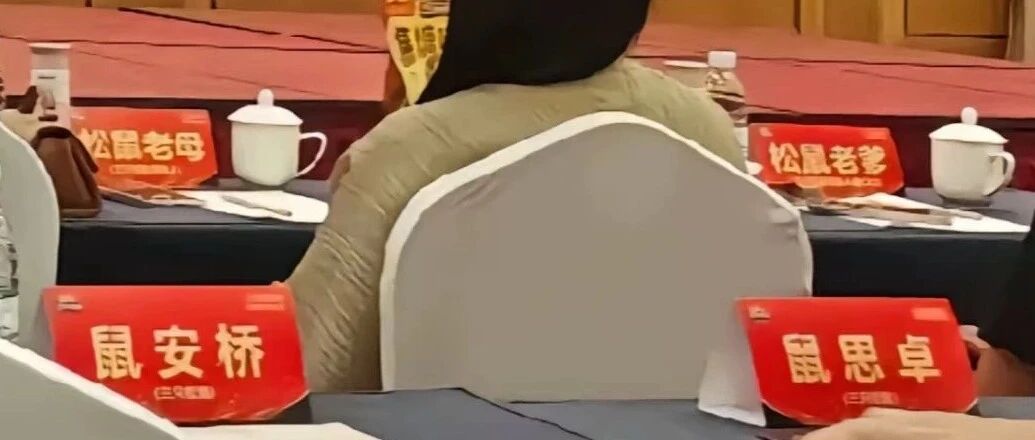
三只松鼠“鼠名文化”惹争议 创始人曾自称“首席洗脑师”
Jing Ji Guan Cha Wang· 2025-11-28 07:17
Core Viewpoint - The implementation of the "Mouse Name Culture" at Three Squirrels has sparked widespread public attention, with employees adopting names prefixed with "Mouse" and referring to customers as "masters" [2][3]. Group 1: Company Culture - Three Squirrels has a unique internal culture where employees use "Mouse" as a prefix for their names, creating a sense of camaraderie and brand identity [2][3]. - The founder, Zhang Liaoyuan, emphasizes that a good corporate culture is one that employees willingly accept and aligns with the company's values, focusing on consumer-centricity and internal collaboration [3]. - The "Mouse Name Culture" is seen as an extension of the internet industry's nickname system into the retail sector, aiming to transform employees into brand symbols [3]. Group 2: Public Reaction - There are mixed opinions regarding the name change policy, with some arguing it may infringe on personal rights and could be seen as extreme [4]. - The practice of calling customers "masters" has raised concerns about consumer dignity and the potential for creating an unequal service dynamic [4]. - The negative connotations associated with the word "mouse" in Chinese culture may conflict with the brand's intended image of being cute and approachable, potentially harming brand perception [4]. Group 3: Business Performance - Financial reports indicate that Three Squirrels experienced a 52.91% year-on-year decline in net profit in the first three quarters, suggesting that the "Mouse Name Culture" has not effectively translated into market competitiveness [5]. - Comparisons with other companies like Alibaba and Meituan highlight the importance of balancing symbolic expression with value resonance in corporate culture [5]. - Recommendations for Three Squirrels include offering diverse naming options, adjusting customer address strategies, and focusing on core product innovation to enhance market competitiveness [5].

旺旺真的“落伍”了吗?
Sou Hu Cai Jing· 2025-11-28 06:15
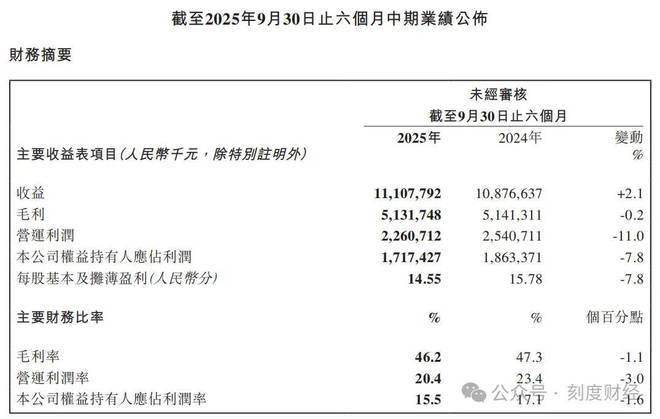
Core Viewpoint - China Wangwang's financial performance for the first half of the 2025 fiscal year shows a mixed result, with total revenue of 11.11 billion RMB, a year-on-year increase of 2.1%, while both gross margin and net profit margin are under pressure [1][5][6] Financial Performance - Total revenue reached 11.11 billion RMB, up 2.1% from 10.88 billion RMB in the previous year [3] - Gross profit decreased slightly by 0.2% to 5.13 billion RMB, resulting in a gross margin of 46.2%, down 1.1 percentage points [3][6] - Operating profit fell by 11% to 2.26 billion RMB, and profit attributable to equity holders decreased by 7.8% to 1.72 billion RMB [3][6] - Basic and diluted earnings per share dropped to 14.55 RMB, down 7.8% from the previous year [3] Market Position and Challenges - The company faces intense competition in the snack food industry, with rivals like Salted Fish and Three Squirrels gaining market share through targeted channel strategies and younger product offerings [4][11] - Rising costs of key raw materials, such as imported whole milk powder and palm oil, have negatively impacted profit margins, despite some decreases in other ingredient costs [7][10] - The shift towards lower-priced products in emerging channels has further diluted profit margins [7] Strategic Initiatives - Wangwang is expanding its online presence through platforms like Tmall, Douyin, and Xiaohongshu, and has established a matrix of self-operated flagship stores [5][22] - The company is also enhancing its offline channels by optimizing community stores and specialized outlets to improve brand reach [6][11] - Significant investments in marketing and promotional expenses have increased by 10.6% to adapt to new channel operations and brand rejuvenation efforts [8][10] Product Performance - The dairy and beverage segment, which accounts for 53% of total revenue, saw a slight decline of 1.1% to 5.94 billion RMB [12][14] - The snack food segment achieved a 7.8% increase in revenue, reaching 2.94 billion RMB, driven by double-digit growth in ice products and a focus on health-oriented offerings [14][15] - The rice cracker segment maintained steady growth, generating 2.13 billion RMB, up 3.5%, with an increase in gift product sales [14][15] Brand Transformation - Wangwang is undergoing a transformation to address its "mid-life crisis," focusing on product innovation, channel diversification, and marketing strategies to appeal to younger consumers [19][24] - New product lines, such as low-calorie snacks and health-oriented offerings, are being introduced to align with changing consumer preferences [19][20] - The company is leveraging its nostalgic brand image while attempting to engage younger audiences through innovative marketing campaigns and collaborations [23][24]
三只松鼠花名引争议,坦诚也是企业“加分项”
2 1 Shi Ji Jing Ji Bao Dao· 2025-11-28 00:14
Core Viewpoint - The article discusses the recent controversy surrounding the internal naming culture at Three Squirrels, highlighting the importance of consumer trust and brand management in response to public opinion events [2][5]. Group 1: Incident Overview - A recent post by a netizen claimed that employees at Three Squirrels are required to adopt a "mouse" themed nickname upon joining, which sparked widespread attention [2]. - Three Squirrels clarified that the "mouse name" is a non-mandatory aspect of their corporate culture, allowing employees to choose their nicknames freely without any negative consequences for opting out [2][6]. Group 2: Company Response - The founder and CEO of Three Squirrels, Zhang Liaoyuan, emphasized that any employee culture that aligns with the company's values and is accepted by employees is beneficial [2][6]. - The company addressed consumer concerns regarding a return process where the return recipient was labeled "Return Mouse," explaining that this is part of their internal culture and not intended to offend [2][5]. Group 3: Public Perception and Management - The incident illustrates how internal corporate culture can attract public scrutiny, leading to questions about employee respect and management style [5]. - Three Squirrels adopted a transparent approach in handling the situation, clarifying the voluntary nature of the nickname system and showcasing that even executives use similar nicknames, which helps mitigate public skepticism [6][7]. Group 4: Consumer Engagement - The company utilized social media to invite consumers to engage with and understand their corporate culture, transforming public criticism into an opportunity for brand explanation [7]. - The humorous and light-hearted nature of the corporate culture resonates well with the target consumer demographic, enhancing brand perception through effective public relations strategies [7].

三只松鼠花名引争议,坦诚也是企业“加分项”|消费舆警指数
2 1 Shi Ji Jing Ji Bao Dao· 2025-11-28 00:05
Core Viewpoint - The article discusses the recent controversy surrounding the employee nickname culture at Three Squirrels, highlighting the importance of consumer trust and brand management in response to public sentiment [1] Group 1: Incident Overview - A recent post by a netizen claimed that employees at Three Squirrels are required to adopt a nickname starting with "Squirrel" upon joining, which sparked widespread attention [1] - Three Squirrels clarified that the use of "Squirrel" nicknames is voluntary and not mandatory, emphasizing that employees can choose whether to adopt such names without facing negative consequences [2] Group 2: Company Response - The company adopted a candid approach in addressing the public's concerns, stating that the nickname culture is not enforced and that it reflects a fun and engaging corporate culture [3] - Three Squirrels' founder and CEO, Zhang Liaoyuan, expressed that any culture that employees enjoy and aligns with the company's values is beneficial [2][3] Group 3: Consumer Interaction - The company faced criticism when a consumer noted that the return label for a product was "Return Squirrel," which was perceived as having a negative connotation [2] - In response, Three Squirrels explained that the nickname is part of their internal culture and is not intended to offend consumers [2] Group 4: Public Relations Strategy - The company effectively communicated its internal culture by showcasing that even executives use similar nicknames, which helped alleviate public skepticism regarding employee consent [3] - By inviting consumers to engage with the brand and understand its culture, Three Squirrels transformed public scrutiny into an opportunity to explain and promote its brand values [4]
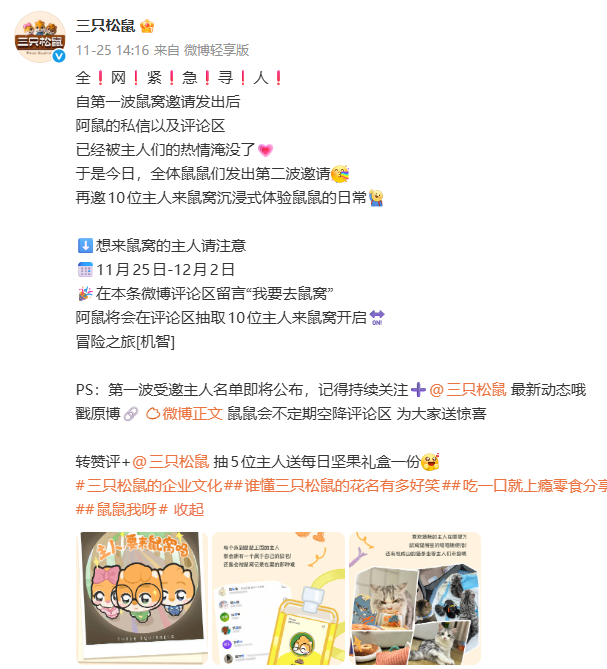
玩梗“鼠名文化”,三只松鼠是怎么火出圈的?
3 6 Ke· 2025-11-27 10:35
Core Insights - The article discusses how Three Squirrels leveraged a recent controversy regarding a return label named "Return Mouse" to enhance its brand visibility through meme marketing and cultural engagement [1][2]. Group 1: Crisis Management - Three Squirrels quickly addressed the potential public relations crisis by clarifying that the "mouse names" are part of the company's culture and not mandatory, with employees voluntarily adopting these names [3][4]. - The company promptly corrected the controversial label from "Return Mouse" to "Return Group" and engaged consumers through a live-stream event to discuss the mouse culture, which helped mitigate misinformation and foster interaction [3][8]. Group 2: Brand Engagement - The company initiated a "Squirrel Name Culture" campaign, encouraging fans to create humorous names, which resulted in a significant increase in online engagement and brand visibility [6][8]. - Employees actively participated in social media interactions, further enhancing the brand's presence and relatability [6][7]. Group 3: Brand Persona Development - The "Mouse Name Culture" reflects Three Squirrels' long-term efforts in building a brand persona characterized by humor and service orientation, which is evident in their unique naming conventions and customer interactions [9][10]. - The brand has established a distinct communication style that emphasizes entertainment and customer engagement, aligning with its vision of creating a joyful shopping experience [10][16]. Group 4: IP and Content Strategy - Three Squirrels has invested in creating brand IP through animated series and various content formats, aiming to deepen consumer connections and enhance brand value [13][14]. - The company is exploring cross-industry collaborations and product extensions to maximize the lifespan and commercial potential of its brand IP [32][33]. Group 5: Future Directions - To further capitalize on its brand persona, Three Squirrels is encouraged to adopt strategies similar to successful brands like Mixue Ice City, focusing on viral marketing, user-generated content, and immersive experiences [17][18][28]. - The brand should consider expanding its IP through licensing and partnerships, as well as developing non-food products to broaden its market reach and visibility [32][33].
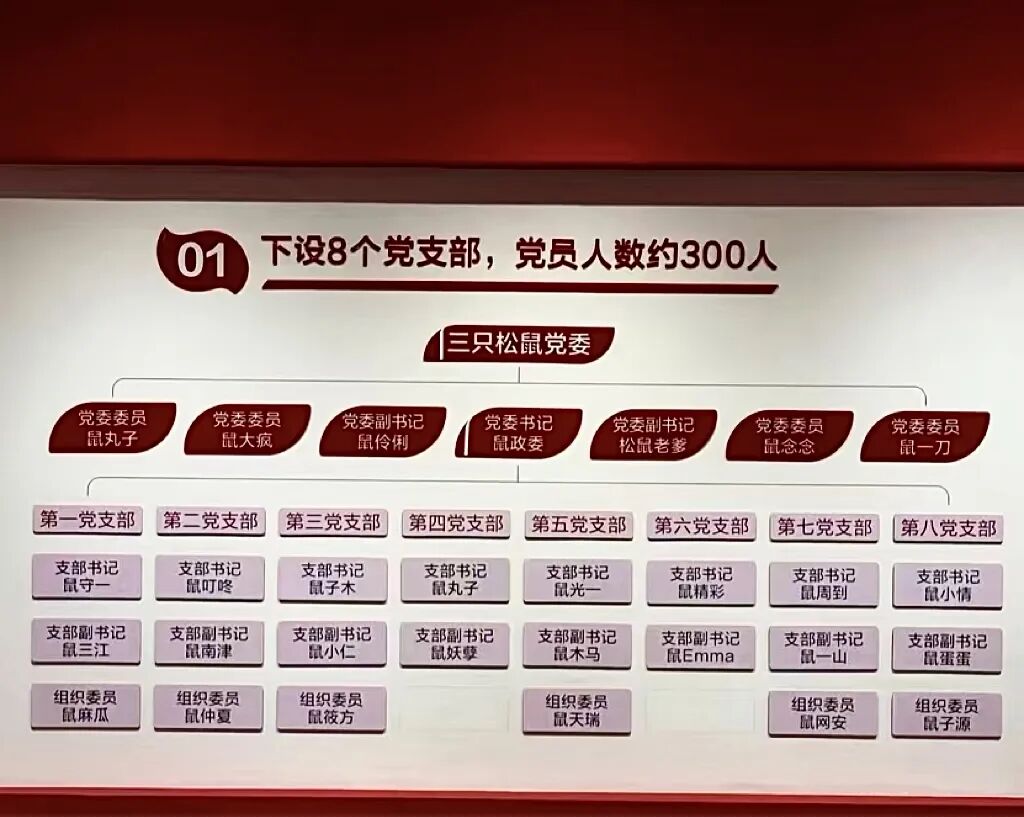
炒货刺客,在山姆跌了一跤
3 6 Ke· 2025-11-27 10:19
Core Viewpoint - The recent controversy surrounding Sam's Club's introduction of Xueji snacks, specifically roasted chestnuts and sweet potatoes, highlights the tension between premium pricing and consumer expectations for value in the snack industry [1][3][19] Company Overview - Xueji Snacks began as a small stall in Jinan, Shandong in 1992 and has evolved into a national brand with over 1200 stores, focusing on high-quality snacks [4][9] - The brand has gained significant attention and investment, securing 600 million yuan in Series A funding in 2022, with plans to expand to 4000 stores within five years [9][19] Product Strategy - Xueji's product offerings include traditional snacks like sunflower seeds and peanuts, as well as innovative items like milk dates and fruit snacks, catering to changing consumer preferences for health and quality [4][6] - The company emphasizes freshness and quality, sourcing ingredients from key regions and employing advanced processing techniques [6][9] Market Trends - The Chinese snack market is projected to reach approximately 1.4 trillion yuan in 2024, with a growth rate of 5.3%, indicating a robust demand for premium snacks [6][9] - Despite the growth potential, the industry faces challenges as consumer preferences shift towards value and quality, leading to a decline in sales for some high-priced brands [10][19] Consumer Sentiment - There is a polarized consumer response to Xueji's pricing strategy, with some praising the quality and affordability compared to traditional stores, while others criticize the high prices and perceived decline in product quality [3][11][19] - Concerns have been raised about the use of additives in some products, leading to negative perceptions among health-conscious consumers [11][12] Competitive Landscape - Xueji faces increasing competition from other snack brands that emphasize freshness and quality, which may dilute its core advantage [12][19] - The brand's expansion strategy includes opening up to franchise opportunities and enhancing its online presence to reach a broader audience [16][18] Financial Performance - Xueji's store expansion has not met initial targets, with only 736 stores opened by the end of 2022, and fewer than 200 new stores added in 2023 [14][19] - Other premium snack brands, such as Liangpinpuzi and Three Squirrels, are also experiencing revenue declines, indicating a broader trend in the high-end snack market [14][19]
凯度消费者指数:传统中式滋补行业:祛湿赛道
凯度消费者指数· 2025-11-27 08:38
Investment Rating - The report indicates a strong growth potential in the traditional Chinese health supplement industry, particularly in the dampness removal segment, with a market size of 68 billion and a year-on-year growth rate exceeding 20% [17][36]. Core Insights - The dampness removal category is evolving into a comprehensive health solution, connecting with modern health demands such as weight loss, beauty, and vitality, thus becoming a key entry point for engaging the new generation of consumers [6][7]. - The competition in this category will shift from individual products to a systematic and brand-oriented competition based on scientific validation, innovative scenarios, and ecosystem building [6][36]. Summary by Sections Traditional Chinese Health Supplement Industry: Dampness Removal Segment - The dampness removal segment is experiencing robust growth driven by policy support, cultural factors, and increasing health demands, with the concept rooted in traditional Chinese medicine [15][18]. - The market is characterized by strong seasonal fluctuations, with sales peaking in summer and showing significant growth in early spring [21][27]. Market Dynamics - The dampness removal market is marked by a "multi-strong mixed battle" landscape, with products priced above 100 yuan leading in sales and growth [30][31]. - The sales distribution is heavily concentrated in southern regions, with the Yangtze River Delta and Pearl River Delta accounting for 65% of total sales [27][28]. Consumer Insights - The primary consumer demographic for dampness removal products is women aged 30 and above, particularly those in child-rearing stages, with a notable focus on health-conscious individuals [44][46]. - There is a growing awareness among Gen Z consumers regarding dampness removal, with sleep and fatigue being significant concerns [48][49]. Trends and Innovations - The industry is witnessing a shift from single-ingredient products to complex formulations that cater to diverse health needs, emphasizing convenience and efficacy [57][63]. - The demand for high-quality, scientifically-backed products is driving the industry's move towards premiumization, with a focus on safety and traceability [66][67]. Future Outlook - The dampness removal segment is expected to continue evolving, with innovations in product forms and a focus on high-end, scientifically validated offerings that meet modern consumer demands for convenience and effectiveness [74][75].
卖牛奶的光明,宠物赛道寻解药
3 6 Ke· 2025-11-27 04:46
乳制品行业的一个新共识是:常温奶正在失宠,低温鲜奶火速上位中。 昔日凭借低温鲜奶成为中国"乳业第一股"的光明,却没乘上这股东风。不仅业绩承压,被逼到出售资产 求生,连仅剩的"鲜奶优势",也在快速消失。被伊利股份(600887.SH)、蒙牛乳业(02319.HK)甩在 身后,沦为区域老三。 到2014年时,光明乳业的营收已经突破双百亿,其中华东地区市场占有率达 22%,上海地区更是高达 40%,坐稳区域龙头地位。但此后选择常温奶赛道的伊利、蒙牛凭借战略与渠道优势逐步实现赶超,差 距一步步持续扩大中。 根据光明乳业最新财报,其2025年前三季度营收同比下降0.99%至182.31亿元,净利润同比下跌25.05% 至0.87亿元。这已是光明乳业自2022年以来,连续三年营收同比下滑。其中第三季度更是直接亏了1.3亿 元。 换句话说,光明乳业2025年忙活了9个月,只赚了不到1个亿。作为对比,乳业老大伊利前三季度的净利 润是104.26亿元,零头都比它多。 是什么压垮了光明乳业的业绩? 分产品来看,光明是国内最早推出鲜奶品牌的乳企,但占公司第一大营收比重的液态奶营收却在持续下 滑,今年前三季度液态奶营收为101.46 ...

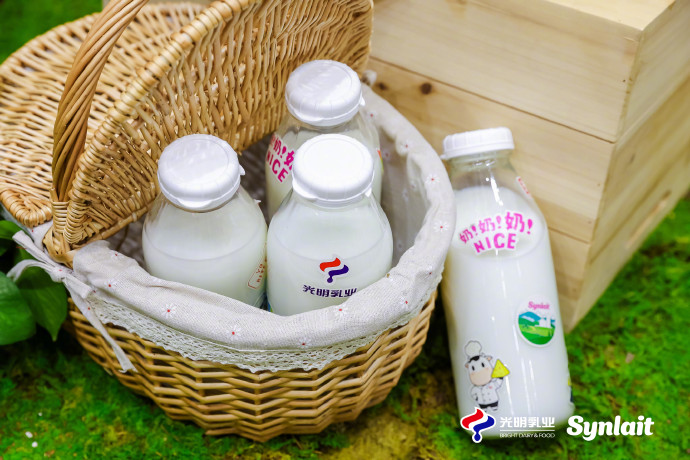
三只松鼠花名是“归属感”还是“洗脑”?员工眼中的两个世界
Feng Huang Wang Cai Jing· 2025-11-27 03:04
Core Viewpoint - The recent controversy surrounding the nickname culture at Three Squirrels has sparked mixed reactions, highlighting both employee acceptance and concerns regarding personal identity and corporate culture [1][3]. Group 1: Company Culture and Employee Perspectives - Three Squirrels has implemented a nickname system where employees are referred to by names like "Mouse XX," which is intended to enhance the brand image and create a friendly work environment [1][4]. - Some employees appreciate the nickname culture as it helps to separate work from personal life and reduces hierarchical distinctions, fostering a more relaxed atmosphere [4]. - However, there are dissenting voices among employees, particularly those in customer-facing roles, who find the nickname system uncomfortable and liken it to a form of indoctrination [5]. Group 2: Financial Performance - Three Squirrels reported a revenue of 7.759 billion yuan for the first three quarters of 2025, reflecting an 8.22% year-on-year increase, but the net profit attributable to shareholders plummeted by 52.91% to 161 million yuan [6][7]. - The company's profitability is concerning, as 98.88 million yuan of the reported profit came from government subsidies, indicating that the actual operating profit, after excluding non-recurring income, was only 57 million yuan, down 78.57% year-on-year [6][7]. - The decline in profitability is further illustrated by a significant drop in basic and diluted earnings per share, both down 53.85% to 0.06 yuan per share [7].
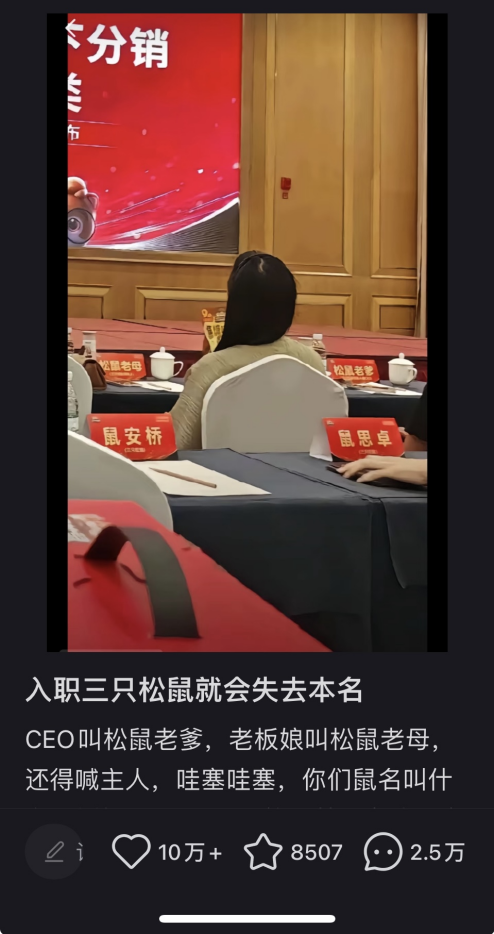
三只松鼠花名是“归属感”还是“洗脑”?员工眼中的两个世界
凤凰网财经· 2025-11-27 02:10
Core Viewpoint - The article discusses the recent controversy surrounding the use of "mouse names" at Three Squirrels, a practice that has sparked mixed reactions among employees and the public, highlighting the company's unique corporate culture while also revealing underlying performance issues [1][3][8]. Group 1: Employee Perspectives on Nickname Culture - Employees have divided opinions on the "nickname system," with some appreciating the separation of work and personal life it provides, while others find it uncomfortable and reminiscent of a "brainwashing" culture [4][7]. - A current employee expressed that using a nickname allows for a more relaxed work environment and diminishes hierarchical distinctions, while a former employee criticized the practice as excessive and detrimental to customer interactions [6][7]. - The acceptance of this corporate culture appears to correlate with job roles, personal values, and team dynamics, indicating a complex relationship between employee satisfaction and corporate identity [7]. Group 2: Financial Performance and Challenges - Three Squirrels reported a revenue of 7.76 billion yuan for the first three quarters of 2025, marking an 8.22% year-on-year increase, but the net profit attributable to shareholders plummeted by 52.91% to 1.61 billion yuan, indicating a significant decline in profitability despite revenue growth [8][9]. - The company's net profit was heavily reliant on government subsidies, with 988 million yuan coming from such sources, leading to a stark drop in the actual operating profit to 570 million yuan, down 78.57% year-on-year [8][10]. - The cash flow situation is concerning, with a net cash flow from operating activities of -506 million yuan, a drastic decline of 1690.52%, attributed to increased procurement expenses, and a significant rise in short-term loans [10]. Group 3: Market Position and Strategic Concerns - The brand's reliance on low pricing to attract traffic has created a cycle of diminishing brand value and profitability, as traditional e-commerce revenues have declined since 2020, despite temporary recoveries through new channels like Douyin [10]. - The lack of effective synergy between online and offline channels further complicates the company's growth strategy, emphasizing the need for a more sustainable business model that prioritizes product quality and employee respect over superficial branding practices [10].